
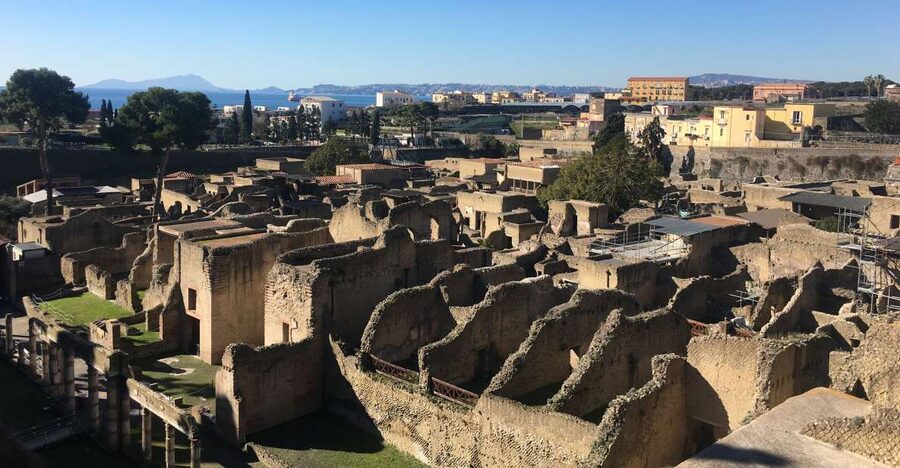
Reviewed · POMPEII ARCHAEOLOGIST-LED TOURS
Pompeii and Herculaneum: Guided Tour with an Archaeologist
Two cities, one volcanic wound. This Pompeii and Herculaneum tour with Benedetto puts Roman everyday life in focus, guided by an archaeologist and paced for a small group. I like the small group size (up to 10) and I really value the archaeologist-led perspective that turns ruins into real people, not just stones.
You’ll spend real time in Pompeii and then head to Herculaneum, where the different way the sites were buried changes what you can see. My one main consideration: it’s a walking-heavy day and it’s not suitable for wheelchair users or people with mobility impairments.
In This Review
- Key things that make this tour worth your time
- Why doing Pompeii and Herculaneum in one 5-hour day works
- Meeting at Ristorante Suisse and getting oriented fast
- Pompeii Highlights: Porta Marina Inferiore to Forum plaster casts
- Pompeii vs. Herculaneum: the real learning happens between ruins
- Lunch break at Ristorante Suisse: where the day resets
- The train hop to Herculaneum: quick logistics, big payoff
- Herculaneum’s conservation effect: wood, jewelry, frescoes, and skeletons
- Benedetto as a guide: humor plus scholarship in real-world pacing
- Price and tickets: what you’re really paying for at $141.61
- What to bring and how to be comfortable (this is an active day)
- Who should book this tour, and who should skip it
- Should you book this Pompeii and Herculaneum tour?
- FAQ
- How long is the Pompeii and Herculaneum guided tour?
- Where do we meet the guide?
- Does the tour include tickets and a guide?
- Do I need to buy tickets on my own?
- How big is the group?
- Is there audio support during the tour?
- How do you travel between Pompeii and Herculaneum?
- Is lunch included?
- What should I bring?
- Is this tour suitable for wheelchair users or people with mobility impairments?
Key things that make this tour worth your time
- Benedetto’s archaeologist approach: he connects buildings, art, and daily routines to what we know about life before AD 79.
- A tight group of up to 10: you get more speaking time, more questions, and a calmer pace than big bus tours.
- Pompeii’s big set pieces: Porta Marina Inferiore, theatres area, houses with frescoes and mosaics, baths, the Lupanare, and the Forum with plaster casts.
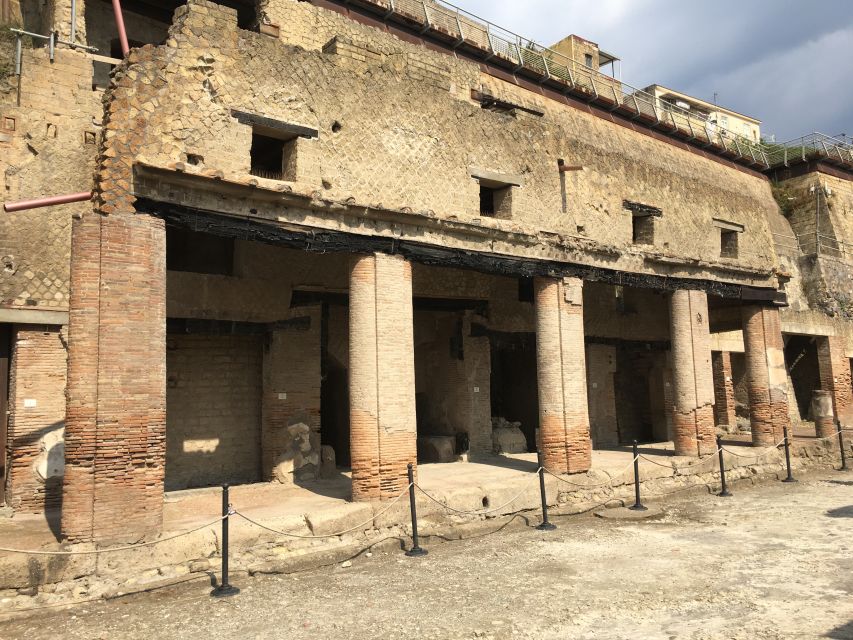
- Herculaneum’s preservation advantage: skeletons and skeleton-related remains, plus wood that survives in a way you mostly don’t see at Pompeii.
- Skip-the-line tickets plus headsets: headsets kick in for groups over 8, so you can actually hear your guide.
- Logistics are built in: a lunch break at Ristorante Suisse and a train hop between sites keeps the day flowing.
Why doing Pompeii and Herculaneum in one 5-hour day works
If you’re only fitting Pompeii in once, I get the temptation to go big and go fast. But Pompeii alone can feel like a long list of highlights. Doing both cities in the same day is smarter because they teach different lessons.
Pompeii is the famous Roman city buried after Vesuvius’s eruption in AD 79. Herculaneum is smaller, and the way it was buried and conserved changes what survives. That means you don’t just repeat the same visuals twice. You see the same Roman world from two angles: Pompeii for the wide, bustling city feel, and Herculaneum for the unusually preserved details that make daily life feel close enough to touch.
This tour is built around that contrast, with enough guided time in each place to make it meaningful, not rushed.
More of the site walked with an archaeologist
- Pompeii: Entry Ticket and Guided Tour with an Archaeologist
★ 4.8 · 19,459 reviews - Pompeii: Small Group Tour with an Archaeologist
★ 4.8 · 12,264 reviews - Pompeii 3hours Villa of Mysteries tour with an Archaeologist
★ 4.8 · 486 reviews
Meeting at Ristorante Suisse and getting oriented fast
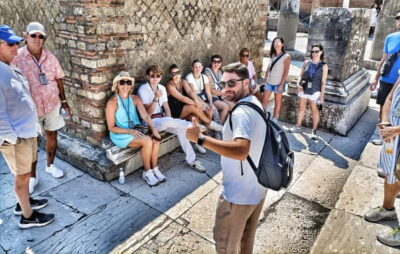
The meeting point is simple: the guide meets you at Suisse Restaurant, with a sign showing your name. That matters more than it sounds, especially at Pompeii, where you can lose time just figuring out where your group is supposed to form.
From there, you’re set up for the two-site rhythm. Tickets are included, and the tour also skips the ticket line, which saves effort during peak hours. For groups larger than 8, you get headsets so you can hear your archaeologist guide even when you’re walking and the crowd noise rises.
Also, the tour starts and ends at the same place. That “same-in/same-out” structure helps you plan the rest of your day without guessing about where you’ll be dropped.
Pompeii Highlights: Porta Marina Inferiore to Forum plaster casts
In Pompeii, you start at Porta Marina Inferiore, then move through the areas near the theatres. That opening stretch is a good way to set context, because you’re already moving through the part of the city where public life shows up.
Next comes the heart of what most people come for: the homes and the decoration. You’ll walk through areas with mosaics, frescoes, and marble elements, and you’ll also pass the everyday stuff that makes Pompeii feel like an actual city. Expect shops, Roman bakeries, and snack-bar style stops—places where you can imagine grabbing food, chatting, and moving through the day like locals did.
Two stops tend to stick in your mind because they’re so unmistakably Pompeian:
- The public baths: not just a place to wash, but a social hub.
- The Lupanare: the famous brothel complex. It’s one of those sites that’s awkward, historically important, and exactly why Pompeii is so useful for understanding Roman life.
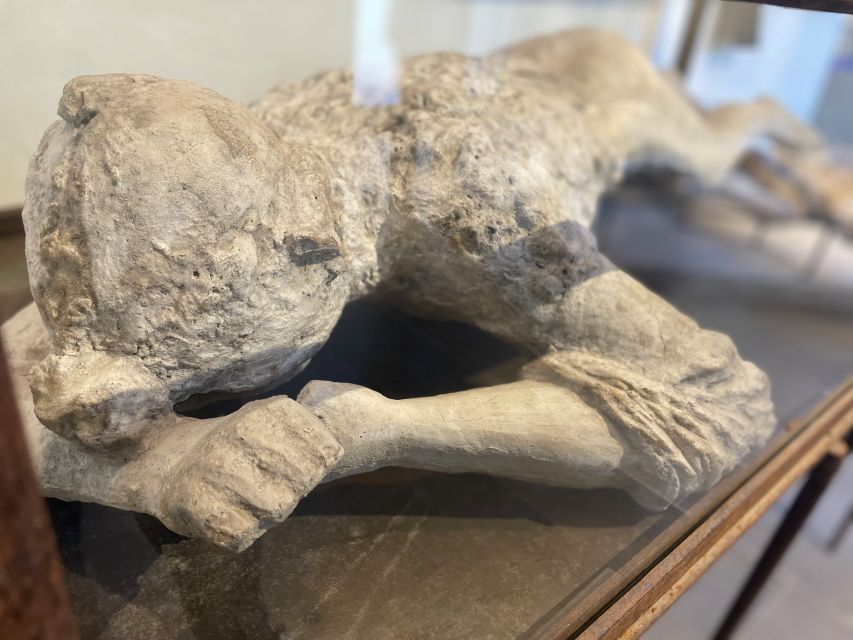
Finally, you reach the Forum, and the tour includes the plaster casts of the victims. Seeing these—along with the surrounding public spaces—helps you understand the scale and timing of the disaster, not just the tragedy itself.
Your Pompeii time is about 2 hours with a guided walk, which is long enough to see the big moments without turning the day into a sprint.
Pompeii vs. Herculaneum: the real learning happens between ruins
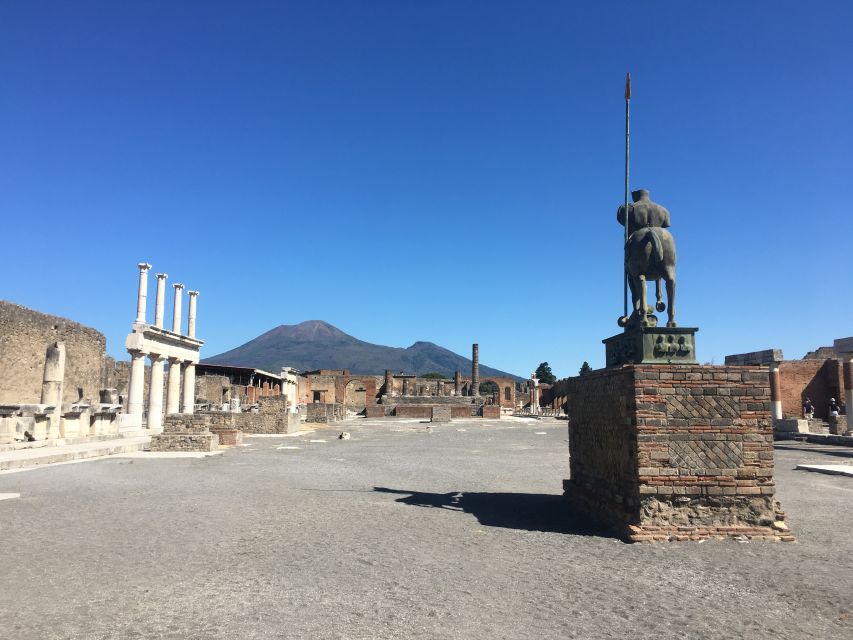
Here’s what I think makes this tour work so well for first-timers: the guide doesn’t treat Pompeii and Herculaneum as two disconnected attractions.
In Pompeii, you’re reading the city layout—public buildings, entertainment spaces, home styles, and the commercial life between. In Herculaneum, the story shifts because the remains are preserved differently. That difference changes what you notice:
- In Pompeii, you often catch the grandeur and the layout, with a lot of imagination needed.
- In Herculaneum, the details can feel more immediate—like materials and shapes that survived in unusually good condition.
When you move from one to the other, your brain does the comparison naturally. That’s where your understanding clicks.
Lunch break at Ristorante Suisse: where the day resets
The tour includes a lunch break with free time. The break fits into the schedule as about 1 hour, and it lines up with the practical reality that you’ll be on your feet.
Lunch is not included, so you’ll need to plan what you want to eat and drink. The good news is that the meeting structure and timing are designed so you don’t spend your lunch hour scrambling for a place far away. Since the break is associated with the Ristorante Suisse area, it’s a convenient pause point before the Herculaneum segment.
A quick tip: if it’s warm when you go, pace yourself after lunch. Pompeii and Herculaneum are both outdoors, and the afternoon light can make the walking feel longer than it looks on a map.
More of Herculaneum next door
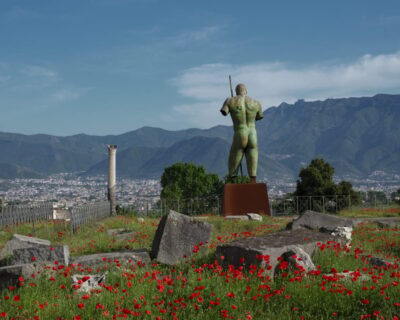
The train hop to Herculaneum: quick logistics, big payoff
Between Pompeii and Herculaneum, the tour uses train travel. The schedule shows about 30 minutes, and the journey is described as about 20 minutes by train, depending on timing.
Either way, the key value isn’t just moving fast. It’s that you keep your energy for the ruins. If you had to coordinate everything yourself—tickets, timing, where to wait—you’d burn a lot of mental energy and lose some of the smoothness of the day.
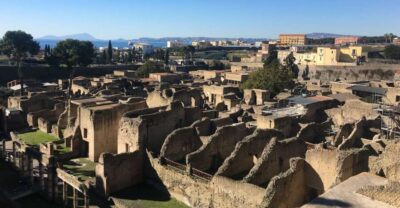
Once you arrive, you’re ready for a different vibe: Herculaneum feels more compact, and it’s often less crowded than Pompeii, which makes it easier to slow down and actually look at what you’re seeing.
Herculaneum’s conservation effect: wood, jewelry, frescoes, and skeletons
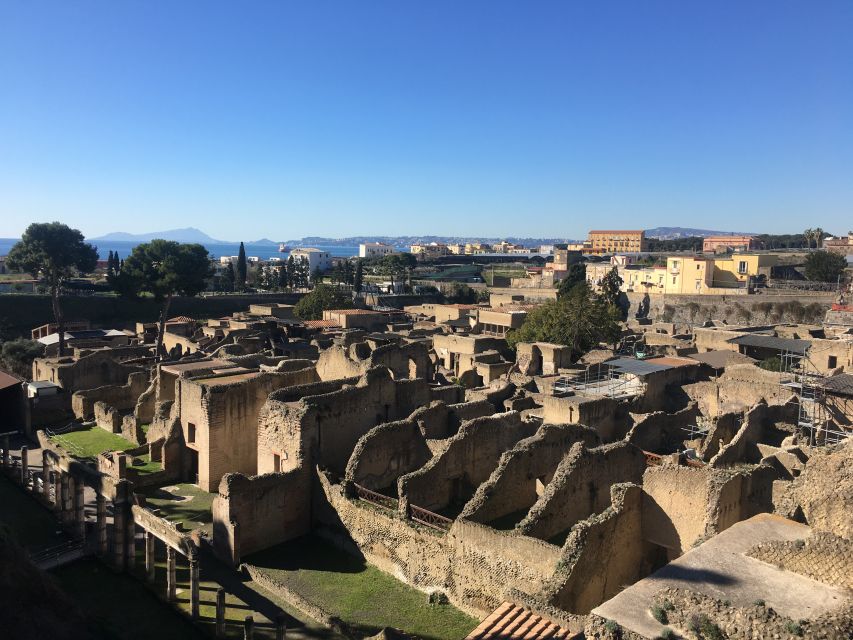
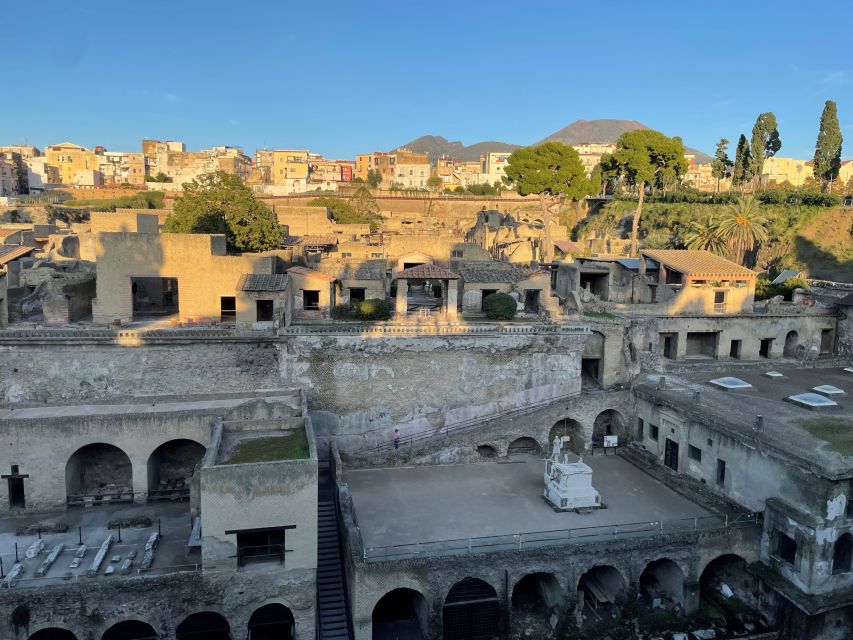
Herculaneum is the “small jewel” part of the day, and that’s not just marketing language. It’s because the site can feel more intimate. The remains are preserved differently, so you can notice materials and textures that often won’t survive at Pompeii.
You get about 1.5 hours guided in Herculaneum, focused on the standout residential areas and their decoration. The tour highlights:
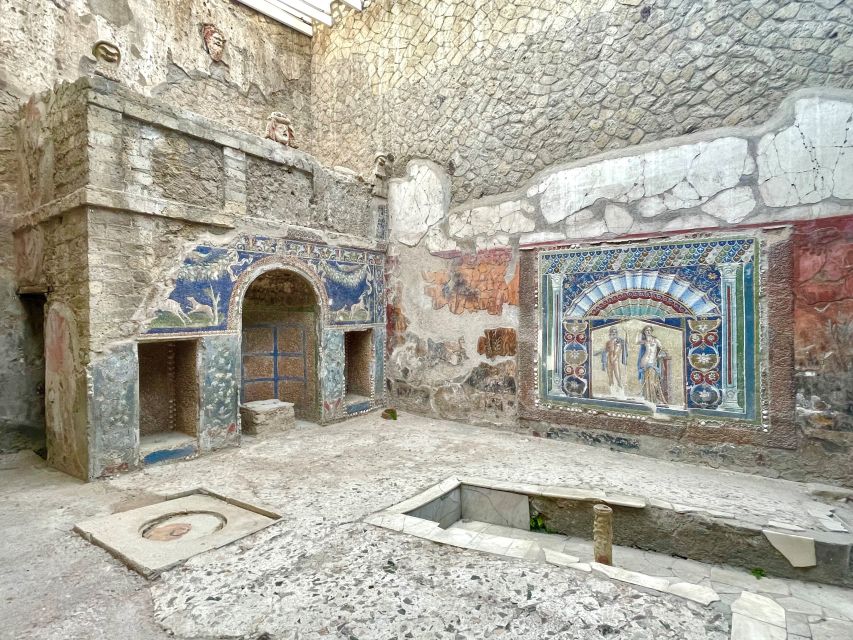
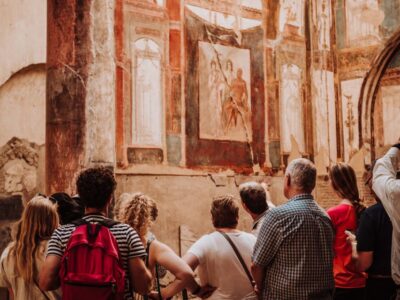
- Frescoes and painted surfaces that make rooms feel lived-in
- Marbles and mosaics, showing how Romans decorated everyday spaces
- Jewelry, which helps bring a more personal scale to the finds
- Skeletons, which you’ll encounter as part of the human story behind the remains
- Exceptionally well-preserved wood, one of the big reasons Herculaneum can feel so vivid compared to what you might expect elsewhere
Those details matter because they change how you understand wealth and routine. It’s one thing to see a plan of a house. It’s another thing to see what was preserved from inside it—where art, household objects, and even wood elements survived long enough to tell you more about domestic life.
If you care about photography, this is often where you start collecting images you’ll actually remember for what they represent, not just how they look.
Benedetto as a guide: humor plus scholarship in real-world pacing
The star of this experience is the guide—Benedetto Tourist Guide—and the recurring theme is that he blends serious archaeology with a very human style.
From what you’re told to expect, the tour isn’t a dry lecture. Benedetto is described as funny and entertaining, but the humor doesn’t replace the facts. It helps the pace stay comfortable, especially across two sites.
One practical thing I’d pay attention to: small groups allow him to keep conversations moving and adjust based on your questions. The tour also focuses on making logistics easier, including guidance on getting to the start point and between sites.
Several accounts point to the same advantage: the ability to navigate around larger crowds and choose routes that feel calmer. In a place like Pompeii, route choice can change your whole experience—less time stuck in bottlenecks, more time looking closely.
Price and tickets: what you’re really paying for at $141.61
At $141.61 per person, this tour is not a budget “ruins walk” deal. But you’re not paying just for entry into two famous archaeological sites.
You’re paying for:
- An archaeologist guide (not just a general tour leader)
- Entry tickets for both places
- Headsets for larger groups
- A full structure that includes a lunch break and train movement
- Skip-the-line convenience for tickets
The value is strongest if you’re the type who wants context while you’re standing there. Pompeii can be overwhelming on your own, and Herculaneum is easier to appreciate when someone explains what you’re looking at and why preservation differs.
If you’re the type who just wants photos and a rough overview, you might question the price. But if you want understanding—why these buildings matter, what daily routines looked like, and how the eruption reshaped Roman life—this is the kind of guided format that usually feels worth it.
What to bring and how to be comfortable (this is an active day)
This is a walking-focused experience, and you’ll feel it. Pack like you’re spending a lot of time on uneven ground.
Bring:
- Passport or ID card (original)
- Comfortable shoes
- Hat
- Water
One more detail that matters: for Pompeii, the ticket is named. After booking, you’ll need to provide first and last names for all participants. Make sure the names match your passport/ID, because Pompeii tickets are issued with that information tied to the entry process.
Also note: the tour is not suitable for wheelchair users and is not recommended for people with mobility impairments.
Who should book this tour, and who should skip it
This tour fits best if:
- You want both Pompeii and Herculaneum without having to coordinate everything
- You like learning from an archaeologist and not just reading plaques
- You prefer a small group (up to 10) and a more personal pace
- You care about art and household life: frescoes, mosaics, marbles, and what survives in Herculaneum
You might skip it if:
- You need step-free access or wheelchair-friendly routing
- You hate walking long distances on uneven surfaces
- You’re happy with a self-guided visit and don’t want a structured plan
Should you book this Pompeii and Herculaneum tour?
I’d book it if you want the best “wow” factors plus real context, and you like the idea of seeing two sites that both relate to AD 79 but feel different because of preservation. The small group size, the archaeologist-led approach, the skip-the-line tickets, and the fact that the day is structured with a lunch pause and train transport all add up.
I’d think twice if mobility is an issue for you, because the tour is clearly designed for walking and isn’t positioned for wheelchair access.
If you’re trying to decide what to do in Campania, this is one of those days where a guided archaeologist changes how you remember the ruins. You won’t just look at Pompeii and Herculaneum. You’ll understand what you’re looking at while you’re there.
FAQ
How long is the Pompeii and Herculaneum guided tour?
It runs for about 5 hours, with the schedule including guided time in Pompeii, a lunch break, travel by train, and guided time in Herculaneum.
Where do we meet the guide?
The guide meets you at Suisse Restaurant. The sign will have your name on it.
Does the tour include tickets and a guide?
Yes. The tour includes an archaeologist guide and entry tickets.
Do I need to buy tickets on my own?
No. Entry tickets are included, and the tour also skips the ticket line.
How big is the group?
The tour is a private or small group format, with a maximum of up to 10 people.
Is there audio support during the tour?
Headsets are included for groups larger than 8.
How do you travel between Pompeii and Herculaneum?
You travel by train. The tour schedule includes a train segment of about 30 minutes (described as about 20 minutes by train).
Is lunch included?
Lunch is not included, but there is a break time with free time for lunch.
What should I bring?
Bring your passport or ID card (original), comfortable shoes, a hat, and water.
Is this tour suitable for wheelchair users or people with mobility impairments?
No. It is not suitable for wheelchair users and not suitable for people with mobility impairments.
More Tour Reviews in Pompei Campania
- Pompeii: Entry Ticket and Guided Tour with an Archaeologist★ 4.8 · 19,459 reviews
- Pompeii: Small Group Tour with an Archaeologist★ 4.8 · 12,264 reviews
- Pompeii: Skip-the-Line Entrance Ticket with Audio Guide★ 4.0 · 2,509 reviews
- Naples: Pompeii and Mt. Vesuvius with Lunch and Wine Tasting★ 4.5 · 2,454 reviews
- Pompeii: Skip-the-line-Ticket and Guided Tour★ 4.6 · 1,152 reviews
More of Herculaneum
- Pompeii: Small-Group Tour of Pompeii and Herculaneum★ 4.8 · 867 reviews
- From Naples: Pompeii and Herculaneum VIP Tour with Lunch★ 4.4 · 129 reviews
- Pompeii & Herculaneum: Skip-the-line & Digital Guide App★ 4.0 · 35 reviews
- Pompeii, Herculaneum, and Vesuvius: Full-Day Tour★ 3.7 · 21 reviews
- From Herculaneum to Pompeii: Audioguides + Entrance Tickets★ 3.6 · 19 reviews
More Tours Led by an Archaeologist
- Pompeii: Entry Ticket and Guided Tour with an Archaeologist★ 4.8 · 19,459 reviews
- Pompeii: Small Group Tour with an Archaeologist★ 4.8 · 12,264 reviews
- Pompeii 3hours Villa of Mysteries tour with an Archaeologist★ 4.8 · 486 reviews
- Pompeii: Tour with Archaeologist Guide & Skip-the-Line Entry★ 4.5 · 478 reviews
- Pompeii: Guided Tour with Archaeologist with max. 12 People★ 5.0 · 155 reviews
Just reviewed: more Pompei Campania tours and day trips

Pompeii Archaeologist-Led Tours, compared.
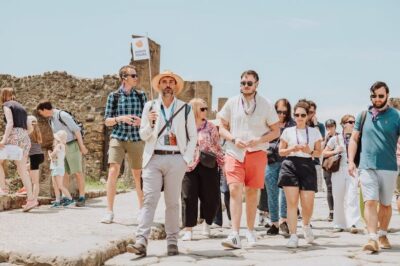 ★ 4.8Entry Ticket and Guided Tour with an ArchaeologistFrom $3519,459 reviews
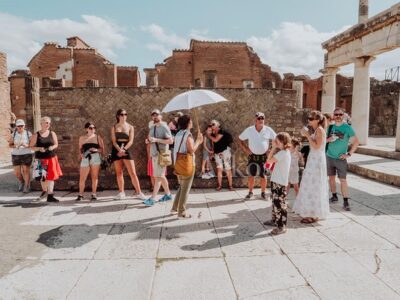 ★ 4.8Small Group Tour with an ArchaeologistFrom $4012,264 reviews
★ 5.0Pompeii Small Group Tour with an ArchaeologistFrom $356,593 reviews
★ 4.8Small Group Tour with an ArchaeologistFrom $4012,264 reviews
★ 5.0Pompeii Small Group Tour with an ArchaeologistFrom $356,593 reviews
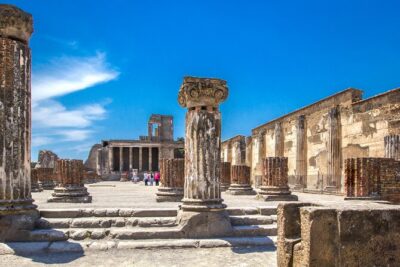 ★ 5.0Pompeii and Herculaneum Small Group Tour with an ArchaeologistFrom $771,350 reviews
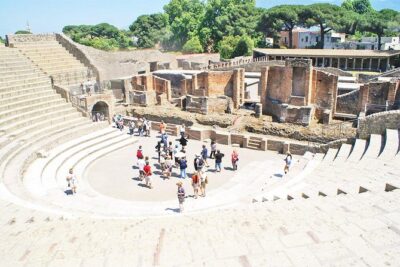 ★ 5.0Skip the Line Guided Tour of Pompeii led by an ArchaeologistFrom $95703 reviews
 ★ 4.9Exclusive Tour with Archaeologist and Entry TicketsFrom $50634 reviews
 ★ 5.0Pompeii Private Tour with an Archaeologist and Skip The Line – 3 hoursFrom $302564 reviews
 ★ 5.0Pompeii Skip-the-line Tour with Archaeologist GuideFrom $71559 reviews
Browse the lists this tour appears in