
Reviewed · POMPEII ARCHAEOLOGIST-LED TOURS
Pompeii: Guided Tour with Archaeologist with max. 12 People
Step into Pompeii, then suddenly it starts speaking. This guided walk with archaeologist Benedetto turns ruined streets into a real Roman day, from shopfronts and bakeries to baths and the Forum. You get a small group (max 12), plus the kind of pacing that helps you spend your time on the sights that matter.
What I like most is the mix of big story and street-level detail. Benedetto connects the AD 79 eruption to what you can still see, and he also explains how people lived right up to the end. I also like that you’re not wandering randomly in a giant site with no help, because you get a clear route and context as you go.
The one thing to plan for: 2 hours is not enough to see all of Pompeii. You’ll finish with a stronger sense of what to look for next, and you may wish you had extra time (heat and crowding can also limit how long you want to linger in each spot).
In This Review
- Key highlights you’ll feel right away
- Pompeii with an archaeologist: what “guided” really means here
- Where you meet and how you start strong at Porta Marina Inferiore
- Theaters to streets: seeing Pompeii as a living town
- House of Menander: frescoes and mosaics that feel personal
- Stabian Baths: the best place to learn routine
- Forum and public buildings: where the story becomes unavoidable
- Lupanare: handling the subject with context, not just shock
- Macellum and Basilica: market life and civic order
- The best value: why $65 makes sense for a 2-hour plan
- Who should book this Pompeii tour
- What to do after the tour so 2 hours feels like more
- Should you book this Pompeii guided tour?
- FAQ
- How long is the Pompeii guided tour?
- Where do we meet the guide?
- Is the ticket line skipped?
- What’s included in the price?
- Do I need to bring my ID?
- What languages is the tour offered in?
Key highlights you’ll feel right away
- Archaeologist-led storytelling: explanations built for what you’re actually standing in front of
- Small-group pacing (up to 12): easier questions, less time stuck, and you keep moving
- Express entry + headsets: included ticket access, and headsets if the group is larger than 8
- Frescoes, mosaics, and the victim casts: art and evidence that make the tragedy tangible
- A route through real Roman spaces: from houses and theaters area to baths, Forum, and the lupanare
Pompeii with an archaeologist: what “guided” really means here
Pompeii is famously dramatic, but it can also feel oddly silent if you show up unprepared. Buildings are stripped down. Walls stand without labels. And yes, you can read a few signs, but you’ll spend a lot of time guessing what you’re looking at.
This tour fixes that. Benedetto leads you with the eye of someone who studies the site, so the ruins don’t stay “pretty rocks.” You learn what each space likely was used for, why it mattered, and how the eruption changed everything. Even if you already know the basics of Vesuvius, the tour gives you a sharper sense of everyday routines: where people shopped, ate, bathed, gathered, and socialized.
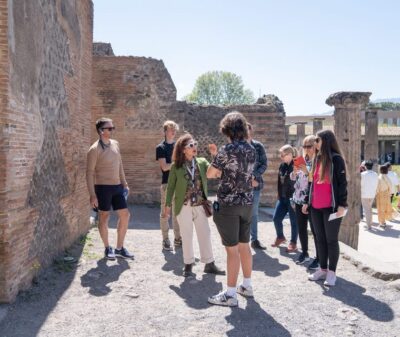
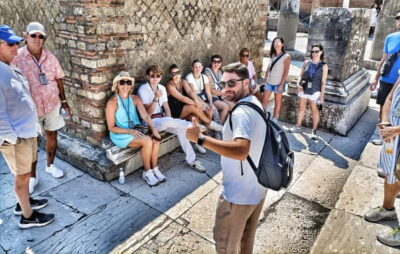
Then there’s the small group part. Max 12 is a big deal at Pompeii. It means the guide can keep you together in the busy bits and answer questions without turning your walk into a lecture line.
More of the site walked with an archaeologist
- Pompeii: Entry Ticket and Guided Tour with an Archaeologist
★ 4.8 · 19,459 reviews - Pompeii: Small Group Tour with an Archaeologist
★ 4.8 · 12,264 reviews - Pompeii 3hours Villa of Mysteries tour with an Archaeologist
★ 4.8 · 486 reviews
Where you meet and how you start strong at Porta Marina Inferiore
You meet at the Suisse Restaurant. The guide waits for you with a sign showing your name, which is a nice start when Pompeii is already chaotic at ground level. After that, you head into the archaeological area with express entry included, so you’re not losing your limited time to ticket queues.
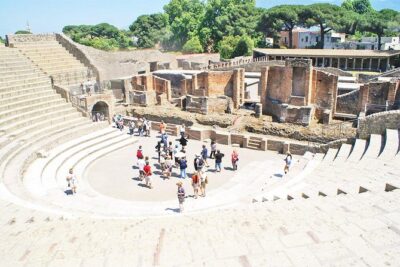
From the start, you follow a logical “Roman day” route. The tour begins around Porta Marina Inferiore and moves through the theaters area, which is a smart way to set the scene. You get oriented before you start threading through residential streets and storefronts.
Practical tip: arrive a few minutes early and keep your ID ready. Pompeii tickets are named, and you’ll need passport or original ID brought with you. If you forget it, you’re the one who pays the price for paperwork, not the tour.
Theaters to streets: seeing Pompeii as a living town
The early walking stretch is where the tour does its best work: it helps you understand Pompeii as a city, not a theme park of collapsed buildings.
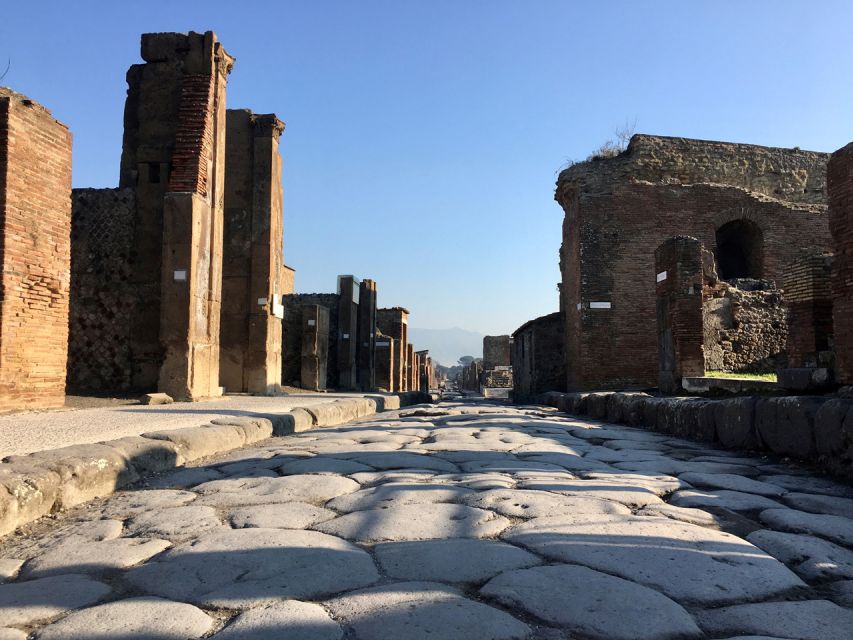
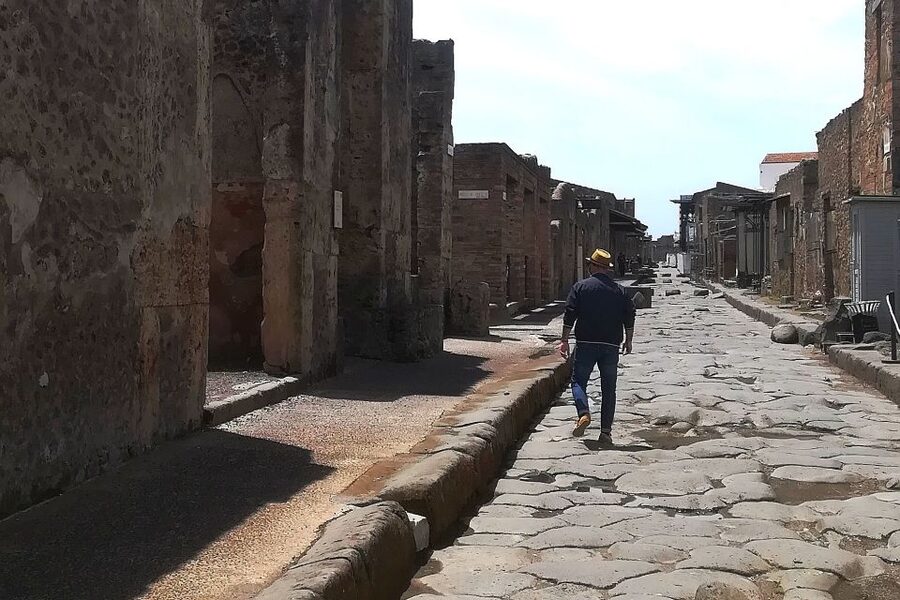
As you move away from the gate zone, the guide leads you through sections where you can imagine foot traffic. You’ll see the layout of how people moved between public entertainment and daily commerce, and you’ll get explanations for the walls that look blank at first.
You also walk through areas flanked by shops and everyday stops. The tour specifically includes the vibe of Roman “high streets,” where you can picture Roman bakeries and small snack areas lining the path. It’s the kind of detail that makes the city feel less like a museum and more like a place you could actually get lost in.
If you’re the type who hates feeling rushed, this is a good fit. The pacing is built to keep you engaged while still letting you look around and take photos when there’s something worth stopping for.
House of Menander: frescoes and mosaics that feel personal
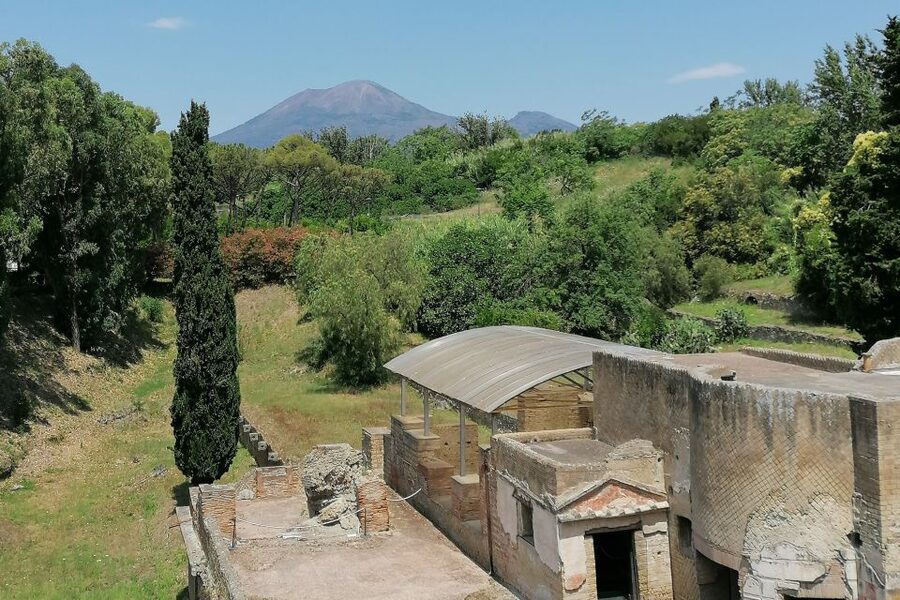
Next comes one of the most satisfying shifts: from street life into the decorative world inside homes. The House of Menander is a highlight on the route, and it’s one of those places where a guide can change everything.
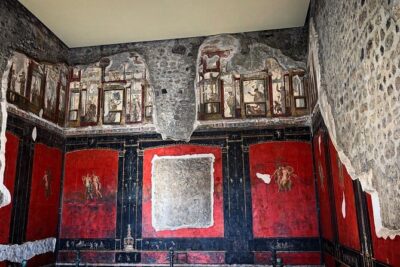
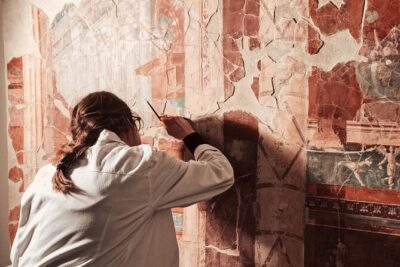
Pompeii houses often look like half-finished shells. But with an archaeologist guiding you, you start noticing patterns in the art and materials. You learn what the decoration likely signaled socially, and why certain rooms mattered more than others.
You’ll also connect the surviving details to Roman tastes: the talk isn’t just about beauty. It’s about function and status, and how home design reflected what owners wanted visitors (or neighbors) to notice.
One caution: don’t expect the house to feel “fully furnished.” Pompeii is partial by nature. The real value is in learning to read what remains, so your imagination has something concrete to build on.
Stabian Baths: the best place to learn routine
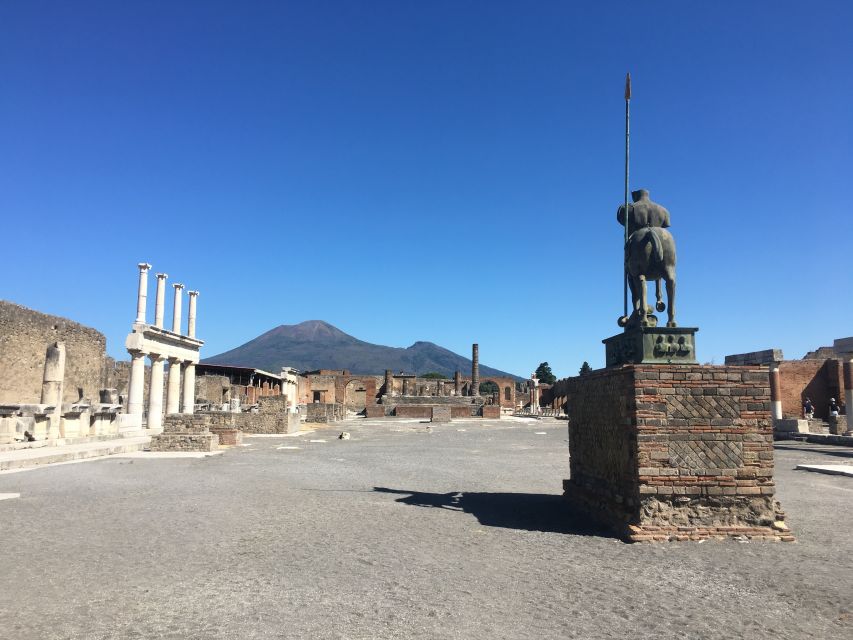
The Terme Stabiane (Stabian Baths) are one of those spots where Pompeii stops being “just tragic.” A bath complex is about daily rhythm. It’s where cleanliness, socializing, and leisure met.
As you walk the bath area, the tour explains what different spaces likely were for and how bathing worked as part of Roman life. You see the structure and you learn the logic. That makes it easier to picture how the city functioned day after day.
And because you’re moving as a group with a guide, you’re not stuck staring at stone fragments. You’re given a mental map: what might have happened where, and why this part of Pompeii was such a major hub.
Heat is real in Pompeii. Several visitors mention it can be hot, and Benedetto is known for being considerate about keeping the group comfortable when possible. Still, bring water and a hat, because even the best tour can’t make the sun disappear.
More guided visits to choose

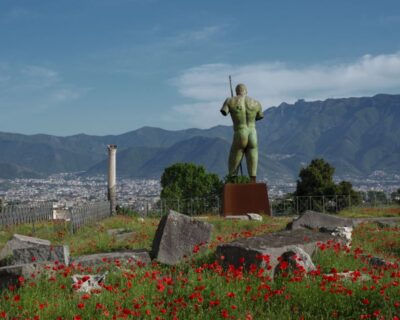
Forum and public buildings: where the story becomes unavoidable
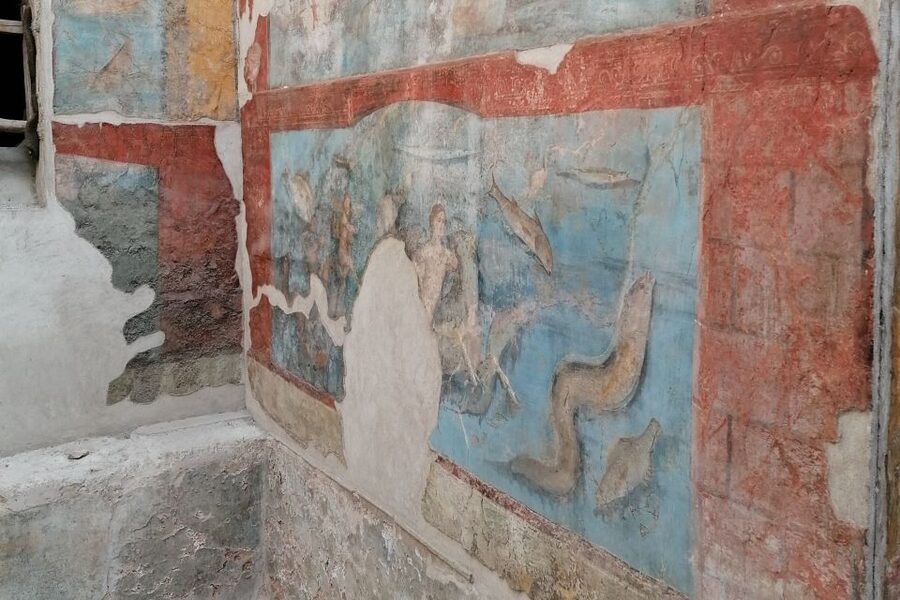
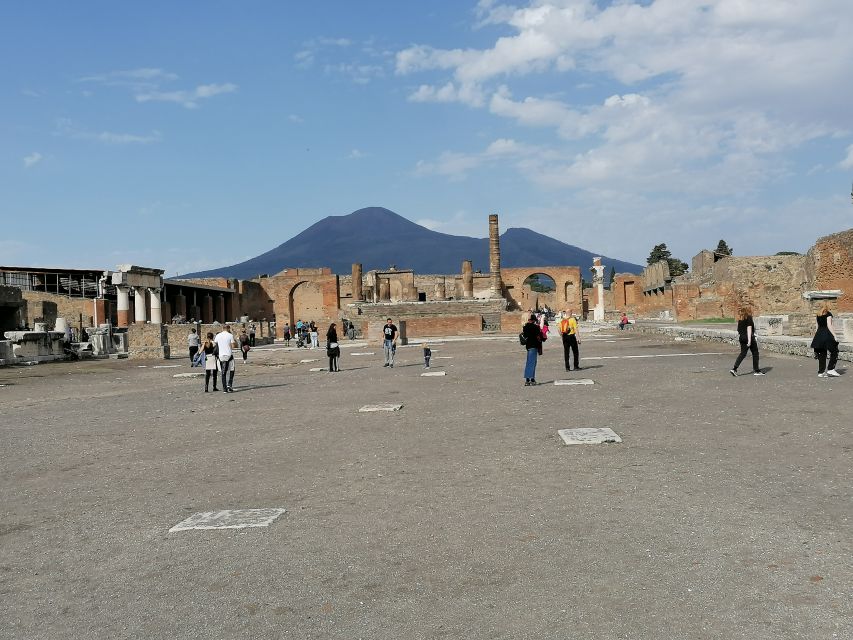
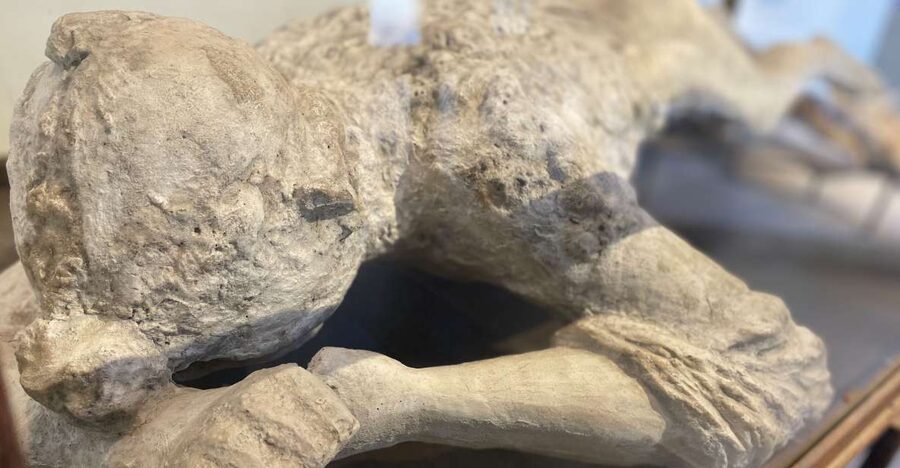
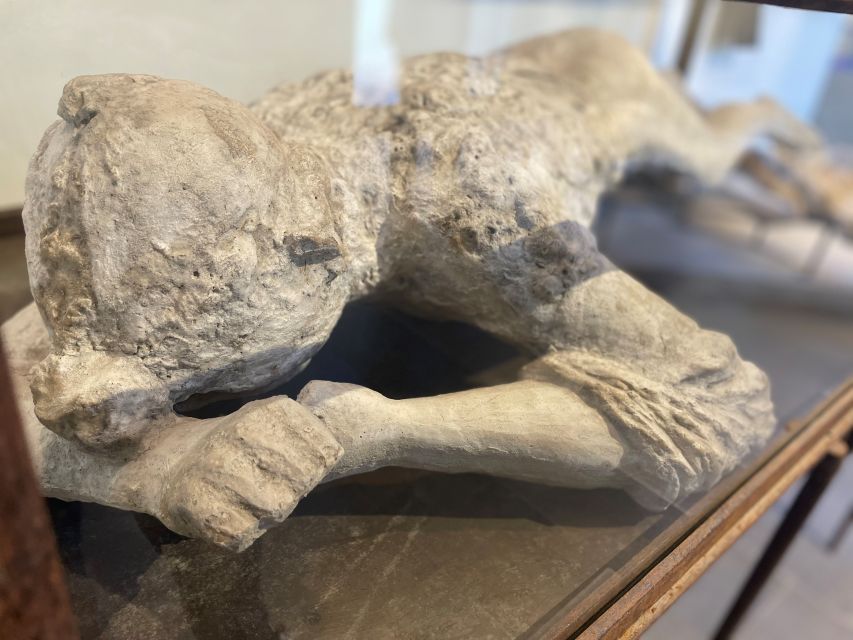
Now you hit the emotional core: the Forum zone and public buildings. This is where Roman political, religious, and civic life overlaps. It’s also where the tour brings you to the plaster casts of the victims.
The casts are famous because they make the eruption’s human cost immediate. When you see them in context of the public spaces around you, the tragedy doesn’t float in the abstract. It’s tied to a real place where people gathered and moved.
You’ll also visit major civic landmarks along the way, including the Temple of Jupiter and other public structures that help you understand the scale of the city’s authority and community life. The guide explains how the architecture supported public rituals and civic identity, not just religion.
If you want one “anchor” experience for your whole trip, this is it. By the time you reach the casts, you’re no longer just looking at ruins. You’re understanding what kind of city it was, and why so many people were caught in that final moment.
Lupanare: handling the subject with context, not just shock
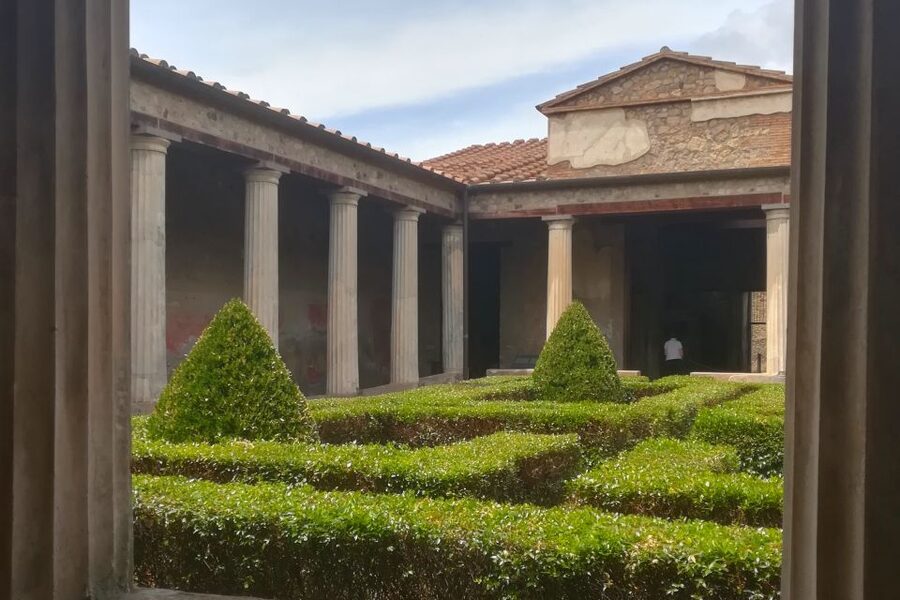
Next is the lupanare, often translated as the brothel. This stop can feel jarring if you approach it like a tourist curiosity, so the tour’s job is to keep it grounded.
You’ll learn what the space likely was and how it fit into everyday life in Pompeii. The tour places it in the flow of city districts rather than treating it as a standalone scandal board. That makes a difference, because it ties the lupanare to how Pompeii’s neighborhoods worked and how residents spent their time.
Also, seeing it after the walk through shops and baths helps you compare “public life” and “private commerce.” Pompeii becomes a whole picture, not a set of isolated stops.
If your goal is to understand the Roman world in a realistic way, this is an important contrast.
Macellum and Basilica: market life and civic order
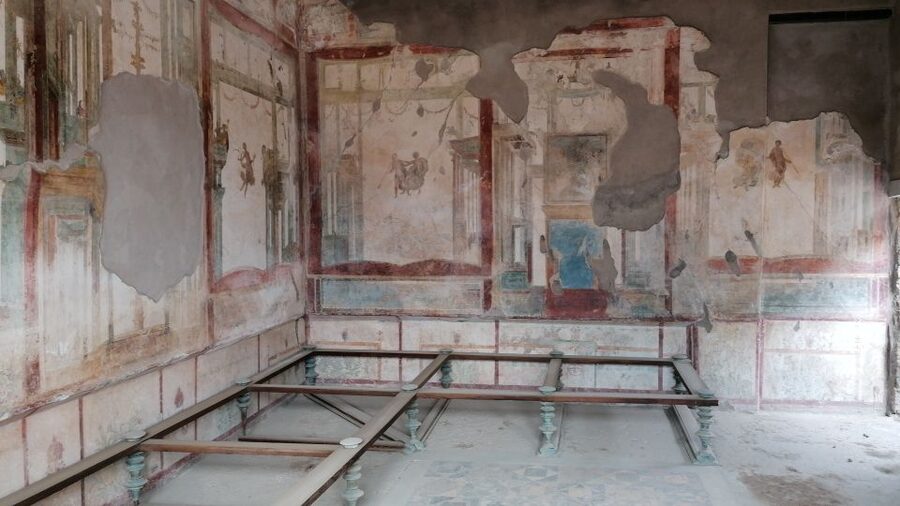
Later you’ll visit the Macellum of Pompeii, which is the market area. This is one of the best “real city” stops. It’s where food, commerce, and daily needs would have intersected.
Market architecture is great for helping you understand movement. You can see how people would have circulated and how sellers and buyers likely interacted. With a guide, you also learn what the space implies about the economy and community routines.
You’ll also see the Basilica, another civic structure tied to public business and administration. It’s not glamorous like the frescoes, but it matters because it shows how order and public decision-making worked in a Roman city.
Together, these stops round out the “Roman day” feeling. You go from entertainment and bathing to work, trade, and governance.
The best value: why $65 makes sense for a 2-hour plan
At $65 per person for about 2 hours, this tour sits in the “pay for clarity” category. You’re not just paying for a warm body holding a microphone. You’re paying for an archaeologist-led route, express entry, and a guide who knows where to take you so time doesn’t vanish in confusion.
You also get a practical benefit: you’re not trying to decode Pompeii by yourself. Pompeii is huge, and the signs are limited. A guide compresses decision-making. That means more time looking at meaningful places and less time walking in circles.
What’s included also helps the math. You get the archaeologist guide, express ticket, and headsets if your group is over 8. You also get free time to explore afterward, which is key. Two hours is short, so this “buffer” lets you follow up on whatever caught your eye during the tour.
A fair consideration: you still may want more time after. Several visitors end up extending their visit on their own because Pompeii rewards slow looking. If you want a full-day plan, consider pairing Pompeii with additional time nearby or choosing a longer format if available.
Who should book this Pompeii tour
This one is a strong match if you want:
- Context while you walk, not just facts read off a sign
- A small-group experience where you can ask questions
- The chance to see major Pompeii areas in a focused route, including the victim casts
It’s also a good choice for families and mixed experience levels because the pacing and explanations are built to fit different backgrounds.
One clear mismatch: it’s not suitable for people with mobility impairments or wheelchair users. Pompeii’s terrain isn’t friendly for everyone, even with the best guide.
What to do after the tour so 2 hours feels like more
Once you finish at the starting area, don’t rush away. Use your free time to go back to whatever left the biggest impression. For some people it’s frescoes and mosaics. For others, it’s the bath spaces or the public Forum area.
If you want to make the most of your time, do this:
- Revisit one or two stops from the route
- Look for details you heard about, like decorative patterns, layout cues, or how spaces connect
- Take photos slowly. Pompeii’s emptiness can make quick shots look flat, but careful framing feels better
And if you’re still hungry for more ruins, ask Benedetto for recommendations for what to prioritize next. The whole point is to leave with a sense of what matters and why.
Should you book this Pompeii guided tour?
Yes, if you want Pompeii to feel like a real city, not a pile of stone. The price is fair for what’s included, and the archaeologist-led approach makes a huge difference in comprehension. The small group size also makes the tour feel more personal and easier to manage in crowded sections.
Skip it only if you’re the kind of traveler who wants to wander freely without structure and you already know Pompeii well enough to read the site on your own. Also skip or rethink if mobility is a concern, since the tour is not designed for wheelchair access.
If you’re choosing a first Pompeii experience, this is a strong way to see the highlights with context and walk away with a clearer mental map.
FAQ
How long is the Pompeii guided tour?
The tour lasts about 2 hours.
Where do we meet the guide?
You meet at Suisse Restaurant. The guide waits with a sign that shows your name.
Is the ticket line skipped?
Yes. The tour includes express entry, so you skip the ticket line.
What’s included in the price?
Included are the archaeologist guide, an express entry ticket, headsets if the group is more than 8, and free time to explore the site.
Do I need to bring my ID?
Yes. The Pompeii ticket is named, and you need to bring your passport or original ID card.
What languages is the tour offered in?
The live guide is available in Italian, English, and French.
More Guided in Pompei Campania
- Pompeii: Entry Ticket and Guided Tour with an Archaeologist★ 4.8 · 19,459 reviews
- Pompeii: Skip-the-Line Entrance Ticket with Audio Guide★ 4.0 · 2,509 reviews
- Pompeii: Skip-the-line-Ticket and Guided Tour★ 4.6 · 1,152 reviews
- Pompeii: Guided Tour with Skip-the-Line Entry★ 4.9 · 812 reviews
- Pompeii: Skip-the-Line Entry Ticket with Digital Guide App★ 4.1 · 770 reviews
More Tour Reviews in Pompei Campania
- Pompeii: Entry Ticket and Guided Tour with an Archaeologist★ 4.8 · 19,459 reviews
- Pompeii: Small Group Tour with an Archaeologist★ 4.8 · 12,264 reviews
- Pompeii: Skip-the-Line Entrance Ticket with Audio Guide★ 4.0 · 2,509 reviews
- Naples: Pompeii and Mt. Vesuvius with Lunch and Wine Tasting★ 4.5 · 2,454 reviews
- Pompeii: Skip-the-line-Ticket and Guided Tour★ 4.6 · 1,152 reviews
More Tours Led by an Archaeologist
- Pompeii: Entry Ticket and Guided Tour with an Archaeologist★ 4.8 · 19,459 reviews
- Pompeii: Small Group Tour with an Archaeologist★ 4.8 · 12,264 reviews
- Pompeii 3hours Villa of Mysteries tour with an Archaeologist★ 4.8 · 486 reviews
- Pompeii: Tour with Archaeologist Guide & Skip-the-Line Entry★ 4.5 · 478 reviews
- Pompeii and Herculaneum: Guided Tour with an Archaeologist★ 5.0 · 164 reviews
Just reviewed: more Pompei Campania tours and day trips


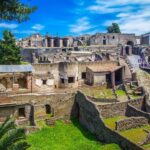
Pompeii Archaeologist-Led Tours, compared.
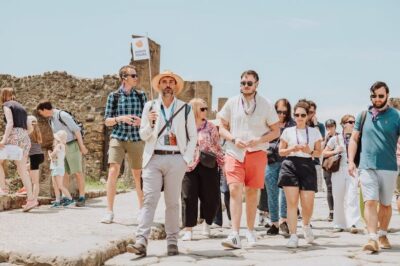 ★ 4.8Entry Ticket and Guided Tour with an ArchaeologistFrom $3519,459 reviews
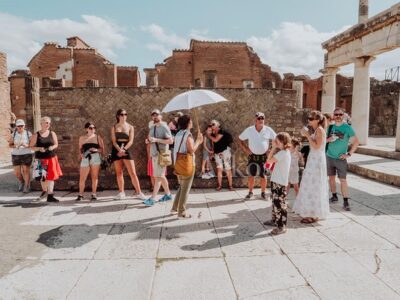 ★ 4.8Small Group Tour with an ArchaeologistFrom $4012,264 reviews
★ 5.0Pompeii Small Group Tour with an ArchaeologistFrom $356,593 reviews
★ 4.8Small Group Tour with an ArchaeologistFrom $4012,264 reviews
★ 5.0Pompeii Small Group Tour with an ArchaeologistFrom $356,593 reviews
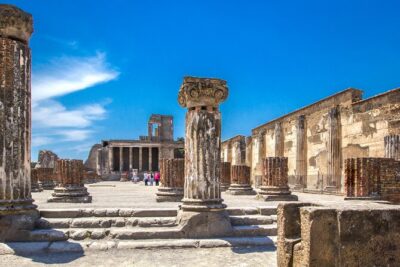 ★ 5.0Pompeii and Herculaneum Small Group Tour with an ArchaeologistFrom $771,350 reviews
 ★ 5.0Skip the Line Guided Tour of Pompeii led by an ArchaeologistFrom $95703 reviews
 ★ 4.9Exclusive Tour with Archaeologist and Entry TicketsFrom $50634 reviews
 ★ 5.0Pompeii Private Tour with an Archaeologist and Skip The Line – 3 hoursFrom $302564 reviews
 ★ 5.0Pompeii Skip-the-line Tour with Archaeologist GuideFrom $71559 reviews
Browse the lists this tour appears in