
Reviewed · POMPEII ARCHAEOLOGIST-LED TOURS
Pompeii: Exclusive Tour with Archaeologist and Entry Tickets
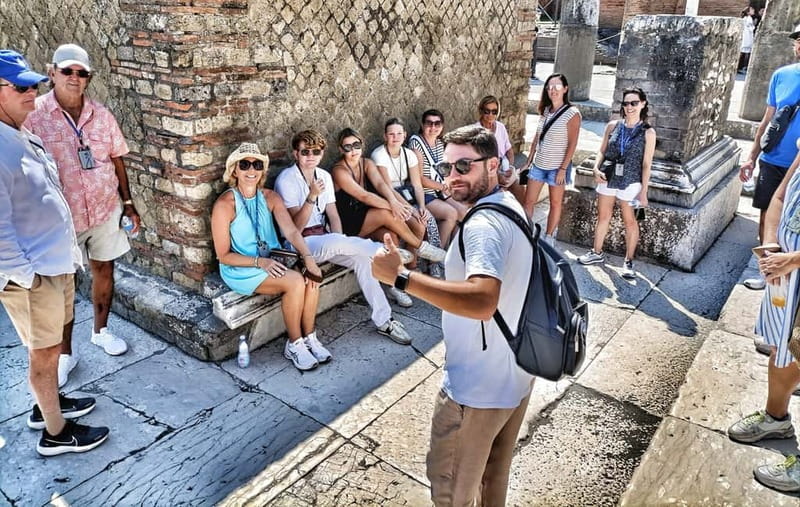
Pompeii hits different with an archaeologist. You walk in with skip-the-line tickets and a licensed guide from Porta Marina, so you spend your energy looking at the ruins, not queueing.
I also love the headset setup: you hear the story clearly while your small group moves at a smart pace through Pompeii’s big highlights—Forum spaces, temples, and painted homes.
The only catch is the 2-hour pace: Pompeii is huge, so if you want a slower wander, plan extra time after the tour.
In This Review
- Key things that make this tour worth your time
- Getting In Fast at Porta Marina (and finding your guide)
- Two Hours in Pompeii: how the route really works
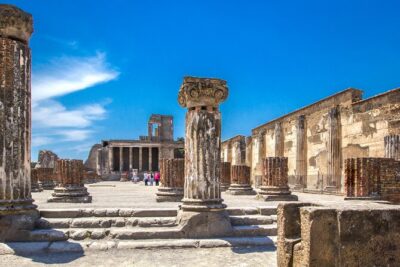
- Basilica and Foro Civile di Pompei: the city’s civic heartbeat
- Temples of Jupiter, Venus, and Apollo: gods you could see daily
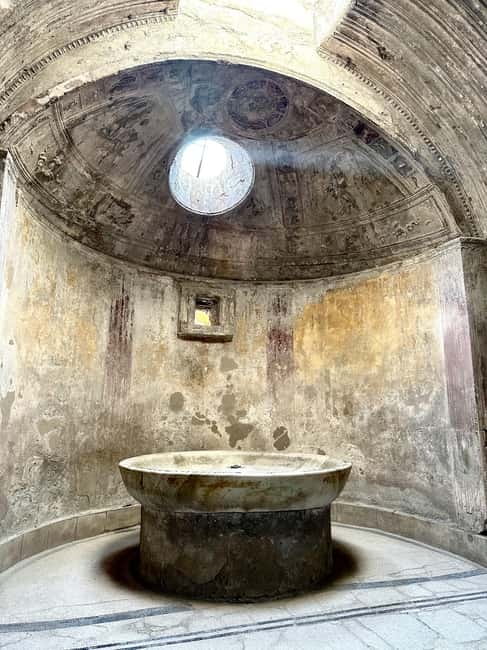
- Forum Baths and the everyday body-work of Roman life
- Macellum market and plaster casts: the human story in a harsh light
- Houses of the Tragic Poet, the Vettii, and the Faun: art and status in plain sight
- Lupanare and the Theatre District: entertainment and human contradictions
- End point near Piazza Esedra: what to do after your tour
- What the $50 price gets you (and why it’s not just about the ticket)
- Who this Pompeii VIP tour suits best
- A note on guides: you might get a star like Livio, Antonio, or Ricardo
- Should you book this Pompeii VIP archaeologist tour?
- FAQ
- How long is the Pompeii VIP archaeologist tour?
- Where do I meet the guide?
- Are entry tickets included or do I need to buy them separately?
- Is it a small group or can I book privately?
- What languages are offered?
- What should I bring to Pompeii?
- Is the tour wheelchair accessible?
Key things that make this tour worth your time
- Skip-the-line entry with an admission Express ticket so you can start seeing Pompeii fast.
- Licensed archaeologist-style guiding with site-based perspective, not just a script.
- Headsets included, which matters a lot in a loud, crowded ruin.
- A tight route through major anchors like the Forum, baths, Macellum, and standout houses.
- Human stories via plaster casts connected to the eruption’s impact.
- Small group or private slot, so you’re not stuck in a giant herd.
Getting In Fast at Porta Marina (and finding your guide)
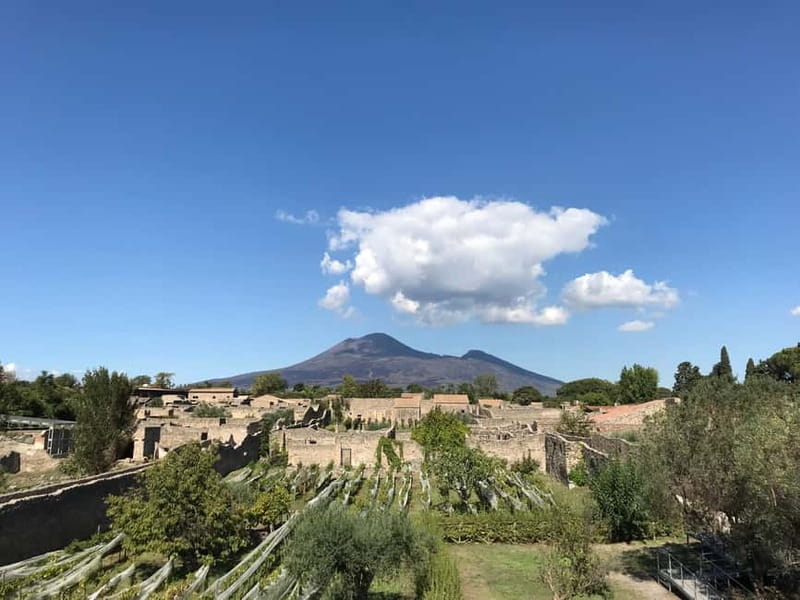
Your Pompeii day starts at Porta Marina Superiore, the original Roman gate that still frames the entrance like a doorway to another world. The meeting point is outside the Pompeii ruins by Porta Marina, right in front of the train station Pompei Scavi – Villa dei Misteri (Circumvesuviana). Your guide holds a sign that says Pompei VIP.
This matters more than it sounds. Pompeii has multiple arrival points, and getting turned around wastes daylight. If you’re using the Circumvesuviana, double-check you’re getting off at the stop named Pompei Scavi – Villa dei Misteri.
Once you’re inside, the tour’s rhythm kicks in quickly. You’re not just drifting. You’re walking with a plan, and that plan is designed for the time you have—2 hours, give or take.
More of the site walked with an archaeologist
- Pompeii: Group Tour with an Archeologist Guide
★ 4.4 · 490 reviews - Pompeii: Skip-the-Line Tickets and Tour with Archaeologist
★ 4.9 · 467 reviews - Pompeii: Skip-the-Line Guided Tour with Expert Archaeologist
★ 4.8 · 196 reviews
Two Hours in Pompeii: how the route really works
A guided tour is about triage. Pompeii has more ruins than one lifetime can absorb, so this style of tour focuses on high-signal areas—places that explain how Pompeii functioned day to day. In a short window, you’re set up to understand what you’re looking at if you continue exploring after.
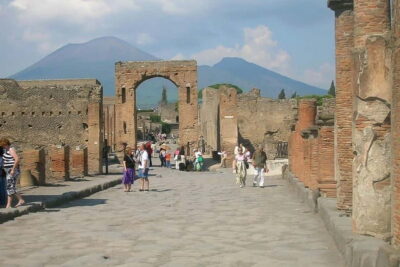
Expect a steady sequence of civic, religious, and daily-life sites. You’ll start near the gate area, then move into the Forum zone, then hit temples and baths, and finally work through markets and homes. The route ends in the broader park area near Piazza Esedra.
One practical thing: the group size is kept small, and headsets are provided. That means less shouting over other languages and fewer moments where you lose the guide because you stopped to photograph a doorway.
Basilica and Foro Civile di Pompei: the city’s civic heartbeat
The tour’s core strength is how it teaches Pompeii as a functioning city, not just a collection of pretty ruins. You’ll spend time at the Roman Forum area, including the Basilica and the Foro Civile di Pompei—spaces tied to public life, administration, and social order.
In these spots, it helps to think about what didn’t survive: the conversations, the noise, the disputes, the selling. The buildings are mostly stone now, but the layout tells you where people gathered and how decisions got made. That’s where the guide’s job is valuable. They don’t just point out columns; they connect the architecture to behavior.
What you’ll appreciate most: the Forum zone makes everything else easier to interpret. When you later stand in a market or a home, you’ll have a clearer picture of where “power” lived versus where regular people ate, shopped, and worked.
A small drawback to accept: you won’t have time to linger everywhere. The tour does a lot of ground in 2 hours, so save deep photo hunts for after the guided portion.
Temples of Jupiter, Venus, and Apollo: gods you could see daily
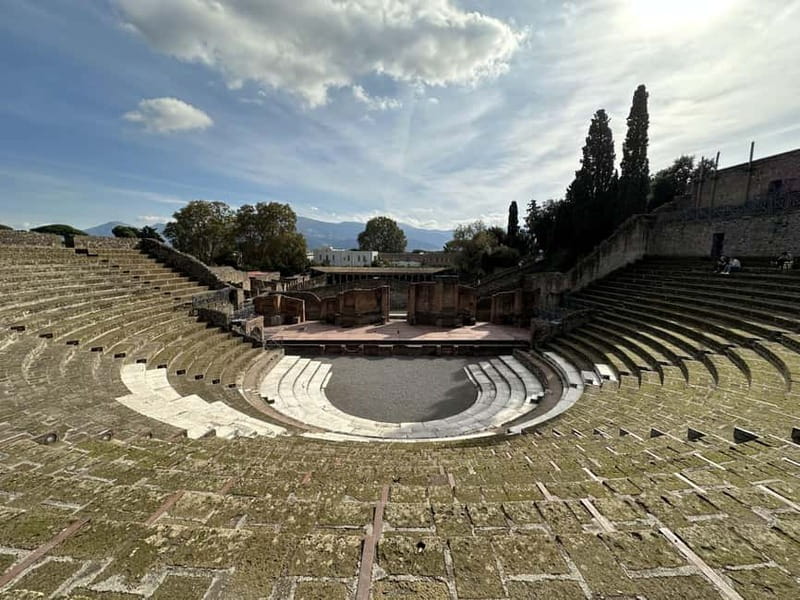
Pompeii wasn’t secular in the modern sense. Religion was part of public space, and the temples help you feel that. You’ll visit the Temple of Jupiter and the Temple of Apollo, and the tour also frames the wider theme of major cults in the city, including Venus.
The cool thing about seeing temples in Pompeii is how close they are to street life. These weren’t far-off sanctuaries. They were anchors in the urban fabric, tied to civic pride and everyday routine.
Your archaeologist-style guide usually brings these stops to life by linking the sites to what people believed and how power was displayed. You’ll also likely hear how scholars and excavators read buildings like these—where inscriptions, layout, and decoration inform interpretation.
If you’re into symbolism, this is a great section. If you’re not, it still works, because the guide keeps it practical: what it looked like, what it did, and why Pompeii built it here.
Forum Baths and the everyday body-work of Roman life
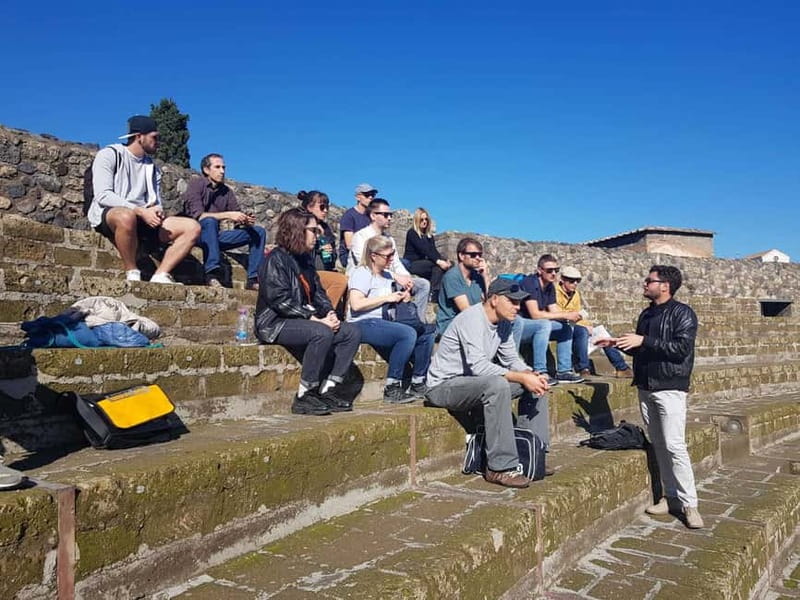
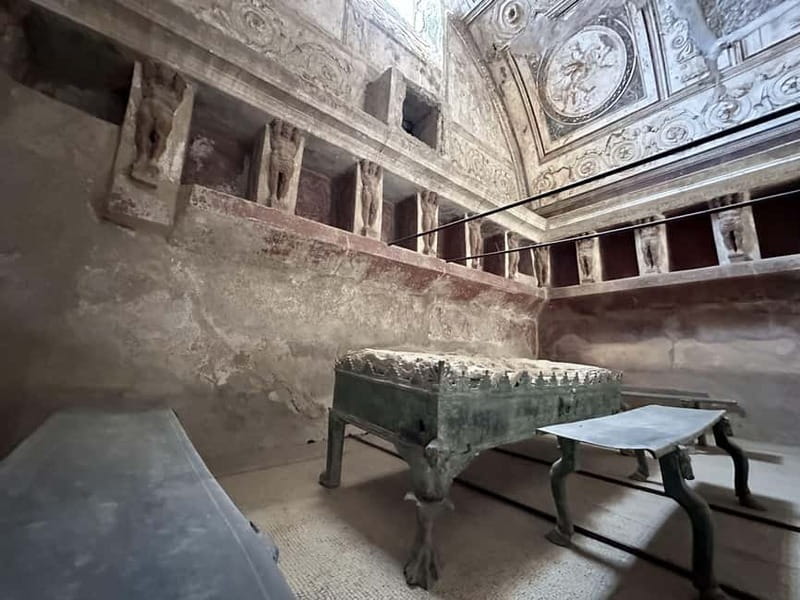
Next come the Forum Baths—another big “aha” moment. Baths in Roman culture weren’t just about hygiene. They were social hubs, places to talk business, meet friends, and spend time.
A key value of this tour format is that it treats baths as part of daily rhythm. You’re not only viewing a ruin. You’re learning how people passed hours, arranged routines, and used shared spaces.
And because you’re guided with headsets, you can stay focused on details. You’re less likely to miss small visual cues in a big open area, like where people would have moved and what spaces were more public versus more private.
One tip for you: wear shoes that handle uneven stone. Pompeii is flat until it isn’t, and you’ll be walking a lot in a short span.
Macellum market and plaster casts: the human story in a harsh light
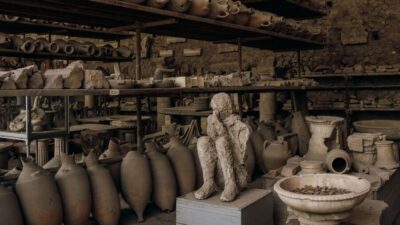
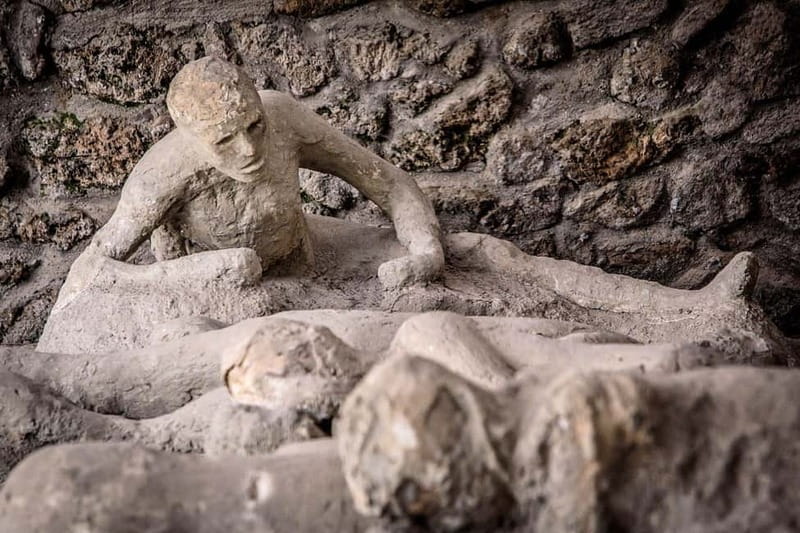
The Macellum is where Pompeii turns emotional in a way that no textbook can fully match. It’s a market setting, built for exchange—food, trade, and daily routines. And then comes the haunting part: plaster casts connected to the victims of the eruption.
Standing in this area, it’s easier to understand why Pompeii is remembered as both a triumph of Roman daily life and a catastrophe of sudden loss. The casts give faces and forms to the people behind the history.
Your guide’s role is crucial here. The best explanation isn’t sensational. It’s clear and grounded—how the casts were made, what they represent, and what the eruption did to the city in real terms. You’ll come away with a stronger sense that the city’s silence wasn’t gradual.
If you’re sensitive to tragedy: this stop is intense, but it’s also one of the most important for understanding the full story of 79 AD.
Houses of the Tragic Poet, the Vettii, and the Faun: art and status in plain sight
After markets and public life, you shift into domestic Pompeii. The tour includes the House of the Tragic Poet, the House of the Vettii, and the House of the Faun—three stops that show how homes displayed taste, status, and identity.
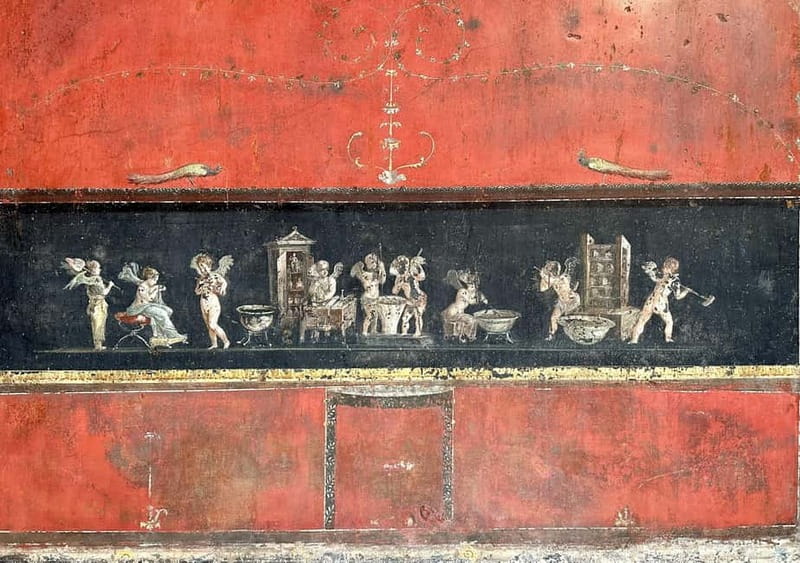
This is where the frescoes and mosaics matter. You don’t just see decoration. You see a message. In a small space, guides often point out how color, themes, and layout signaled wealth and personality. Even if you only catch a few details, having the interpretation helps you notice what you’d otherwise overlook.
The House of the Vettii is especially memorable for the way it shows domestic affluence. The House of the Faun stands out for its artistic impact and scale, and the guide will help you connect those visual choices to the people who lived there.
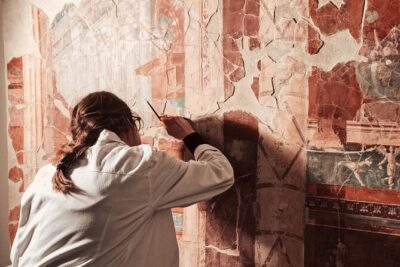
In this section, you’ll often hear about how excavations and restoration inform what we see today. Guides with experience on site tend to explain the logic behind what survives and what scholars reconstruct.
If you like “how do we know this?” this is a strong stretch. It’s history with a process, not just facts on cards.
Lupanare and the Theatre District: entertainment and human contradictions
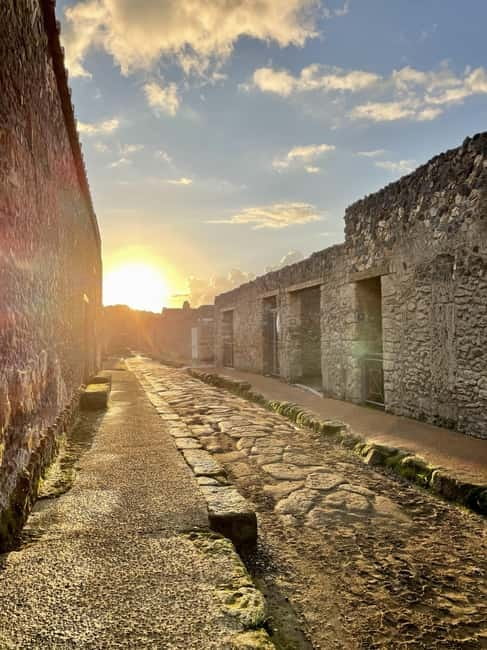
Pompeii doesn’t behave like a museum. It behaves like a city. That’s why the tour includes the Lupanare, a place tied to sex work and the realities behind Roman leisure. You also continue toward the Theatre District.
This part is a good reminder that Pompeii was not sanitized. It had commerce, pleasure, gossip, and hard edges—like any port city with trade and tourists of its era.
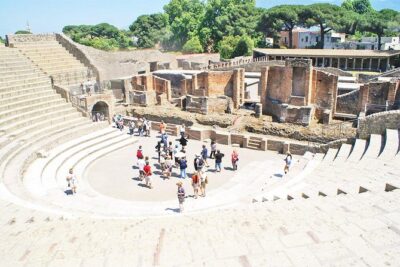
Then you’ll reach the Large Theatre. The theatre gives you a different lens on civic life. It’s entertainment, but it’s also social glue. People shared stories and spectacle in a public setting.
How the guide helps here: they keep the tone grounded, so you understand the function and context instead of getting lost in shock. You also learn what to look for in layout and surviving elements.
And yes, you’ll likely make it out with a smile too. Plenty of guides bring humor without turning the site into a joke.
End point near Piazza Esedra: what to do after your tour
You’ll finish with drop-off locations that keep you close to continued self-exploration, including Pompeii Ruins and Piazza Esedra. That ending is useful because it gives you options: you can go back over areas you want to see again, or you can drift outward into zones that need slow looking.
If you only have one shot at Pompeii, this guided structure is the best way to avoid missing the meaning behind the ruins. If you have time after, treat the guided tour as your orientation map, then spend your extra hour or two following your curiosity.
If you’re tempted to “just keep walking” immediately: pause first. Read the building layouts while they’re still fresh in your mind. It’s the fastest way to convert photos into understanding.
What the $50 price gets you (and why it’s not just about the ticket)
At $50 per person for a 2-hour tour, the value hinges on three things you actually get here:
1) Entry tickets are included, plus skip-the-line and an admission Express ticket. That saves time when lines are long.
2) You’re paying for a licensed guide and archaeologist-style explanation, which adds context to what you’re seeing.
3) You get headsets, so you can hear the story clearly instead of losing it to noise and crowding.
If you were to assemble this on your own—ticket plus guide plus a way to avoid confusion—the total usually stops being “cheap” fast. Here, it’s bundled into a short, efficient window.
Also, the option for a private slot can be a smart value if you’re traveling with family or friends who want a quieter pace. Many people choose private because questions don’t feel rushed.
Who this Pompeii VIP tour suits best
This tour fits best if you want Pompeii’s main story in one focused outing. It’s also a great choice if you like asking questions, because the guide’s explanations tend to connect excavation methods, daily life, and what survives in the ruins.
It’s especially strong for:
- Couples and small groups who want maximum clarity in 2 hours
- Families with kids who benefit from pacing and structure (the stops are iconic without being random)
- History lovers who want to understand how the city worked—civic life, markets, baths, and homes
It’s not a great fit if you have mobility limitations. The tour is listed as not suitable for wheelchair users and people with mobility impairments.
A note on guides: you might get a star like Livio, Antonio, or Ricardo
Even though you won’t control who guides your slot, it helps to know the caliber. Past guides mentioned include Livio, Raffaelle, Ivan, Antonio, Ricardo, Pierluigi, Loredana, Monica, and Antonio again (names show up often). The common thread is pace plus clear explanation.
Some guides are especially good at answering lots of questions without rushing. Others bring humor while staying professional. Either way, the headsets keep you connected so the guide’s voice stays with you.
Should you book this Pompeii VIP archaeologist tour?
If you’re planning Pompeii as a priority stop and you don’t want to spend your day in lines, I’d book it. The skip-the-line entry plus licensed archaeologist guidance plus headsets is a very practical combo for a site this large.
Choose this tour if you want a structured route that makes later wandering easier. Skip it if you’re the type who needs a long, slow walk with no schedule. Pompeii will still be there after your tour, but your guided window is brief by design.
If you do book, wear comfortable shoes, bring water, and have your ID ready. And if you’re sending your participant details for the ticketing system, send the full names exactly as requested—this avoids last-minute headaches.
FAQ
How long is the Pompeii VIP archaeologist tour?
The tour lasts about 2 hours.
Where do I meet the guide?
You meet outside Pompeii’s Porta Marina entrance, in front of the train station Pompei Scavi – Villa dei Misteri (Circumvesuviana). The guide holds a sign with the name of this tour, Pompei VIP.
Are entry tickets included or do I need to buy them separately?
Yes. Skip-the-line entry tickets and Pompeii’s admission Express ticket are included.
Is it a small group or can I book privately?
Small group tours are available, and private group options are also available.
What languages are offered?
The live tour guide is available in English, Italian, French, and Spanish.
What should I bring to Pompeii?
Bring a passport or ID card, comfortable shoes, and water.
Is the tour wheelchair accessible?
No. It is not suitable for people with mobility impairments or wheelchair users.
More Tour Reviews in Pompeii Archaeological Site
- Pompeii: Entry Ticket with Optional Audio Guide★ 4.2 · 12,360 reviews
- Pompeii: Archaeological Park Tour with Ticket on request★ 4.5 · 2,283 reviews
- Pompeii Ruins Private Tour with Optional Skip-the-Line Entry★ 4.9 · 732 reviews
- Pompeii: Group Tour with an Archeologist Guide★ 4.4 · 490 reviews
- Pompeii: Skip-the-Line Tickets and Tour with Archaeologist★ 4.9 · 467 reviews
More Tours Led by an Archaeologist
- Pompeii: Group Tour with an Archeologist Guide★ 4.4 · 490 reviews
- Pompeii: Skip-the-Line Tickets and Tour with Archaeologist★ 4.9 · 467 reviews
- Pompeii: Skip-the-Line Guided Tour with Expert Archaeologist★ 4.8 · 196 reviews
Just reviewed: more Pompeii Archaeological Site tours and day trips

Pompeii Archaeologist-Led Tours, compared.
 ★ 4.8Entry Ticket and Guided Tour with an ArchaeologistFrom $3519,459 reviews
 ★ 4.8Small Group Tour with an ArchaeologistFrom $4012,264 reviews
★ 5.0Pompeii Small Group Tour with an ArchaeologistFrom $356,593 reviews
★ 4.8Small Group Tour with an ArchaeologistFrom $4012,264 reviews
★ 5.0Pompeii Small Group Tour with an ArchaeologistFrom $356,593 reviews
 ★ 5.0Pompeii and Herculaneum Small Group Tour with an ArchaeologistFrom $771,350 reviews
 ★ 5.0Skip the Line Guided Tour of Pompeii led by an ArchaeologistFrom $95703 reviews
 ★ 5.0Pompeii Private Tour with an Archaeologist and Skip The Line – 3 hoursFrom $302564 reviews
 ★ 5.0Pompeii Skip-the-line Tour with Archaeologist GuideFrom $71559 reviews
 ★ 5.0Explore Pompeii with an ArchaeologistFrom $35511 reviews
Browse the lists this tour appears in