

Reviewed · POMPEII AUDIO GUIDE TOURS
Pompeii: Entry Ticket with Optional Audio Guide
Pompeii hits you fast. With reserved entry and an optional audio guide, you skip a lot of the usual ticket scramble and explore the ancient city at your own pace. My only caution: the audio can reference areas or buildings that are closed when you arrive.
This is one of those places where the details matter. You’ll walk preserved streets, spot mosaics in the public baths, and look into spaces like the amphitheater and frescoed Villa of the Mysteries—then you can decide how fast you move. I’d also plan for real walking, and for the fact that the audio desk and device return are very specific.
If you want an easy “show up and go” Pompeii day that doesn’t require a full guided tour, this ticket format works well. Just come with your ID ready for the audio deposit, and bring headphones that will work with the device (Bluetooth won’t).
In This Review
- Key highlights before you go
- Pompeii at your pace: what this reserved ticket really gives you
- Pompei Express vs Pompei+: choose your villa level
- Getting your voucher and locating the audio guide desk
- Where to enter first: Piazza Esedra and a smarter start
- The self-guided route through Pompeii’s top ruins
- 1) The streets preserved in volcanic ash
- 2) The market scene and everyday Roman life
- 3) Public baths and the mosaic details
- 4) House of the Faun and Hellenistic influences
- 5) The amphitheater: imagine the audience
- 6) Temples of Venus, Apollo, and Jupiter
- 7) Villa of the Mysteries and frescoes
- 8) The “petrified bodies” area (plan for location and time)
- A reality check: not every building is always open
- How long to plan: one day can mean a lot of ground
- Audio guide reality check: orientation is great, but it has quirks
- Comfort and practical tips that make Pompeii easier
- Price and value: is $26 good for Pompeii?
- Who should book this Pompeii ticket with optional audio
- Should you book this Pompeii ticket with optional audio?
- FAQ
- How long is this Pompeii ticket valid?
- What’s the difference between Pompei Express and Pompei+?
- What’s the last entry time for the Pompei+ option?
- Do I get an audio guide with the ticket?
- Where do I pick up and return the audio guide?
- What headphones do I need?
- Do I need ID for the audio guide?
- Is luggage storage available?
- What do I need to bring for entry?
- Is Pompeii wheelchair accessible, and are there free entry options?
Key highlights before you go

- Two ticket options (Pompei Express vs Pompei+) so you can match your budget to the villas you want
- Audio guide tied to a specific desk in Porta Marina Superiore, with pickup and return rules
- Free luggage storage so you can stroll without juggling bags
- Audio as both story and orientation for a site this big and spread out
- Must-see stops like the amphitheater, public baths mosaics, House of the Faun, and the big Venus/Apollo/Jupiter temple area
Pompeii at your pace: what this reserved ticket really gives you

This entry ticket is built for independence. You’re not stuck in a group schedule. You show your reserved access, then move through Pompeii’s ruins when you feel ready—whether that means a slow morning with photos or a focused sprint to the big highlights.
What I like most is the combo of reserved entry plus the optional audio guide. Pompeii is famous, so lines can be long for people who arrive without prebooking. Having your voucher handled in advance usually keeps your day from starting with wasted time.
The other thing that helps a lot is pacing control. Pompeii’s layout can make you feel like you’re constantly moving, even when you stop. With an audio guide you can slow down where you care and keep moving when you’re just trying to cover ground.
Not decided yet? A few more Pompeii Archaeological Site tours worth weighing before you book.
- Pompeii: Archaeological Park Tour with Ticket on request
★ 4.5 · 2,283 reviews - Pompeii Ruins Private Tour with Optional Skip-the-Line Entry
★ 4.9 · 732 reviews - Pompeii: Exclusive Tour with Archaeologist and Entry Tickets
★ 4.9 · 634 reviews
Pompei Express vs Pompei+: choose your villa level
The ticket splits into two routes:
Pompei Express
This covers the ancient city of Pompeii only. It does not include the suburban villas. If you’re mainly interested in the densest core—streets, public buildings, theaters, baths, and the main archaeological highlights—Express is often the simpler pick.
Pompei+
This includes the ancient city plus suburban villa sites: Villa of the Mysteries, Villa of Diomedes, and Villa Regina in Boscoreale, along with the Antiquarium. If you care about frescoes and domestic life beyond the town center, Pompei+ is where the ticket starts to feel more “worth it.”
One practical note: for Pompei+ there’s a clear last entry time depending on season—3:30 p.m. in winter (Nov 1–Mar 31) and 5:30 p.m. in summer (Apr 1–Oct 31). If you’re planning a late start, Pompei+ can squeeze your plan.
Getting your voucher and locating the audio guide desk
The “smooth” part of this experience is that you can get your voucher on your phone, then use it at entry. You’ll show your ticket at the door and begin your exploration without needing a traditional guided group.
The part that needs your attention is the audio guide pickup and return. Audio guides can only be picked up and returned at the park’s official audio guide desk in Porta Marina Superiore. If you add the physical audio device, you’ll need a valid ID as a deposit. Also, headphones aren’t included, and Bluetooth headphones don’t work with the audio device—so plan to bring compatible headphones.
A detail that helps: the audio desk is near the ticket office area in Porta Marina Superiore. People often try to figure it out as they enter; it’s better to aim for it right away so you can start walking with the map and context from the beginning.
Where to enter first: Piazza Esedra and a smarter start

Once you have your audio guide sorted, your first moves can save you time. A top tip I’d follow: get your bearings early and head toward Piazza Esedra, where there’s a kiosk for e-tickets/vouchers. The point is to skip unnecessary back-and-forth and to avoid getting pulled into the wrong queue.
This matters because Pompeii is big. If you waste your first 30–45 minutes sorting logistics, you’ll feel it later when you still want to see the amphitheater, the baths mosaics, and the villa areas.
Also, be ready for signposting to feel a bit chaotic at first. One common frustration is unclear meeting points and inconsistent guidance on where to go first. Go in with a calm mindset: pick your route, follow signs for the entry you were directed to, then locate Porta Marina Superiore for the audio desk.
The self-guided route through Pompeii’s top ruins

This ticket doesn’t force a strict itinerary. That’s the benefit—and also the challenge. Pompeii is huge, and if you wander without a plan you can miss key areas. Here are the highlights you can reasonably aim for in a single day, using the audio guide to connect the dots.
More tickets to the site



1) The streets preserved in volcanic ash
The big emotional hook of Pompeii is walking down lanes that were preserved by the eruption. You’re seeing a city frozen mid-life, not reconstructed into something modern-looking and clean. The audio context helps you interpret what you’re standing in front of—shops, homes, civic areas—so it doesn’t feel like you’re just looking at stones.
2) The market scene and everyday Roman life
One of the most vivid parts is imagining lunch and daily errands in the marketplace. Pompeii’s public spaces make everyday routines feel real. I love that this ticket lets you linger in the places that trigger your curiosity instead of moving on a schedule.
3) Public baths and the mosaic details
If you like visual surfaces—tiles, patterns, floors—make time for the public baths area. The mosaics are a standout. Without audio (or without reading a lot of signage), it’s easy to miss how central the baths were to Roman social life.
4) House of the Faun and Hellenistic influences
You may see areas tied to Hellenistic art and styles, including the House of the Faun. It’s one of those stops where the audio helps you “read” the building layout and understand why it mattered.
5) The amphitheater: imagine the audience
Pompeii’s amphitheater gives you a natural “stand here, look around” moment. Even without a formal tour, you can use the audio to picture performances and crowds. If your day is short, this is a smart highlight to include because it’s visually striking and emotionally easy to picture.
6) Temples of Venus, Apollo, and Jupiter
The audio guide route includes temple areas dedicated to major gods—Venus, Apollo, and Jupiter. These stops turn the walk from sightseeing into something like religious geography: where the important spaces were and how they shaped city life.
7) Villa of the Mysteries and frescoes
If you choose Pompei+, prioritize Villa of the Mysteries. Frescoes are the key draw here, and the villa’s artwork is why many people spend extra for Pompei+. Even if you’re not an art expert, it’s a moment where the whole city starts to feel like a place people decorated and cared about.
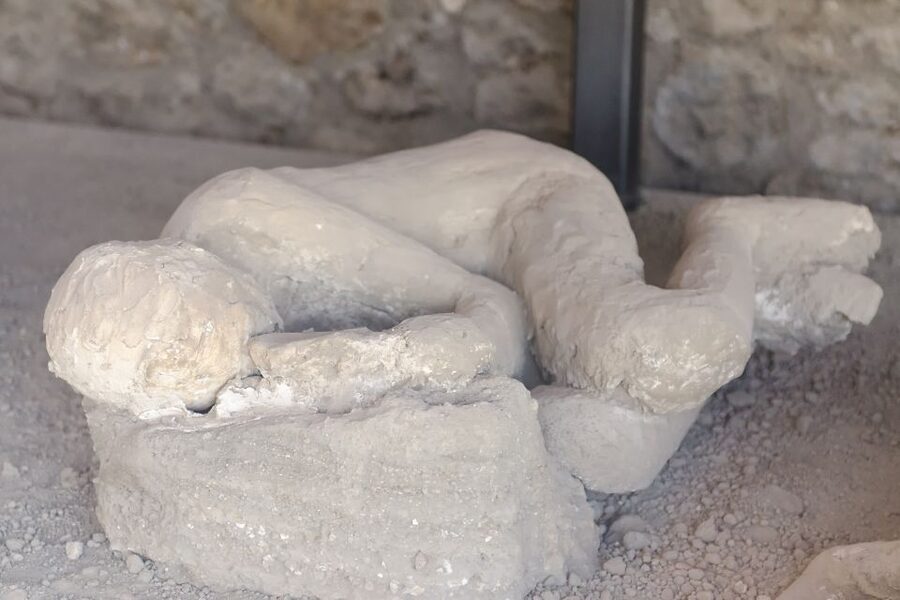
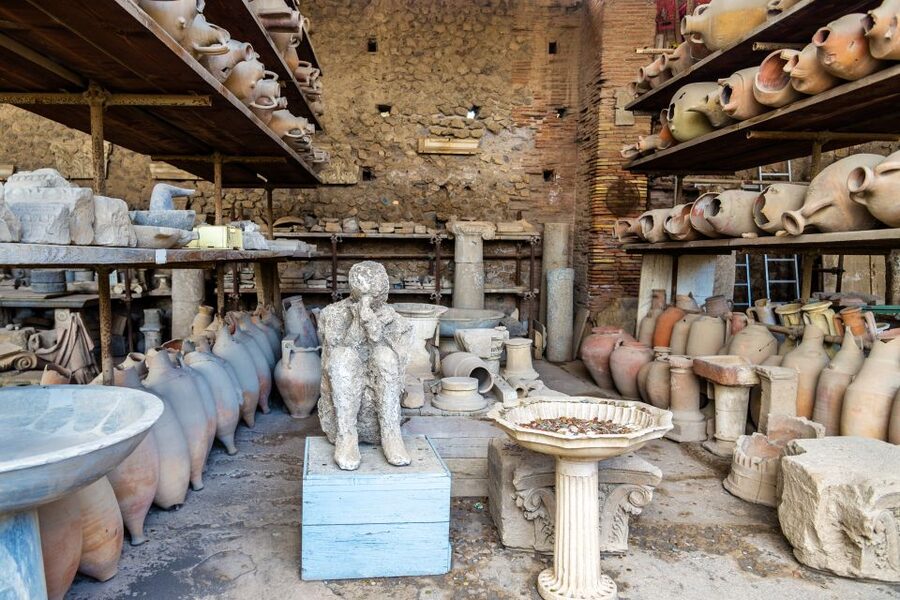
8) The “petrified bodies” area (plan for location and time)
The petrified remains are a well-known stop. One heads-up from real-world use: this area can be at the far end of the site, so it might feel like a long walk if you’re trying to conserve energy for later in the day. Use your audio map early so you’re not unintentionally saving it for a time when you’re tired or running behind.
A reality check: not every building is always open
Not every structure connected to the audio guide will necessarily be accessible on the day you visit. Sometimes you may hear explanations for buildings you can’t actually see. It’s not a deal-breaker, but it is a reason to keep expectations flexible and to treat the audio as guidance, not a guarantee of perfect stop-by-stop viewing.
How long to plan: one day can mean a lot of ground
The ticket is valid for 1 day, with starting times that vary by availability. With Pompeii, your day is really about timing your “routes,” not clocking an exact number of hours.
If you go earlier, you’ll usually feel less rushed. If you go later, you might have to choose between finishing the core ancient city or adding suburban villa time (especially for Pompei+ with its seasonal last entry).
One strong strategy: decide your must-do list before you enter. For many first-timers, that list includes the amphitheater, the baths mosaics, and at least one villa highlight (Villa of the Mysteries if you’re on Pompei+). Once you hit those, let the rest become pleasantly spontaneous.
Audio guide reality check: orientation is great, but it has quirks

The official audio option is designed to be both storytelling and navigation. In practice, it can do a great job of giving you context and helping you orient as you move around the site.
But here’s the honest side: the audio system can be a little confusing at first, especially if you’re trying to learn buttons while standing in a huge space. There are also times when the audio doesn’t seem to match your exact location perfectly. When that happens, don’t panic—use the audio guide map to re-find your position and continue.
Also remember:
- Collect and return the physical device at the Porta Marina Superiore audio guide desk
- You’ll need an ID deposit to rent the device
- Bluetooth headphones don’t work with the device
- Headphones aren’t included with the ticket
If you’re traveling with kids, time your audio use. Kids often want quick “what is this” stories more than long explanations, so you may want shorter bursts and more breaks.
Comfort and practical tips that make Pompeii easier

Pompeii is not a sit-and-watch attraction. You’re going to walk. Even if you’re only doing the ancient city, you should treat it like a full day of city hiking on uneven ground.
Here’s what helps:
- Wear comfortable shoes from the start. If you’re thinking about foot comfort, you’ll enjoy the ruins more.
- Bring water. It’s a lot of walking under open sky.
- Use the map often. The site is laid out for self-navigation, and it helps you strike off what you’ve done and decide what’s next.
- Take advantage of free luggage storage so you’re not lugging bags while you explore.
- Toilets are available around the site, but it’s still smart to check locations using the map as you go.
Wheelchair access is listed as available, so if you need it, plan around what routes are accessible on the day.
Price and value: is $26 good for Pompeii?

At $26 per person, this ticket can be good value, mainly because Pompeii is one of those “you’ll pay with time or money” attractions. Prebooking helps reduce the queue stress that can eat part of your day, and the audio guide option can transform scattered ruins into a connected experience.
Where the value shifts is in the choice between Express and Plus:
- If you’re trying to keep costs down, Pompei Express can be a solid way to see the core site without paying for suburban villa additions.
- If you’re the type who wants the standout fresco and domestic-life villas, Pompei+ can feel like a better deal because it directly includes Villa of the Mysteries, Villa of Diomedes, and Villa Regina plus the Antiquarium.
Also consider the inclusions around audio. Digital audio is available, and if you select the physical official audio guide, you get the full experience in the format the site supports (with the headphones rule and device pickup/return rules). The “value” is less about paying for a device and more about paying for clarity—knowing what you’re looking at instead of guessing.
Who should book this Pompeii ticket with optional audio
This is a good fit if you want:
- A self-paced Pompeii day with the option to enrich it with audio
- A practical way to avoid ticket-line stress at a top-demand UNESCO site
- Enough structure to help you hit major highlights without hiring a full guided tour
I’d especially recommend it for:
- First-timers who are excited but don’t want to feel lost
- Pairs who like independence
- Families who can handle audio in shorter bursts (and appreciate lots of photo moments)
If you hate audio or need heavy structure every minute, a guided tour might serve you better. But if you’re happy to roam and you like learning as you go, this format is a strong match.
Should you book this Pompeii ticket with optional audio?
Yes, I’d book it—if you go in with a plan and respect the audio setup details. Reserved entry helps your day start smoothly, and the audio guide option can make the ruins feel understandable instead of random.
Pick Pompei Express if your top priority is the ancient city core and you want to keep things simple. Choose Pompei+ if you care about the suburban villas, especially the fresco-focused Villa of the Mysteries, and you’re confident you can manage the last-entry timing.
If you do one thing to maximize your day: get the audio guide sorted at Porta Marina Superiore quickly, bring compatible headphones, and don’t leave your must-see stops to the end of the day.
FAQ
How long is this Pompeii ticket valid?
The reserved entry ticket is valid for 1 day. You’ll check availability to see starting times.
What’s the difference between Pompei Express and Pompei+?
Pompei Express includes the ancient city of Pompeii only. Pompei+ includes the ancient city plus suburban villas: Villa of the Mysteries, Villa of Diomedes, and Villa Regina in Boscoreale with Antiquarium. See Sicily Guide for the Sicily side of it.
What’s the last entry time for the Pompei+ option?
For Pompei+, the last entry time is 3:30 p.m. in winter (Nov 1–Mar 31) and 5:30 p.m. in summer (Apr 1–Oct 31).
Do I get an audio guide with the ticket?
You can add an optional audio guide. Included options can include a physical audio guide (if selected) and a digital audio guide.
Where do I pick up and return the audio guide?
Audio guides can only be picked up and returned at the park’s official audio guide desk in Porta Marina Superiore.
What headphones do I need?
Headphones are not included. Bluetooth headphones don’t work with the audio guide device.
Do I need ID for the audio guide?
Yes. A valid ID is required as a deposit in order to rent the audio guide device.
Is luggage storage available?
Yes. There is free luggage storage.
What do I need to bring for entry?
Bring a passport or ID card.
Is Pompeii wheelchair accessible, and are there free entry options?
Wheelchair accessible is listed. Also, entrance fees for Pompeii are free for EU citizens under 18, and for disabled citizens and their relatives.
More Tickets in Pompeii Archaeological Site
- Pompeii: Archaeological Park Tour with Ticket on request★ 4.5 · 2,283 reviews
- Pompeii: Exclusive Tour with Archaeologist and Entry Tickets★ 4.9 · 634 reviews
- Pompeii: Skip-the-Line Tickets and Tour with Archaeologist★ 4.9 · 467 reviews
- Pompei: Pompeii and Vesuvius Combo with Transfer and Tickets★ 3.9 · 130 reviews
- Pompeii: Skip-the-Line Ticket and Virtual Museum★ 4.5 · 66 reviews
More Tour Reviews in Pompeii Archaeological Site
- Pompeii: Archaeological Park Tour with Ticket on request★ 4.5 · 2,283 reviews
- Pompeii Ruins Private Tour with Optional Skip-the-Line Entry★ 4.9 · 732 reviews
- Pompeii: Exclusive Tour with Archaeologist and Entry Tickets★ 4.9 · 634 reviews
- Pompeii: Group Tour with an Archeologist Guide★ 4.4 · 490 reviews
- Pompeii: Skip-the-Line Tickets and Tour with Archaeologist★ 4.9 · 467 reviews
Just reviewed: more Pompeii Archaeological Site tours and day trips






Pompeii Audio Guide Tours, compared.
 ★ 4.0Skip-the-Line Entrance Ticket with Audio GuideFrom $392,509 reviews
 ★ 4.1Skip-the-Line Entry Ticket with Digital Guide AppFrom $22770 reviews
 ★ 4.1Ercolano: Herculaneum Entry Ticket with Optional Audio GuideFrom $21581 reviews
 ★ 4.3Herculaneum: Skip The Line Entrance ticket + AudioguideFrom $35266 reviews
 ★ 3.8Skip-the-Line Entry & AudioguideFrom $53225 reviews
 ★ 3.5Skip the line ticket (art) + audioguide + mapFrom $44155 reviews
 ★ 4.0Skip-the-Line Ticket with Audio Guide and MapFrom $44117 reviews
 ★ 3.2Vesuvio Skip The Line Ticket With Digital AudioguideFrom $2991 reviews
Browse the lists this tour appears in