
Reviewed · POMPEII GUIDED RUINS WALKS
Pompeii 3-Hour Walking Tour
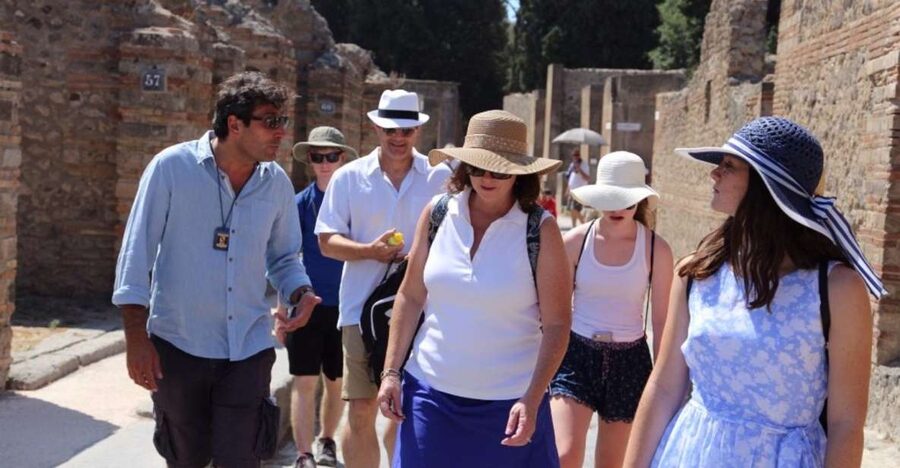
Pompeii hits you in the first five minutes. You’re walking through a Roman city fossilized by the eruption of Vesuvius in 79 A.D., then brought back to the world after its rediscovery in the 18th century. I like that this is a private, guided route with time to understand what you’re seeing, not just where to stand for photos.
What I love most is the focus on both public and private life. You’ll move through the Forum and civic buildings, then cut into everyday spaces like bath areas and elite homes, so Pompeii feels like a place people actually lived in. I also like the inclusion of the plaster casts of humans and animals, because it turns the disaster from a fact into a human-scale moment.
One possible drawback: three hours at Pompeii is fast. If you want lots of museum-style, slow reading or you’re sensitive to crowds and walking, you may feel a little rushed even with a private guide.
Key moments I’d plan around
- Private guidance with an archaeologist-style perspective, so stops connect into a story
- Forum, temples, baths, and theaters to show daily life across social classes
- Lupanar (brothel) plus street-level Pompeii details, which add honesty to the picture
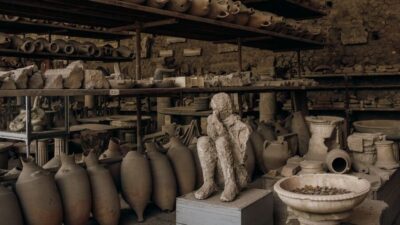
- Plaster casts of humans and animals that make the eruption more than a timeline
- Skip-the-ticket-line entry helps you start fast in a site that rewards momentum
In This Review
- Pompeii in 3 Hours: What This Private Walk Is Really Good At
- Meeting at Via Villa dei Misteri: Get Positioned Before You Enter
- Porta Marina to the Main Site: Trading, Travel, and the City’s Pulse
- Forum and Basilica: Where Roman Public Life Happened
- Temples and Theaters: Apollo, Civic Belief, and Roman Entertainment
- Elite Houses: Menander, Faun, Vettii, and the Private Side of Pompeii
- Baths, Street Food, and Daily Routine: Sarno Baths and Beyond
- Lupanar and the Plaster Casts: Facing the Hard Parts Without Getting Lost
- Theatres to Amphitheater: Finishing With Entertainment and Crowd Energy
- Price and Value: What You’re Paying For (and What You’re Not)
- What to Bring and How to Handle Weather at Pompeii
- Who This Tour Fits Best
- Should You Book This Pompeii 3-Hour Private Walking Tour?
- FAQ
- How long is the Pompeii 3-hour walking tour?
- Is this tour private, and what languages are available?
- Where is the meeting point?
- What’s included, and do I skip the ticket line?
- What should I bring, and what isn’t allowed?
- Does the tour run in rain, and is it wheelchair accessible?
Pompeii in 3 Hours: What This Private Walk Is Really Good At
Pompeii is huge, and it can feel like sensory overload if you go in cold. This tour’s real advantage is that it gives you a human pace: a focused circuit, key buildings, and enough context to understand why each place mattered in Roman life.
The timing is tight on purpose. In about three hours you’ll hit the classic anchors of the site—public spaces like the Forum and basilica, plus private spaces like notable houses. That’s valuable because Pompeii works best when you connect the dots: who ruled, who performed, who shopped, who bathed, and who lived behind decorative walls.
It’s also a good fit for people who want an expert voice without paying for a full day. If you’ve only got a half-day in Campania, you’ll still leave with the main shape of Pompeii—and a way to keep understanding the rest on your own.
Meeting at Via Villa dei Misteri: Get Positioned Before You Enter
Your start depends on the option you book, with two possible addresses on Via Villa dei Misteri (2 or 3). The tour ends back at the meeting point too, which keeps things simple when you’re planning the rest of your day around trains, buses, or a hotel in the area.
Why this matters: Pompeii is easier when you’re not trying to figure out the entrance, the first orientation point, and the quickest path to the first big sight. Starting at the right spot means you spend less time “finding your feet” and more time listening to the guide.
Also note the practical rules. No backpacks and no pets (assistance dogs are allowed). Plan to bring only what you need—passport or ID—so you don’t get stuck dealing with storage or restrictions at the start.
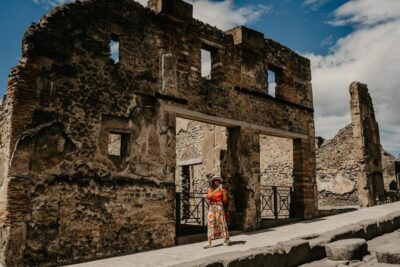
Keep walking the excavated streets
- Pompeii 3-Hour Walking Tour
★ 5.0 · 8 reviews
Porta Marina to the Main Site: Trading, Travel, and the City’s Pulse
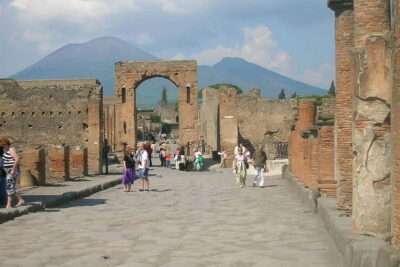
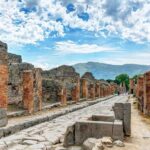
One of your first major stops is Porta Marina, also referred to as Marina Gate. This is the kind of location that helps you understand Pompeii as a working port-adjacent city rather than a single dramatic ruin. Gates like this connect movement and commerce: people traveled in, goods arrived, and daily life followed routines that made the city feel alive.
Right after that, you step into the Pompeii Archaeological Site portion of the walk, where the guide sets the foundation. The core story you’ll hear is the eruption of Vesuvius in 79 A.D., when Pompeii was buried under ash and molten materials. You’ll also learn how the site was rediscovered centuries later in the 18th century. That timeline matters because it explains why Pompeii looks the way it does today: it wasn’t just destroyed, it was preserved—then uncovered.
If you’re the type who gets impatient at long introductions, this is still worth your attention. A good guide here helps you read the buildings as evidence, not as random stone outlines.
Forum and Basilica: Where Roman Public Life Happened
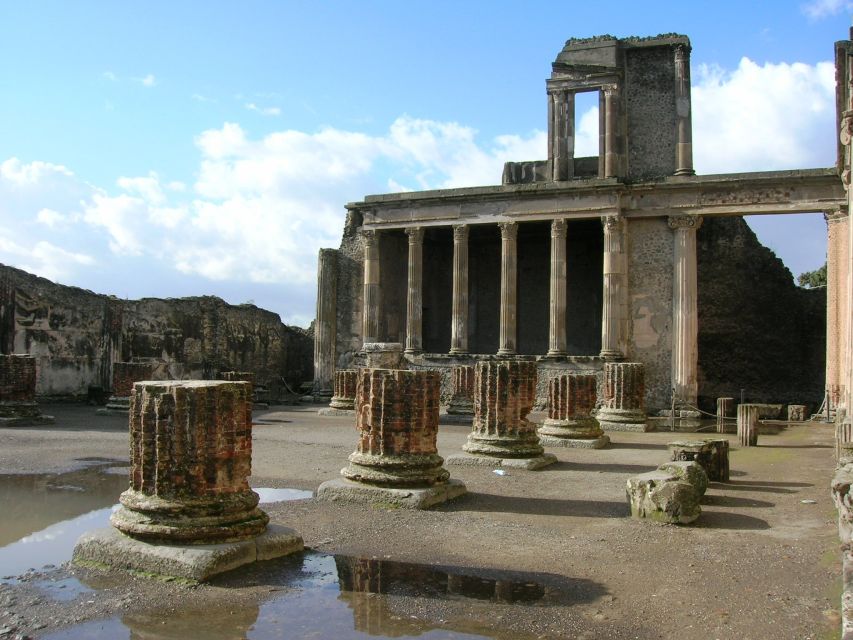
The heart of the route is civic Pompeii. You’ll visit the Foro Civile di Pompei (civic forum area) and the Basilica, often understood as the court-house and administrative center.
This is where the city becomes political. The Forum is where people saw authority up close and where public business played out. The basilica adds another layer: law, disputes, administration—things that shape daily life even for ordinary people.
Here’s the practical benefit of a guided approach: Pompeii’s stone walls can look similar unless someone explains the function. With the Forum and basilica in your walk, you’ll understand what “public space” meant in Roman culture—less about a single monument and more about routines and institutions.
Temples and Theaters: Apollo, Civic Belief, and Roman Entertainment
Your tour includes key religious and cultural stops. You’ll see Temple of Apollo, plus other major temples highlighted in the route such as those dedicated to Jupiter and Venus. Even if you don’t know Roman religion ahead of time, these stops are useful because they show how belief connected to public identity.
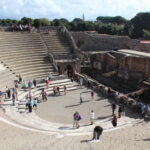
Then you move toward performance and leisure spaces, including the Large Theatre (Teatro Grande) and the Odeion (small theater). Pompeii isn’t just a “disaster story.” It’s a place built for gatherings—audiences, crowds, speeches, and entertainments that kept the city socially glued together.
Why I think this mix works: temples explain the city’s worldview, while theaters explain the city’s downtime. Together, they give you a balanced Roman day—from worship and ceremony to music, acting, and public viewing.
Elite Houses: Menander, Faun, Vettii, and the Private Side of Pompeii
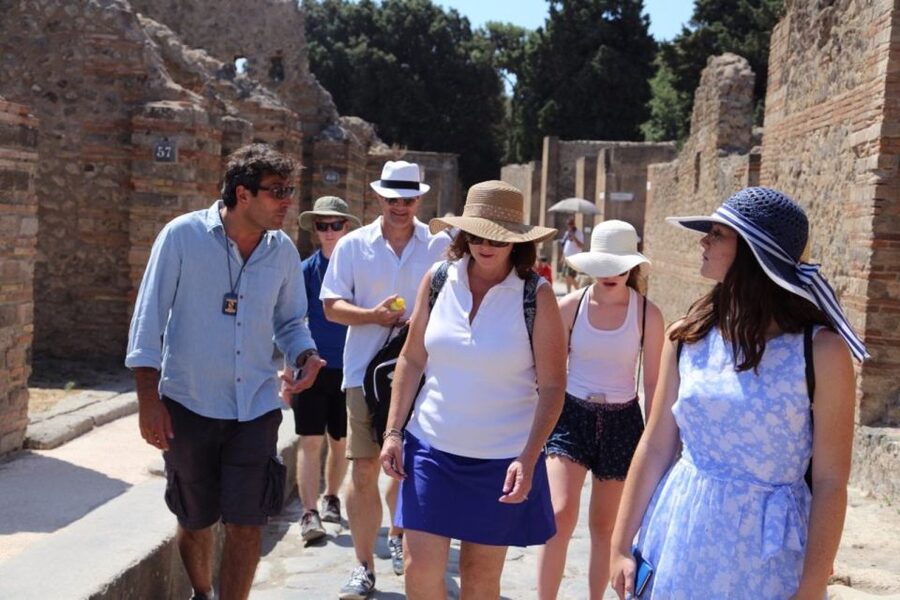
The route doesn’t stay only in public buildings. You’ll also visit multiple houses—perfect for understanding how status and wealth shaped daily life.
Stops include the House of Menander, the House of the Faun, and the House of the Vettii. You may also pass by references to other notable residences in the route such as the House of Tragic Poet. These house stops matter because Pompeii’s power imbalance is visible in architecture and layout. You can literally see how elite homes were organized differently from the shared public spaces.
A good private guide helps you notice the clues: how rooms connect, where reception spaces likely were, and how homes were designed to show taste and position. Without guidance, it’s easy to treat these sites as “pretty ruins.” With guidance, they become evidence of routine—where people slept, met, ate, and displayed culture.
One quick consideration: houses can be visually crowded. If you’re traveling during peak times, you’ll get more from the tour if you lean into the guide’s pacing and keep your phone down for a few minutes at each stop.
Baths, Street Food, and Daily Routine: Sarno Baths and Beyond
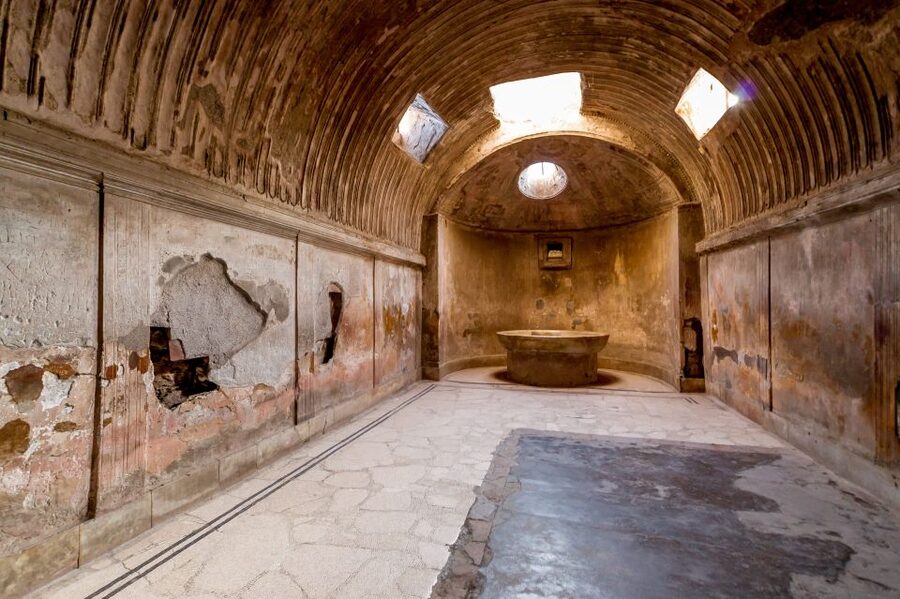
You’ll visit Sarno Baths, also described as Forum Baths in the route. Baths are a big deal in Roman life because they were social and functional at the same time. You learn how these spaces worked as places to meet, relax, and care for the body.
The tour also points you to everyday commerce and routines, with stops connected to places like a bakery and a termopolium (a Roman-style snack bar). Even if you only catch fragments of layout, it’s the context that matters. Roman cities weren’t just temples and government. They were also food systems, quick meals, and the small transactions that kept the city moving.
If you enjoy “how real people lived” more than big monuments, this portion is where the tour pays off. You’ll leave with a better sense of a Roman day than most short Pompeii visits provide.
Lupanar and the Plaster Casts: Facing the Hard Parts Without Getting Lost
This is the section that usually leaves a strong impression. You’ll visit the Lupanar (the old brothel), which adds a blunt, practical look at how Pompeii’s economy and social life worked.
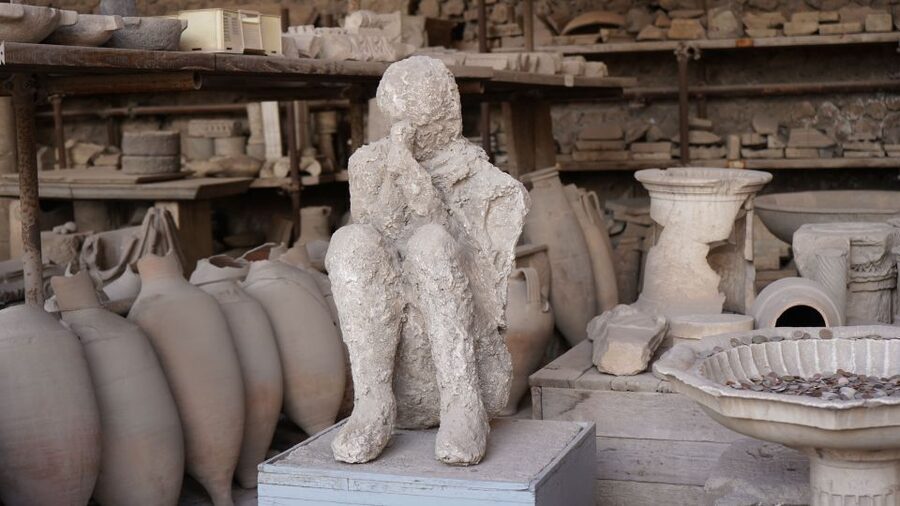
Then comes one of the tour’s most powerful components: plaster casts of humans and animals at the time of their death. These casts don’t just show that tragedy happened. They help you understand what it means when a city is suddenly overwhelmed—how people froze in place, how animals reacted, and how fast history can change.
It’s also where a skilled guide helps you stay grounded. The material can feel heavy, but the guide’s job is to connect it back to the broader story: a city with routines, cut off by catastrophe, preserved in motion.
For some people, this stop can feel too intense for the middle of the day. If you’re sensitive, plan to take a slower breath here—stay aware that you’re looking at evidence of real loss.
Theatres to Amphitheater: Finishing With Entertainment and Crowd Energy

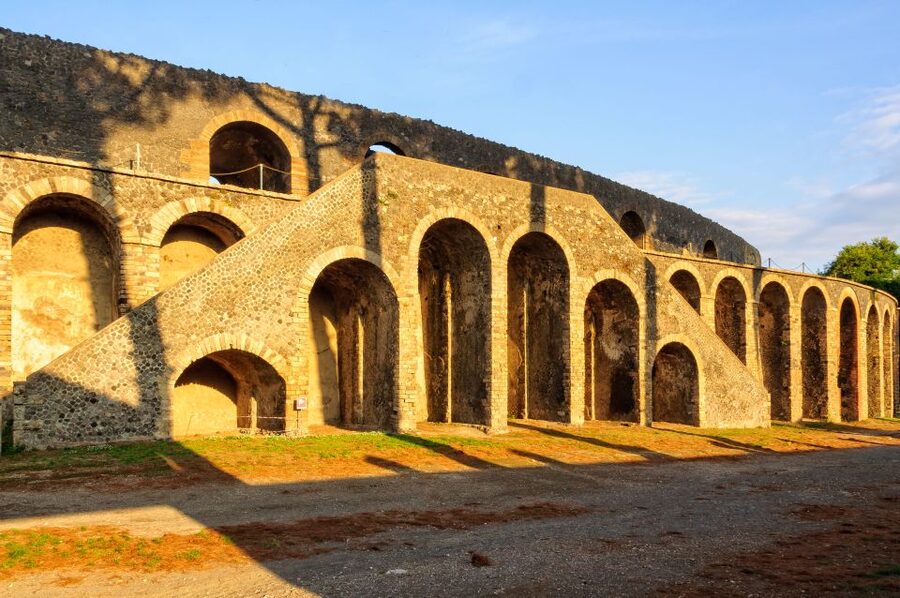
Your walk continues to major performance and crowd spaces. In addition to the Large Theatre and Odeion, you’ll also visit the amphitheater.
This ending theme matters because it closes the “daily life loop.” Roman entertainment wasn’t rare. It was a shared social event. When you stand in these spaces, it’s easier to imagine Pompeii’s rhythms: ceremonies leading to gatherings, gatherings turning into performances, and performances drawing the whole city together.
From a pacing standpoint, it’s a good way to cap the tour because it gives you a final sense of scale. You’ve already learned about public institutions and religion, so the amphitheater adds the last piece: how Pompeii made time feel collective.
Price and Value: What You’re Paying For (and What You’re Not)
The price is listed as $508.15 per group (up to 1), for a private 3-hour walk. That sounds steep until you understand what’s included and what private guidance really buys you here.
Inclusion highlights:
- Private guidance
- Pompeii admission fees
- Skip the ticket line
What’s not included:
- Meals and transportation
Here’s the practical way to judge the value. If you’re splitting a guide with a larger party, private can be a bargain. If it’s just you, the value comes from how much you gain per hour: interpretation, a focused route, and time saved at the ticket line. Pompeii rewards understanding, and understanding takes a guide’s effort.
If you already have strong Roman history background and you love reading on your own, you might prefer self-guided audio. But if you want Pompeii to click—fast—this private structure is usually worth it.
What to Bring and How to Handle Weather at Pompeii
This tour runs in any weather. Rain happens, and Pompeii stone doesn’t care.
You’re advised to bring a small umbrella and/or a raincoat in rainy conditions. Since umbrellas are listed as not allowed, a raincoat is the safer choice for staying compliant. Wear footwear that can handle uneven ground. Bring your passport or ID card. Keep your bag minimal because backpacks aren’t allowed.
Also, plan your phone use. You’ll be moving from stop to stop, and the guide’s explanations land best when you’re actually looking at what they’re describing.
Who This Tour Fits Best
This Pompeii 3-hour walking tour is a strong match if:
- You want a private guide and a structured route through the essentials
- You care about both public life (Forum, basilica, temples) and private life (houses, bath areas)
- You want the emotional impact of the plaster casts without trying to piece it together alone
- You prefer expert context in your chosen language, since the live guide options include Spanish, German, Russian, Chinese, English, Italian, Japanese, and Portuguese
It may feel less perfect if you want long, slow time in one area or you’re traveling with someone who needs frequent breaks. Three hours moves.
Should You Book This Pompeii 3-Hour Private Walking Tour?
I’d book it if your goal is clarity and momentum. The route hits the major categories that help Pompeii make sense: the civic core, religion, entertainment, everyday routine, elite homes, the brothel, and the plaster casts that connect history to real bodies.
Also, it’s priced for a private experience, not a group bargain. If you’re paying for one person, the decision hinges on whether you want expert interpretation driving every stop. If that’s your style, you’ll likely feel like three hours is enough to leave Pompeii with a coherent picture you can carry into the rest of your trip.
If you want, tell me your travel month and whether you’re starting from Naples or staying locally in the Pompeii area. I can suggest a smart timing plan so you’re not rushing between sites before or after your tour.
FAQ
How long is the Pompeii 3-hour walking tour?
The tour duration is 3 hours.
Is this tour private, and what languages are available?
Yes, it’s a private group tour with a live tour guide. Languages listed include Spanish, German, Russian, Chinese, English, Italian, Japanese, Portuguese.
Where is the meeting point?
The start uses one of two options on Via Villa dei Misteri: number 2 or number 3. The activity ends back at the meeting point.
What’s included, and do I skip the ticket line?
Included are private guidance and Pompeii admission fees. The tour also offers skip-the-ticket-line entry.
What should I bring, and what isn’t allowed?
Bring your passport or ID card. Pets are not allowed (assistance dogs are allowed). Backpacks and umbrellas are listed as not allowed.
Does the tour run in rain, and is it wheelchair accessible?
The tour takes place in any weather condition. For rain, the guidance suggests bringing a small umbrella and/or a raincoat. The tour is wheelchair accessible.
More Tour Reviews in Pompeii Archaeological Site
- Pompeii: Entry Ticket with Optional Audio Guide★ 4.2 · 12,360 reviews
- Pompeii: Archaeological Park Tour with Ticket on request★ 4.5 · 2,283 reviews
- Pompeii Ruins Private Tour with Optional Skip-the-Line Entry★ 4.9 · 732 reviews
- Pompeii: Exclusive Tour with Archaeologist and Entry Tickets★ 4.9 · 634 reviews
- Pompeii: Group Tour with an Archeologist Guide★ 4.4 · 490 reviews
Still in the Ruins? Keep Walking
- 2-Hour Private Walking Tour of Pompeii★ 4.7 · 22 reviews
Just reviewed: more Pompeii Archaeological Site tours and day trips

Pompeii Guided Ruins Walks, compared.
 ★ 4.3Guided Walking Tour with Entrance TicketFrom $501,423 reviews
 ★ 4.8Discover Pompeii: French Walking Tour of the Buried CityFrom $41253 reviews
 ★ 5.0Pompeii 3 Hours Walking Tour Led by an ArchaeologistFrom $256126 reviews
 ★ 4.6Highlights Guided Walking TourFrom $53105 reviews
 ★ 4.33D Walking Tour with Entry TicketFrom $61102 reviews
 ★ 4.5Explore Pompeii: 2-Hour Guided Walking Tour with Included TicketFrom $5277 reviews
 ★ 4.5walking tour with 3D glasses and with entrance ticketFrom $6261 reviews
 ★ 5.0Herculaneum: Private Walking Tour with Archeologist GuideFrom $31759 reviews
Browse the lists this tour appears in