
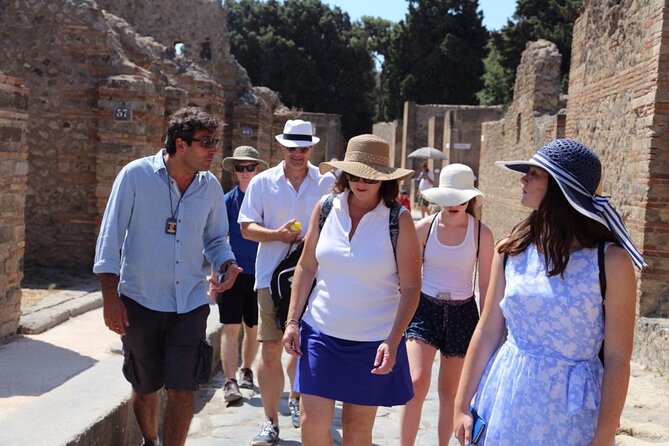
Reviewed · POMPEII ARCHAEOLOGIST-LED TOURS
Pompeii 3 Hours Walking Tour Led by an Archaeologist
Pompeii feels big until you have a guide. This 3-hour, private archaeologist-led walking tour helps you read the city like a real place, not a postcard, with Roman-day details at the Forum, baths, and famous houses. I especially like the tight route that hits the major stops without turning your day into a maze, and the way the guide explains what you’re actually seeing on the ground. One drawback to plan for: Pompeii is exposed with minimal shade, so the midday heat can be brutal even if the tour is only 3 hours.
You also get a more human pace than the big-bus style tours. It’s customizable for your group, and since it’s private, questions don’t get cut off every 20 seconds. Still, with a compact timeline, you won’t have endless time to linger at every wall painting the way you might on a self-guided day.
In This Review
- Key things that make this Pompeii tour worth your time
- Porta Marina Superiore: where your Pompeii story starts
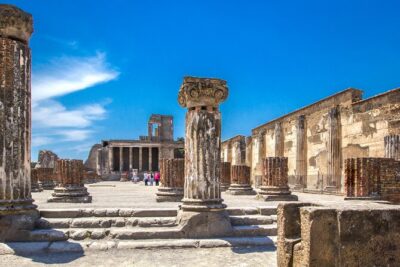
- Forum and Basilicas: the heart of Roman public life
- Basilica stop: a covered stage for commerce
- Foro di Pomma(ya): the main square
- Granaries of the Forum: marble tables, fountain basins, and casts
- Rich houses and painted neighborhoods: Menander, Faun, and the street between
- House of Menander: a lesson in wealth and design
- Walking the main street: why the route matters
- House of the Faun: large and impressive
- Stabian Baths: oldest thermal complex, real Roman downtime
- Lupanar: the famous brothel, explained with context
- Teatro Piccolo and Teatro Grande: Roman performance spaces
- Odeon – Teatro Piccolo: a quick look
- Teatro Grande: the big theater
- Duration and pace: how 3 hours actually feels on your feet
- Price and value: is $256.99 worth it?
- Practical tips: heat, shade, and getting through the day
- Should you book Askos Tours’ Pompeii 3-Hour Archaeologist Walk?
- FAQ
- FAQ
- How long is the Pompeii 3-hour walking tour?
- Is this a private tour?
- What language is the tour offered in?
- What is included in the tour price?
- Where do we meet the guide?
- Is there a luggage place at the meeting point?
- Does the tour run in bad weather?
- Is Pompeii shaded during the walk?
- What’s the cancellation policy?
Key things that make this Pompeii tour worth your time
- Professional archaeologist guide who connects structures to how people lived
- Private format: only your group participates
- Tickets included for key sights (Pompeii Archaeological Park and the Granaries of the Forum)
- A smart mix of public life and private life, from the Forum to rich houses
- Sun-and-heat prep is part of the plan: bring sunscreen and a hat
Porta Marina Superiore: where your Pompeii story starts
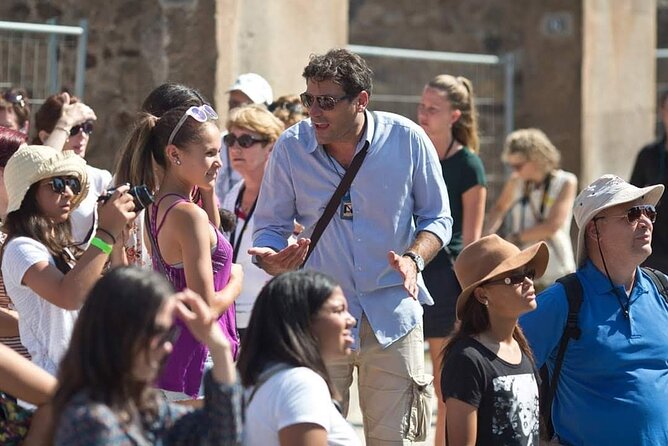
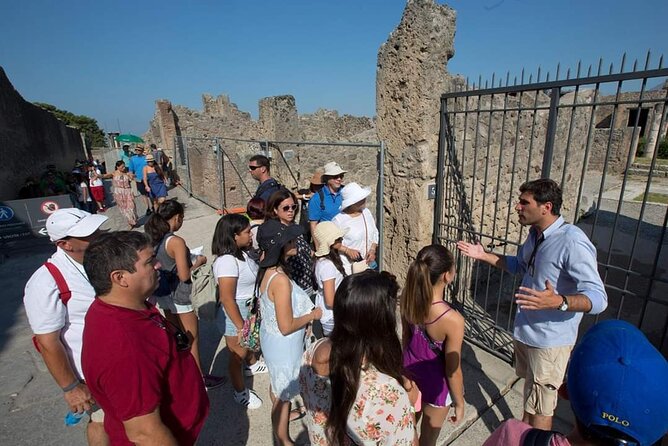
You meet at Via Villa dei Misteri, 1 (Pompei) with the guide holding an Askos Tours sign. The tour begins at the Pompeii Archaeological Park main entrance area called Porta Marina Superiore. This matters more than it sounds. Pompeii’s huge, and walking in without context can make you feel like you’re speed-walking through famous ruins instead of learning a functioning city.
At the start, you’ll get your bearings fast. The guide’s job here is to give you a mental map of what you’re about to see, so each next stop makes sense. You also get a handy perk right at the meeting area: there’s a free luggage store, so you can travel lighter and not haul bags around the ruins.
More of the site walked with an archaeologist
- Pompeii and Herculaneum Small Group Tour with an Archaeologist
★ 5.0 · 1,350 reviews - Skip the Line Guided Tour of Pompeii led by an Archaeologist
★ 5.0 · 703 reviews - Pompeii Private Tour with an Archaeologist and Skip The Line – 3 hours
★ 5.0 · 564 reviews
Forum and Basilicas: the heart of Roman public life
The first big cluster is all about public space—how merchants, officials, and everyday people used the city center.
Basilica stop: a covered stage for commerce
The Basilica is described as an open portico used by merchants and for various activities. Picture a shaded, semi-public space where trade and talk likely happened all day. When a guide points out how these porticoes functioned, you stop seeing columns as decoration and start seeing them as infrastructure.
This is also a good moment to reset your energy. The tour rhythm keeps moving, but basilicas and porticoes help you understand how Romans designed comfort into public life—especially important in a hot climate like this.
Foro di Pomma(ya): the main square
Next comes the Foro—Pompeii’s main square. This stop is shorter, but it’s a crucial link between the big-ticket buildings and the street-level reality. A lot of Pompeii’s power comes from the way the streets, squares, and civic buildings connect. A good guide helps you notice those sightlines and the flow between spaces.
If you tend to get overwhelmed by “too many monuments,” this is where the guide’s structure helps. You’re building a model of the city as you walk, not just collecting photos.
Granaries of the Forum: marble tables, fountain basins, and casts
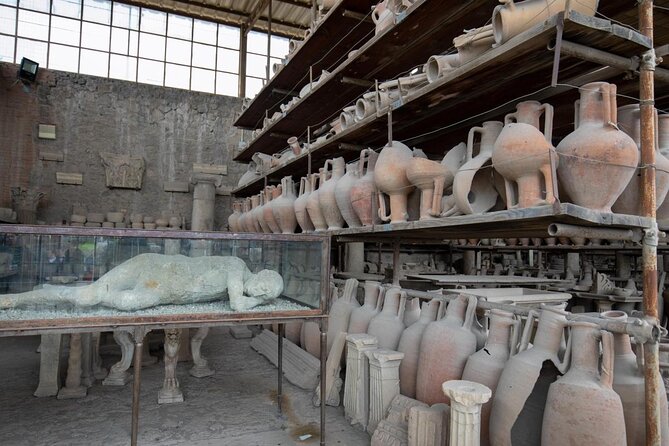
The Granaries of the Forum is one of the most intense stops on the route. You’ll see features tied to daily supply and household convenience—marble tables and bathing-style elements connected to fountains at entrances of houses.
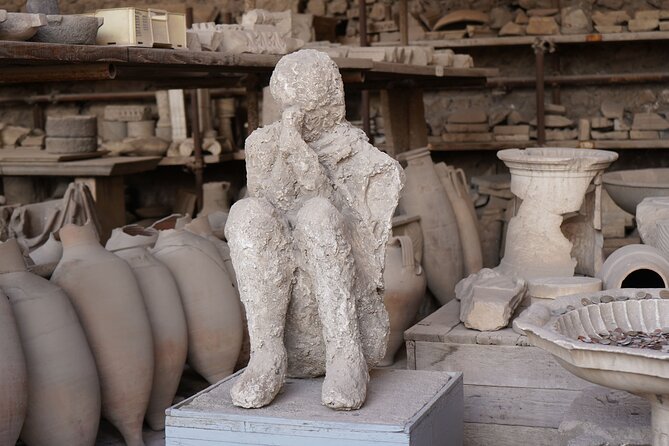
Then you get the part that hits harder. The granaries include casts of victims of the eruption, and the information also references casts connected to a dog and a tree. This is the kind of moment where a guide’s pacing and tone really matter. The site is emotionally heavy, so it helps when someone can anchor what you’re seeing in careful explanation rather than rushing you through.
Practical note: this is an excellent stop to ask questions—because it’s where many people’s curiosity spikes.
Keep walking the excavated streets
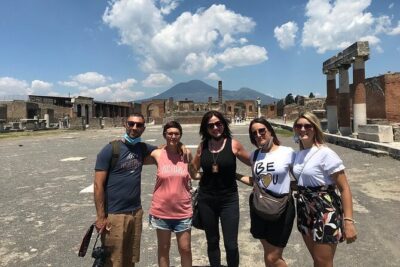

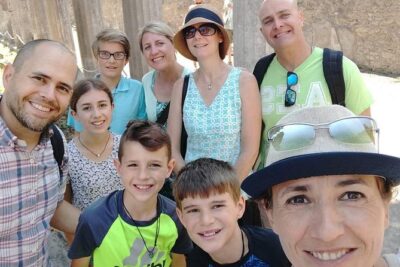
Rich houses and painted neighborhoods: Menander, Faun, and the street between
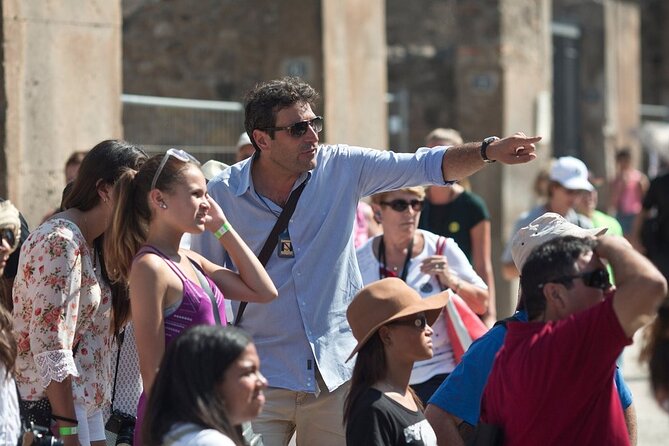
After the civic center, the tour shifts toward private life. That’s where Pompeii becomes more personal.
House of Menander: a lesson in wealth and design
The House of Menander is highlighted as one of Pompeii’s richest homes, noted for architecture, decoration, and contents. Even on a short visit, the guide can help you understand what “rich” meant here—how space and ornament signaled status, and how daily movement through rooms worked.
This stop is also a reminder that Pompeii wasn’t just public buildings and busy squares. It was families, taste, and routine—captured in stone and paint.
Walking the main street: why the route matters
You’ll also walk through Pompeii’s main street. This is a smart inclusion because it ties the public and private areas together. If you only visit buildings, Pompeii can feel like isolated sets. Walking the corridor between them helps you understand scale and how people likely moved through the city.
Think of it like learning a museum layout versus learning a neighborhood.
House of the Faun: large and impressive
The House of the Faun is described as one of the largest and most impressive private residences in Pompeii. The guide can point out why size changes the feel of a home—how space suggests hospitality, status, and more complex movement between areas.
In a short tour window, you’re not trying to memorize every room. You’re learning what to look for so when you see a similar doorway, courtyard, or painted area later, it clicks.
Stabian Baths: oldest thermal complex, real Roman downtime
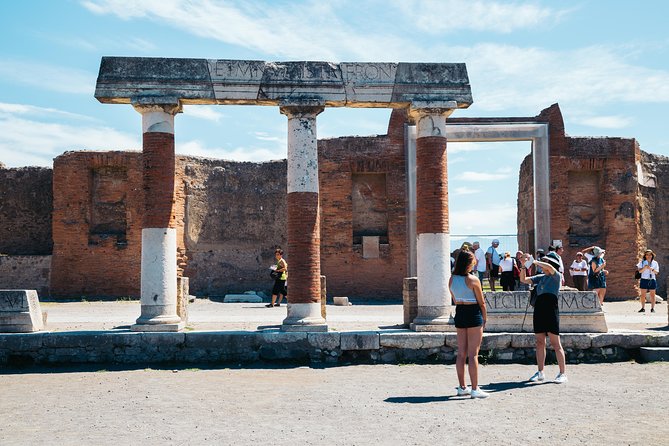
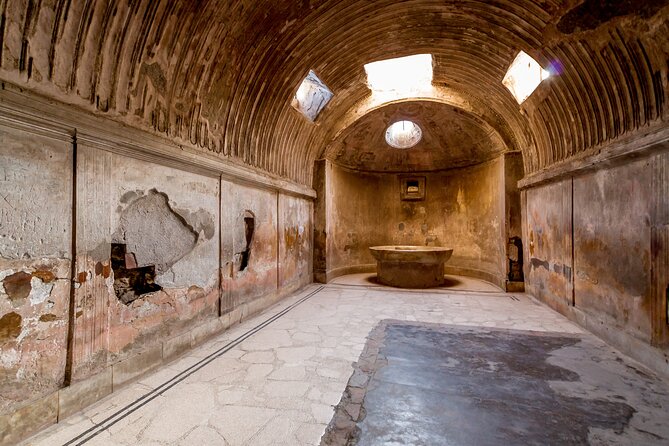
Thermal baths are a major theme in Pompeii, and this tour includes the Stabian Baths (Terme Stabiane). The description calls them the oldest thermal complex in the city, spread out across a vast area.
Even if you’ve read about Roman bathing before, being shown the layout can make it feel more practical. Baths weren’t just about cleanliness—they were a social system. A guide’s commentary can help you connect the space to routines: moving between different rooms, waiting, chatting, recovering, and showing up as part of daily life.
This stop is great if you like sites that explain how people spent time. It’s also a good “cooldown” for your brain after the emotional weight of the casts at the granaries—though sun and heat still matter.
Lupanar: the famous brothel, explained with context
The Lupanar is Pompeii’s most famous brothel in the ruined Roman city. Yes, it’s a striking label. But what makes this stop valuable is how it can be framed beyond shock value.
A professional guide can help you interpret what the space says about the economy of desire, how business worked, and how architecture supports daily operations. It’s not just an attention grab—done well, it’s a window into how Pompeii’s society functioned.
This is also one of those stops where your reaction might be immediate. If you prefer more measured pacing at emotional or sensitive places, you can ask the guide to slow down or explain the context first.
Teatro Piccolo and Teatro Grande: Roman performance spaces
The final stretch brings you to Pompeii’s theaters.
Odeon – Teatro Piccolo: a quick look
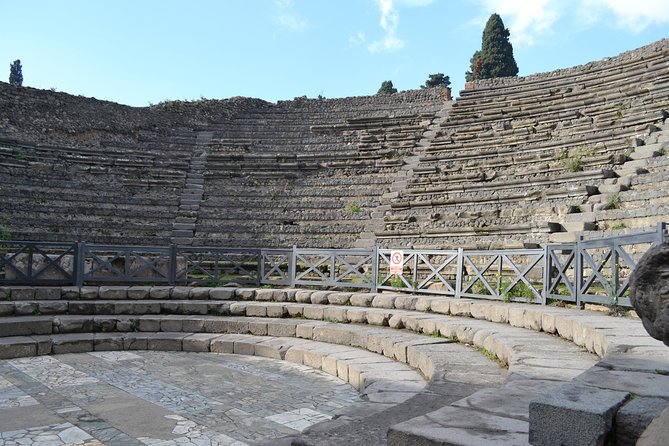
The tour includes a look at the Odeon / Teatro Piccolo (the “Piccolo” theater). It’s a shorter stop, but it gives you a sense of Pompeii’s performance culture at different scales, not only the biggest venue.
This kind of stop is helpful because it rounds out what Roman public life meant. Not every gathering was in a marketplace or civic square—people gathered to watch, listen, and celebrate.
Teatro Grande: the big theater
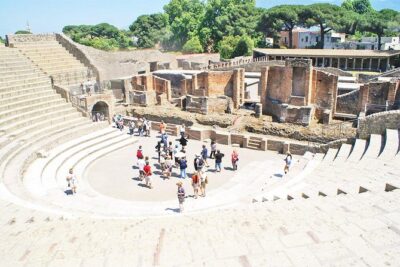
Then you visit the Teatro Grande, described as Pompeii’s most important theater. This stop is longer than the Piccolo, giving you time to focus on the structure and the experience of performance.
A strong guide helps you notice how theaters work: where crowds would sit, how sightlines might look, and how the building shaped sound and movement. Even in ruins, you can still feel how the space would host events and create shared energy.
When you finish here, Pompeii often clicks into place: it’s not only a “city of tragedies,” but a city of routines, entertainment, and civic pride.
Duration and pace: how 3 hours actually feels on your feet
This tour runs about 3 hours. That’s a sweet spot for first-time visitors. Long enough to cover the Forum-to-houses arc and include major sites like the baths and theaters. Not so long that you lose half the day to logistics and wandering.
The pace is guided and intentional. Stops are often around 5–25 minutes, which means you’ll see a lot in a short time—but it also means you should come ready to walk, look, and absorb without expecting hours of deep lingering at every single wall.
If you want a slower, picture-by-picture experience, you might find 3 hours a bit tight. But if you want momentum and context, this format usually lands well.
Price and value: is $256.99 worth it?
The price is $256.99 per person. In Pompeii, that’s not “cheap,” but it also isn’t random. You’re paying for three things the self-guided route can’t reliably deliver:
- A trained archaeologist guide (and yes, the guides highlighted include people like Daniela Mantice, who was praised for bringing Pompeii to life with art-historian depth; Monica, described as having a PhD; and archaeologists such as Antonella).
- Interpretation: the difference between seeing a doorway and understanding why it was placed there, how it functioned, and what it meant.
- Tickets for key areas: admission is included at the start point entry into the archaeological park and for the Granaries of the Forum. Other stops are listed as free.
Also, the tour notes group discounts and that it’s typically booked ahead (around 50 days). That’s often a sign people value the guide time.
Is it “worth it” for everyone? If you’re the type who loves reading plaques and figuring things out solo, you can do Pompeii on your own. But if you want the city translated into human terms—fast, structured, and accurate—this price starts to look less like a splurge and more like paying for efficiency and clarity.
Practical tips: heat, shade, and getting through the day
Pompeii’s vast and very exposed with minimal shade, so plan around sun. The tour specifically recommends sunscreen and a hat. I’d treat those as non-negotiables.
The tour also runs rain or shine, so pack for weather variability. Since you’re walking, you’ll want layers and clothing you don’t mind getting a little dusty—Pompeii has a way of making shoes look like they’ve been to war.
One more practical plus: the meeting area includes a safe luggage store for free, which is great if you’re arriving by train or want to keep your hands free for photos and maps.
And if you’re worried about ending in the right place, the guide can help you with info on how to get back to your accommodation or the nearest train station.
Should you book Askos Tours’ Pompeii 3-Hour Archaeologist Walk?
Book it if you want Pompeii to make sense quickly. This tour is built for people who want the big highlights (Forum spaces, baths, famous houses, theaters) plus the explanations that turn ruins into a believable city.
Skip it or consider a longer alternative if you need lots of quiet time at each stop. Pompeii is famous for wall paintings and details, and a 3-hour window means you’ll be moving steadily rather than settling in for hours.
Also, if you’re traveling in extreme heat, plan your day with the shade reality in mind. Bring the hat, wear sunscreen, and start early if you can.
FAQ
FAQ
How long is the Pompeii 3-hour walking tour?
The tour lasts about 3 hours.
Is this a private tour?
Yes. It’s a private tour, and only your group participates.
What language is the tour offered in?
It’s offered in English.
What is included in the tour price?
The price includes a professional archaeologist guide and admission ticket fees (admission is included at the Pompeii Archaeological Park entry point and at the Granaries of the Forum stop).
Where do we meet the guide?
You meet at Via Villa dei Misteri, 1, 80045 Pompei NA, Italy. The guide holds a sign with the Askos Tours name at the main entrance area.
Is there a luggage place at the meeting point?
Yes. There is a free luggage store at the meeting place.
Does the tour run in bad weather?
The tour takes place rain or shine.
Is Pompeii shaded during the walk?
No. The site is vast and very exposed with minimal shade, so sunscreen and a hat are recommended.
What’s the cancellation policy?
Free cancellation is available up to 24 hours in advance for a full refund. If you cancel less than 24 hours before the start time, the amount paid isn’t refunded.
More Tour Reviews in Pompeii
- Pompeii Small Group Tour with an Archaeologist★ 5.0 · 6,593 reviews
- Discover the Ancient Ruins of Pompeii: Day Trip from Rome★ 3.5 · 2,247 reviews
- Pompeii and Herculaneum Small Group Tour with an Archaeologist★ 5.0 · 1,350 reviews
- Skip the Line Guided Tour of Pompeii led by an Archaeologist★ 5.0 · 703 reviews
- Pompeii Ticket + Tour with Optional Tasting Experience at Pompeii★ 5.0 · 663 reviews
Still in the Ruins? Keep Walking
- Explore Pompeii: 2-Hour Guided Walking Tour with Included Ticket★ 4.5 · 77 reviews
- Pompeii: walking tour with 3D glasses and with entrance ticket★ 4.5 · 61 reviews
- Pompeii walking tour★ 5.0 · 29 reviews
- Small Group Guided Walking Tour of Ancient Pompeii Highlights★ 5.0 · 27 reviews
- Pompeii Walking Tour with a licensed Guide★ 5.0 · 19 reviews
More Tours Led by an Archaeologist
- Pompeii Small Group Tour with an Archaeologist★ 5.0 · 6,593 reviews
- Pompeii and Herculaneum Small Group Tour with an Archaeologist★ 5.0 · 1,350 reviews
- Skip the Line Guided Tour of Pompeii led by an Archaeologist★ 5.0 · 703 reviews
- Pompeii Private Tour with an Archaeologist and Skip The Line – 3 hours★ 5.0 · 564 reviews
- Pompeii Skip-the-line Tour with Archaeologist Guide★ 5.0 · 559 reviews
Just reviewed: more Pompeii tours and day trips




Pompeii Archaeologist-Led Tours, compared.
 ★ 4.8Entry Ticket and Guided Tour with an ArchaeologistFrom $3519,459 reviews
 ★ 4.8Small Group Tour with an ArchaeologistFrom $4012,264 reviews
★ 5.0Pompeii Small Group Tour with an ArchaeologistFrom $356,593 reviews
★ 4.8Small Group Tour with an ArchaeologistFrom $4012,264 reviews
★ 5.0Pompeii Small Group Tour with an ArchaeologistFrom $356,593 reviews
 ★ 5.0Pompeii and Herculaneum Small Group Tour with an ArchaeologistFrom $771,350 reviews
 ★ 5.0Skip the Line Guided Tour of Pompeii led by an ArchaeologistFrom $95703 reviews
 ★ 4.9Exclusive Tour with Archaeologist and Entry TicketsFrom $50634 reviews
 ★ 5.0Pompeii Private Tour with an Archaeologist and Skip The Line – 3 hoursFrom $302564 reviews
 ★ 5.0Pompeii Skip-the-line Tour with Archaeologist GuideFrom $71559 reviews
Browse the lists this tour appears in