
Reviewed · POMPEII ARCHAEOLOGIST-LED TOURS
Pompeii Private Tour with an Archaeologist and Skip The Line – 3 hours
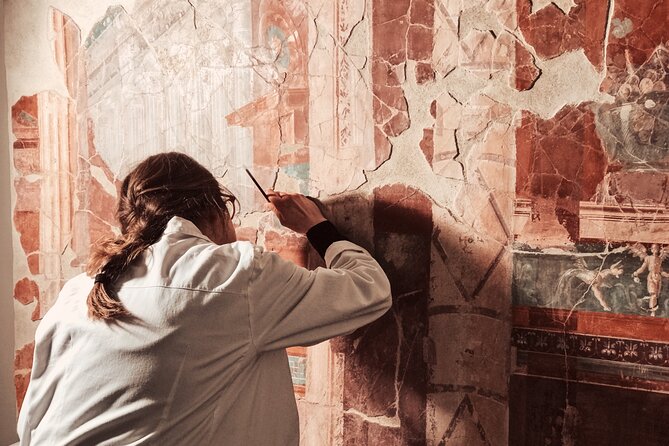
Pompeii moves at walk-speed. This private archaeologist-led tour is a smart way to see the highlights of Pompeii in about 3 hours, starting at Porta Marina and ending back near the start. I love that you get a structured route instead of wandering, and I love the way guides like Luisa and Eliana Sandretti explain what you’re looking at—so the theaters, baths, markets, and houses feel like a real city, not just ruins.
One thing to plan for: it’s still Pompeii, so expect steps and uneven ground, plus a lot of walking in the open. If your group has mobility limits, it’s worth telling them up front—many guides adapt the pace and route, but you’ll want to be ready for the physical reality of the site.
In This Review
- Key Things That Make This Tour Worth It
- Why a 3-Hour Pompeii Tour Actually Works
- The Price, and What It Really Buys You
- Start at Hortus Pompei, Then Walk In
- Skip-The-Line Tickets: The One Detail You Must Handle
- Pompeii’s Big Hits, Stop by Stop
- Porta Marina and the Archaeological Park
- Odeon / Teatro Piccolo: Small Theater Energy
- Teatro Grande: The Major Stage
- The Main Street: Pompeii’s Spine
- Granai del Foro: The Granaries and Power of Storage
- Stabian Baths (Terme Stabiane): Social Life in Stone
- Forum and Court of Justice (Basilica Area)
- Temple of Jupiter and the Theatre Quadriporticus
- Gladiators’ Barrack Area Logic
- Lupanar: The Brothel Area
- Temple of Venus
- Casa del Poeta Tragico: Cave Canem Mosaic
- Macellum: Meat and Fish Market
- Edificio di Eumachia: Wool Market
- Casa del Menandro: Frescoes and Mosaics
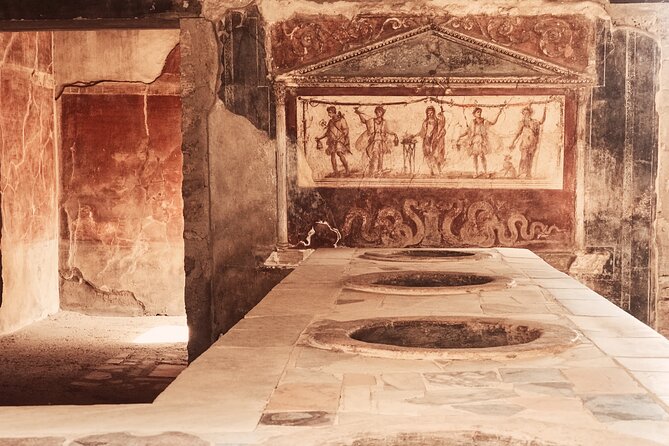
- Termopolio di Vetuzio Placido: Take-Away Food Stop
- Fullonica di Stephanus: Laundry Work
- Temple (Final Taste)
- Walking Comfort, Heat, and Pace
- Who This Tour Fits Best
- Should You Book This Pompeii Private Tour?
- FAQ
- How long is the Pompeii private tour?
- Is this tour private?
- What language is the tour offered in?
- Where do we meet, and where does the tour end?
- Does the tour include Pompeii entry tickets?
- Is skip the line available?
- Does the price include meals?
- What should I expect in terms of walking?
- What if bad weather affects the tour?
Key Things That Make This Tour Worth It
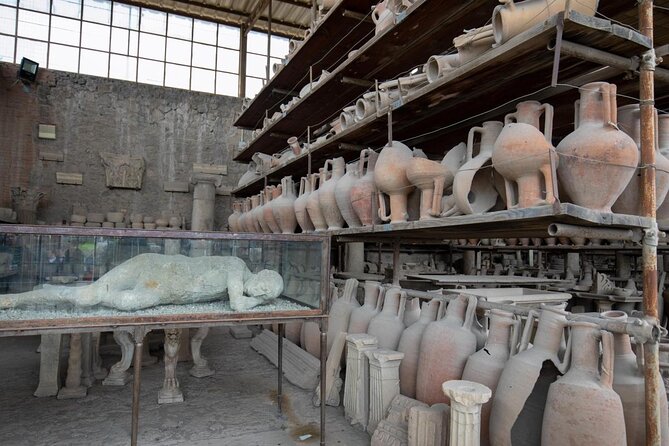
- Private, archaeologist-led pacing: You’ll move with purpose and still have time for questions.
- Skip-the-line help, but request it early: The benefit depends on arranging it in advance.
- Stops that cover daily life: Markets, bath life, the Forum, and even the brothel area.
- Real Pompeii texture: You’ll see mosaics like the Cave Canem and commercial spaces like the wool market.
- A guide who adjusts: From accommodating mobility needs to finding better viewpoints and shade.
Why a 3-Hour Pompeii Tour Actually Works
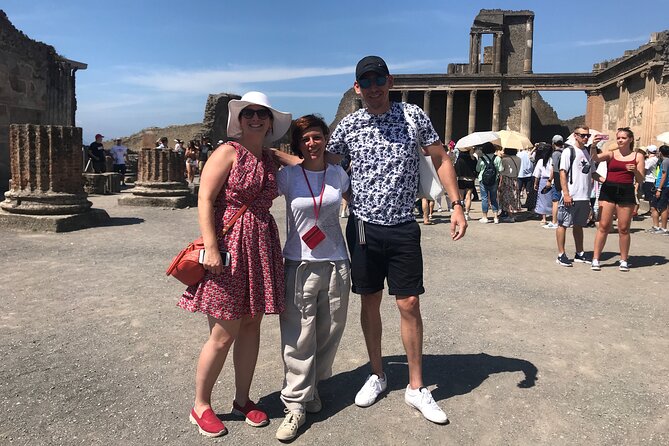
Pompeii is huge, and the clock moves faster than you think. A 3-hour private format is long enough to hit the main clusters—theaters, Forum area, baths, and the most famous neighborhoods—without burning your whole day stuck in the wrong spot at the wrong time.
What you gain with a guide is not just facts. You get orientation. When someone points out how the main street connects key zones, or explains why the bath complex mattered socially, you stop seeing isolated stones and start seeing the city’s logic.
More ways past the ticket queue
- Skip the Line Guided Tour of Pompeii led by an Archaeologist
★ 5.0 · 703 reviews - Pompeii Private Tour with an Archaeologist and Skip The Line – 3 hours
★ 5.0 · 564 reviews - Pompeii Skip-the-line Tour with Archaeologist Guide
★ 5.0 · 559 reviews
The Price, and What It Really Buys You
The price shown is $302.32 per group, and the tour is private. Depending on how your booking is set up, that can mean excellent value if you’re traveling as a small party that wants time and attention rather than a big group scramble.
The big catch is entrance tickets. The park ticket price is not included in the tour fee details you have here: 19 euros per adult, and under 18 is free. On top of that, skip-the-line access is available only on request in advance. So the best value comes when you do two things:
- Buy your park entrance in advance using the provided link (or follow the instructions you receive).
- Request the skip-the-line ticket handling ahead of time so it’s actually applied to your entry.
That’s how you avoid the most common frustration: arriving ready to enter and realizing you still need to sort out the ticket process.
Start at Hortus Pompei, Then Walk In
You meet at Hortus Pompei, Restaurant & Garden Bar, near Porta Marina Superiore (Via Villa dei Misteri / Piazza Porta Marina Superiore area). It’s a good setup because you’re starting at a real entrance point that matches the way Pompeii is organized on the ground.
The tour begins at Porta Marina Superiore and finishes back at the meeting point area (ending at Porta Marina Inferiore). Translation: you get a route that doesn’t feel like you’re retracing every step, and you don’t end your visit far from where you started.
Skip-The-Line Tickets: The One Detail You Must Handle
This tour includes skip-the-line access only if you request it in advance. The wording here matters, because the site ticket workflow can be confusing if you’re doing it on the spot, especially if the process is in Italian.
Also keep in mind a common issue: some bookings can leave you expecting tickets are covered when the park entry fee is separate. The safest move is to treat entrance as your responsibility and get it sorted before your tour time. You’ll still get the benefit of the skip-the-line assistance, but you won’t be stuck waiting while trying to solve ticket problems mid-walk.
Pompeii’s Big Hits, Stop by Stop
This tour is built as a sequence of “city rooms.” Each stop gives you a different slice of Pompeii life—public, social, commercial, and domestic.
More of the site walked with an archaeologist
Porta Marina and the Archaeological Park
Your first stretch is your orientation moment. As you enter the park, you’re not just walking in—you’re getting the route explained so later stops make sense. It’s the best time to ask anything like:
- Where you should slow down
- What areas are most important for photos
- How to understand the layout without getting lost
Odeon / Teatro Piccolo: Small Theater Energy
The Odeon (small theater) is where Pompeii starts feeling human. Smaller venues are easier to picture as places where people gathered often, not only for grand events. You’ll spend only a few minutes here, but it sets up the later contrast with the big theater.
Teatro Grande: The Major Stage
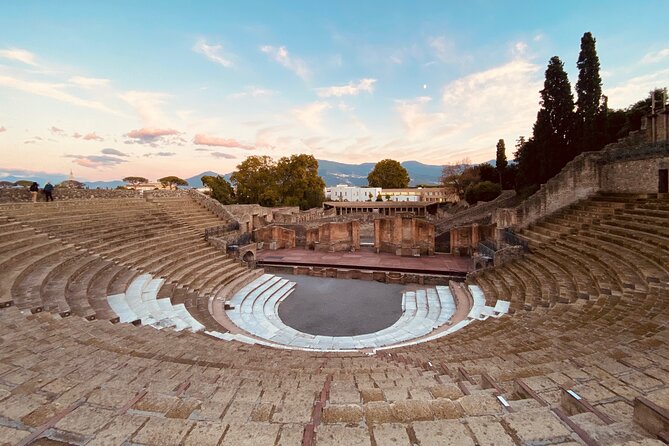
The large theater gets more time. This is where you can connect Pompeii’s architecture to real behavior—crowds watching, people conversing, the space shaping how the audience moved and talked. Even in a short visit, you’ll get enough context to read the structure instead of just photographing it.
The Main Street: Pompeii’s Spine
Then comes Pompeii’s main street, the artery that connects neighborhoods and public spaces. This stop is short, but it’s a key payoff. When you understand how the street channels foot traffic, markets, and social areas, the ruins stop feeling random.
Granai del Foro: The Granaries and Power of Storage
The Granai del Foro (archaeological deposit/granary area) gives you a sense of logistics—what a city needed to survive. Storage buildings are not glamorous, but they’re important. They hint at supply, management, and the everyday reality behind political and ceremonial areas nearby.
Stabian Baths (Terme Stabiane): Social Life in Stone
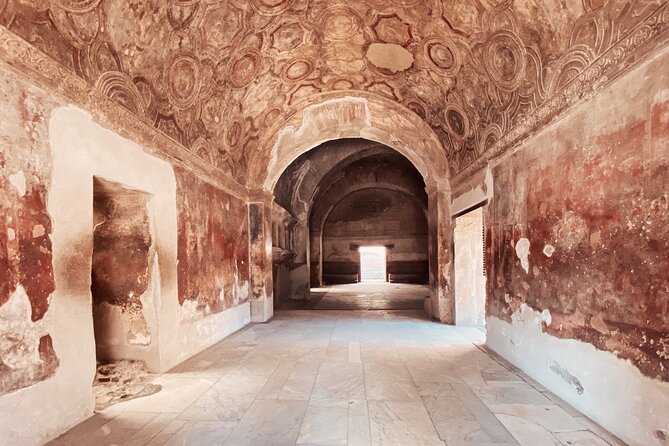
The Stabian Baths are one of the most satisfying stops because baths were both practical and social. You’re there long enough to understand the idea of a spa-like routine: moving through areas, using different rooms for different purposes, and gathering while doing it.
If you’re visiting in warm months, this stop can feel like a relief—more open-air shade is often possible depending on the exact moment and season, and guides frequently plan for comfort.
Forum and Court of Justice (Basilica Area)
The Forum and the court of justice (Basilica) are where Pompeii’s civic identity comes forward. You’re not just looking at big public buildings; you’re seeing the setting for debate, decisions, and community authority.
This is also where your guide’s storytelling matters. A good explanation turns these rooms into a picture of daily life in 79 AD rather than an abstract “important building.”
Temple of Jupiter and the Theatre Quadriporticus
You then hit major sacred and ceremonial zones, including the Temple of Jupiter and the Quadriporticus of the theatres. The Quadriporticus area is linked with the practical side of spectacle—think crowds, organization, and the behind-the-scenes rhythm that made public events happen.
Gladiators’ Barrack Area Logic
The Quadriporticus stop is tied to the gladiators’ barrack idea. Even if you only get a brief look, it’s useful because it connects the theater spaces to the people who prepared for the show.
Lupanar: The Brothel Area
Next is the Lupanar, the brothel/prostitution area. This is a stop that can feel jarring if you expect a purely heroic story of Rome. But it’s also part of the truth of the city. You’re seeing how entertainment, commerce, and everyday economics overlapped in real life.
Ask questions if you want help placing what you see in context. A good guide will keep it factual and grounded.
Temple of Venus
The Temple of Venus brings you back toward religion and cultural identity. It’s another short stop, but it helps balance what the city offered: pleasure and work, public ceremony and private rituals.
Casa del Poeta Tragico: Cave Canem Mosaic
One of the most memorable moments is at Casa del Poeta Tragico, where you’ll see the Cave Canem mosaic. A mosaic like this makes Pompeii feel immediate. It’s not just a decorative floor—it’s a message in front of a door, a way to think about daily boundaries and humor in domestic space.
If you like art or symbols, this is a great stop to linger during the few minutes you have.
Macellum: Meat and Fish Market
Then you get a commercial hit: the Macellum, Pompeii’s meat and fish market. Markets are where the city breathes. You’ll get context for why these spaces mattered for meals, social visits, and supply—again, not “Roman history” in theory, but logistics in action.
Edificio di Eumachia: Wool Market
The Edificio di Eumachia covers the wool market. Textiles were huge in the ancient economy, and this stop helps connect Pompeii to broader trade and craft. If you’ve ever wondered how Roman cities worked beyond politics, this kind of place answers that question.
Casa del Menandro: Frescoes and Mosaics
At Casa del Menandro, you’ll have time for frescoes and mosaics in a domestic setting. This stop is longer than a few of the others, and it’s where Pompeii turns artistic.
You can also use this part of the tour to compare houses: what luxury looks like in one space versus another, and how much private life was shaped by public visibility.
Termopolio di Vetuzio Placido: Take-Away Food Stop
The Termopolio di Vetuzio Placido is your “grab-and-go” moment—a take-away shop/fast food area. It’s one of those stops that surprises people because it makes the city feel less distant. Food wasn’t a rare event for elites only; it was part of street life.
Fullonica di Stephanus: Laundry Work
The Fullonica di Stephanus is about laundry and processing. Fulling (cleaning and thickening cloth) was labor-heavy and necessary, and this stop ties Pompeii’s economy back to everyday jobs. It’s also a reminder that the city ran on work, not just monuments.
Temple (Final Taste)
You end with a final temple stop. By then, your brain has a better map, so the last sacred site lands with more meaning than it would on arrival.
Walking Comfort, Heat, and Pace
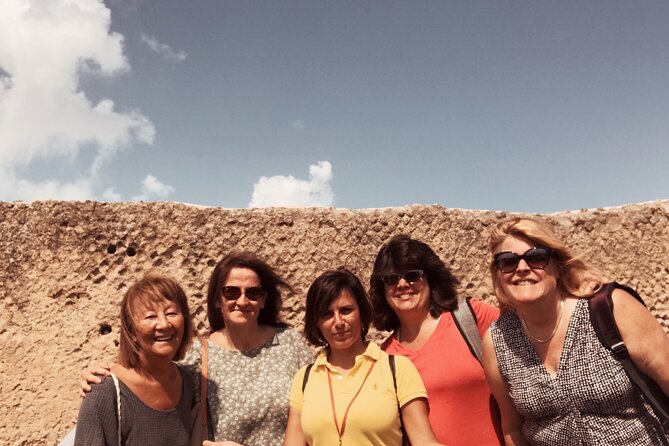
Expect uneven ground, steps, and some slippery surfaces. That’s not a warning to scare you off—it’s just Pompeii being Pompeii. The advantage of a private tour is that your guide can manage the pace and pick moments to slow down.
In several experiences, guides have shown they’re willing to accommodate mobility issues and adjust the route so you can keep up. If mobility is a concern, tell them what you need before you go, and ask how they plan to handle steps.
Also, if it’s hot, ask for shaded breaks. Guides have been known to plan around comfort, and it makes the difference between surviving Pompeii and enjoying it.
Who This Tour Fits Best
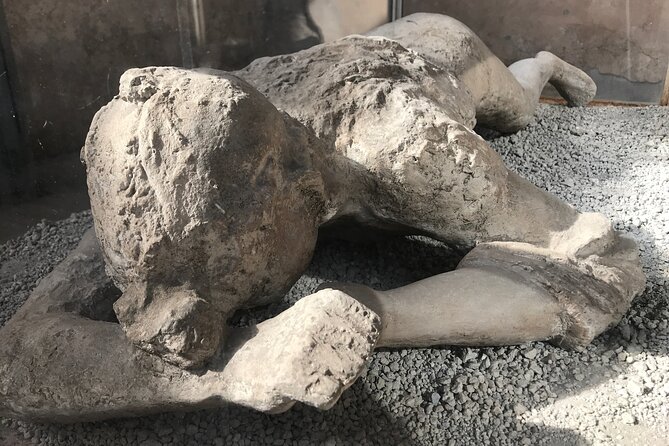
This tour is a great match if you:
- Want a structured route and not guesswork
- Care about understanding how people lived, not just what buildings look like
- Prefer private pacing and time for questions
- Appreciate seeing a mix of public life (Forum, theaters) and daily life (markets, bath, street food)
It might be less ideal if you want a slower “wander and chill” day, because Pompeii rewards efficient route planning more than aimless meandering.
Should You Book This Pompeii Private Tour?
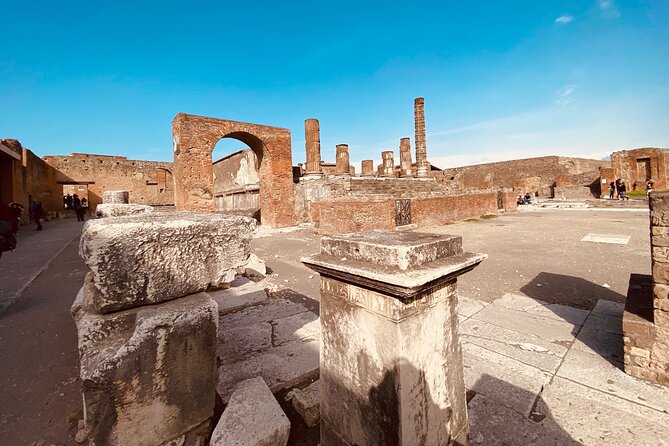
If you’re choosing between random walking and a guide who can connect the dots, book this. The strongest reason is simple: a good archaeologist-led route turns Pompeii into a readable place. You’ll see famous highlights like the big theater and Forum areas, but you’ll also understand the daily systems—markets, baths, work spaces—that make Pompeii feel like a real town.
Just do two homework items before you go: handle the park entrance ticket (adults at 19 euros here) and request skip-the-line support in advance. If you line those up, you get a smooth, high-value 3-hour window.
If you want the best-person match, keep an eye on guides such as Luisa or Eliana Sandretti—the common thread in the guide feedback is clarity, patience, and the ability to tailor the tour to your needs.
FAQ
How long is the Pompeii private tour?
It runs about 3 hours.
Is this tour private?
Yes. It’s a private tour, so only your group participates.
What language is the tour offered in?
The tour is offered in English.
Where do we meet, and where does the tour end?
You meet at Hortus Pompei, Restaurant & Garden Bar near Porta Marina Superiore, and the tour ends back at the meeting point.
Does the tour include Pompeii entry tickets?
Entrance tickets for Pompeii are described as not included here. Adults are listed at 19 euros per person, while under 18 is free. The tour may include ticket-related assistance, and you may be given a link to buy in advance.
Is skip the line available?
Skip-the-line access is available on request in advance.
Does the price include meals?
No meals or drinks are included.
What should I expect in terms of walking?
Expect a lot of walking, including steps and slippery surfaces at times, so a moderate balance is helpful.
What if bad weather affects the tour?
This experience requires good weather. If it’s canceled due to poor weather, you’ll be offered another date or a full refund.
If you tell me your travel month and whether anyone in your group has mobility limits, I can suggest a practical game plan for fitting Pompeii comfortably into these 3 hours.
More Private Guides at the Site
- Pompeii private tour with an Official Guide★ 5.0 · 631 reviews
- Visit in Pompeii – Pompeii Private Tour with Ada★ 5.0 · 436 reviews
- Pompeii Private Tour with an Archaeologist and Skip The Line★ 5.0 · 391 reviews
- Pompeii Vineyard Escape: Private Wine Tasting & Lunch★ 5.0 · 329 reviews
- Private Day Tour to Vesuvius, Herculaneum & Pompeii with Pick Up★ 5.0 · 279 reviews
More Tours Led by an Archaeologist
- Pompeii Small Group Tour with an Archaeologist★ 5.0 · 6,593 reviews
- Pompeii and Herculaneum Small Group Tour with an Archaeologist★ 5.0 · 1,350 reviews
- Skip the Line Guided Tour of Pompeii led by an Archaeologist★ 5.0 · 703 reviews
- Pompeii Skip-the-line Tour with Archaeologist Guide★ 5.0 · 559 reviews
- Explore Pompeii with an Archaeologist★ 5.0 · 511 reviews
Skip-the-Line Entries, More to Book
- Skip the Line Guided Tour of Pompeii led by an Archaeologist★ 5.0 · 703 reviews
- Pompeii Skip-the-line Tour with Archaeologist Guide★ 5.0 · 559 reviews
- Pompeii Private Tour with an Archaeologist and Skip The Line★ 5.0 · 391 reviews
- Complete Pompeii Skip the Line Tour with Archaeologist Guide★ 4.5 · 379 reviews
- Ancient Pompeii Private Tour: Skip the Line & Kid-Friendly Option★ 5.0 · 167 reviews
Just reviewed: more Pompeii tours and day trips




Pompeii Archaeologist-Led Tours, compared.
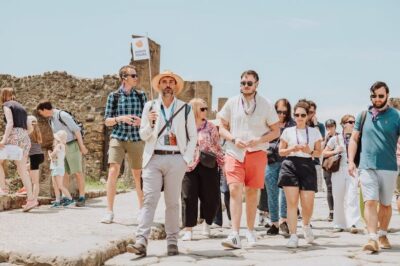 ★ 4.8Entry Ticket and Guided Tour with an ArchaeologistFrom $3519,459 reviews
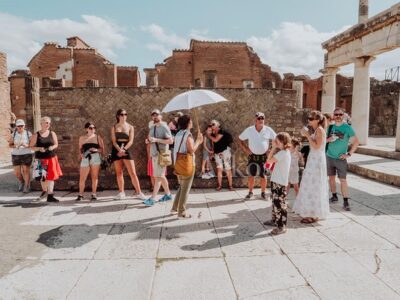 ★ 4.8Small Group Tour with an ArchaeologistFrom $4012,264 reviews
★ 5.0Pompeii Small Group Tour with an ArchaeologistFrom $356,593 reviews
★ 4.8Small Group Tour with an ArchaeologistFrom $4012,264 reviews
★ 5.0Pompeii Small Group Tour with an ArchaeologistFrom $356,593 reviews
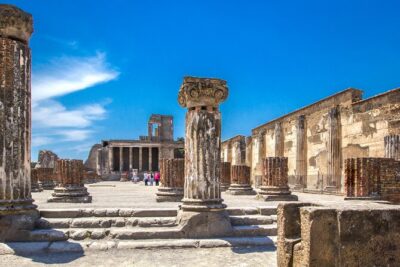 ★ 5.0Pompeii and Herculaneum Small Group Tour with an ArchaeologistFrom $771,350 reviews
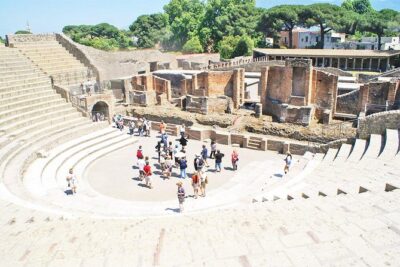 ★ 5.0Skip the Line Guided Tour of Pompeii led by an ArchaeologistFrom $95703 reviews
 ★ 4.9Exclusive Tour with Archaeologist and Entry TicketsFrom $50634 reviews
 ★ 5.0Pompeii Skip-the-line Tour with Archaeologist GuideFrom $71559 reviews
 ★ 5.0Explore Pompeii with an ArchaeologistFrom $35511 reviews
Browse the lists this tour appears in