
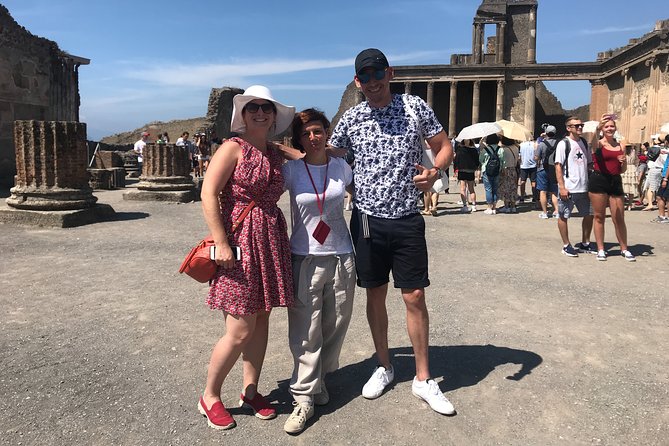
Reviewed · POMPEII ARCHAEOLOGIST-LED TOURS
Pompeii Private Tour with an Archaeologist and Skip The Line
Pompeii makes more sense with a guide. This private, archaeologist-led tour is built for high-impact stops in about two hours, so you’re not just wandering and hoping it clicks. You’ll move from performance spaces to everyday life to power and religion, with the kind of context that turns stone into stories.
I especially like the personal pacing of a private group (up to 10), plus the way the route hits Pompeii’s most talked-about areas in a logical order. I also like the focus on real details, like how Romans designed the acoustics in the Small Theater and how the Forum functioned as the city’s hub.
One drawback to plan for: the Pompeii entrance ticket is not included in the tour price. Also, skip-the-line works best when you’ve already sorted your entry ticket in advance.
In This Review
- Key Highlights You’ll Actually Feel During the Walk
- Two Hours, the Big Pompeii Hits, Without Wandering
- Price and Group Value: What You Pay, and What You Still Need to Buy
- Skip the Line: The Simple Rule That Avoids Confusion
- Meeting at Piazza Esedra: Where the Tour Starts and Ends
- Theatre, Temples, Baths, and Everyday Street Life: Stop-by-Stop Breakdown
- Pompeii Archaeological Park: The Big Starter Circuit
- The Small Theater (Odeion): How Romans Engineered Sound
- Teatro Grande: Pompeii’s Most Important Theatre
- Via dell’Abbondanza: The Main Street Walk-Through
- Stabian Baths and the “Roman Spa” Angle
- The Forum of Pompeii: Markets, Religion, and City Power
- Granaries of the Forum: Victim Casts + Practical Storage Life
- Foro di Pompei: The Main Square
- Pompei La Basilica: Justice in the Middle of Everything
- Temple of Jupiter (Forum Square)
- Gladiators, Training Spaces, and the City’s Tough Side
- Lupanar District and Temples of Venus: A Quick Look at Daily Reality
- Vicolo del Lupanare (Lupanar Alley): The Brothel District
- Temple of Venus
- Casa del Fauno: Why This House Is the Classic Finish
- What Makes This Tour Worth the Money: The Guide Part
- Who Should Book This Pompeii Private Tour
- Should You Book This Pompeii Private Tour?
- FAQ
- Is the Pompeii entrance ticket included in the tour price?
- How long is the tour?
- What does the tour include?
- Where do we meet for the tour?
- Is this tour private?
- What language is the tour offered in?
- What if weather is bad?
- Is free cancellation available?
Key Highlights You’ll Actually Feel During the Walk
- Skip-the-line support tied to having your Pompeii entry ticket ready
- Roman theatre focus, including the Odeion (Small Theater) and the Teatro Grande
- Stabian Baths stop, the “Roman spa” showcase in Pompeii
- Forum + Basilica route, where trade and justice both happened
- Victim casts in the Granaries area, a powerful way to understand the eruption
- Lupanar and temples, showing the city’s daily life and religious center
Two Hours, the Big Pompeii Hits, Without Wandering
Pompeii is huge. Even if you love ruins, you can still lose the thread fast—streets repeat, buildings blur together, and you end up taking photos of doorways and calling it a day. This tour is designed to avoid that problem. You cover a tight circuit that maps to how Pompeii actually worked: where people watched shows, where they bathed, where they shopped, and where the city governed itself.
The route also gives you a storyline. You start with the broader archaeological park highlights (theatres, temples, houses, baths, everyday spaces), then you zoom into the Forum zone for the big civic moments. After that, you shift into “neighborhood Pompeii,” including the red-light district and major temples, then finish with one of the showpiece homes—Casa del Fauno.
More ways past the ticket queue
- Skip the Line Guided Tour of Pompeii led by an Archaeologist
★ 5.0 · 703 reviews - Pompeii Private Tour with an Archaeologist and Skip The Line – 3 hours
★ 5.0 · 564 reviews - Pompeii Skip-the-line Tour with Archaeologist Guide
★ 5.0 · 559 reviews
Price and Group Value: What You Pay, and What You Still Need to Buy
The tour price is $375.05 per group (up to 10 people) for about 2 hours. That sounds steep until you think in group terms: you’re paying for a private archaeologist-guided route, not just a generic walking pass.
But here’s the important part: the Pompeii site entrance ticket is separate. The entrance ticket costs 19 euros per person (and it’s free for people under 18 if they bring ID or passport for age verification). So your real “all-in” cost is the tour fee plus the Pompeii entry ticket for everyone in your group who’s 18+.
I like this setup because it gives you control. If you’re coming as a family or a small group of friends, you get a guided experience without feeling trapped in a huge bus-tour crowd.
Skip the Line: The Simple Rule That Avoids Confusion
This tour includes “skip the line,” but don’t treat that as magic if you haven’t handled the official Pompeii entry ticket. The tour includes help with advance ticket purchase: you’ll receive a link one day before to buy the online entry ticket, aiming to skip the ticket office line.
So the practical takeaway is straightforward:
- Buy your Pompeii entry ticket in advance so you can enter smoothly.
- Bring your ticket details (mobile ticket is part of the setup).
- Then your guide can focus on the route and the explanations, not on sorting entry problems.
If you prefer to buy at the site, that’s allowed too—but in high season, advanced purchase is strongly recommended to reduce delays.
Meeting at Piazza Esedra: Where the Tour Starts and Ends
You meet at Piazza Esedra, 10, 80045 Pompei NA, Italy, and the tour returns to the same meeting point at the end. That matters more than it sounds. Pompeii can drain you if you spend energy guessing where you’ll exit or how far you’ll walk after the tour ends.
Because it’s a private tour, you also get assistance from your guide during the visit—useful when you’re trying to keep the pace right for kids, older relatives, or anyone who just wants a clean plan.
Theatre, Temples, Baths, and Everyday Street Life: Stop-by-Stop Breakdown
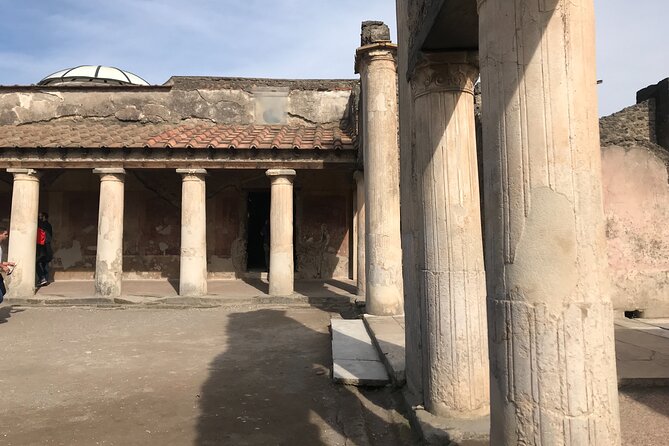
This is where the “archaeologist brain” helps the most. Pompeii isn’t just impressive stone. It’s a working city plan frozen at one moment in time, and your stops guide you through that daily rhythm.
More of the site walked with an archaeologist

Pompeii Archaeological Park: The Big Starter Circuit
You begin inside the Pompeii Archaeological Park and move through major elements such as:
- The Theaters and Temples
- A rich house
- Stabian Baths (Roman spa complex)
- Shops and even fast food-style spaces
- The Lupanar area (brothel district)
- The Forum and the Area of the Gladiators
- Casts of people who died during the eruption of 79 AD
A smart thing here is that the tour doesn’t pretend Pompeii was only about monuments. You also get spaces linked to work, food, leisure, and social life. That gives you the feel of a city, not a museum floor.
The Small Theater (Odeion): How Romans Engineered Sound
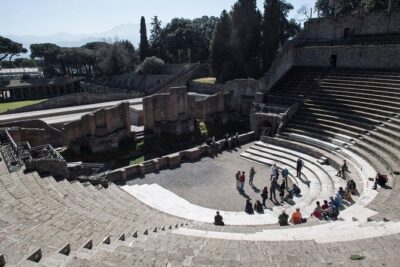
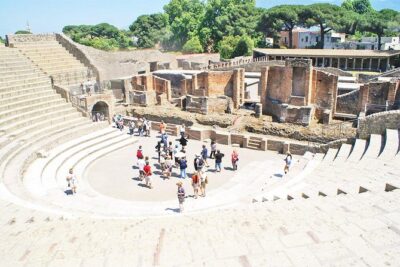
Then you add a short stop at the Small Theater (Odeion), where you’ll hear how Romans recreated effective acoustics. This is one of those details that makes you look differently at the building—suddenly you’re imagining performances designed for real human voices, not just ruins.
Teatro Grande: Pompeii’s Most Important Theatre
Next is Teatro Grande, described as the most important theater in the site. This stop is shorter (about 15 minutes), but it’s the big “auditorium moment.” If you only remember one performance space from your day, this is the one to focus on.
Via dell’Abbondanza: The Main Street Walk-Through
You cross Via dell’Abbondanza, Pompeii’s main street. This is helpful because streets are how you understand orientation. Once you’ve mentally tied the street grid together, the rest of the site feels less random.
Stabian Baths and the “Roman Spa” Angle
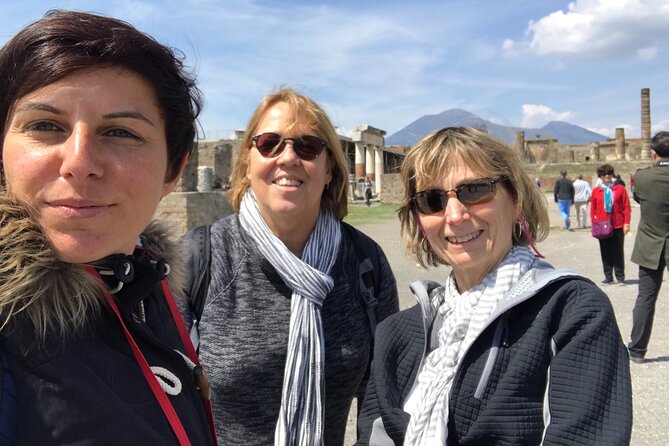
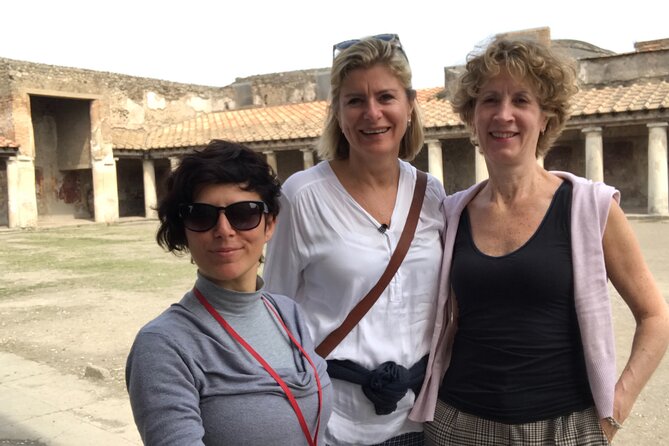
The tour includes the Stabian Baths (Terme Stabiane), positioned as the best spa experience in Pompeii. You’re not just looking at pools and walls—you’re seeing how bathing fit into Roman life, including leisure and social routines.
Time here is about 15 minutes. That’s enough for the big architecture and for your guide to explain what you’re looking at, without dragging you through endless corridors.
If you’re the type who likes your ruins to connect to real behavior—where people gathered, how they relaxed—this stop will land.
The Forum of Pompeii: Markets, Religion, and City Power
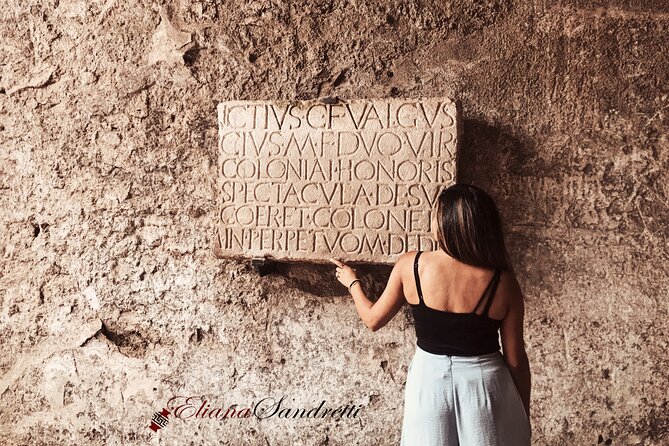
The next stretch is the heart of civic Pompeii.
Granaries of the Forum: Victim Casts + Practical Storage Life
You visit the Granaries of the Forum and see casts of people who died during the eruption. This is one of the most emotionally intense areas on the route. It also gives you a double perspective: tragedy, yes—but also the fact that this was a working storage zone tied to food supply and everyday logistics.
The stop also includes details about the deposit with amphorae and work tools. That’s what makes it feel grounded instead of purely grim.
Foro di Pompei: The Main Square
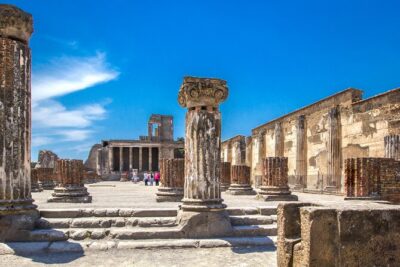
You then move to the ancient Forum (about 10 minutes), the main square with markets and temples. Think of it as Pompeii’s “center of gravity.” Every time you return to the Forum in your mind later, you’ll be able to connect temples and commerce in one mental picture.
Pompei La Basilica: Justice in the Middle of Everything
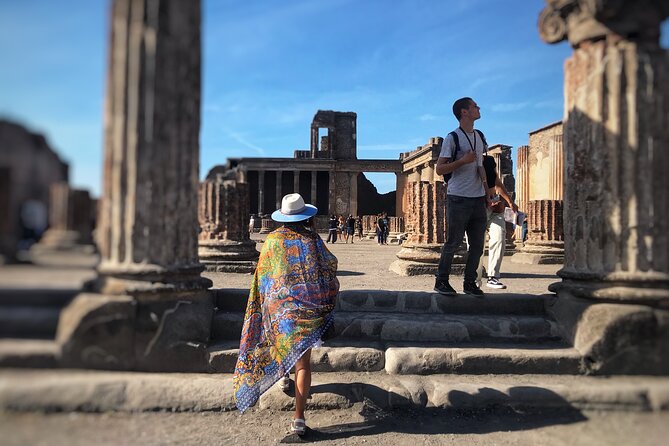
Next is the Basilica, where justice was administered. This is a quick stop, but the value is in the concept: the Forum wasn’t only about buying and selling. It was also where decisions happened.
Temple of Jupiter (Forum Square)
You also stop to visit the Temple of Jupiter, located in the main square area. That helps you read Pompeii as a religious city-state as well as a commercial one.
Gladiators, Training Spaces, and the City’s Tough Side
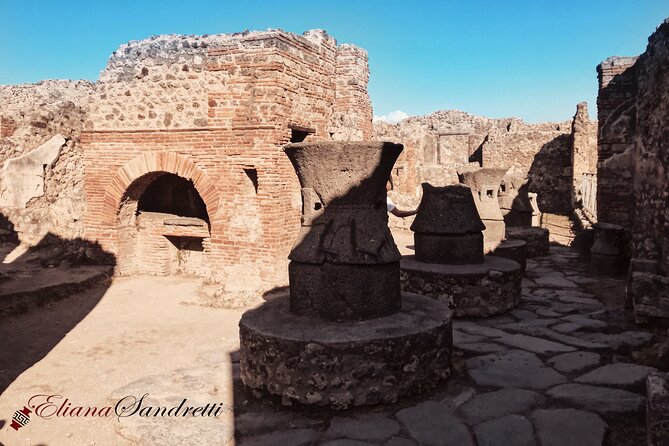
You’ll visit the Quadriporticus of the theatres, including the Gladiator Barracks area. The focus here is on where gladiators trained and lived—so you can connect the dramatic stories you’ve heard with the practical architecture of the training spaces.
This works well after the theatres earlier in the tour. You go from performance space to the people who trained for performance, and suddenly the site feels connected instead of segmented.
Lupanar District and Temples of Venus: A Quick Look at Daily Reality
Pompeii didn’t separate public entertainment from private life. The tour reflects that with two stops in the “city vibe” category.
Vicolo del Lupanare (Lupanar Alley): The Brothel District
The route includes Vicolo del Lupanare, the red district light area. The stop is about 15 minutes, and it’s presented as a specific district within the city plan rather than a sensational detour.
This is worth it if you want realism. It’s also worth pacing yourself here—some people find it uncomfortable even with historical context.
Temple of Venus
You also stop at the Temple of Venus, described as where the city’s divinity was venerated. That religious anchor rounds out the earlier civic stops, so you end the walk with both governance and belief in your mental toolkit.
Casa del Fauno: Why This House Is the Classic Finish
You end with Casa del Fauno, one of Pompeii’s richest and most luxurious residences. This stop is about 15 minutes, which may sound short, but it’s a classic closing act because it gives you a “what did wealthy life look like?” view.
It’s also a good way to remember your day. When your brain is tired from ruins, a single high-status house helps you organize what you saw into categories: homes, public life, religion, entertainment, and crisis.
What Makes This Tour Worth the Money: The Guide Part
The big value here is not just the route. It’s the guide’s role in connecting spaces to meaning. The tour is private with an archaeologist and is billed as a tailor made experience. That usually means you’ll get a better fit for:
- families who need kid-friendly explanations (including finding shade when it’s hot)
- groups who want to ask questions and get direct answers
- visitors who want fewer crowds and more control over the pace
The meeting point and the “about two hours” timing also help. Pompeii days can go sideways if you wander too long. This keeps you moving with purpose, then lets you explore on your own after.
The tour provider is Eliana Sandretti, and the experience is often praised for guide passion and clear explanations, which is exactly what you want when you’re paying for a private archaeologist visit.
Who Should Book This Pompeii Private Tour
This is a strong fit if you:
- want Pompeii explained clearly, not just photographed
- prefer a private group setting (up to 10) over big crowds
- have limited time and want the core highlights in a single circuit
- enjoy details like Roman acoustics, civic functions, and how daily life worked
You might reconsider if you:
- hate planning ahead at all (because you still need to buy the Pompeii entrance ticket)
- want a long, slow walk through every street corner (Pompeii deserves more than two hours)
- expect the tour price to include the site admission (it doesn’t)
Should You Book This Pompeii Private Tour?
Yes—if you want the best “thinking experience” for your time in Pompeii. The route hits theatres, baths, the Forum and Basilica, gladiator areas, the Lupanar district, major temples, and Casa del Fauno, all in a tidy flow that helps you understand the city instead of just see it.
Just do one thing to protect your day: buy the Pompeii entrance ticket in advance so skip-the-line actually helps the way you expect. Add the tour fee, plan for 19 euros per adult, and you’ll likely feel like you spent your time in the right order.
FAQ
Is the Pompeii entrance ticket included in the tour price?
No. Pompeii ticket entrance is not included. The cost is 19 euros per person, and it’s free for under 18 with ID or passport.
How long is the tour?
It’s about 2 hours.
What does the tour include?
You get an authorized tour guide and assistance, skip-the-line service, and a private tour with an archaeologist. The experience also covers main Pompeii attractions and is described as tailor made, with support for advance ticket purchase via a link sent one day before.
Where do we meet for the tour?
You meet at Piazza Esedra, 10, 80045 Pompei NA, Italy. The tour ends back at the same meeting point.
Is this tour private?
Yes. It’s private, and only your group participates (up to 10).
What language is the tour offered in?
English is offered. Multiple languages are available only on request.
What if weather is bad?
The experience requires good weather. If it’s canceled due to poor weather, you can choose another date or receive a full refund.
Is free cancellation available?
Yes. You can cancel up to 24 hours in advance for a full refund. If you cancel less than 24 hours before, the amount paid is not refunded.
More Private Guides at the Site
- Pompeii private tour with an Official Guide★ 5.0 · 631 reviews
- Pompeii Private Tour with an Archaeologist and Skip The Line – 3 hours★ 5.0 · 564 reviews
- Visit in Pompeii – Pompeii Private Tour with Ada★ 5.0 · 436 reviews
- Pompeii Vineyard Escape: Private Wine Tasting & Lunch★ 5.0 · 329 reviews
- Private Day Tour to Vesuvius, Herculaneum & Pompeii with Pick Up★ 5.0 · 279 reviews
More Tours Led by an Archaeologist
- Pompeii Small Group Tour with an Archaeologist★ 5.0 · 6,593 reviews
- Pompeii and Herculaneum Small Group Tour with an Archaeologist★ 5.0 · 1,350 reviews
- Skip the Line Guided Tour of Pompeii led by an Archaeologist★ 5.0 · 703 reviews
- Pompeii Private Tour with an Archaeologist and Skip The Line – 3 hours★ 5.0 · 564 reviews
- Pompeii Skip-the-line Tour with Archaeologist Guide★ 5.0 · 559 reviews
Skip-the-Line Entries, More to Book
- Skip the Line Guided Tour of Pompeii led by an Archaeologist★ 5.0 · 703 reviews
- Pompeii Private Tour with an Archaeologist and Skip The Line – 3 hours★ 5.0 · 564 reviews
- Pompeii Skip-the-line Tour with Archaeologist Guide★ 5.0 · 559 reviews
- Complete Pompeii Skip the Line Tour with Archaeologist Guide★ 4.5 · 379 reviews
- Ancient Pompeii Private Tour: Skip the Line & Kid-Friendly Option★ 5.0 · 167 reviews
Just reviewed: more Pompeii tours and day trips




Pompeii Archaeologist-Led Tours, compared.
 ★ 4.8Entry Ticket and Guided Tour with an ArchaeologistFrom $3519,459 reviews
 ★ 4.8Small Group Tour with an ArchaeologistFrom $4012,264 reviews
★ 5.0Pompeii Small Group Tour with an ArchaeologistFrom $356,593 reviews
★ 4.8Small Group Tour with an ArchaeologistFrom $4012,264 reviews
★ 5.0Pompeii Small Group Tour with an ArchaeologistFrom $356,593 reviews
 ★ 5.0Pompeii and Herculaneum Small Group Tour with an ArchaeologistFrom $771,350 reviews
 ★ 5.0Skip the Line Guided Tour of Pompeii led by an ArchaeologistFrom $95703 reviews
 ★ 4.9Exclusive Tour with Archaeologist and Entry TicketsFrom $50634 reviews
 ★ 5.0Pompeii Private Tour with an Archaeologist and Skip The Line – 3 hoursFrom $302564 reviews
 ★ 5.0Pompeii Skip-the-line Tour with Archaeologist GuideFrom $71559 reviews
Browse the lists this tour appears in