
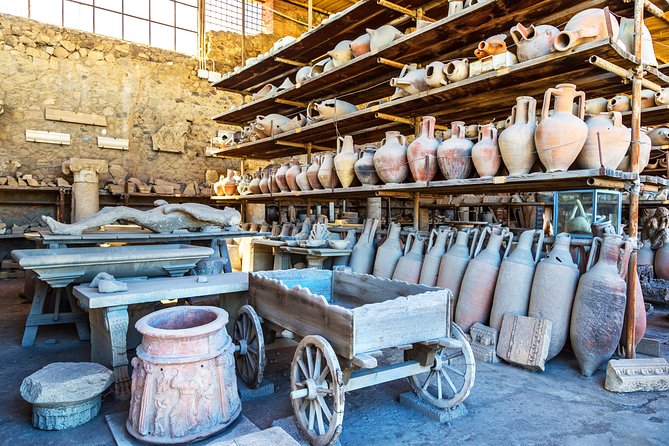
Reviewed · ANCIENT POMPEII HISTORY TOURS
Discover the Ancient Ruins of Pompeii: Day Trip from Rome
Pompeii is one of those places that feels impossible—until you’re there. This day trip turns that famous tragedy into a guided, practical walk through UNESCO-listed ruins like the Villa dei Misteri and the House of the Fauno, with time to see major sights such as the Teatro Grande. I also like that the day includes lunch in Pompeii and a small-group, air-conditioned coach from Rome. The main thing to consider: even though it’s offered in English, this is a multilingual/multilingual setup, so tours can slow down if you’re trying to follow two languages.
Most of the day is spent on the road south—passing big stops like the Abbey of Montecassino and heading through the Bay of Naples area—then you get a focused visit to Pompeii with a guide who explains what Vesuvius did in AD 79. You’ll be back in Rome the same day, so it’s a good choice if you want the essentials without adding a hotel night. Just know it’s a long day with limited breathing room once you’re inside the ruins.
In This Review
- Key things to know before you go
- A long coach day from Rome to Pompeii (and back)
- The route south: Montecassino, Herculaneum area, and Naples vibes
- Pompeii in about two hours: where the guide will take you
- Where you’ll feel the time pressure
- The Vesuvius story: from ash burial to Teatro Grande
- Lunch in Pompeii: included, local, and usually a highlight
- Language and pacing: why English may still feel slow
- The stops that can feel like detours (and how to handle them)
- Comfort, group size, and what to bring for a 13-hour day
- Should you book this Pompeii day trip from Rome?
Key things to know before you go
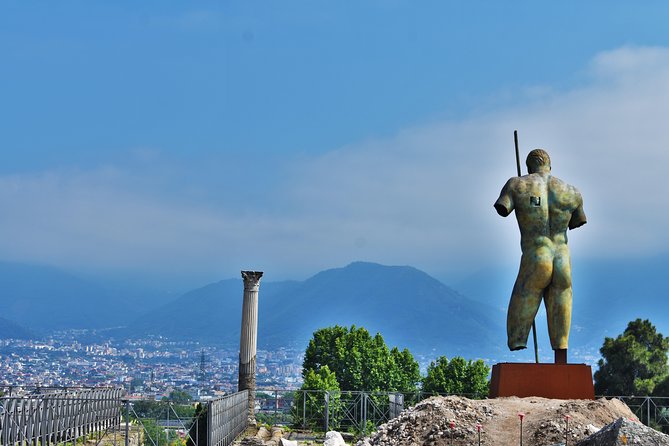
- Pompeii highlights in a timed visit: Villa dei Misteri, Temple of Apollo, House of the Fauno, plus major public spaces like Teatro Grande (about 5,000 seats).
- Included ticket + local guide: Admission to the Pompeii ruins and a guide are part of the package.
- Lunch in Pompeii is included, but drinks aren’t: Plan on budgeting separately for drinks.
- Your day is road-heavy: You’ll travel by air-conditioned coach for about 13 hours total.
- Language may affect pacing: Even with an English offering, the tour can run in more than one language.
- Small group, long day: Maximum travelers are listed at 25, but coach capacity is also listed up to 50—either way, it’s tight and busy.
A long coach day from Rome to Pompeii (and back)
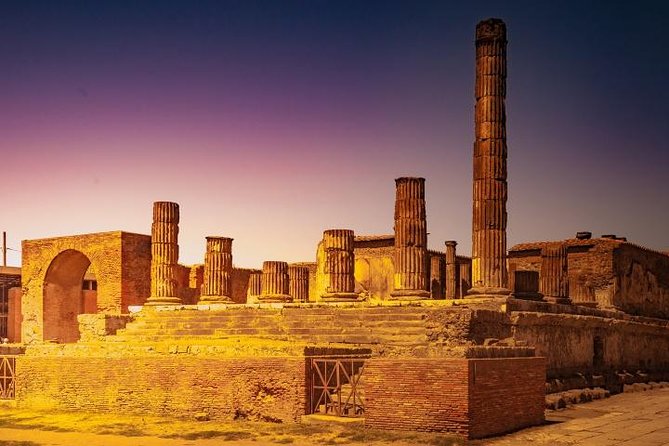
This is built like a classic Rome day trip: early start, long drive, then one main event. Expect about 13 hours total, with the Pompeii portion scheduled after a lunch stop.
The day begins early—start time is 7:15 am—either with a pickup from select Rome hotels or meeting at the address listed in Rome: Via Giovanni Amendola, 32, 00185. The tour description also notes an option to meet near Rome Termini. The practical takeaway: if you don’t have hotel pickup, show up early enough to find the exact meeting spot without stressing.
Once the bus leaves Rome, it’s mostly about settling in. The coach is air-conditioned, and the group size is kept small (the tour lists a maximum of 25 travelers). That matters on a day like this because Pompeii is walk-heavy and the drive includes traffic. You’ll want your feet comfy, your water handy, and your expectations set: your time is not equal everywhere. The center of gravity is Pompeii.
More of the story behind the stones
- 2 hours Pompeii Tour with Local Historian – Ticket Included
★ 5.0 · 335 reviews - Stories of Pompeii: Small Group tour with archeology expert guide
★ 5.0 · 191 reviews - Ancient Pompeii Private Tour: Skip the Line & Kid-Friendly Option
★ 5.0 · 167 reviews
The route south: Montecassino, Herculaneum area, and Naples vibes
Between Rome and Pompeii, you get a moving “Rome-to-Campania” lesson. The itinerary includes a scenic pass by the Abbey of Montecassino, a dramatic Benedictine monastery perched on a hill in the rocky Castelli Romani area. It’s one of those sights you can’t really appreciate until you’re looking at it from the road, so don’t waste your window seat time.
Then you head further south toward Vesuvius and the Bay of Naples zone. The route passes through places such as Ercolano (linked to the ancient site of Herculaneum), plus Torre del Greco and Torre Annunziata. Even if you don’t get out of the bus at every town, you’ll get a sense of how the coastline and volcano shape everyday life here.
One word of caution: parts of the day can feel like “drive and listen” instead of “drive and see.” Some versions of this style of tour include extra time around Naples (including a short panoramic drive). If you’re hoping to actually experience Naples on your own schedule, this isn’t the format for that. You’ll trade freedom for structure and a guided Pompeii visit.
Pompeii in about two hours: where the guide will take you
Pompeii is huge. The surprise isn’t that it’s impressive—it’s that you can see so much in a short guided block. The included stop is the Archaeological Park of Pompeii, and the ticket is part of the package.
You’ll typically visit key set pieces the guide points out, such as:
- Villa dei Misteri
- Temple of Apollo
- House of the Fauno
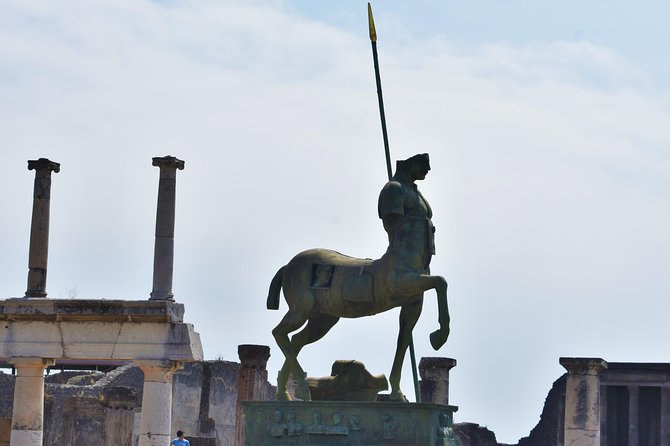
And you’ll also hear about the city itself—how Pompeii was a Greco-Roman city destroyed by Vesuvius’s eruption in AD 79. The big win of a guided visit here is not just knowing what you’re looking at. It’s understanding why the ash burial matters so much. Pompeii isn’t a ruin you wander through and guess. It’s evidence—streets, spaces, and buildings preserved in a way that makes daily life feel close.
Two hours sounds short (because it is), but that can also be the whole point. You’ll leave with the main story, the major buildings, and enough context to come back later if you want a deeper, slower second visit.
Where you’ll feel the time pressure
The guide route moves you through the park, but you should plan for:
- Uneven stone surfaces
- Heat exposure (the ruins can offer limited shade, depending on the day)
- A pace that aims to cover highlights, not everything
If you’re the type who wants to stop for photos every few minutes, bring patience. Your best strategy is to treat this as your “first Pompeii pass,” not your only pass.
The Vesuvius story: from ash burial to Teatro Grande
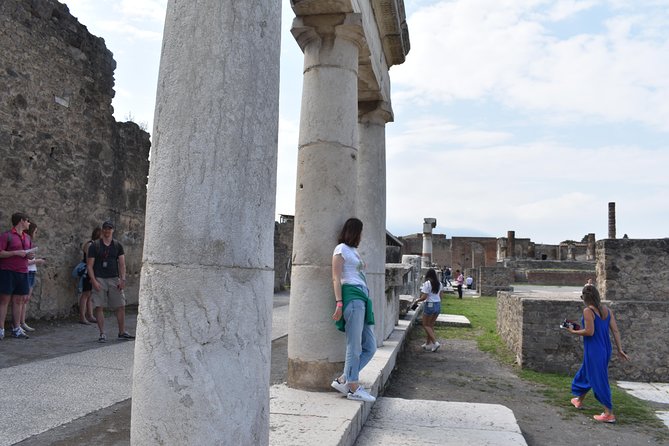
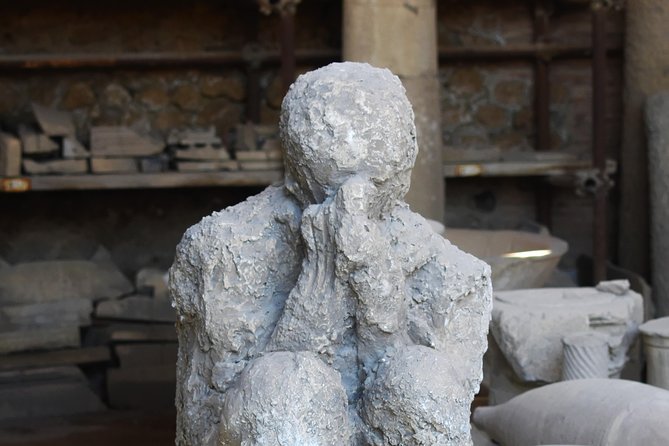
The eruption is the heart of Pompeii. The tour frames it clearly: the city was buried under a sea of volcanic ash from Mount Vesuvius. That explanation isn’t just dramatic storytelling. It changes how you look at what’s left.
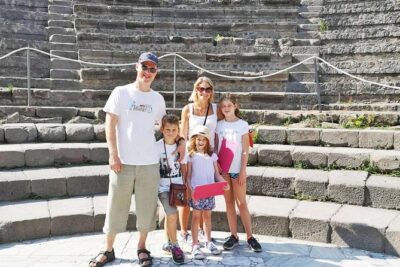
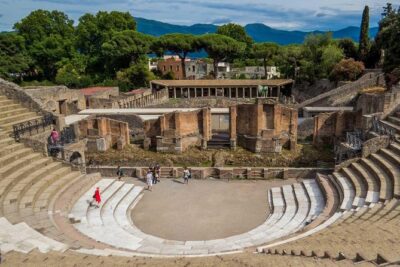
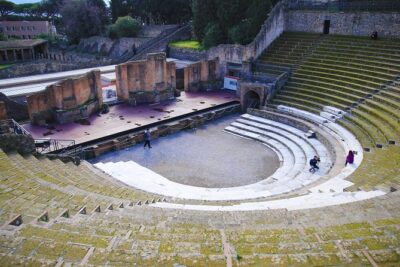
When you see structures like the Teatro Grande—an amphitheater with seating for roughly 5,000 people—the scale hits. You start to understand how public space worked in the city. It’s one thing to know Pompeii had entertainment. It’s another to stand where thousands once sat, hearing voices carried through a Roman theater.
The guide will connect the physical layout to daily life and civic culture. That’s where a good guide matters most. You get a guided “decode”: this arch means this, this layout implies that, and the ash preservation helps explain how the city was used right up to the eruption.
If you’re lucky and your day has extra time near Vesuvius itself, that can add a second perspective. Some groups do get a chance to walk or linger near the volcano area, which helps you visualize what the eruption looked like from the human scale.
More Pompeii runs down from Rome
Lunch in Pompeii: included, local, and usually a highlight
Lunch is part of the package, and it’s usually where the day turns from exhausting to satisfying. The tour includes a meal at a traditional Italian restaurant in Pompeii.
The practical part: drinks aren’t included. So if you like water or something else with your meal, budget for it separately.
Also, do a quick check on dietary needs before you order. The format can include fixed menu choices, and seafood can show up even when you don’t expect it. If you’re sensitive or allergic, tell the staff clearly and early. This is especially important if your group is moving and the schedule is tight.
In general, lunch is one of the best value moments of the day. It breaks up the drive and resets your energy before the main guided walk.
Language and pacing: why English may still feel slow
Here’s the deal you should plan around: this is listed as an English tour, but it’s also multilingual. In practice, some guides may speak in more than one language during the coach ride and/or inside Pompeii.
The result can be simple: explanations take longer. If you hear the guide repeat directions in a second language, you don’t just lose a few sentences—you can lose time inside the park. And because Pompeii is large, that time can be the difference between catching one more key street versus feeling rushed at the end.
If you’re strongly language-dependent (for example, you rely on hearing every detail, or you need to ask questions), consider booking a tour that is explicitly single-language if that option exists. If you’re flexible and you mainly want the highlights with enough context to make sense of it, a multilingual format is manageable.
If you do go, bring your own coping tools:
- Take a screenshot of the main sites you want to see (like Villa dei Misteri, Temple of Apollo, House of the Fauno).
- Keep questions short.
- Focus on body language and gestures when the guide switches languages.
Some Pompeii guides on this type of tour have been named Guido and Nandio. Anyone can do a great job—language clarity is the real variable for your experience.
The stops that can feel like detours (and how to handle them)
The Pompeii visit is the star. But the day can also include extra stops around Naples and souvenir-style workshops. On some days, the schedule may include a drive-through of Naples and a visit to a shop or workshop that sells items like cameo or coral crafts. You may also see a limoncello store-style stop.
This isn’t automatically bad. Watching a craft being made can be interesting if you enjoy process and don’t mind shopping pressure. The key is expectation management: if you want more time in the real Naples streets or you’re not interested in buying, these stops can feel like time away from what you came to do.
So decide what you’re optimizing for:
- If your priority is Pompeii plus a comfortable coach and included lunch, these add-ons are tolerable.
- If your priority is maximum time in Pompeii, you might feel the squeeze.
Either way, go in with a plan to protect Pompeii time. Don’t assume you’ll get a lot of free wandering inside the ruins after the guided portion. If you want extra time for the amphitheater area, market streets, or specific rooms, you may need to do it by moving efficiently during the guided route.
Comfort, group size, and what to bring for a 13-hour day
This is an early, long, road-heavy day. The bus is air-conditioned and group size is kept relatively small, which helps. But expect the reality of coach travel: bathroom breaks, waiting time, and seating that can feel close.
Because Pompeii is a walking site, pack for it even if you’re mainly sitting on the bus:
- Comfortable shoes for uneven ground
- Sunscreen and a hat (shade can be limited)
- A light layer in case you hit rain or wind
- A small snack if you get hungry between lunch and the ruins (not guaranteed)
Also, the tour uses a mobile ticket. Have it accessible on your phone, with enough battery life for early pickup and the park entry.
If rain hits, the ruins can become slick and walking less pleasant. One downside of “keep going” touring is that people can get irritated if the guide pushes forward when others want shelter. If weather is unpredictable, wearing layers and bringing a compact umbrella or poncho can save your day.
Should you book this Pompeii day trip from Rome?
Yes—if you want a guided first look at Pompeii with a comfortable plan and included lunch. The UNESCO ruins are the main event, and with a guide you’ll see major buildings like the Villa dei Misteri and Temple of Apollo in a short, focused window. You’ll also get the story of Vesuvius in a way that makes the site easier to understand.
But I’d hesitate if you:
- Need an all-English experience with lots of Q&A time
- Hate souvenir or workshop stops
- Want long free wandering inside Pompeii with lots of photo time
My best advice: book it if Pompeii is your goal and you can accept a structured schedule. If you’re picky about pacing and language, look for a single-language option (if available) or plan to treat this as your starter Pompeii trip, then return later for the areas you felt you missed.
More Tour Reviews in Pompeii
- Pompeii Small Group Tour with an Archaeologist★ 5.0 · 6,593 reviews
- Pompeii and Herculaneum Small Group Tour with an Archaeologist★ 5.0 · 1,350 reviews
- Skip the Line Guided Tour of Pompeii led by an Archaeologist★ 5.0 · 703 reviews
- Pompeii Ticket + Tour with Optional Tasting Experience at Pompeii★ 5.0 · 663 reviews
- Pompeii private tour with an Official Guide★ 5.0 · 631 reviews
From Rome, More Pompeii Runs
The Story of the City, More Ways In
- 2 hours Pompeii Tour with Local Historian – Ticket Included★ 5.0 · 335 reviews
- Stories of Pompeii: Small Group tour with archeology expert guide★ 5.0 · 191 reviews
- Ancient Pompeii Private Tour: Skip the Line & Kid-Friendly Option★ 5.0 · 167 reviews
- Skip-the-Line Half-Day Private Tour Ancient Pompeii Highlights with Native Guide★ 5.0 · 146 reviews
- Ancient Pompei in the afternoon★ 5.0 · 140 reviews
Just reviewed: more Pompeii tours and day trips




Ancient Pompeii History Tours, compared.
 ★ 5.02 hours Pompeii Tour with Local Historian – Ticket IncludedFrom $48335 reviews
 ★ 4.8Discover Pompeii: French Walking Tour of the Buried CityFrom $41253 reviews
 ★ 5.0Stories of Pompeii: Small Group tour with archeology expert guideFrom $54191 reviews
 ★ 5.0Ancient Pompeii Private Tour: Skip the Line & Kid-Friendly OptionFrom $165167 reviews
 ★ 5.0Skip-the-Line Half-Day Private Tour Ancient Pompeii Highlights with Native GuideFrom $83146 reviews
 ★ 5.0Ancient Pompei in the afternoonFrom $254140 reviews
 ★ 5.0Fast Access Exclusive Private Ancient Pompeii Half Day Tour with Local GuideFrom $20354 reviews
 ★ 5.0Skip-the-line Exclusive Private Full-Day Complete Ancient Pompeii Guided TourFrom $34730 reviews
Browse the lists this tour appears in