
Reviewed · POMPEII ARCHAEOLOGIST-LED TOURS
Pompeii: Skip-the-Line Guided Tour with Expert Archaeologist
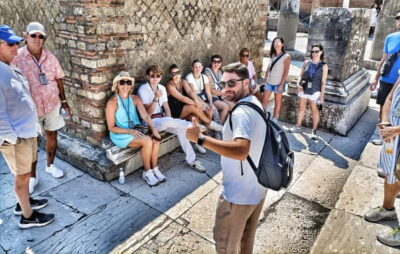
Pompeii gets overwhelming fast, and that is exactly why a guided route helps. This tour pairs skip-the-line access with an official archaeologist who explains what you’re seeing on the ground, plus what’s still being uncovered. You’re not just walking ruins; you’re learning how Romans lived, ate, worshipped, worked, and died in 79 AD.
What I like most is the focus on the streets and daily life parts of Pompeii, not only the postcard stops. I also love the small-group feel with headsets, so you can actually hear the stories without crowding the guide. The one drawback to plan for is the walking: it’s a moderate-pace walk in the heat and you’ll need solid shoes and stamina.
In This Review
- Pompeii Highlights You Can Actually Use
- Why Pompeii Works Best With a Real Archaeologist
- Meeting at Via Villa dei Misteri: The Start That Sets the Tone
- What the 2-to-3-Hour Walk Feels Like (and How to Prepare)
- The Pompeii Stops That Make the Tour Worth It
- 1) Shops, Temples, and “Normal” Roman Streets
- 2) The Roman Forum and Temple Areas
- 3) A Roman Bakery and Food That’s Still There
- 4) An Ancient Supermarket-Style Area and Everyday Infrastructure
- 5) Baths, Villas, and Neighborhood Homes
- 6) The Eruption’s Victims: Plaster Casts
- 7) One of the Reasons the Itinerary Feels Alive: Ongoing Excavations
- 8) The Brothel Option and City Walls With Naples Views
- Complete vs Express: Picking the Right Amount of Pompeii
- Small Groups, Headsets, and the Guides You Might Get
- Value: Is $70 a Good Deal for Pompeii?
- Practical Tips That Improve the Day
- Should You Book This Pompeii Archaeologist Tour?
- FAQ
- FAQ
- Where does the tour meet?
- How long is the tour?
- Is it skip-the-line?
- What language is the tour in?
- Do you get headsets?
- Is hotel pickup or drop-off included?
- Are strollers allowed?
- Is the tour wheelchair accessible?
- What should I bring?
- Is there a shorter option?
- Do I need to provide full names for booking?
Pompeii Highlights You Can Actually Use

- Official archaeologist-led tour that explains what you’re looking at and why it matters
- Skip-the-line, pre-reserved tickets so you spend more time inside and less time waiting
- More ground than most basic tours, with options that prioritize larger portions of the site
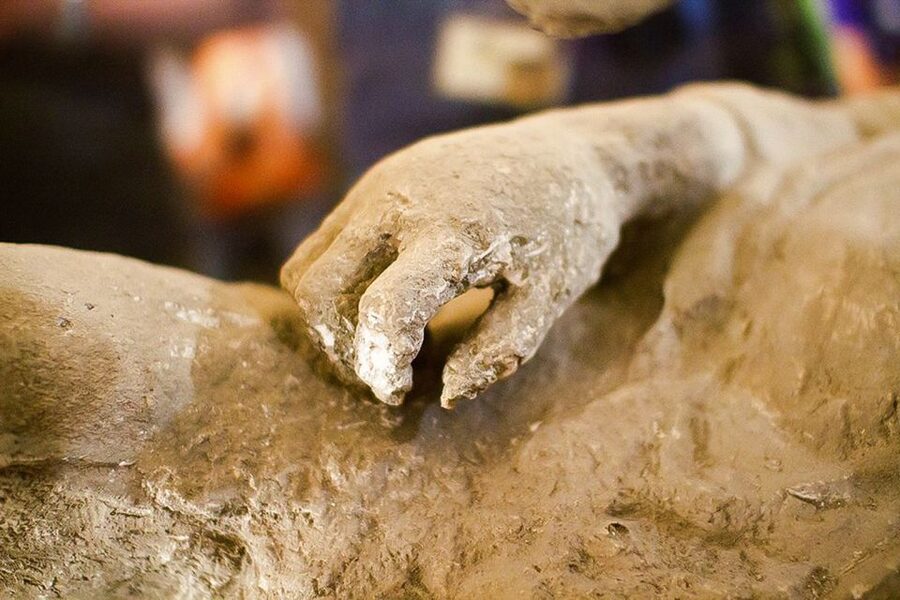
- Victim plaster casts that bring the eruption’s horror into clear, human scale
- Ongoing excavation context, including how a large portion of Pompeii still remains to be uncovered
- Naples city-wall views and older neighborhoods, including the chance to see an ancient brothel if your group is appropriate
Why Pompeii Works Best With a Real Archaeologist
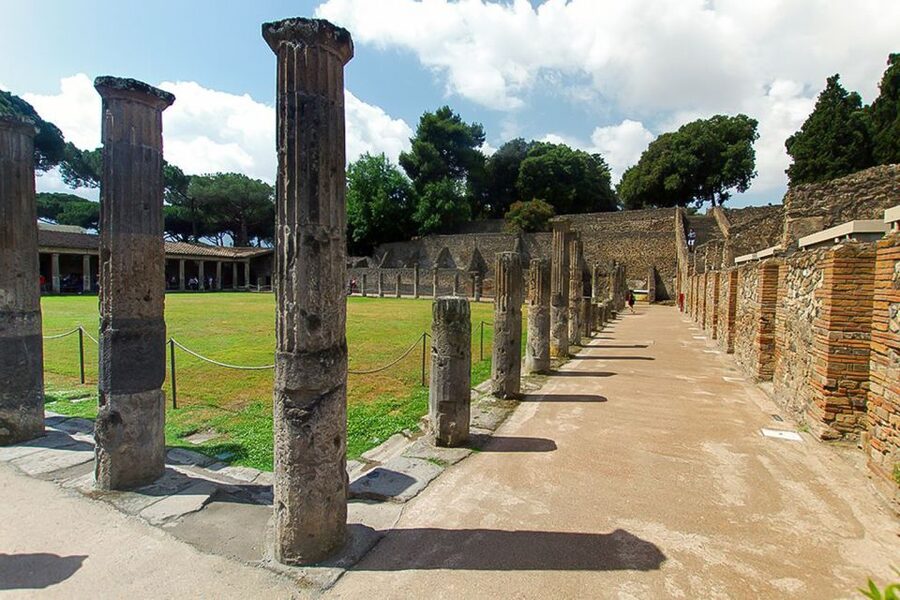
Pompeii is one of those places where your brain wants to do two jobs at once. You want to look, and you also want to understand what you’re seeing. On your own, the site can feel like a giant jigsaw puzzle with missing pieces, especially when you’re moving quickly and the buildings start to blur together.
This guided format fixes that by attaching real explanations to the physical remains. Instead of vague “ancient Rome” commentary, you get targeted context for each area: how the spaces functioned, what daily routines probably looked like, and what the finds mean for how archaeologists interpret the city. And because the guide is a trained archaeologist, the storytelling tends to come with the right mix of facts and cautious interpretation—exactly what you want in a place still being studied.
The other smart choice is the time-saving entry. Skip-the-line access sounds minor until you picture the alternatives: waiting, sweating, and then trying to cram everything into a short visit. With pre-reserved admission and a timed start, you settle into the park faster and your 2 to 3 hours (or the 2-hour express option) feels like it has a point.
More ways past the ticket queue
- Pompeii Ruins Private Tour with Optional Skip-the-Line Entry
★ 4.9 · 732 reviews - Pompeii: Skip-the-Line Tickets and Tour with Archaeologist
★ 4.9 · 467 reviews - Pompeii: Skip-the-Line Tour for Kids and Families
★ 4.9 · 72 reviews
Meeting at Via Villa dei Misteri: The Start That Sets the Tone
The meeting point is Via Villa dei Misteri, 1, at the entrance gate for the Pompeii Archaeological Park. It’s described as being across from the Hortus Pompei restaurant, and your guide will hold a green walks sign. Plan to arrive about 15 minutes early so you can spot your group without rushing.
That “early enough” buffer matters more here than in many cities. Pompeii entrance areas can get busy, and it’s not fun to lose time before the tour even begins. Also, since you’re walking right away, getting organized before you start pays off fast: water, sunscreen, and comfortable shoes should be ready to go before you step into the ruins.
The tour is in English, and you’ll have headsets when needed, which makes a huge difference when you’re standing near other groups or when it’s loud in open areas.
What the 2-to-3-Hour Walk Feels Like (and How to Prepare)

This is a walking tour through a large archaeological park. You should expect a moderate pace, and you’ll want comfortable, closed-toe shoes. High-heeled shoes are not allowed, and baby strollers are also not permitted. If you have mobility concerns, this tour is not suitable for wheelchair users or guests with mobility impairments.
Heat is the practical issue that can affect everyone, even when the route is managed well. A recurring theme from past tours is that Pompeii can be brutal in warm weather, with limited shade and lots of stone and sun. I’d treat this like a summer hike: bring water, a hat, and sun protection.
One tip that really tracks: consider a UV umbrella. Pompeii’s atmosphere is part archaeology, part outdoor exposure. If you can cut the sun strain, the tour becomes more enjoyable and you’re better able to notice details.
The Pompeii Stops That Make the Tour Worth It
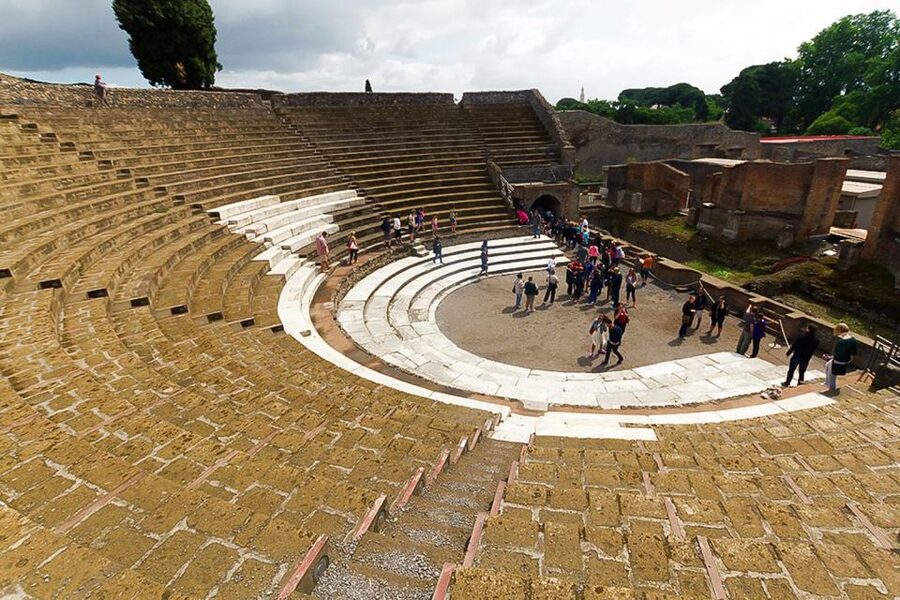
The best way to think about this tour is that it turns Pompeii into a guided map of everyday life. You’re not bouncing between random highlights. You’re moving through key neighborhoods and public spaces so you can see how the city worked.
1) Shops, Temples, and “Normal” Roman Streets
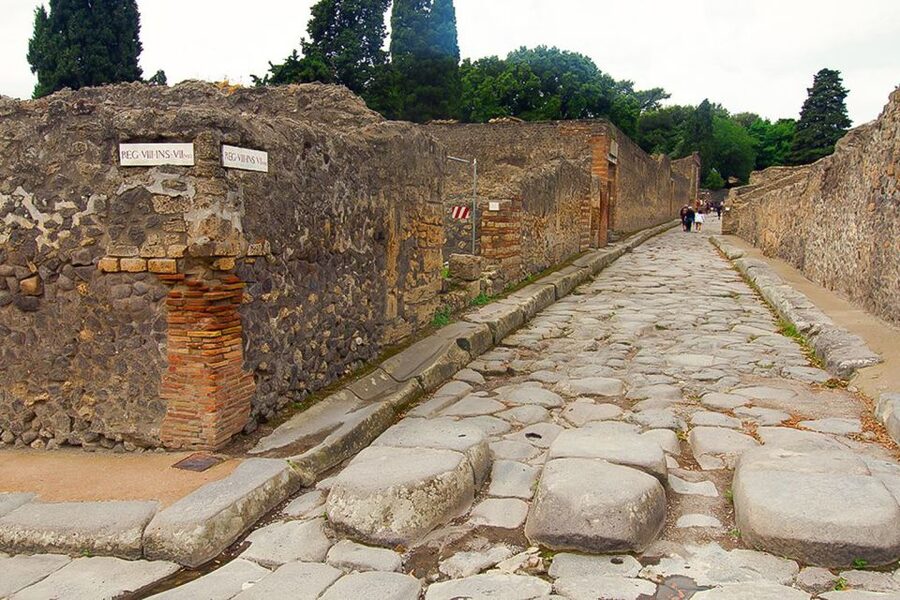
You’ll stroll the best-preserved streets of the Roman Empire, with stops that connect architecture to daily behavior. The tour focuses on remains of shops, temples, public baths, and houses—the everyday mix of work, worship, health, and home.
The big value here is learning the logic of the space. A street looks simple until someone explains how people moved through it, where commerce happened, or why certain buildings were built where they were. When you understand those basics, even standing still for a few minutes becomes more rewarding.
More of the site walked with an archaeologist
2) The Roman Forum and Temple Areas
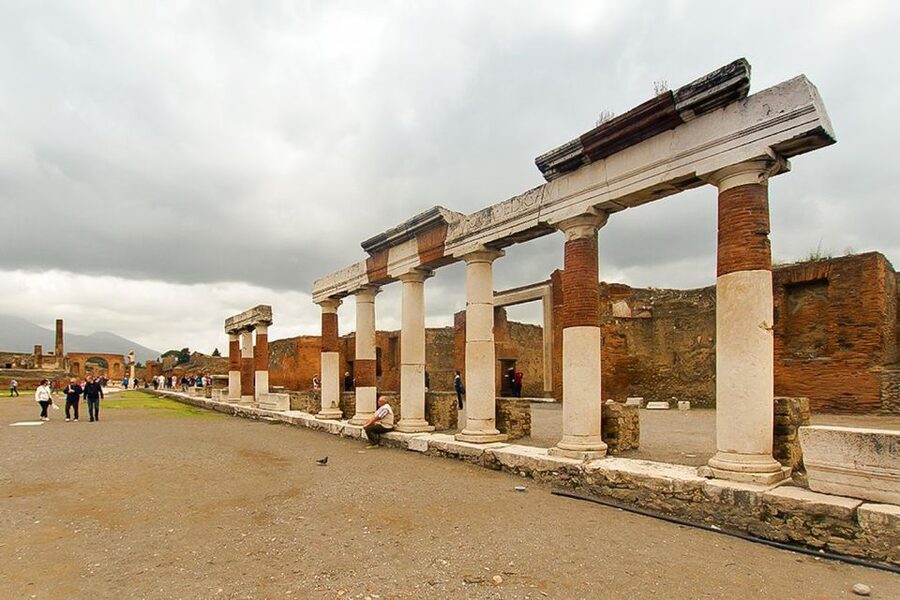
You’ll visit major civic and religious zones, including the Roman Forum and the Temple of Apollo. These stops matter because they show Pompeii as a community, not just a collection of houses.
The Forum helps you picture government and public life, while the Apollo complex ties religion to the city’s identity. Even if you’ve read about the Romans before, seeing these spaces with a guide who can explain what would have happened there changes how your memory sticks.
3) A Roman Bakery and Food That’s Still There
One especially emotional and memorable stop is the remains of a Roman bakery, where the food is described as still almost intact. That detail is a big deal because it makes Pompeii feel immediate. Instead of imagining consumption, you’re seeing what could look like a real snapshot of a pantry moment.
It also highlights why Pompeii is so famous for preservation: the eruption trapped daily life in place. A guide helps you look at the building surfaces and layout with the right questions in mind—what the space was for, how people used it, and how evidence from the site supports those interpretations.
4) An Ancient Supermarket-Style Area and Everyday Infrastructure
You may also see the remains of an ancient supermarket, plus other elements like old cemetery areas. These kinds of stops are great because they broaden Pompeii beyond the usual “big-name” ruins.
A cemetery area, for example, forces you to consider the city as a place of multiple life stages. The shopping and food spaces push you to see commerce as routine, not spectacle. When your tour includes both, the city starts to feel like a living system.
5) Baths, Villas, and Neighborhood Homes
The tour includes stays that focus on baths and villas, along with residential spaces that help you understand class differences and household routines. Roman public baths were social spaces, not just hygiene stops, and a guide can explain how bathing flowed from room to room.
Villas and houses add another layer: where people lived when they wanted privacy, how rooms might have been used, and what daily routines looked like for different households. You’re not just admiring stone—you’re reconstructing the human patterns that used it.
6) The Eruption’s Victims: Plaster Casts
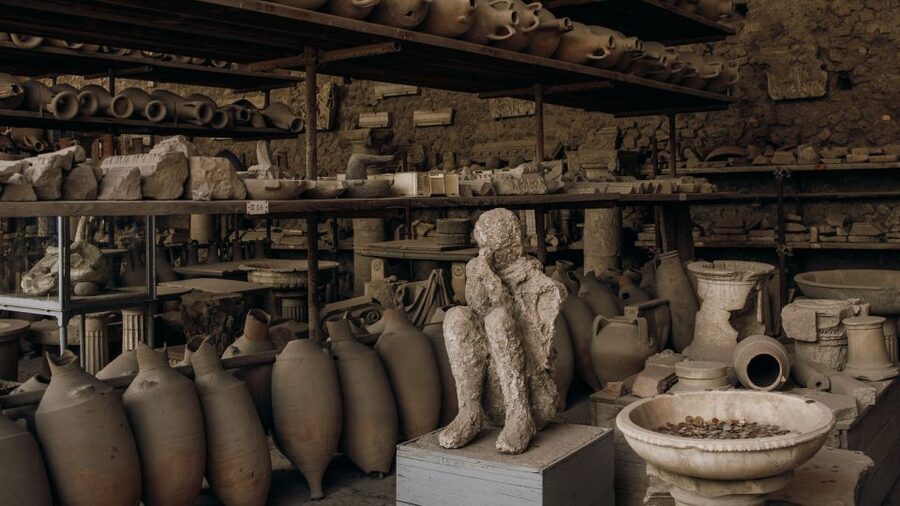
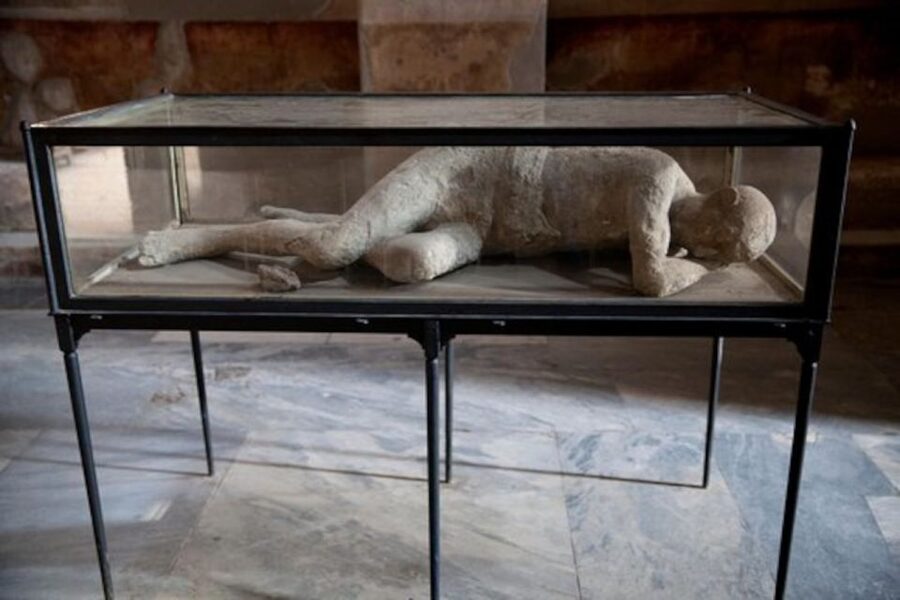
This is where the tour becomes hardest to shake. You’ll see plaster casts of people caught in the eruption at the moment of their deaths. It’s eerie because it is specific. It’s heart-wrenching because it turns “a tragedy” into bodies, postures, and final seconds.
A good archaeologist guide matters here. You want a calm, careful explanation that respects the evidence and doesn’t turn it into a spectacle. When the tour is paced well, this segment lands as solemn and clear, not rushed.
7) One of the Reasons the Itinerary Feels Alive: Ongoing Excavations
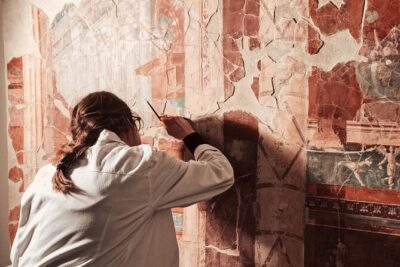
Pompeii is still a work site. About a third of Pompeii remains uncovered, and excavation and preservation efforts continue today. The tour’s itinerary can adapt based on new discoveries, so you get a sense of how archaeologists revise what they think they know as fresh evidence comes in.
This is a major reason the tour feels different from a static “greatest hits” walk. When you hear how excavation changes interpretations, you stop thinking of Pompeii as frozen in time. It becomes a living scientific project, even though the city itself is long gone.
8) The Brothel Option and City Walls With Naples Views
If your group is appropriate, the route can include an older brothel stop. It’s not positioned as shock value. Instead, it’s used to show another side of Roman urban life and how certain services were integrated into the city’s economy.
You’ll also stroll along old city walls for panoramic views over Naples. These views are practical too. After hours of stone, a high-outlook moment gives your eyes a reset, and it helps you orient mentally. When you’re back inside the streets again later, you’ll feel like you understand where everything sits.
Complete vs Express: Picking the Right Amount of Pompeii
You’ll see two time paths offered. If you choose the longer experience (the option described as a Complete Pompeii route), you’ll get to see more of the park than many shorter formats. That extra time matters because Pompeii is huge, and most “short tours” inevitably skim.
If you prefer something tighter, the Pompeii Express option is about 2 hours. It’s led by an archaeologist and focuses on a shortlist of core highlights such as the Forum, temples, and shops. This makes sense if you’re combining Pompeii with other stops in Campania or if you want a guided primer before you explore more on your own afterward.
My practical advice: if this is your one and only Pompeii day, lean toward the longer option. If you already plan a return—or if your schedule is tight—go with Express and plan to add self-guided time later.
Small Groups, Headsets, and the Guides You Might Get
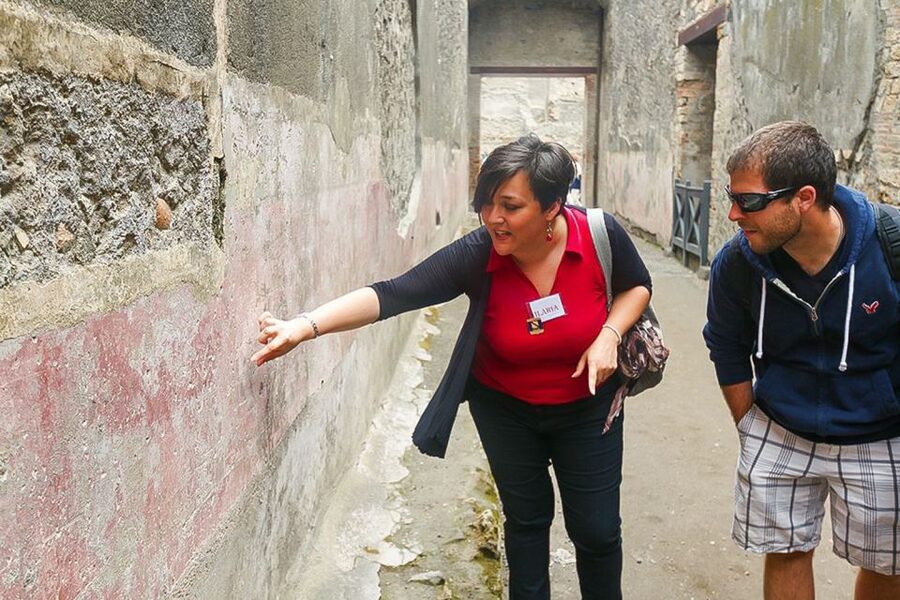
A key comfort factor is the group size. Tours are described as small group or private, and you won’t be straining to hear. Past guides named include archaeologists such as Iliana, Anna, Enzo, Brunella, Ilaria, Sonya, Paulo, and Vincenzo.
The common thread in how these guides are described is clear voice and strong pacing. One guide style you’ll benefit from is patience: taking time in shaded spots when heat hits, explaining without rushing, and making room for questions. That sounds basic, but in Pompeii it’s the difference between a tour you enjoy and one you endure.
Headsets also help a lot. You can stand a little back, look at what the guide is pointing to, and still catch the explanation cleanly.
Value: Is $70 a Good Deal for Pompeii?
At $70 per person, you’re paying for three things: expert interpretation, time saved at the entrance, and a structured walk that covers more than the obvious highlights. If you were doing this on your own, the cost would be just admission and a guidebook. The problem is that Pompeii is too big and too easy to misunderstand.
This tour gives you skip-the-line tickets plus an official Pompeii tour guide and a trained archaeologist. Those two roles together are what you’re really buying: the ability to connect visible remains to how people lived and how archaeologists read the evidence. You also get headsets, so you’re not paying extra just to be “near” someone talking.
Is it worth it if you’re already an archaeology fan? Even more so. If you’re not, it’s still worth it because the city basically teaches itself faster with the right guide turning on explanations at the right moments.
Practical Tips That Improve the Day
Pompeii can feel like a high-speed museum, unless you plan like a walker.
- Bring water, a hat, and sunscreen. Shade can be limited.
- Wear closed-toe shoes that can handle stone and uneven ground.
- Consider sun gear like a UV umbrella if you get heat-strained.
- Plan for limited facilities during the walk. One past booking noted there may be only one toilet stop during the tour, so go when you get the chance.
- If you care about photos, expect stops where you can pause, but remember the tour is built for walking and explanation, not long photo sessions.
Should You Book This Pompeii Archaeologist Tour?
Book it if you want Pompeii to make sense. This is a strong choice when you like learning by seeing: streets, shops, baths, homes, and the eruption’s evidence explained in context. It’s also a great pick if you’re short on time and want to maximize what you see with pre-reserved skip-the-line entry and a paced route.
Skip it or think twice if you don’t handle long outdoor walks well, or if mobility limitations make a walking-only route a bad fit. Also, if you prefer totally self-directed wandering with no structure at all, you might resent the pace.
If you’re balancing a single Pompeii day with other Campania plans, choose based on time: the longer option for deeper coverage, Express when you need a focused guided primer.
FAQ
FAQ
Where does the tour meet?
It meets at Via Villa dei Misteri, 1, at the entrance gate for the Pompeii Archaeological Park across from the Hortus Pompei restaurant. The guide will be holding a green walks sign.
How long is the tour?
The standard experience is listed as 2 to 3 hours.
Is it skip-the-line?
Yes. You get Pompeii pre-reserved skip-the-line tickets.
What language is the tour in?
The tour is in English.
Do you get headsets?
Yes. Headsets when needed are included.
Is hotel pickup or drop-off included?
No. Hotel pick-up and drop off are not included.
Are strollers allowed?
No. Baby strollers are not allowed.
Is the tour wheelchair accessible?
No. It is not suitable for guests with mobility impairments or with wheelchairs.
What should I bring?
Bring passport or ID, comfortable shoes, and for children the required passport or ID as well.
Is there a shorter option?
Yes. Choose the Pompeii Express option for a shorter 2-hour experience.
Do I need to provide full names for booking?
Yes. The full names of all participants must match the names on ID/passport, and name changes are not permitted.
More Tour Reviews in Pompeii Archaeological Site
- Pompeii: Entry Ticket with Optional Audio Guide★ 4.2 · 12,360 reviews
- Pompeii: Archaeological Park Tour with Ticket on request★ 4.5 · 2,283 reviews
- Pompeii Ruins Private Tour with Optional Skip-the-Line Entry★ 4.9 · 732 reviews
- Pompeii: Exclusive Tour with Archaeologist and Entry Tickets★ 4.9 · 634 reviews
- Pompeii: Group Tour with an Archeologist Guide★ 4.4 · 490 reviews
More Tours Led by an Archaeologist
- Pompeii: Exclusive Tour with Archaeologist and Entry Tickets★ 4.9 · 634 reviews
- Pompeii: Group Tour with an Archeologist Guide★ 4.4 · 490 reviews
- Pompeii: Skip-the-Line Tickets and Tour with Archaeologist★ 4.9 · 467 reviews
Skip-the-Line Entries, More to Book
- Pompeii Ruins Private Tour with Optional Skip-the-Line Entry★ 4.9 · 732 reviews
- Pompeii: Skip-the-Line Tickets and Tour with Archaeologist★ 4.9 · 467 reviews
- Pompeii: Skip-the-Line Tour for Kids and Families★ 4.9 · 72 reviews
- Pompeii: Skip-the-Line Ticket and Virtual Museum★ 4.5 · 66 reviews
- Pompeii: Skip-the-Line Guided Archaeological Discovery Tour★ 4.2 · 13 reviews
Just reviewed: more Pompeii Archaeological Site tours and day trips

Pompeii Archaeologist-Led Tours, compared.
 ★ 4.8Entry Ticket and Guided Tour with an ArchaeologistFrom $3519,459 reviews
 ★ 4.8Small Group Tour with an ArchaeologistFrom $4012,264 reviews
★ 5.0Pompeii Small Group Tour with an ArchaeologistFrom $356,593 reviews
★ 4.8Small Group Tour with an ArchaeologistFrom $4012,264 reviews
★ 5.0Pompeii Small Group Tour with an ArchaeologistFrom $356,593 reviews
 ★ 5.0Pompeii and Herculaneum Small Group Tour with an ArchaeologistFrom $771,350 reviews
 ★ 5.0Skip the Line Guided Tour of Pompeii led by an ArchaeologistFrom $95703 reviews
 ★ 4.9Exclusive Tour with Archaeologist and Entry TicketsFrom $50634 reviews
 ★ 5.0Pompeii Private Tour with an Archaeologist and Skip The Line – 3 hoursFrom $302564 reviews
 ★ 5.0Pompeii Skip-the-line Tour with Archaeologist GuideFrom $71559 reviews
Browse the lists this tour appears in