
Reviewed · POMPEII SKIP-THE-LINE ENTRY
Pompeii: Skip-the-Line Ticket and Virtual Museum
Pompeii is the kind of place that makes time feel short. With a skip-the-line ticket plus a Virtual Museum session, you get the ruins and then a 3D, animated way to picture what you’re walking through.
I especially like that the day is self-paced, so you can linger where your curiosity pulls you—street corners, homes, baths, and fountains. I also like the Virtual Museum’s animated reconstructions of major spots like the Forum, baths, and amphitheater, because it helps the whole site click faster. The one potential downside: the multimedia show may not match everyone’s expectations; one review called it outdated.
If you’re heading to Pompeii from Campania for a straightforward one-day plan, this pairing is a practical way to pack in interpretation without needing a full guided tour. You’ll start at the Office IBT Center/Touristation next to Chalet Donna Lucia, then work your way through Pompeii’s 50-plus hectares at your own pace, using the city map and the reserved Virtual Museum ticket to tie it together.
In This Review
- Key reasons this works well
- Pompeii with less waiting: what the skip-the-line actually changes
- Virtual Museum: your 3D primer before you walk the streets
- Meeting point and first steps: keep your ID ready
- Your Pompeii walk: what you’ll actually be looking for
- The central Forum: civic life frozen in stone
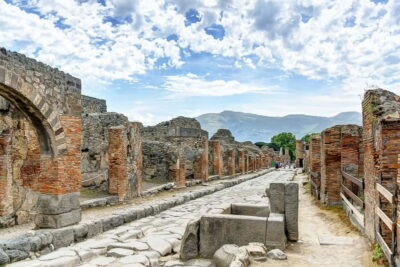
- Streets, aqueduct remnants, and fountain points
- Baths and public life
- Private houses, businesses, and colorful fresco remnants
- Theater and amphitheater: where crowds once gathered
- The eruption story: ending the day with the final act
- What this is best for (and who might want something else)
- Price and value: is $60 a fair deal?
- Practical tips to make your day go smoothly
- Should you book this Pompeii skip-the-line + Virtual Museum ticket?
- FAQ
- What’s included in the ticket?
- How long is the experience?
- Where do I meet for the tour?
- Do I need to bring ID?
- Is a guided tour included?
- Is an audio guide included?
- Is the Villa dei Misteri included?
- Are pets allowed?
- Can I bring luggage or large bags?
- Is the experience refundable?
Key reasons this works well
- Skip-the-line entry saves time when you arrive at one of Italy’s busiest ancient sites
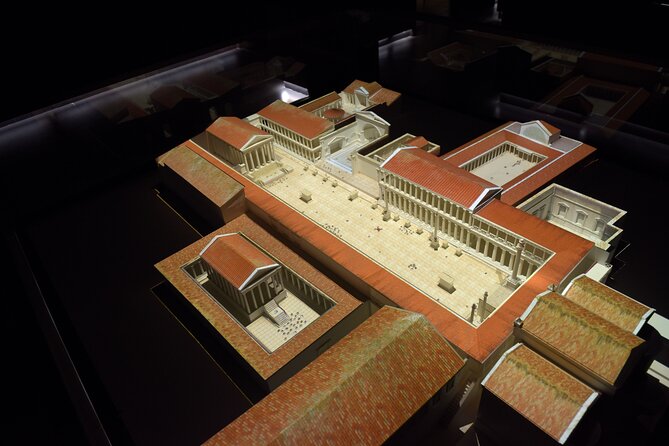
- Virtual Museum 3D reconstructions help you visualize the Forum, baths, and amphitheater before you stroll the stones
- Self-paced walking means you can move at your own speed, not the group’s
- A multimedia eruption finale gives context for what ended daily life in 79 AD
- City map + Wi‑Fi help you stay oriented without constantly hunting for information
Pompeii with less waiting: what the skip-the-line actually changes

Pompeii is famous for one reason above all: it’s preserved so well that you don’t just read about ancient life—you walk through it. The main practical issue is time. There’s often a line, and with a one-day visit, every delay matters.
That’s where the skip-the-line ticket earns its keep. It means you can get into the archaeological area faster and start shaping your day around the parts that interest you most. If you love architecture, you can head toward the Forum. If you’re drawn to public life, you can aim for baths and the amphitheater. If you want the street-level stuff—shops, doorways, and fountain remnants—you can spend extra time there without feeling like you’re racing the clock.
One note that affects expectations: this experience does not include a guided tour or an audio guide. So while the ticket gets you inside quickly, you’ll rely on the ruins themselves, the provided map, and the Virtual Museum to fill in the “what am I looking at?” gaps.
More ways past the ticket queue
- Pompeii Ruins Private Tour with Optional Skip-the-Line Entry
★ 4.9 · 732 reviews - Pompeii: Skip-the-Line Tickets and Tour with Archaeologist
★ 4.9 · 467 reviews - Pompeii: Skip-the-Line Tour for Kids and Families
★ 4.9 · 72 reviews
Virtual Museum: your 3D primer before you walk the streets
After (or around) your on-site entry, you’ll use the reserved Virtual Museum experience to time travel. The show is multimedia and designed around how Pompeii looked and functioned before the eruption. In the Virtual Museum, you’re presented with animated reconstructions of key spaces—especially the Forum, the public baths, and the amphitheater.
What I like about this kind of pre-visualization is simple: Pompeii can feel like a collection of walls and street segments until you understand how the spaces connected. When you later see a surviving doorway, a platform, or a section of column, you’re more likely to mentally place it in the larger civic scene you just saw in 3D.
There’s also a multimedia video reconstruction of part of Pompeii, and the experience ends with the spectacle of Vesuvius’ eruption—basically the story arc from normal Roman city life to sudden catastrophe. One of the reviews praised the Virtual Museum presentation in French right at the start of the outing, saying it helped them understand what they would then see on foot. That’s exactly how you’d want it to work: learning the layout and major landmarks first, then using your feet to explore.
The trade-off is that multimedia doesn’t suit everyone. One review criticized the Virtual Museum as obsolete. So if you’re picky about visuals or modern presentation style, keep your expectations flexible.
Meeting point and first steps: keep your ID ready
Your day begins at the Office IBT Center/Touristation next to Chalet Donna Lucia. Plan to arrive with enough time to find the office and get checked in without rushing.
You’ll need passport or ID card for all participants. Also, this activity requires Id for all participants, so don’t assume you can skip it. (Pompeii is part of a working ticket system, and these checks can be strict.)
You should also know the restrictions before you go:
- No luggage or large bags
- No smoking
- No alcohol or drugs
- Pets are not allowed, but small dogs are permitted in the archaeological area on a leash—and they must be carried when inside buildings
If you’re traveling with a daypack, that’s usually manageable, but the “no large bags” rule is worth respecting so you don’t end up stuck dealing with storage at the last minute.
Your Pompeii walk: what you’ll actually be looking for
Pompeii covers over 50 hectares, and the best way to enjoy it is to accept that you won’t see everything the way a “checklist” tour does. Instead, think of your visit like choosing a few city threads and following them until you feel satisfied.
Here are the specific kinds of places you should expect to find, and why they matter.
The central Forum: civic life frozen in stone
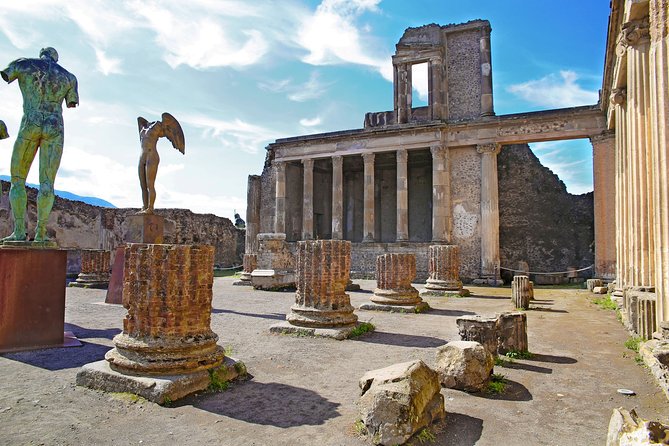
The Forum is the heart of Pompeii—the central gathering place where civic and commercial activity would have happened. In the ruins, you’ll see remnants of columns and doorways and enough open space to imagine the movement around you.
If you’re someone who likes context, the Forum is often where it becomes real. You can stand in the open area and see how the surrounding buildings define the “rooms” of public life. The Virtual Museum’s reconstructions of this space can help you place the ruins mentally, so your eye knows what mattered.
A drawback: the Forum can feel crowded during peak times, and it’s also a hub for foot traffic. If you want quiet viewing, pick a less busy moment in the day and stay flexible.

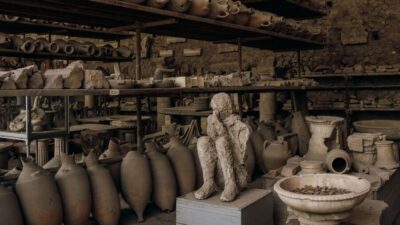
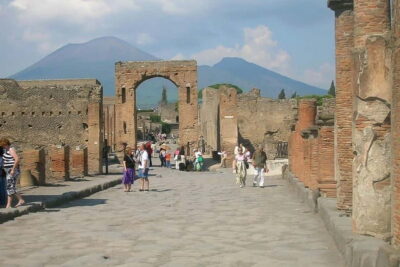
Streets, aqueduct remnants, and fountain points
Pompeii is famous for how much you can read from the ground plan. As you wander, you should expect to see evidence tied to everyday infrastructure, including:
- Aqueduct remnants
- Street fountains
- Street-level building remnants like doorways and shop spaces
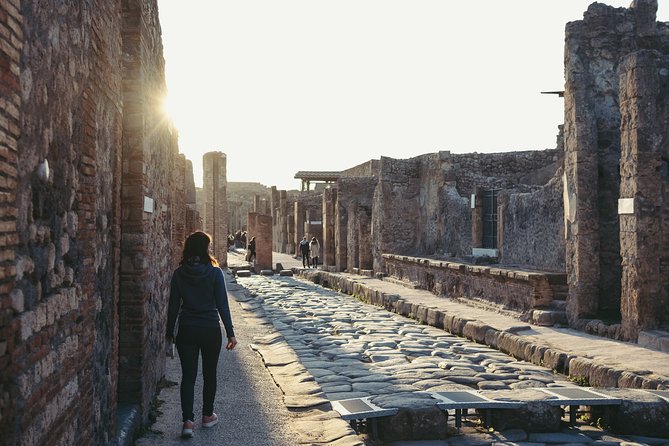
This is where a self-paced visit shines. You can slow down, angle your steps to follow water-related features, and connect that with what your senses already know about cities. Roman urban life wasn’t just drama and statues. It was also water and distribution—small details that keep the city running.
Baths and public life
The baths are a big deal in any Roman city, and Pompeii’s surviving structures help you understand why. You’ll see what remains of these facilities, and the Virtual Museum’s animated reconstructions of bath spaces are meant to help you picture circulation—where people moved, where activity happened, and how the space was used.
Even if you’re not a “bath person,” this stop can be surprisingly rewarding because it’s social. You’re seeing how daily routines overlapped: cleanliness, conversation, relaxation, and status.
Private houses, businesses, and colorful fresco remnants
This is where Pompeii starts tugging at your imagination. You’ll find remains connected to:
- Private houses
- Businesses
- Statues
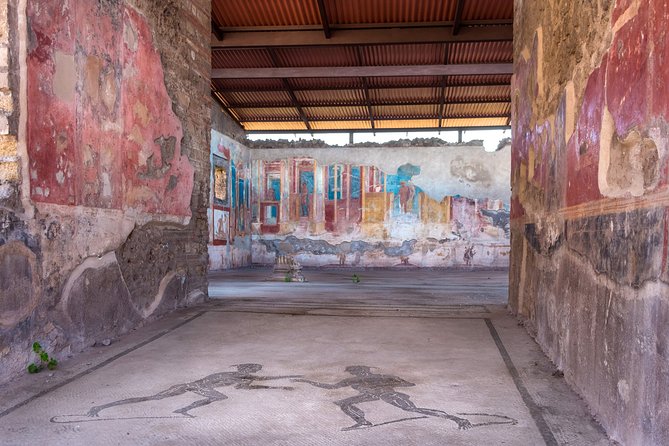
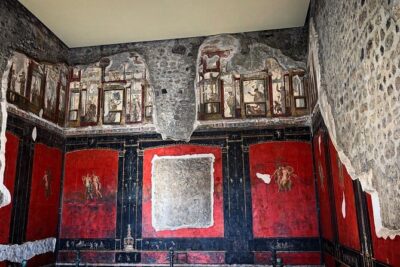
- Frescoes in places where color once helped bring rooms to life
The key value here is perspective. Frescoes and household remnants can look fragmentary if you approach them like museum artifacts behind glass. But seeing them in situ changes the experience. You get a sense of scale—how wide a doorway was, how rooms relate to streets, and how decoration tied into the idea of home.
One caution: if you expect lots of intact, fully restored art, you might feel underwhelmed. The experience is about what survived, not about everything being preserved perfectly.
Theater and amphitheater: where crowds once gathered
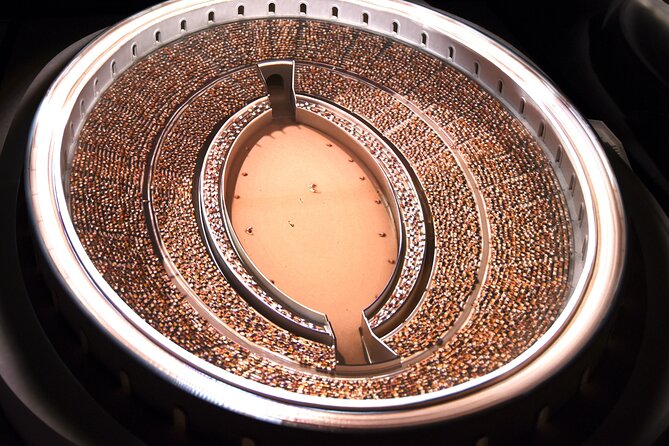
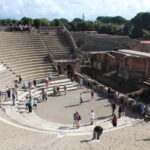
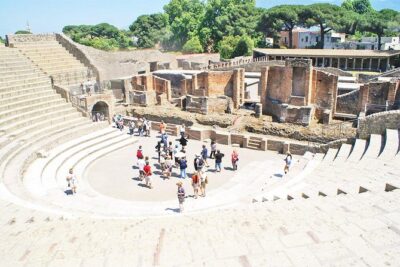
Pompeii’s amphitheater and dramatic theater were built for spectators, and you should expect to see what remains of both. In the Virtual Museum, you’ll see animated reconstructions meant to show how packed these spaces were and what performances meant for the city.
This is a great area to slow down and look upward as well as around. In ruins like these, the “shape” of the seating and staging helps you understand the sound and view lines—things the stones don’t spell out on their own.
The eruption story: ending the day with the final act
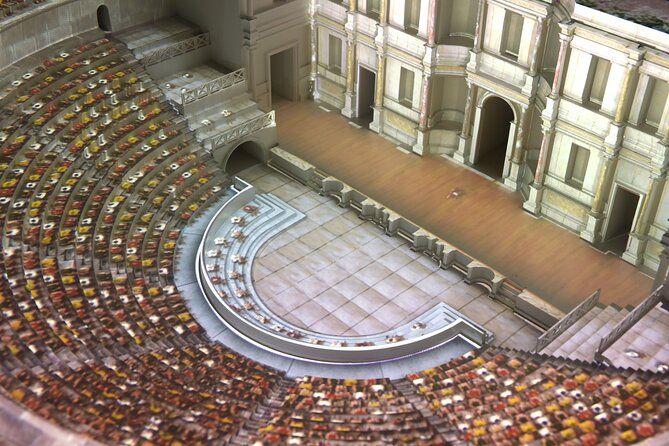
The day doesn’t just end with ruins. The Virtual Museum experience is described as culminating in the terrible eruption of Vesuvius that effectively ended the city.
I like having this emotional and factual closing moment tied to what you’ve walked through. It turns disconnected buildings into a single timeline. And it also sets a baseline for understanding why Pompeii looks the way it does—why suddenness froze daily life rather than allowing gradual change.
If you’re visiting with kids, this kind of ending can make the visit feel like a story instead of a scavenger hunt for facts.
What this is best for (and who might want something else)
This Pompeii experience is a strong fit if you:
- Want one day that mixes ruins with interpretation
- Like self-paced wandering more than fixed group time
- Appreciate 3D reconstructions that help you visualize what you’re seeing
- Don’t want to pay for or coordinate a guided tour
It may be less ideal if you:
- Want a deep, on-the-spot guide walking you through details (this experience doesn’t include a guided tour or audio guide)
- Are very sensitive to multimedia quality, especially if you were hoping for cutting-edge visuals (one review criticized the Virtual Museum presentation as outdated)
Price and value: is $60 a fair deal?
At $60 per person, the value depends on what you’d otherwise do.
Here’s the simple logic:
- Skip-the-line saves time, which can be worth a lot in a one-day visit.
- The Virtual Museum adds interpretation in 3D and animation, which can help you understand Pompeii faster than relying only on guesswork with a map.
- What you’re not paying for is a guided tour or audio guide, so if you need a constant expert voice, you may still want to bring your own plan.
In other words, this price is most fair for people who are happy to explore at their own pace and use multimedia as their explanation layer. If you crave constant narration, $60 might feel like you’re paying for access without enough human help. If you’re flexible and curious, it can feel like a smart, efficient pairing.
Practical tips to make your day go smoothly
- Bring passport or ID. It’s required for all participants.
- Plan around the fact that Pompeii is big. With self-paced time, decide in advance which zones you want most: Forum, baths, amphitheater, or houses and fresco remnants.
- Keep expectations grounded about the Virtual Museum. It’s designed to reconstruct and animate, not to replace a guide or provide perfect modern freshness.
- Keep your bag light. No large bags means you should travel with only what you need for several hours outdoors.
- If you’re traveling with a small dog, remember the special rules: leash inside the archaeological area, and carried when inside buildings.
Should you book this Pompeii skip-the-line + Virtual Museum ticket?
I’d book it if you want a well-structured Pompeii day without the pressure of keeping pace with a group. The skip-the-line entry is the easy win, and the Virtual Museum’s focus on major landmarks like the Forum, baths, and amphitheater can make your on-foot visit feel much more legible.
I would pause before booking if you know you need an expert guide for context, or if you’re extremely picky about multimedia being current and polished. In that case, consider whether you’ll be satisfied exploring on your own with only the map and the show.
Bottom line: for most first-timers, this is a practical way to get in, understand faster, and walk away feeling like you truly saw Pompeii—not just passed through it.
FAQ
What’s included in the ticket?
You get a skip-the-line ticket for the Pompeii archaeological site, a reserved ticket for the Virtual Museum, a city map, and Wi‑Fi.
How long is the experience?
The duration is 1 day. Starting times depend on availability.
Where do I meet for the tour?
Meet at the Office IBT Center/Touristation next to Chalet Donna Lucia.
Do I need to bring ID?
Yes. You need a passport or ID card, and ID is required for all participants.
Is a guided tour included?
No. A guided tour is not included.
Is an audio guide included?
No. An audio guide is not included.
Is the Villa dei Misteri included?
No. Entrance to Villa dei Misteri is not included.
Are pets allowed?
Pets are not allowed. Small dogs are permitted inside the archaeological area on a leash, and they must be carried when inside buildings.
Can I bring luggage or large bags?
No. Luggage or large bags are not allowed.
Is the experience refundable?
No. This activity is non-refundable.
More Tour Reviews in Pompeii Archaeological Site
- Pompeii: Entry Ticket with Optional Audio Guide★ 4.2 · 12,360 reviews
- Pompeii: Archaeological Park Tour with Ticket on request★ 4.5 · 2,283 reviews
- Pompeii Ruins Private Tour with Optional Skip-the-Line Entry★ 4.9 · 732 reviews
- Pompeii: Exclusive Tour with Archaeologist and Entry Tickets★ 4.9 · 634 reviews
- Pompeii: Group Tour with an Archeologist Guide★ 4.4 · 490 reviews
Skip-the-Line Entries, More to Book
- Pompeii Ruins Private Tour with Optional Skip-the-Line Entry★ 4.9 · 732 reviews
- Pompeii: Skip-the-Line Tickets and Tour with Archaeologist★ 4.9 · 467 reviews
- Pompeii: Skip-the-Line Guided Tour with Expert Archaeologist★ 4.8 · 196 reviews
- Pompeii: Skip-the-Line Tour for Kids and Families★ 4.9 · 72 reviews
- Pompeii: Skip-the-Line Guided Archaeological Discovery Tour★ 4.2 · 13 reviews
Just reviewed: more Pompeii Archaeological Site tours and day trips
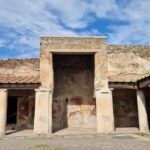




Pompeii Skip-the-Line Entry, compared.
 ★ 4.0Skip-the-Line Entrance Ticket with Audio GuideFrom $392,509 reviews
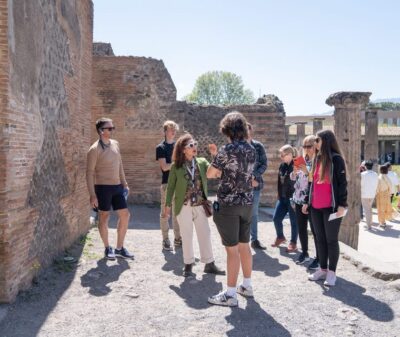 ★ 4.6Skip-the-line-Ticket and Guided TourFrom $641,152 reviews
 ★ 4.9Guided Tour with Skip-the-Line EntryFrom $58812 reviews
 ★ 4.1Skip-the-Line Entry Ticket with Digital Guide AppFrom $22770 reviews
 ★ 4.9Pompeii Ruins Private Tour with Optional Skip-the-Line EntryFrom $254732 reviews
 ★ 5.0Skip the Line Guided Tour of Pompeii led by an ArchaeologistFrom $95703 reviews
 ★ 5.0Pompeii Private Tour with an Archaeologist and Skip The Line – 3 hoursFrom $302564 reviews
 ★ 5.0Pompeii Skip-the-line Tour with Archaeologist GuideFrom $71559 reviews
Browse the lists this tour appears in