
Reviewed · POMPEII PRIVATE GUIDED TOURS
2-Hour Private Walking Tour of Pompeii
Pompeii hits hard, even in just two hours. I like that this tour mixes big-picture Roman planning with close-up details like the basalt road and torchlight reflections. I also love the convenience of skip-the-line entry with a private guide to keep things moving. One drawback: the walk is not suitable for wheelchair users, so comfortable shoes and solid mobility matter.
This is a smart way to see Pompeii without getting lost in a maze of streets, tombs, and temples. You’ll cover the Forum, key temples and public buildings, plus everyday-life stops like bakeries, markets, and the Roman take on fast food. You can also shape the pacing to your interests and physical ability, but you still need to accept a condensed route.
In This Review
- Key Things I’d Focus On
- Why Two Hours in Pompeii Works (If You Want the Big Picture)
- Meeting at Café Hortus Pompeii: Start Where the Park Actually Feels Navigable
- The Basalt Road Walk: The Detail That Makes Pompeii Feel Real
- Forum Stops That Define Pompeii’s City Brain
- Public Life Beyond Temples: Baths, Villas, Taverns, and Shops
- Human Casts: Why This Ruin’s Story Lands So Deep
- Pompeii’s Bakery Stop: The Roman Fast-Food Equivalent
- The Red Light District and Erotic Frescoes: A Shock You Can Still Use
- Theatres: Roman Entertainment in Three Different Forms
- Price and Value: What You’re Paying For at $175.22 Per Person
- Practical Details That Affect Your Comfort (Not Just Logistics)
- Should You Book This Pompeii Private Walking Tour?
- FAQ
- Where does the tour start?
- How long is the Pompeii private walking tour?
- Is this tour really skip-the-line?
- What’s included in the price?
- How many people are in the group?
- What languages are available for the guide?
- Can the itinerary be tailored to my interests?
- Do I need to provide names for tickets?
- What should I wear?
- Is the tour accessible for wheelchair users?
Key Things I’d Focus On
- Skip-the-line Pompeii Express tickets that let you visit all areas within the city walls
- Original basalt road details, including stone features used to help pedestrians in rain
- Forum highlights like Temple of Apollo, Capitolium, Temple of the Emperor, and the Basilica
- Everyday Roman stops such as bakeries, markets, taverns, shops, and public baths
- Theatres and the city’s after-dark edge, including erotic frescoes in a former Red Light District
Why Two Hours in Pompeii Works (If You Want the Big Picture)
Pompeii can feel endless when you arrive on your own. This tour keeps you in motion, but not in a rushed blur. In two hours, you’ll get a guided walkthrough of how an everyday Roman town functioned—religion, politics, commerce, entertainment, and street life—right alongside the most famous ruins.
I like that the route is designed to show you examples across building types, not just temples or just streets. That means you’re not leaving thinking you only saw one slice of the city. And because it’s private-guided, you can ask questions and shift focus—say you want more on public life, or you’d rather spend time on daily habits and food.
The second “win” is the skip-the-line approach. Pompeii’s popularity is real, and time lost in lines can steal your best hours. With entry handled for you, you spend your energy looking, not waiting.
Keep walking the excavated streets
- Pompeii 3-Hour Walking Tour
★ 5.0 · 8 reviews
Meeting at Café Hortus Pompeii: Start Where the Park Actually Feels Navigable
The tour begins at Café Hortus Pompeii, right in front of the entrance at Via Villa dei Misteri 2, Pompeii Archaeological Park. Ending back at the same place helps you keep things simple, especially if you’re using local transport or meeting other plans afterward.
This matters more than it sounds. Pompeii is spread out, and a clear start point reduces the stress of finding your group and catching the right entrance. You can also begin with the guide’s orientation, which is a huge deal when you’re trying to connect what you see to how the city worked.
If you have photos to take before entry, this meeting spot gives you that chance—without forcing you to arrive early and wander around uncertain gates. In a place like this, getting your bearings fast helps you notice the small things later.
The Basalt Road Walk: The Detail That Makes Pompeii Feel Real
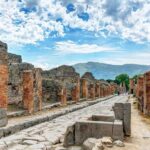
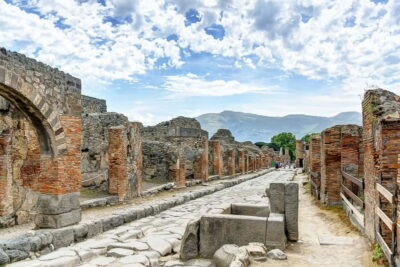
One of the most memorable parts is the walk along an original road paved with volcanic basalt. This isn’t just a nice photo stop. It’s a window into how people actually moved through the town.
Your guide points out features embedded in the road that explain daily habits. You’ll see how the stone and small white travertine spots were used to reflect torch light—so even at night, streets could be clearer and safer. You’ll also notice larger basalt blocks rising from the road, designed to give pedestrians a dry footing when it rained.
These kinds of details help you stop seeing Pompeii as frozen scenery. It becomes a working street where people navigated weather, light, and foot traffic. And that’s the difference between seeing ruins and understanding them.
Forum Stops That Define Pompeii’s City Brain
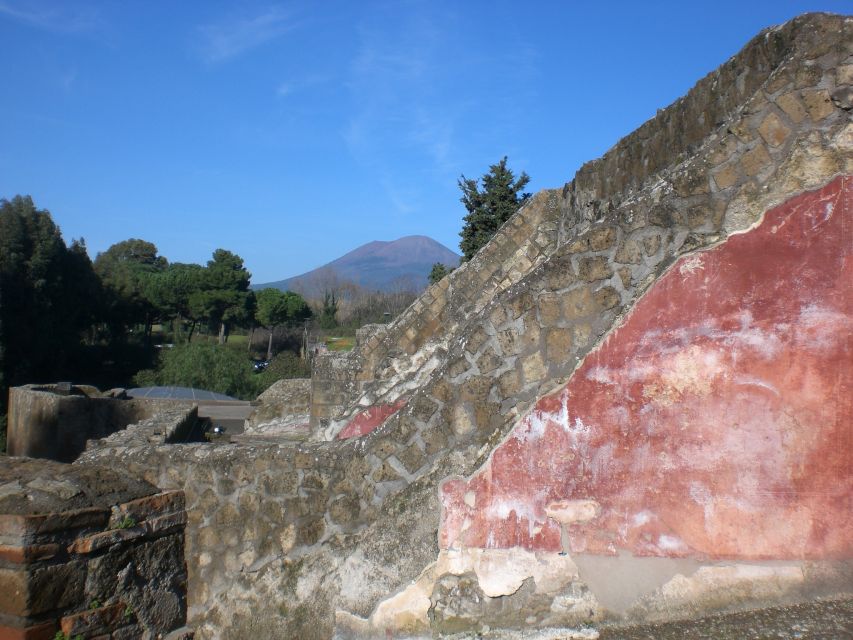
Pompeiian life runs through the Forum, the city center where religion, trade, administration, and politics all tangled together. The tour includes major stops that help you read the layout like a map of power.
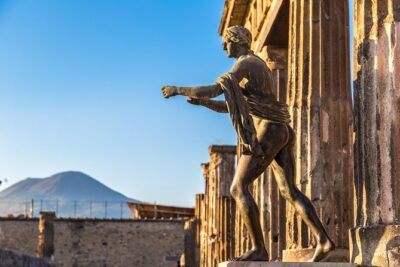
Expect to see the Temple of Apollo, the Capitolium, the Temple of the Emperor, and the Basilica—all named landmarks that anchor the story of civic identity. If you’ve ever wondered how Romans balanced worship, government, and business in the same walkable zone, this is the area that answers it fast.
There’s also the Macellum market, the idea of a public food-and-shopping hub. Even if you only catch one market moment, it’s enough to understand how everyday commerce sat next to official buildings.
A practical note: the Forum is visually busy. Columns, inscriptions, and overlapping walls can overwhelm if you’re not guided. A good guide turns it into a sequence, so your brain doesn’t treat everything as random stone.
Public Life Beyond Temples: Baths, Villas, Taverns, and Shops
After the “big public” zone, Pompeii widens into the spaces where people lived and spent time. Your tour aims to include at least one example from each building type, and that’s where the experience becomes more human.
You can expect stops tied to daily rhythm, including public baths, villas, taverns, and shops. Even when you only see parts of these spaces, the guide’s job is to connect them: where people relaxed, where they drank and ate, how commerce worked, and how homes related to the street.
This is where the tour earns its value. If you only see monumental ruins, Pompeii can feel like a museum. When you also see the ordinary infrastructure—places to wash, eat, trade, and gather—you start to feel the texture of Roman town life.
If you’re the type who likes context—how people actually spent their day—this portion is where you’ll feel the most payoff.
Prefer your own guide? More private tours

Human Casts: Why This Ruin’s Story Lands So Deep
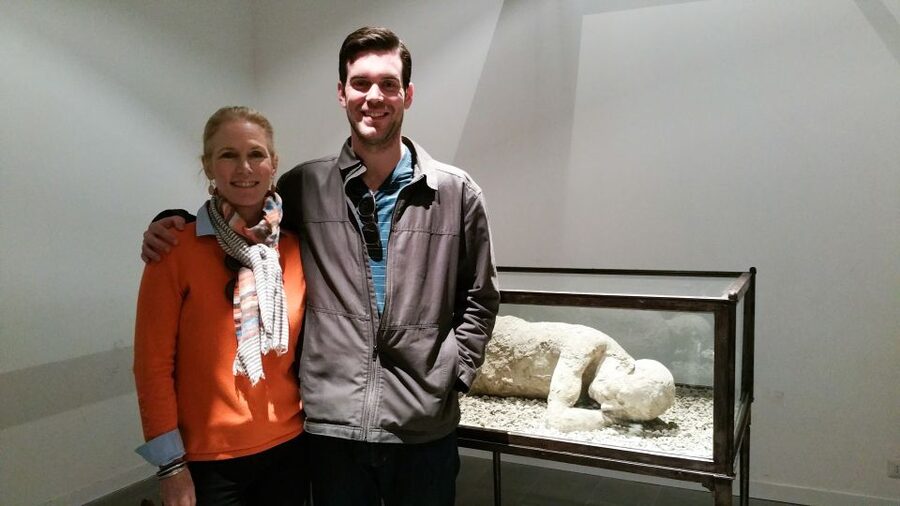
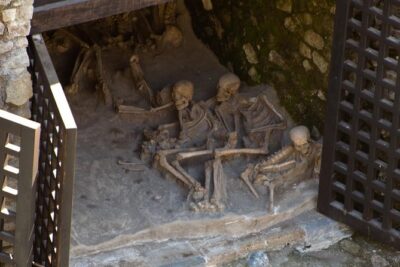
One of the most intense stops is a display of human casts—people caught by the eruption and preserved in the exact poses they held when they died.
This isn’t about shock value. It’s about scale and reality. Guides help you understand what you’re looking at in a way that’s respectful and clear, so it doesn’t become a quick moment you forget.
I’d treat this stop as a slow-down point. If you move through Pompeii fast, these displays can feel like just another exhibit. But if you give it a few minutes, it changes how you interpret everything else: the streets, the buildings, the sudden end of daily life.
Pompeii’s Bakery Stop: The Roman Fast-Food Equivalent

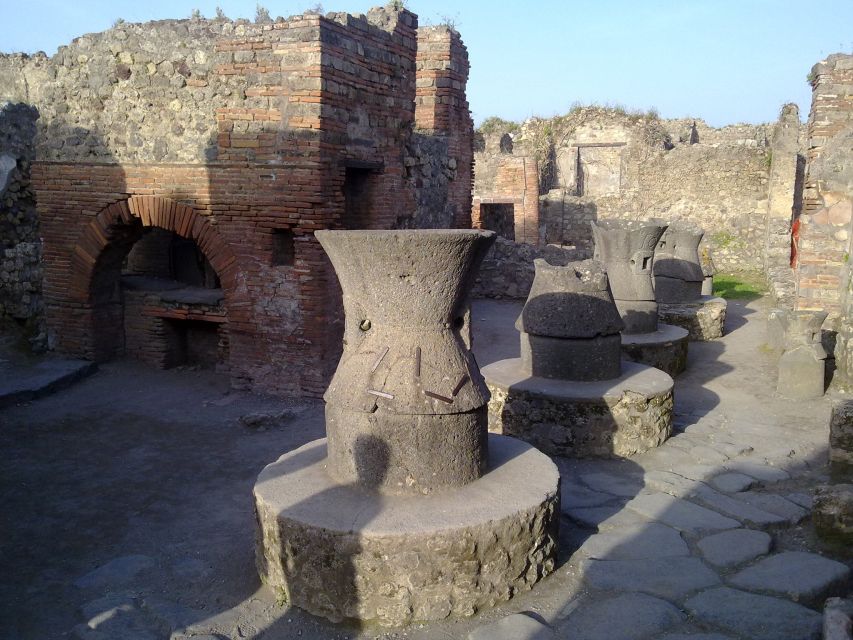
Yes, you’ll stop at a Pompeii bakery. The interesting twist is that you’re not only looking at ruins—you’re looking at evidence of what Romans were eating and how food was produced and sold.
Your tour goes to a place where carbonized loaves of bread were found during excavations. That detail connects the eruption to the everyday world: people planning meals, buying food, and eating like their next day mattered—because to them, it did.
This is also where the tour earns a fun comparison. You’ll see a “Roman fast-food” moment: baked goods and quick access to food in a way that feels familiar, even across two thousand years.
If you love food history, or you just like a change from temples and forums, this stop gives your brain a break and helps you remember Pompeii as a lived-in city.
The Red Light District and Erotic Frescoes: A Shock You Can Still Use
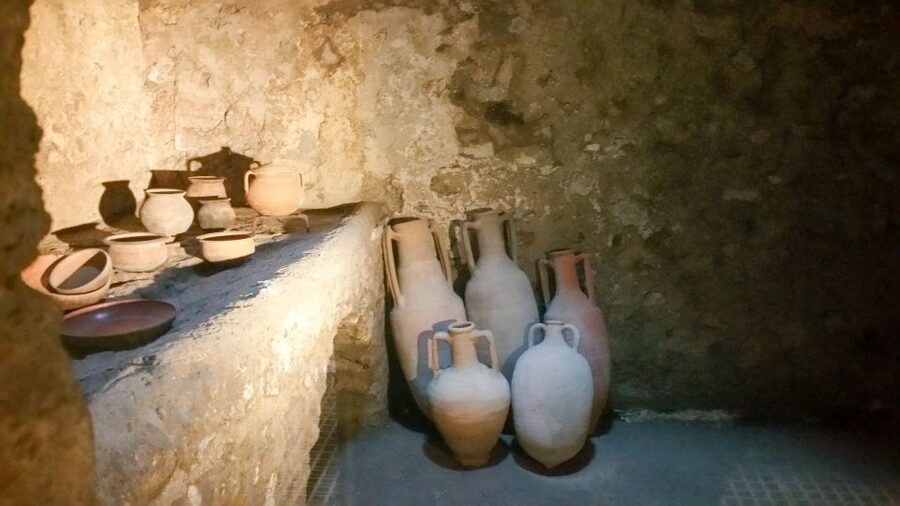
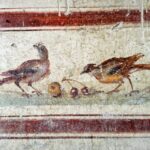
Pompeii doesn’t shy away from adult themes, and the tour includes the former Red Light District area with Roman frescoes of erotic images.
This is not there to be scandalous. It’s there because it was part of street life and public culture. If you’re trying to understand Pompeii as a real society—not just a tragedy—then these frescoes are part of the evidence.
If you’re easily uncomfortable, you’ll still want to know what you’re walking into before you reach it. The good news is your guide can keep context clear, so you understand what the imagery represents in its original setting.
Theatres: Roman Entertainment in Three Different Forms
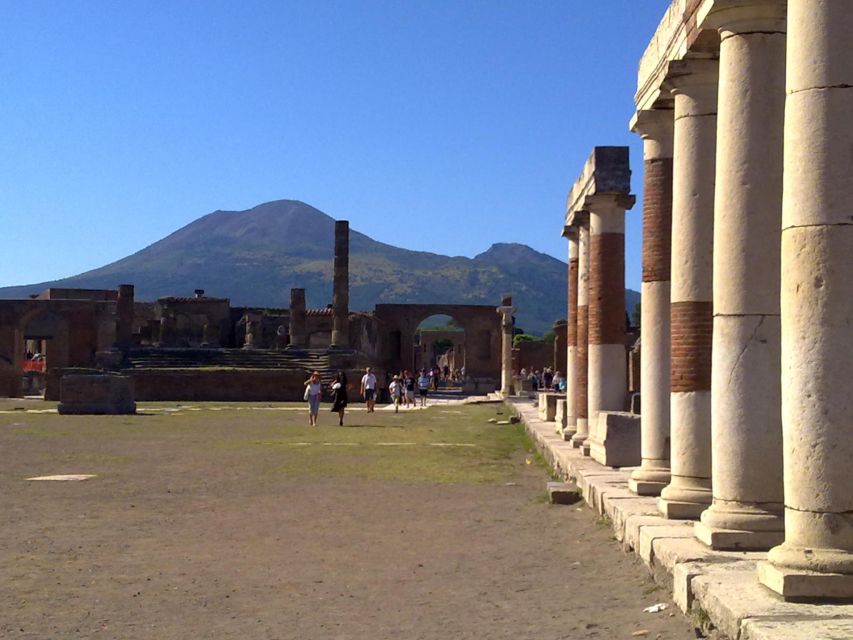
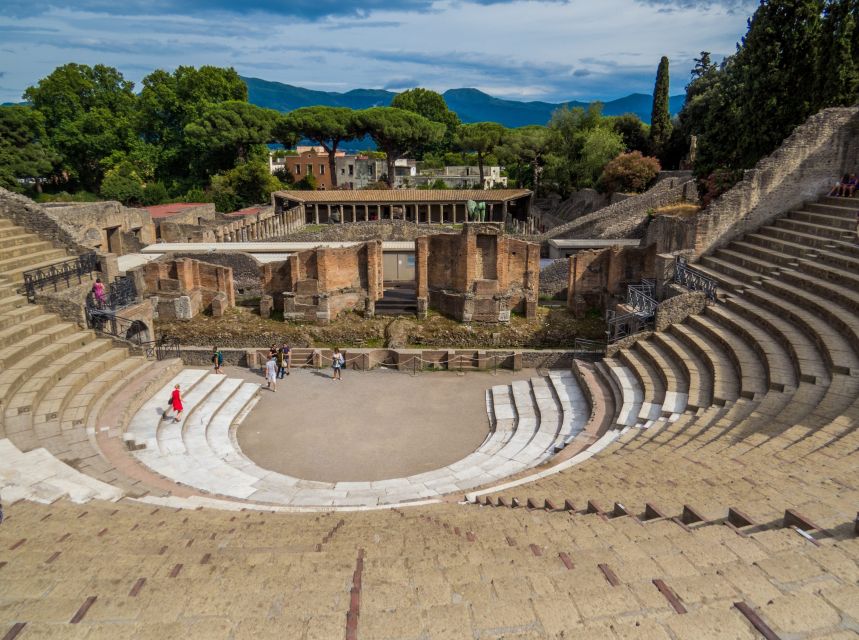
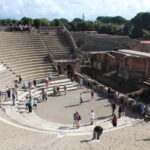
Entertainment is baked into the city, and your tour includes access to one of Pompeii’s three theatres. Which one you see depends on the flow of the walk and what fits your group.
Expect to encounter the different types:
- an outdoor arena for public performances
- an indoor theatre for mime and poetry
- an outdoor theatre for tragedies and comedies
Even in a short visit, comparing the “indoor vs outdoor” concept helps you understand how Romans chose venues based on performance type. A guide’s interpretation makes the stone seating and structure feel less like generic amphitheatre rubble and more like a tool built for audiences.
If you like drama, literature, or Roman public gatherings, this theatre portion is a satisfying capstone. It gives you a sense of what people did after work—and how community time was organized.
Price and Value: What You’re Paying For at $175.22 Per Person
At $175.22 per person for a two-hour private walking tour, you’re paying for three things that matter in Pompeii: time saved, interpretation, and a smaller group.
Skip-the-line tickets reduce the “arrival penalty.” That’s real value when lines can eat up your best viewing hours. A private guide also changes the quality of what you notice. Pompeii’s ruins are dense, and without guidance it’s easy to miss the story that connects one building to the next.
Finally, the group size is limited to 10 participants. For a site this large, that’s the difference between feeling like you’re in a crowd versus feeling like you have space to ask questions and slow down where you want.
Is it cheaper to go on your own? Sure. But if you want the most sense per minute—plus curated stops across Forum, daily life, food evidence, erotic frescoes, and theatres—this price can feel fair.
Practical Details That Affect Your Comfort (Not Just Logistics)
You’ll want comfortable shoes. Pompeii’s surfaces are uneven in places, and you’re doing a walking-focused tour. This is especially important because the experience is designed for an active route across the park.
It’s also listed as not suitable for wheelchair users and not suitable for people with mobility impairments. That doesn’t mean you can’t go if you’re a bit slow, but you should assume the pace and walking demands are part of the setup. One of the strengths of this tour is that the itinerary is flexible based on your interests and physical ability, so within normal walking limits, you can often adjust how hard you push yourself.
Languages are Spanish, English, French, and Italian, and you’ll be guided by a live person. For me, that matters in Pompeii, where a short explanation can turn stonework into meaning.
Should You Book This Pompeii Private Walking Tour?
Book it if you want a guided route that hits the city’s key themes in a tight two-hour window: Roman public life in the Forum, everyday life through baths, villas, taverns, shops, and markets, plus the bakery evidence, erotic frescoes, and theatre culture.
Skip it (or reconsider) if you’re not comfortable with a walking-heavy visit or you need wheelchair access, since the tour is not suitable for those needs. Also, if you’re hoping for a long, slow wander with hours of self-directed exploration, you may feel constrained by the focused route.
If you’re deciding between doing Pompeii alone versus with a guide, I’d choose this kind of structured guidance. It helps you remember Pompeii as a functioning town—streets, light, food, entertainment, and civic power—rather than just impressive ruins.
FAQ
Where does the tour start?
The meeting point is Café Hortus Pompeii, in front of the entrance at Via Villa dei Misteri 2, Pompeii Archaeological Park.
How long is the Pompeii private walking tour?
The duration is 2 hours. Starting times vary, so check availability.
Is this tour really skip-the-line?
Yes. You get Pompeii Express skip-the-line tickets that allow you to visit the areas within the city walls.
What’s included in the price?
Included are a private guide and the Pompeii Express skip-the-line tickets.
How many people are in the group?
The tour is limited to 10 participants.
What languages are available for the guide?
The live guide is available in Spanish, English, French, and Italian.
Can the itinerary be tailored to my interests?
Yes. The itinerary is flexible based on your interests and physical ability, aiming to include at least one example from each type of building.
Do I need to provide names for tickets?
Yes. It’s compulsory to provide the full names of all participants because they are required for the tickets.
What should I wear?
Wear comfortable shoes, since it is a walking tour.
Is the tour accessible for wheelchair users?
No. It is listed as not suitable for wheelchair users and not suitable for people with mobility impairments.
More Tour Reviews in Pompeii Archaeological Site
- Pompeii: Entry Ticket with Optional Audio Guide★ 4.2 · 12,360 reviews
- Pompeii: Archaeological Park Tour with Ticket on request★ 4.5 · 2,283 reviews
- Pompeii Ruins Private Tour with Optional Skip-the-Line Entry★ 4.9 · 732 reviews
- Pompeii: Exclusive Tour with Archaeologist and Entry Tickets★ 4.9 · 634 reviews
- Pompeii: Group Tour with an Archeologist Guide★ 4.4 · 490 reviews
More Private Guides at the Site
- Pompeii Ruins Private Tour with Optional Skip-the-Line Entry★ 4.9 · 732 reviews
- Pompei: Pompeii Private Tour★ 4.8 · 146 reviews
- Pompeii 2-Hour Private Tour★ 4.9 · 121 reviews
Still in the Ruins? Keep Walking
- Pompeii 3-Hour Walking Tour★ 5.0 · 8 reviews
Just reviewed: more Pompeii Archaeological Site tours and day trips

Pompeii Private Guided Tours, compared.
 ★ 4.9Pompeii Ruins Private Tour with Optional Skip-the-Line EntryFrom $254732 reviews
 ★ 5.0Pompeii private tour with an Official GuideFrom $107631 reviews
 ★ 5.0Pompeii Private Tour with an Archaeologist and Skip The Line – 3 hoursFrom $302564 reviews
 ★ 5.0Visit in Pompeii – Pompeii Private Tour with AdaFrom $229436 reviews
 ★ 5.0Pompeii Private Tour with an Archaeologist and Skip The LineFrom $375391 reviews
 ★ 5.0Pompeii Vineyard Escape: Private Wine Tasting & LunchFrom $66329 reviews
 ★ 5.0Private Day Tour to Vesuvius, Herculaneum & Pompeii with Pick UpFrom $120279 reviews
 ★ 5.0Guided Small Group Tour Max 6 People with Private OptionFrom $168269 reviews
Browse the lists this tour appears in