

Reviewed · POMPEII SKIP-THE-LINE ENTRY
Pompeii: Skip-the-Line Ticket with Audio Guide and Map
Pompeii moves at your pace. With a skip-the-line ticket and an audio guide, you get into the ancient city window from 9:00 am to 3:00 pm without that slow start that ruins the day. I also like that the audio guide and updated map let you pick your own rhythm, so you can linger where the details grab you.
One thing to watch: you’ll need a valid ID to rent the audio guide, and the area’s internet can be unpredictable if you’re trying to download anything on the spot. If you show up without a plan, you can lose time you meant to spend inside Pompeii.
In This Review
- Key things to know before you go
- Why Skip-the-Line Entry Feels Worth It at Pompeii
- Meeting Point and Audio Guide Rules: Don’t Lose Time at the Start
- Self-Paced Exploration With the Map: How to Actually Use the Audio
- What You’ll See: The Amphitheater and the Eruption Casts
- Frescoed Houses, Spas, Temples, and Shops: How Pompeii Looked Before It Vanished
- Thermopolis to Theaters to Brothels: Finding the Human Details
- Price and Value: Is $44 a Good Deal for This Pompeii Package?
- Timing Your Visit: Morning Quiet, Better Pace, Less Stress
- Comfort and Common Sense: What to Wear and What to Bring
- Who Should Book, and Who Should Skip This One
- Should You Book This Pompeii Skip-the-Line Ticket?
- FAQ
- What time can I enter Pompeii with this ticket?
- How long is the experience valid?
- What’s included in the price?
- Where do I meet the team?
- Do I need an ID to get the audio guide?
- Which languages are available on the audio guide?
- Are large bags allowed inside?
- Is this tour suitable for everyone?
- What if my plans change?
Key things to know before you go
- Skip-the-line entry lets you start within the 9:00 am to 3:00 pm window
- Audio guide + updated map means self-paced exploring without guessing
- A must-do trio: the amphitheater, the victim casts, and frescoed houses
- Bring a valid ID to rent the audio device
- Plan for phone coverage issues if you rely on downloads
- Luggage limits apply: no oversize luggage or large bags
Why Skip-the-Line Entry Feels Worth It at Pompeii
Pompeii is the kind of site where timing matters. Even with a self-guided plan, you want to spend your hours in the ruins, not parked in a queue. This ticket is designed for that, with a skip-the-line entry that gives you more usable time inside the site.
You can enter anytime from 9:00 am till 3:00 pm, and the experience is valid for 1 day. That flexibility is a real value. If you don’t want to rush, you can aim for later in the morning. If you prefer cooler temps and quieter paths, you can go earlier and slow down once you’re inside.
The big practical benefit is that you don’t have to match your pace to a group schedule. Pompeii’s highlights are spread out, and the best way to enjoy it is usually to follow your curiosity rather than a stopwatch.
More ways past the ticket queue
- Pompeii: Skip-the-Line Entrance Ticket with Audio Guide
★ 4.0 · 2,509 reviews - Pompeii: Guided Tour with Skip-the-Line Entry
★ 4.9 · 812 reviews - Pompeii: Skip-the-Line Entry Ticket with Digital Guide App
★ 4.1 · 770 reviews
Meeting Point and Audio Guide Rules: Don’t Lose Time at the Start
Your day begins outside the office next to Pasticceria De Vivo, where you’ll meet the team (often wearing blue and yellow jackets). This is one of those details that can save you stress later. If you show up a little early, you can get oriented before everyone else arrives.
The audio guide is included, but there’s an important rule: you need to bring a valid ID document in order to rent the audio guide. That means it’s not enough to have a photo on your phone. Bring the real thing, and keep it easy to access.
Also note the practical limits: oversize luggage and large bags aren’t allowed. If you’re traveling with a backpack, keep it compact. If you have a larger bag, plan to store it before you head to the meeting point.
If you’re wondering about languages, you’ll get two layers of support:
- The instructor team can speak English, Italian, Spanish, and French
- The audio guide is available in English, Italian, French, German, Hebrew, Russian, Chinese, Portuguese, and Spanish
That’s helpful if you’re traveling with friends who want different languages, or if you want to switch for different sections of the site.
Self-Paced Exploration With the Map: How to Actually Use the Audio
This experience is built around self-guided exploring, and that works best when you actively use the tools you’re given. The updated map is there so you’re not constantly backtracking, and the audio guide is there to give context while you walk.
Here’s the honest mindset that makes this type of tour work: don’t try to hear everything in perfect order. Instead, let the ruins pull you in, then use the audio guide when you stop. If you move fast through the stops, the audio turns into background noise.
One extra heads-up from real-world experience in Pompeii: internet connectivity can be unpredictable. If you’re planning to download anything on a phone, don’t rely on it working every time. It’s safer to use the audio guide device/pickup option as intended and keep your phone for navigation only.
A good approach is to pick a few “anchors” for your day and then fill the gaps between them with audio stops. That keeps you from wandering aimlessly while still giving you the freedom this ticket is known for.
What You’ll See: The Amphitheater and the Eruption Casts
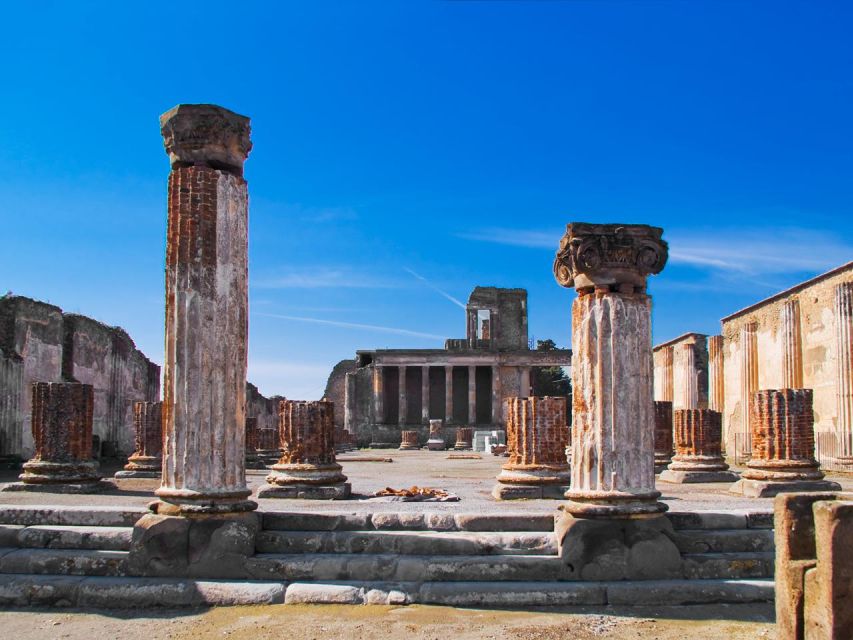
The highlight list is focused, and it points to the most emotionally powerful and visually clear parts of Pompeii.
First up is the amphitheater, described as one of the best-preserved Roman amphitheaters. This is the kind of site where you can instantly understand the scale. Even if you’re not an architecture person, the shape tells a story: performance spaces weren’t just for entertainment, they were social stages.
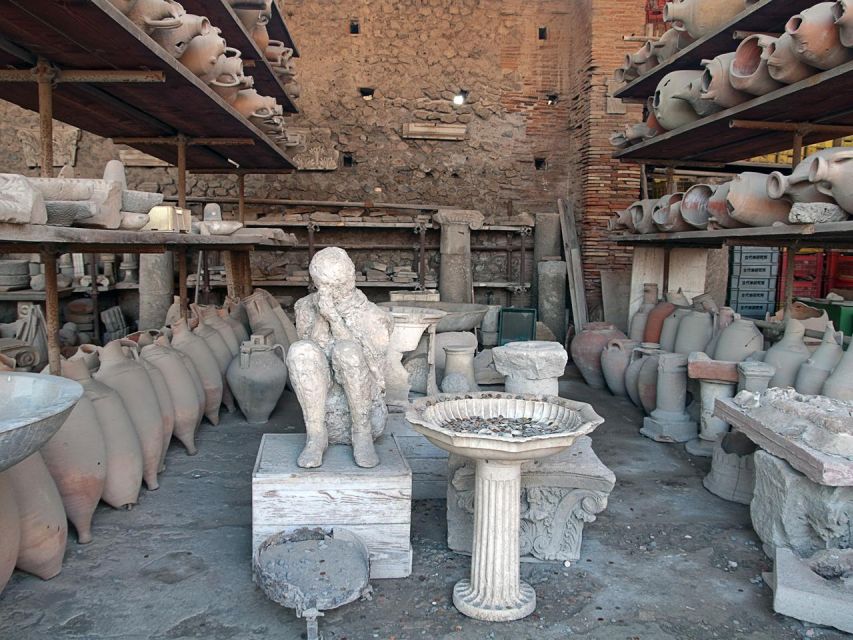
Then there are the casts of the victims of the eruption. These are often the most affecting stops in Pompeii, because they turn a historical disaster into something human and immediate. If you’re the type who prefers to absorb emotionally heavy spaces at a slower pace, this is a good reason to go earlier in the day or plan a quiet moment before moving on.
If you want your visit to feel meaningful, I’d treat these two stops like bookends: amphitheater for everyday public life, victim casts for the abrupt stop that changed everything.
Frescoed Houses, Spas, Temples, and Shops: How Pompeii Looked Before It Vanished

One of the best things about exploring Pompeii with an audio guide is that the ruins aren’t just stone. You get help connecting what you’re seeing to how people lived.
The experience includes time around:
- Frescoed houses
- Spas
- Temples
- Shops
- Thermopolis (described as the coffee-fast food of the time)
- Theaters
- Brothels
That list isn’t random. It covers home life, public ritual spaces, leisure, and commerce, which is basically what you want if you’re trying to understand the city as a functioning place.
The frescoed houses are a standout category because decoration gives you clues about taste and daily habits. The audio guide context helps you see beyond pretty walls and into what those rooms might have meant.
Spas and temples add a different kind of insight. You’re not only looking at buildings; you’re learning how routines and belief shaped the city. Shops and markets bring you back to ordinary economics and everyday transactions.
And yes, the thermopolis is a clever inclusion if you like social history. It’s a reminder that food culture existed alongside big civic spaces, and you can often spot the practical setup that supported quick meals.
Set your own pace with an audio guide




Thermopolis to Theaters to Brothels: Finding the Human Details

Pompeii works best when you don’t treat it like a museum display. The ruins are scattered, but the themes connect: people ate, gathered, watched performances, and lived intimate lives.
The theaters are part of that thread. They’re where community entertainment happened, and your audio guide should help put the stage and seating into context so you don’t just see stone steps.
Then there’s the inclusion of brothels. Pompeii is famous for showing the parts of urban life other places skip. If that topic is uncomfortable for you, you can always move on quickly, but it’s also one of the reasons Pompeii feels grounded. Life was not one single mood; it was messy, social, and very real.
If you’re traveling with teens or friends who want something more than ruins for ruins’ sake, this is where Pompeii can become surprisingly relatable. Not because it’s modern, but because human behavior is still human behavior.
Price and Value: Is $44 a Good Deal for This Pompeii Package?
At $44 per person, you’re paying for more than entry. This package combines:
- a Pompeii skip-the-line ticket (listed at €20)
- an audio guide (included in the price)
- an updated map to help you navigate independently
That’s important when you’re comparing to other ways of doing Pompeii. If you were to enter by standard ticket and then rent an audio guide separately, the combined option usually saves hassle. Here, the main value is reduced friction: fewer lines, clear start, and a guide built into your day.
Also, the flexibility matters. You can enter any time between 9:00 am and 3:00 pm, and you explore at your own pace. If you tend to hate tight schedules, that’s not a small perk. You’re buying time quality, not just access.
One caution: audio quality can vary by device and personal expectations. In at least one experience, the audio was described as just okay, but the ruins themselves were still considered extremely valuable. So think of the audio as helpful framing, not a guarantee of perfect narration.
Timing Your Visit: Morning Quiet, Better Pace, Less Stress

If you can choose your arrival time, I’d lean toward earlier hours within the entry window. A common pattern at Pompeii is that early in the day you’ll have an easier time slowing down. That means fewer people hovering in the spots you want to actually look at.
Going in the morning also gives you a practical win: you’re less likely to feel rushed by the day. Pompeii doesn’t reward speed. It rewards stopping, reading what you can, and letting the audio explain what you’re seeing.
A simple day plan you can adapt:
- Start with a major visual anchor like the amphitheater
- Move toward the victim casts when you want the emotional core of the city
- Then shift to neighborhood life: frescoed houses, spas, shops, and temples
- Finish with performance and social spaces: theaters and brothels
- Use the thermopolis section as a reset between heavier stops
You’ll still end up walking between areas, but you’ll feel like you’re following a story rather than crossing random points on a map.
Comfort and Common Sense: What to Wear and What to Bring

This is one of those experiences where your basics matter. You’re advised to bring:
- comfortable shoes
- comfortable clothes
That’s not vague advice. Pompeii is a ruin site, and you’ll want stable footing and clothes you can move in while you pause for audio and photos.
Also remember the luggage rule: oversize luggage and large bags aren’t allowed. If you’re traveling with a larger day bag, keep it manageable. If you’re unsure, travel light and be ready to adjust.
Who Should Book, and Who Should Skip This One
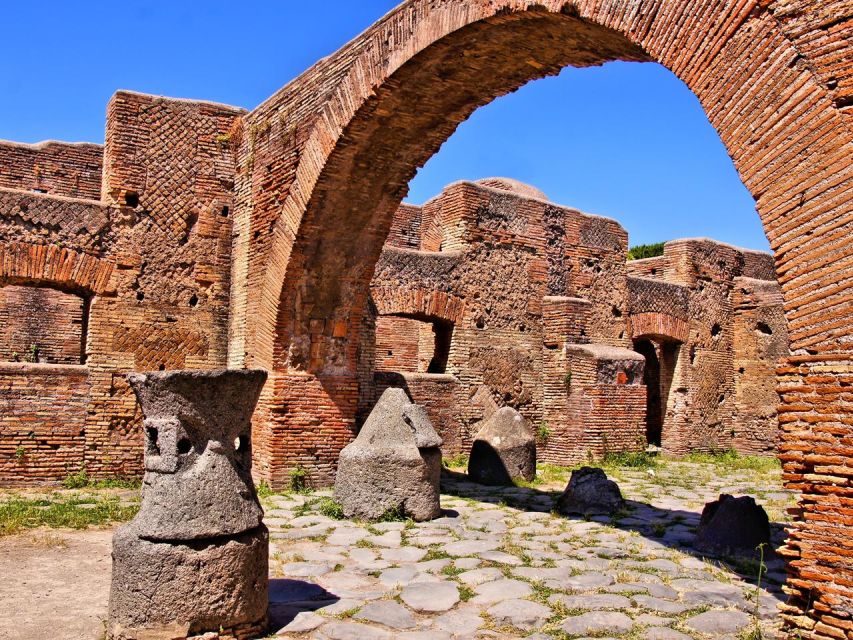
This Pompeii ticket is designed for most visitors who can handle a self-paced ruin walk. But it’s not suitable for everyone. It’s specifically listed as not suitable for people with mobility impairments, people with heart problems, or people with altitude sickness.
If any of those apply to you, you’ll want to choose a different Pompeii format that matches your needs. Self-guided doesn’t automatically mean gentle, and the site conditions can be tough.
Who it fits best:
- couples and solo travelers who hate rigid group pacing
- people who like to stop for details and photos without asking permission
- visitors who want background context in multiple languages
- anyone who values skip-the-line time
If you prefer a fully guided tour with a strict route, this might feel too free. But if you want control, it’s a strong match.
Should You Book This Pompeii Skip-the-Line Ticket?
I’d book it if you want the basics done right: skip the line, enter during a clear window, and explore with a map plus audio so you can understand what you’re seeing. The price makes sense because it bundles entry and audio together, and the self-paced format is ideal for Pompeii’s spread-out highlights.
Skip it or think twice if you might struggle with basic logistics like bringing a valid ID for the audio guide, or if you’re counting on phone-based downloads without a backup plan. Also consider whether Pompeii is a physically comfortable choice for you based on the site’s listed unsuitability categories.
If you want Pompeii without the stress of waiting in lines and without feeling lost, this is a practical way to do it, and it keeps your time focused on the places that matter: amphitheater, victim casts, frescoed houses, everyday shops and spaces, and the city’s sudden end.
FAQ
What time can I enter Pompeii with this ticket?
You can enter any time from 9:00 am to 3:00 pm.
How long is the experience valid?
The ticket is valid for 1 day.
What’s included in the price?
You get a Pompeii skip-the-line ticket and an audio guide, plus an updated map.
Where do I meet the team?
Meet the team outside the office next to Pasticceria De Vivo.
Do I need an ID to get the audio guide?
Yes. You’re told it’s very important to bring a valid ID document to rent the audio guide.
Which languages are available on the audio guide?
The audio guide is offered in English, Italian, French, German, Hebrew, Russian, Chinese, Portuguese, and Spanish.
Are large bags allowed inside?
No. Oversize luggage and large bags aren’t allowed.
Is this tour suitable for everyone?
It’s not suitable for people with mobility impairments, people with heart problems, or people with altitude sickness.
What if my plans change?
You can cancel up to 24 hours in advance for a full refund, and there’s also a reserve now & pay later option so you can book without paying immediately.
More Tour Reviews in Pompei Campania
- Pompeii: Entry Ticket and Guided Tour with an Archaeologist★ 4.8 · 19,459 reviews
- Pompeii: Small Group Tour with an Archaeologist★ 4.8 · 12,264 reviews
- Pompeii: Skip-the-Line Entrance Ticket with Audio Guide★ 4.0 · 2,509 reviews
- Naples: Pompeii and Mt. Vesuvius with Lunch and Wine Tasting★ 4.5 · 2,454 reviews
- Pompeii: Skip-the-line-Ticket and Guided Tour★ 4.6 · 1,152 reviews
More Audio-Guided Visits
- Pompeii: Skip-the-Line Entrance Ticket with Audio Guide★ 4.0 · 2,509 reviews
- Pompeii: Skip-the-Line Entry Ticket with Digital Guide App★ 4.1 · 770 reviews
- Pompeii: Skip-the-Line Entry & Audioguide★ 3.8 · 225 reviews
- From Pompeii: Vesuvius Entry with Transfer and Audioguide★ 4.2 · 74 reviews
- From Naples: Vesuvius & Pompeii with Transfer & Audio Guide★ 4.0 · 58 reviews
Skip-the-Line Entries, More to Book
- Pompeii: Skip-the-Line Entrance Ticket with Audio Guide★ 4.0 · 2,509 reviews
- Pompeii: Skip-the-line-Ticket and Guided Tour★ 4.6 · 1,152 reviews
- Pompeii: Guided Tour with Skip-the-Line Entry★ 4.9 · 812 reviews
- Pompeii: Skip-the-Line Entry Ticket with Digital Guide App★ 4.1 · 770 reviews
- Pompeii: Tour with Archaeologist Guide & Skip-the-Line Entry★ 4.5 · 478 reviews
Just reviewed: more Pompei Campania tours and day trips





Pompeii Skip-the-Line Entry, compared.
 ★ 4.0Skip-the-Line Entrance Ticket with Audio GuideFrom $392,509 reviews
 ★ 4.6Skip-the-line-Ticket and Guided TourFrom $641,152 reviews
 ★ 4.9Guided Tour with Skip-the-Line EntryFrom $58812 reviews
 ★ 4.1Skip-the-Line Entry Ticket with Digital Guide AppFrom $22770 reviews
 ★ 4.9Pompeii Ruins Private Tour with Optional Skip-the-Line EntryFrom $254732 reviews
 ★ 5.0Skip the Line Guided Tour of Pompeii led by an ArchaeologistFrom $95703 reviews
 ★ 5.0Pompeii Private Tour with an Archaeologist and Skip The Line – 3 hoursFrom $302564 reviews
 ★ 5.0Pompeii Skip-the-line Tour with Archaeologist GuideFrom $71559 reviews
Browse the lists this tour appears in