
Reviewed · HERCULANEUM RUINS TOURS
Pompeii: Small-Group Tour of Pompeii and Herculaneum
Two ancient cities, one huge eruption.
This small-group tour takes you through Pompeii and Herculaneum, frozen in time after Vesuvius erupted in 79 A.D., with an archaeologist guide leading the way. You’ll cover the big-picture story and also the practical details that help you read what you’re seeing, all in English (with Italian as an option).
What I love most is the archaeologist-led explanations paired with a walk at human speed. I also like the setup that includes headsets for groups over 10, which matters in crowded ruins when you actually want to hear the guide over the background noise.
One thing to consider: the schedule is tight, and the 30-minute break for lunch can feel rushed if you want a proper sit-down meal in the shade.
In This Review
- Key highlights to know before you go
- Pompeii and Herculaneum with an archaeologist: why it works
- Where you meet and how to start without stress
- Pompeii archaeological site: a 2-hour walk that makes the city readable
- A note on pace
- The 30-minute break: lunch, toilets, and not getting sunburned
- Circumvesuviana train to Ercolano: the short hop that changes the mood
- Herculaneum in two hours: smaller city, sharper details
- Comfort, timing, and what to pack for a day like this
- Value check: why this is a smart way to see both sites
- Should you book this Pompeii and Herculaneum tour?
- FAQ
- How long is the Pompeii and Herculaneum small-group tour?
- Where do I meet the guide?
- Is the tour available in English?
- How big is the group?
- Does the tour include entry tickets and skip the line?
- What is the lunch or break time?
- How do you travel from Pompeii to Herculaneum?
- What should I wear or bring?
- Is the tour suitable for wheelchair users or mobility impairments?
- Are headsets provided?
Key highlights to know before you go
- Small group size (up to 20): easier questions and better pacing through crowds
- Archaeologist guide: you learn how the cities worked, not just what they looked like
- Skip-the-ticket line: more time walking inside Pompeii and Herculaneum
- Real contrast between the two sites: ash in Pompeii, deeper mud burial in Herculaneum
- Headsets for larger groups: you can hear the guide even when it’s busy
Pompeii and Herculaneum with an archaeologist: why it works
Pompeii and Herculaneum can feel like ruins you either love instantly or find confusing. The difference is context. With an archaeologist guide, the streets stop being just stone paths and start becoming a map of real Roman life.
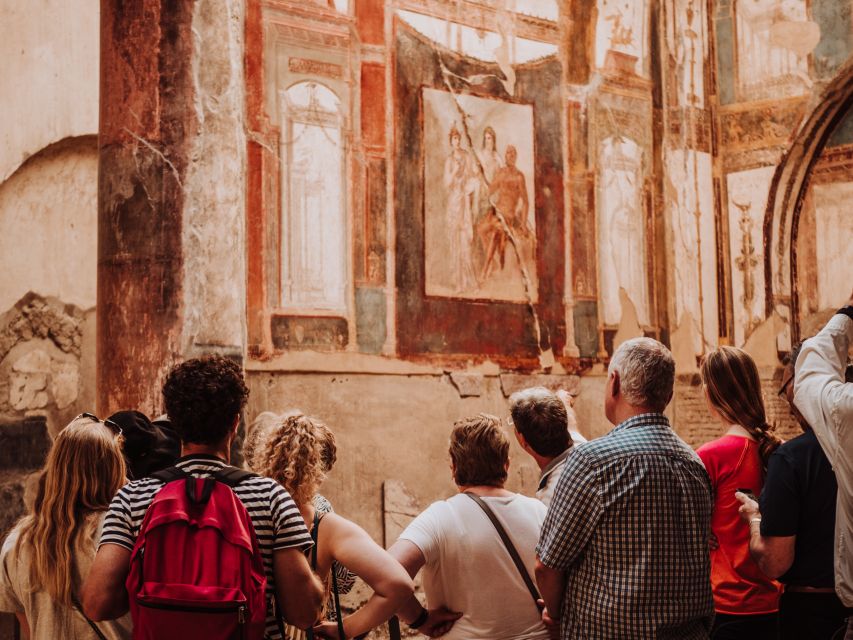
This tour focuses on the why behind the what. You’re not only looking at columns, walls, mosaics, and bas-reliefs. You’re learning how these places were built, how they functioned day to day, and what the eruption did to preserve (and destroy) people’s worlds. That’s especially important because both sites are enormous—and without a guide, you can easily wander past the most meaningful parts.
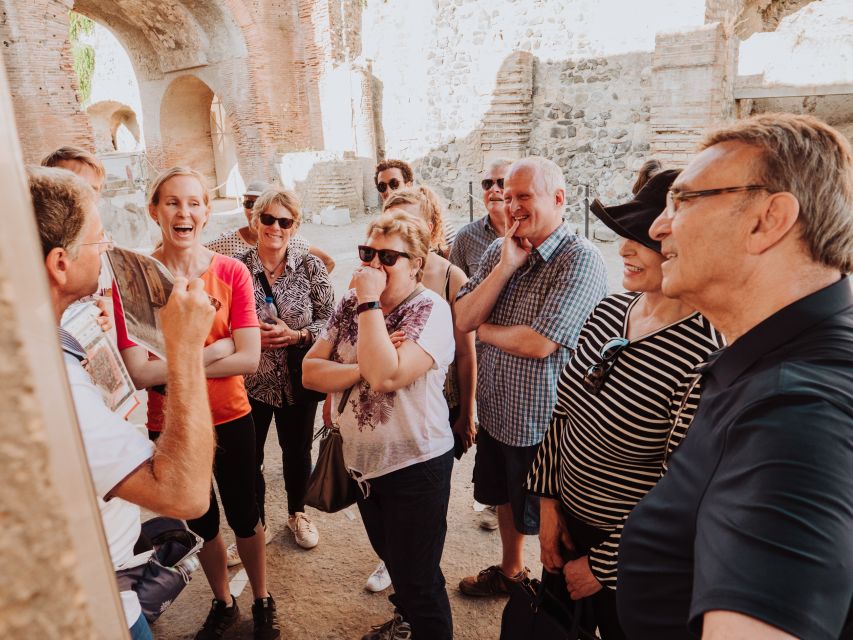
Also, the group size is small enough to keep things moving without turning it into a sprint. You’ll have time for questions, and guides can steer you toward the most readable areas rather than forcing everyone to chase the same “greatest hits” checklist.
Finally, you’re watching the story unfold across two cities with opposite personalities. Pompeii is bigger and more familiar in the popular imagination. Herculaneum is smaller—but the preservation is shockingly detailed, because of how it was buried.
More of Herculaneum next door
- Pompeii and Herculaneum: Guided Tour with an Archaeologist
★ 5.0 · 164 reviews - From Naples: Pompeii and Herculaneum VIP Tour with Lunch
★ 4.4 · 129 reviews - Pompeii & Herculaneum: Skip-the-line & Digital Guide App
★ 4.0 · 35 reviews
Where you meet and how to start without stress
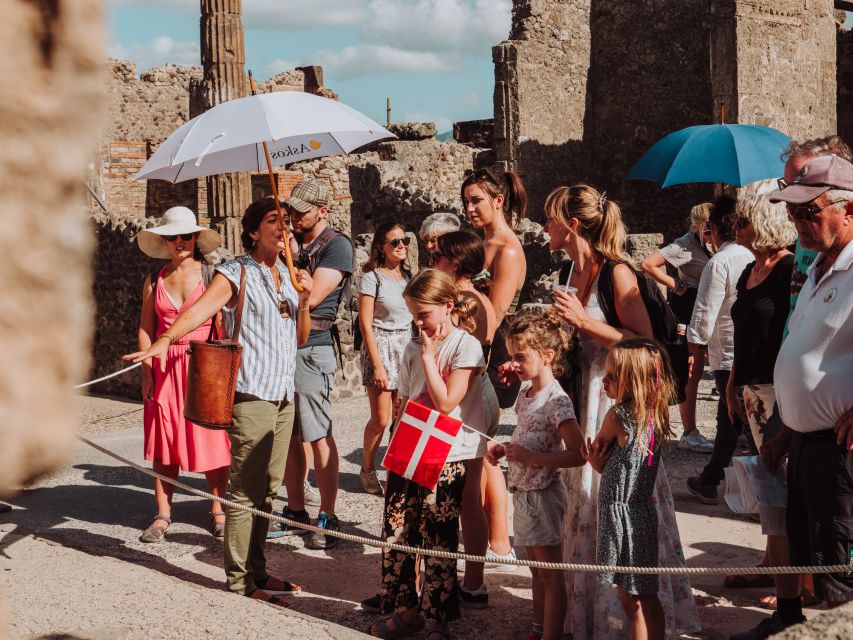
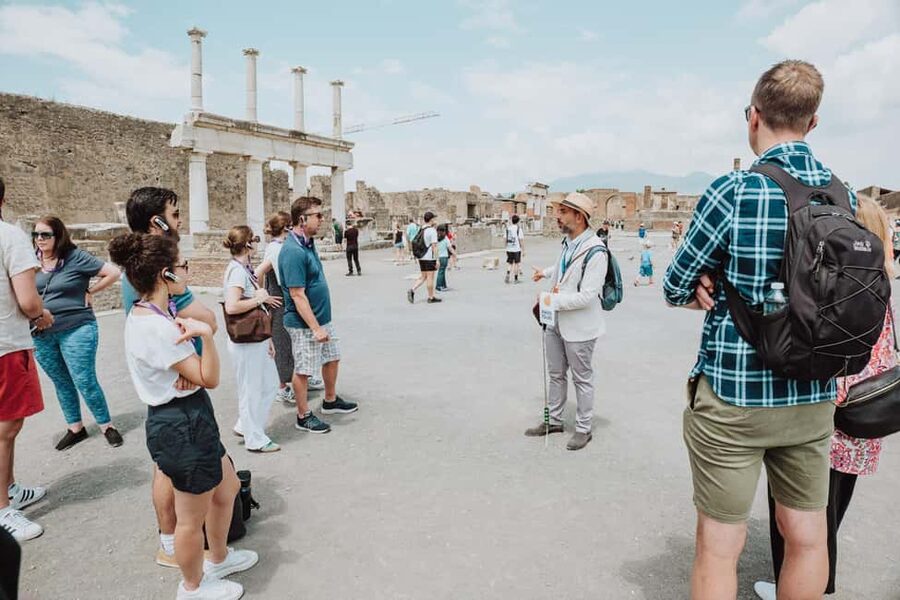
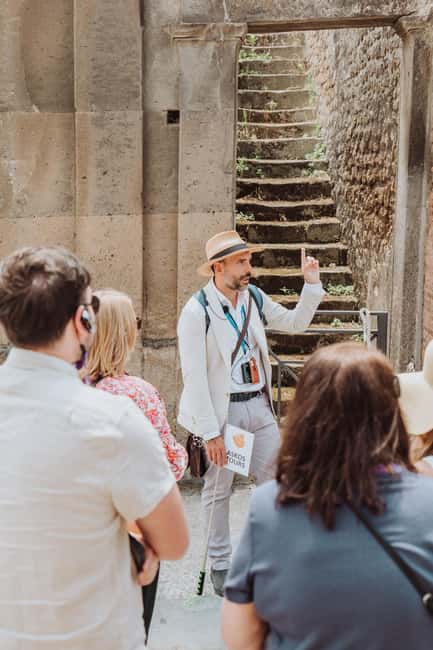
You meet at Piazza Porta Marina Inferiore, 1, at the left side of the Pompeii entrance called Porta Marina Inferiore, close to the Arte bus stop. The guide carries a sign that says Askos Tours, so look for that rather than trying to spot the biggest crowd.
This meeting spot is a few minutes from the Circumvesuviana Pompei-Villa dei Misteri train station. If you’re coming in that way, it helps to get there early so the “finding each other” part doesn’t eat into your day.
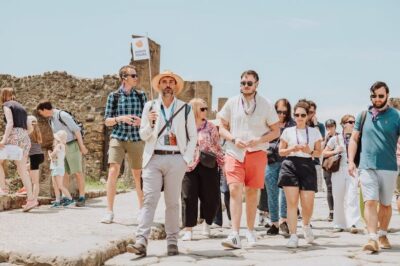
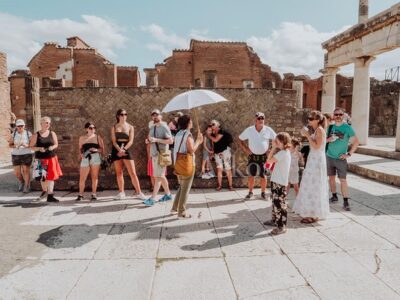
Once you start, you’ll follow a guided walk inside the Pompeii archaeological site for about 2 hours. That first block is key. It sets the framework for what you’ll later see in Herculaneum, where the details are more “up close” and the evidence is easier to miss if you haven’t been taught how to look.
Pompeii archaeological site: a 2-hour walk that makes the city readable
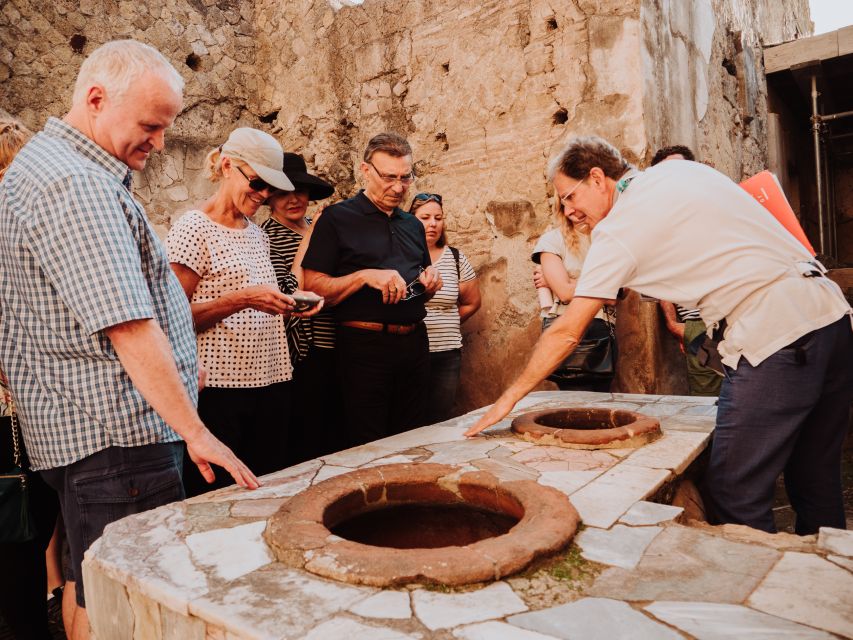
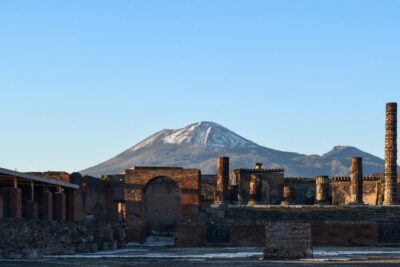
Pompeii gets most of the attention, and for good reason. It was buried by pumice and volcanic ash during Vesuvius’s eruption in 79 A.D. The coverage is often described as about four meters of ash, and the result is a mix of preservation and loss—enough to show how life worked, and enough to make you feel the tragedy.
In your 2-hour guided visit, the goal is not to “see everything.” It’s to see the most important parts in a way that helps you understand the city’s layout and social life. Pompeii is one of those places where small things matter: an inscription, a street crossing, the way a space is used, the contrast between public and private areas.
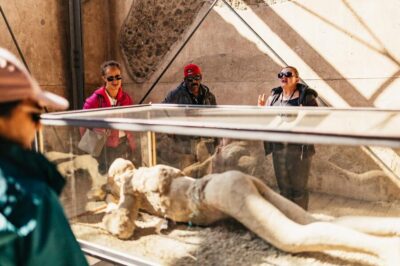
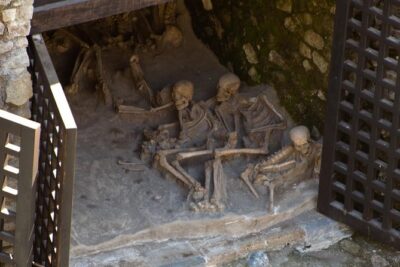
Pompeii also hits hard emotionally. It can be heartbreaking because the preservation brings the human story back into focus. If your guide includes stops that connect to the famous casts and the evidence of what happened, you’ll feel that moment where history stops being abstract.
Crowds are real here. That’s one reason the small group format matters. A good guide keeps the route moving and steers you toward areas that are easiest to interpret at the moment—not just the areas with the longest photo lines.
A note on pace
You have 2 hours in Pompeii, then a break. If you’re the type who wants to linger by every doorway, you may feel the time squeeze. But the flip side is you’ll still cover Herculaneum the same day, and that’s where many people feel the most “wow” for preservation.
The 30-minute break: lunch, toilets, and not getting sunburned
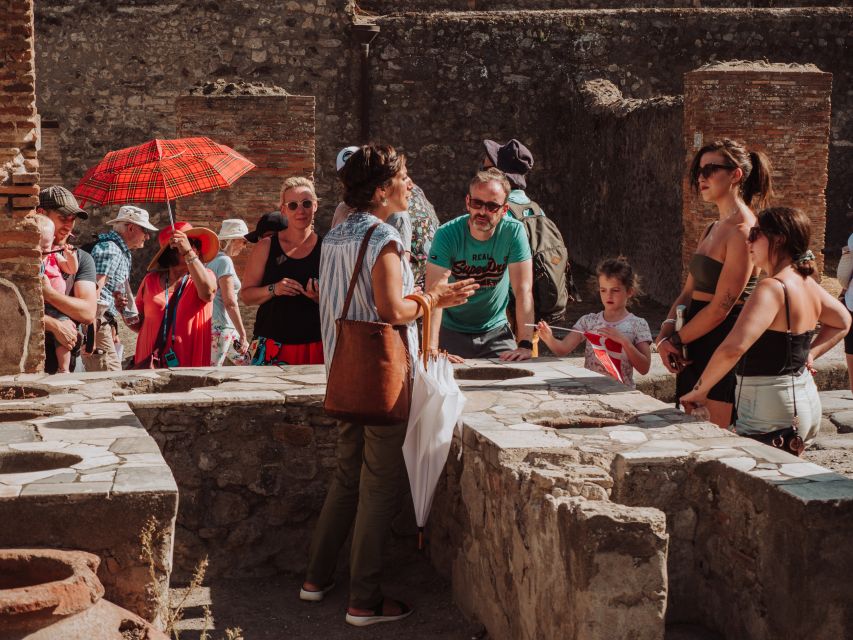
After the Pompeii portion, you’ll get about 30 minutes of break time. This is for lunch (if you want it) and for buying small items in the shops just outside the ruins.
Here’s the practical reality: 30 minutes is enough to grab something and move, but it’s not enough if you’re trying to do a slow, shaded meal. If you want a sit-down lunch with time to reset, plan to eat before you meet or accept that you’ll likely do a quicker stop.
Use the break strategically:
- Prioritize water and a real bathroom stop
- If it’s hot, get out of full sun when you can
- Keep your souvenirs light. You’ll carry them into the train and second site
If weather turns (and in Campania it can), you may want a raincoat or poncho ready. Comfortable clothes matter too, because you’ll be walking.
Circumvesuviana train to Ercolano: the short hop that changes the mood
Next comes the travel moment. You’ll take the Circumvesuviana train to Ercolano. Expect about a 20-minute ride, with the overall transport block set at around 30 minutes in the itinerary.
This part is useful in two ways. First, it breaks the day so you’re not doing both sites back-to-back without a breather. Second, it helps you mentally switch gears from “large and tragic Pompeii” to “smaller and extremely well-preserved Herculaneum.”
Your guide will start the second walk when you arrive at Ercolano. From there, you’ll step into Herculaneum’s preserved world.
Herculaneum in two hours: smaller city, sharper details
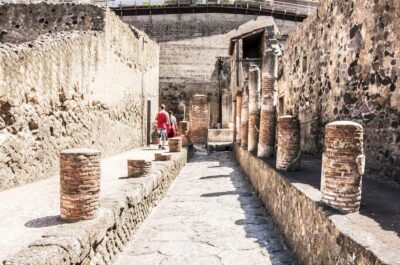
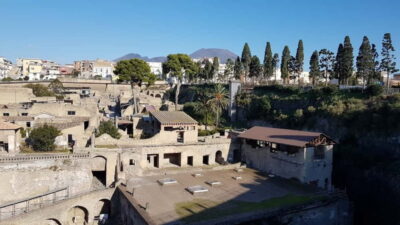
Herculaneum is often described as smaller than Pompeii but better preserved—and that’s the heart of why this combo tour is worth doing.
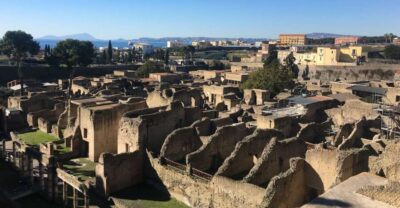
Instead of four meters of ash, Herculaneum was buried under an avalanche of mud—described here as about 20 meters thick. That deeper, different kind of burial helped protect many materials that Pompeii didn’t keep as intact. You can still find evidence like carbonized wooden objects, intact paintings, and mosaics.
In practice, this means the ruins feel more “legible” as real homes and workplaces. You’re not only seeing decoration. You’re seeing what people actually owned, used, and displayed. The result is a vivid look at the opulent Roman lifestyle, especially for wealthier citizens.
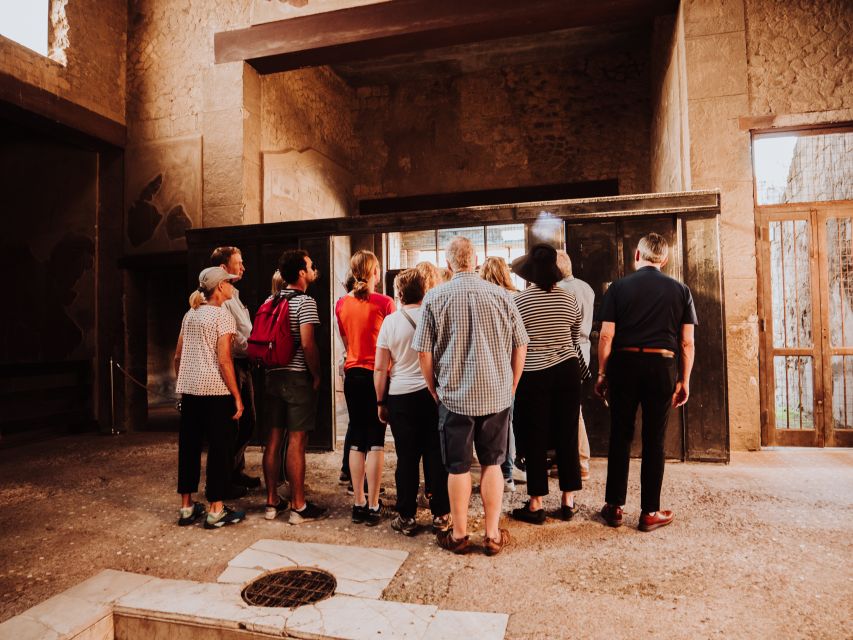
This second 2-hour guided visit is where your guide’s ability to explain context really pays off. The best moments often come when the guide points out what you’re seeing and why it survived. Even the same type of feature—like a floor mosaic—can feel totally different when you understand what kind of burial protected it.
One more important practical note: Herculaneum can also be busy, but guides often adjust routes to keep the walk comfortable and readable. That’s where the small group size plus the headset setup makes your experience smoother.
Comfort, timing, and what to pack for a day like this
This tour lasts 5.5 hours, and it’s a walking day with two major sites. Even if you’re not a “marathon walker,” you’ll want to treat this as an active half-day.
You’ll be outdoors for Pompeii and Herculaneum, so pack like a summer visitor even if your dates look mild:
- Comfortable shoes
- Sunglasses and a hat
- Water (especially in summer)
- A raincoat or poncho for sudden showers
Headsets are provided for groups of more than 10. That’s a big help in loud, crowded areas, and it also makes it easier to follow along when you’re moving through narrow spaces.
Also, the tour is listed as not suitable for people with mobility impairments or wheelchair users. The ruins involve uneven surfaces and lots of walking.
The tour ends at Parco Archeologico di Ercolano, so after Herculaneum you’ll need to plan your next step on your own.
Value check: why this is a smart way to see both sites
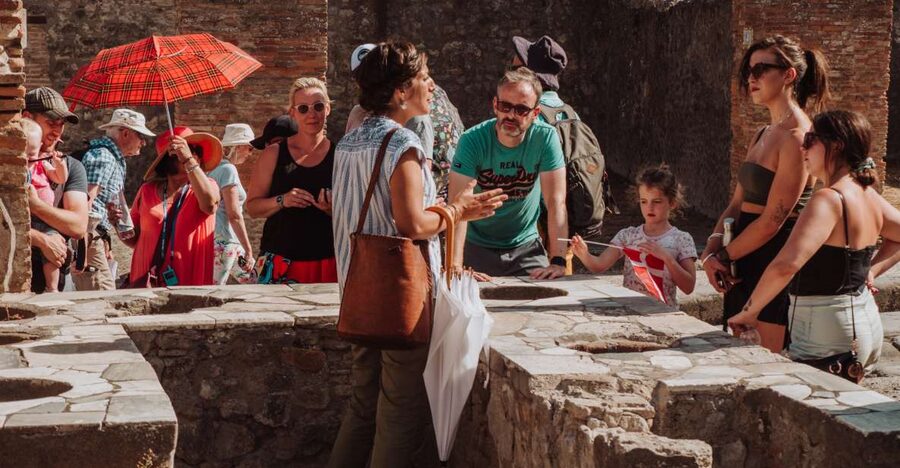
If your goal is to see both Pompeii and Herculaneum in one day, the value here comes from three things working together.
First, you’re not stitching together two separate visits with separate guides and separate ticket hassles. Your time is organized: 2 hours in Pompeii, 30-minute break, then the train to Ercolano, then 2 hours in Herculaneum.
Second, you’re paying for expert interpretation. Ruins are easier to enjoy when someone helps you read them. Based on what guides bring to the table across different days—like Sergio guiding people to the most interesting viewpoints, Diego using stories that are hard to find in guidebooks, and guides like Alfredo (described as an archaeologist) or Antonio using humor and stagey focus while pointing out inscriptions—the big difference is how quickly things start to make sense.
Third, you get support for hearing and pacing. Headsets for larger groups, plus a route managed by a guide, means you’re less likely to lose your group or spend energy figuring out what matters.
About tickets: the tour notes that entry tickets for both sites are provided and you can skip the ticket line. That’s not glamorous, but it saves time and stress when you’re arriving with limited daylight for two big sites.
No pricing is listed here, so I can’t compare numbers. But as a concept, this tour is good value if you want the most meaning per hour—especially if you’re only in the area for a short window.
Should you book this Pompeii and Herculaneum tour?
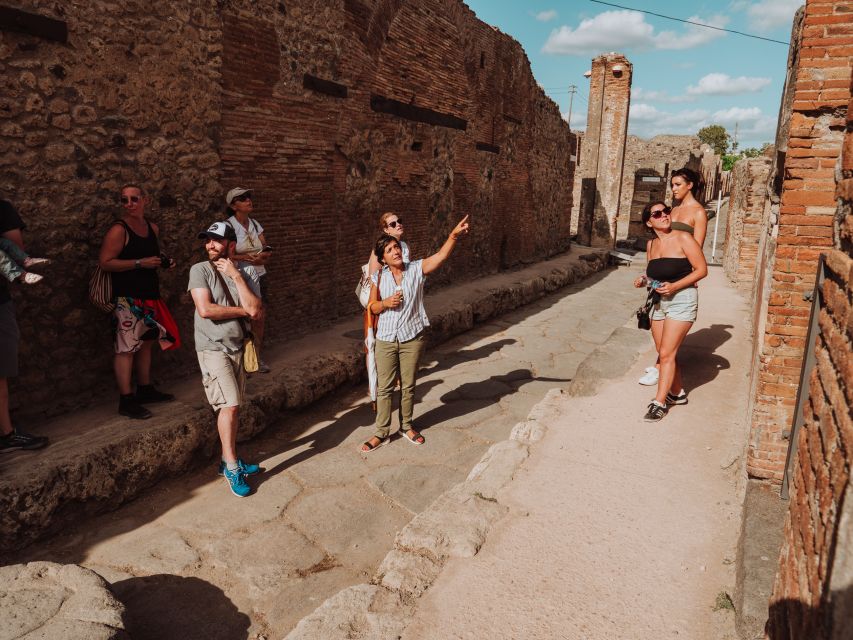
Book it if:
- You want Pompeii plus Herculaneum in one day
- You like learning with a real archaeologist guide, not just audio or wandering
- You appreciate a small group and headsets in busy ruins
Skip it or adjust expectations if:
- You need a longer, sit-down lunch break. The 30-minute break is quick by design.
- You rely on wheelchair access or have mobility constraints. The tour isn’t set up for that.
- You hate walking and sun exposure. This is two active ruins visits.
If you’re deciding between this and doing it on your own, I’d lean toward the guided route. Pompeii and Herculaneum are famous, but that fame can trick you into thinking you’ll “get it” just by looking. With this format, the guide’s job is to help you understand what you’re seeing—then you can enjoy the emotion and the detail instead of just trying to navigate.
If you want, tell me your travel month and whether you’re starting from Naples or staying in the Amalfi area. I’ll suggest the best day plan around the timing and heat.
FAQ
How long is the Pompeii and Herculaneum small-group tour?
The tour duration is 5.5 hours.
Where do I meet the guide?
Meet at Piazza Porta Marina Inferiore, 1, at the left side of the Pompeii entrance called Porta Marina Inferiore, near the Arte bus stop. The guide has an Askos Tours sign.
Is the tour available in English?
Yes. The tour is conducted in English, with Italian also offered by the live guide.
How big is the group?
The tour is set up for a small group of up to 20 people.
Does the tour include entry tickets and skip the line?
The tour notes that you do not care about entry tickets because tickets for both sites are provided, and it also mentions skip the ticket line.
What is the lunch or break time?
After the Pompeii guided tour, there is a 30-minute break. You can use it for a quick lunch or to browse souvenir shops outside the ruins.
How do you travel from Pompeii to Herculaneum?
You take the Circumvesuviana train to Ercolano (about 20 minutes).
What should I wear or bring?
Wear comfortable clothes. Bring sunglasses, a hat, and water in summer, and carry a raincoat or poncho if showers happen. A passport or ID card is also required.
Is the tour suitable for wheelchair users or mobility impairments?
No. The tour is listed as not suitable for people with mobility impairments and wheelchair users.
Are headsets provided?
Yes. Headsets are provided for groups of more than 10 participants.
More Tour Reviews in Pompei Campania
- Pompeii: Entry Ticket and Guided Tour with an Archaeologist★ 4.8 · 19,459 reviews
- Pompeii: Small Group Tour with an Archaeologist★ 4.8 · 12,264 reviews
- Pompeii: Skip-the-Line Entrance Ticket with Audio Guide★ 4.0 · 2,509 reviews
- Naples: Pompeii and Mt. Vesuvius with Lunch and Wine Tasting★ 4.5 · 2,454 reviews
- Pompeii: Skip-the-line-Ticket and Guided Tour★ 4.6 · 1,152 reviews
More of Herculaneum
- Pompeii and Herculaneum: Guided Tour with an Archaeologist★ 5.0 · 164 reviews
- From Naples: Pompeii and Herculaneum VIP Tour with Lunch★ 4.4 · 129 reviews
- Pompeii & Herculaneum: Skip-the-line & Digital Guide App★ 4.0 · 35 reviews
- Pompeii, Herculaneum, and Vesuvius: Full-Day Tour★ 3.7 · 21 reviews
- From Herculaneum to Pompeii: Audioguides + Entrance Tickets★ 3.6 · 19 reviews
Just reviewed: more Pompei Campania tours and day trips

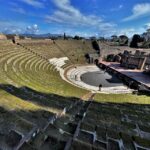
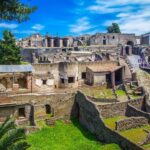
Herculaneum Ruins Tours, compared.
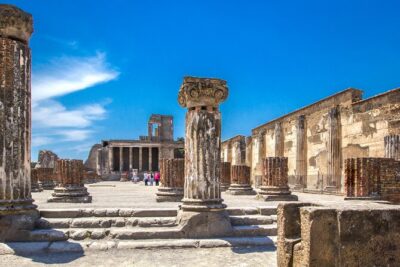 ★ 5.0Pompeii and Herculaneum Small Group Tour with an ArchaeologistFrom $771,350 reviews
 ★ 4.1Ercolano: Herculaneum Entry Ticket with Optional Audio GuideFrom $21581 reviews
 ★ 5.0Private Day Tour to Vesuvius, Herculaneum & Pompeii with Pick UpFrom $120279 reviews
 ★ 4.3Herculaneum: Skip The Line Entrance ticket + AudioguideFrom $35266 reviews
 ★ 4.2Naples: Herculaneum and Vesuvius Day TripFrom $135200 reviews
 ★ 5.0Pompeii and Herculaneum: Guided Tour with an ArchaeologistFrom $141164 reviews
 ★ 4.4Naples: Pompeii and Herculaneum Tour with Tickets and LunchFrom $126136 reviews
 ★ 4.4From Naples: Pompeii and Herculaneum VIP Tour with LunchFrom $237129 reviews
Browse the lists this tour appears in