

Reviewed · POMPEII SKIP-THE-LINE ENTRY
Pompeii & Herculaneum: Skip-the-line & Digital Guide App
Pompeii without the headache is a win. This one-day plan pairs skip-the-line tickets with a smart digital guide app, so you can walk in fast and follow the sites at a comfortable speed. You get Pompeii plus Herculaneum, which is a great way to see two very different slices of Roman life without squeezing everything into half a day.
What I like most is the practical flow: you pick up your materials in Pompeii, then you’re walking to the ruins in under ten minutes with no waiting in line. I also like that the app is designed for self-guided exploration, so you control how long you pause at streets, temples, and houses versus moving on. One drawback to consider: you’ll need your own headphones and a charged smartphone, and the experience is self-run, not led by a person in front of you.
In This Review
- Key Points Worth Noting
- Quick Ticket Pick-Up at Pompeii’s FS Train Station Office
- Walking to Pompeii Ruins Fast (No Waiting, Just Going)
- Pompeii’s Street-Level Self-Guide: How the App Actually Helps
- Where You’ll Spend Time in Pompeii (Streets, Temples, Houses)
- Switching Gears: From Pompeii to Herculaneum in One Day
- Herculaneum’s Best Bits: Preserved Homes, Mosaics, Everyday Objects
- Smart Scheduling: How to Make Two Ruins Fit Without Burning Out
- Price and Value: Is $72 Worth It for Two Skip-the-Line Tickets?
- Who This Tour Suits Best (And Who Should Rethink)
- Practical Notes Before You Go (So the Day Runs Smooth)
- Should You Book This Pompeii & Herculaneum Digital Guide Tour?
- FAQ
- What is included in the Pompeii & Herculaneum skip-the-line digital guide experience?
- How long does the tour take?
- Where do I pick up tickets if there is no in-person meeting?
- Do I need headphones?
- Can I explore at my own pace?
- Are entry lines skipped at both sites?
- What about food during the day?
- What language support is available?
- Is the experience wheelchair accessible?
Key Points Worth Noting

- Skip-the-line entry saves time at both Pompeii and Herculaneum gates
- Digital guide app keeps you flexible instead of marching in a group
- Under 10 minutes on foot from the pickup office to the Pompeii ruins
- Two sites in one day means more variety, but you’ll need to pace yourself
- Headphones are not included, so plan for your own audio setup
- Herculaneum can feel shorter or less satisfying for some people, depending on your interests and how you handle logistics
Quick Ticket Pick-Up at Pompeii’s FS Train Station Office

This tour starts with a simple, low-drama setup. There’s no in-person host meeting you at a central square. Instead, you receive your tickets via WhatsApp the day before. Then, on the day of your visit, you collect your materials from the operator’s office at the FS train station in Pompei.
Why this matters: when Pompeii is crowded, the worst plan is one that depends on finding someone first. Here, you’re set up in advance, then you handle the pickup near a major transport hub. It makes it easier to build the rest of your day—especially if you’re already in town by train or bus.
One small practical note from the info: you’re expected to come collect your tickets from that FS station office. Don’t assume you can show up and instantly get everything at the gate.
More ways past the ticket queue
- Pompeii: Skip-the-Line Entrance Ticket with Audio Guide
★ 4.0 · 2,509 reviews - Pompeii: Guided Tour with Skip-the-Line Entry
★ 4.9 · 812 reviews - Pompeii: Skip-the-Line Entry Ticket with Digital Guide App
★ 4.1 · 770 reviews
Walking to Pompeii Ruins Fast (No Waiting, Just Going)
After you pick up your skip-the-line tickets, it’s a short walk to the archaeological area—just under ten minutes on foot. That timing is a big deal because it sets the tone for the whole day. You’re not spending your first hour feeling frazzled, scanning crowds, or wondering where the entrance is.
Once you’re at Pompeii, your entry is set up to skip the ticket line. That doesn’t mean Pompeii is calm—Pompeii can still feel like a moving crowd—but it does mean you’re not trapped waiting for a separate process. You can focus on the real point: walking through a city that froze in time under volcanic ash.
If you’re sensitive to crowds or travel on a tight schedule, this is exactly the kind of arrangement that helps.
Pompeii’s Street-Level Self-Guide: How the App Actually Helps
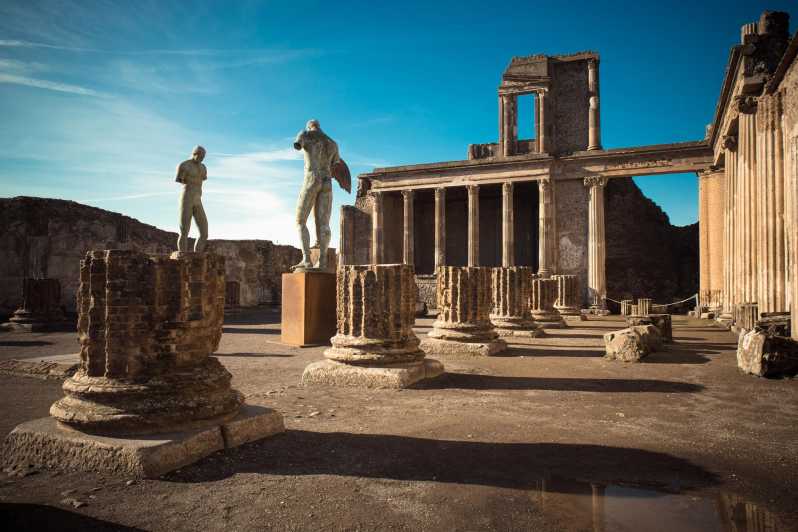
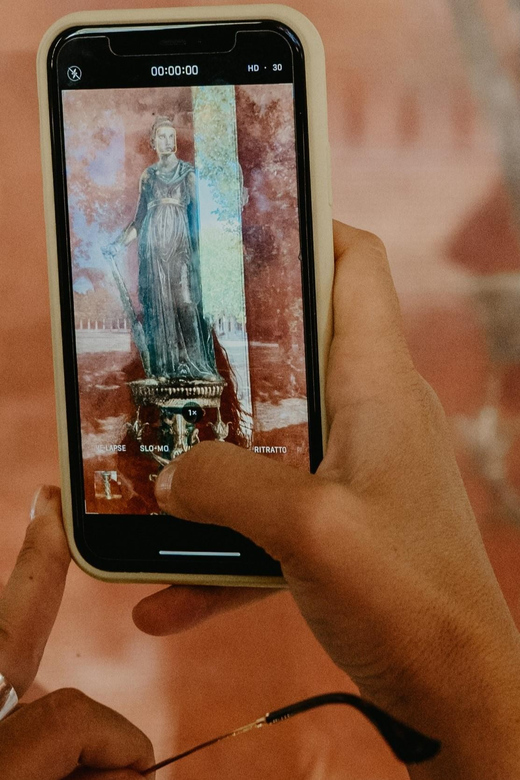
The heart of this experience is the smart digital guide app on your smartphone. The app leads you through Pompeii at your own pace, with an audio-style experience built for walking—streets, temples, and houses included.
Here’s the practical value: Pompeii is famous, but it’s also easy to get lost in the scale and the repetition of ruins. A self-guided audio path can help you connect what you’re looking at—so you’re not just seeing walls. You’re seeing daily life patterns: how people moved, worshipped, and lived in domestic spaces.
Also, because it’s self-guided, you don’t have to do the classic group-tour mistake: listening to someone talk while you drift mentally to the next spot. You can stop when something clicks. You can move on quickly when you’ve had enough of a particular lane. That control is what makes the skip-the-line part feel worth it—you use the saved time to actually look.
Tip for best results: before you start walking, get your phone sorted. Make sure the app is downloaded or ready for use and that your sound works. This is where having your own headphones becomes more than a suggestion.
Where You’ll Spend Time in Pompeii (Streets, Temples, Houses)
The guide is designed to take you through the main kinds of spaces people want to see in Pompeii: ancient streets, temples, and houses. That’s the right mix if you want a full overview rather than just one famous area.
In a place like Pompeii, the “houses” category often ends up being the most satisfying, because you get a sense of what ordinary people owned and valued. The “temples” section helps you understand the civic-religious side—how the city expressed identity through worship and public space. And the “streets” portion gives you the skeleton of the city, helping your brain build a map while you walk.
A couple of real-world pacing insights matter here. Pompeii is big enough that many people need a good chunk of the day to feel satisfied. So plan your expectations accordingly. If you only have 60–90 minutes in your head, you may end up skipping parts mentally. Give Pompeii enough time so the experience doesn’t feel like a forced march.
Switching Gears: From Pompeii to Herculaneum in One Day
After Pompeii, you continue to Herculaneum, another preserved Roman city. The key difference is the feel. Pompeii often reads as dramatic because it’s the bigger, more famous stage. Herculaneum can feel more intimate because the focus is on exceptionally preserved everyday spaces—houses, mosaics, and objects that survived in striking condition.
The same digital guide app supports this shift. You keep the audio guidance and the structure, but the visuals and details change your perspective. That’s a smart pairing for one-day visitors: you’re not just repeating ruins twice. You’re seeing how daily life can look different across two cities under the same disaster.
One important consideration is logistics between the sites. The tour data doesn’t spell out transport for you. Also, lunch is not included. That means you’ll want a realistic plan for how you’ll get there and where you’ll fit a break. If you’re driving or using your own transport, build in buffer time. One note from past experience: parking in Herculaneum can be difficult, so don’t assume you’ll find something close and instant.
Set your own pace with an audio guide




Herculaneum’s Best Bits: Preserved Homes, Mosaics, Everyday Objects

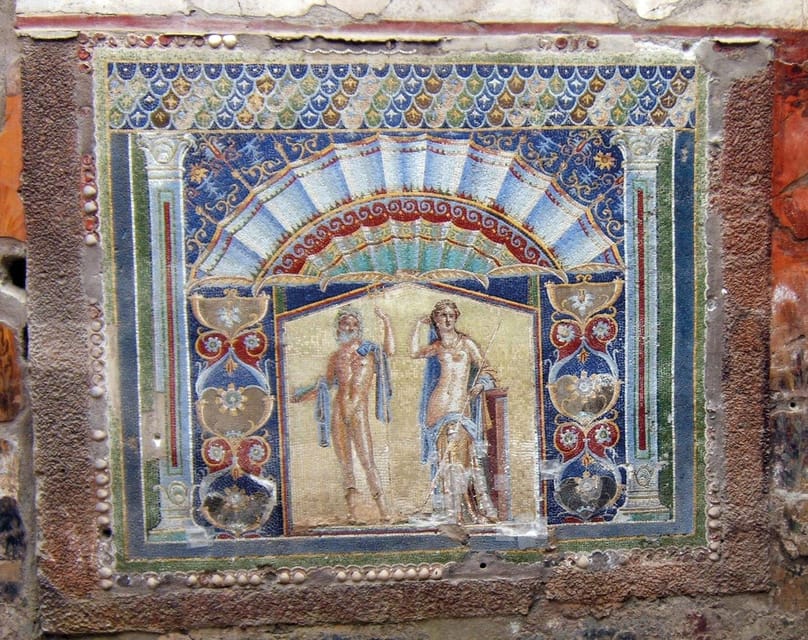
In Herculaneum, the emphasis is exactly what you hope for: remarkably preserved houses, visible mosaics, and the conservation of ordinary things—everyday objects that help you picture what life felt like.
Why that matters: Pompeii can be overwhelming because you see so much. Herculaneum can be more emotionally readable because the details feel closer. It’s the kind of place where small elements can create the biggest mental picture—tools, household items, or how rooms are arranged.
That said, Herculaneum is not guaranteed to be everyone’s favorite. If you love big open areas and the wide spectacle of Pompeii, you might find yourself less impressed here. If you genuinely enjoy domestic spaces, mosaics, and the idea of seeing ordinary life preserved, Herculaneum is often the part that sticks with you.
Smart Scheduling: How to Make Two Ruins Fit Without Burning Out

This is a one-day plan that hits two major sites. That’s a fun challenge, but you need a schedule mindset.
Here’s how to think about it:
- Use skip-the-line to your advantage. Don’t save that time and then spend it endlessly checking your phone.
- Treat the app as a pacing tool, not a rulebook. If you’re behind, you can skip one stop type and focus on houses or mosaics.
- Plan a lunch strategy. Lunch isn’t included. So bring a plan that keeps you moving instead of losing an hour hunting food.
- Headphones matter. If you arrive without them, you may still see everything, but you’ll miss the audio guidance that helps you connect the dots.
Also, keep in mind this is smartphone-first. A dead battery isn’t just inconvenient in Italy—it can kill the experience style. Start the day fully charged and carry a backup option if you rely heavily on maps and audio.
Price and Value: Is $72 Worth It for Two Skip-the-Line Tickets?
For $72 per person, you’re paying for a specific combination:
- Digital guide app for your smartphone
- Skip-the-line entry ticket for Pompeii
- Skip-the-line entry ticket for Herculaneum
So you’re not just paying for a “guide talk.” You’re paying for time savings and structure at two separate sites. If you were to buy skip-the-line access separately, the math often makes more sense for a package like this—especially when you’ll otherwise be fighting queues across more than one venue.
Where value gets real: Pompeii and Herculaneum both reward attention. The audio guide helps you interpret what you’re seeing. And the skip-the-line part helps you arrive when you’re still fresh enough to actually look.
Where value might feel weaker: if you love total independence without any structure at all, or if your phone battery fails, the guide component becomes a hassle. In that case, you’re still buying entry tickets, but you’re paying extra for a format you didn’t fully use.
Who This Tour Suits Best (And Who Should Rethink)
This experience fits best if you want:
- A self-guided style that lets you pause and wander without feeling dragged
- Time saved via skip-the-line entries
- A way to cover both Pompeii and Herculaneum in one day, not two
It’s also a good fit if you travel with different interests inside your group—people can spend more time in houses, while others move through streets faster.
You might rethink it if:
- You hate smartphone-based experiences or you don’t like audio guidance
- You want a classic live guide who answers questions on the fly
- You’re expecting the kind of hands-on, person-led narration that adjusts to the group in real time
And if Herculaneum sounds like it might not be your priority, you’ll still get a lot from Pompeii—just remember the day is built around both.
Practical Notes Before You Go (So the Day Runs Smooth)
A few “don’t get caught” items come straight from the tour details.
You’ll need:
- Headphones
- Charged smartphone
Languages available include English, French, Italian, German, and Spanish, and the greeter is listed as covering those languages—though you aren’t personally meeting someone, you’re still covered if you have questions during the app/ticket setup process.
Wheelchair accessibility is stated, which is good news if you plan ahead for accessible routes inside the archaeological areas.
One more category note: there’s mention of free tickets for minors and reduced tickets for European citizens aged 18 to 24 at the entrance ticket office. The activity provider doesn’t offer this type of service, and there’s no skip-the-line option for those categories through the provider. If you’re in that group, you’ll want to check how you’ll handle access and ticketing.
Should You Book This Pompeii & Herculaneum Digital Guide Tour?
I’d book it if you want an efficient one-day plan with a structured audio guide and the time-saving benefit of skip-the-line tickets. It’s a smart format for people who like to set their own pace in a huge, crowded place.
I’d think twice if you know your phone battery and audio setup are usually trouble, or if you prefer a live guide who can adapt explanations as you go. In that case, you might end up paying for a format that doesn’t match your style.
If you’re the type who loves piecing together daily life from spaces like houses, streets, and mosaics, this is a strong match for Campania’s two most famous Roman freeze-frames.
FAQ
What is included in the Pompeii & Herculaneum skip-the-line digital guide experience?
You get a digital guide app for your smartphone, plus skip-the-line entry tickets for both Pompeii and Herculaneum.
How long does the tour take?
It’s valid for one day. Check availability to see starting times.
Where do I pick up tickets if there is no in-person meeting?
You collect your tickets from the office at the FS train station in Pompei. You also receive tickets via WhatsApp the day before.
Do I need headphones?
Yes. Headphones are listed as something to bring, and they are not included.
Can I explore at my own pace?
Yes. The smart guide app is designed for independent exploration rather than a fixed group schedule.
Are entry lines skipped at both sites?
Yes. Skip-the-line entry tickets are included for Pompeii and for Herculaneum.
What about food during the day?
Lunch is not included, so you’ll need to plan your own meal breaks.
What language support is available?
English, French, Italian, German, and Spanish are listed as available.
Is the experience wheelchair accessible?
Yes, wheelchair accessibility is stated.
More of Herculaneum
- Pompeii: Small-Group Tour of Pompeii and Herculaneum★ 4.8 · 867 reviews
- Pompeii and Herculaneum: Guided Tour with an Archaeologist★ 5.0 · 164 reviews
- From Naples: Pompeii and Herculaneum VIP Tour with Lunch★ 4.4 · 129 reviews
- Pompeii, Herculaneum, and Vesuvius: Full-Day Tour★ 3.7 · 21 reviews
- From Herculaneum to Pompeii: Audioguides + Entrance Tickets★ 3.6 · 19 reviews
More Audio-Guided Visits
- Pompeii: Skip-the-Line Entrance Ticket with Audio Guide★ 4.0 · 2,509 reviews
- Pompeii: Skip-the-Line Entry Ticket with Digital Guide App★ 4.1 · 770 reviews
- Pompeii: Skip-the-Line Entry & Audioguide★ 3.8 · 225 reviews
- Pompeii: Skip-the-Line Ticket with Audio Guide and Map★ 4.0 · 117 reviews
- From Pompeii: Vesuvius Entry with Transfer and Audioguide★ 4.2 · 74 reviews
Skip-the-Line Entries, More to Book
- Pompeii: Skip-the-Line Entrance Ticket with Audio Guide★ 4.0 · 2,509 reviews
- Pompeii: Skip-the-line-Ticket and Guided Tour★ 4.6 · 1,152 reviews
- Pompeii: Guided Tour with Skip-the-Line Entry★ 4.9 · 812 reviews
- Pompeii: Skip-the-Line Entry Ticket with Digital Guide App★ 4.1 · 770 reviews
- Pompeii: Tour with Archaeologist Guide & Skip-the-Line Entry★ 4.5 · 478 reviews
Just reviewed: more Pompei Campania tours and day trips






Pompeii Skip-the-Line Entry, compared.
 ★ 4.0Skip-the-Line Entrance Ticket with Audio GuideFrom $392,509 reviews
 ★ 4.6Skip-the-line-Ticket and Guided TourFrom $641,152 reviews
 ★ 4.9Guided Tour with Skip-the-Line EntryFrom $58812 reviews
 ★ 4.1Skip-the-Line Entry Ticket with Digital Guide AppFrom $22770 reviews
 ★ 4.9Pompeii Ruins Private Tour with Optional Skip-the-Line EntryFrom $254732 reviews
 ★ 5.0Skip the Line Guided Tour of Pompeii led by an ArchaeologistFrom $95703 reviews
 ★ 5.0Pompeii Private Tour with an Archaeologist and Skip The Line – 3 hoursFrom $302564 reviews
 ★ 5.0Pompeii Skip-the-line Tour with Archaeologist GuideFrom $71559 reviews
Browse the lists this tour appears in