
Reviewed · POMPEII ARCHAEOLOGIST-LED TOURS
Pompeii & Herculaneum Tour with an archeologist
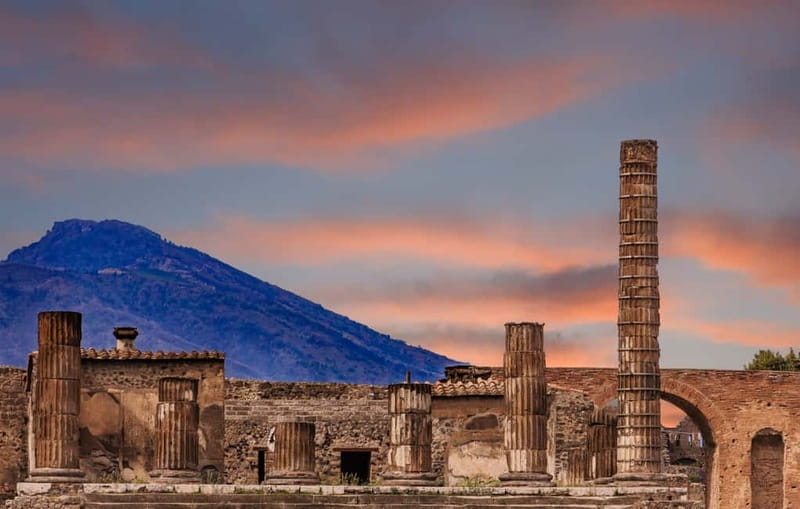
One volcano, two cities, and sharp archaeology. This tour takes you into Campania’s most famous ruins with an archaeologist guide, so the AD 79 story is explained in plain language as you move from Pompeii’s main public core to Herculaneum’s preserved streets and homes. I especially like that you get skip-the-line access via a separate entrance, which keeps your time focused on walking and asking questions.
I love the contrast you’ll see: Herculaneum’s preservation makes daily life feel close, not like a distant textbook. You’ll walk past upper floors that remain standing at places like the Casa del Salone Nero and the Casa Sannitica, and you’ll have a chance to admire mosaics plus charred but remarkably intact furniture.
One thing to plan for: entry tickets are not included in the price, so you’ll pay extra on top of the tour cost. There’s also a first-Sunday-of-the-month free-entry situation, but because tickets can’t be reserved ahead, entry isn’t guaranteed—so don’t count on it as a sure thing.
In This Review
- Key highlights to know before you go
- Meeting at Coffee Shop Vittoria and what the small-group format feels like
- Pompeii’s Forum: your orientation point for streets, politics, and commerce
- Vesuvius in AD 79: why the eruption’s impact wasn’t the same
- Herculaneum’s homes on upper floors: Casa del Salone Nero and Casa Sannitica
- Mosaics and charred furniture: when preservation feels almost unfair
- Thermal baths and bathing culture: recreation you can see
- What the archaeologist guide adds (and why Maria gets praised)
- Skip-the-line via a separate entrance: save time for real sightseeing
- Price and value: $993.72 per group up to 8, plus entry tickets
- Practical tips for a 5-hour Pompeii + Herculaneum schedule
- Who should book this tour?
- Should you book Pompeii & Herculaneum with an archaeologist?
- FAQ
- FAQ
- How long is the Pompeii and Herculaneum tour?
- Where does the tour start and where does it end?
- Is entry to Pompeii and Herculaneum included in the price?
- Does the tour have a separate entrance to avoid lines?
- Is the tour guided in English?
- How large is the group?
- Is the tour wheelchair accessible?
- What guides are included?
- Is pickup and drop-off included?
- Is there a cancellation policy?
Key highlights to know before you go
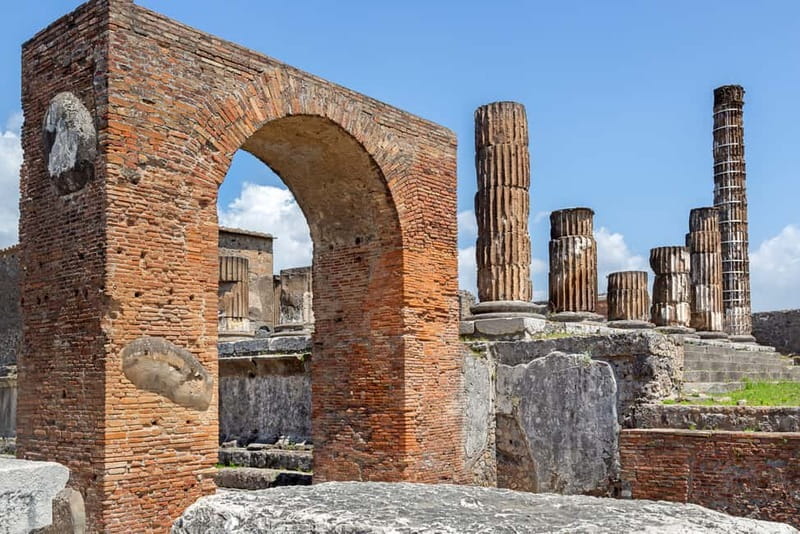
- Archaeologist-led comparison of Pompeii vs Herculaneum, including how the eruption differed in impact
- Pompeii’s Forum as your starting anchor for political and commercial life
- Herculaneum’s better preservation, including standing upper floors in famous houses
- Mosaics and charred furniture that look preserved from the moment of disaster
- Thermal baths with talk focused on recreation and bathing culture
- Small group up to 8, which usually means more back-and-forth with your guide
Meeting at Coffee Shop Vittoria and what the small-group format feels like
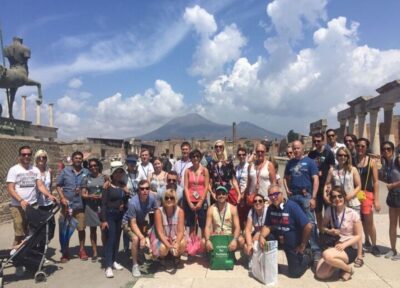
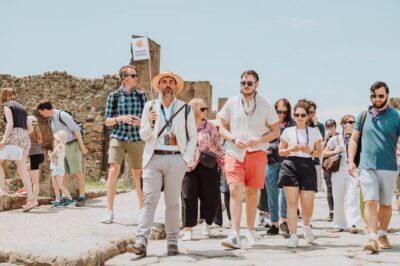
Your day begins at Coffee Shop Vittoria, and you finish back at the same meeting point. It’s a 5-hour experience designed around real walking time, not long bus rides between stops. With a small group limited to 8, you’ll typically get the kind of pace that lets you hear details and ask questions without feeling swept along.
This is also the kind of tour where your guide matters. When you have an archaeologist in charge, the “what am I looking at?” questions get answered as you go—especially helpful in Pompeii, where the ruins can feel like a maze if you don’t know what you’re seeing.
Quick note before you commit: the information provided includes pickup and drop-off in one spot, while another part says pickup and drop-off aren’t included. I’d treat that as a “confirm at booking” item so you’re not surprised on arrival.
More of the site walked with an archaeologist
- Pompeii: Entry Ticket and Guided Tour with an Archaeologist
★ 4.8 · 19,459 reviews - Pompeii: Small Group Tour with an Archaeologist
★ 4.8 · 12,264 reviews - Pompeii 3hours Villa of Mysteries tour with an Archaeologist
★ 4.8 · 486 reviews
Pompeii’s Forum: your orientation point for streets, politics, and commerce
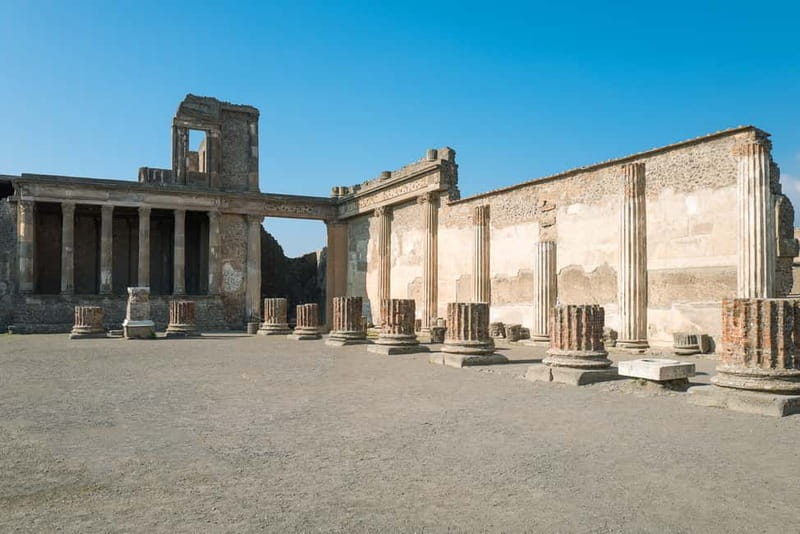
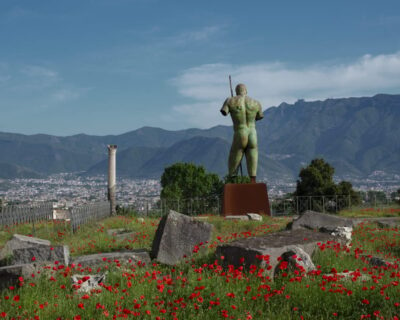
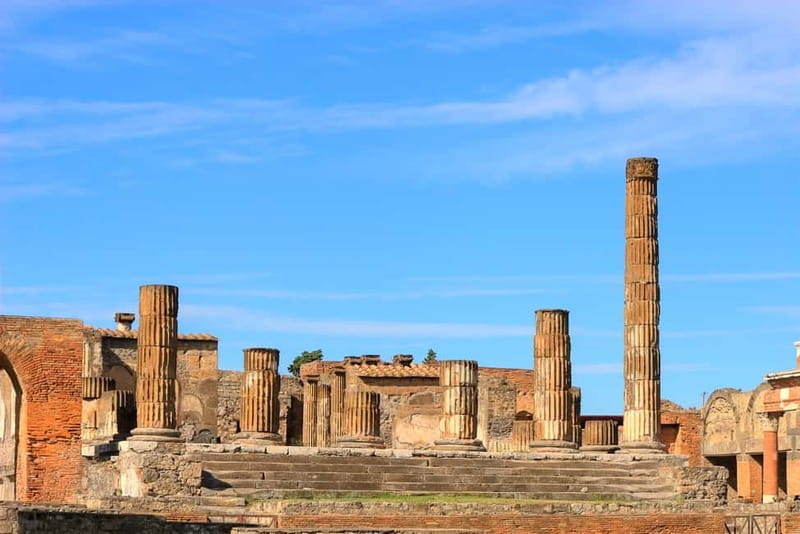
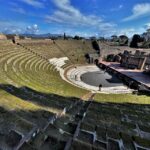
You start in Pompeii, and you begin with the Forum—the city’s political and commercial center. That matters more than it sounds. If you start in the Forum, you get an instant mental map: where power and trade lived, and why so many important movements and decisions would have started nearby.
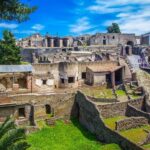
From there, you’ll walk through a dense network of streets. The value here is that your guide isn’t just pointing out walls; they’re helping you connect the layout to how people moved through daily life. Pompeii isn’t only about one big monument. It’s about how all those streets stitch together a city. Starting at the Forum is the easiest way to make the rest of the site click.
My practical tip: as you transition from the Forum into the streets, keep asking for “what kind of place is this?”—market space, residential space, public space. The guide’s explanations are the tool that turns scattered stones into a lived-in place.
Vesuvius in AD 79: why the eruption’s impact wasn’t the same
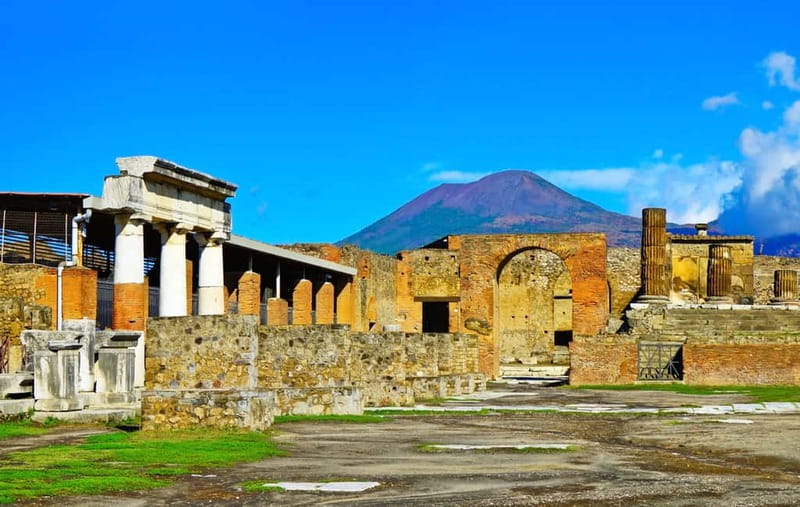
You’ll hear the core story clearly: Vesuvius buried both cities in AD 79. But the point of this tour is the comparison—because the disaster affected Pompeii and Herculaneum in different ways, and you’ll see that difference right in front of you.
That’s the “aha” moment many people miss when they visit on their own. Pompeii gets the spotlight, but Herculaneum often feels more intimate because of how much has survived visibly. Your archaeologist guide ties those observations together, so the site stops being just impressive and starts being understandable.
And because your guide is specialized, you’re not left with vague explanations. You’ll get context that helps you interpret what you see: preservation levels, building survival, and how those factors shape what we know.
Herculaneum’s homes on upper floors: Casa del Salone Nero and Casa Sannitica
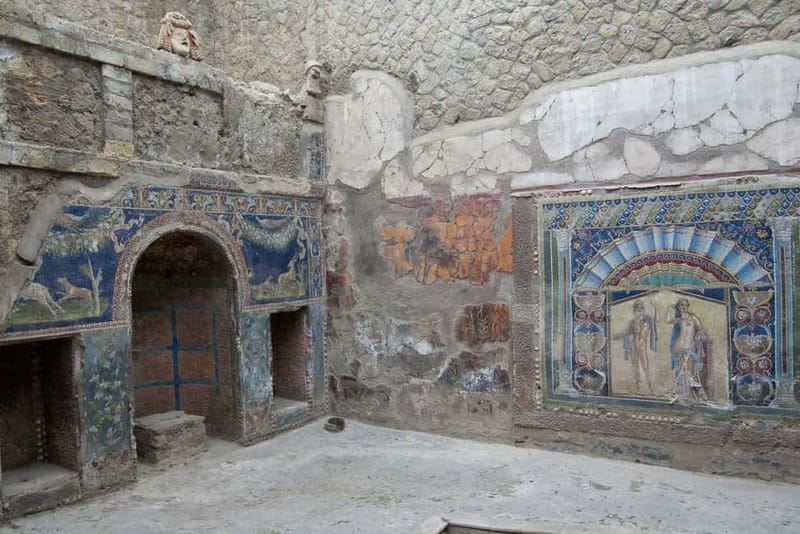
Then you shift to Herculaneum, often described as a jewel of archaeology—and you’ll understand why fast. The big takeaway is simple: Herculaneum is better preserved than Pompeii, which means you can actually see more of how buildings looked and functioned.
Your stops include the Casa del Salone Nero and the Casa Sannitica. The stand-out detail you’ll hear about at these places is the survival of upper floors of elegant buildings—still standing enough to give a sense of elevation and layout. That’s huge for visitors. Low walls and collapsed roofs can be hard to interpret. Upper floors give you vertical clues: where people lived, how spaces separated, and how these homes were set up for status and comfort.
You’ll also focus on what preservation lets you study:
- mosaics (for art and decoration)
- charred but extraordinarily intact furniture (for material culture and daily objects)
This is where the tour turns into a real sensory learning experience. You’re not only seeing “ruins.” You’re seeing how a household was arranged and decorated—then thinking about what must have happened in the moments after burial.
Mosaics and charred furniture: when preservation feels almost unfair
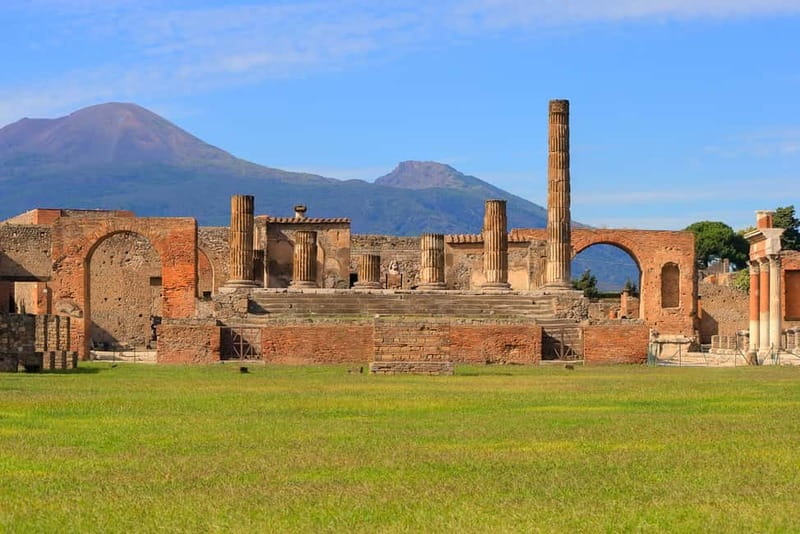
One of the strongest parts of the Herculaneum experience is how lifelike certain details can feel. You’ll see beautiful mosaics and charred furniture that remains astonishingly intact. That combination is why many people walk away feeling like the past is closer than expected.
The guide’s role here is important. If you just look at surfaces, you might miss the significance of what’s preserved and what isn’t. With the archaeologist explaining, you learn how these objects help answer questions about taste, household life, and social status.
If you’re picky about what you photograph, this is your moment. Don’t only take wide shots of the site. Take a few close photos of mosaic patterns and furniture placements (where permitted). Later, those details help you remember what your guide said about function and style.
More of Herculaneum next door
Thermal baths and bathing culture: recreation you can see
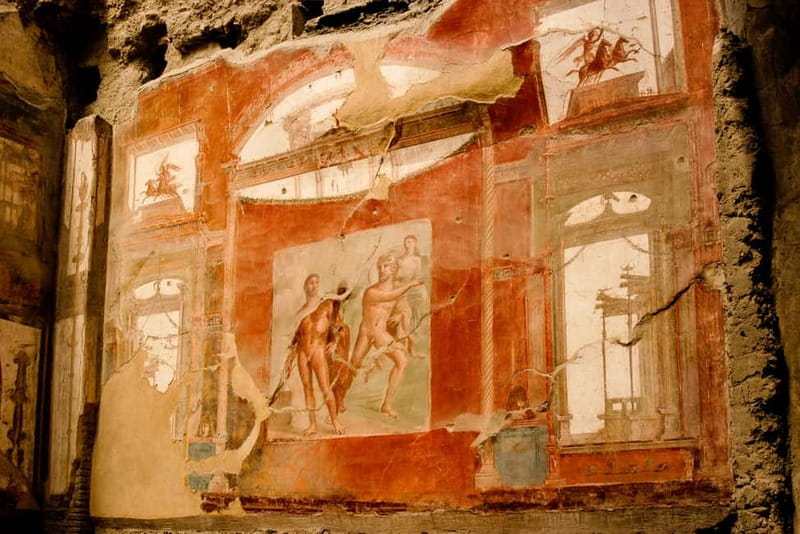
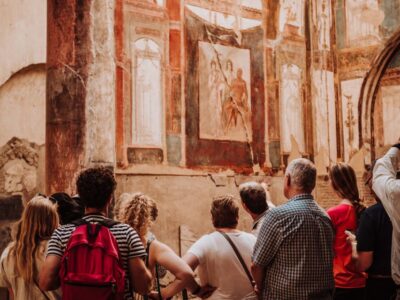
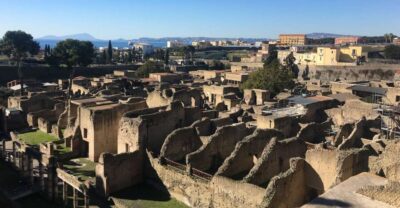
At Herculaneum, you’ll move on to the thermal baths, and this is more than a side stop. Your guide will explain recreational bathing culture—so the baths aren’t just a location with leftover stone basins. You’ll get a sense of why people went, what bathing meant socially, and how the architecture supported that routine.
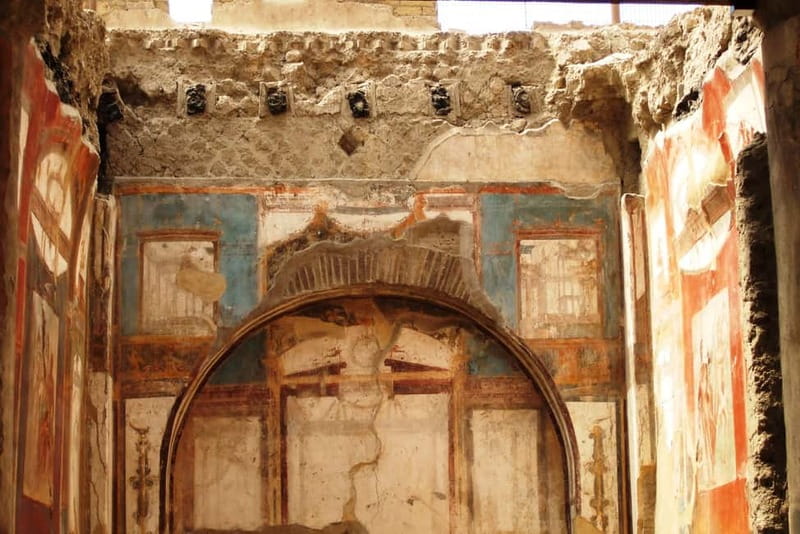
You’ll also admire fine decorations that are described as perfectly preserved. That’s a key theme of Herculaneum: decorative surfaces often survive in ways that help you understand how people wanted spaces to look and feel.
If you’ve ever visited ruins and wondered how ordinary people actually spent their time, this portion helps answer it. Baths were not just hygiene. They were social and recreational.
What the archaeologist guide adds (and why Maria gets praised)
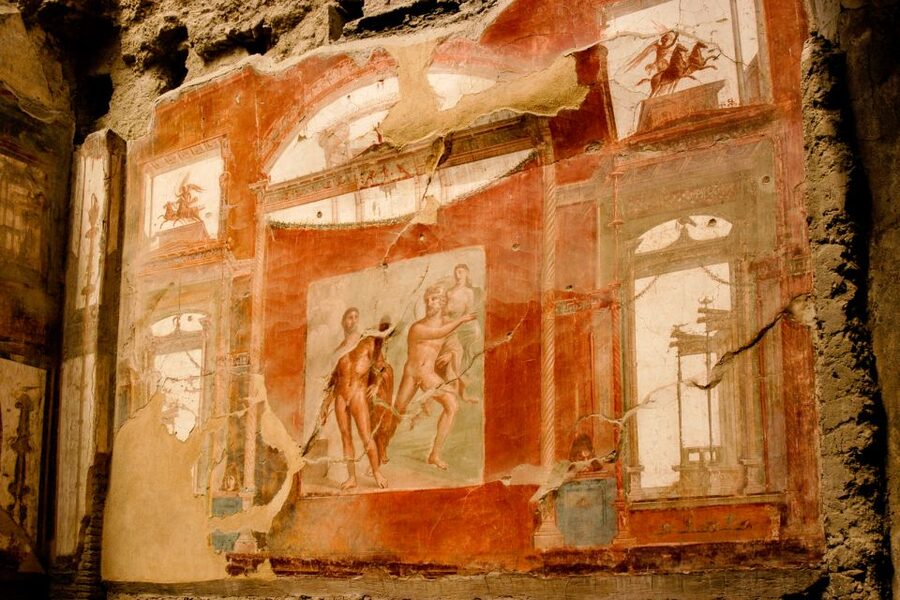
This tour is built around a specialist archaeologist guide, and that makes a noticeable difference. In the best cases, your guide turns complicated site info into clear, story-based explanations you can follow while walking.
One guide named Maria is called out for being very interesting and having perfect knowledge of the places, with very good explanations. That lines up with what you want for a double-site tour like this. You’ll be seeing lots of visual information in a short time. The guide has to translate it fast and clearly, without turning it into a lecture you can’t process.
Also, the group size helps. Limited to 8 participants, your guide can pace questions, adjust explanations on the fly, and make sure you’re not lost in a crowd.
Skip-the-line via a separate entrance: save time for real sightseeing
You’ll appreciate the skip-the-line setup through a separate entrance. In Pompeii and Herculaneum, time is everything. The more time you spend standing in ticket lines, the less time you can spend inside the story.
This is also why the tour is a good “fit” for a half-day plan. You get guided walking through key areas rather than a scattered self-tour where you’re constantly trying to guess what matters.
Just remember: entry tickets are not included, so you still need to sort that part out. The skip-the-line feature is about the entry process once you have tickets, not about covering admission.
Price and value: $993.72 per group up to 8, plus entry tickets
The price is listed as $993.72 per group up to 8, and the duration is 5 hours. That sounds high at first glance, but it’s priced for a private-style group size rather than per person.
Here’s the practical value math:
- If your group is at the full limit of 8, that works out to about $124 per person.
- If fewer people book, the per-person cost rises because it’s a per-group price.
That’s why this tour can feel like a strong deal for small groups of friends or couples who want an expert guide and a manageable pace.
The big cost consideration is that entry tickets aren’t included. Given how often admissions can add up, you’ll want to budget for that separately. Also, there’s a first-Sunday free-entry rule, but since tickets can’t be reserved and entry isn’t guaranteed, you should still plan for standard paid entry unless you’re taking a calculated risk.
Practical tips for a 5-hour Pompeii + Herculaneum schedule
This is a timed, walking-heavy outing, so plan like you’re trying to see two cities without rushing. A few smart moves:
- Wear comfortable shoes. You’ll be walking through both Pompeii’s street network and Herculaneum’s site areas.
- Bring a plan for food. Food and drinks aren’t included, so eat beforehand or bring what you need.
- If you’re going on the first Sunday of the month, treat free entry as possible, not assured, because reservations aren’t available and entry may not be guaranteed.
- Go with questions. The tour is strongest when you ask what you don’t understand—especially during the Pompeii-to-Herculaneum comparison.
And if accessibility is a concern for your group, good news: the tour is listed as wheelchair accessible.
Who should book this tour?
Book this if you want:
- a guided comparison of Pompeii vs Herculaneum with real interpretation, not just sightseeing
- a smaller group experience (up to 8) so you can hear explanations
- highlights that focus on the places that help you understand daily life: Forum, elite homes like Casa del Salone Nero and Casa Sannitica, and the thermal baths
- an archaeologist-led format where the story of AD 79 is explained clearly
If you already know everything about Roman architecture and archaeology, you might find it more useful to choose other site-focused experiences. But for most people, the guide-and-comparison format is exactly what turns ruins into understanding.
Should you book Pompeii & Herculaneum with an archaeologist?
Yes—if you’re aiming for a guided, high-value visit that makes the two cities feel different for the right reasons. The strongest reason to book is the archaeologist guide plus the structured route: Pompeii’s Forum first for orientation, then Herculaneum for that unusually preserved, life-like feeling—mosaics, charred furniture, and baths.
Just do two things before you go: budget for entry tickets (since they’re not included) and confirm whether your departure includes pickup/drop-off, since the details provided are inconsistent. If you handle those, you’ll get a focused 5 hours that turns Vesuvius from a headline into a story you can actually see.
FAQ
FAQ
How long is the Pompeii and Herculaneum tour?
The tour is 5 hours long. Starting times can vary, so you’ll need to check availability for the time options.
Where does the tour start and where does it end?
It starts at Coffee Shop Vittoria and ends back at the same meeting point.
Is entry to Pompeii and Herculaneum included in the price?
No. Entry tickets are not included, even though the tour includes skip-the-line access through a separate entrance.
Does the tour have a separate entrance to avoid lines?
Yes. You’ll skip the line through a separate entrance.
Is the tour guided in English?
Yes. The live tour guide is English.
How large is the group?
It’s a small group limited to 8 participants.
Is the tour wheelchair accessible?
Yes, the tour is listed as wheelchair accessible.
What guides are included?
A specialist archaeologist guide is included.
Is pickup and drop-off included?
The information provided includes pickup and drop-off in one place, but it also notes that pickup and drop-off are not included elsewhere. It’s best to confirm this detail when you book.
Is there a cancellation policy?
Yes. There is free cancellation up to 24 hours in advance for a full refund.
More Tour Reviews in Pompei Campania
- Pompeii: Entry Ticket and Guided Tour with an Archaeologist★ 4.8 · 19,459 reviews
- Pompeii: Small Group Tour with an Archaeologist★ 4.8 · 12,264 reviews
- Pompeii: Skip-the-Line Entrance Ticket with Audio Guide★ 4.0 · 2,509 reviews
- Naples: Pompeii and Mt. Vesuvius with Lunch and Wine Tasting★ 4.5 · 2,454 reviews
- Pompeii: Skip-the-line-Ticket and Guided Tour★ 4.6 · 1,152 reviews
More of Herculaneum
- Pompeii: Small-Group Tour of Pompeii and Herculaneum★ 4.8 · 867 reviews
- Pompeii and Herculaneum: Guided Tour with an Archaeologist★ 5.0 · 164 reviews
- From Naples: Pompeii and Herculaneum VIP Tour with Lunch★ 4.4 · 129 reviews
- Pompeii & Herculaneum: Skip-the-line & Digital Guide App★ 4.0 · 35 reviews
- Pompeii, Herculaneum, and Vesuvius: Full-Day Tour★ 3.7 · 21 reviews
More Tours Led by an Archaeologist
- Pompeii: Entry Ticket and Guided Tour with an Archaeologist★ 4.8 · 19,459 reviews
- Pompeii: Small Group Tour with an Archaeologist★ 4.8 · 12,264 reviews
- Pompeii 3hours Villa of Mysteries tour with an Archaeologist★ 4.8 · 486 reviews
- Pompeii: Tour with Archaeologist Guide & Skip-the-Line Entry★ 4.5 · 478 reviews
- Pompeii and Herculaneum: Guided Tour with an Archaeologist★ 5.0 · 164 reviews
Just reviewed: more Pompei Campania tours and day trips

Pompeii Archaeologist-Led Tours, compared.
 ★ 4.8Entry Ticket and Guided Tour with an ArchaeologistFrom $3519,459 reviews
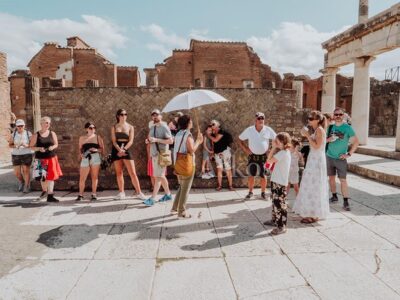 ★ 4.8Small Group Tour with an ArchaeologistFrom $4012,264 reviews
★ 5.0Pompeii Small Group Tour with an ArchaeologistFrom $356,593 reviews
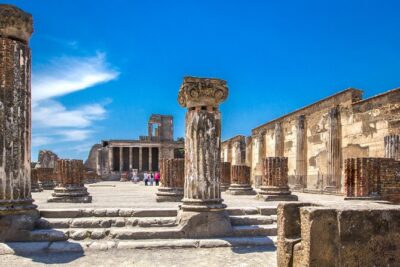 ★ 5.0Pompeii and Herculaneum Small Group Tour with an ArchaeologistFrom $771,350 reviews
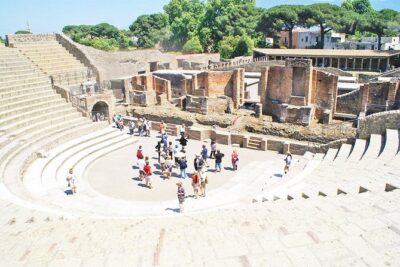 ★ 5.0Skip the Line Guided Tour of Pompeii led by an ArchaeologistFrom $95703 reviews
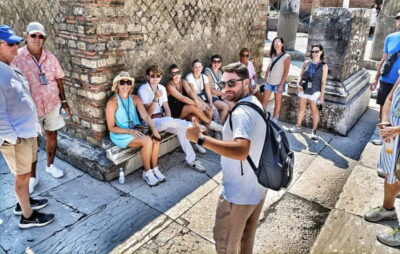 ★ 4.9Exclusive Tour with Archaeologist and Entry TicketsFrom $50634 reviews
 ★ 5.0Pompeii Private Tour with an Archaeologist and Skip The Line – 3 hoursFrom $302564 reviews
 ★ 5.0Pompeii Skip-the-line Tour with Archaeologist GuideFrom $71559 reviews
Browse the lists this tour appears in