
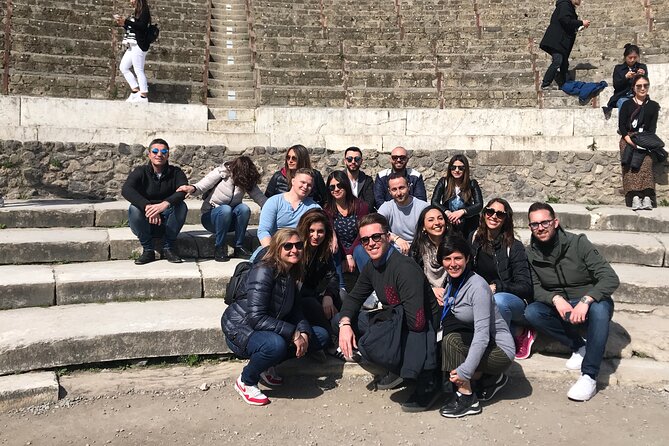
Reviewed · POMPEII ARCHAEOLOGIST-LED TOURS
Pompeii Small Group with an Archaeologist and Skip The Line
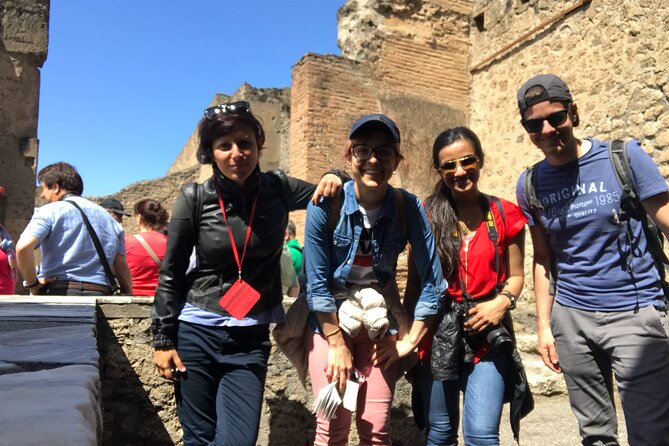
Pompeii feels huge until you get inside fast. This small-group skip-the-line tour gets you moving right away, with an archaeologist-led walk through the key streets and buildings. I like that you trade waiting in line for actual time at the ruins, even if two hours still means you’ll hit the highlights, not every corner.
The best part is the guidance. With archaeologist Eliana Sandretti (and other guides who’ve stepped in, like Dario, Francisco, Francesco, and Anna), you get explanations that connect the stones to real life, from public spaces to the places most visitors only glance at. One possible drawback: on a noisy site, you may need to position yourself well to catch every word, especially when the group is moving.
In This Review
- Key things to know before you go
- Skip-the-Line Pompeii Entry: Where Your Time Actually Goes
- Your Archaeologist Guide Turns Ruins Into Real Places
- Stop-by-Stop: Pompeii’s Highlights in the Right Order
- Entrance area and the small theater
- Teatro Grande: where Greek-Roman drama landed
- Granai del Foro: the forum’s barns and the casts
- Stabian Baths (Terme Stabiane): frescoes you’ll remember
- Foro di Pompei: the main square
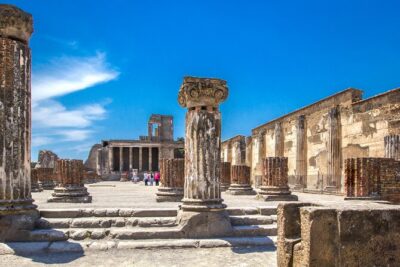
- Basilica of Pompeii: law and judgment
- Temple of Jupiter: with Vesuvius as a backdrop
- Quadriporticus of the theaters and the Gladiator Barracks
- Lupanar: the old Red Light District
- Temple of Venus and Casa del Fauno: wealth and devotion
- Price and Logistics: What You’re Paying For at $217.69
- Who This Tour Fits Best (And Who Might Want a Different Plan)
- Practical Tips for a Smoother Walk Through Pompeii
- Should You Book This Pompeii Skip-the-Line Archaeologist Tour?
- FAQ
- How long is the Pompeii Small Group with an Archaeologist and Skip The Line tour?
- What is the group size for this tour?
- Is admission included for the sites visited?
- Does the tour include skip-the-line tickets?
- What language is the tour offered in?
- Where does the tour start?
- Is a mobile ticket provided?
- Is food or drinks included?
- What is included besides the guide and entry tickets?
- What’s the cancellation policy?
Key things to know before you go
- Skip-the-line entry that saves real time so you start seeing Pompeii sooner
- Archaeologist-led explanations that turn buildings into stories
- Up to 10 people keeps the pace relaxed and questions practical
- Major landmarks in about 2 hours without feeling like a sprint
- Tickets included for the main stops you’ll walk through
- You’ll cover both “famous” and surprising sites like the baths and the lupanar
Skip-the-Line Pompeii Entry: Where Your Time Actually Goes
Pompeii punishes slow starts. Lines eat your day, and once you’re inside, it’s easy to get pulled in ten directions at once. This tour is built to fix that with fast-track skip-the-line tickets. You arrive at the meeting point near Piazza Esedra at Ristorante Suisse (80045 Pompeii), and you head into the archaeological park with your entrance handled already.
The tour runs about two hours. That time window matters. You’ll get a strong overview of the city’s layout and the big monuments, plus a few of the more “what am I looking at?” stops that make Pompeii feel human. But it’s not a full-day survey. If you want to linger in one house or one street for an hour, you’ll likely feel time pressure.
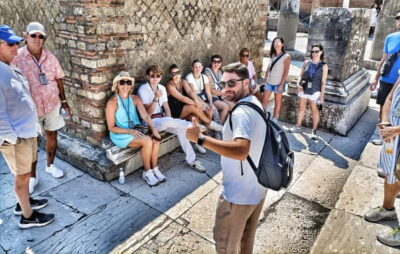
Also, this is a small group (maximum 10). That tends to make the pace more comfortable and keeps you from being stuck behind a crowd of shoulder-to-shoulder walkers. You still need to walk—Pompeii is uneven and outdoors—but it’s a calmer way to see the core sights without the chaos.
More ways past the ticket queue
- Skip the Line Guided Tour of Pompeii led by an Archaeologist
★ 5.0 · 703 reviews - Pompeii Private Tour with an Archaeologist and Skip The Line – 3 hours
★ 5.0 · 564 reviews - Pompeii Skip-the-line Tour with Archaeologist Guide
★ 5.0 · 559 reviews
Your Archaeologist Guide Turns Ruins Into Real Places
A guide is nice. An archaeologist guide changes what you notice.
The provider listed for this experience is Eliana Sandretti, and multiple accounts describe her as someone who knows Pompeii from the inside, not just from guidebooks. The difference shows up in the details: why certain spaces look the way they do, how people used public buildings, and what you can infer from the arrangement of rooms and structures.
In practice, you’ll be able to ask questions without your guide sounding like they’re reading pre-packaged facts. People specifically noted that the explanations felt fresh and not like recycled scripts. You also get context about what it’s like to work on the site today, including how excavations are ongoing and how the site is managed.
One real-life advantage of this style of guiding is comfort. You’re not just chasing sights; you’re learning enough to interpret them while you walk. That makes the “skip-the-line” piece more valuable too, because you’re not buying time just to stare at stones—you’re buying time to understand what you’re seeing.
Stop-by-Stop: Pompeii’s Highlights in the Right Order
This tour focuses on the main areas of Pompeii in a route that makes sense for a short visit. Expect short, high-impact stops. Here’s how each area helps you build a mental map of the city.
Entrance area and the small theater
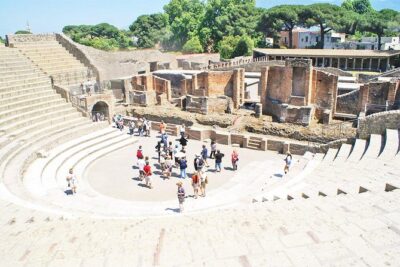
You start at the Pompeii Archaeological Park with your entry taken care of. Early on, you’ll visit the small theater, a designated place for musical and singing performances. This sets the tone: Pompeii wasn’t only about politics and commerce. It was also entertainment, social life, and everyday culture.
What to look for: how performance spaces are designed for viewing and acoustics, and how that fits into neighborhood life.
Watch-outs: because it’s early in the walk, you may still be orienting yourself. If you’re the type who likes to take photos, try to do it between points rather than during key explanations.
Teatro Grande: where Greek-Roman drama landed
Next is the Teatro Grande, a larger theater tied to Greek-Roman comedies and tragedies. If you remember Pompeii mainly as ruins and fresco fragments, this stop helps you see the city as a place with formal cultural events and recognizable genres.
What to look for: the scale of the seating and the sense of rhythm in how people would have entered, sat, and watched.
The tour also keeps time tight here (around 15 minutes). That’s not a flaw—it’s the point. You’ll get the core idea quickly and then move on to anchor it with other landmarks.
More of the site walked with an archaeologist

Granai del Foro: the forum’s barns and the casts
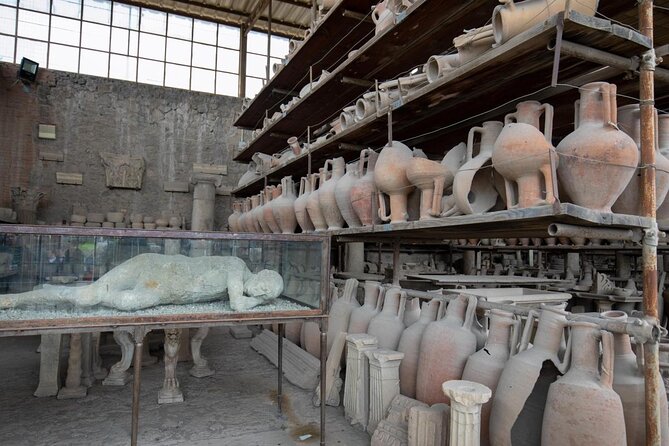
At the Granai del Foro, you’ll see the barns of the forum and the casts connected to victims who died during the eruption of 79 AD. This stop hits emotionally, but it’s also important historically because it shows how food storage and civic life were tied together.
What to look for: the function of the space. Barns aren’t glamorous, but they matter. They show the mechanics of running a city.
Consideration: if you’re sensitive to the subject matter, it may feel intense. The upside is that a structured stop with guided context usually helps you process it rather than rushing past it.
Stabian Baths (Terme Stabiane): frescoes you’ll remember
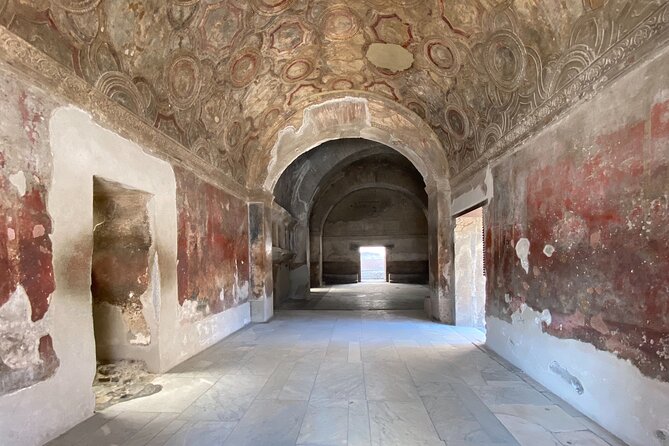
Then it’s off to the Stabian Baths, known for colorful, memorable frescoes. Baths weren’t just about washing. They were social spaces—places to talk, relax, and build relationships.
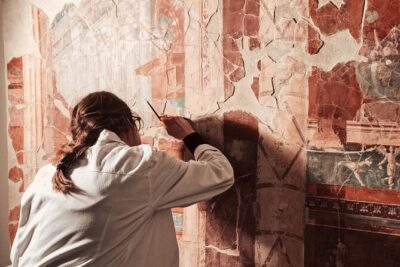
What to look for: the frescoes and the way decoration survives in parts of the bath complex. Even when you don’t catch every artistic detail, you’ll leave with a strong sense of color and luxury.
This stop is short, too (about 15 minutes), but baths are one of those areas where guided pointing helps. Without a guide, you might see the walls; with one, you also understand why certain areas mattered.
Foro di Pompei: the main square
The Foro di Pompei is the ancient forum—the city’s main square. This is where power and public life intersected: civic speeches, daily movement, trade, and the backdrop for official decisions.
What to look for: the forum’s layout as a hub, not just a single landmark.
Basilica of Pompeii: law and judgment
Next you’ll visit the Basilica, the ancient seat of the court where justice was administered. If the forum is where public life gathered, the basilica is where decisions were made.
What to look for: the role of architecture in enforcing order. The basilica’s purpose explains the design and how people would have acted inside.
Temple of Jupiter: with Vesuvius as a backdrop
You’ll also see the Temple of Jupiter, with the imposing presence of Vesuvius behind it. This is one of those visual pairings that makes Pompeii feel grounded in place.
What to look for: how the temple’s prominence and the volcano’s physical presence work together to shape the city’s identity and worldview.
Quadriporticus of the theaters and the Gladiator Barracks
The tour then moves through the broader theater area, including the Quadriporticus of the theatres and the Gladiator Barracks. You’ll look at apartments and see where gladiators trained.
This is where Pompeii surprises a lot of first-time visitors. It’s not just entertainment; it’s labor, discipline, and a structured lifestyle.
What to look for: training space and housing clues. Even in short visits, guided explanations help you connect daily routines to the survival of these buildings.
Lupanar: the old Red Light District
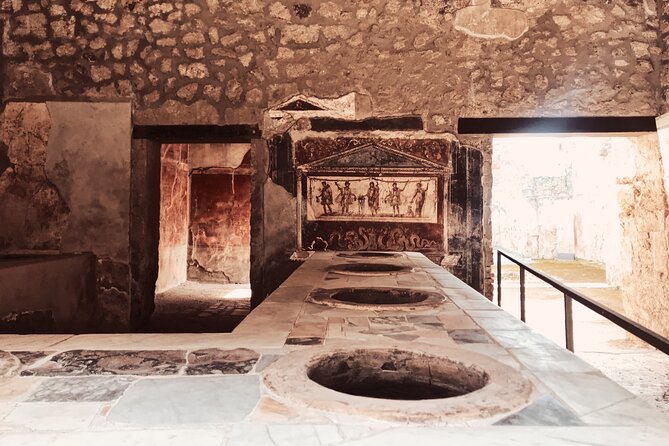
Next comes the Lupanar, often described as the city’s old Red Light District. This stop is brief (around 15 minutes), but it’s memorable because it shows the underbelly of urban life in a way that feels stark and surprisingly specific.
What to look for: the layout as a commercial setup, and the human reality behind it. A good guide helps keep it from turning into shock-value tourism.
Temple of Venus and Casa del Fauno: wealth and devotion
You’ll then visit the Temple of Venus, where a key city divinity was venerated. After that, you’ll walk through Casa del Fauno, one of the richest and most luxurious residences in Pompeii.
This pairing works well: temple + elite home. It’s a quick snapshot of how belief, status, and daily life connected.
What to look for: the shift from public religious space to private wealth. Even without long hours, you’ll come away with a clearer picture of social layers in Pompeii.
Price and Logistics: What You’re Paying For at $217.69
At $217.69 per person, this tour sits in the higher range. So what do you actually get for that money?
You’re buying three things that are hard to replace with a self-guided visit:
- Time saved from skipping the entrance line
- An archaeologist-led explanation that helps you understand what you’re looking at, not just see it
- Tickets included for the main stops you visit, which removes a chunk of planning stress
For a two-hour visit, the value becomes clearer. If you have limited time in Pompeii, a guide helps you hit the most meaningful areas efficiently. If you’d rather wander slowly and study details on your own, you may feel less need for this level of help.
There’s also an added comfort factor: small groups make the experience feel less like cattle herding, and guides can adjust pacing to keep people together. In at least one instance, the tour team even managed schedule changes by swapping guides when plans shifted, which speaks to flexibility and continuity.
Who This Tour Fits Best (And Who Might Want a Different Plan)
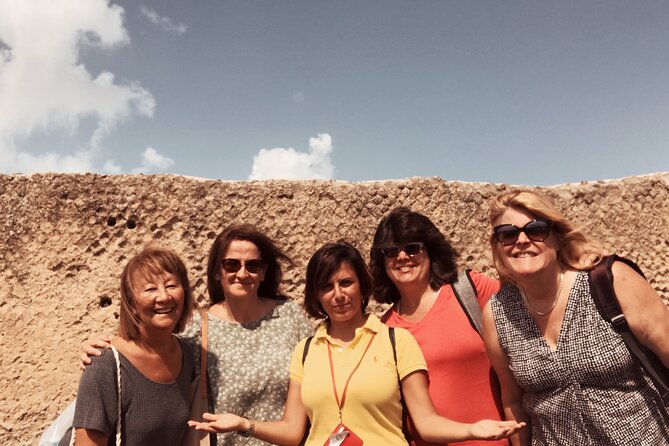
This is a great match for:
- Short-stay visitors who want the main highlights without committing to a full day
- People who learn better by hearing how spaces were used, not just looking at ruins
- Families or small groups who prefer a relaxed pace and fewer bottlenecks
One detail from real-life accounts that matters: guides were attentive to practical needs like carrying a stroller over tougher areas. So this tour can work for parents who want structure without getting overwhelmed.
It may not be ideal for:
- People who are very hard of hearing and hate outdoor noise. One person noted it could be hard to catch words when the guide was farther away.
- Visitors who only want one or two areas and want 45+ minutes in each spot. This tour is designed for breadth, not deep dwelling.
Practical Tips for a Smoother Walk Through Pompeii
Pompeii is outdoors and often hot. Bring what you’d bring for walking all day, even though the tour is two hours.
Here’s how to make the most of it:
- Bring water, sunscreen, and a hat or umbrella. Heat was specifically called out as a factor during the experience.
- Wear shoes that handle uneven stone and frequent stops.
- If you struggle to hear, try to stay closer to the guide at each stop so you’re not depending on volume.
- Ask questions. A major theme in strong feedback was that the guide made room for them.
One timing tip came up too: if your schedule allows, visiting later in the day can mean fewer crowds. That can make Pompeii feel calmer and give your guide more room to pause and explain.
Should You Book This Pompeii Skip-the-Line Archaeologist Tour?
Book it if you want a fast, structured Pompeii experience that still feels personal. The combination of skip-the-line entry, small group size, and an archaeologist-led guide is what makes this tour feel worth it—especially if your time in Pompeii is limited.
Skip it (or consider another style) if you’re the type who plans to spend most of the day wandering and studying at your own pace. This tour is excellent for seeing the city’s big picture, but it won’t replace a longer, slower visit.
If you’re debating what to do with your one shot at Pompeii, this is one of the better ways to get your bearings fast and leave with a real understanding of the places you saw.
FAQ
How long is the Pompeii Small Group with an Archaeologist and Skip The Line tour?
It lasts about 2 hours.
What is the group size for this tour?
The tour is a small group with a maximum of 10 travelers.
Is admission included for the sites visited?
Yes. Tickets entrance and admission for the main attractions on the tour are included.
Does the tour include skip-the-line tickets?
Yes. You get fast-track skip-the-line entry, with your ticket already handled at the entrance.
What language is the tour offered in?
The tour is offered in English.
Where does the tour start?
The meeting point is Ristorante Suisse, Piazza Esedra, 10/13, 80045 Pompei NA, Italy.
Is a mobile ticket provided?
Yes. A mobile ticket is included.
Is food or drinks included?
No. Food and drinks are not included.
What is included besides the guide and entry tickets?
It includes an authorized tourist guide and assistance during the tour, plus fees and taxes for purchasing the entrance ticket.
What’s the cancellation policy?
Free cancellation is available up to 24 hours in advance for a full refund. If weather requires cancellation, you’ll be offered a different date or a full refund.
More Tour Reviews in Pompeii
- Pompeii Small Group Tour with an Archaeologist★ 5.0 · 6,593 reviews
- Discover the Ancient Ruins of Pompeii: Day Trip from Rome★ 3.5 · 2,247 reviews
- Pompeii and Herculaneum Small Group Tour with an Archaeologist★ 5.0 · 1,350 reviews
- Skip the Line Guided Tour of Pompeii led by an Archaeologist★ 5.0 · 703 reviews
- Pompeii Ticket + Tour with Optional Tasting Experience at Pompeii★ 5.0 · 663 reviews
More Tours Led by an Archaeologist
- Pompeii Small Group Tour with an Archaeologist★ 5.0 · 6,593 reviews
- Pompeii and Herculaneum Small Group Tour with an Archaeologist★ 5.0 · 1,350 reviews
- Skip the Line Guided Tour of Pompeii led by an Archaeologist★ 5.0 · 703 reviews
- Pompeii Private Tour with an Archaeologist and Skip The Line – 3 hours★ 5.0 · 564 reviews
- Pompeii Skip-the-line Tour with Archaeologist Guide★ 5.0 · 559 reviews
Skip-the-Line Entries, More to Book
- Skip the Line Guided Tour of Pompeii led by an Archaeologist★ 5.0 · 703 reviews
- Pompeii Private Tour with an Archaeologist and Skip The Line – 3 hours★ 5.0 · 564 reviews
- Pompeii Skip-the-line Tour with Archaeologist Guide★ 5.0 · 559 reviews
- Pompeii Private Tour with an Archaeologist and Skip The Line★ 5.0 · 391 reviews
- Complete Pompeii Skip the Line Tour with Archaeologist Guide★ 4.5 · 379 reviews
Just reviewed: more Pompeii tours and day trips





Pompeii Archaeologist-Led Tours, compared.
 ★ 4.8Entry Ticket and Guided Tour with an ArchaeologistFrom $3519,459 reviews
 ★ 4.8Small Group Tour with an ArchaeologistFrom $4012,264 reviews
★ 5.0Pompeii Small Group Tour with an ArchaeologistFrom $356,593 reviews
★ 4.8Small Group Tour with an ArchaeologistFrom $4012,264 reviews
★ 5.0Pompeii Small Group Tour with an ArchaeologistFrom $356,593 reviews
 ★ 5.0Pompeii and Herculaneum Small Group Tour with an ArchaeologistFrom $771,350 reviews
 ★ 5.0Skip the Line Guided Tour of Pompeii led by an ArchaeologistFrom $95703 reviews
 ★ 4.9Exclusive Tour with Archaeologist and Entry TicketsFrom $50634 reviews
 ★ 5.0Pompeii Private Tour with an Archaeologist and Skip The Line – 3 hoursFrom $302564 reviews
 ★ 5.0Pompeii Skip-the-line Tour with Archaeologist GuideFrom $71559 reviews
Browse the lists this tour appears in