
Reviewed · POMPEII ARCHAEOLOGIST-LED TOURS
Pompeii 3h Private & Quality Tour with your Archaeologist
Pompeii makes more sense with an archaeologist. I like that this private tour is led by an authorized archaeologist guide who helps you connect ruins to real Roman life, not just facts. I also like the skip-the-line setup, so you start at Porta Marina Superiore and actually use your time. One thing to plan for: the admission ticket is not included, so add the €19 per person cost.
You’ll cover a lot in three hours, from the basilica and forum area to standout domus like the Domus of Leda and the Swan, then through the Fugitives’ Garden to the Great Gymnasium and amphitheatre. Because it’s a private group for up to 10 people, you can keep the pace comfortable and ask questions as you go.
The guide quality seems to be a big deal here. I’ve seen named archaeologist-guides such as Raffaele, Francesco, Paolo, Patrizia, Riccardo, and Daniela bring Pompeii into focus with clear explanations and smart use of time, even for families with wide age ranges. If you’re sensitive to uneven stone and lots of walking, plan on slower moments and good footwear—Pompeii doesn’t offer many flat breaks.
In This Review
- Key points to know before you go
- How a private archaeologist changes Pompeii
- Skip-the-line entry: what actually gets you there faster
- Starting at Porta Marina Superiore and the first Vesuvius view
- Basilica, Forum, and the Greater Decumano: reading the city’s spine
- Domus highlights: the Domus of Leda and the Swan and restored rooms
- Via dell’Abbondanza to the Fugitives’ Garden molds
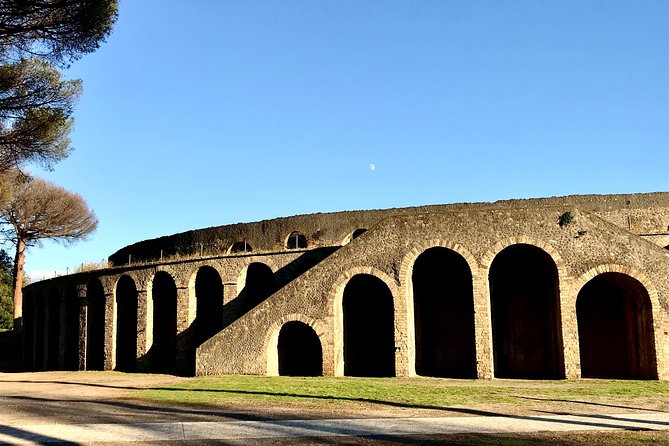
- Great Gymnasium and the amphitheatre: everyday objects and public life
- Price and value: $385.32 per group plus the ticket
- Who this tour suits best in real life
- Practical tips to make your three hours count
- Should you book this Pompeii archaeologist tour?
- FAQ
- How long is the Pompeii private archaeologist tour?
- Is the Pompeii admission ticket included in the price?
- Does the tour help with skip-the-line entry?
- What is the meeting point for the tour?
- Is this a private tour?
- Is the tour offered in English?
Key points to know before you go
- Archaeologist-led storytelling focused on what you’re seeing, from public buildings to private homes
- Skip-the-line entry arranged via a link sent before the tour, so you’re not stuck waiting
- Private group up to 10 people, which usually means more questions and less feeling rushed
- A structured route that starts at Porta Marina Superiore and ends back at the meeting point
- Standouts you won’t want to miss, including the Domus of Leda and the Swan and the Fugitives’ Garden molds
- Objects and “survival evidence” like charred items shown in the Great Gymnasium area
How a private archaeologist changes Pompeii
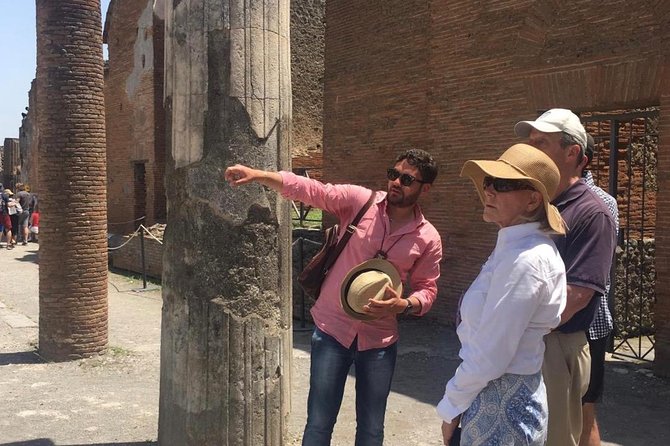
Pompeii is the kind of place where “seeing” is easy, but “understanding” takes help. This tour is built around an archaeologist guide, so you get explanations that fit the setting: how people lived, what buildings were for, and what the eruption evidence actually shows.
I like that the pace is managed, which matters more than you’d think. Three hours sounds short until you realize Pompeii involves real walking between clusters of ruins, plus the mental work of reading space, scale, and everyday details. With an expert leading you, you spend that time looking at meaningful things instead of guessing.
Another plus: the experience is private for your group. That makes it easier to adjust when your group has mixed energy levels—think kids who need stories, and adults who want detail. The tour format also works well if you’re the type who asks a lot of questions (and you will, because Pompeii begs for it).
More of the site walked with an archaeologist
- Pompeii and Herculaneum Small Group Tour with an Archaeologist
★ 5.0 · 1,350 reviews - Skip the Line Guided Tour of Pompeii led by an Archaeologist
★ 5.0 · 703 reviews - Pompeii Private Tour with an Archaeologist and Skip The Line – 3 hours
★ 5.0 · 564 reviews
Skip-the-line entry: what actually gets you there faster
The big practical win here is the skip-the-line admission ticket link sent before your tour. You still need to purchase the entry ticket separately—€19 per person—but the process is designed to avoid long lines on the day.
Why that matters: Pompeii’s entrance time can eat into a short tour. With a guided three-hour plan, those wasted minutes turn into less time at the places you came for, like the domus and amphitheatre.
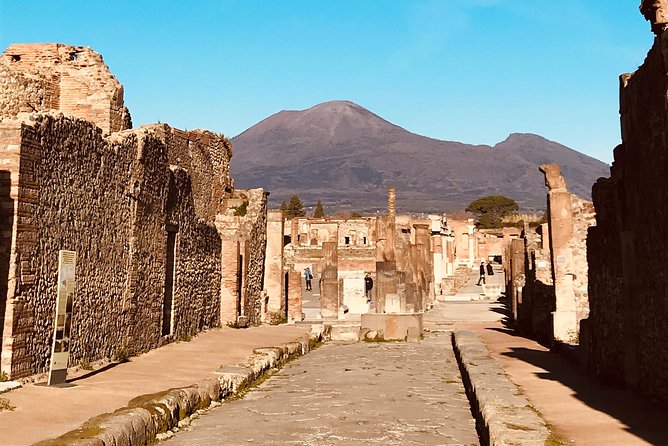
The tour also starts at a specific entrance point: Porta Marina Superiore at Scavi di Pompei. From there, you’re in the ruins early and moving with purpose, looking toward Vesuvius as you go.
Starting at Porta Marina Superiore and the first Vesuvius view
Your tour begins at Scavi di Pompei, at the Biglietteria Porta Marina Superiore (Via Villa dei Misteri, 2). It’s a strong start because you’re entering through the main access point and building momentum from the beginning.
One of my favorite parts of this route is the way it frames Pompeii in relation to Vesuvius. As you move through the first areas, you’re not just walking through stones—you’re learning how the city connects to the eruption story.
Before you get too deep into the ruins, you’ll pass the antiquarium. This is where the tour earns its credibility with real finds from recent excavations. Expect the guide to talk about objects like a coin that helps modify the date of the eruption and a very heavy golden armcuff, which gives you a quick sense of wealth, evidence, and how archaeologists refine the timeline.
Basilica, Forum, and the Greater Decumano: reading the city’s spine
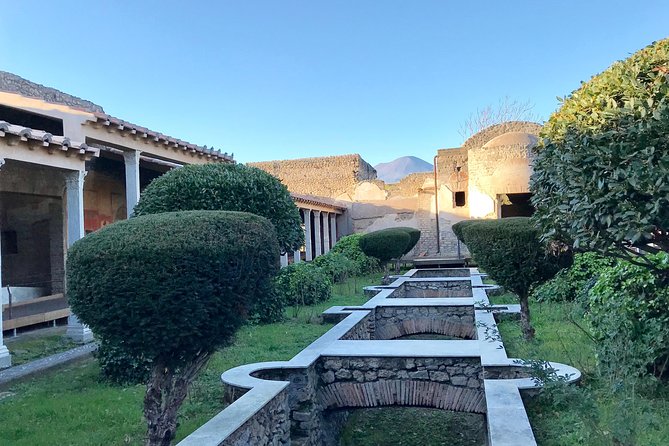
After the opening introduction, the tour moves into major public spaces. You’ll head toward the basilica, then the forum area with the market and main temples. Even if you’ve seen photos before, these zones hit differently when someone points out what activity would have happened here.
The forum and market area is where the city’s daily rhythm becomes clearer. The guide can connect buildings to routines—trading, gathering, public movement—so you understand why the layout matters.
Then comes the walk along the Greater Decumano, a major street spine. This is a great stretch for figuring out orientation. When your brain has landmarks, the rest of the ruins stop feeling like random fragments.
Along the way, you’ll also see the thermal system and the Lupanare. Pompeii’s bathing system and entertainment/sex-work area are both key parts of how Romans spent time. A good guide makes it less awkward and more useful—turning it into real context about daily habits, social life, and how space was organized.
Domus highlights: the Domus of Leda and the Swan and restored rooms
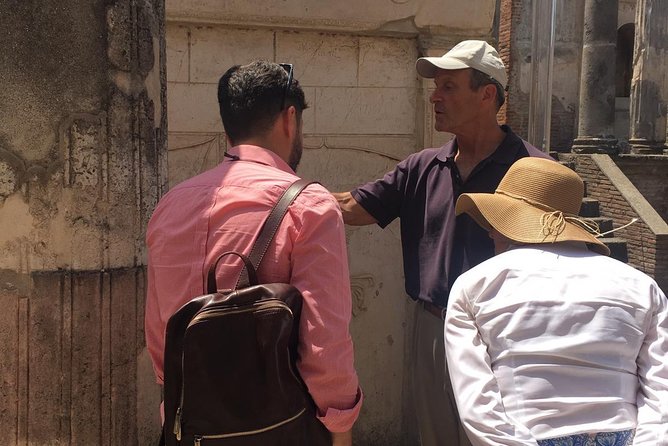
The heart of Pompeii for many people is the domus—private homes with surviving wall paintings, mosaics, and room layouts. On this tour, you’ll move through many of the most beautiful domus, including recently opened spaces such as the Domus of Leda and the Swan.
This matters because private homes aren’t just pretty rooms. They show status, wealth, taste, and the way families controlled privacy and display. When a guide points out what you’re looking at, the wall paintings stop being wallpaper and start being messages.
You’ll also encounter restorations, including ones tied to the House of Golden Cupids. This is where the tour becomes educational in a specific way: you learn that Pompeii isn’t frozen in time. Restoration work keeps updating how the site can be understood, and the guide shares what those choices mean.
If you love art, Pompeii’s paintings can feel strangely three-dimensional in person. A strong guide helps you see why—how color, figures, and room lighting line up with what the ancient artist was trying to do.
Prefer your own guide? More private tours


Via dell’Abbondanza to the Fugitives’ Garden molds
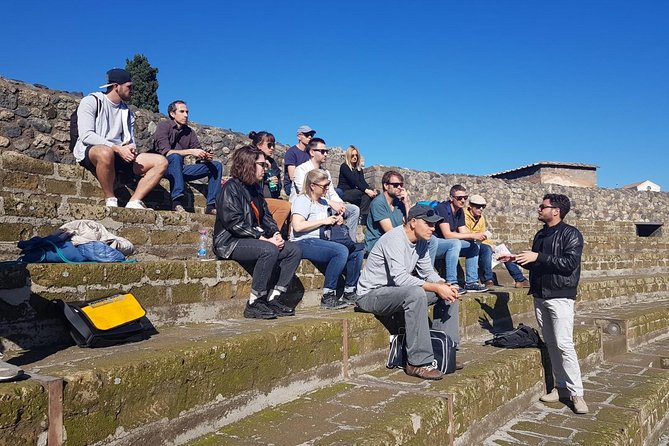
Next, the tour continues along Via dell’Abbondanza, heading toward the so-called Fugitives’ Garden. This is one of the more intense stops because it’s about what happened during the eruption, not just what existed before.
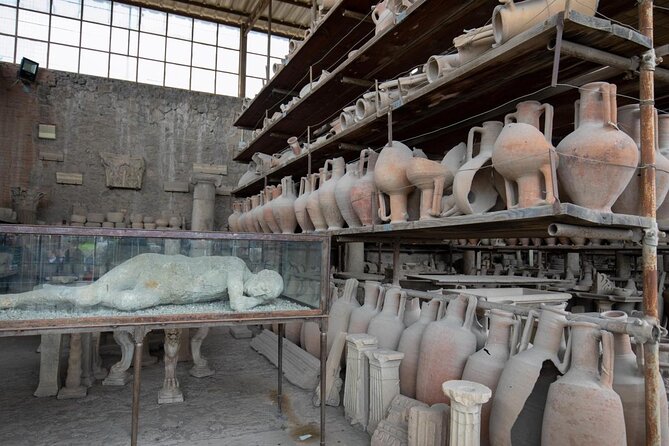
The big detail here is the molds. The guide will explain how the eruption’s conditions left evidence in the forms people tried to escape with—leading you to understand why Pompeii’s tragedy is preserved so clearly.
This stop is a good example of why you want a guide for archaeology. You’re not just looking at a dramatic story. You’re learning how archaeologists interpret evidence and how the site’s survival patterns inform the larger eruption narrative.
It’s also a reminder that Pompeii isn’t only about romance and ruins. It’s about people making choices under extreme danger—and the site shows the consequences with chilling physical clarity.
Great Gymnasium and the amphitheatre: everyday objects and public life
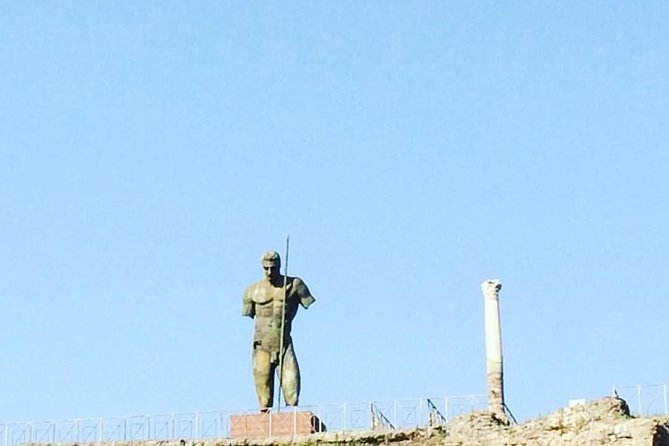
As the route continues, you’ll reach the Great Gymnasium. This is where the tour shifts from architecture to objects, and that change is valuable. You’ll see many daily objects displayed, including charred food—one of those details that makes Pompeii feel suddenly less ancient and more immediate.
Seeing food-related evidence can be surprising if you’re expecting only buildings and paintings. But that’s the point: Pompeii is a snapshot of a full city, including what people ate and owned.
The tour ends at the amphitheatre, which is a fitting finale. By then, you’ve moved from public decision-making spaces (like basilica/forum) to private homes (domus), then through evidence of the eruption’s impact, and finally into the arena where crowds gathered. It’s a full circle of Roman public life.
Price and value: $385.32 per group plus the ticket
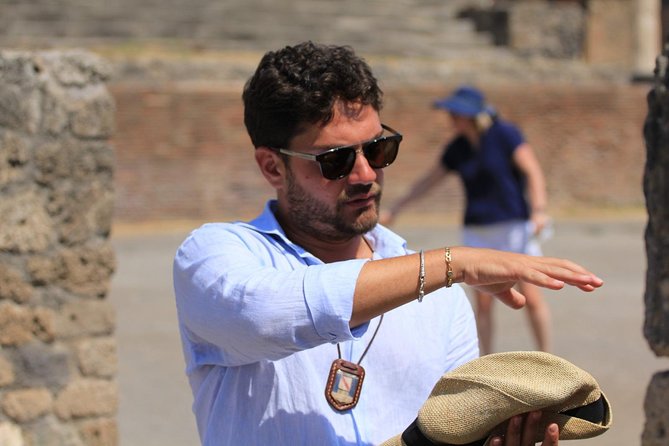
The listed price is $385.32 per group (up to 10 people) for about three hours. That can be very reasonable if your group is near the top end.
Here’s the simple math in dollars: if you book the full group of 10, you’re paying about $38.53 per person for the guiding service. Then add the €19 per person admission ticket. If you have a smaller group, your per-person guiding cost climbs, which is where value depends on what you want—private attention and expert interpretation, not just entry.
For me, this is best value when:
- you want to ask questions and not feel rushed,
- you’re traveling with more than one person,
- you care about seeing specific domus and evidence spots within a short time,
- you don’t want to waste your limited hours figuring out the site alone.
Who this tour suits best in real life
This private format is a smart fit for families and mixed-age groups. One booking highlighted how the guide adjusted the storytelling for children while still satisfying adults, and another described pace control that worked well for an 81-year-old in the group. That’s exactly what you’d want in a three-hour Pompeii visit.
It also works well if you’ve already done Pompeii without a guide before. A second visit with an archaeologist can feel like turning on the lights: suddenly you can name places, understand why they matter, and notice restoration and evidence in a way that’s harder to do solo.
If you’re the kind of person who loves taking photos, you may appreciate that some archaeologist-guides are also comfortable helping with pictures and selfies—because you’ll likely want a few shots as you pass major stops.
Practical tips to make your three hours count
Pompeii is famously stone and sometimes uneven. I’d treat this as a walking tour, even though it feels like “a site.” Wear shoes you can move in for a few hours, and keep water and sun protection in your plan.
Since the tour is structured with efficient time use, you’ll get the most out of it if you come ready to move. If you want long bathroom breaks or long detours for photos, you might feel a bit constrained by the guided flow.
Language is listed as English, but you may find guides with strong ability to work in other languages as well. For example, Daniela has been described delivering explanations in French in one booking—so if you’re not strict on language, you may still be in good hands.
Also: you’ll meet at Porta Marina Superiore. If you’re navigating on arrival day, give yourself enough time to get to that exact entrance area so you start together.
Should you book this Pompeii archaeologist tour?
Yes—if your goal is to get meaning from Pompeii in a short window. This is the kind of tour where an archaeologist’s explanations add up fast: the antiquarium artifacts, the walk along the Greater Decumano, the domus highlights like Leda and the Swan, the Fugitives’ Garden molds, and the Great Gymnasium objects (including charred food).
You might choose something else if you want a slower, self-paced Pompeii day with long pauses and lots of roaming. A three-hour private tour is focused by design, so it’s not built for drifting.
If you’re deciding between saving money and buying understanding, this one is a strong “pay for the guide” choice—especially for groups where the per-person guiding cost drops near the top end.
FAQ
How long is the Pompeii private archaeologist tour?
It runs about 3 hours.
Is the Pompeii admission ticket included in the price?
No. Admission tickets are not included and cost €19.00 per person.
Does the tour help with skip-the-line entry?
Yes. You’ll receive a link before the tour to purchase a direct skip-the-line admission ticket.
What is the meeting point for the tour?
It starts at Scavi di Pompei – Biglietteria Porta Marina Superiore, Via Villa dei Misteri, 2, 80045 Pompei NA, Italy.
Is this a private tour?
Yes. It’s private for your group only.
Is the tour offered in English?
The tour is offered in English.
More Tour Reviews in Pompeii
- Pompeii Small Group Tour with an Archaeologist★ 5.0 · 6,593 reviews
- Discover the Ancient Ruins of Pompeii: Day Trip from Rome★ 3.5 · 2,247 reviews
- Pompeii and Herculaneum Small Group Tour with an Archaeologist★ 5.0 · 1,350 reviews
- Skip the Line Guided Tour of Pompeii led by an Archaeologist★ 5.0 · 703 reviews
- Pompeii Ticket + Tour with Optional Tasting Experience at Pompeii★ 5.0 · 663 reviews
More Private Guides at the Site
- Pompeii private tour with an Official Guide★ 5.0 · 631 reviews
- Pompeii Private Tour with an Archaeologist and Skip The Line – 3 hours★ 5.0 · 564 reviews
- Visit in Pompeii – Pompeii Private Tour with Ada★ 5.0 · 436 reviews
- Pompeii Private Tour with an Archaeologist and Skip The Line★ 5.0 · 391 reviews
- Pompeii Vineyard Escape: Private Wine Tasting & Lunch★ 5.0 · 329 reviews
More Tours Led by an Archaeologist
- Pompeii Small Group Tour with an Archaeologist★ 5.0 · 6,593 reviews
- Pompeii and Herculaneum Small Group Tour with an Archaeologist★ 5.0 · 1,350 reviews
- Skip the Line Guided Tour of Pompeii led by an Archaeologist★ 5.0 · 703 reviews
- Pompeii Private Tour with an Archaeologist and Skip The Line – 3 hours★ 5.0 · 564 reviews
- Pompeii Skip-the-line Tour with Archaeologist Guide★ 5.0 · 559 reviews
Just reviewed: more Pompeii tours and day trips




Pompeii Archaeologist-Led Tours, compared.
 ★ 4.8Entry Ticket and Guided Tour with an ArchaeologistFrom $3519,459 reviews
 ★ 4.8Small Group Tour with an ArchaeologistFrom $4012,264 reviews
★ 5.0Pompeii Small Group Tour with an ArchaeologistFrom $356,593 reviews
 ★ 5.0Pompeii and Herculaneum Small Group Tour with an ArchaeologistFrom $771,350 reviews
 ★ 5.0Skip the Line Guided Tour of Pompeii led by an ArchaeologistFrom $95703 reviews
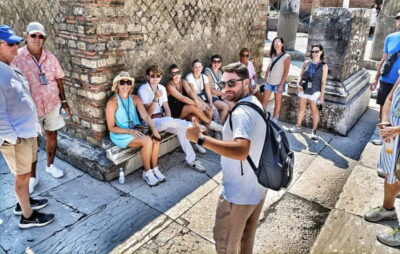 ★ 4.9Exclusive Tour with Archaeologist and Entry TicketsFrom $50634 reviews
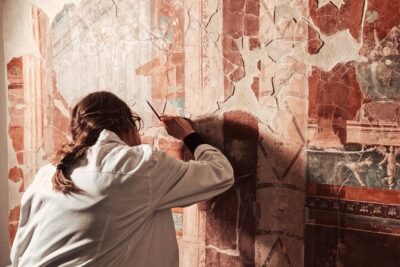 ★ 5.0Pompeii Private Tour with an Archaeologist and Skip The Line – 3 hoursFrom $302564 reviews
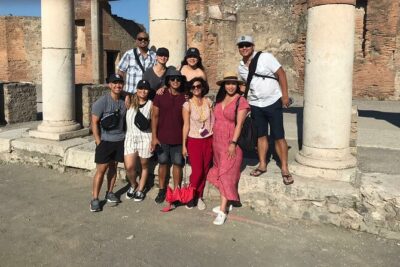 ★ 5.0Pompeii Skip-the-line Tour with Archaeologist GuideFrom $71559 reviews
Browse the lists this tour appears in