
Reviewed · POMPEII ARCHAEOLOGIST-LED TOURS
Private Skip The Line Archeo Tour Of Pompeii
Pompeii makes more sense with a guide. In this private 2-hour tour, you cover the big sights of this UNESCO site—then you actually understand what you’re looking at, not just where it sits. I like that it focuses on Roman daily life and lets you see more than you’d manage solo. One thing to think about: two hours is tight for a place this huge, so it’s best if you want clarity and highlights, not a slow, wander-every-street day.
My favorite part is how the guide keeps everyone involved. Guides named Viktoria and Victoria (both mentioned in the experiences I reviewed) use energy, humor, and smart questions to help you visualize everyday life—so the ruins start acting like a story instead of random stones. The tour also includes a mobile ticket, which is a practical win when you’re trying to get moving efficiently.
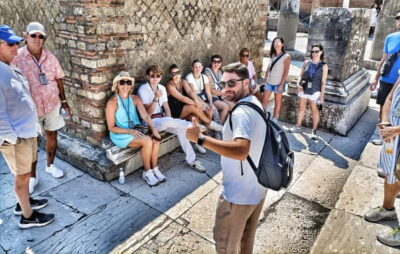
The “private” label matters here. This is only your group, capped at up to 10 people, so the pace can adjust and you’re not stuck waiting for the slowest member. The one caution: the tour duration and scope mean you’ll hit top areas like the Forum and baths, but you may still want extra time after the tour to go deeper on your favorite spot.
In This Review
- Key Things I’d Focus On
- Pompeii in Two Hours: What This Private Tour Actually Lets You Do
- Meeting at Piazza Esedra and Getting Started Efficiently
- The Stops That Give You the Real Pompeii Map
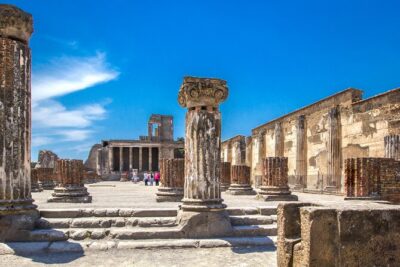
- The Forum and Civic Center: Where You Get the City’s Rhythm
- Theatres and Entertainment: Public Life, Not Just Architecture
- Gladiator Barracks: When Daily Training Becomes Visible
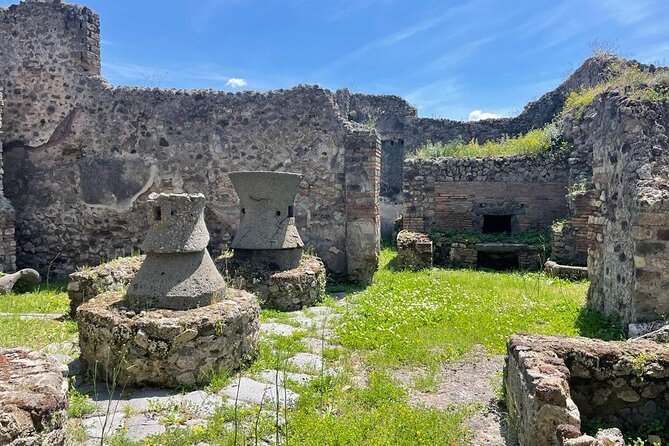
- Houses and “Everyday Pompeii”: Shops and Restaurants
- Roman Baths, Villas, and the Temple of Apollo: Why These Sights Matter
- Temples and Religious Spaces: Not Just Big Buildings
- Baths: The Best Stop for Understanding How People Lived
- The Guide Makes or Breaks It: Viktoria/Victoria’s Style
- Pace and Group Size: Private Doesn’t Mean Chaotic
- Price and Value: Is $240.28 Worth It?
- Who This Tour Suits Best (And Who Might Not Love It)
- Should You Book This Private Skip-The-Line Pompeii Tour?
- FAQ
- How long is the private Pompeii tour?
- Where does the tour start and end?
- Is this tour private?
- Is the tour offered in English?
- Does the tour include Pompeii admission?
- Can I get a full refund if plans change?
Key Things I’d Focus On
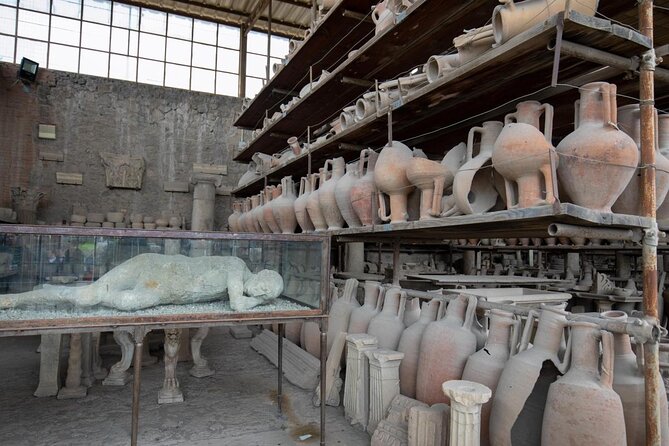
- A 2-hour hit list of Pompeii’s must-sees: streets, theatres, Gladiator barracks, shops, baths, temples, basilica, and the Forum
- Private guide, up to 10 people: small enough for questions and pace control
- Roman life made visual: guides use humor and interactive questions to turn ruins into routines
- Forum + major civic sites: you get the city’s “center of gravity,” not just scattered viewpoints
- Temple of Apollo plus villas and baths: you’re shown the religious and residential rhythm of the city
- Mobile ticket approach: easier check-in than hunting for paper on the spot
Pompeii in Two Hours: What This Private Tour Actually Lets You Do
Pompeii can feel overwhelming fast. You walk in, you see a lot, you take photos, and then—later—you realize you don’t quite know what you saw or why it mattered. This private 2-hour structure is built to fix that.
Instead of treating Pompeii like a museum of individual artifacts, the tour guides you through how the city worked: civic life in the Forum, public entertainment in the theatres, practical daily routine around shops and restaurants, and the body-and-mind culture shown in the baths. That’s the difference. You don’t just add stops to your list—you connect them into a picture.
The tour is also timed so you’re not trapped in a full-day commitment. If you only have part of a day in Naples/Pompeii or you’re juggling other plans, two hours is a manageable chunk. You get a strong overview and a sense of direction for whatever you want to do afterward.
More ways past the ticket queue
- Skip the Line Guided Tour of Pompeii led by an Archaeologist
★ 5.0 · 703 reviews - Pompeii Private Tour with an Archaeologist and Skip The Line – 3 hours
★ 5.0 · 564 reviews - Pompeii Skip-the-line Tour with Archaeologist Guide
★ 5.0 · 559 reviews
Meeting at Piazza Esedra and Getting Started Efficiently
You meet at Piazza Esedra, 80045 Pompei NA, Italy, and the tour ends back at the meeting point. That round-trip finish matters more than it sounds: you don’t end up stranded halfway across the park wondering how you’ll regroup.
The tour uses a mobile ticket, which is usually easier than paper tickets when you’re checking in and moving along. It’s offered as a skip-the-line style experience, but even with that, you should still plan for some on-site checks and the natural flow of people once you’re inside.
A few practical notes that can help you plan: service animals are allowed, and the meeting point is described as near public transportation. Also, it’s in English, and it’s set up so most people can participate.
One more practical point for value: the tour is priced per group (up to 10). That means the “real cost” drops as your group size rises, as long as you’re traveling with others who will actually enjoy a guided walkthrough.
The Stops That Give You the Real Pompeii Map
This tour is designed around the parts of Pompeii that act like anchors. You’re not just checking off random ruins. You’re shown the main neighborhoods and civic zones—then the guide points out the details that are easy to miss when you’re on your own.
Here’s the core run of sights you can expect:
- ancient streets and the way the city moves
- theatres
- Gladiator barracks
- houses
- ancient restaurants and shops
- Roman baths
- temples and key religious spaces
- the basilica
- the main square, the Forum
What makes this approach helpful is that it gives you orientation. Pompeii is not laid out like a single straight corridor; it’s a grid of districts and public spaces. When you start with the Forum and major civic sites, you build a mental compass early. Then the rest of what you see has a place to “click” into.
The Forum and Civic Center: Where You Get the City’s Rhythm
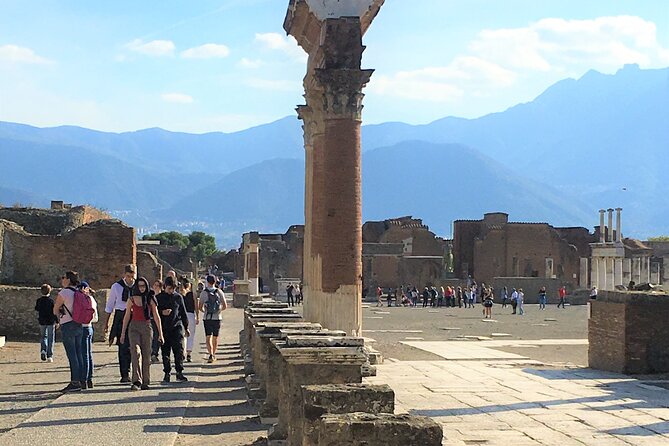
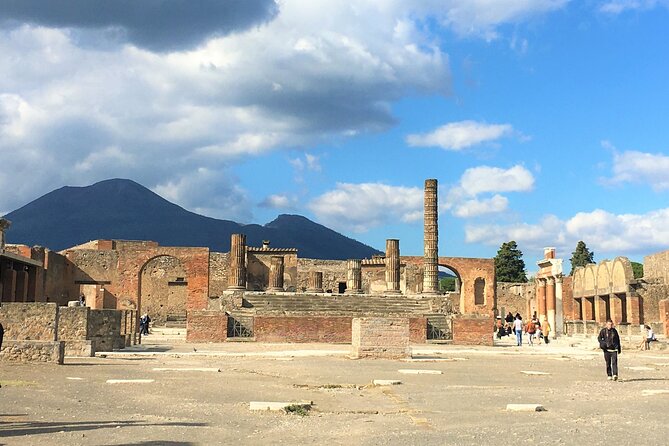
The Forum is the biggest payoff stop for most people. It’s where civic life, power, and public activity overlap. Being led through it by an expert guide helps you connect the physical layout to the social purpose.
Even if you’ve never studied Roman politics, the guide’s explanations make the basilica and surrounding spaces feel less abstract. You understand why people gathered there and how that space structured the day-to-day.
Theatres and Entertainment: Public Life, Not Just Architecture
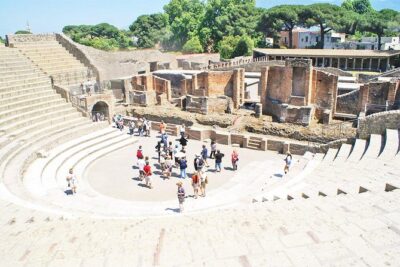
Theatres aren’t just dramatic stone shells. They’re where entertainment and community culture meet. With a guide, you’re more likely to notice how the space is designed and how it would have shaped crowds and events.
This is one of those areas where photos can be misleading—your camera sees a wall, but the guide helps you imagine the audience and movement through the space.
More of the site walked with an archaeologist

Gladiator Barracks: When Daily Training Becomes Visible
The Gladiator barracks are a standout because they connect violence and discipline to ordinary routine. A skilled guide helps you understand training as labor, not just spectacle. That’s what turns a “cool ruin” into a real story about work in the city.
If you like human-scale details—habits, routines, and what people actually did day after day—this stop is worth leaning into.
Houses and “Everyday Pompeii”: Shops and Restaurants
Houses, ancient restaurants, and shops shift the focus from public spaces to everyday needs. You start to see the city as a living marketplace and home network, not just a set for dramatic disaster.
This is also where a guide’s ability to point out small things helps. Without that, you might walk past elements that matter—like how spaces relate to commerce or how areas suggest how people moved and lived.
Roman Baths, Villas, and the Temple of Apollo: Why These Sights Matter
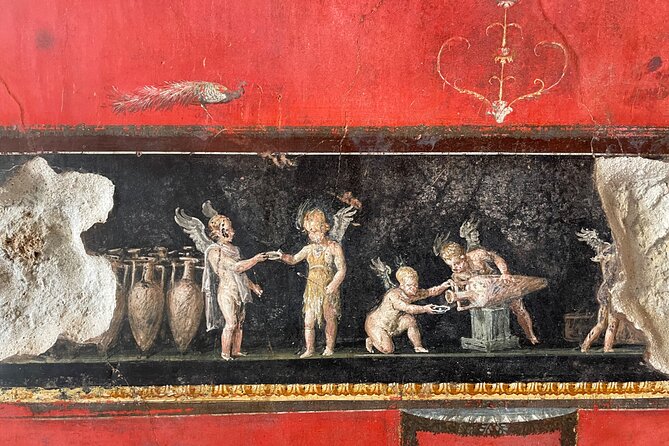
A lot of Pompeii tours skim the “greatest hits.” This one keeps returning to spaces tied to how people spent time and took care of themselves. Baths, villas, and religious sites are central to that.
You’ll see Roman baths and you’ll also visit areas like villas and the Temple of Apollo. Those choices aren’t random. In a Roman city, baths weren’t just about cleanliness. They were social hubs—places to talk, pass time, and run into people.
With a guide, you get explanations that make baths feel functional rather than decorative. You start to see why the layout would matter for daily routines. And when you’re shown villas alongside these spaces, you also get a sense of what “home life” could look like in Pompeii.
Temples and Religious Spaces: Not Just Big Buildings
Religious structures help you understand civic identity. In Pompeii, temples and sacred areas weren’t isolated—they were woven into public life.
The Temple of Apollo adds an extra layer because Apollo represents order, culture, and different ideals tied to Roman identity. When a guide explains the setting clearly, the site becomes easier to interpret even if you don’t know the backstory beforehand.
Baths: The Best Stop for Understanding How People Lived
Of all the ruins in Pompeii, baths often create the strongest “oh, that makes sense” moment. A guide’s pacing and explanations help you notice the logic of the spaces—how they connect to rest, conversation, and routine.
If you’re the type who likes to understand daily life (what people did, where they met, what mattered), you’ll appreciate that this tour doesn’t treat baths like a quick photo stop.
The Guide Makes or Breaks It: Viktoria/Victoria’s Style
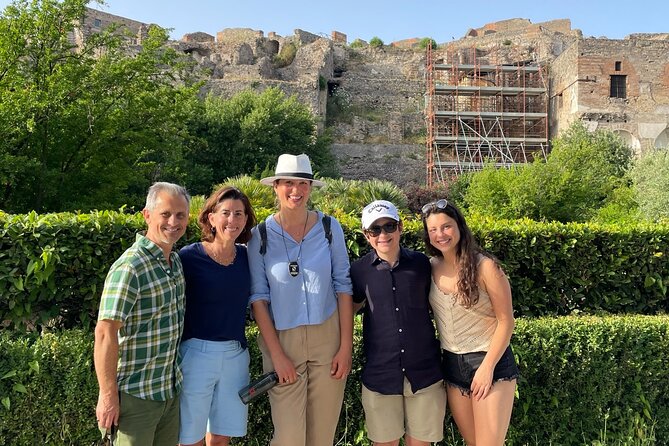
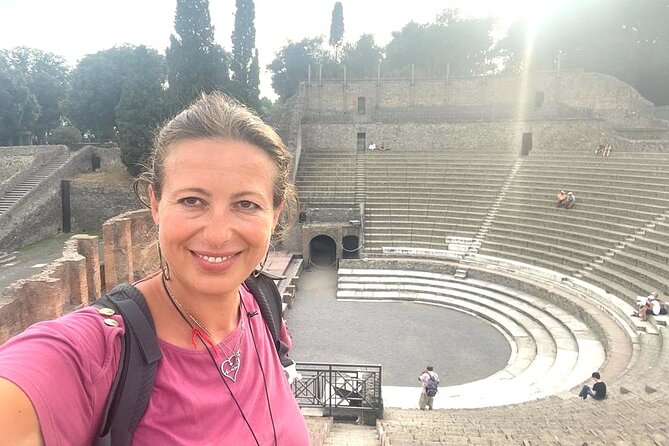
This is where the experiences you provided really shine. The guide experience stands out for two reasons: the communication style and the active engagement.
One guide named Viktoria was described as energetic, fun, and fast at keeping people thinking. What I like about that style is that it turns passive sightseeing into a kind of mini workshop. Instead of you walking around hoping the guide explains everything you’re curious about, you’re encouraged to notice and think.
Another guide named Victoria was praised for being friendly, knowledgeable in a practical way, and checking pace regularly. That’s a big deal in Pompeii because the terrain and the density of sights can easily make groups either rush or stall. Pace checks help prevent that classic problem: the group moves too quickly for meaning to land.
And yes—there’s a small but memorable detail: the guide even shared a recommended pizza option for lunch. That kind of local, real-world advice is often what makes a guided day feel like more than just a route through ruins.
Pace and Group Size: Private Doesn’t Mean Chaotic
This is a private tour/activity, which means only your group participates. The group size limit is up to 10 people, and the guide can adjust pace based on how your group is doing.
In a place like Pompeii, timing matters. Two hours can fly by if you’re not sure what to focus on. Here, the guide’s role is to shape your attention so you don’t spend the time just trying to decode the site.
You should also know the tour is built around key “stop points” that cover both public and residential areas. That helps you avoid the trap of picking one district and missing the city’s big story.
Price and Value: Is $240.28 Worth It?
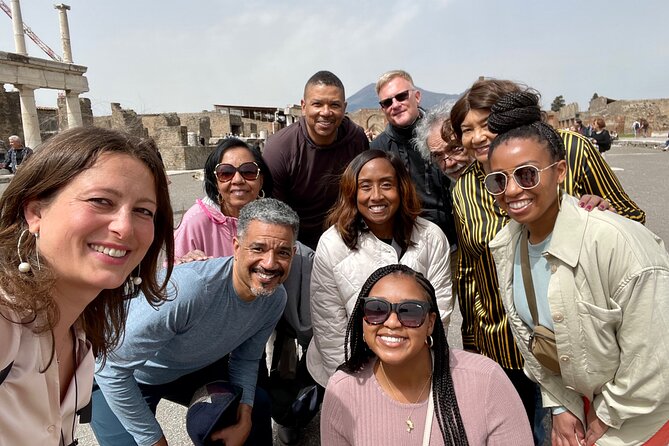
At $240.28 per group (up to 10), this tour sits in the “value if it fits your group” category. The math is simple: you’re paying for a guide’s time and a structured experience, not just access.
If you’re traveling solo, you’ll feel the cost more. If you’re traveling as a couple or small group—especially with up to 10 people split among your party—the value grows quickly because everyone gets the benefits at once:
- guided explanation of what you’re seeing
- an efficient route through major sights
- personalized pacing for your group
- a skip-the-line style approach with a mobile ticket
Two hours might sound short, but Pompeii has a way of expanding your schedule on its own. Without direction, you can lose an hour just wandering. With a guide, you’re more likely to use that time to build understanding you can take away.
Also, note the tour details are a bit mixed about admissions: the itinerary description says admission ticket free, while the “not included” section lists entrance fees. I’d treat that as a “verify when you book” item, so you’re not surprised when you arrive.
Who This Tour Suits Best (And Who Might Not Love It)
This tour fits best if you want:
- a guided overview that makes Pompeii understandable
- major sights covered in about two hours
- a private experience where you can ask questions and control pace
- a focus on Roman daily life (not only stone and dates)
It may be less ideal if you:
- want a long, slow, unstructured exploration of the park
- plan to spend a lot of time reading everything independently
- expect a full-day “everything Pompeii” plan
The sweet spot is people who want a strong first visit. You’ll leave with names for the places and a framework for what you saw, which makes any follow-up exploring feel easier.
Should You Book This Private Skip-The-Line Pompeii Tour?
I’d book it if you care about understanding Pompeii, not just checking boxes. The biggest reason is the guide factor. The experiences tied to Viktoria/Victoria emphasize engagement, humor, and a steady pace—exactly what you need in a site where you could otherwise get lost in details.
If you’re short on time, this tour is also a smart move. Pompeii is so dense that two hours of well-directed attention can outperform a longer solo day where you’re constantly trying to figure out what matters.
One last decision tip: before you go, confirm the admission situation. The description suggests an admission ticket angle, but the details also say entrance fees aren’t included. A quick check during booking can save you stress.
If that’s sorted, I think you’ll get a fun, structured Pompeii visit with real context—and you’ll know what to look for when you return to the ruins on your own.
FAQ
How long is the private Pompeii tour?
It’s about 2 hours.
Where does the tour start and end?
It starts at Piazza Esedra, 80045 Pompei NA, Italy, and ends back at the meeting point.
Is this tour private?
Yes. It’s private, and only your group participates (up to 10 people).
Is the tour offered in English?
Yes, it’s offered in English.
Does the tour include Pompeii admission?
The tour description mentions an admission ticket free, but the details also list entrance fees as not included. Check the exact terms when you book.
Can I get a full refund if plans change?
Yes. Free cancellation is available up to 24 hours in advance for a full refund.
More Private Guides at the Site
- Pompeii private tour with an Official Guide★ 5.0 · 631 reviews
- Pompeii Private Tour with an Archaeologist and Skip The Line – 3 hours★ 5.0 · 564 reviews
- Visit in Pompeii – Pompeii Private Tour with Ada★ 5.0 · 436 reviews
- Pompeii Private Tour with an Archaeologist and Skip The Line★ 5.0 · 391 reviews
- Pompeii Vineyard Escape: Private Wine Tasting & Lunch★ 5.0 · 329 reviews
More Tours Led by an Archaeologist
- Pompeii Small Group Tour with an Archaeologist★ 5.0 · 6,593 reviews
- Pompeii and Herculaneum Small Group Tour with an Archaeologist★ 5.0 · 1,350 reviews
- Skip the Line Guided Tour of Pompeii led by an Archaeologist★ 5.0 · 703 reviews
- Pompeii Private Tour with an Archaeologist and Skip The Line – 3 hours★ 5.0 · 564 reviews
- Pompeii Skip-the-line Tour with Archaeologist Guide★ 5.0 · 559 reviews
Skip-the-Line Entries, More to Book
- Skip the Line Guided Tour of Pompeii led by an Archaeologist★ 5.0 · 703 reviews
- Pompeii Private Tour with an Archaeologist and Skip The Line – 3 hours★ 5.0 · 564 reviews
- Pompeii Skip-the-line Tour with Archaeologist Guide★ 5.0 · 559 reviews
- Pompeii Private Tour with an Archaeologist and Skip The Line★ 5.0 · 391 reviews
- Complete Pompeii Skip the Line Tour with Archaeologist Guide★ 4.5 · 379 reviews
Just reviewed: more Pompeii tours and day trips






Pompeii Archaeologist-Led Tours, compared.
 ★ 4.8Entry Ticket and Guided Tour with an ArchaeologistFrom $3519,459 reviews
 ★ 4.8Small Group Tour with an ArchaeologistFrom $4012,264 reviews
★ 5.0Pompeii Small Group Tour with an ArchaeologistFrom $356,593 reviews
★ 4.8Small Group Tour with an ArchaeologistFrom $4012,264 reviews
★ 5.0Pompeii Small Group Tour with an ArchaeologistFrom $356,593 reviews
 ★ 5.0Pompeii and Herculaneum Small Group Tour with an ArchaeologistFrom $771,350 reviews
 ★ 5.0Skip the Line Guided Tour of Pompeii led by an ArchaeologistFrom $95703 reviews
 ★ 4.9Exclusive Tour with Archaeologist and Entry TicketsFrom $50634 reviews
 ★ 5.0Pompeii Private Tour with an Archaeologist and Skip The Line – 3 hoursFrom $302564 reviews
 ★ 5.0Pompeii Skip-the-line Tour with Archaeologist GuideFrom $71559 reviews
Browse the lists this tour appears in