
Reviewed · POMPEII ARCHAEOLOGIST-LED TOURS
Pompeii: Skip-the-Line Private Tour with Archaeologist Guide
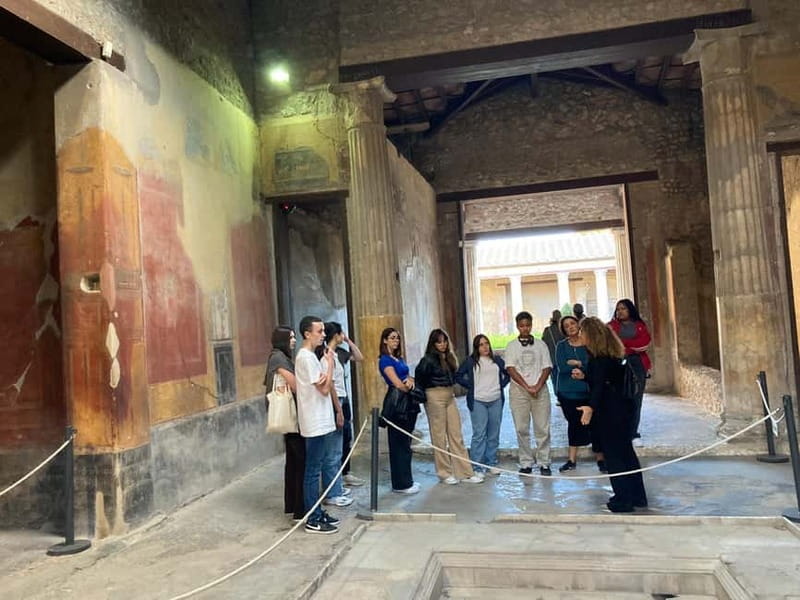
Pompeii, explained by an archaeologist, feels alive. I like the priority entrance to the ticket office, which cuts down waiting, and I love how the guide steers you through the big Roman public sites and the domus with mosaics and frescoes. One catch: the entrance ticket isn’t included, so you’ll still need to plan for admission.
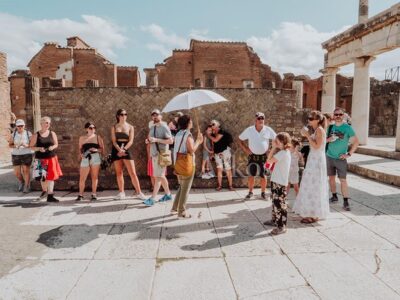
This private group tour runs about 2.5 hours, with live guidance in English, French, or Italian. It starts at the excavations entrance (the guide holds a sign with your names) and you’ll end back there, then you get time to explore the site on your own.
In This Review
- Key highlights you’ll feel fast
- At the Pompeii gate: the payoff of priority entry
- Why a private archaeologist guide changes everything
- Roman public life: amphitheater, gymnasium, and baths
- The forum: where public life happened
- Inside the brothel: social life, not scandal tourism
- Domus mosaics and frescoes: seeing the house as a story
- Shops, bakery, laundry, and fast-food style stops
- Timing and what to bring for 2.5 hours on foot
- Accessibility note: what’s listed, what to confirm
- Price and value: $192.58 for a private group up to 20
- The after-tour freedom: use your new lens
- Should you book this Pompeii skip-the-line private tour?
- FAQ
- How long is the Pompeii skip-the-line private tour?
- Is the entrance ticket to Pompeii included?
- What does skip-the-line mean for this tour?
- Where does the tour start and how do I find my guide?
- What languages are available for the live tour?
- Is this a private group or a shared tour?
- Is the tour wheelchair accessible?
- Is free cancellation available?
- What should I know about the first Sunday of the month?
Key highlights you’ll feel fast
- Priority entrance to the ticket office so your time goes to Pompeii, not lines
- An archaeologist guide who explains what you’re seeing in context
- Must-see Roman landmarks like the amphitheater, baths, forum, and gymnasium
- Mosaics and frescoes in the domus that show everyday taste and wealth
- The brothel and city shops—laundry, bakery, and even fast-food style stops—so life feels real
At the Pompeii gate: the payoff of priority entry
The best part of this tour is the simple math: less time queued, more time learning. You get priority entrance to the ticket office, which helps you start your walk through Pompeii sooner and keeps the momentum going.
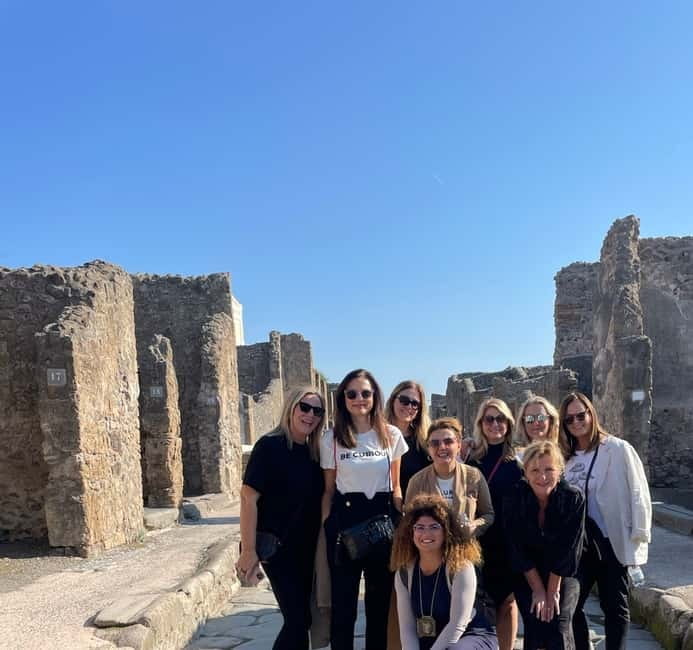
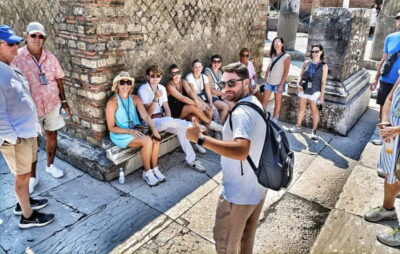
When you arrive, the guide waits at the entrance to the excavations with a sign showing your names. That little detail matters on a site like Pompeii, where it’s easy to waste minutes figuring out which line is for what.
This tour doesn’t include your entrance ticket, so plan on buying that separately before or during your arrival. If you’re coming on the first Sunday of each month, entrance is free, but tickets can’t be reserved ahead, so entry isn’t guaranteed—meaning your day can be a bit more unpredictable than usual.
More ways past the ticket queue
- Pompeii: Skip-the-Line Entrance Ticket with Audio Guide
★ 4.0 · 2,509 reviews - Pompeii: Guided Tour with Skip-the-Line Entry
★ 4.9 · 812 reviews - Pompeii: Skip-the-Line Entry Ticket with Digital Guide App
★ 4.1 · 770 reviews
Why a private archaeologist guide changes everything
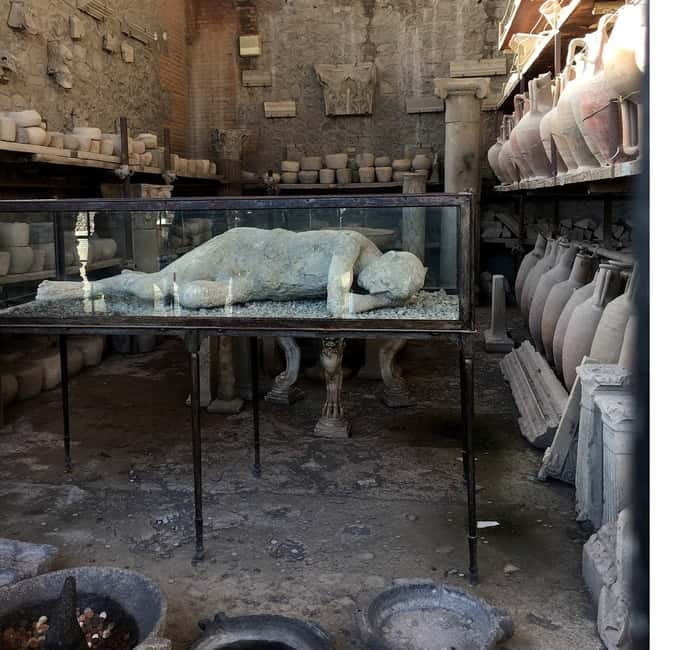
Pompeii can be impressive even when you’re just strolling. But it’s different when someone with a real archaeology background points out how the city worked—where people met, how they bathed, how public life ran, and what ordinary commercial spots looked like.
That’s what you’re paying for here: interpretation. You’re not just collecting photo angles. You’re learning how the last hours of the city made sense, and how different buildings connect as one living system.
I also like that the tour is built around key public places (amphitheater, gymnasium, baths, forum, brothel) and then shifts into private-domestic detail (domus interiors with original mosaics and frescoes). That blend is smart because it shows you Pompeii at two scales: community life and personal life.
A bonus from the experience: the guide is set up to adapt to the group and help you move around crowds. If you’ve visited Pompeii before, you know that crowd flow can make or break the experience.
Roman public life: amphitheater, gymnasium, and baths
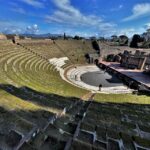
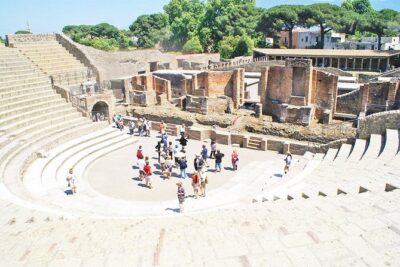
The amphitheater is where the city’s public energy shows up fast. Even if you don’t know the technical terms, you can sense what it was for: spectacles, gathering, and a shared schedule of entertainment. With a guide, it becomes more than stone rows—it turns into a picture of how people spent their leisure.
Next comes the gymnasium and baths, and that’s a big deal in Roman daily life. These weren’t just functional rooms; they were social spaces. You’ll get a clearer sense of routine—how people moved through bathing culture, how the facilities supported conversation and status, and why the site’s layout matters.
One practical advantage: these buildings help you pace the walk. Instead of feeling like you’re constantly searching for meaning, the tour keeps you focused on the major systems that shaped everyday behavior.
The forum: where public life happened
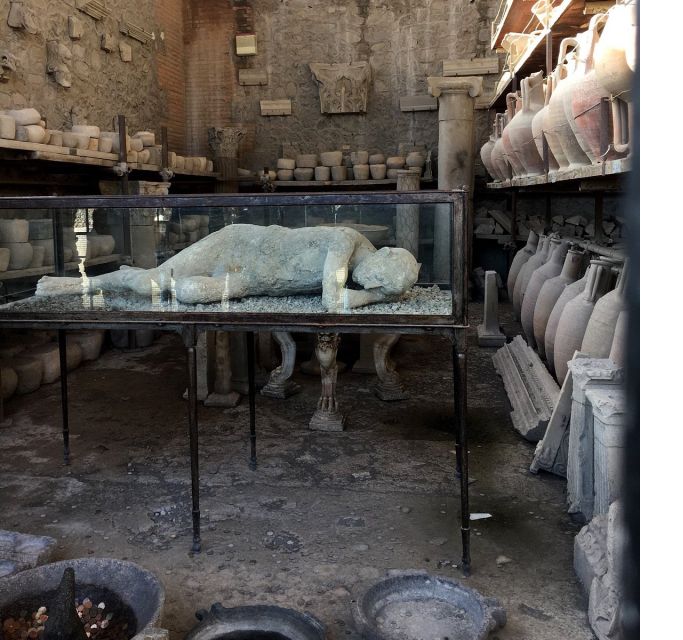
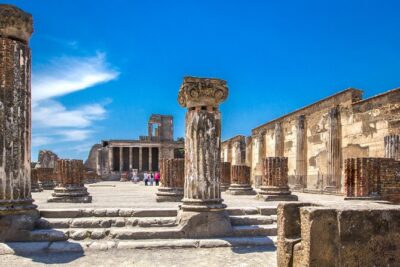
The forum is Pompeii’s social engine. In broad terms, it’s where commerce, civic activity, and public messaging collided—so it’s also where you start feeling how organized the city was.
With a guide, you’re more likely to notice the signs of that organization: how people would have approached spaces, how public areas functioned as meeting points, and how everyday Roman life played out in a shared environment.
This stop is also where you can connect the dots between earlier sites. The amphitheater pulls people together for events, while the forum anchors them to daily civic life. Together, they help you understand why Pompeii wasn’t a museum city—it was a working one.
Inside the brothel: social life, not scandal tourism
The brothel stop is one of the most talked-about areas, but it works best when it’s explained with context. Here, the focus is on the ancient city brothel as part of Pompeii’s everyday reality—how the city served different social needs, and how commerce and private life overlapped.
It’s not the kind of site where you’ll learn much by just looking at walls. A guide helps you interpret what you’re seeing in a grounded way, so you can avoid turning the experience into simple shock-value sightseeing.
I also like how this stop balances the tour. After grand public buildings, you get a different slice of life. That variety is what makes Pompeii feel human instead of only impressive.
More of the site walked with an archaeologist

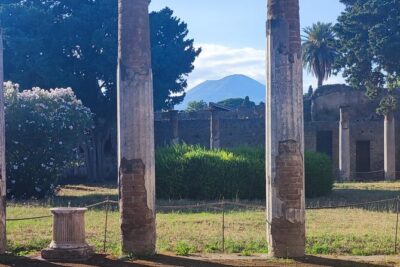
Domus mosaics and frescoes: seeing the house as a story
Pompeii’s private homes—the domus—are where the art really lands. You see original mosaics and frescoes, and once you know what to look for, it’s hard not to get pulled in.
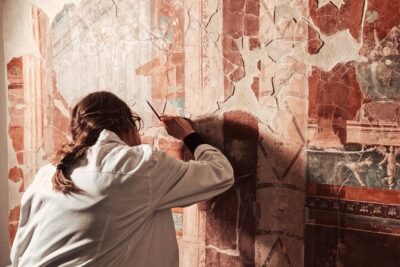
These decorations weren’t just for show. They signaled taste, wealth, and identity. They also helped define rooms and movement inside the home, which is why a guided stop is valuable: you’re not guessing what matters—you’re being told.
This is also a good time to slow down. Frescoes and mosaics reward attention, and the guide’s archaeologist perspective can help you understand why certain motifs and placements mattered.
If you want your pictures to mean something, this is the part where you’ll start framing shots differently. You’ll be aiming for details you now know are significant, not just pretty surfaces.
Shops, bakery, laundry, and fast-food style stops
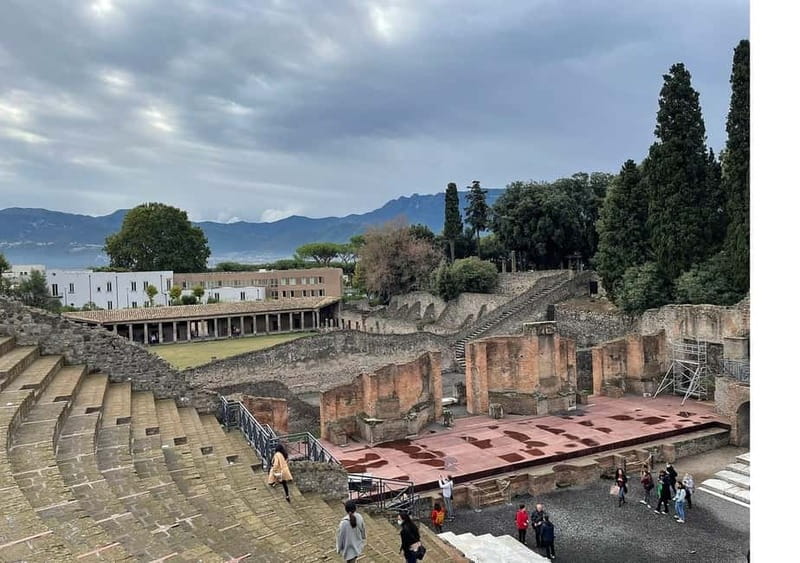
One of the strongest touches of this tour is that it doesn’t treat Pompeii as only politics and art. You also get to connect what you’re seeing to daily routines, including ancient shops and services.
The tour specifically highlights places like:
- a laundry
- a bakery
- fast food–style spots
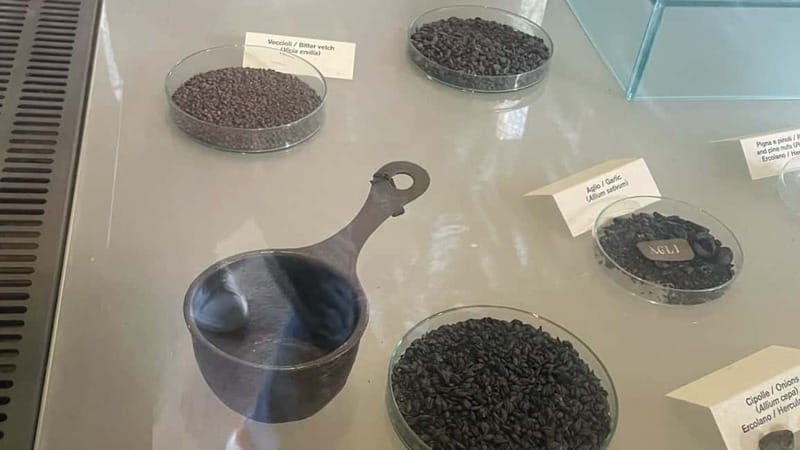
That might sound like a throwaway detail, but it’s actually what helps Pompeii feel modern. Once you recognize these categories, you start imagining the flow of errands and quick meals, the kinds of needs people had every day, and where they would have paused along the way.
And it gives you an easy framework for self-exploration afterward. When you’re wandering after the guided portion, you’ll have names for what you’re seeing—and that turns free time into learning time.
Timing and what to bring for 2.5 hours on foot
The tour is designed for about 2.5 hours. That’s long enough for a real guided experience, but short enough that you can still move comfortably through Pompeii without turning it into a full-day slog.
Bring comfortable shoes, water, and a sun hat. Pompeii can be hard on your feet, and you don’t want to be rationing energy when the best details are right in front of you.
Also plan your expectations: this is a walk with stops at multiple major areas. You’ll be outdoors and moving at a sensible pace, but you should still be ready for uneven stone and lots of time on your feet.
If you want to keep the experience smooth, arrive with your entrance ticket decision sorted (including the first-Sunday free-entry uncertainty). It’s one fewer stressor while you’re trying to take in the architecture.
Accessibility note: what’s listed, what to confirm
The activity lists wheelchair accessibility, but it also notes it is not suitable for people with mobility impairments. That conflict is worth taking seriously.
If you’re using a wheelchair or you have mobility limitations, contact the provider ahead of time to confirm what routes and areas the guide can realistically access during the 2.5-hour visit. Don’t assume it will match only one line of the listing—ask, then decide.
Price and value: $192.58 for a private group up to 20
The price is $192.58 per group, up to 20 people, for about 2.5 hours. On paper, that can look like a wide range in value depending on how many people are in your party.
Here’s the practical way to judge it: you’re paying for an archaeologist guide plus priority entrance to the ticket office. If you’re traveling with family or friends and can fill part of the group, the cost per person drops fast. If you’re two people traveling together, you’ll pay more per person than a larger group—but you still get the benefits of a private, focused route and the chance to explore independently after.
Don’t forget the entrance ticket is not included. So your total budget is ticket cost plus this tour fee.
For me, the value comes down to this: you’re buying time savings and interpretation. If you want to wander without a guide, you can do that. But if you want Pompeii to make sense—how buildings relate and why certain details matter—this is the kind of tour that turns the experience from seeing to understanding.
The after-tour freedom: use your new lens
After the guided portion, you’re free to explore the archaeological site independently. This is where the tour payoff really shows itself.
Instead of returning to wandering mode with no framework, you’ll likely notice patterns: how the city’s public spaces connect to the residential areas, where commerce likely fit into daily movement, and how art and decoration reflect Roman priorities.
Also, ending back at the meeting point keeps things tidy. You’re not hunting for an end-of-tour transfer or trying to regroup with a larger crowd.
Should you book this Pompeii skip-the-line private tour?
Book it if you want Pompeii to feel like a city you can understand, not just ruins you can look at. The biggest reasons are the priority ticket-office entrance and the fact that the guide is an archaeologist focused on how the Romans lived—public buildings, domus art, brothel context, and even everyday services like bakery and laundry.
Skip it only if you’re perfectly fine paying for a general walk-in ticket and you don’t care about interpretation. If that’s you, free wandering might be enough. But if you want sharper meaning in a limited time window, this is a strong way to get your money’s worth.
FAQ
How long is the Pompeii skip-the-line private tour?
It lasts about 2.5 hours.
Is the entrance ticket to Pompeii included?
No. The entrance ticket is not included in the tour price.
What does skip-the-line mean for this tour?
It includes priority entrance to the ticket office.
Where does the tour start and how do I find my guide?
Your guide waits at the entrance to the excavations with a sign displaying the clients’ names.
What languages are available for the live tour?
The guide offers English, French, and Italian.
Is this a private group or a shared tour?
It’s a private group, up to 20 people.
Is the tour wheelchair accessible?
Wheelchair accessibility is listed, but it also says it is not suitable for people with mobility impairments. If this affects you, confirm the practical route details with the provider before booking.
Is free cancellation available?
Yes. You can cancel up to 24 hours in advance for a full refund.
What should I know about the first Sunday of the month?
Entrance is free of charge on the first Sunday of each month, but tickets cannot be reserved ahead of time, so entry is not guaranteed.
More Private Guides at the Site
- From Amalfi: Pompeii and Mount Vesuvius Private Day Trip★ 5.0 · 10 reviews
- Pompeii: Private Guided Tour with an archeologist★ 5.0 · 9 reviews
- Pompeii & Virtual Museum Private 2-in-1 Kid’s Tour★ 4.9 · 9 reviews
- Pompeii: Private Guided Tour★ 5.0 · 6 reviews
- 4H Pompeii Private Tour with Villa Dei Misteri included★ 5.0 · 6 reviews
More Tours Led by an Archaeologist
- Pompeii: Entry Ticket and Guided Tour with an Archaeologist★ 4.8 · 19,459 reviews
- Pompeii: Small Group Tour with an Archaeologist★ 4.8 · 12,264 reviews
- Pompeii 3hours Villa of Mysteries tour with an Archaeologist★ 4.8 · 486 reviews
- Pompeii: Tour with Archaeologist Guide & Skip-the-Line Entry★ 4.5 · 478 reviews
- Pompeii and Herculaneum: Guided Tour with an Archaeologist★ 5.0 · 164 reviews
Skip-the-Line Entries, More to Book
- Pompeii: Skip-the-Line Entrance Ticket with Audio Guide★ 4.0 · 2,509 reviews
- Pompeii: Skip-the-line-Ticket and Guided Tour★ 4.6 · 1,152 reviews
- Pompeii: Guided Tour with Skip-the-Line Entry★ 4.9 · 812 reviews
- Pompeii: Skip-the-Line Entry Ticket with Digital Guide App★ 4.1 · 770 reviews
- Pompeii: Tour with Archaeologist Guide & Skip-the-Line Entry★ 4.5 · 478 reviews
Just reviewed: more Pompei Campania tours and day trips



Pompeii Archaeologist-Led Tours, compared.
 ★ 4.8Entry Ticket and Guided Tour with an ArchaeologistFrom $3519,459 reviews
 ★ 4.8Small Group Tour with an ArchaeologistFrom $4012,264 reviews
★ 5.0Pompeii Small Group Tour with an ArchaeologistFrom $356,593 reviews
 ★ 5.0Pompeii and Herculaneum Small Group Tour with an ArchaeologistFrom $771,350 reviews
 ★ 5.0Skip the Line Guided Tour of Pompeii led by an ArchaeologistFrom $95703 reviews
 ★ 4.9Exclusive Tour with Archaeologist and Entry TicketsFrom $50634 reviews
 ★ 5.0Pompeii Private Tour with an Archaeologist and Skip The Line – 3 hoursFrom $302564 reviews
 ★ 5.0Pompeii Skip-the-line Tour with Archaeologist GuideFrom $71559 reviews
Browse the lists this tour appears in