
Reviewed · POMPEII ARCHAEOLOGIST-LED TOURS
Pompeii Private Tour with an Archaeologist Guide
Pompeii clicks faster with the right guide. On this private tour in English, you get an archaeologist who can translate the streets and buildings into how people actually lived. I love the archaeologist-led storytelling and the no-rush private pace that lets you ask questions without feeling like you’re interrupting.
In about 2 hours, you’ll cover a smart slice of the site, including the Stabian Baths and the Forum zone. Your route starts at the main entrance area near Porta Marina Superiore and then moves through Roman houses, public buildings, and major squares so you get a clear sense of the city fast.
One consideration: the Pompeii entrance ticket can be a little confusing versus what’s included in the tour price. Even though the stop near the entrance mentions admission, your booking cost does not list the park ticket, and many people report paying the site admission separately on arrival. Also, Pompeii is huge, so 2 hours is great for orientation and highlights, not for everything.
Best reasons to book this private Pompeii tour
- Archaeologist guidance that turns ruins into everyday life, not just dates and walls
- Private, group-only experience: your questions set the pace
- A focused highlights route including the Stabian Baths and the Forum area
- Route control around crowds with help from someone who knows the site
- Simple, walkable stop plan designed for a 2-hour visit
In This Review
- Why an archaeologist guide changes Pompeii
- Meeting at the site: get your footing early
- Price and what you’re actually paying for
- The 2-hour Pompeii route: what each stop is teaching you
- Stop 1: Archaeological Park of Pompeii (Porta Marina Superiore)
- Stop 2: Casa dei Vettii (House of the Vettii)
- Stop 3: Lupanar
- Stop 4: House and Thermopolium of Vetutius Placidus (Termopolium)
- Stop 5: Teatro Grande (Large Theatre)
- Stop 6: House of the Faun
- Stop 7: Stabian Baths (Terme Stabiane)
- Stop 8: Via dell’Abbondanza (Abbondanza Street)
- Stop 9: Forum Baths
- Stop 10: Macellum
- Stop 11: House of Menander
- Stop 12: Granaries of the Forum
- Stop 13: Foro de Pompeya (Pompeii Forum)
- Crowd control, pacing, and the real benefit of private time
- What kind of traveler this fits best
- Practical tips so you enjoy every minute
- Should you book this Pompeii private archaeologist tour?
- FAQ
- How long is the Pompeii private tour with an archaeologist guide?
- What language is the tour offered in?
- Is this tour private?
- Where do we meet the guide?
- What should I wear for Pompeii?
- Is the Pompeii entrance ticket included in the tour price?
- What stops are included during the tour?
- Can I cancel for a full refund?
- Is the tour good if I need public transportation access?
Why an archaeologist guide changes Pompeii
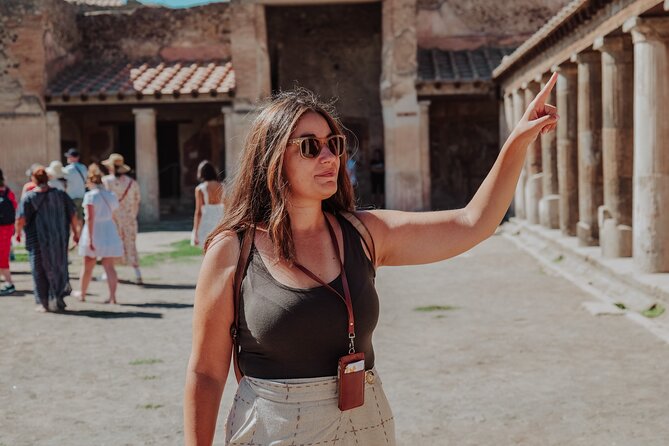
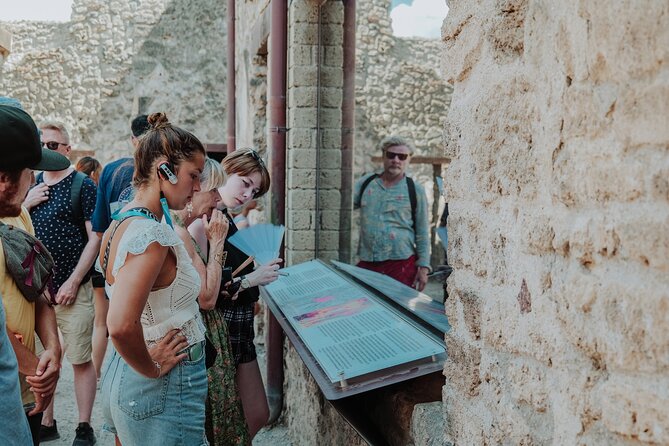
Pompeii is one of those places where you can stand in front of a doorway for 20 minutes and still feel like you’re looking at random stone. The value of an archaeologist guide is that they slow your brain down and give you something to hang your attention on. You stop seeing only ruins and start noticing social signals: status in homes, everyday rituals in baths, and how the city organized public life around squares and commerce.
Because this is private, the tour stops aren’t just “checkpoints.” They become conversation starters. If you wonder why a wall is decorated in one place and plain in another, or what a specific room function might have been, your guide can answer in real time. That matters at Pompeii, where the temptation is to sprint and the reward is understanding.
This also helps with the emotional side. Pompeii can feel overwhelming because it’s big and densely packed. A good guide keeps it manageable, and you leave with a mental map instead of just photos.
Meeting at the site: get your footing early
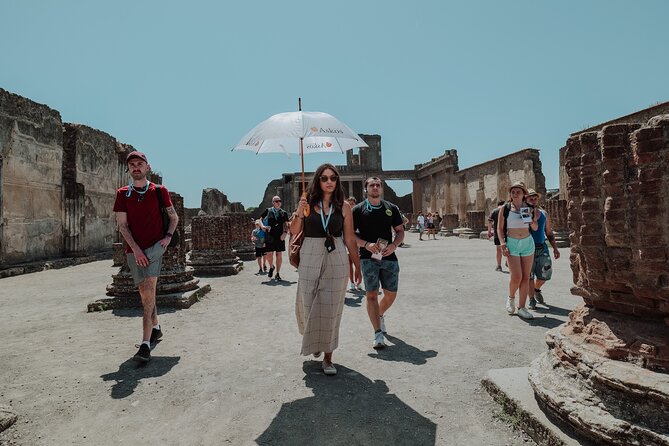
You’ll meet at Via Villa dei Misteri, 1, 80045 Pompei NA, Italy, and the tour ends at the same address. From there, you’ll connect with your guide at the main entrance area of the archaeological park called Porta Marina Superiore. Your guide will be holding a sign with Askos Tours on it, which makes finding each other less stressful.
Plan your first 10 minutes like you mean it. The best tip here is also the most practical: wear closed shoes. The ground can be uneven and the site requires steady walking. Flip-flops might look vacation-y, but at Pompeii they turn into a safety issue fast.
If you’re coming in during busy hours, the early minutes matter too. A smart start means you’re not trying to ask questions while you’re stuck in a traffic knot of other groups.
More of the site walked with an archaeologist
- Pompeii and Herculaneum Small Group Tour with an Archaeologist
★ 5.0 · 1,350 reviews - Skip the Line Guided Tour of Pompeii led by an Archaeologist
★ 5.0 · 703 reviews - Pompeii Private Tour with an Archaeologist and Skip The Line – 3 hours
★ 5.0 · 564 reviews
Price and what you’re actually paying for
At $178.45 per person for a roughly 2-hour private tour, this isn’t the cheapest way to see Pompeii. It’s also not trying to be. You’re paying for:
- A dedicated archaeologist guide for your group (not shared time with dozens of strangers)
- Private pacing, which is a big deal in a site this large
- Targeted highlights that help you understand the city’s layout quickly
In guides and routes, the difference shows. Some guides in this tour style have built reputations for making the experience feel personal and memorable, including archaeologists like Rossana, Mena, Mimma, Paolo, Michele, Vito, Silvia, and Maria. That variety matters because Pompeii is interpretive—how the story is told shapes what you notice.
One caution on value: the tour price doesn’t list transportation, and the Pompeii entrance ticket may require a separate payment. Some people report needing about 20 euro per person for the site admission after booking. I’d treat the entrance ticket as something you should plan to pay, then you won’t be surprised at the gate.
The 2-hour Pompeii route: what each stop is teaching you
This itinerary is built for momentum. Each stop is short, but the guide’s job is to give you context so those short visits still feel meaningful.
Stop 1: Archaeological Park of Pompeii (Porta Marina Superiore)
You start at the park entrance, Porta Marina Superiore. This is where your guide helps you get oriented right away: where you’re headed, what to notice first, and how to look at the ruins without getting lost in scale.
How this helps you: Pompeii is large enough that people waste time if they don’t start with a plan. A guide turns the first minutes into navigation and expectations.
Possible drawback: If you’re expecting a long leisurely stroll, keep your expectations aligned. The tour is about highlights and understanding, not a full-day wandering plan.
Admission timing can be the one snag. The itinerary notes admission around the entrance, but the overall tour info says the Pompeii entrance ticket isn’t included. So expect that you may need to purchase the site entry ticket separately.
Stop 2: Casa dei Vettii (House of the Vettii)
This is a house stop, and it’s a great one early. Roman homes at Pompeii aren’t just about walls; they’re about hierarchy and daily routines. In a short visit, you’ll learn what kind of wealth, taste, and household life these spaces represented.
Why it’s worth your time: Houses teach you “how people lived,” fast. You’ll likely connect what you see in rooms to the broader city story.
Prefer your own guide? More private tours


Stop 3: Lupanar
The Lupanar is a famous stop, and your guide will frame it in practical historical terms rather than letting it become only shock value. Expect the focus to be on how the building functioned and what this kind of space tells you about the city’s economy and social life.
Consideration: This stop can feel intense if you’re sensitive to the subject. Going with an archaeologist helps you keep it grounded in history and context.
Stop 4: House and Thermopolium of Vetutius Placidus (Termopolium)
A termopolium is like Roman fast food plus a public stop. The name here points you to how food and drink were served, and how these businesses sat within everyday movement around the city.
What to watch for: even in a quick stop, your guide can help you notice how commercial spaces mixed with residential life.
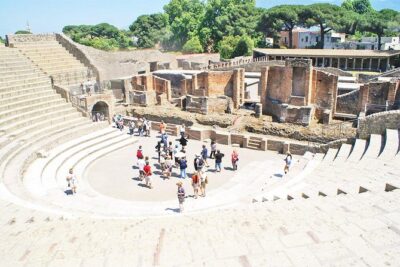
Stop 5: Teatro Grande (Large Theatre)
Theatres matter because they show public culture. You’ll get a quick orientation to where performances happened and how Roman entertainment fit into civic identity.
Why this works in 2 hours: It gives you a “public Pompeii” moment before you drift back toward daily life zones.
Stop 6: House of the Faun
This house stop typically signals status and spectacle. Even if you only see key parts in a short visit, your guide can connect the house’s features to the idea of living as display.
How it helps your understanding: Houses like this make it easier to compare classes across Pompeii, instead of treating every doorway as identical.
Stop 7: Stabian Baths (Terme Stabiane)
The Stabian Baths are one of the most valuable stops on this route. Baths were social, not only hygienic. This is where Pompeii stops feeling like a museum and starts feeling like a place where people spent time.
What you’re likely to notice: how the bathing sequence and architecture structured a routine, plus why baths were central gathering points.
Stop 8: Via dell’Abbondanza (Abbondanza Street)
This is the “walk and picture the city” segment. A guide uses the street perspective to help you imagine movement: where foot traffic went, how the city felt at ground level, and how buildings framed daily routes.
Tip for you: keep your questions for the walk. A street is when it’s easiest to ask, because your guide can point and explain on the spot.
Stop 9: Forum Baths
Forum Baths extend the bathing theme into the center of public life. If the Stabian Baths are about routine and social time, the Forum Baths connect that daily rhythm to the city’s busiest civic zone.
Why it matters: it links private habits to public infrastructure.
Stop 10: Macellum
A macellum is a market setting. Even in a short look, it helps you understand how food supply and commerce shaped daily life. Markets are a fast way to ground the city in realism.
Possible drawback: because it’s short, you’ll get more value if you ask your guide what kinds of goods were typically traded and how market spaces functioned.
Stop 11: House of Menander
This is another house stop that usually gives a clearer picture of how art and household identity blended. Your guide can help you interpret what made the home special and how domestic spaces communicated status.
Stop 12: Granaries of the Forum
Granaries pull you back to the big systems: storage, supply, and the practical logistics that kept a city running. In a city like Pompeii, this is where you start thinking like an archaeologist: not just what was decorative, but what kept life going.
Why it’s a strong stop: it shifts your view from rooms to infrastructure.
Stop 13: Foro de Pompeya (Pompeii Forum)
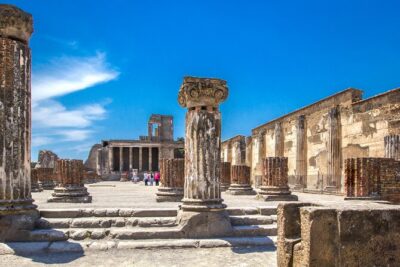
The tour ends in the Forum zone, which is the heart of public life in any Roman city. This is the final “big picture” stop. With the earlier houses, baths, market, and street context, the Forum should feel more than dramatic stone—it should feel like a functioning civic center.
The takeaway: by the time you reach the Forum, you’re not just seeing it. You’re understanding how the city was organized.
Crowd control, pacing, and the real benefit of private time
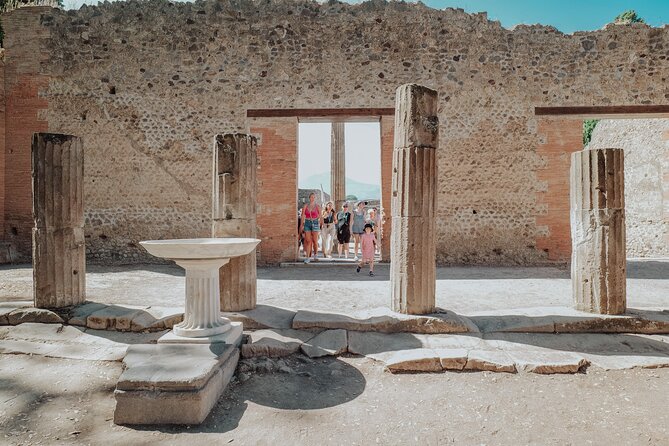
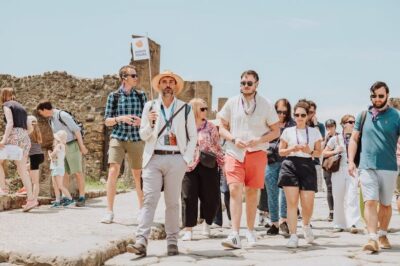
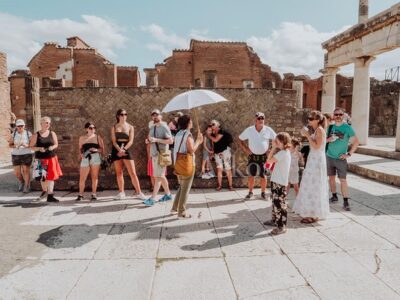
Pompeii can feel like a test of stamina: lots of walking, lots of visual input, and lots of other people trying to do the same thing. A private tour helps you handle that without turning your day into a sprint.
You’ll likely get help routing around heavy congestion. Some guides are specifically praised for steering the group efficiently, so you can spend time looking at what matters instead of standing in lines or shoving through bottlenecks.
Private pacing also matters for families and mixed group needs. Guides on this tour style have been noted for keeping kids and teens engaged, which is no small feat at a site full of stone. If someone in your group needs to go slower, the structure of a private tour makes that adjustment easier than with fixed group schedules.
What kind of traveler this fits best
This tour is ideal if you want:
- a high-impact overview in about 2 hours
- more meaning than you’d get from wandering on your own
- the freedom to ask questions on the spot, not later in a guidebook
- a route that hits major highlights like the Stabian Baths and the Forum area
It’s also a solid choice for a day that already includes other stops nearby, since you can plan a tight schedule without losing your whole morning to logistics.
If you’re the kind of traveler who needs hours in one place to absorb details, then you might find 2 hours short. Some people end up adding extra time after the tour because Pompeii is too large to fully settle in during one quick pass.
Practical tips so you enjoy every minute
- Wear closed shoes. The ruins are tough on open sandals.
- Bring water and plan for sun. Even when you’re in the shade, the walking adds up.
- If you care about a theme (art, daily life, baths, markets, public spaces), tell your guide early so they can aim the story.
- Ask questions during the street and building transitions. It’s where explanations land fastest.
And if you want an extra personal touch: ask about how your guide approaches interpretation. Guides like Paolo, Vito, and Michele have been described as bringing Pompeii’s everyday life into focus in a way that feels like you can picture yourself there.
Should you book this Pompeii private archaeologist tour?
If you’re deciding between solo wandering and paying for a guide, I’d book this if your top goal is understanding quickly and leaving with a clear sense of the city’s major pieces. The best part isn’t just seeing famous stops like the Stabian Baths and the Forum—it’s having someone explain what you’re looking at while you’re still standing in place.
I’d skip or reconsider if you hate paying separate admission fees on arrival, or if you’re planning a long, slow, full-coverage Pompeii day. This is a highlights-and-context tour, and it does that job well in a short window.
If you do book, plan for the site ticket cost, wear sturdy shoes, and come with a couple of questions you actually want answered. That’s how you turn 2 hours into a day you’ll remember.
FAQ
How long is the Pompeii private tour with an archaeologist guide?
It runs about 2 hours.
What language is the tour offered in?
The tour is offered in English.
Is this tour private?
Yes. It’s a private tour, and only your group participates.
Where do we meet the guide?
You’ll meet at Via Villa dei Misteri, 1, 80045 Pompei NA, Italy. The guide meets you at the archaeological site entrance area called Porta Marina Superiore holding an Askos Tours sign.
What should I wear for Pompeii?
Closed shoes are recommended, since it can be difficult to walk through the ruins with open footwear.
Is the Pompeii entrance ticket included in the tour price?
The tour information lists the Pompeii entrance ticket as not included, so you should plan to pay the park admission separately.
What stops are included during the tour?
The route includes stops such as Casa dei Vettii, the Lupanar, the House and Thermopolium of Vetutius Placidus, Teatro Grande, the House of the Faun, Stabian Baths, Via dell’Abbondanza, Forum Baths, the Macellum, the House of Menander, the Granaries of the Forum, and the Forum.
Can I cancel for a full refund?
Yes, you can cancel for a full refund up to 24 hours in advance.
Is the tour good if I need public transportation access?
It’s noted as near public transportation, and the guide can help with information on how to get back to your accommodation or the closest train station.
More Tour Reviews in Pompeii
- Pompeii Small Group Tour with an Archaeologist★ 5.0 · 6,593 reviews
- Discover the Ancient Ruins of Pompeii: Day Trip from Rome★ 3.5 · 2,247 reviews
- Pompeii and Herculaneum Small Group Tour with an Archaeologist★ 5.0 · 1,350 reviews
- Skip the Line Guided Tour of Pompeii led by an Archaeologist★ 5.0 · 703 reviews
- Pompeii Ticket + Tour with Optional Tasting Experience at Pompeii★ 5.0 · 663 reviews
More Private Guides at the Site
- Pompeii private tour with an Official Guide★ 5.0 · 631 reviews
- Pompeii Private Tour with an Archaeologist and Skip The Line – 3 hours★ 5.0 · 564 reviews
- Visit in Pompeii – Pompeii Private Tour with Ada★ 5.0 · 436 reviews
- Pompeii Private Tour with an Archaeologist and Skip The Line★ 5.0 · 391 reviews
- Pompeii Vineyard Escape: Private Wine Tasting & Lunch★ 5.0 · 329 reviews
More Tours Led by an Archaeologist
- Pompeii Small Group Tour with an Archaeologist★ 5.0 · 6,593 reviews
- Pompeii and Herculaneum Small Group Tour with an Archaeologist★ 5.0 · 1,350 reviews
- Skip the Line Guided Tour of Pompeii led by an Archaeologist★ 5.0 · 703 reviews
- Pompeii Private Tour with an Archaeologist and Skip The Line – 3 hours★ 5.0 · 564 reviews
- Pompeii Skip-the-line Tour with Archaeologist Guide★ 5.0 · 559 reviews
Just reviewed: more Pompeii tours and day trips




Pompeii Archaeologist-Led Tours, compared.
 ★ 4.8Entry Ticket and Guided Tour with an ArchaeologistFrom $3519,459 reviews
 ★ 4.8Small Group Tour with an ArchaeologistFrom $4012,264 reviews
★ 5.0Pompeii Small Group Tour with an ArchaeologistFrom $356,593 reviews
★ 4.8Small Group Tour with an ArchaeologistFrom $4012,264 reviews
★ 5.0Pompeii Small Group Tour with an ArchaeologistFrom $356,593 reviews
 ★ 5.0Pompeii and Herculaneum Small Group Tour with an ArchaeologistFrom $771,350 reviews
 ★ 5.0Skip the Line Guided Tour of Pompeii led by an ArchaeologistFrom $95703 reviews
 ★ 4.9Exclusive Tour with Archaeologist and Entry TicketsFrom $50634 reviews
 ★ 5.0Pompeii Private Tour with an Archaeologist and Skip The Line – 3 hoursFrom $302564 reviews
 ★ 5.0Pompeii Skip-the-line Tour with Archaeologist GuideFrom $71559 reviews
Browse the lists this tour appears in