

Reviewed · MOUNT VESUVIUS CRATER HIKES
Pompeii, Herculaneum and Vesuvius Tour
Pompeii, Herculaneum, and Vesuvius in one day is a lot of geology and grief—without the usual travel headache. I like that the tour is built for little-stress logistics (coach transfers and scheduled stops) and that entrance tickets are included, so you’re not scrambling for paperwork at every gate. One watch-out: Pompeii can feel a bit controlled, with areas sometimes closed off by ropes or doors, so you may have less access than your dream Pompeii checklist.
This is a full-day format designed for independent wandering. You get set time on Vesuvius (with free time near the crater), then 2 hours at Herculaneum, then 2 hours at Pompeii, using an audio guide only for Pompeii ruins. The pace is steady, not rushed, but it’s still a day built around key stops rather than lingering all day in one place.
Before you go, pack like a realist: water, hat, and comfy shoes. Also bring a valid ID document—Pompeii’s audio guide setup depends on it, and you’ll need it to get your audio started.
In This Review
- Key Points You’ll Care About
- How the Vesuvius–Herculaneum–Pompeii Day Works Without Chaos
- Vesuvius National Park: 1.5 Hours Near the Crater
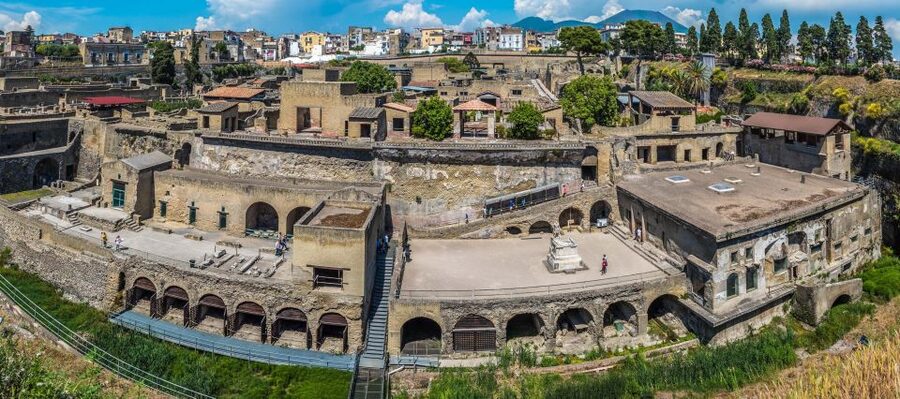
- Herculaneum: Frescoes and Architecture in a 2-Hour Window
- Pompeii Ruins With an Audio Guide: Getting the Most From 2 Hours
- Transfers, Group Flow, and What Your Day Feels Like
- Price and Value: What You’re Really Paying For
- Who Should Book This Pompeii–Herculaneum–Vesuvius Tour
- Should You Book It?
- FAQ
- How long is the Pompeii, Herculaneum and Vesuvius tour?
- Where does the tour start?
- Are entrance tickets included?
- Do I get an audio guide?
- What languages are available for the audio guide?
- Is there a person guide during the visit?
- What should I bring and wear?
Key Points You’ll Care About

- Pickup is easy: meet at Via Roma, 32 in Pompei before the coach ride begins
- Tickets come with the tour: Pompeii, Herculaneum, and Vesuvius National Park are included
- Audio guide only at Pompeii: you’ll need a valid ID to activate it
- Vesuvius gets real free time: about 1.5 hours for the crater area
- Two UNESCO sites in one sweep: Herculaneum and Pompeii let you compare Roman life in different preservation styles
How the Vesuvius–Herculaneum–Pompeii Day Works Without Chaos

The biggest reason I’d pick this tour is how it protects your time. You start at Via Roma, 32 in Pompei, then you get a coach ride up and between stops instead of trying to stitch together trains, buses, and taxi negotiations. The schedule is straightforward: coach transfers, then free time for you to walk and take your time, then transfer again when the next site opens its window.
The day runs about 8 hours, with travel time built in between major locations. You’ll spend roughly 40 minutes on the coach before Vesuvius, then about 30 minutes between Vesuvius and Herculaneum, and another 30 minutes between Herculaneum and Pompeii. That rhythm matters because it keeps the day from turning into a “transportation day” with tiny museum breaks.
You also get the peace-of-mind stuff that adds up: entrance tickets are included, and the tour mentions skipping the ticket line. That’s a big deal on busy days, because waiting is the part of sightseeing that feels hardest to control.
The tour style is mostly self-guided. The driver is English-speaking, and the audio guide is available for Pompeii ruins (in multiple languages). You’re not looking at a lecturer timeline all day—you’re walking through places that still look like they could be interrupted by a Roman returning from work.
If you’re the type who likes deep, slow reading in one corner, the time limits at each site might feel tight. If you’re the type who likes to get your bearings fast and come away with a strong mental map, this setup fits well.
More climbs up to the crater rim
- Naples: Pompeii and Mt. Vesuvius with Lunch and Wine Tasting
★ 4.5 · 2,454 reviews - Pompeii: Day Tour of Pompeii and Vesuvius with Bus Transfer
★ 4.2 · 250 reviews - From Pompeii: Mt. Vesuvius Hike & Tour by Bus
★ 4.0 · 165 reviews
Vesuvius National Park: 1.5 Hours Near the Crater
Vesuvius is the moment that turns the whole story from history class into real atmosphere. You’re given about 1.5 hours of free time to reach the crater area in the Vesuvius National Park.
This is your best chance to connect the eruption to the landscape around it. You’ll see how the area looks from the volcano itself, not just from street-level photos. Even without a guide speaking in your ear, that physical perspective tends to do something to your understanding—because you can literally see the terrain that the Romans lived on.
What I’d do with your time there:
- Start with the path that gets you the clearest crater viewpoint first, then slow down once you’re satisfied
- Bring water and a hat because the sun and wind can be a real combo at elevation
- Wear shoes with grip—your footing matters more than you think once you’re walking on rougher surfaces
The tour includes transfers to and from Vesuvius and covers Vesuvius National Park entrance tickets, so you’re not calculating costs while you’re standing in front of a gate. Still, remember this is the only truly outdoor leg of the day, so weather can change your comfort level.
The tour doesn’t mention a person-guide for this portion, so expect to rely on the time you have and your own pacing. In that way, Vesuvius is ideal if you like freedom more than commentary.
Herculaneum: Frescoes and Architecture in a 2-Hour Window
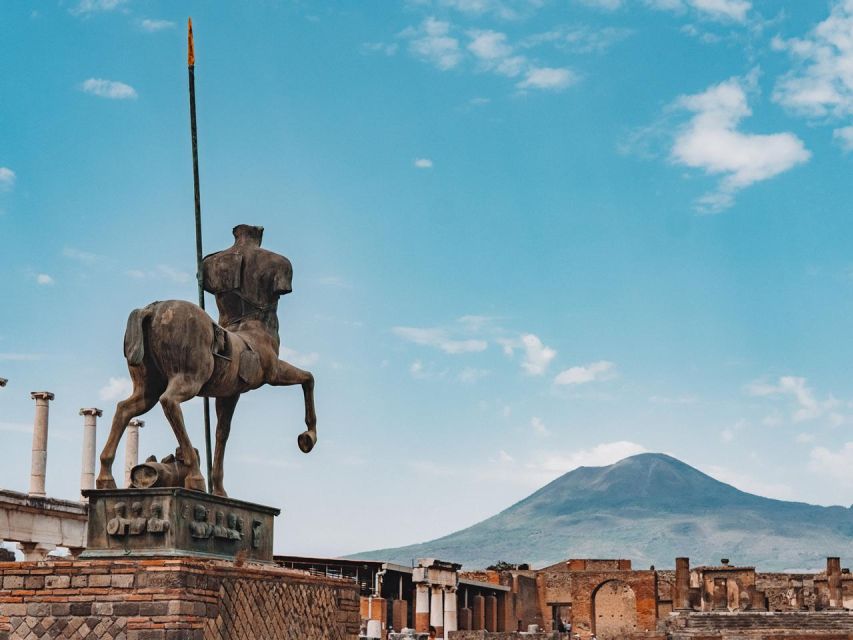
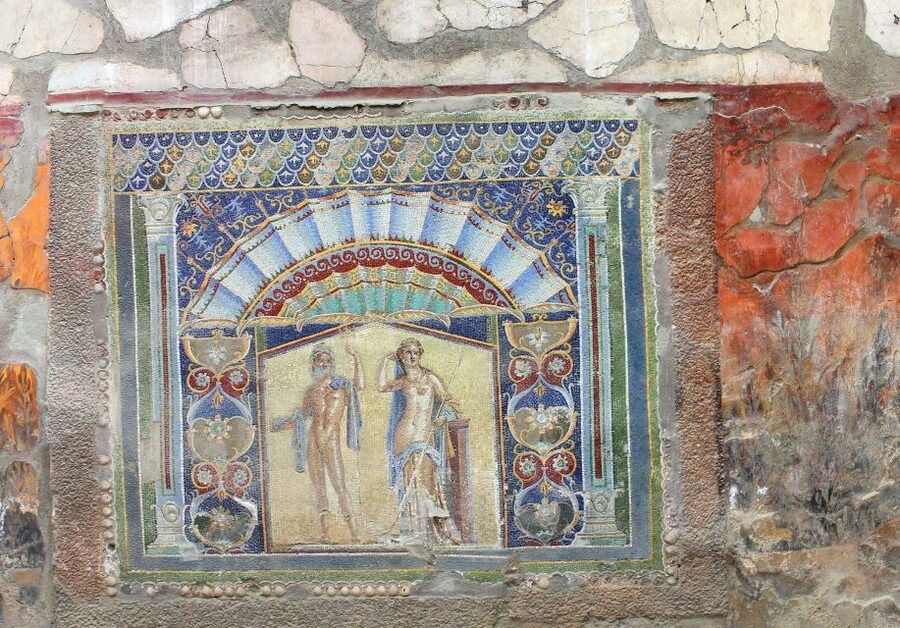
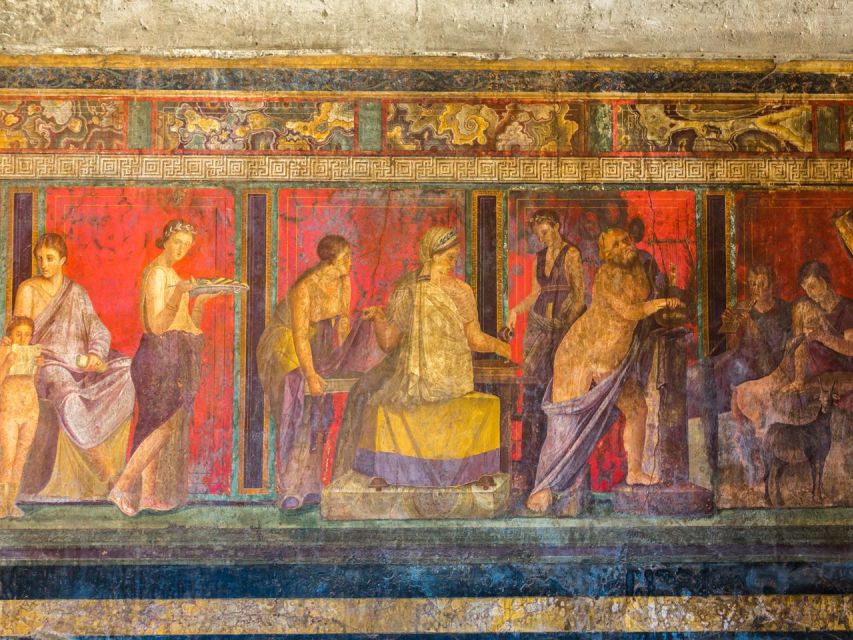
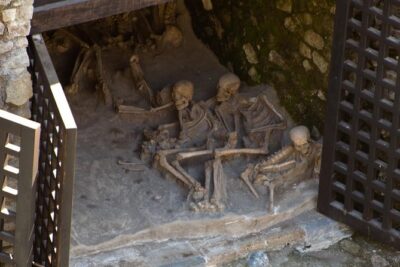
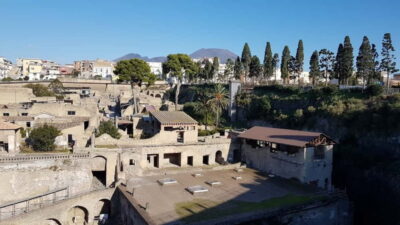
Herculaneum is often the relief stop in this kind of itinerary, and it makes sense. You get about 2 hours at the archaeological site, and the tour includes the entrance ticket. The overall vibe here is preservation you can feel: buildings and painted details come across clearly enough that you’re not just reading ruins—you’re seeing rooms and decoration.
One of the strongest signals from experience is that Herculaneum can outperform expectations for many people, especially if you care about frescoes and intact architectural impressions. The site’s preserved details tend to make the Roman world feel specific rather than generic. You walk through what looks like a snapshot of daily life, not just stone outlines.
Two hours is plenty for a focused route, but you’ll still want a plan. If you love wall paintings, aim for the areas where frescoes are most visible first, then let yourself wander after you’ve found your favorites. If you love town layout and street structure, prioritize how spaces connect—because Herculaneum’s layout helps you understand how people moved through the city.
A practical tip: keep an eye on where ropes or barriers guide you. Even in a place built for wandering, conservation rules shape how you experience the site. With time limits, you’ll get more satisfaction if you don’t spend the whole window walking back and forth.
Pompeii Ruins With an Audio Guide: Getting the Most From 2 Hours

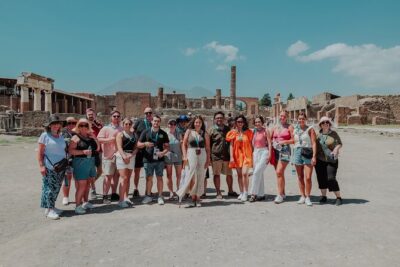
Pompeii is the headline name, but it’s also the most likely to create disappointment if your expectations are too broad. You get 2 hours there, and Pompeii has an audio guide included—but it’s audio guide only for Pompeii ruins.
Here’s the key point: you must bring a valid ID document to activate or render the audio guide for the Pompeii section. Don’t treat that as optional. If your ID isn’t with you, you’ll lose a major part of what makes the visit easier, especially if you want context for what you’re seeing.
Audio guide details matter because Pompeii isn’t just “walk and look.” You’re navigating neighborhoods, houses, and buildings with different functions, and the audio helps you connect those dots without needing a person-guide. The tour lists many supported languages for the audio guide, including English, Chinese, Dutch, French, German, Hebrew, Italian, Portuguese, Russian, and Spanish. So if you’re traveling with someone who prefers another language, this can still work smoothly.
Now the reality check: Pompeii can be hit-or-miss depending on what’s open and how access is managed. Some areas may be closed off with doors, ropes, or limited access routes, and certain houses can operate with time-slot style entry. That means you might not be able to see every “must-see” photo spot you hoped for.
My advice to make Pompeii work anyway:
- Pick 2–3 priorities before you enter (for example, one house style, one major street, one area with paintings)
- Start earlier in your 2-hour window on the highest-priority sections, because access constraints can shift your best route
- Use the audio guide actively, not passively—pause to locate what the track is describing
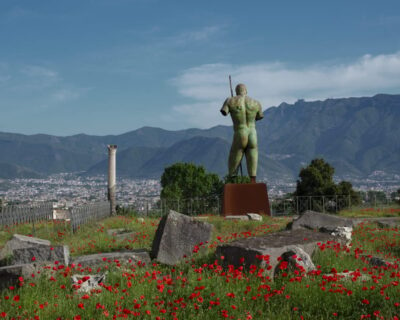
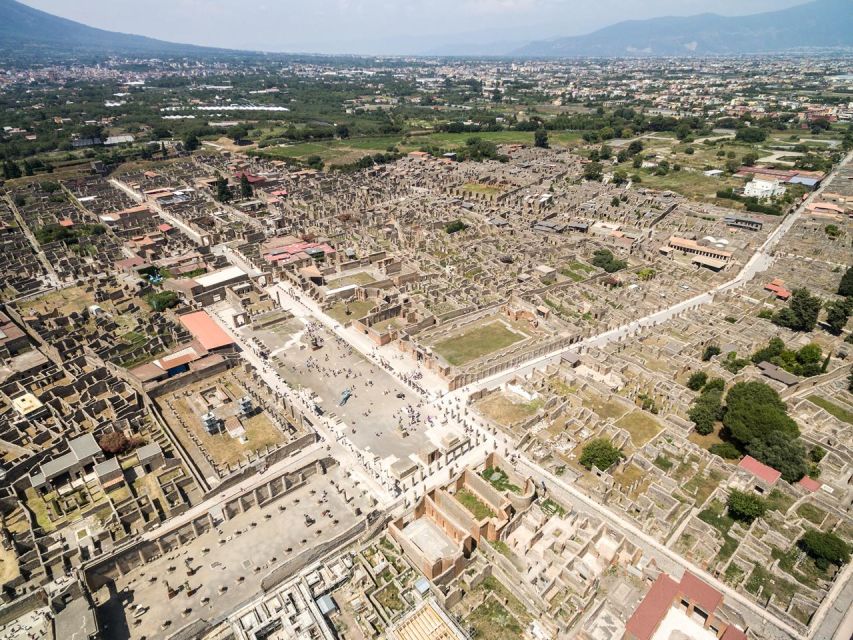
Despite the access limitations, Pompeii is still one of the most famous archaeological sites for a reason: it’s where you see the impact on a huge scale. Just go in with the mindset that the best experience comes from smart choices, not from expecting a perfectly open version of Pompeii every time.
Transfers, Group Flow, and What Your Day Feels Like
The schedule here is designed to prevent the two biggest trip-killers: long waiting lines and confusing point-to-point travel. You board the coach after pickup, and the day moves you from stop to stop with planned time buffers. That structure is why people often come away happy with the overall organization.
Also, the tour gives you transfer time between sites, so you’re not burning energy negotiating transit. In a day that’s mostly walking, saving energy matters.
What it feels like in practice:
- A short transit stretch to get oriented
- A semi-independent block at Vesuvius (outdoor, crater-focused)
- A guided-by-time visit block at Herculaneum
- A timed walking block at Pompeii with audio help
One more detail that affects your experience: the tour says it’s not suitable for people with mobility impairments. That doesn’t just mean “you might have trouble.” It means the walking distances and site terrain likely won’t work comfortably for everyone.
If you’re generally mobile and you like an organized day with autonomy, this is a strong match. If you want a fully escorted, slow, wheelchair-friendly experience, you’ll probably be happier choosing a different format.
More of Herculaneum next door

Price and Value: What You’re Really Paying For
At $141.61 per person, the biggest question is what’s included. Here, a lot is baked in:
- Pickup in Pompei (Via Roma, 32)
- Transfers by coach between all stops
- Entrance tickets included for Pompeii and Herculaneum
- Vesuvius National Park entrance tickets included
- Audio guides included for Pompeii ruins
- Booking fee
The itinerary also includes a perk most DIY plans struggle with: skip the ticket line (at least in the ways the tour applies it to the experience). Even if you love researching yourself, ticket lines and entrance logistics can steal time from the actual sites.
What’s not included is also clear:
- Food and beverages
- Person guide (you’re mostly on your own with audio at Pompeii)
So the real value comes down to whether you want to spend your day walking the sites versus managing logistics. If you’d rather not coordinate transport up Vesuvius, then back down to the two archaeological zones, this is the kind of package that saves brainpower.
Is it cheap? No. But it’s priced like an all-in-day plan where you’re paying for convenience, transportation, and admission. For many first-timers, that convenience translates into a smoother day and more time in the places that matter.
Who Should Book This Pompeii–Herculaneum–Vesuvius Tour
This tour makes sense if:
- You want to see Pompeii, Herculaneum, and Vesuvius in one day
- You like self-guided exploration with help where it counts (audio at Pompeii)
- You prefer comfortable transfers over building your own route
- You’re okay with fixed time windows at each site
It might not be your best option if:
- You want a fully guided narrative at every stop (this tour emphasizes audio and free time, not a live person-guide)
- You have mobility limitations
- You’re the kind of planner who needs every single Pompeii highlight open and accessible (access can be limited)
One useful mindset: treat Pompeii as a choose-your-own-adventure. Decide your priorities before you enter, and you’ll be much happier even if some areas are restricted.
Should You Book It?
If your goal is to hit all three landmarks efficiently, this tour is a solid way to do it. The organization and inclusion of entrance tickets and Pompeii audio are the big wins, and the day structure prevents a lot of common headaches.
I’d book it if you’re comfortable walking for long periods and you’re happy making smart choices in Pompeii rather than expecting everything to be fully open. Given the average rating of 3.4 out of 5 across 9 reviews, I’d also keep expectations realistic—especially for Pompeii access and time-slot behavior.
If you want, tell me your travel month and what you most want to see in Pompeii (frescoes, specific houses, or the big streets). I can help you build a short priority list so your 2 hours feel productive.
FAQ
How long is the Pompeii, Herculaneum and Vesuvius tour?
It’s about 8 hours total, with time scheduled for travel and visits to Vesuvius, Herculaneum, and Pompeii.
Where does the tour start?
Pickup is listed at Via Roma, 32 in Pompei.
Are entrance tickets included?
Yes. Entrance tickets are included for Pompeii and Herculaneum archaeological sites, plus Vesuvius National Park.
Do I get an audio guide?
An audio guide is included for Pompeii ruins only. The tour states you’ll need a valid ID document to render the audio guide for Pompeii.
What languages are available for the audio guide?
The audio guide is available in multiple languages, including English, Chinese, Dutch, French, German, Hebrew, Italian, Portuguese, Russian, and Spanish.
Is there a person guide during the visit?
No. The tour includes audio for Pompeii ruins, but it does not include a person guide.
What should I bring and wear?
Bring water, a passport or ID card, a hat, and comfortable shoes. Oversize luggage is not allowed, and you should plan for a small bag only.
More Tour Reviews in Pompei Campania
- Pompeii: Entry Ticket and Guided Tour with an Archaeologist★ 4.8 · 19,459 reviews
- Pompeii: Small Group Tour with an Archaeologist★ 4.8 · 12,264 reviews
- Pompeii: Skip-the-Line Entrance Ticket with Audio Guide★ 4.0 · 2,509 reviews
- Naples: Pompeii and Mt. Vesuvius with Lunch and Wine Tasting★ 4.5 · 2,454 reviews
- Pompeii: Skip-the-line-Ticket and Guided Tour★ 4.6 · 1,152 reviews
More of Herculaneum
- Pompeii: Small-Group Tour of Pompeii and Herculaneum★ 4.8 · 867 reviews
- Pompeii and Herculaneum: Guided Tour with an Archaeologist★ 5.0 · 164 reviews
- From Naples: Pompeii and Herculaneum VIP Tour with Lunch★ 4.4 · 129 reviews
- Pompeii & Herculaneum: Skip-the-line & Digital Guide App★ 4.0 · 35 reviews
- Pompeii, Herculaneum, and Vesuvius: Full-Day Tour★ 3.7 · 21 reviews
Vesuvius, More Climbs to the Rim
- Naples: Pompeii and Mt. Vesuvius with Lunch and Wine Tasting★ 4.5 · 2,454 reviews
- From Pompeii: Bus Transfer to Vesuvius with Park Entry Fee★ 4.2 · 700 reviews
- Pompeii: Day Tour of Pompeii and Vesuvius with Bus Transfer★ 4.2 · 250 reviews
- From Pompeii: Mt. Vesuvius Hike & Tour by Bus★ 4.0 · 165 reviews
- Pompei: Mount Vesuvius and Pompeii with Round-Trip Transfer★ 3.9 · 96 reviews
Just reviewed: more Pompei Campania tours and day trips



Mount Vesuvius Crater Hikes, compared.
 ★ 4.2From Pompeii: Bus Transfer to Vesuvius with Park Entry FeeFrom $50700 reviews
 ★ 4.2From Naples: All-Inclusive Mount Vesuvius Half-Day TourFrom $75674 reviews
 ★ 5.0Pompeii Guided Tour & Horse Riding on Vesuvius with LunchFrom $240419 reviews
 ★ 5.0Private Day Tour to Vesuvius, Herculaneum & Pompeii with Pick UpFrom $120279 reviews
 ★ 4.8From Pompeii: Mount Vesuvius Guided Tour with TransferFrom $77255 reviews
 ★ 4.2Day Tour of Pompeii and Vesuvius with Bus Transfer250 reviews
 ★ 4.5Pompeii and Mount Vesuvius Small Group TourFrom $119233 reviews
 ★ 4.2Naples: Herculaneum and Vesuvius Day TripFrom $135200 reviews
Browse the lists this tour appears in