
Reviewed · MOUNT VESUVIUS CRATER HIKES
Pompeii and Mount Vesuvius Small Group Tour
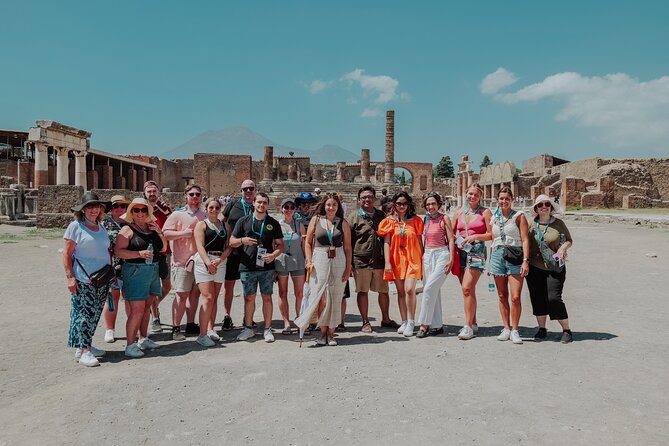
Two worlds in one long day. You get Pompeii explained with real archaeological context, then trade museum walls for crater-edge views from Mt. Vesuvius. I especially like that the Pompeii time is led by an archaeologist and the volcano half is led by a licensed hiking guide, both of which keep you from wandering and guessing. The main drawback: it’s a full 8-hour outing with real walking, including steps and a steep final stretch on Vesuvius.
You’ll also like the tight logistics. This is an English-speaking small group (max 14 in the minibus), with a modern vehicle transfer up and back so you’re not piecing together trains or buses.
Just pack smart. Closed-in shoes are essential for Vesuvius, the first 30 minutes include steps, and the last 500 meters are a steep uphill push. If the volcano is shut due to force majeure, the plan swaps to Herculaneum instead.
In This Review
- Key things to know before you go
- A small-group Pompeii and Vesuvius day that actually fits
- Finding the meeting point and getting into Pompeii fast
- Pompeii with an archaeologist: how to turn ruins into a city
- Foro de Pompeya and the main street feeling
- Granaries of the Forum: fountains, marble tables, and casts
- House of Menander: architecture and decoration in motion
- Stabian Baths: the city’s everyday wellness spaces
- Lupanar: the infamous brothel, explained in context
- House of the Faun: Pompeii’s big, statement-scale residence
- Teatro Piccolo and Teatro Grande: the entertainment backbone
- The Vesuvius climb: steps, steep stretches, and real wind exposure
- What the crater-edge moment feels like
- Footwear and clothing: don’t treat this as a casual walk
- Weather can change everything: the Herculaneum swap plan
- Price and value: what you’re paying for beyond transportation
- Fitness level and comfort: who this tour suits best
- Should you book this Pompeii and Vesuvius small-group tour?
- FAQ
- What is the duration of the Pompeii and Mount Vesuvius small group tour?
- What is the meeting point for the tour?
- Where do you meet the archaeologist guide inside Pompeii?
- Is Pompeii guided by an archaeologist?
- Is admission to Pompeii and Vesuvius included?
- What is the group size limit?
- What should I wear for Mt. Vesuvius?
- Is food included?
- What happens if Vesuvius is not accessible due to force majeure?
- Can children participate?
- Is free cancellation available?
Key things to know before you go
- Archaeologist-led Pompeii: You spend about two hours with an expert who helps you read the city, not just walk through it.
- Short Pompeii stops, big payoff: Expect targeted visits to landmarks like the Forum area, Stabian Baths, the Lupanar, and both main theaters.
- Licensed guide on Vesuvius: The hike is guided, with coaching for steady pacing.
- Shoes matter: The trail includes steps early and a steep final 500m uphill section.
- Weather backup to Herculaneum: If Vesuvius can’t be accessed, you’ll still get something major instead of turning the day into downtime.
A small-group Pompeii and Vesuvius day that actually fits
This tour is built for one big goal: seeing Pompeii and Vesuvius in the same day without spending your vacation on transit. That matters, because Pompeii already takes energy—adding a volcano climb means you need the plan to be tight and the groups to be small.
I also like that the tour is set up with English guidance and a minibus transfer from Pompeii and back. You don’t have to figure out where to park, when to take a bus, or how to coordinate ticket lines on your own.
And yes, it’s popular. The average booking lead time is about 47 days, so if your dates are firm, don’t procrastinate.
More climbs up to the crater rim
- Private Day Tour to Vesuvius, Herculaneum & Pompeii with Pick Up
★ 5.0 · 279 reviews - Pompeii and Mount Vesuvius Small Group Tour
★ 4.5 · 233 reviews - Mount Vesuvius Tour from Pompeii Led by an Expert Guide
★ 5.0 · 185 reviews
Finding the meeting point and getting into Pompeii fast
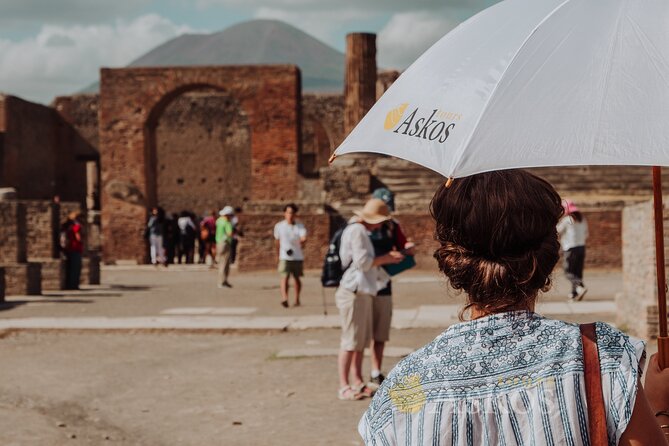
You start in Pompeii at Via Villa dei Misteri, 2, 80045 Pompei NA, Italy. Then, inside Pompeii, you meet at the main entrance called Porta Marina Superiore. Your Pompeii guide will be holding a sign with Askos Tours on it.
This may sound minor, but it’s a big deal in real life. Pompeii is a maze of signs, routes, and crowds. Getting oriented right at the start helps you understand where you are, what you’re about to see, and how the city connects.
Pompeii with an archaeologist: how to turn ruins into a city
The Pompeii portion is about 2 hours of guidance with an archaeologist, for a small group size (up to 20). That “expert explanation” time is exactly what makes Pompeii worth it, because the stones can look random if you don’t have context.
Here’s what I like about how the walk is structured. Instead of trying to cover everything, the tour focuses on key anchors you can recognize and then build a mental map from. That saves time and makes your later self-guided wandering more rewarding.
Foro de Pompeya and the main street feeling
You’ll take a close look at the Forum area, the ancient main square. Even with only a short stop, you get a sense of the city’s civic center—where business, announcements, and everyday life collided.
Then you move along the main street. This is the kind of walk that helps you grasp scale. You’re not just seeing buildings; you’re tracing movement—how people would have walked, shopped, and gone about their day.
Granaries of the Forum: fountains, marble tables, and casts
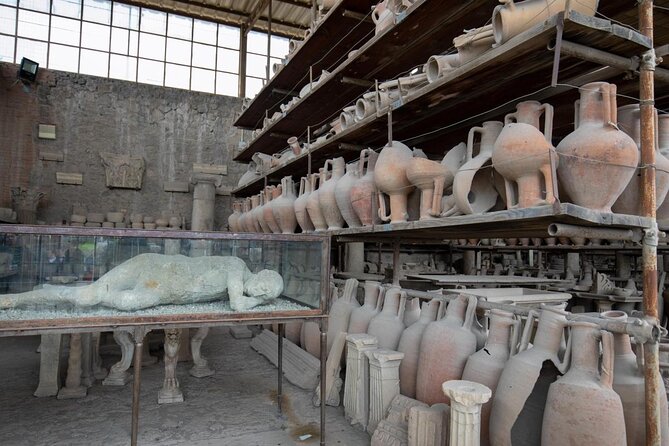
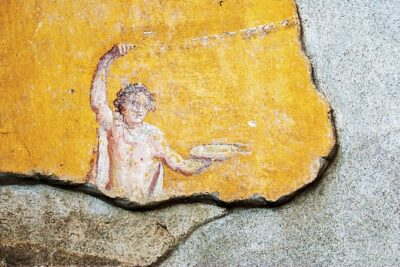
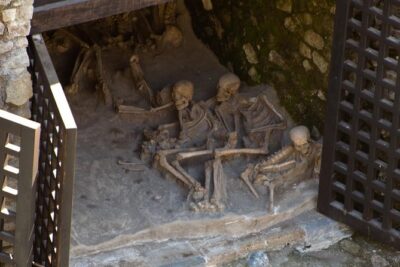
At the Granaries of the Forum, you’ll see marble tables and elements connected to fountains at house entrances. You’ll also come across casts related to the eruption—plus the details that make people stop and look twice, like a dog and even a tree in the casting materials.
This stop isn’t about being “spooky.” It’s about seeing how Pompeii records disaster: the physical impact and the human story, compressed into artifacts that still make the past feel immediate.

House of Menander: architecture and decoration in motion
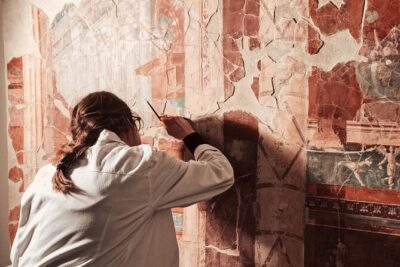
The House of Menander is one of the richest homes in Pompeii, and the focus is on why: architecture, decoration, and the kinds of objects people kept there.
Even if you’re not a “house tour” person, this is useful. Homes like this explain social rank, wealth, and taste—so Pompeii doesn’t just become “streets and walls.” It becomes a place with lifestyles.
Stabian Baths: the city’s everyday wellness spaces
The Stabian Baths (Terme Stabiane) cover a vast area and represent the oldest thermal complex in the city. Baths in Roman life weren’t only about hygiene. They were also social spaces—places to talk, relax, and spend time.
So when you walk through the remnants, you’re not only looking at plumbing and rooms. You’re picturing routine and community life.
Lupanar: the infamous brothel, explained in context
The Lupanar is Pompeii’s best-known brothel. The tour stop here gives you a chance to connect the physical layout with the reality of what the site represents in Roman urban life.
This is one of those places where you’ll learn more by hearing interpretation than by reading signage. The goal is understanding, not shock.
House of the Faun: Pompeii’s big, statement-scale residence
The House of the Faun is a large private residence. It’s a strong contrast to the more public or civic areas, and it helps show how Pompeii’s elite lived with space, display, and style.
Short stops like this work well because you leave with one clear image: Pompeii wasn’t all public grandeur. It also had private worlds.
Teatro Piccolo and Teatro Grande: the entertainment backbone
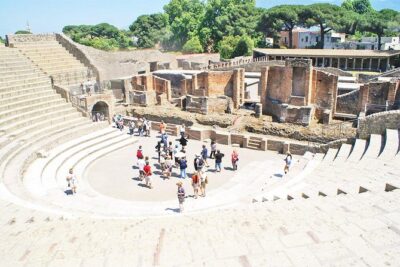
You’ll also get a look at Teatro Piccolo and then Teatro Grande, the most important theater in Pompeii. The theaters matter because they point to the city’s rhythms—public gatherings, performances, and shared culture.
If you’ve ever wondered why ancient cities felt alive even through ruins, theaters are a big part of the answer.
The Vesuvius climb: steps, steep stretches, and real wind exposure
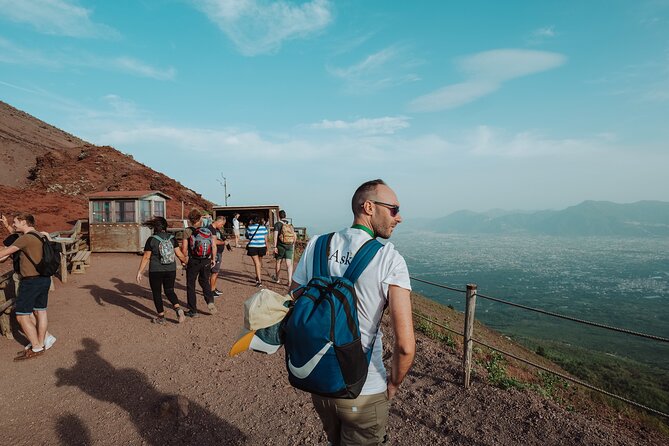
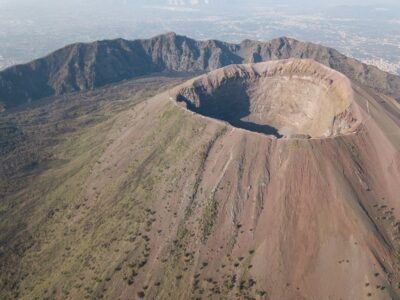
After Pompeii, you transfer to Vesuvius National Park and get on the volcano route toward the crater area. The tour description calls out views from the trail and the crater’s edge, with the crater still smoking slightly.
The trail isn’t just scenic; it’s physical. Here are the details that should shape your clothing and shoe choice:
- From the entrance, the first 30 minutes include step walking
- The last 500 meters is a steep uphill walk
- The guide will lead the hike, but you still choose your pace in wind and footing
The climb is where people either feel accomplished or feel stressed—so it helps to have a guide who keeps the group moving comfortably. In past departures, guides like Mario have been praised for going at a pace that suits mixed fitness levels, and Simona has been noted for encouraging hikers who struggled a bit.
What the crater-edge moment feels like
When visibility is good, the top can be jaw-dropping: views across the Bay of Naples, and sightlines that can include Capri, Ischia, and the Sorrento coast edge.
When it’s not clear, you still get value. The guide’s explanation of the volcanic mechanism and what it did to Pompeii and Herculaneum helps you “see” even if you can’t see far. Weather can turn the crater area into a study in change: wind, mist, and the shifting view at your feet.
Footwear and clothing: don’t treat this as a casual walk
You’ll want closed-in shoes with grip. One review-style lesson that fits the on-the-ground reality: lose the flip-flops. Loose sand and uneven footing can make the climb feel harder than expected.
Also, plan for wind at the top. Even in warm months, the crater edge can feel colder and harsher than you expect.
Weather can change everything: the Herculaneum swap plan
Mt. Vesuvius is not reliable in the same way a city museum is. Wind, rain, and fog can bring closures or limit access at the last minute.
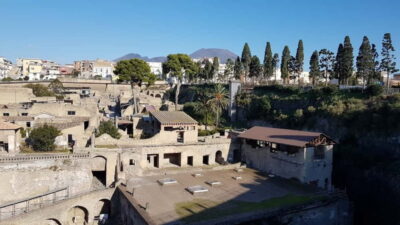
This tour includes a built-in contingency: if Vesuvius is not accessible due to force majeure, the plan includes a visit to Herculaneum instead of Vesuvius.
I like this because it respects reality. You’re not left with a blank schedule. You still get a major Roman site, and Herculaneum often feels more intimate and detailed because it’s less about covering the biggest sweep and more about absorbing well-preserved structures.
Price and value: what you’re paying for beyond transportation
The price is $119.77 per person for an about 8-hour day. That number only makes sense when you look at what’s included.
You get:
- 2 hours of archaeologist-led Pompeii guidance
- Admission fees for Pompei Express and Mount Vesuvius (the Vesuvius entry ticket is listed as 11.00 euros)
- A modern minibus transfer from Pompeii and back (up to 14 people)
- A hiking licensed guide for Vesuvius
That mix is the value. Tickets alone can add up, and Pompeii guidance is the difference between “I saw ruins” and “I understood what I saw.” Then the volcano part is not just transit—it’s a guided climb with a licensed guide.
What’s not included is also clear: food and drinks. So build lunch into your expectations. If your schedule allows only a short break, bring a plan—either buy a sandwich during free time or carry snacks if that’s allowed and practical for you.
Fitness level and comfort: who this tour suits best
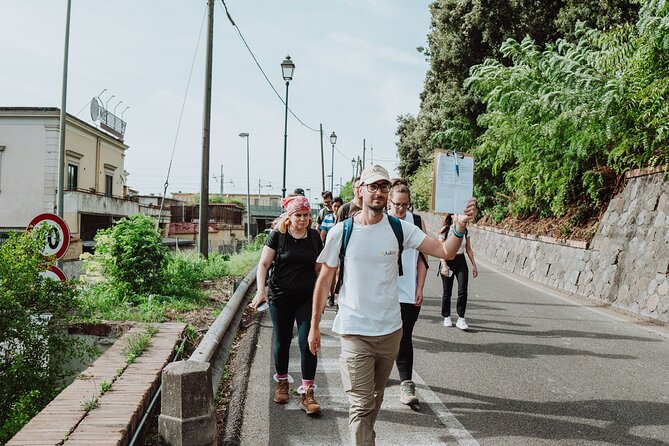
This is listed for people with moderate physical fitness. Children under 6 years aren’t allowed. It’s also not recommended for mobility issues or impairments, especially because the Vesuvius portion includes steps and a steep uphill segment.
If you’re used to walking—especially on uneven ground—you’ll likely find it manageable when paced by the guide. If you’re less active, I’d be honest with yourself: the hike is long enough and steep enough to matter.
Heat can also make the experience feel more intense than you think. Pompeii is exposed and Vesuvius can be windy, but both can be draining when you combine them into one day. Bring sunscreen and sunglasses in warmer months.
One practical move: bring a small daypack with water and essentials (you’ll be glad you did), and keep an extra layer accessible. Wind at the top can change how long you’ll want to stand and take photos.
Should you book this Pompeii and Vesuvius small-group tour?
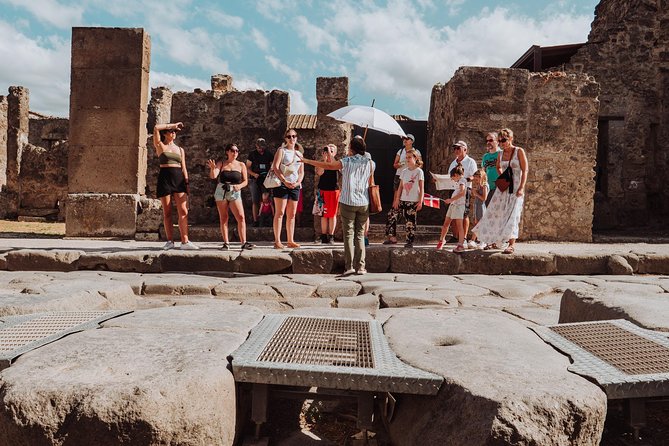
If your main goal is a high-value day—Pompeii guided well, then Vesuvius with a real hiking guide—this tour is a strong pick. The price makes sense for what you get: expert guidance plus guided volcano hiking, all in a small group with transport handled.
I’d say book it if:
- You want to avoid the stress of connecting buses or trains
- You like structured stops that help you build a mental map of Pompeii
- You’re comfortable with a guided climb that includes steps and a steep final stretch
I’d think twice if:
- You have mobility limitations or lower stamina for steep walking
- You hate uncertainty from weather and are hoping for a guaranteed crater view in all conditions
- You don’t want a full-day commitment (this runs long, even when parts feel fast)
If you do book, your best preparation is simple: wear grippy closed-in shoes, plan for sun and wind, and treat Vesuvius as the star that demands effort.
FAQ
What is the duration of the Pompeii and Mount Vesuvius small group tour?
It lasts about 8 hours (approximately).
What is the meeting point for the tour?
The tour meets at Via Villa dei Misteri, 2, 80045 Pompei NA, Italy.
Where do you meet the archaeologist guide inside Pompeii?
You meet at the main entrance of Pompeii called Porta Marina Superiore, and the guide holds a sign with Askos Tours.
Is Pompeii guided by an archaeologist?
Yes. The tour includes about 2 hours of guidance at the Pompeii ruins by an archaeologist (up to 20 people).
Is admission to Pompeii and Vesuvius included?
Admission fees are included. Mount Vesuvius entry is listed as 11.00 euros.
What is the group size limit?
The tour is a small group with a maximum of 14 travelers. Pompeii guidance is for up to 20 people.
What should I wear for Mt. Vesuvius?
Wear comfortable, closed-in shoes. The hike includes steps early on and a steep uphill section, so supportive footwear matters.
Is food included?
No. Food and drinks are not included.
What happens if Vesuvius is not accessible due to force majeure?
The tour includes a visit to Herculaneum instead of Vesuvius.
Can children participate?
Children under 6 years old are not allowed.
Is free cancellation available?
Yes. You can cancel up to 24 hours in advance for a full refund.
More Tour Reviews in Pompeii
- Pompeii Small Group Tour with an Archaeologist★ 5.0 · 6,593 reviews
- Discover the Ancient Ruins of Pompeii: Day Trip from Rome★ 3.5 · 2,247 reviews
- Pompeii and Herculaneum Small Group Tour with an Archaeologist★ 5.0 · 1,350 reviews
- Skip the Line Guided Tour of Pompeii led by an Archaeologist★ 5.0 · 703 reviews
- Pompeii Ticket + Tour with Optional Tasting Experience at Pompeii★ 5.0 · 663 reviews
Vesuvius, More Climbs to the Rim
- Pompeii Guided Tour & Horse Riding on Vesuvius with Lunch★ 5.0 · 419 reviews
- Private Day Tour to Vesuvius, Herculaneum & Pompeii with Pick Up★ 5.0 · 279 reviews
- Mount Vesuvius Tour from Pompeii Led by an Expert Guide★ 5.0 · 185 reviews
- Horseback Riding on Vesuvius★ 5.0 · 144 reviews
- From Pompeii: Day Tour of Pompeii and Vesuvius with Bus Transfer★ 4.0 · 32 reviews
Just reviewed: more Pompeii tours and day trips



Mount Vesuvius Crater Hikes, compared.
 ★ 4.2From Pompeii: Bus Transfer to Vesuvius with Park Entry FeeFrom $50700 reviews
 ★ 4.2From Naples: All-Inclusive Mount Vesuvius Half-Day TourFrom $75674 reviews
 ★ 5.0Pompeii Guided Tour & Horse Riding on Vesuvius with LunchFrom $240419 reviews
 ★ 5.0Private Day Tour to Vesuvius, Herculaneum & Pompeii with Pick UpFrom $120279 reviews
 ★ 4.8From Pompeii: Mount Vesuvius Guided Tour with TransferFrom $77255 reviews
 ★ 4.2Day Tour of Pompeii and Vesuvius with Bus Transfer250 reviews
 ★ 4.2Naples: Herculaneum and Vesuvius Day TripFrom $135200 reviews
 ★ 4.8Mount Vesuvius: Vineyard Tour with Wine Tasting and LunchFrom $65193 reviews
Browse the lists this tour appears in