
Reviewed · POMPEII ARCHAEOLOGIST-LED TOURS
Pompeii Exclusive 2h Private Tour with your Archaeologist
Skip-the-line plus an archaeologist saves your sanity. In Pompeii, this private tour helps you spot what you are looking at, from the Porta Marina area to the Great Theatre, the Odeion, street shops, and the Roman spa.
I love the skip-the-line entry into the archaeological park, which keeps your time for questions instead of waiting. I also love the custom pace: with groups ranging from kids to older relatives, the guide can slow down for different interests without turning it into a checklist.
The one heads-up is that Pompeii admission is extra at €19 per person, so your total cost will be higher than the group price. And since you only have about two hours, you will cover major highlights, not every corner of the site.
In This Review
- Key things that make this Pompeii tour worth it
- Pompeii makes more sense when someone points things out
- Meet at Porta Marina Superiore, then start your route
- The real cost: group price plus the €19 admission ticket
- Great Theatre to the Odeion: Roman entertainment with names you’ll remember
- Banquet culture and plaster casts: the moment Pompeii becomes real
- Cardo and Via Stabiana: Roman shops, tabernae, and the snack-bar feel
- Houses, everyday items, the main square, and the Roman spa
- Brothels and the social side of Pompeii
- What you get for a group of up to 10
- Guide names you might meet, and the style to expect
- Should you book this Pompeii private tour?
- FAQ
- Is this a private Pompeii tour?
- How long is the tour?
- Is the Pompeii admission ticket included in the price?
- What does the tour include?
- Where do we meet for the tour?
- Where does the tour end?
- What language is the tour offered in?
- Can I choose the start time?
- Are service animals allowed?
- How does cancellation work?
Key things that make this Pompeii tour worth it
- Private archaeologist-led pacing: your route can adapt to your group’s ages and interests.
- Skip-the-line entry: less time in queues, more time understanding what you see.
- Theatre focus (Great Theatre and Odeion): you get architectural and cultural context, not just photos.
- Plaster casts that make history tangible: preserved figures help you visualize what the eruption froze in time.
- Roman street life along the Cardo/Via Stabiana: typical snack-bar style stops and shops come with explanation.
- Roman spa and brothels in the same route: you see the social and practical side of Pompeii, not just the big monuments.
Pompeii makes more sense when someone points things out
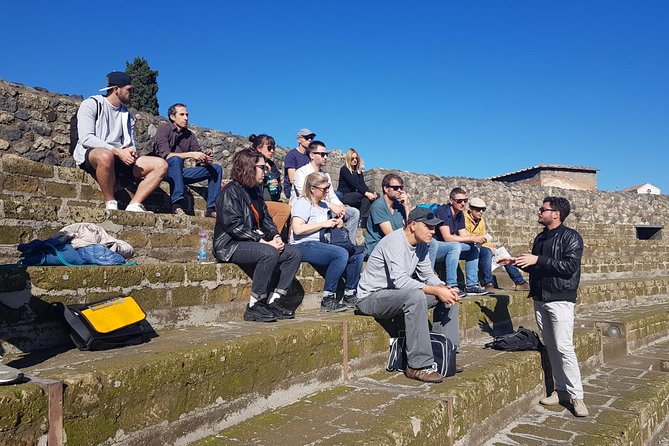
Pompeii is the kind of place where you can stare at walls for hours and still feel lost. That is why I like tours led by an archaeological guide who can translate the site into something you can actually read. Here, the emphasis is on ancient art and architecture, and on connecting the ruins to everyday life. In two hours, that kind of framing matters.
What I’d count as the real win is how the tour stays private and paced for your group. If you have kids, you do not want a fast-moving lecture. If you have older relatives, you want stops that feel structured and clear. A guide who can adjust makes Pompeii feel less like a scavenger hunt and more like a story you can follow.
One more thing: the route is built around recognizable highlights, so you are not wandering without a plan. You end up with mental anchors you can remember later—theatres, street life, houses, and the Roman spa complex—instead of a blur of stones.
More of the site walked with an archaeologist
- Pompeii and Herculaneum Small Group Tour with an Archaeologist
★ 5.0 · 1,350 reviews - Skip the Line Guided Tour of Pompeii led by an Archaeologist
★ 5.0 · 703 reviews - Pompeii Private Tour with an Archaeologist and Skip The Line – 3 hours
★ 5.0 · 564 reviews
Meet at Porta Marina Superiore, then start your route
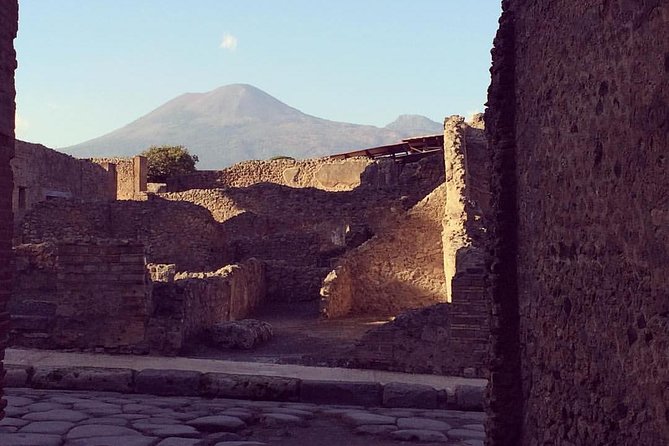
You meet at Scavi di Pompei – Biglietteria Porta Marina Superiore, Via Villa dei Misteri, 2, 80045 Pompeii. The tour ends back at the meeting point, so you do not have to figure out logistics mid-visit.
This start matters because it puts you close to the heart of the site’s action. From there, your guide leads you into the Pompeii area around Porta Marina Inferiore and begins the sightseeing. You also have the flexibility to pick the start time that best fits your schedule, which is useful in a place where mornings can feel calmer.
If you are using public transport, you’ll be happy to know the meeting point is listed as near public transportation. And this is a private experience, meaning it is only your group—no mixing with strangers who want a different pace or different priorities.
The real cost: group price plus the €19 admission ticket
The headline price is $299.82 per group (up to 10) for about 2 hours. That sounds straightforward until you remember the key add-on: Pompeii admission is not included and costs €19.00 per person.
So how do you judge value? First, think about what you avoid. With skip-the-line entry, you trade time-wasting waiting for time spent learning. Second, this is private for up to ten people, which can be a strong value if you are traveling with a family or a small friend group that wants the same direction and same explanations.
If you are traveling solo or as a couple, you may feel the admission add-on more, because it scales per person. If you’re splitting the group cost among multiple people, the math gets friendlier fast.
One practical note: because the guide is included but the ticket is separate, you’ll want to budget for both when you plan. It is an easy step, but it is still a step.
Great Theatre to the Odeion: Roman entertainment with names you’ll remember
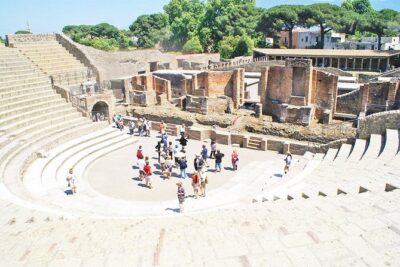
A big reason I’d choose this tour is that it starts by pulling you into Roman public life. The first stop inside the park includes the Great Theatre and the smaller theatre called the Odeion (also referred to as the Small one). Those are not just landmarks. They are clues about how Pompeii designed shared experiences—where people gathered and what buildings were made to amplify sound and performance.
In a guided format, the buildings stop being anonymous. Your archaeologist can connect the architecture you see to how it functioned in the city. That is the difference between taking pictures and actually feeling like you understand the place.
The pacing is also what makes these theatre stops work in two hours. You are not being rushed through dozens of locations. Instead, you’re given enough time to look closely, ask questions, and learn the meaning behind what you’re standing in front of.
Banquet culture and plaster casts: the moment Pompeii becomes real
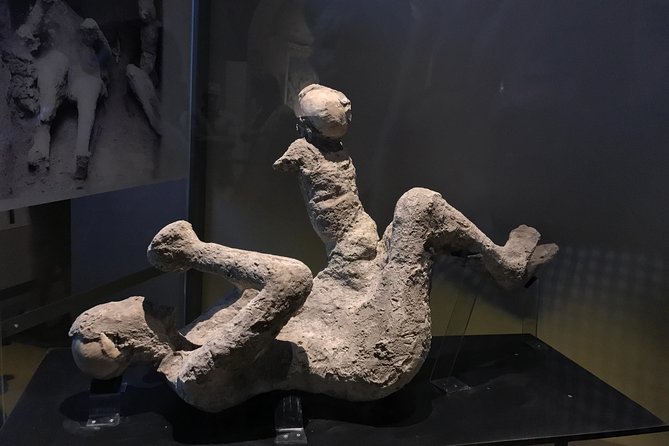
Pompeii’s most haunting lesson is also one of the most educational: what the eruption preserved. Your route includes areas tied to Romans held banquets, plus a chance to see plaster casts of citizens that preserve their positions from the explosion.
This is where a guide earns their keep. Without explanation, plaster casts can look like odd displays. With an archaeologist, you understand what the casts represent and why Pompeii is so important. You also get the context of how a city like this lived day to day—then how quickly it stopped.
One practical advantage of having a guide here: you’re not left to figure out which details matter most. You get a guided path that keeps you moving through the site while still stopping long enough to process what you’re seeing.
And yes, it is emotional material. That’s part of Pompeii’s power. The best tours are the ones that keep the facts clear while making the visit feel understandable rather than chaotic.
Prefer your own guide? More private tours


Cardo and Via Stabiana: Roman shops, tabernae, and the snack-bar feel
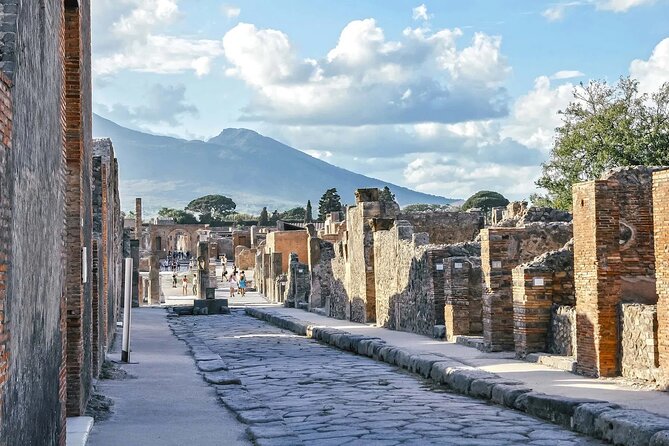
After the theatre and personal-story elements, the tour shifts toward street-level life. You’ll reach the Roman Cardo or Via Stabiana, where the guide points out typical Roman commercial spots—things like an ancient snack bar and tabernae.
This stop is valuable because it brings Pompeii down to scale. It’s easy to fixate on temples and big showpiece areas. But markets, food, and everyday services are what make a city feel inhabited.
In a private format, you can ask simple questions that make a big difference: What would people buy? What kind of activity happened in that space? How would the street connect to the rest of daily routines? A good archaeologist guide can answer these clearly, and that turns a street corridor into a lived-in part of the city rather than a backdrop.
Also, the timing works well. Coming here after the theatre and plaster casts means you leave with a balanced picture: public entertainment, human tragedy, and the routine mechanics of daily life.
Houses, everyday items, the main square, and the Roman spa
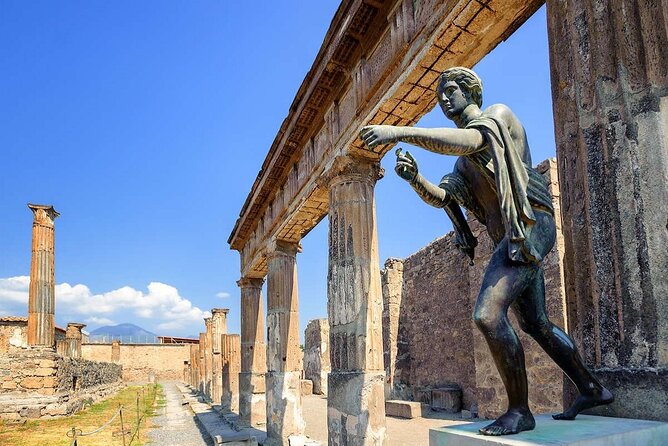
You’ll also explore houses and everyday items that were still almost intact when Pompeii was unearthed. That kind of preservation is what makes the site so unusual. You are not just looking at ruins from a distance; you’re seeing spaces where objects were left behind—and you can imagine how they were used.
From there, you move into the main square and the thermal bath complex, often called the Roman spa. This is one of Pompeii’s biggest “how did people live?” lessons. Bathing was social, practical, and part of civic routine. When a guide connects the space to daily habits, you start to see Pompeii less like a frozen postcard and more like a working city.
The tour also includes plaster casts again in the broader route, plus stops that relate to the city’s social spaces. It’s a good way to keep the visit from becoming repetitive. You see different categories of life—home, square, baths—without losing the main thread.
Brothels and the social side of Pompeii
One of the less expected parts of many first-time Pompeii visits is the city’s social system. Your route includes brothels, plus other features that sit alongside the main square and bath complex.
This matters because Pompeii is not only a story about architecture. It is also a story about human behavior—how people met, interacted, and spent time. A guide helps keep it factual and understandable, instead of awkward or vague.
When the tour is paced well, these topics can fit naturally into the wider picture: entertainment at the theatres, daily routines along the street, homes and objects, then social spaces and public facilities like the spa. By the time you reach the end, you feel like you’ve seen a city functioning across different roles and rhythms.
What you get for a group of up to 10
This is priced per group—up to ten people—for a 2-hour private guide. That setup can be a smart value if you travel with multiple adults who want the same experience and the same questions answered.
Here’s the value logic I’d use:
- You’re paying for a guide’s time, not a general admission-only experience.
- The skip-the-line piece reduces wasted time, which becomes more important when your visit window is short.
- A private pace means your group does not have to compromise with strangers’ interests.
If you’re traveling with different age groups, it helps even more. One person may want architecture; another may want the most gripping human elements. With a private tour, the guide can blend those needs instead of sticking to one rigid pace.
I also think the two-hour length is part of the value. It’s long enough to get context and meaningful stops, short enough that you can still do other parts of Pompeii on your own afterward if you want.
Guide names you might meet, and the style to expect
You might be guided by archaeologists like Raffaele, Maria, Massimo, Federica, or Raffaella (depending on availability and language needs). Across these guide profiles, the common thread is how they keep the visit engaging and structured.
Some tours clearly work especially well for families. One guide experience involved Raffaele and making the visit more interactive for a 6-year-old, with the group staying involved across ages. Another guide experience with Maria highlighted the calm feel of being early and the confidence to explain the site’s time period clearly.
That is what you should look for when you book: a guide who can explain without talking down, and who can answer questions without rushing you out. With a private setup, you are not stuck with a one-size-fits-all approach.
Should you book this Pompeii private tour?
If you want Pompeii context fast, this is a strong choice. It is private, paced for mixed ages, and built around meaningful stops like the Great Theatre, the Odeion, street life along the Cardo/Via Stabiana, plaster casts, houses, the Roman spa, and even brothels. You’ll leave with a clearer sense of what the city was like, not just where the main ruins are.
I would not book it if your goal is to “see everything.” Two hours covers highlights, not the full expanse. And remember the extra €19 per person admission, which you’ll pay in addition to the group price.
If your group values understanding the site over trying to sprint through it, I think you’ll be happy you booked a guided, archaeologist-led visit.
FAQ
Is this a private Pompeii tour?
Yes. It is a private tour/activity where only your group participates.
How long is the tour?
The duration is about 2 hours.
Is the Pompeii admission ticket included in the price?
No. Admission is not included and costs €19.00 per person.
What does the tour include?
It includes a professional archeological guide and a custom route if needed.
Where do we meet for the tour?
You meet at Scavi di Pompei – Biglietteria Porta Marina Superiore, Via Villa dei Misteri, 2, 80045 Pompei NA, Italy.
Where does the tour end?
The activity ends back at the meeting point.
What language is the tour offered in?
The tour is offered in English.
Can I choose the start time?
Yes. You can choose the start time that fits your sightseeing schedule.
Are service animals allowed?
Yes, service animals are allowed.
How does cancellation work?
You can cancel for a full refund if you cancel up to 24 hours in advance of the experience’s start time.
Small-Group and VIP Access
- PompeiI Exclusive Tour with your Archaeologist in a Small Group★ 4.5 · 363 reviews
- Fast Access Exclusive Private Ancient Pompeii Half Day Tour with Local Guide★ 5.0 · 54 reviews
- Half-Day Exclusive Private Tour of Pompeii and Herculaneum★ 5.0 · 49 reviews
- VIP Pompeii Tour including Newly Opened Houses With Archaeologist★ 5.0 · 33 reviews
- Skip-the-line Exclusive Private Full-Day Complete Ancient Pompeii Guided Tour★ 5.0 · 30 reviews
More Private Guides at the Site
- Pompeii private tour with an Official Guide★ 5.0 · 631 reviews
- Pompeii Private Tour with an Archaeologist and Skip The Line – 3 hours★ 5.0 · 564 reviews
- Visit in Pompeii – Pompeii Private Tour with Ada★ 5.0 · 436 reviews
- Pompeii Private Tour with an Archaeologist and Skip The Line★ 5.0 · 391 reviews
- Pompeii Vineyard Escape: Private Wine Tasting & Lunch★ 5.0 · 329 reviews
More Tours Led by an Archaeologist
- Pompeii Small Group Tour with an Archaeologist★ 5.0 · 6,593 reviews
- Pompeii and Herculaneum Small Group Tour with an Archaeologist★ 5.0 · 1,350 reviews
- Skip the Line Guided Tour of Pompeii led by an Archaeologist★ 5.0 · 703 reviews
- Pompeii Private Tour with an Archaeologist and Skip The Line – 3 hours★ 5.0 · 564 reviews
- Pompeii Skip-the-line Tour with Archaeologist Guide★ 5.0 · 559 reviews
Just reviewed: more Pompeii tours and day trips





Pompeii Archaeologist-Led Tours, compared.
 ★ 4.8Entry Ticket and Guided Tour with an ArchaeologistFrom $3519,459 reviews
 ★ 4.8Small Group Tour with an ArchaeologistFrom $4012,264 reviews
★ 5.0Pompeii Small Group Tour with an ArchaeologistFrom $356,593 reviews
 ★ 5.0Pompeii and Herculaneum Small Group Tour with an ArchaeologistFrom $771,350 reviews
 ★ 5.0Skip the Line Guided Tour of Pompeii led by an ArchaeologistFrom $95703 reviews
 ★ 4.9Exclusive Tour with Archaeologist and Entry TicketsFrom $50634 reviews
 ★ 5.0Pompeii Private Tour with an Archaeologist and Skip The Line – 3 hoursFrom $302564 reviews
 ★ 5.0Pompeii Skip-the-line Tour with Archaeologist GuideFrom $71559 reviews
Browse the lists this tour appears in