
Reviewed · POMPEII ARCHAEOLOGIST-LED TOURS
Pompeii: 2-Hour Guided Tour with an Archaeologist
Pompeii hits you fast, and this tour matches that energy. You’ll walk the western part of town, through spaces built for Roman politics, bathing, shopping, and social life—then the story turns toward Vesuvius and what happened in 79 AD. I really like the archaeologist-style explanations that make the ruins feel specific, not vague, and I also love the pace of a private group in a site that’s huge and busy. One thing to consider: two hours means you’ll see major highlights, but you won’t cover everything in Pompeii.
You meet near Porta Marina Superiore and start with the kind of big-picture orientation that helps you read the city as you go. Guides such as Rosalina, Tonia, Enzo, Paola, and Giancarlo are repeatedly praised for turning details into a story you can follow, so even the less-famous spots feel connected. If you only have a short window, this is a strong way to get your bearings and get real value from the ticket.
In This Review
- Key things I’d plan around before you go
- Two Hours in Pompeii: the Western Route Focus
- Porta Marina Start: Find the Meeting Point and Set Your Pace
- Forum, Basilica, and Temple of Apollo: Public Power Up Close
- Thermal Baths, Shops, and the Food Stops
- Lupanar and the Houses: Daily Life, Private Space, and Social Rules
- Plaster Casts at Human Scale: What the Eruption Took
- Theatre and Amphitheater Plus the Walk to Villa dei Misteri
- Price and Value of a Private Archaeologist Guide
- Should You Book This Pompeii Archaeologist Tour?
- FAQ
- How long is the Pompeii guided tour with an archaeologist?
- Where do I meet for the tour?
- What’s included in the price?
- What language options are available?
- What should I bring?
- Is there a free-entry day?
- Is the tour wheelchair accessible?
Key things I’d plan around before you go
- Western Pompeii focus: Forum and public buildings first, then homes, baths, and entertainment.
- Archaeology in plain language: You’re not just looking; you’re understanding what you’re looking at.
- Plaster casts with human scale: A hard-but-important stop that makes the eruption personal.
- Vesuvius context built in: You get the how-and-why behind the city’s preservation and later rediscovery.
- Storytelling guides matter: Names like Rosalina, Enzo, and Tonia show up for a reason—communication style is a big deal here.
- Two hours is a sprint: Plan your expectations around highlights, not total coverage.
Two Hours in Pompeii: the Western Route Focus
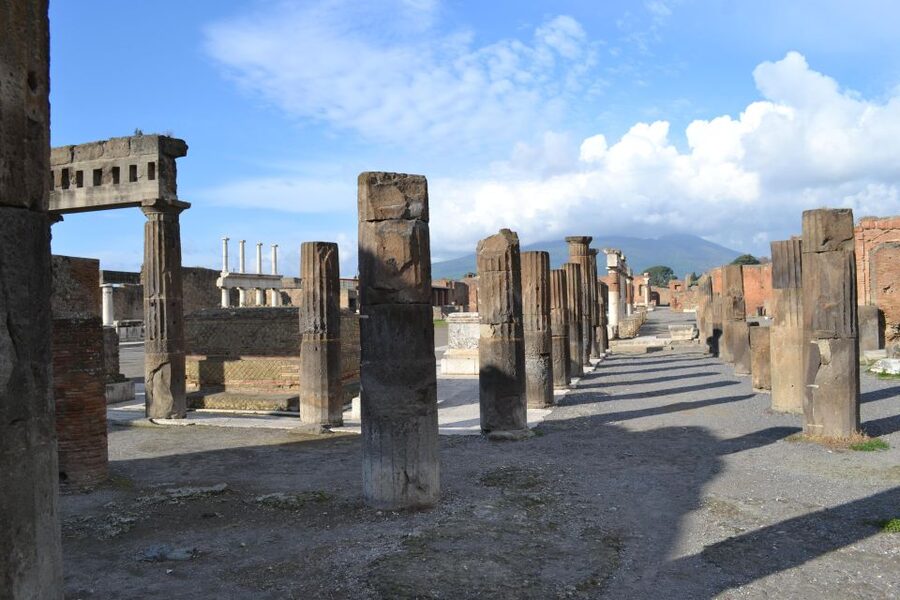
This Pompeii tour is built for people who want the main beats of the city without spending the whole day. You’ll spend your time in the western part of Pompeii, where you can connect the dots between public life (forums, courts, temples), everyday life (baths and street commerce), and private life (Roman houses with real texture and layout).
I like how that focus changes how you walk. Instead of seeing random columns and walls, you start to recognize patterns: where people gathered to vote or argue, where they washed and socialized, and where you’d find craftsmen and traders doing business. Pompeii is full of “wow” moments, but value comes from understanding what each area was for.
The only drawback is the math. With just two hours, you won’t see every corner of Pompeii, and you’ll probably move more quickly than a do-it-yourself visit. If you want to linger in one house for a long time, this format may feel tight. But if you want a guided hit of the essentials, it’s a smart use of limited time.
More of the site walked with an archaeologist
- Pompeii: Entry Ticket and Guided Tour with an Archaeologist
★ 4.8 · 19,459 reviews - Pompeii: Small Group Tour with an Archaeologist
★ 4.8 · 12,264 reviews - Pompeii 3hours Villa of Mysteries tour with an Archaeologist
★ 4.8 · 486 reviews
Porta Marina Start: Find the Meeting Point and Set Your Pace
The tour’s starting point is tied to Porta Marina Superiore, the gateway used to orient visitors to the western route. You may see two specific meeting options depending on what you book: Pompei – Porta Marina, Via Villa dei Misteri, 2 and a nearby Porta Marina meeting spot in the same general area.
Here’s the practical part: GPS can be awkward around Pompeii. One common issue is simply finding the correct spot. If you’re coming from a train, shuttle, or taxi drop-off, give yourself a little buffer. Wear shoes you can walk in for 2+ hours on uneven stone, and bring water and sun protection because the site can bake.
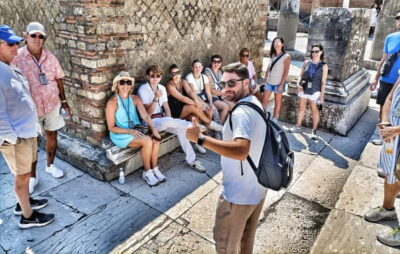
Because this is a private group, you’re less likely to feel like you’re being dragged along behind the loudest people. Guides can also pace you better through the breaks between monuments, which helps a lot in a place where it’s easy to lose your thread.
Forum, Basilica, and Temple of Apollo: Public Power Up Close
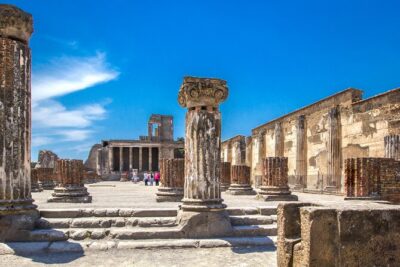
Your early time in Pompeii is where the city’s “big decisions” live. You’ll start with major religious and civic landmarks, including the Temple of Apollo, then move into the core of political and social life: the Forum and the Basilica (the court-house area).
The Forum is not just impressive architecture. It’s the Roman version of a public square where decisions, arguments, and status played out in full view. When you understand that, you stop thinking of the Forum as a backdrop and start seeing it as a stage.
The Basilica adds another layer. You see the space where legal matters and public business would have taken place, and that makes the architecture feel purposeful instead of decorative. This is also where the guide’s archaeologist approach pays off: you’ll connect layout and function, and you’ll learn what made these civic buildings central to daily Roman life.
This section is also your best chance to get the “Pompeii context” right. Your guide explains the city’s fate in 79 AD and the later rediscovery, so the ruins start to feel like a time capsule rather than a random pile of stone. UNESCO’s reason for listing Pompeii and Herculaneum is tied to this exact idea: a complete, vivid snapshot of society and daily life at one specific moment.
Thermal Baths, Shops, and the Food Stops
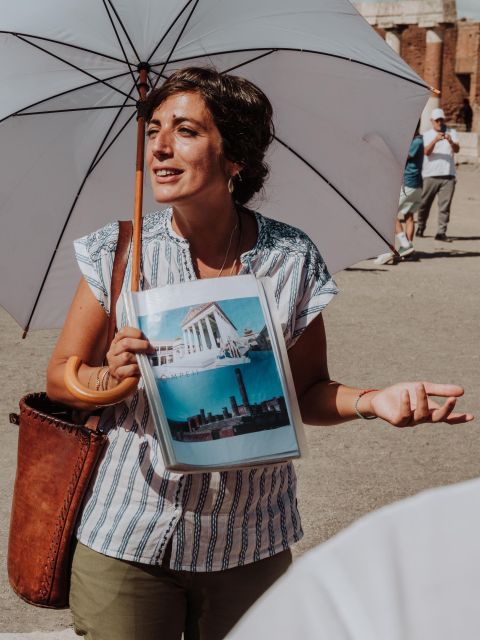
After the public center, you shift into spaces that feel more like a living city. Pompeii’s thermal baths show how Romans used bathing not just for cleanliness, but for routine, conversation, and relaxation.
Then you’ll head toward commercial life. The tour highlights stops such as the Termopolium Capuano, a street-side food place, and it also points you to a bakery area where you can still see remains of utensils and even food. That’s a standout detail because it’s rare to see “kitchen evidence” so close to the moment of destruction. It helps you understand that Pompeii wasn’t only temples and politics—it was lunch, trade, and everyday habits.
This is where the 2-hour format can either work great or feel rushed, depending on your priorities. If you’re the type who loves street-level life—what people actually ate, where they waited, what they bought—this part delivers. If you only want grand monuments, you might wish for a longer stop in the Forum areas. The good news is that a strong guide keeps it coherent, so the baths and shops don’t feel like detours.
Lupanar and the Houses: Daily Life, Private Space, and Social Rules
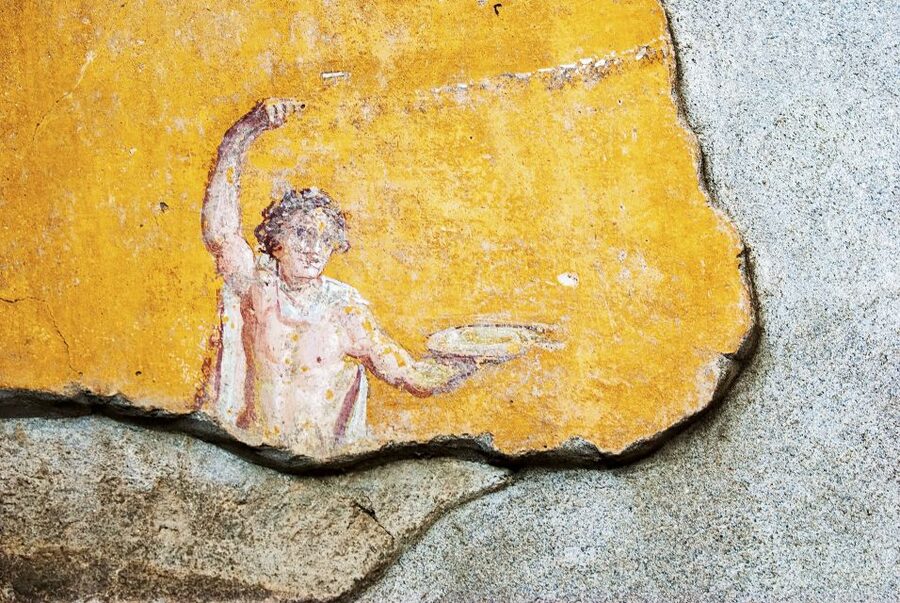
Pompeii is one of the rare ancient sites where private life is visible enough to feel real. You’ll see key residential areas like the House of Menander, the House of the Faun, and the House of the Vettii. You may also pass through notable highlights such as the House of the Tragic Poet.
These houses aren’t just pretty. Their layouts teach you how Roman homes worked: how rooms were organized around daily movement, where spaces connected to the public side of life, and how status could appear in decoration and plan. When you get this right, you start reading the city like a system, not a museum display.
You’ll also visit the Lupanar, a brothel. The subject matter is sensitive, but it’s historically important because it shows how Pompeii held all kinds of everyday behavior inside its walls. A good guide keeps the tone respectful while still explaining the function of the space and the social reality it represents.
One more detail I value here: the best guides handle the subject matter carefully, without turning it into shock value. Guides like Paola, Alessandro, and Chiara are repeatedly praised for storytelling style and pacing, and that matters because Pompeii can be intense. Your goal is understanding, not just scanning for photos.
More guided visits to choose

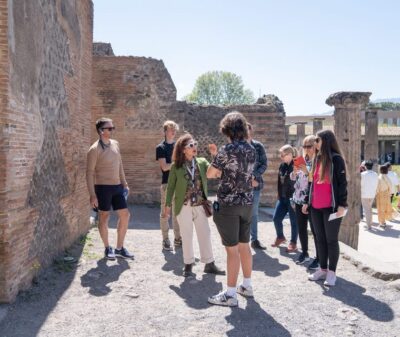
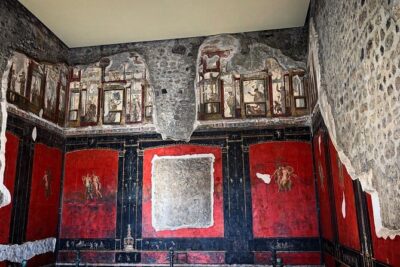
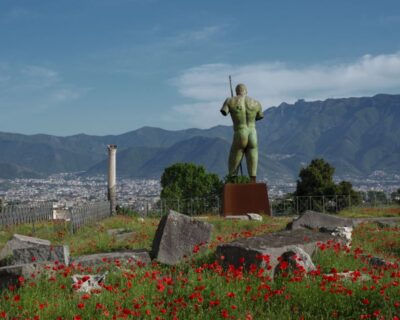
Plaster Casts at Human Scale: What the Eruption Took
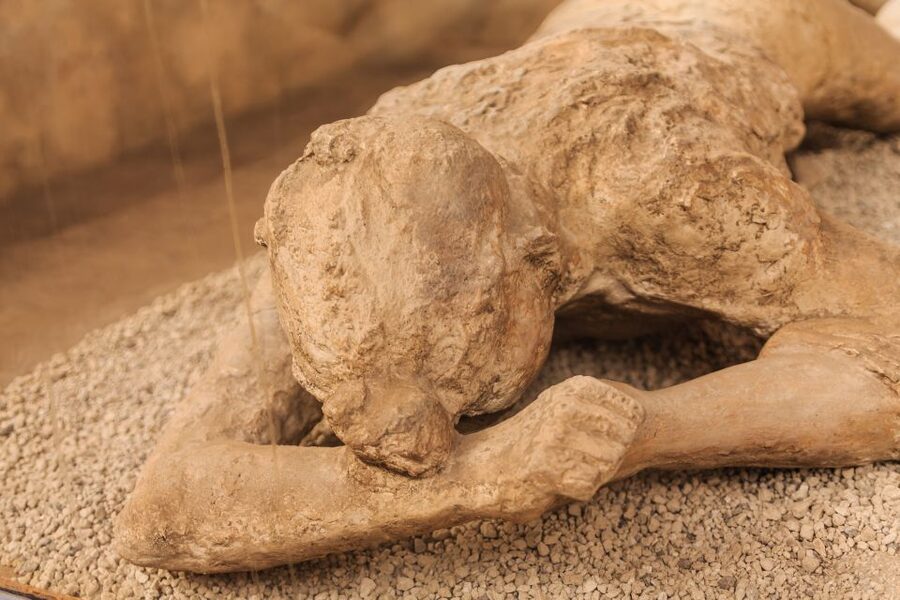
If you want one reason this tour is worth doing with a guide, it’s the stop for the plaster casts of humans and animals made at the moment of death. These casts turn catastrophe into something you can actually grasp, because they’re not abstract. You see form, posture, and the terrible finality of the event.
This is also where context matters. Your guide explains how the city was buried under molten ash and lava from Vesuvius, and how Pompeii and Herculaneum were later rediscovered in the 1700s. Once you understand that timeline, the plaster casts don’t feel like a horror prop. They feel like evidence—an attempt to make the past visible in a way that still respects what happened.
I’ll be honest: this part is emotionally heavy. Still, it’s the stop that makes Pompeii more than a collection of ruins. It reminds you that this was a city of real people, not a backdrop for Roman architecture.
Theatre and Amphitheater Plus the Walk to Villa dei Misteri
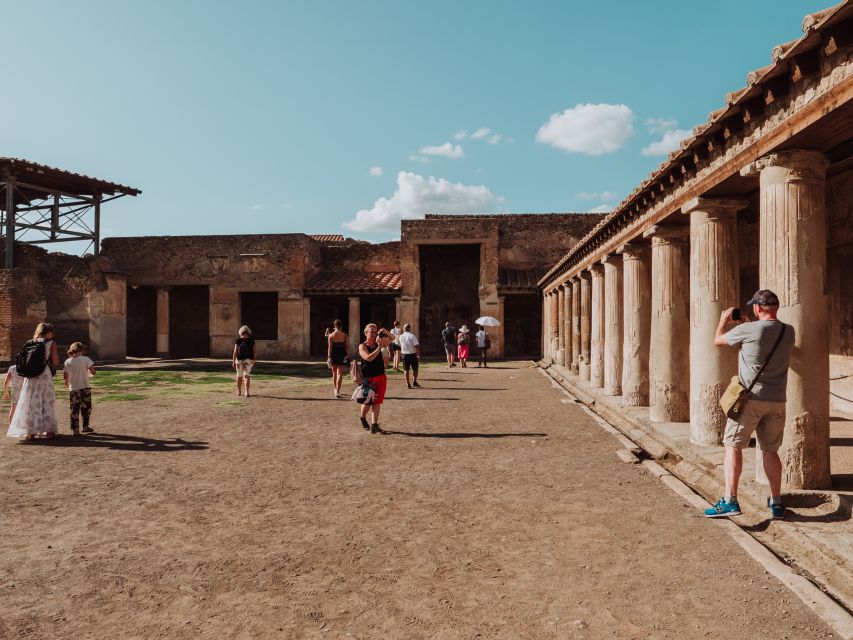
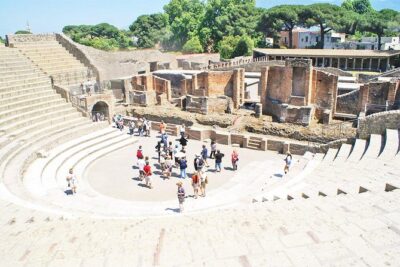
Pompeii didn’t just govern itself and eat itself. It entertained itself, too. You’ll visit the Large Theatre and also see the Amphitheater, both tied to public performances and gatherings.
Theatre spaces are useful for understanding Roman culture because they show how civic identity worked through events. When you’re standing in the right spot and you know what to look for, you can picture how audiences moved and how performances shaped social life.
At the end, your tour wraps up at Pompei Scavi – Villa Dei Misteri. The operator also notes the activity ends back at the meeting point, so expect the tour to function like a loop through the site rather than a one-way trek. Either way, this matters for planning your afternoon. You’re not left stranded wondering how you’ll get out.
Price and Value of a Private Archaeologist Guide
At $175.74 per person for a 2-hour private tour, you’re paying for three things: an expert guide, included entry tickets, and time-saving route choices.
Let’s talk value. Pompeii is massive. If you try to cover the essentials on your own, you’ll either move too fast to learn anything or you’ll spend time figuring out what matters most. A guide compresses that decision-making into a set route focused on major public buildings, homes, baths, and key highlights like the Lupanar and plaster casts.
The inclusion of Pompeii entry tickets helps, because Pompeii admissions are not the same as a normal museum fee. The tour also provides disposable earphones for bigger groups, which suggests you’ll be able to hear the guide better even when it’s crowded.
Is it cheap? No. But for the kind of experience you get—a structured walk, expert interpretation, and the ability to ask questions—you’re buying a clearer experience per hour. If you only have a limited time window, that’s where the price starts to make sense.
Should You Book This Pompeii Archaeologist Tour?
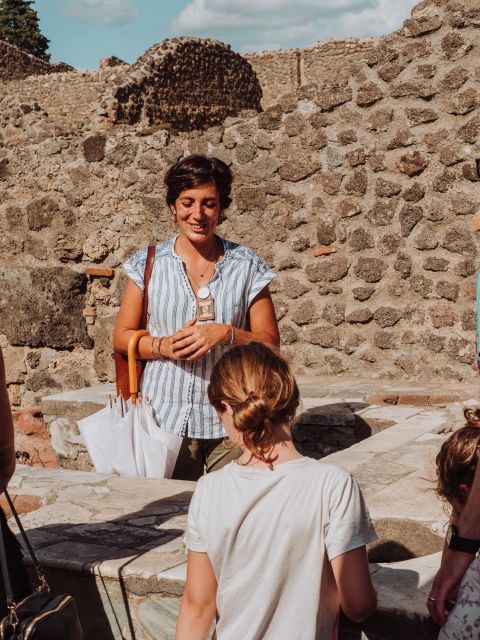
Book it if you want the clearest path through Pompeii in a short visit. This tour is a good match if you like expert storytelling, want to connect buildings to real daily life, and don’t want to spend your energy sorting out what’s important.
Skip it or consider a longer plan instead if you need lots of downtime to linger in one area, or if you’re the type who hates being timed. Also, double-check details if you’re traveling with accessibility needs, because the activity information is inconsistent: it’s listed as wheelchair accessible, but it also says not suitable for wheelchair users. In either case, ask before you go.
If your goal is high-impact learning and a respectful look at a world-famous site, I’d say this is the right kind of splurge.
FAQ
How long is the Pompeii guided tour with an archaeologist?
It’s listed as 2 hours. Starting times vary, so you’ll need to check availability for the schedule.
Where do I meet for the tour?
Meeting points can vary based on the option you book, with Porta Marina and Pompei – Porta Marina, Via Villa dei Misteri, 2 listed. The tour also ends at/near the meeting point area, with a finish noted at Pompei Scavi – Villa Dei Misteri.
What’s included in the price?
The tour includes the guide, Pompeii entry tickets, and disposable earphones for bigger groups.
What language options are available?
The live guide can speak French, German, Spanish, Italian, or English.
What should I bring?
Bring comfortable shoes, sunglasses, a sun hat, and water.
Is there a free-entry day?
Yes. On the first Sunday of each month, entrance is free, but tickets can’t be reserved ahead of time, so entry is not guaranteed.
Is the tour wheelchair accessible?
The information provided says the tour is wheelchair accessible, but it also notes it is not suitable for wheelchair users. If you need mobility support, confirm with the operator before booking.
More Guided in Pompei Campania
- Pompeii: Entry Ticket and Guided Tour with an Archaeologist★ 4.8 · 19,459 reviews
- Pompeii: Skip-the-Line Entrance Ticket with Audio Guide★ 4.0 · 2,509 reviews
- Pompeii: Skip-the-line-Ticket and Guided Tour★ 4.6 · 1,152 reviews
- Pompeii: Guided Tour with Skip-the-Line Entry★ 4.9 · 812 reviews
- Pompeii: Skip-the-Line Entry Ticket with Digital Guide App★ 4.1 · 770 reviews
More Tour Reviews in Pompei Campania
- Pompeii: Entry Ticket and Guided Tour with an Archaeologist★ 4.8 · 19,459 reviews
- Pompeii: Small Group Tour with an Archaeologist★ 4.8 · 12,264 reviews
- Pompeii: Skip-the-Line Entrance Ticket with Audio Guide★ 4.0 · 2,509 reviews
- Naples: Pompeii and Mt. Vesuvius with Lunch and Wine Tasting★ 4.5 · 2,454 reviews
- Pompeii: Skip-the-line-Ticket and Guided Tour★ 4.6 · 1,152 reviews
More Tours Led by an Archaeologist
- Pompeii: Entry Ticket and Guided Tour with an Archaeologist★ 4.8 · 19,459 reviews
- Pompeii: Small Group Tour with an Archaeologist★ 4.8 · 12,264 reviews
- Pompeii 3hours Villa of Mysteries tour with an Archaeologist★ 4.8 · 486 reviews
- Pompeii: Tour with Archaeologist Guide & Skip-the-Line Entry★ 4.5 · 478 reviews
- Pompeii and Herculaneum: Guided Tour with an Archaeologist★ 5.0 · 164 reviews
Just reviewed: more Pompei Campania tours and day trips


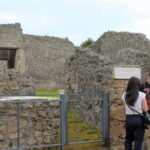
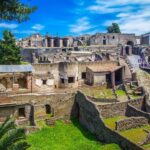
Pompeii Archaeologist-Led Tours, compared.
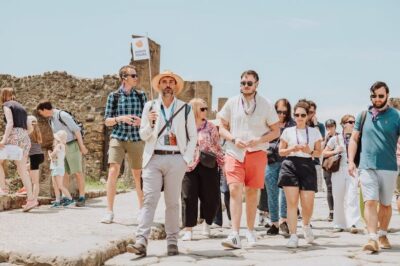 ★ 4.8Entry Ticket and Guided Tour with an ArchaeologistFrom $3519,459 reviews
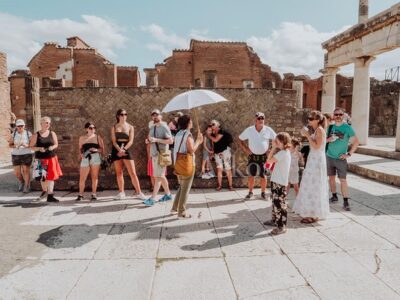 ★ 4.8Small Group Tour with an ArchaeologistFrom $4012,264 reviews
★ 5.0Pompeii Small Group Tour with an ArchaeologistFrom $356,593 reviews
★ 4.8Small Group Tour with an ArchaeologistFrom $4012,264 reviews
★ 5.0Pompeii Small Group Tour with an ArchaeologistFrom $356,593 reviews
 ★ 5.0Pompeii and Herculaneum Small Group Tour with an ArchaeologistFrom $771,350 reviews
 ★ 5.0Skip the Line Guided Tour of Pompeii led by an ArchaeologistFrom $95703 reviews
 ★ 4.9Exclusive Tour with Archaeologist and Entry TicketsFrom $50634 reviews
 ★ 5.0Pompeii Private Tour with an Archaeologist and Skip The Line – 3 hoursFrom $302564 reviews
 ★ 5.0Pompeii Skip-the-line Tour with Archaeologist GuideFrom $71559 reviews
Browse the lists this tour appears in