

Reviewed · POMPEII AUDIO GUIDE TOURS
From Naples_ Pompeii Tour_Skip the line ticket + audioguide
Pompeii is big, but this tour makes it manageable. Skip-the-line entry plus a multi-language audio guide and updated map helps you walk the ruins without losing half your day in lines or guesswork. I especially like the simple rhythm: transfer from Naples, get in fast, then explore on your own. One real consideration: the audio can be tricky to follow while juggling the map, and you should plan for some bus waiting time.
This is a self-guided way to visit one of the world’s most famous archaeological sites. Pompeii covers about 66 hectares and draws roughly 3 million visitors per year, so strategy matters. You’ll cover the main highlights with audio support, but this is not a full commentary from a live guide.
If you’re okay with walking and using your phone or audio set-up smartly, this can be a very efficient day trip from Naples. You’ll get plenty of famous scenes within the 5-hour window, including frescoed houses, baths, temples, theaters, and the casts of victims from the eruption, plus one of Pompeii’s best-preserved Roman amphitheaters.
In This Review
- Key things that make this Pompeii tour work
- Pompeii in 5 hours: what you actually get
- From Naples to Pompeii: the Around Vesuvio bus setup
- Skip-the-line entry and how to use the audio guide well
- A self-guided Pompeii walk: highlights that fit the time
- Frescoed houses and the look of everyday life
- Spas, temples, and public routines
- Shops and thermopolis: food culture without the modern version
- Theaters and brothels: entertainments and vice
- Victim casts: the moment history becomes personal
- A well-preserved Roman amphitheater
- Reading Pompeii like a pro: what to look for as you walk
- Timing and pacing: the 5-hour format and what it means for you
- What to bring (and what to skip) for an easier Pompeii day
- Driver, staff, and the small touches that affect your day
- Price and value: is $77 a smart deal?
- Who should book this Pompeii skip-the-line audio tour
- Should you book this Pompeii tour or go DIY?
- FAQ
- What is included in the tour price?
- Is the ticket skip the line?
- How long is the experience?
- Where is the meeting point in Naples?
- What languages are available for the audio guide?
- Are there live guides included?
- Is food included?
- What should I bring for Pompeii?
- Can I bring large luggage or bags?
- Is the tour suitable for mobility impairments?
Key things that make this Pompeii tour work

- Skip-the-line Pompeii ticket so you spend time inside the ruins, not outside
- Audio guide in 7 languages (English, French, German, Italian, Portuguese, Russian, Spanish)
- Roundtrip bus transfer from Naples with an English/Italian-speaking driver
- Updated map + suggested itineraries to help you choose what to see
- A fast, easy 5-hour format built for first-timers who want the essentials
Pompeii in 5 hours: what you actually get

Pompeii is one of those places where “seeing it” and “seeing enough” are two different things. The ruins are huge, and once you’re inside, it’s easy to get pulled toward one area and accidentally run out of time. This package is built to solve that exact problem by bundling three key pieces: entrance, audio guidance, and transport.
The price is $77 per person, and it covers: the Pompeii entrance ticket, audio guides, and a roundtrip bus transfer from Naples. That’s good value if you’re the type of traveler who likes to roam at your own pace, stopping where the audio pulls you in. It’s also a practical way to avoid the hassle of coordinating ticket lines and public transit while you’re short on hours.
The trade-off is also clear: no guide is included and no food is included. If you want a deep, live storyteller walking you point-by-point, you’ll need to either spend time studying on your own or consider a guided tour instead. This one is about independence with guardrails: audio + map + fast entry.
Set your own pace with an audio guide
- Pompeii: Skip-the-Line Entrance Ticket with Audio Guide
★ 4.0 · 2,509 reviews - Pompeii: Skip-the-Line Entry Ticket with Digital Guide App
★ 4.1 · 770 reviews - Pompeii: Skip-the-Line Entry & Audioguide
★ 3.8 · 225 reviews
From Naples to Pompeii: the Around Vesuvio bus setup
Your day starts in Naples near Via Galileo Ferraris n.40. The meeting coordinates given are 40.8505189N, 14.2747942E, and your bus has the logo Around Vesuvio. That matters more than it sounds, because Pompeii days go smoothly when you show up exactly where you’re supposed to.
The driver speaks English and Italian, which is useful if you have quick questions about timing, pickup, or which stop to aim for once you arrive. The tour is designed around a bus transfer both directions, so you’re not stuck figuring out how to return after you’ve covered your favorite streets.
One more reality check: with a bus day-trip, the “tour time” doesn’t always equal your “waiting time.” You’re going out and back by road, and traffic plus operating timing can add pause moments. If you’re the kind of traveler who hates waiting around, come prepared with snacks or a plan for keeping yourself busy during longer gaps.
Skip-the-line entry and how to use the audio guide well

The biggest time-saver here is the skip-the-line ticket. Pompeii’s popularity is real, and a standard ticket line can eat up your energy fast. Getting in smoothly means you can start your walk earlier and use your 5 hours for the ruins themselves.
Once you’re inside, the audio guide is the backbone of the experience. You’ll get narration in English, French, German, Italian, Portuguese, Russian, and Spanish. There’s also an updated map, plus itineraries that help you decide what to prioritize.
Here’s the practical tip I’d follow: don’t rely on the map while you’re trying to listen and track audio at the same time. If possible, use headphones and keep the map open only when you need to confirm where you are. In that way, the audio can do its job—helping you connect what you’re seeing to the story behind it—without turning your day into a juggling act.
Also, since there’s no live guide included, your best results come from treating the audio as your “in-room docent.” When you hear a section you like, pause, look longer, and move on only when you’re ready. Pompeii rewards that pacing.
A self-guided Pompeii walk: highlights that fit the time
Pompeii is the famous “ancient city that froze in time” story, but you’ll experience it through specific places. With 5 hours, you won’t see everything, so you’ll want to focus on the areas that the audio and map point you toward.
Here’s what you can expect to cover during your independent visit, based on what the tour is designed around:
Frescoed houses and the look of everyday life
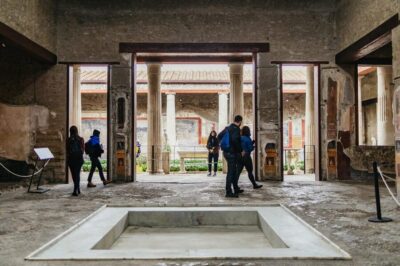
Pompeii’s domus—the frescoed houses—show how people lived, not just what rulers built. Expect rooms decorated with painted scenes and details that make the city feel human instead of museum-like. In a short visit, I like spending time here because a few minutes in the right doorway can make the whole city make sense.
More tickets to the site


Spas, temples, and public routines
You’ll also find spas and temples, plus spaces that reflect daily and public routines. Even if you don’t study Roman religion in depth, it helps to walk through these areas and notice how the city was organized around community life—ritual, hygiene, and gatherings.
Shops and thermopolis: food culture without the modern version
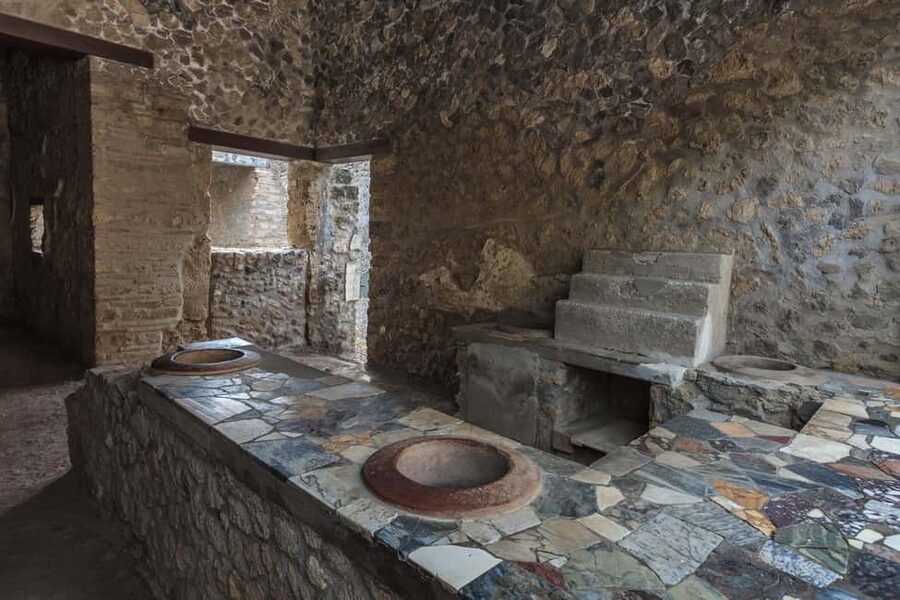
The ruins include shops and thermopolis, which were basically a fast-food style counter for hot drinks and quick meals. This is one of my favorite categories for a self-guided visit. You’ll get a sense for how practical life worked, and it’s easier to imagine than some of the bigger monuments.
Theaters and brothels: entertainments and vice
Pompeii includes both theaters and brothels. It can feel like a shock at first, but that’s part of why Pompeii is so compelling: it doesn’t only show the polite side of Roman life. If you’re sensitive to adult themes, take your time and decide what you want to see. Either way, these spaces help you understand that the city wasn’t just ceremonial—it was social.
Victim casts: the moment history becomes personal
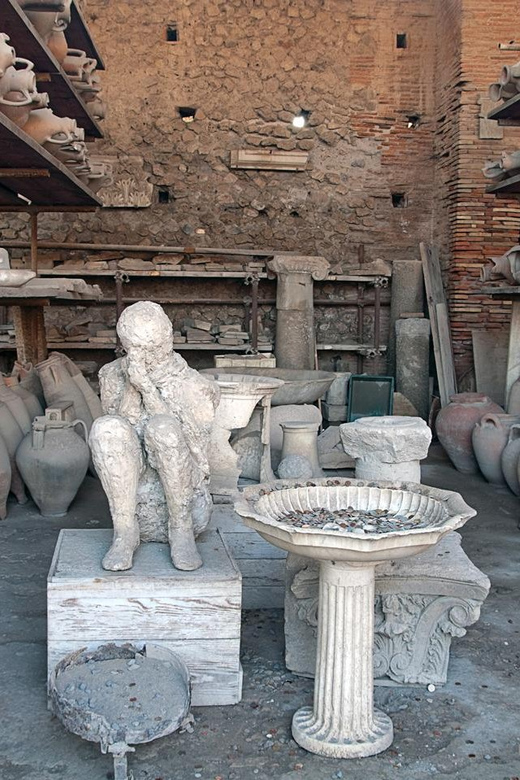
One of the most emotionally powerful stops is the casts of the victims of the eruption. This is where the story stops being an archaeological concept and becomes human tragedy. In a short visit, I recommend not rushing through this area. Even if you only take a few extra minutes, it changes the way the rest of Pompeii lands in your memory.
A well-preserved Roman amphitheater
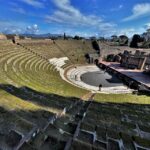
Finally, Pompeii offers one of the best preserved Roman amphitheaters. This is a strong “wrap-up” highlight because the structure is easier to read than many ruins: you can see the shape of performance spaces and imagine the seating and crowds.
Reading Pompeii like a pro: what to look for as you walk

When you visit Pompeii independently, the biggest challenge is knowing what deserves attention. You don’t need a degree. You just need a few anchors—so you can tell the difference between “interesting stones” and “this is why it mattered.”
Here are a few ways to make the audio and ruins click:
- When you reach frescoed houses, look for the kind of decoration that would have made rooms feel like a statement. Pompeii’s paintings aren’t just pretty—they signal identity and status.
- In spas, focus on how the space is arranged. You’ll start recognizing how Romans managed bathing and flow through different areas.
- In thermopolis and shops, treat them like clues. Even without signage, you can often picture how people moved in, grabbed something quick, and went on with their day.
- For theaters and amphitheaters, stand in a spot where you can see the space as an event venue, not just a pile of seating.
- At the victim casts, let your visit slow down. This isn’t the place to power-walk, because it’s designed to hit hard.
The audio guide helps you connect these stops, but you still control the pace. If you’re the type who always wants to “see the next thing,” this format can still work—you just want to pick one or two places to linger at so your time doesn’t feel like a blur.
Timing and pacing: the 5-hour format and what it means for you
Five hours sounds like a lot until you’re in a place as large as Pompeii. The tour’s design is meant for a comfortable “essentials” loop: get in fast, follow the audio for key locations, and leave before you feel rushed or exhausted.
Here’s how I’d pace it:
- Start strong: spend your first part of the visit orienting yourself and picking a route. The map and audio itineraries are there for a reason.
- Mid-visit: choose what’s most important to you—houses, entertainment, or the tragedy section—and commit time there.
- Final stretch: save the amphitheater and major public spaces for when you still have energy to appreciate layout and scale.
If you find yourself trying to cram everything, you’ll miss the point. Pompeii rewards focused attention more than checklists.
Also, plan for walking. Comfortable shoes aren’t optional. Pompeii’s ground can be uneven, and the day is short enough that your legs do the work whether you’re ready or not.
What to bring (and what to skip) for an easier Pompeii day
This is a practical rules-light activity, but a few details matter.
Bring
- Comfortable shoes
- Comfortable clothes
- Passport or ID card (a copy is accepted)
Not allowed
- Oversize luggage
- Luggage or large bags
So pack like you’re going to walk all day: small bag, water planning, and keep anything bulky at a minimum. If you show up with extra stuff, you’ll spend energy dealing with it instead of looking at Roman life frozen in stone.
And one more note: the tour is not suitable for people with mobility impairments. Since the ruins involve walking through uneven areas, this isn’t the kind of place where “slow and steady” always works.
Driver, staff, and the small touches that affect your day
You’ll be with a driver who speaks English and Italian, and the operation is set up to keep the transfer smooth. One of the nicest parts of bus days like this is that you can ask quick questions without needing to figure everything out yourself.
Some versions of this experience also include small hospitality moments. Based on what I’ve learned from similar day-trip formats, you might find extra kindness like coffee during the day. Don’t count on it as your only meal plan, but small touches can make the wait feel less painful and the day feel more cared for.
And music can matter, too. In at least one case connected to this kind of Naples transfer experience, the driver’s selection leaned into Naples-style music, which is a fun way to start shifting your mindset from city streets to ancient streets.
Price and value: is $77 a smart deal?

At $77 per person, the value comes from what’s bundled. You’re getting:
- Pompeii entrance
- Audio guide support in multiple languages
- Roundtrip bus transfer from Naples
The big things not included are:
- A live guide
- Food and beverages
So the real question isn’t just whether it’s cheap. It’s whether the structure matches your travel style. If you want a fast entry and you’re happy to explore independently with audio prompts, this price can feel fair. You’ll spend your time in the ruins instead of in lines and transport planning.
If you want a guide to explain context in real time, point out the best details, and keep a group moving, then $77 might feel incomplete. In that case, you’d likely pay more overall for the guide-based version of Pompeii.
Who should book this Pompeii skip-the-line audio tour
This one is a strong fit if you:
- Want skip-the-line entry and a simple day plan
- Prefer independent exploring with an audio safety net
- Like structure without needing a full guided lecture
- Are short on time and want the big Pompeii categories in one trip: houses, public spaces, entertainment, and the eruption’s aftermath
It’s also good for people who like to pause and replay sections of audio when they spot something they want to understand better. Since you’re not following a live guide’s pace, you can control where your attention goes.
If you need step-free access or rely heavily on assistance for mobility, this format likely won’t work well, given the ruins and the stated unsuitability for mobility impairments.
Should you book this Pompeii tour or go DIY?
If you’re trying to squeeze Pompeii into a day with minimal friction, I’d lean toward booking this. Skip-the-line plus a bus transfer plus audio support is a practical trio, especially when Pompeii’s scale can make DIY feel chaotic.
Skip it only if you strongly prefer a live guide, want food included, or you’d be too frustrated managing audio and map navigation without a person walking you through each stop.
If you do book, set yourself up for success: bring comfortable shoes, use headphones if possible, and treat your 5 hours as a focused route—not a race to see everything.
FAQ
What is included in the tour price?
You get the Pompeii entrance ticket, audio guides, and roundtrip transfer from Naples by bus.
Is the ticket skip the line?
Yes, the package includes a skip-the-line Pompeii ticket.
How long is the experience?
The duration is 5 hours.
Where is the meeting point in Naples?
It’s near Via Galileo Ferraris n.40, Naples. The suggested coordinates are 40.8505189N, 14.2747942E.
What languages are available for the audio guide?
The audio guide is available in English, French, German, Italian, Portuguese, Russian, and Spanish.
Are there live guides included?
No. The tour does not include a guide.
Is food included?
No. Food and beverages are not included.
What should I bring for Pompeii?
Bring comfortable shoes and comfortable clothes, plus a passport or ID card (a copy is accepted).
Can I bring large luggage or bags?
No. Oversize luggage and luggage or large bags are not allowed.
Is the tour suitable for mobility impairments?
No, it is not suitable for people with mobility impairments.
More Tickets in Pompei Campania
- Pompeii: Entry Ticket and Guided Tour with an Archaeologist★ 4.8 · 19,459 reviews
- Pompeii: Skip-the-Line Entrance Ticket with Audio Guide★ 4.0 · 2,509 reviews
- Pompeii: Skip-the-line-Ticket and Guided Tour★ 4.6 · 1,152 reviews
- Pompeii: Skip-the-Line Entry Ticket with Digital Guide App★ 4.1 · 770 reviews
- Pompeii: Afternoon to Sunset Guided Tour with Ticket★ 4.9 · 484 reviews
More Tour Reviews in Pompei Campania
- Pompeii: Entry Ticket and Guided Tour with an Archaeologist★ 4.8 · 19,459 reviews
- Pompeii: Small Group Tour with an Archaeologist★ 4.8 · 12,264 reviews
- Pompeii: Skip-the-Line Entrance Ticket with Audio Guide★ 4.0 · 2,509 reviews
- Naples: Pompeii and Mt. Vesuvius with Lunch and Wine Tasting★ 4.5 · 2,454 reviews
- Pompeii: Skip-the-line-Ticket and Guided Tour★ 4.6 · 1,152 reviews
More Audio-Guided Visits
- Pompeii: Skip-the-Line Entrance Ticket with Audio Guide★ 4.0 · 2,509 reviews
- Pompeii: Skip-the-Line Entry Ticket with Digital Guide App★ 4.1 · 770 reviews
- Pompeii: Skip-the-Line Entry & Audioguide★ 3.8 · 225 reviews
- Pompeii: Skip-the-Line Ticket with Audio Guide and Map★ 4.0 · 117 reviews
- From Pompeii: Vesuvius Entry with Transfer and Audioguide★ 4.2 · 74 reviews
Just reviewed: more Pompei Campania tours and day trips



Pompeii Audio Guide Tours, compared.
 ★ 4.2Entry Ticket with Optional Audio GuideFrom $2612,360 reviews
 ★ 4.0Skip-the-Line Entrance Ticket with Audio GuideFrom $392,509 reviews
 ★ 4.1Skip-the-Line Entry Ticket with Digital Guide AppFrom $22770 reviews
 ★ 4.1Ercolano: Herculaneum Entry Ticket with Optional Audio GuideFrom $21581 reviews
 ★ 4.3Herculaneum: Skip The Line Entrance ticket + AudioguideFrom $35266 reviews
 ★ 3.8Skip-the-Line Entry & AudioguideFrom $53225 reviews
 ★ 3.5Skip the line ticket (art) + audioguide + mapFrom $44155 reviews
 ★ 4.0Skip-the-Line Ticket with Audio Guide and MapFrom $44117 reviews
Browse the lists this tour appears in