
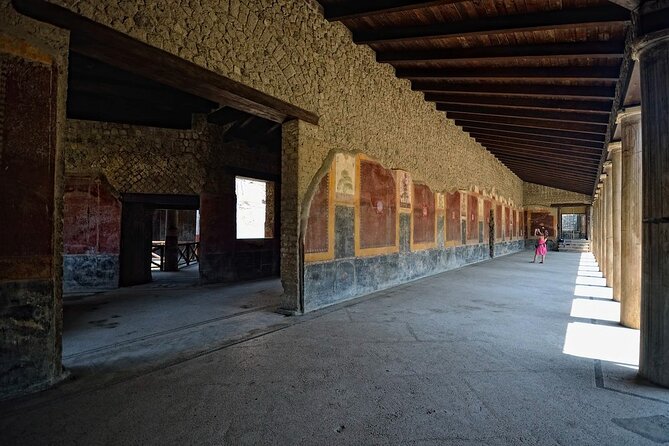
Reviewed · POMPEII ARCHAEOLOGIST-LED TOURS
Villa Oplontis & Stabiae: discover the Hidden Treasures with your Archaeologist
Roman villas with frescoes still feel alive. This compact 3-hour tour connects Oplontis and Stabiae so you see more than one side of Roman life. It’s guided by a professional archaeologist and a licensed guide, with tickets handled and a smooth route between sites.
What I like most is the focus on the artwork and the buildings themselves. At Villa di Poppea (Oplontis), the frescoes are the kind you remember later, and your guide points out details you’d miss on your own. And in Stabiae, you actually walk along rooms inside the villas, not just glance at ruins from a distance.
One thing to keep in mind: site hours can change. If the Stabiae portion gets affected for timing reasons, the operator may shift the plan toward more time at Oplontis, so it’s smart to confirm your time slot before you go.
In This Review
- Key Things to Know Before You Go
- Oplontis and Stabiae: Why This Paired-Villa Route Works
- Your 3-Hour Plan: Start at Oplontis, End with Stabiae’s Promenade
- Villa di Poppea at Oplontis: Where the Frescoes Do the Talking
- Villa San Marco in Stabiae: Walking Through Ancient Rooms
- Villa Arianna: Greek Myth in Wall Painting Form
- How the Archaeologist and Licensed Guide Improve What You See
- Price and Value: Is $226.37 Worth It?
- Logistics: Getting There, Staying Flexible, and Finishing in Stabiae
- Who This Tour Suits Best
- Should You Book This Oplontis & Stabiae Tour?
- FAQ
- How long is the tour?
- What language is the tour offered in?
- Where does the tour start and end?
- Is admission included?
- Do I need to arrange transportation or meals?
- Is this a private tour?
- Is there a mobile ticket?
- Is cancellation free?
Key Things to Know Before You Go
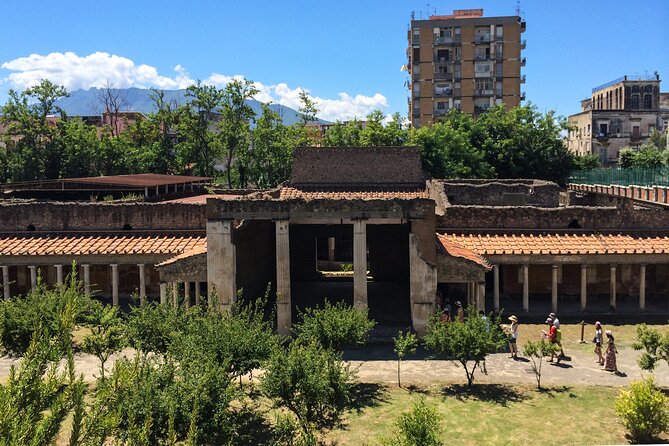
- Villa di Poppea’s fresco focus: you spend real time on the painted walls, not just a quick walk-by.
- Stabiae walking experience: you move through ancient rooms as part of an archaeological promenade.
- Myth on the walls: Villa Arianna includes a Greek-myth themed painting that’s easier to read with a guide.
- Skip-the-line, ticketed access: admission for Oplontis and Stabia villas is included, with skip-the-line tickets.
- Private-group feel: only your group participates, so you can ask questions without crowd pressure.
Oplontis and Stabiae: Why This Paired-Villa Route Works
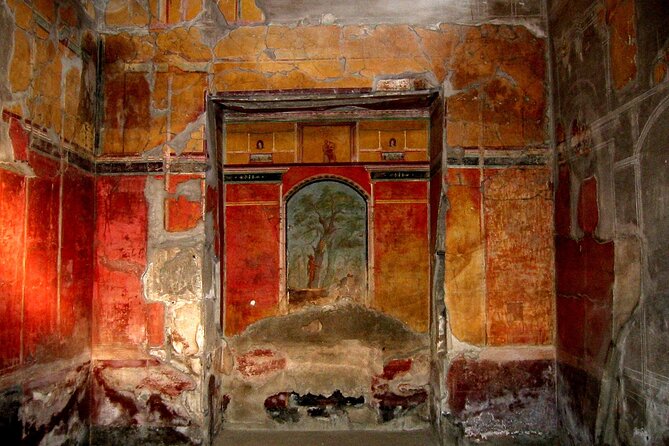
If you’ve already spent time in Pompeii and Herculaneum, you know the danger and the drama. This tour adds the human scale back in. You’re not only looking at ruins after a catastrophe; you’re seeing how wealthy Romans lived, displayed art, and used their homes as stages for taste, comfort, and status.
The clever part is the pairing. Oplontis and Stabiae complement each other. Oplontis gives you the painted intensity—wall-to-wall art and decorative detail. Stabiae shifts the mood toward rooms and myth-driven decoration, so your brain can connect the visual style to the stories people wanted to see every day.
I also like that the tour is short enough to feel focused. You’re not spending half a day commuting and waiting around. Instead, you’re spending your time in three meaningful chunks of the archaeological experience.
More of the site walked with an archaeologist
- Pompeii and Herculaneum Small Group Tour with an Archaeologist
★ 5.0 · 1,350 reviews - Skip the Line Guided Tour of Pompeii led by an Archaeologist
★ 5.0 · 703 reviews - Pompeii Private Tour with an Archaeologist and Skip The Line – 3 hours
★ 5.0 · 564 reviews
Your 3-Hour Plan: Start at Oplontis, End with Stabiae’s Promenade
This runs for about 3 hours, and it’s built around three stops. You’ll begin at Scavi di Oplontis – Villa Poppea in Torre Annunziata and finish at Scavi di Stabia – Villa San Marco via the Passeggiata Archeologica. The tour ends after the Stabiae promenade, so your logistics at the end matter.
Timing is part of the design. Oplontis is the longer stop (about 1 hour), because that’s where the frescoes get center stage. Then Stabiae comes in two equal, shorter visits (about 30 minutes each), which works well because the art themes and room layouts are easier to grasp when you’re not rushing.
One practical note: the meeting points are near public transportation, which helps if you’re not using private car service. But because the tour starts and ends in different places, plan how you’ll get back after Stabiae.
Villa di Poppea at Oplontis: Where the Frescoes Do the Talking
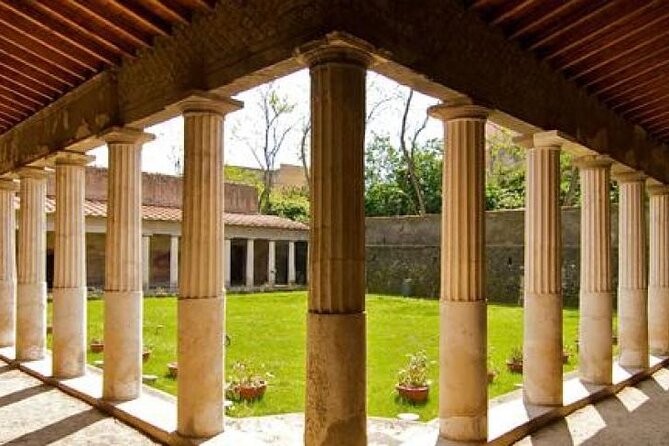
Villa di Poppea (Oplontis) is the anchor of the trip. Expect amazing, detailed frescoes and a guided look that turns decoration into information. Roman wall paintings aren’t just pretty backgrounds—they tell you how the owner wanted rooms to feel, what stories they liked, and how they framed daily life.
Your guide’s job here is crucial. Without one, it’s easy to see fragments and miss relationships between scenes and architectural features. With the archaeologist-led commentary, you get help reading the painted space—how it links to the building, and what kinds of themes were popular in this part of the Vesuvian area.
This stop is listed at about 1 hour, and that’s about the right pace. Long enough to slow down and look carefully, short enough that you still have energy for Stabiae afterward. If you care about Roman art, this is the moment you’ll probably want to linger over in your memory.
Drawback to consider: the frescoes are weather- and light-sensitive to view, and some details can be harder to spot if you’re not following the guide’s pointing and pacing. If you want the most out of it, keep close when your guide moves to the next painted section.
Villa San Marco in Stabiae: Walking Through Ancient Rooms
In Stabiae, you’re not just looking at ruins—you’re walking along the ancient villa rooms as part of an archaeological promenade. Villa San Marco is the first Stabiae stop, at about 30 minutes.
What makes this work is the contrast to Oplontis. At Oplontis, the frescoes take over the conversation. At Villa San Marco, room layout and movement through spaces becomes the story. You get a physical sense of how spaces connect, where people would have stood, and how a villa could be designed for social life and private retreat at the same time.
This stop is also marked as admission free, but don’t treat that as “less important.” In practice, the guide’s interpretation matters most when the visit is short. In other words: the time you’re spending isn’t just for entry—it’s for orientation and understanding what you’re seeing.
If you’re the kind of traveler who likes to connect art to architecture, you’ll likely enjoy this phase. It’s where the tour starts to feel like a real route through Roman domestic life rather than three separate sightseeing stops.
Villa Arianna: Greek Myth in Wall Painting Form
Next comes Villa Arianna, again about 30 minutes. The big hook here is the Greek myth described in wall painting. This is one of those moments where knowing the theme changes your interpretation. A myth in a private home isn’t neutral decoration; it’s a message—about culture, education, and taste.
Because the tour keeps each Stabiae visit relatively short, it helps you focus. You’re there to notice the mural concept, understand how it sits within the room, and connect it back to the villa’s overall style. You don’t need hours to get a meaningful experience if your guide helps you read the key elements.
This is also a good stop for photo-minded travelers, since myth scenes tend to have clear focal points. One reason the tour gets strong feedback is that guides take time with questions and can pause so you can capture what you came for.
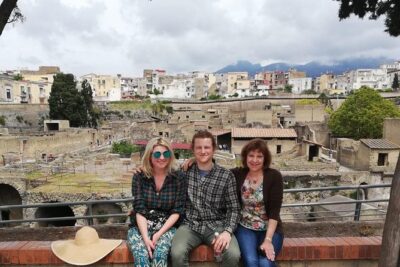
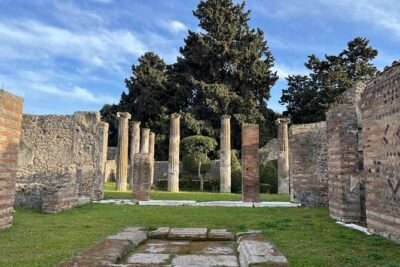
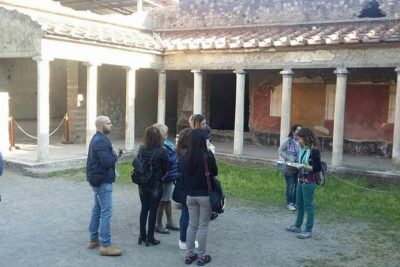
The quieter villas at Oplontis and Stabiae
How the Archaeologist and Licensed Guide Improve What You See
This isn’t a generic walk-and-point tour. You get guided interpretation from a professional archaeologist and licensed guide, and that’s the difference between seeing broken walls and actually understanding what you’re looking at.
In Oplontis, the archaeologist’s commentary helps you notice how frescoes are placed, what architectural surfaces they belong to, and how details fit together. In Stabiae, the guide’s job is to help you read the villa rooms like a designed space, not just a collection of fragments.
There’s also a human side that matters on shorter tours. On at least one experience, the guide was willing to take a few photos while the group moved, and to keep the pace friendly as people arrived at each stop. That’s small, but it changes the feel of the tour—less rushing, more shared attention.
If you’re the sort of traveler who has read about Roman history but wants the “so what” explained in plain terms, this format is built for you.
Price and Value: Is $226.37 Worth It?
At $226.37 per person, this is not the cheapest way to see Pompeii-area villas. So you should ask what you’re really paying for.
Here’s the value math that matters:
- Guidance by a professional archaeologist and licensed guide
- Skip-the-line tickets included
- Admission handled for Oplontis and Stabia villas
- A format that keeps the total visit to about 3 hours, so you’re buying focus more than time
Skip-the-line access sounds like a marketing phrase until you’re standing at an entry point with a schedule to keep. When time is limited, and you’re doing multiple sites, that convenience becomes real value.
You also get a private-group style experience, meaning you’re not sharing your guide’s attention with strangers in a large crowd. That’s a big deal when the experience is interpretation-heavy.
So is it worth it? If you care about Roman villas, wall art, and getting explanations that turn ruins into lived-in meaning, the price likely feels fair. If you mainly want independent wandering time, you might find a lower-cost option better suited.
Logistics: Getting There, Staying Flexible, and Finishing in Stabiae
You’ll start at Scavi di Oplontis – Villa Poppea and end at Scavi di Stabia – Villa San Marco after the Passeggiata Archeologica. That means you’re doing an A-to-B route, so think about your return plan early.
Since the tour doesn’t include private transportation or meals, you’ll want to plan food and timing around your own schedule. Also, this is an outdoor archaeological experience, so dress for walking and changing light.
One more practical point: the tour depends on site operations. In one case, Stabiae visit time got affected by site hours, and the operator compensated with a more in-depth experience at Oplontis. That’s a solid sign of flexibility. Still, I’d personally treat time slots as something to confirm with the company before you lock in your day.
Who This Tour Suits Best
This tour is a strong match if you:
- Love Roman art and want help reading frescoes
- Prefer guided interpretation over self-guided wandering
- Want a focused Pompeii-area experience without spending the whole day moving between sites
- Like myth and storytelling shown through visual design
It also makes sense if you’ve already done Pompeii and Herculaneum and you want your next step to feel like a deeper architectural and artistic contrast.
For people who want maximum walking time, you might wish it were longer than 3 hours. But for the sweet spot of art + rooms + context in one go, this length is well chosen.
Should You Book This Oplontis & Stabiae Tour?
If you’re torn, I’d use this quick checklist.
Book it if:
- You care about Villa di Poppea’s frescoes and want expert help noticing what matters.
- You like the idea of walking through Stabiae rooms and connecting them to themes like Greek myth.
- You value skip-the-line access and having tickets plus a guide handled for you.
Skip it or reconsider if:
- You don’t want a guided format and prefer independent sightseeing.
- Your schedule is very strict and you can’t tolerate any site-hour changes.
Overall, this is a good-value choice for people who want more than a snapshot. With an archaeologist-led approach and a tight route, you leave with the sense that you actually understood what the villas were trying to communicate.
FAQ
How long is the tour?
It lasts about 3 hours.
What language is the tour offered in?
The tour is offered in English.
Where does the tour start and end?
It starts at Scavi di Oplontis – Villa Poppea (Via Sepolcri, Torre Annunziata) and ends at Scavi di Stabia – Villa San Marco (Passeggiata Archeologica, Castellammare di Stabia), after the archaeological promenade.
Is admission included?
Yes. Admission tickets to Oplontis Villa and Stabia villas are included, along with skip-the-line tickets.
Do I need to arrange transportation or meals?
Private transportation and meals are not included.
Is this a private tour?
Yes. It’s a private tour/activity with only your group participating.
Is there a mobile ticket?
Yes, the tour includes a mobile ticket.
Is cancellation free?
Free cancellation is available. You can cancel up to 24 hours in advance for a full refund.
More Tour Reviews in Pompeii
- Pompeii Small Group Tour with an Archaeologist★ 5.0 · 6,593 reviews
- Discover the Ancient Ruins of Pompeii: Day Trip from Rome★ 3.5 · 2,247 reviews
- Pompeii and Herculaneum Small Group Tour with an Archaeologist★ 5.0 · 1,350 reviews
- Skip the Line Guided Tour of Pompeii led by an Archaeologist★ 5.0 · 703 reviews
- Pompeii Ticket + Tour with Optional Tasting Experience at Pompeii★ 5.0 · 663 reviews
Oplontis and Stabiae, Quieter Villas
- Fast Access Exclusive Private Ancient Pompeii Herculaneum & Oplontis Guided Tour★ 5.0 · 8 reviews
- Full Day Private Tour to Pompeii, Herculaneum and Oplontis★ 4.5 · 7 reviews
- Tour in the villa of Poppea with an archaeologist★ 5.0 · 6 reviews
More Tours Led by an Archaeologist
- Pompeii Small Group Tour with an Archaeologist★ 5.0 · 6,593 reviews
- Pompeii and Herculaneum Small Group Tour with an Archaeologist★ 5.0 · 1,350 reviews
- Skip the Line Guided Tour of Pompeii led by an Archaeologist★ 5.0 · 703 reviews
- Pompeii Private Tour with an Archaeologist and Skip The Line – 3 hours★ 5.0 · 564 reviews
- Pompeii Skip-the-line Tour with Archaeologist Guide★ 5.0 · 559 reviews
Just reviewed: more Pompeii tours and day trips





Pompeii Archaeologist-Led Tours, compared.
 ★ 4.8Entry Ticket and Guided Tour with an ArchaeologistFrom $3519,459 reviews
 ★ 4.8Small Group Tour with an ArchaeologistFrom $4012,264 reviews
★ 5.0Pompeii Small Group Tour with an ArchaeologistFrom $356,593 reviews
 ★ 5.0Pompeii and Herculaneum Small Group Tour with an ArchaeologistFrom $771,350 reviews
 ★ 5.0Skip the Line Guided Tour of Pompeii led by an ArchaeologistFrom $95703 reviews
 ★ 4.9Exclusive Tour with Archaeologist and Entry TicketsFrom $50634 reviews
 ★ 5.0Pompeii Private Tour with an Archaeologist and Skip The Line – 3 hoursFrom $302564 reviews
 ★ 5.0Pompeii Skip-the-line Tour with Archaeologist GuideFrom $71559 reviews
Browse the lists this tour appears in