
Reviewed · POMPEII PRIVATE GUIDED TOURS
Private Pompeii & Ravello Day Trip via Amalfi Coast (Tickets)
Pompeii feels unreal in daylight, and I love the hotel pickup plus the chance to add a licensed Pompeii guide with skip-the-line tickets. The trade-off is the price, and in peak heat or heavy traffic you may feel a bit rushed at the Amalfi stops.
This is built for people who want their day handled end to end: an English-speaking driver, live commentary on the drive, and a full day where you can spend energy on the views. In Pompeii, you can go at your own pace or upgrade for a private, tailored walkthrough that helps you make sense of what you’re seeing.
You’ll bounce between ancient city streets and modern cliffside towns, with enough variety to keep the day from feeling repetitive. It’s a strong pick if you’re short on time and want the best “wow” hits without figuring out trains, parking, and lines.
In This Review
- Key things that make this day trip work
- How the day runs: pickup, driving, and avoiding time sinks
- Entering Pompeii through Porta Marina: where the story starts
- Temple of Apollo and the Forum: religion and civic life in the same frame
- The Macellum and the Forum Baths: everyday routines, preserved
- Grand homes: House of the Faun and House of the Vettii
- The residential/commercial block above street level: see the city as a system
- Via dell’Abbondanza and Teatro Grande: the city’s main artery and its entertainment
- Antiquarium and the Basilica: context that makes the ruins click
- Guide upgrade vs self-guided Pompeii: what you actually get
- The Amalfi Coast drive: a scenic day done without the stress
- Ravello: a calmer high point with cathedral square and two garden stops
- Villa Rufolo: a Grand Tour stop with Wagner in the backstory
- Villa Cimbrone Gardens: the Terrace of Infinity payoff
- Minori and Maiori: smaller coast stops that feel more local
- Cetara and Vietri sul Mare: fishing traditions and ceramic color
- Timing, heat, and walking in Pompeii: the real comfort checklist
- Price and value: what $508.61 buys you in real terms
- Who this private day trip fits best
- Should you book this private Pompeii and Ravello tour?
- FAQ
- FAQ
- How long is the Pompeii and Ravello day trip?
- Is pickup included?
- Is this a private tour or a group tour?
- What Pompeii access is included?
- Is there an option for a private guide in Pompeii?
- Are tickets mobile?
- Is lunch included?
- Does the driver speak English?
- What should we wear or bring for Pompeii?
- What if someone in our group doesn’t want to walk much in Pompeii?
- Is free cancellation available?
Key things that make this day trip work
- Hotel pickup and a full-day driver: you spend less time wrestling logistics and more time looking out the window.
- Pompeii options: self-guided vs guide upgrade: choose your pace, then add a licensed guide when you want deeper context.
- Skip-the-line access in the guide option: Pompeii Express tickets are included only when you select the Pompeii guide upgrade.
- Ravello plus real coast towns: you get a quieter Amalfi base in Ravello, then smaller stops like Minori, Maiori, Cetara, and Vietri sul Mare.
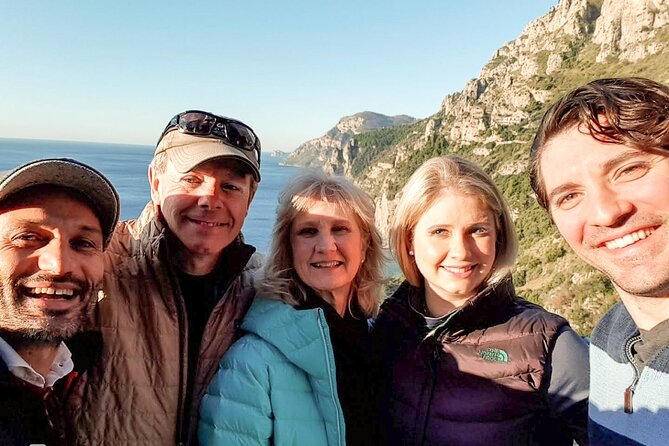
- Guides that tailor the tempo: people mention great results with kids, like an engaging style from guides such as Viviana, Umberto, Lavinia, or Fabrizio.
How the day runs: pickup, driving, and avoiding time sinks
This is a private day trip, so it’s just your group in the vehicle. You’ll get pickup from places like Naples, Sorrento, Pompeii, and even cruise terminals and ports—handy if you’re doing this as a cruise excursion.
Expect about 8 to 9 hours total. That includes driving time along the Amalfi Coast (expect curves, tunnels, and slowdowns when traffic thickens), plus your time inside Pompeii and at each town stop.
One practical trick: the schedule can be rearranged to fit your priorities. In practice, that often means going to the Amalfi side first to help with crowds and comfort, then heading into Pompeii when the morning crush eases. If you have flexibility in your group, this can make the day feel less like a sprint.
Also, the route is photo-stop friendly. A private driver can slow down at the spots you actually want, instead of watching a bus roll past the one viewpoint you came for.
Prefer your own guide? More private tours
- Pompeii private tour with an Official Guide
★ 5.0 · 631 reviews - Pompeii Private Tour with an Archaeologist and Skip The Line – 3 hours
★ 5.0 · 564 reviews - Visit in Pompeii – Pompeii Private Tour with Ada
★ 5.0 · 436 reviews
Entering Pompeii through Porta Marina: where the story starts
Your Pompeii day begins at Porta Marina, one of the main gates. Crossing through it gives you an immediate sense of arrival—this wasn’t an open-air museum. It was a city edge where people came and went, day after day.
From there, the route typically threads into Pompeii’s core “what life looked like” spaces. The big advantage of a guided or upgrade option is not that you see more ruins. It’s that you understand what you’re looking at, and you spend less time wandering around trying to connect the dots.
If you choose the simpler ticket approach without the guide upgrade, you’ll still have plenty to do. Pompeii is vast, and even with the top stops, it helps to have a plan for how you like to move—slow and photographic, or faster and structured.
Temple of Apollo and the Forum: religion and civic life in the same frame
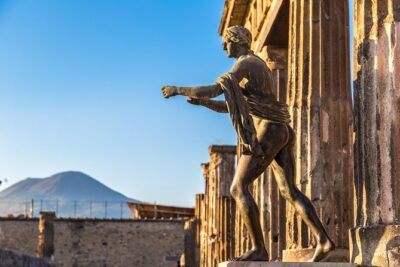
The Temple of Apollo brings early history to the front. Even if you only glance at the columned portico and the altar area, you get the sense that religion was built into the city’s daily rhythm. The temple’s Greek influence also matters because Pompeii wasn’t one single culture—it was a blend of traditions that evolved over time.
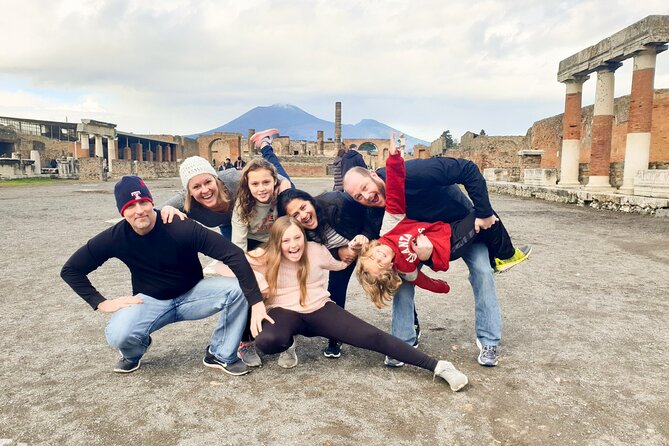
Then you hit the Forum, Pompeii’s civic heart. This open plaza is one of the strongest “imagine it alive” spots in the whole park. Even without roofs, you can read the layout: politics, markets, religion, and public life all funnel through this central space. The Forum is also visually dramatic because it frames views toward Mount Vesuvius, making the volcano feel connected to everyday life rather than just a distant threat.
The Macellum and the Forum Baths: everyday routines, preserved
The Macellum (the main food market) is one of the best places to wrap your head around daily life. As you move through the porticoes and stalls, you can picture the shopping and social chatter that went along with meals. It also shows how organized the city was—marble counters, basins, and storage areas hint at logistics, not just commerce.
Next, the Forum Baths show another daily rhythm: cleaning, relaxing, and meeting people. The sequence of changing rooms and hot plunge areas is still easy to follow, and the surviving vaulted ceilings help you understand the engineering behind Roman bathing culture. This is one of those stops where you’ll feel the “how did they do that?” moment—then it fades into a real sense of routine.
Grand homes: House of the Faun and House of the Vettii
Pompeii’s wealthy homes are where the city flexes. The House of the Faun feels palace-like, stretching across an entire city block. You’ll see spacious courtyards, columned gardens, and high-quality mosaics. The famous “Dancing Faun” connects the house to art history, but the real point is scale—this wasn’t a small private residence.
Then the House of the Vettii offers a different flavor: vivid frescoes and a layout that feels more like life lived at home. You can stand in front of mythological and playful wall paintings and realize how much decoration mattered to status, storytelling, and comfort. If you care about visual details, this is the segment that keeps giving as you slow down.
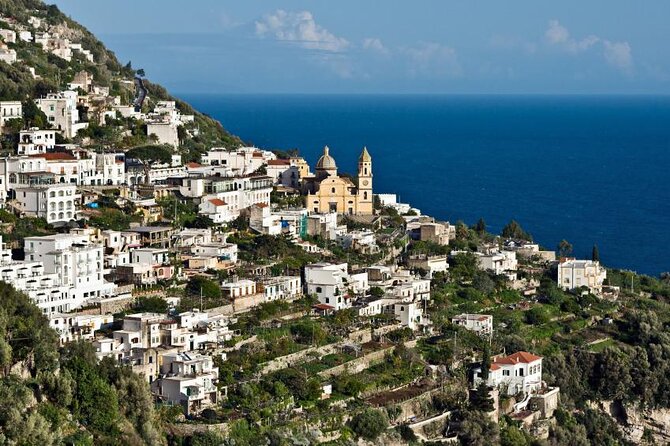
More runs out to the Amalfi Coast

The residential/commercial block above street level: see the city as a system
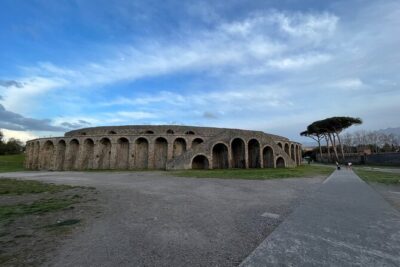
One of the most interesting ways Pompeii is presented is through raised walkways over excavated areas. This makes it easier to observe an active city layout—rooms, courtyards, ovens, and building materials—without stepping down into the fragile archaeology.
You’ll also get a peek at how densely mixed residential and commercial life was. Think homes beside shops and workshops, not “one building per purpose.” It’s a big reason Pompeii feels more like a functioning town than a pile of stone.
Via dell’Abbondanza and Teatro Grande: the city’s main artery and its entertainment
Walking along Via dell’Abbondanza helps you grasp the flow between major sites. It’s the kind of street where you can almost feel the movement: shops, bakeries, bars, and workshops serving people traveling between the Forum and the amphitheater.
Then you reach the Teatro Grande, an open-air theater carved into the slope. The acoustics and seating layout still work, which makes it one of the most memorable public spaces to experience. Even without a performance, you can feel the structure designed for crowd attention—elite patrons below, everyday spectators higher up.
Antiquarium and the Basilica: context that makes the ruins click
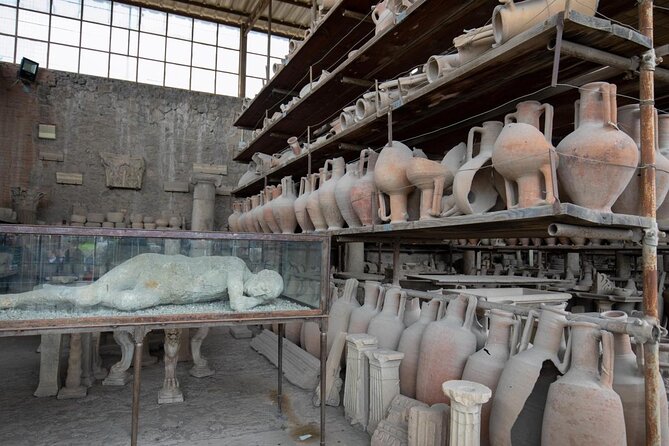
The Antiquarium is your context hub. It’s where the site’s story becomes easier to understand. You’ll see everyday objects, fresco fragments, and more—plus display pieces that help explain what you’re seeing across the park.
Think of it like the “orientation” moment. If you’re prone to getting lost in the ruins, it helps to visit with intention: look at objects first, then return to the city spaces with better eyes.
Another major stop is the Basilica, a public building used for civic business and law courts. Even roofless, you can still imagine how magistrates and citizens negotiated disputes and settled matters. It’s one of the clearest reminders that Pompeii wasn’t just entertainment and luxury—it ran on institutions.
Guide upgrade vs self-guided Pompeii: what you actually get
This tour is flexible. In Pompeii, you can either tour independently or upgrade for a private Blue Badge guide. If you do upgrade, you also receive Pompeii Express skip-the-line tickets.
Here’s the value math: independent tickets can be great if you’re happy reading signage and moving at your own tempo. But Pompeii’s depth is what makes it hard without help. A good guide turns “I see columns and walls” into “I know what this was for and who used it.”
I also like the practical benefits people describe: guides who help you manage crowd flow, spot the right photo angles, and keep the story coherent even when you’re moving quickly. Names that come up include Viviana, Umberto, Lavinia, and Pasqual, plus guides who can handle families with kids, adjusting explanations so children stay interested.
One more practical point: admission fees at Pompeii are not included unless you select the guide option. So if you choose the self-guided route, budget for that entry on top of the tour price.
The Amalfi Coast drive: a scenic day done without the stress
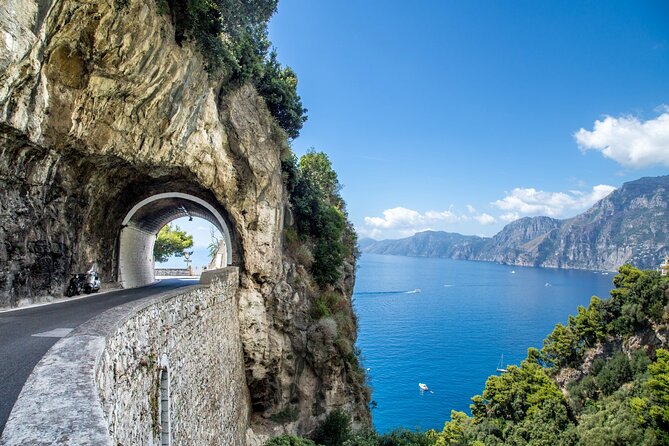
The Amalfi Coast route is the headline for the driving portion. You’ll be on a cliffside road where the view changes constantly—harbors down below, villages perched above, and roads that curve like they’re daring you to take the next photo.
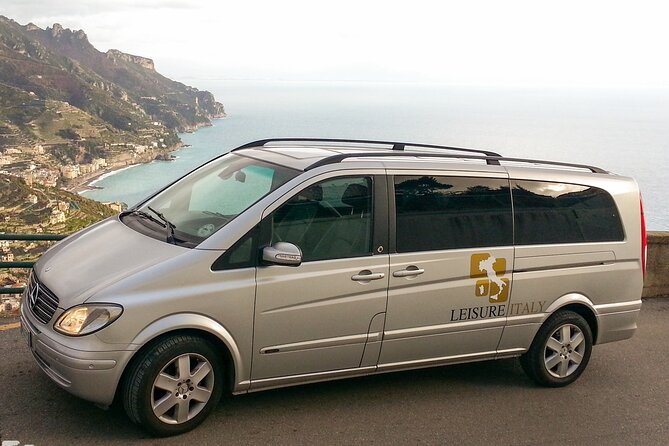
A private driver matters here. The roads are narrow and windy, and you don’t want your attention divided between traffic and navigation. People often mention feeling safer and more relaxed because the driver is experienced with the route and timing.
This is also where the day earns its “private” label. Instead of being stuck at a rigid bus schedule, you can pause for viewpoints when they look right and skip them when they don’t.
Ravello: a calmer high point with cathedral square and two garden stops
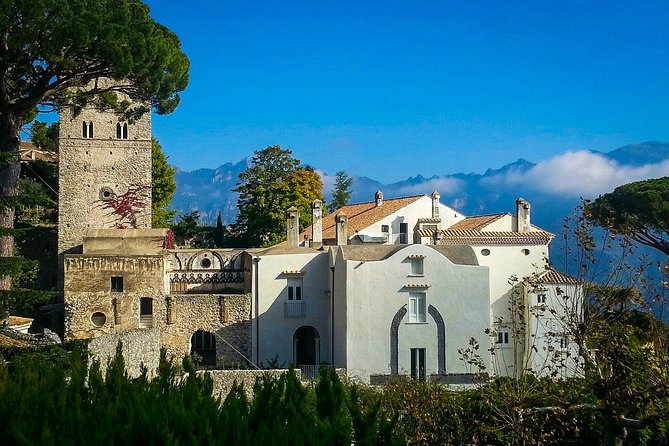
Ravello is often where the day slows down in a good way. It sits high above the coast, so the town feels quieter and more refined than the seaside strips below.
You get about 1 hour of free time to explore at your own pace. The key stop is Piazza Duomo, anchored by Ravello’s 11th-century Cathedral, with bronze doors and an interior tied to the maritime Republic of Amalfi.
Ravello is also where I’d plan for wandering. Narrow lanes and artisan shops pop up around the square, and you can pick up ceramic, linen, and lemon-based items without the constant crush you get in the most famous beaches.
Villa Rufolo: a Grand Tour stop with Wagner in the backstory
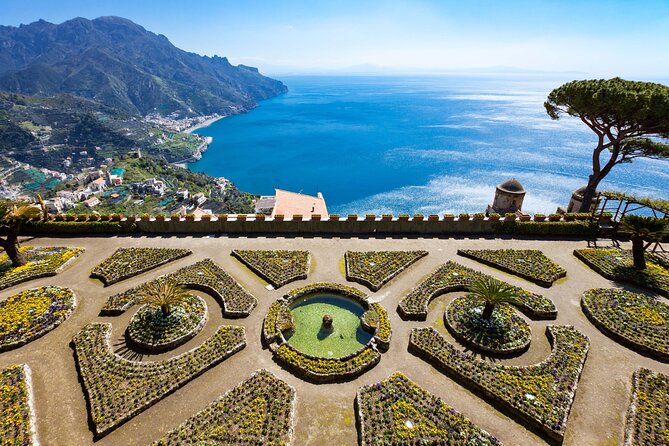
Villa Rufolo is close to the main square and typically gets about 15 minutes. Its cloistered courtyards and Neo-Moorish arches feel like a movie set, and the tiered gardens open to huge sea views.
The best-known detail is Richard Wagner’s connection. He was inspired by these gardens for scenes connected to Parsifal, and that artistic link is part of why the villa became a stop for Grand Tour travelers.
Because the visit is short, treat this as a “see and absorb” stop, not a long stroll. If you want your time to feel unhurried, focus on views and the main garden paths rather than trying to tick every corner.
Villa Cimbrone Gardens: the Terrace of Infinity payoff
Villa Cimbrone is where Ravello earns its big reputation. You typically get 30 minutes here, enough for the core walk and the big viewpoint.
The signature feature is the Terrace of Infinity, where the balustrade lined with marble busts makes the edge feel like it drops straight into the sea and sky. You’ll see why people plan their whole Ravello trip around this moment.
In short: it’s a classic “stand here, then stand somewhere else for the same view in better light” stop. If you go in clear weather, it can be the most photogenic part of the day.
Minori and Maiori: smaller coast stops that feel more local
After Ravello, the schedule keeps moving along the coast with shorter town breaks.
Minori gets about 30 minutes. It’s known as the City of Taste, with a laid-back seaside feel and pastries that draw you toward the snack counter. There’s also Roman context—Minori once served as a Roman maritime village, and remnants of a 1st-century villa can be found in town. Even if you don’t go looking for ruins, the atmosphere is the draw.
Then comes Maiori, about 30 minutes as well. Compared with its cliffier neighbors, Maiori feels more open with one of the longest beaches on the Amalfi Coast. You’ll find a wide promenade, relaxed cafés, and an easy-to-walk waterfront section before you start seeing lemon terraces and mountain paths behind town.
These stops won’t replace a beach day. But they do give you a taste of everyday Amalfi Coast life—especially if you’re tired of rushing.
Cetara and Vietri sul Mare: fishing traditions and ceramic color
If you want the Amalfi Coast beyond the postcard towns, these two stops help.
Cetara is a small fishing village, usually about a short scenic stop from the road. It’s centered on the daily catch, with a tiny harbor and a medieval watchtower above. The local anchovy tradition is part of the identity here, and it’s the kind of place where you understand the coast as work, not just scenery.
Vietri sul Mare is the artistic gateway. Even when you’re only seeing it from the road, the bright ceramic tiles and the domed church stand out. Vietri is known for distinctive hand-painted ceramics, and you’ll still see that craft in shopfronts and decorative details.
These stops are quick, but they add variety. You’re not only chasing views—you’re also seeing what locals build and sell.
Timing, heat, and walking in Pompeii: the real comfort checklist
Pompeii is walk-heavy. The good news is that the tour is designed for a moderate physical fitness level, and you’re not expected to do everything at once.
Still, bring the right setup. Comfortable shoes are a must. In summer, you’ll also want sun protection. Pompeii doesn’t forgive bad shoe choices.
There’s also an important practical backup. If your group member doesn’t want to walk much inside Pompeii, you’ll find cafés and gift shops right in front of the ticket office area. It’s one of those details that makes the tour more flexible than it looks on paper.
Heat can also affect pacing. People often mention July as especially intense, and heavy traffic on weekends can shrink your time at some Amalfi towns. The fix is timing: start early when possible and keep your expectations realistic about how long each stop can last.
Price and value: what $508.61 buys you in real terms
At $508.61 per person, this is not a budget option. You’re paying for private transportation, a full day with an English-speaking driver, live commentary, and the convenience of pickup from where you’re staying or where your cruise docks.
The value spikes if you plan to upgrade for Pompeii. With the guide option, you get the Pompeii Express skip-the-line tickets and a private Blue Badge guide. That’s where the extra cost starts to make sense, because Pompeii is hard to fully appreciate without context.
If you choose the self-guided path, you can still have a great day, but you may miss some of the connections that make Pompeii feel alive. Also, Pompeii admission fees are only included in the guide option, so check that before you assume everything is covered.
Finally, this tour isn’t built as a long beach day. If your main goal is lying on a towel for hours, Minori and Maiori stops might feel too short. The day is more about ruins, viewpoints, and coastal towns than beach time.
Who this private day trip fits best
This is a great fit if you:
- Want a single private day that covers both Pompeii and the Amalfi Coast
- Prefer driving with viewpoints and commentary rather than coordinating buses
- Care about understanding Pompeii, especially if you’re visiting for the first time
- Travel with kids who do better with a tailored explanation (many guides are noted for engaging families)
It’s also a good pick for cruise passengers with limited time. The pickup-from-port setup reduces friction, and the itinerary includes enough variety to make the day feel full without being chaotic.
If you’re very budget-focused or you truly don’t care about stories and just want to wander, you may find a cheaper independent approach works. But if you want the day managed and you’d like Pompeii to click, the guide upgrade is often the difference between seeing ruins and understanding them.
Should you book this private Pompeii and Ravello tour?
Book it if you want a smooth, high-effort day that combines Pompeii’s top spaces with the Amalfi Coast’s best “view moments,” and you’re willing to pay for convenience and private pacing. I’d especially recommend it if you’re leaning toward the Pompeii guide upgrade, because Pompeii is the part where context changes everything.
Skip or rethink it if:
- You’re mainly after a long beach stretch
- You’re doing this during peak traffic days and you’d rather stay flexible than accept possible timing pressure
- You want the lowest price and you’re happy handling Pompeii logistics on your own
FAQ
FAQ
How long is the Pompeii and Ravello day trip?
It runs about 8 to 9 hours.
Is pickup included?
Yes. Pickup is offered from hotels and other meeting locations like Naples, Sorrento, Pompeii, train stations, airports, and cruise terminals/ports.
Is this a private tour or a group tour?
This is a private tour/activity, meaning only your group participates.
What Pompeii access is included?
Pompeii Express skip-the-line tickets are included only if you select the Pompeii guide option. Pompeii admission fees are also only included if you select that guide option.
Is there an option for a private guide in Pompeii?
Yes. You can either explore Pompeii independently or upgrade for a private Blue Badge guide in Pompeii.
Are tickets mobile?
Yes, mobile tickets are offered.
Is lunch included?
No, lunch is not included.
Does the driver speak English?
Yes. The tour includes private transportation with an English-speaking driver and live commentary on board.
What should we wear or bring for Pompeii?
Comfortable shoes are recommended, and sun gear is suggested during summertime.
What if someone in our group doesn’t want to walk much in Pompeii?
There are cafés and gift shops right in front of the ticket office area for easier break options.
Is free cancellation available?
Yes. Free cancellation is available up to 24 hours in advance of the experience start time for a full refund.
More Tour Reviews in Pompeii
- Pompeii Small Group Tour with an Archaeologist★ 5.0 · 6,593 reviews
- Discover the Ancient Ruins of Pompeii: Day Trip from Rome★ 3.5 · 2,247 reviews
- Pompeii and Herculaneum Small Group Tour with an Archaeologist★ 5.0 · 1,350 reviews
- Skip the Line Guided Tour of Pompeii led by an Archaeologist★ 5.0 · 703 reviews
- Pompeii Ticket + Tour with Optional Tasting Experience at Pompeii★ 5.0 · 663 reviews
More Amalfi Coast Days
- Scooter rental on the Amalfi Coast★ 5.0 · 90 reviews
- Official Ape Dolce Vita Tour – Amalfi Coast★ 5.0 · 52 reviews
- Full Day Private Tour of Pompeii and the Amalfi Coast★ 5.0 · 45 reviews
- Full Day Private Tour – Positano Amalfi Ravello or Sorrento★ 5.0 · 41 reviews
- Private Pompeii & Amalfi Coast Tour: Sorrento & Positano -Tickets★ 5.0 · 33 reviews
More Private Guides at the Site
- Pompeii private tour with an Official Guide★ 5.0 · 631 reviews
- Pompeii Private Tour with an Archaeologist and Skip The Line – 3 hours★ 5.0 · 564 reviews
- Visit in Pompeii – Pompeii Private Tour with Ada★ 5.0 · 436 reviews
- Pompeii Private Tour with an Archaeologist and Skip The Line★ 5.0 · 391 reviews
- Pompeii Vineyard Escape: Private Wine Tasting & Lunch★ 5.0 · 329 reviews
Just reviewed: more Pompeii tours and day trips




Pompeii Private Guided Tours, compared.
 ★ 4.9Pompeii Ruins Private Tour with Optional Skip-the-Line EntryFrom $254732 reviews
 ★ 5.0Pompeii private tour with an Official GuideFrom $107631 reviews
 ★ 5.0Pompeii Private Tour with an Archaeologist and Skip The Line – 3 hoursFrom $302564 reviews
 ★ 5.0Visit in Pompeii – Pompeii Private Tour with AdaFrom $229436 reviews
 ★ 5.0Pompeii Private Tour with an Archaeologist and Skip The LineFrom $375391 reviews
 ★ 5.0Pompeii Vineyard Escape: Private Wine Tasting & LunchFrom $66329 reviews
 ★ 5.0Private Day Tour to Vesuvius, Herculaneum & Pompeii with Pick UpFrom $120279 reviews
 ★ 5.0Guided Small Group Tour Max 6 People with Private OptionFrom $168269 reviews
Browse the lists this tour appears in