
Reviewed · POMPEII PRIVATE GUIDED TOURS
Private Pompeii & Amalfi Coast Tour: Sorrento & Positano -Tickets
Roman streets and cliff roads in one day. This private tour strings together Pompeii’s best sights with the photo-famous Amalfi Coast drive, then gives you time to wander Sorrento and Positano at your own pace.
I like that you get priority access to Pompeii and a focused walking route, not a random shuffle through crowds. I also love the pacing for families and mixed groups, because the experience can turn the ruins into games and questions (I’m especially impressed by how guide Giuseppe keeps kids engaged without steamrolling adults).
The main thing to consider is the day is long—expect a moderate amount of walking in Pompeii and some hills and stairs, so wear proper shoes and plan for heat.
In This Review
- Key Highlights Worth Your Time
- Why This Pompeii + Amalfi Coast Combo Feels Efficient
- Pompeii First: Priority Entry and the Antiquarium Reset
- The Forum, Basilica, and Macellum: How Daily Life Worked
- Baths, Markets, and the Social Side at Terme del Foro
- Religion and Power: Temple of Apollo and the City Gate
- Elite Homes and a Neighborhood in Mid-Routine
- Teatro Grande: The Best Place to Imagine the Crowd
- The Amalfi Drive on SS145: Views That Take the Stress Away
- Sorrento at Your Own Pace: Piazza Tasso to Corso Italia
- The Amalfi Coast’s “Every Bend Is a View” Feeling
- Positano: Spiaggia Grande and the Iconic Church
- Price and Value: What $486.47 Buys You
- Who This Tour Fits Best (and Who Might Want a Different Plan)
- Should You Book This Private Pompeii & Amalfi Coast Tour?
- FAQ
- How long is the Private Pompeii & Amalfi Coast Tour?
- Where does pickup happen?
- Is the tour in English?
- What’s included with Pompeii entry?
- Is mobile ticketing used?
- What transportation is used?
- How much walking is involved inside Pompeii?
- What about lunch?
- Do I need a passport?
- Can I cancel for a full refund?
Key Highlights Worth Your Time
- Priority access to Pompeii keeps the day moving so you can spend more minutes where it matters.
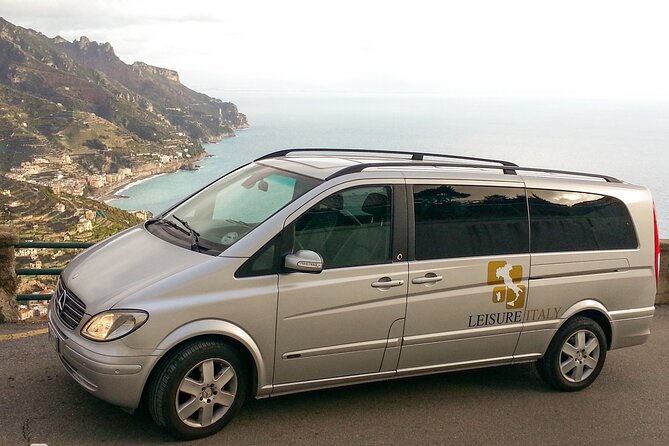
- Mercedes minivan with A/C plus live English commentary makes the coast drive less stressful.
- Pompeii for kids option works best for ages 6–11 and turns the ruins into an activity.
- Smart Pompeii stops cover forum life, religion, markets, baths, and elite homes.
- Sorrento and Positano on your own lets you shop, snack, or just linger by the sea.
- Photo stops on the Amalfi Drive give you classic Bay of Naples views without frantic navigating.
Why This Pompeii + Amalfi Coast Combo Feels Efficient
This is one of those days that’s efficient without feeling rushed. You start in Pompeii, where having skip-the-line entry and a guided route saves real energy. Then you roll into the Amalfi Coast part—where the views do a lot of the work for you, as long as you’re in the right vehicle with room to stop and take photos.
What makes the mix work for me is the structure. Pompeii is the “slow down and look closely” portion. Sorrento and Positano are the “wander, eat, and photograph” portion. You get both moods in one day, with fewer logistics headaches than piecing it together yourself.
Prefer your own guide? More private tours
- Pompeii private tour with an Official Guide
★ 5.0 · 631 reviews - Pompeii Private Tour with an Archaeologist and Skip The Line – 3 hours
★ 5.0 · 564 reviews - Visit in Pompeii – Pompeii Private Tour with Ada
★ 5.0 · 436 reviews
Pompeii First: Priority Entry and the Antiquarium Reset
Your Pompeii visit starts with entry that’s built for time. With Pompeii Express skip-the-line tickets and priority access, you’re not stuck feeding the line monster before you even reach the ruins.
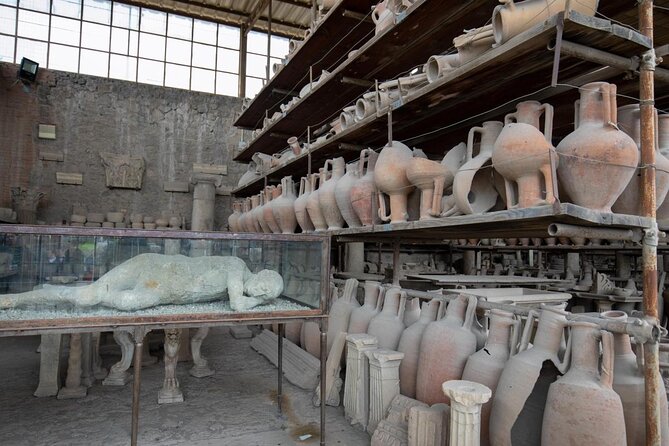
Before you even hit the streets, you pass through the Antiquarium di Pompei. This part matters more than people think. It gives you a quick grounding: statues, household items, inscriptions, jewelry, and other objects recovered from excavations. You also get context for daily life and the eruption story, plus the more emotional pieces like plaster casts and eruption material. If Pompeii feels like a bunch of broken walls for you, this stop helps it click.
Then your guide shapes the walk. The idea is not to see every single ruin—that’s impossible in one day—but to hit the city’s core themes so you leave with a mental map.
The Forum, Basilica, and Macellum: How Daily Life Worked
In Pompeii, the Forum is where civic life happened—religion, politics, and commerce all showing up in the same square. From the elevated modern walkways and terraces, you can understand the layout more easily than if you’re wandering at ground level. The viewing angle is a big deal here, because it helps you connect buildings like the Capitolium, Basilica, and the Macellum in one glance.
Right near that civic center, you’ll see the Basilica. It was a main public hall for business and justice, with tall columns and an open rectangular space where deals got negotiated and rulings were issued. This is one of those stops that makes Pompeii feel less like a museum and more like a working city.
Next comes the Macellum, Pompeii’s food market. It’s covered and organized, and that’s what makes it memorable. You get a feel for how vendors sold fish, meat, fruit, and imported goods, and you can still see the stall layout, storerooms, and the central shrine that signaled what kind of place this was.
For practical planning: these “key buildings” are short stops in a longer route, so you’re not stuck staring at the same wall for 45 minutes. It’s a tour that moves with intention.
Baths, Markets, and the Social Side at Terme del Foro

Pompeii wasn’t just work and worship. The Terme del Foro (Forum Baths) shows the city as social and recreational.
These baths had men’s and women’s sections, plus changing rooms, warm and hot halls, and a cold plunge area. The standout is the hypocaust heating system, a technical feature that still impresses because you can trace how the heating worked beneath the floors. You also get preserved stucco reliefs and vaulted ceilings, which help you visualize the atmosphere of a daily ritual—cleanliness plus conversation.
If you’re deciding whether to prioritize Pompeii’s ruins or museums, I’d pick Pompeii’s “life” stops like this bath complex. They tell you how people used the city, not just what survived it.
Religion and Power: Temple of Apollo and the City Gate
The Temple of Apollo is a near-perfect counterpoint to the civic Forum area. It’s one of the older and most important religious sites, set in an open courtyard near the Forum. The story here is about ritual and community belief—offers, guidance, and worship tied to Apollo as the god of the sun, music, and prophecy.
And before you even get too deep into the interior story, you pass through the gate area. You’ll visit Porta Marina and the surrounding defensive wall path. This is a quick stop, but it’s a smart one. It shows how Pompeii controlled access—where arrivals happened, and how people moved between the port area and the city. You can even walk along the original stone ramp and see the fortifications that greeted merchants and sailors.
A gate and a temple close together are a great reminder: Pompeii was both protected and outward-facing. It wasn’t isolated.
More runs out to the Amalfi Coast

Elite Homes and a Neighborhood in Mid-Routine

If you want Pompeii to feel personal, you need homes and streets, not only public buildings. The Casa dei Vettii is one of the top “elite life” stops. It’s a richly decorated aristocratic residence known for frescoes and a layout around atria and peristyle gardens. Even in ruins, you get the sense of wealth, taste, and the role of art in everyday life.
Then you’ll move into a block called Insula dei Casti Amanti. This one is special because the name comes from a lively fresco of a couple. What you’ll notice from the access ramps is how you can look down into workshops, storerooms, and domestic spaces without trampling fragile surfaces. You also see signs of daily life frozen mid-change—painted notices, half-finished renovations—giving the impression of a neighborhood caught in the flow right before AD 79 ended it.
This pairing is why I like Pompeii with a planned route. You get public power, private wealth, and neighborhood grit—so you see the city as a whole, not just the biggest headline structures.
Teatro Grande: The Best Place to Imagine the Crowd
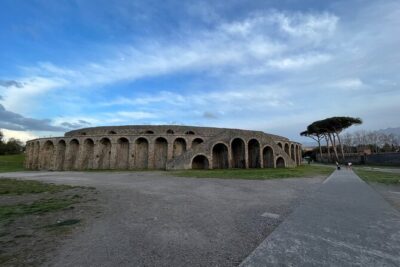
Teatro Grande is where Pompeii turns into performance. From the upper terraces and modern walkways, you can look down onto the semicircular seating tiers and the stage area. The acoustics and the views toward the city (with Mount Vesuvius in the direction of sight) help you imagine why crowds came for comedies, tragedies, and public ceremonies.
This is also a stop where standing and looking helps. If you try to photograph everything in frantic bursts, you miss the feeling. Take a few minutes to picture the sound bouncing off the space and the way audiences would have gathered for entertainment and civic events.
The Amalfi Drive on SS145: Views That Take the Stress Away
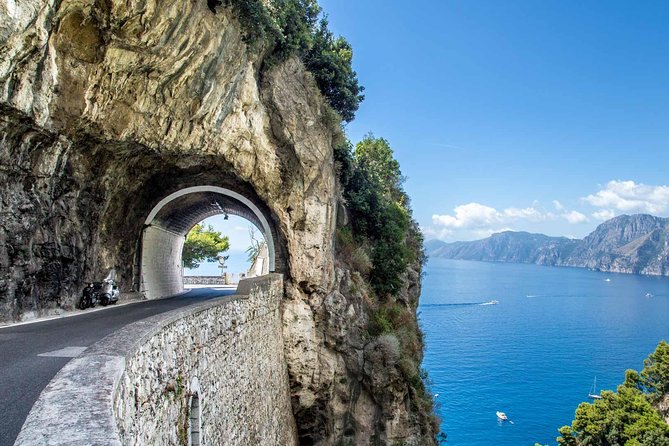
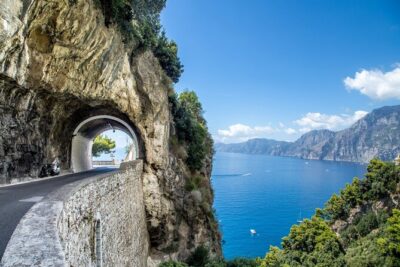
After Pompeii, you get the scenic shift. Your drive along the cliffs toward Sorrento runs on Strada Statale 145, with big Bay of Naples viewpoints from the vehicle. You can look down on terraced lemon groves, see small ports and fishing villages, and catch glimpses of Mount Vesuvius across the water.
Here’s the practical win: you’re not driving and scanning maps at the same time. You’re in an A/C Mercedes minivan with a driver and live commentary, so you can actually enjoy the “what you’re seeing” part.
Along the way, there are also built-in moments where you can snap photos. That matters, because the Amalfi Coast is famous for sudden, dramatic vistas—you want those chances to stop, not just speed past them.
Sorrento at Your Own Pace: Piazza Tasso to Corso Italia
Sorrento is the kind of place where you can wander without a strict plan—and still get a good day. You’ll have time to explore on your own in the historic center, where narrow lanes lead to piazzas and cafes.
Start with Piazza Tasso, the social hub. It’s framed by cafés and patisseries, and it naturally anchors your time—people watching, a coffee break, a quick gelato, then off to the next lane.
Next, head to Corso Italia, the main promenade. It’s practical because it’s easy to navigate and lined with shops—leather goods, limoncello producers, and everything from casual bars to boutique-style storefronts. If you want to shop without getting lost in side streets, this is a strong move.
If you want a breather, pause at the Cloister of San Francesco. It’s quieter than the main streets, with an elegant portico and a courtyard feel that mixes medieval and Renaissance elements. Even a short stop here helps reset your brain before the coast road continues.
The Amalfi Coast’s “Every Bend Is a View” Feeling
From Sorrento, the route continues along the Amalfi Drive (SS163), and it really earns its reputation. The road twists through rugged headlands and deep valleys, with lemon groves visible between towns. You also get repeated “new vista” moments as you crest curves and look down at villages perched above the sea.
What you’ll want from this part is not a strict sightseeing checklist. It’s a slow-motion photo route where you can pause for pictures and just take in the fact that towns were built where most people would refuse to drive.
Positano: Spiaggia Grande and the Iconic Church
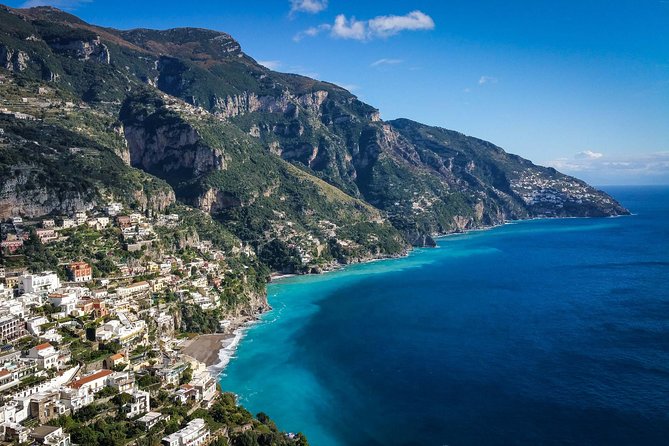
Positano comes in like a visual trick—houses cascading down toward the water, then stepping onto narrower streets full of shops and small cafés.
You’ll have time to explore around Spiaggia Grande, the main beach and the social center. It’s directly at the base of the cliffside village, with waterfront promenades and boats moving in and out. It’s a good place to plan your time because everything feels close: beach views, ferry connections to nearby towns, and that classic Positano scene where the pastel buildings frame your photos.
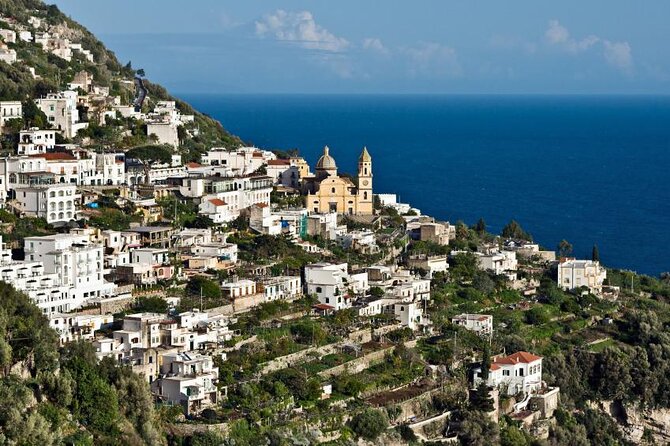
Don’t skip the Chiesa di Santa Maria Assunta, Positano’s most recognizable landmark with its colorful majolica-tiled dome. Inside, you’ll find a Baroque setting and marble altars, plus the famous 13th-century Byzantine icon known locally as the Black Madonna. The church steps are also one of the best viewpoints for looking back toward Spiaggia Grande and the harbor.
This is exactly the kind of stop that turns a “nice town” day into a “remember that for years” day.
Price and Value: What $486.47 Buys You
At about $486.47 per person, you’re paying for fewer headaches and better control over time. This price typically makes sense when you value three things:
First, skip-the-line Pompeii access. Pompeii is one of those places where queues can eat your morning. Priority entry helps you start strong.
Second, you’re getting a private transportation setup with a Mercedes minivan, A/C, and live English commentary. That’s not just comfort; it’s risk reduction. You’re not trying to coordinate meeting points and transfers across Amalfi traffic.
Third, you’re buying the guide-led structure. Pompeii is huge, and a guided highlight route helps you understand what you’re looking at without spending your limited hours guessing.
If you’re the type who likes freedom only, this might feel structured. But if you want to see a lot while keeping the day coherent, the value is solid.
Who This Tour Fits Best (and Who Might Want a Different Plan)
This works especially well if you’re traveling as a group with mixed interests—some people want ruins and context, and others just want great views and easy pacing. It also makes sense for families because the Pompeii portion can be handled with Pompeii for kids activities designed for kids ages 6 to 11.
It might not be ideal if you want a slow, museum-at-your-own-speed Pompeii day. The route is built around seeing key highlights rather than lingering for hours in one area.
And because the tour notes moderate physical fitness and includes walking inside Pompeii, plan for shoes with good traction and expect some stairs and uneven ground.
Should You Book This Private Pompeii & Amalfi Coast Tour?
Book it if you want a single-day plan that actually holds together: priority entry for Pompeii, a guided highlight route that teaches without bogging you down, and then the coast with time in Sorrento and Positano for real wandering. The private Mercedes minivan and on-board English commentary are the kind of details that make the day feel easier, not just more expensive.
Skip it if you’re hoping to do Pompeii completely at leisure or you’re trying to avoid any walking at all. Otherwise, this is a smart way to connect two of the region’s biggest wow-factors without juggling schedules.
FAQ
How long is the Private Pompeii & Amalfi Coast Tour?
It runs about 8 to 9 hours.
Where does pickup happen?
Pickup is offered from Naples, Sorrento, Pompeii, and also from hotels, vacation rentals, the train station, airport, and cruise terminal/port. You specify your pickup place when booking.
Is the tour in English?
Yes, it’s offered in English, including an English-speaking driver and live commentary on board.
What’s included with Pompeii entry?
You get Pompeii Express skip-the-line tickets, and admission tickets are included for the Pompeii stops listed on the route.
Is mobile ticketing used?
Yes, you receive a mobile ticket.
What transportation is used?
You travel in a private Mercedes minivan with an English-speaking driver. The vehicle is described as clean, comfortable, and air-conditioned.
How much walking is involved inside Pompeii?
The experience asks for a moderate physical fitness level. If you do not want to take the entire walk inside Pompeii, there are cafés and gift shops right outside the entrance.
What about lunch?
Lunch is not included if requested.
Do I need a passport?
A current valid passport is required on the travel day (or a picture of it).
Can I cancel for a full refund?
Yes. You can cancel for free up to 24 hours in advance for a full refund.
More Days to Sorrento and Positano
- Private Day Tour of Pompeii, Sorrento and Positano with Pick Up★ 5.0 · 110 reviews
- Private Transfer from Naples to Positano★ 5.0 · 98 reviews
- Full Day Private Tour – Positano Amalfi Ravello or Sorrento★ 5.0 · 41 reviews
- Pompeii, Positano,Sorrento with guide, tickets and lunch all included★ 5.0 · 38 reviews
- Tour of Pompeii for families with Transfer from Naples & Sorrento★ 5.0 · 37 reviews
More Amalfi Coast Days
- Scooter rental on the Amalfi Coast★ 5.0 · 90 reviews
- Private Pompeii & Ravello Day Trip via Amalfi Coast (Tickets)★ 5.0 · 71 reviews
- Official Ape Dolce Vita Tour – Amalfi Coast★ 5.0 · 52 reviews
- Full Day Private Tour of Pompeii and the Amalfi Coast★ 5.0 · 45 reviews
- Full Day Private Tour – Positano Amalfi Ravello or Sorrento★ 5.0 · 41 reviews
More Private Guides at the Site
- Pompeii private tour with an Official Guide★ 5.0 · 631 reviews
- Pompeii Private Tour with an Archaeologist and Skip The Line – 3 hours★ 5.0 · 564 reviews
- Visit in Pompeii – Pompeii Private Tour with Ada★ 5.0 · 436 reviews
- Pompeii Private Tour with an Archaeologist and Skip The Line★ 5.0 · 391 reviews
- Pompeii Vineyard Escape: Private Wine Tasting & Lunch★ 5.0 · 329 reviews
Just reviewed: more Pompeii tours and day trips





Pompeii Private Guided Tours, compared.
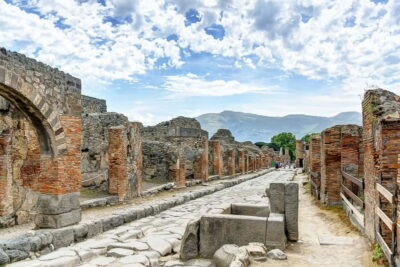 ★ 4.9Pompeii Ruins Private Tour with Optional Skip-the-Line EntryFrom $254732 reviews
 ★ 5.0Pompeii private tour with an Official GuideFrom $107631 reviews
 ★ 5.0Pompeii Private Tour with an Archaeologist and Skip The Line – 3 hoursFrom $302564 reviews
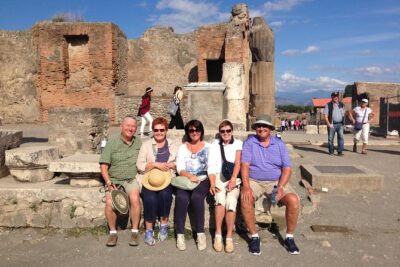 ★ 5.0Visit in Pompeii – Pompeii Private Tour with AdaFrom $229436 reviews
 ★ 5.0Pompeii Private Tour with an Archaeologist and Skip The LineFrom $375391 reviews
 ★ 5.0Pompeii Vineyard Escape: Private Wine Tasting & LunchFrom $66329 reviews
 ★ 5.0Private Day Tour to Vesuvius, Herculaneum & Pompeii with Pick UpFrom $120279 reviews
 ★ 5.0Guided Small Group Tour Max 6 People with Private OptionFrom $168269 reviews
Browse the lists this tour appears in