
Reviewed · HERCULANEUM RUINS TOURS
Pompeii and Herculaneum small group Excursion from Naples
Two Roman cities, one fast day. This small-group excursion turns your Naples time into a focused archaeological tour, with port-style pickup and skip-the-line entry so you spend more time walking ancient streets. I especially like the archaeologist-led guidance, which helps you understand what you’re seeing instead of just wandering from stone to stone.
In Pompeii and Herculaneum, I like the pace that keeps things moving without feeling like a sprint, and you get a stack of standout stops rather than a quick drive-by. One drawback to consider: this is a walking day with multiple short stops, so if you hate crowds or you tire easily on uneven ground, plan for slower moments and sturdy shoes.
In This Review
- Key highlights at a glance
- Naples pickup and a small-group rhythm that actually works
- Pompeii’s Express entry: where your time goes first
- Pompeii stop-by-stop: Basilica, Forum, Baths, and the homes people lived in
- Herculaneum: a more intimate city walk with big emotional payoff
- Herculaneum houses and terraces: the route that makes the town feel lived in
- Why the archaeologist guide changes everything
- Timing, walking comfort, and how to keep the day from feeling rushed
- Value for money: what you’re paying for beyond tickets
- COVID-era practicalities you should plan for
- Who should book this Pompeii and Herculaneum day
- Quick decision guide: should you book?
- FAQ
- How long is the Pompeii and Herculaneum excursion?
- What is the price per person?
- Does the tour include pickup in Naples?
- Is the tour a small group?
- Are entrance tickets included?
- Is guidance included?
- Are meals and drinks included?
- Is this tour suitable for most people?
- Do I need to bring a mask?
- What is the cancellation window?
Key highlights at a glance
- Small group cap (up to 20) keeps the tour manageable and helps the guide control timing.
- Skip-the-line style tickets in Pompeii save you real minutes.
- Two archaeological parks in one day means you see both towns’ different flavors of Roman life.
- A true archaeologist guide puts context on ruins like streets, baths, and homes.
- Hands-on route planning through major sights means you don’t waste time choosing what to see.
Naples pickup and a small-group rhythm that actually works
This is the kind of tour that starts with common-sense logistics. You meet at Starhotels Terminus in Naples (P.za Giuseppe Garibaldi, 91), and the day is built around getting you out of the city and into the sites efficiently. That matters because Pompeii and Herculaneum each swallow a lot of time if you go on your own.
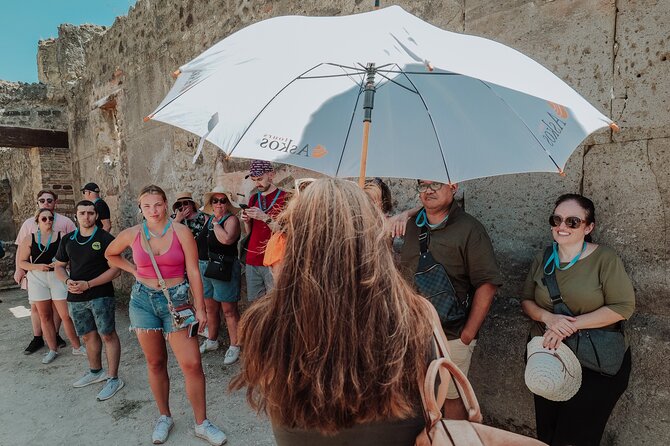
The group stays small, with a maximum of 20 people. That size is big enough for energy and questions, but small enough that the guide can keep people together at entrances and interpret key features without losing the whole class every five minutes.
You’ll also want to know upfront that the day is designed for movement. The schedule is split into many stops—mostly brief “see this, understand that” moments—with two longer visits: Pompeii archaeological park and Herculaneum archaeological park. That format works well if you want structure, but it also means you won’t get long, slow wandering at every corner.
More of Herculaneum next door
- Pompeii and Herculaneum Small Group Tour with an Archaeologist
★ 5.0 · 1,350 reviews - Private Day Tour to Vesuvius, Herculaneum & Pompeii with Pick Up
★ 5.0 · 279 reviews - The Ultimate Ruins of Pompeii and Herculaneum Private Day Trip
★ 5.0 · 103 reviews
Pompeii’s Express entry: where your time goes first
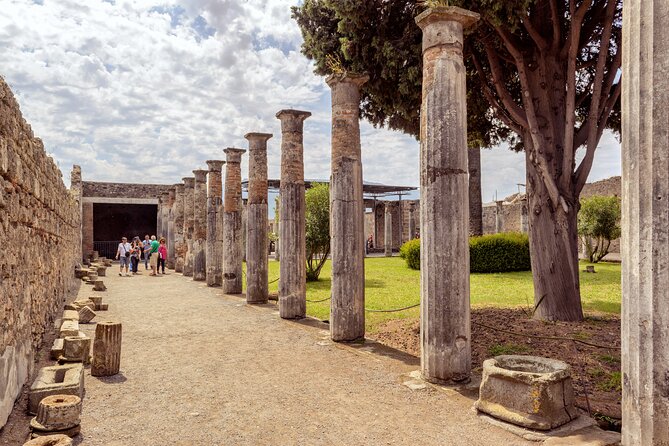
You start at Pompeii Archaeological Park with about two hours inside. Entry is included for what’s described as Pompeii Express. Translation: you’re not stuck in the slowest line for basic admission, which is the difference between seeing a few highlights and seeing a lot of them.
Once inside, you’re guided through a tight string of key sights. Some stops are “quick hits” (think minutes), like viewpoints or signature buildings, while others are more descriptive walking segments. The goal is not to cover every room. The goal is to get your bearings fast and then make the city readable.
If you’ve ever been to ruins with zero context, Pompeii can feel like a jumble: walls, columns, and shadows with no storyline. This tour’s rhythm helps you learn the layout—forum area, street life, public buildings, and then the private houses—so the whole town starts to make sense as one system.
Pompeii stop-by-stop: Basilica, Forum, Baths, and the homes people lived in
Here’s what the route focuses on, and why each stop is worth your time.
Basilica
You’ll spend only a few minutes here, but it’s a big clue to how the Romans organized civic life. The Basilica is tied to public business and gatherings, and the guide uses it to connect architecture to daily routines.
Forum (Foro de Pompeya)
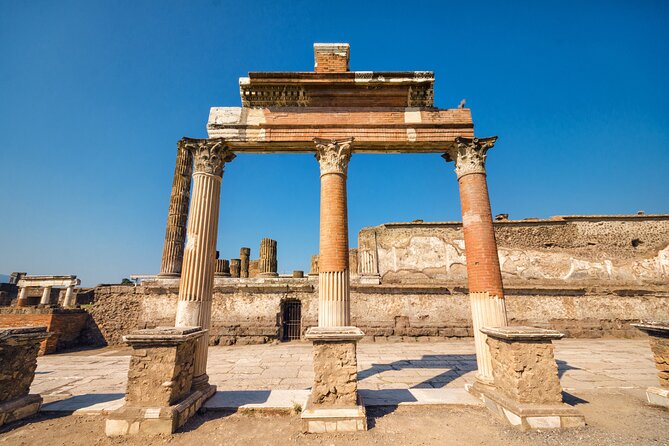
This is one of Pompeii’s central stages. Even with a short visit, you get a strong sense of the public square mindset—space for meetings, commerce, and display. It’s also a good checkpoint to understand what you’re seeing elsewhere.
Via dell’Abbondanza
Walking Abbondanza Street for about ten minutes is a smart move. Streets are where you feel the city’s scale. In Pompeii, the street layout helps you imagine foot traffic, storefront life, and the way neighbors moved between public and private spaces.
House of Menander
This stop is brief, but it’s a classic Pompeii teaching tool. You see how wealthy homes signaled status through decoration and design. The guide’s job is to translate what you’re looking at—no one wants to stare at a wall and guess why it mattered.
Granaries of the Forum
Food logistics sounds boring until you realize it’s power. Grain storage and supply systems tell you how a city functioned. This stop helps you see infrastructure, not just impressive buildings.
Stabian Baths (Terme Stabiane)
The Stabian Baths are one of Pompeii’s best reminders that Roman life included serious public leisure. Even in ten minutes, you’re able to connect bathing culture with social interaction. It’s also a good stop to understand how these spaces were built for flow—people moving through rooms and rituals.
Lupanar
This is one of those Pompeii stops that can feel surprising at first. The guide’s framing is what makes it useful: you learn how the city documented social behavior, and you get a clearer sense of how different services operated within the town’s fabric.
House of the Faun
Another quick but memorable house stop. Houses like this help you compare different levels of domestic comfort and layout. After a few stops, you’ll start noticing patterns—courtyards, room sequences, and how people used space.
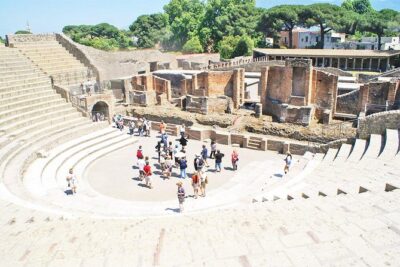
Odeon – Teatro Piccolo and Teatro Grande
You wrap the Pompeii portion with performance spaces: the small theatre (Odeon/Teatro Piccolo) and the Great Theatre. Even short visits are still valuable because they show how Pompeii balanced daily work with spectacle. The guide helps you place these buildings in the broader idea of community life.
Herculaneum: a more intimate city walk with big emotional payoff
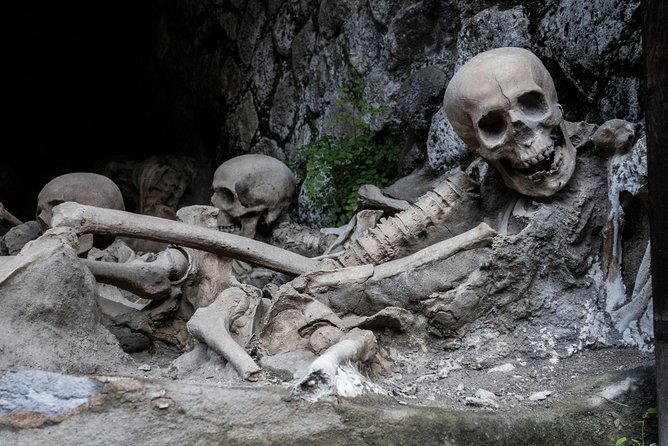
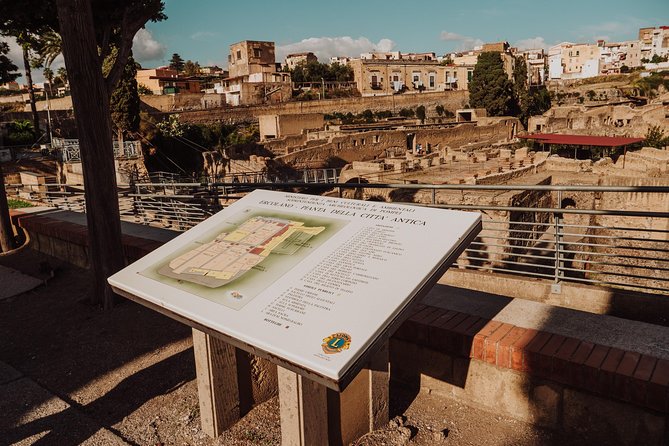
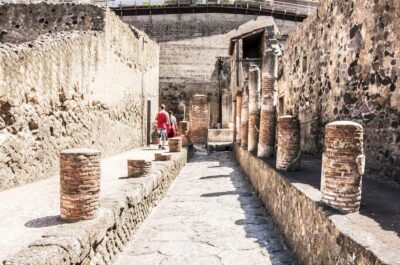
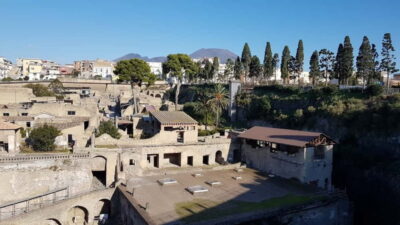
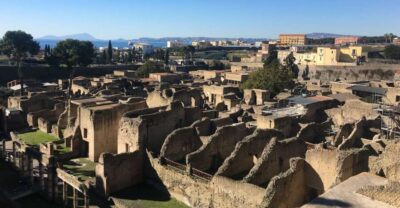
After Pompeii, you move to the Archaeological Park of Herculaneum for about two hours. This is where the vibe changes. Herculaneum feels more compact and, in many ways, more personal—houses and rooms feel closer to the people who used them.
The itinerary in Herculaneum is also built around many short stops. That’s perfect here because the park contains a lot of detail in tight spaces. Ten minutes can be enough to grasp a house’s purpose, then move on before you lose the thread.
Even if you’re not a “ruins person,” Herculaneum tends to stick because you’re not only seeing buildings—you’re seeing how people arranged daily life indoors. The guide supports this by connecting features to Roman routines, especially how homes were structured for light, privacy, and social behavior.
Herculaneum houses and terraces: the route that makes the town feel lived in
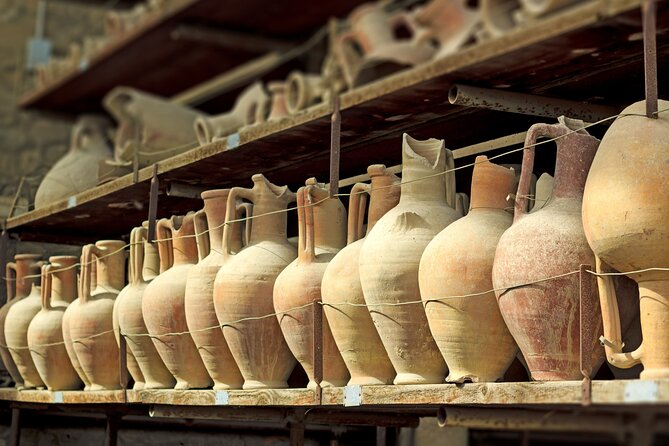
Here are the Herculaneum stops and why they work as a group route.
House of the Deer
A short viewing stop, but it’s designed to get you thinking about domestic decoration and what it signaled. The guide uses the house as an entry point to how wealthy living looked in this town.
La Terrazza di M. Nonio Balbo
This terrace stop is short, yet it’s useful because it changes your perspective. You’re not only looking at rooms—you’re also learning how homes related to open space and views.
College of the Augustales
This is a civic/religious connection point. Even in around ten minutes, it’s a chance to understand how organizations formed identity and status within the community.
Casa del Rilievo di Telefo
A quick stop that’s built around a specific artistic feature. When the guide points out what you’re looking at and why it was displayed, the art becomes a story, not a random artifact.
Partem Domus lignea (Casa del Tramezzo di Legno)
The wooden partition house concept is a great reminder that not everything you see is stone. This stop helps you picture the living structure more clearly than you would from ruins alone.
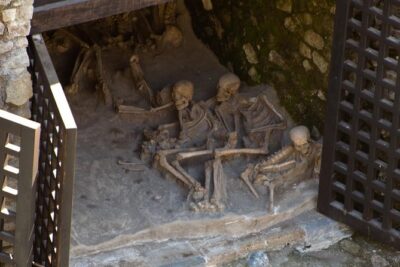
House of the Skeleton
Another house visit that hits emotionally. The guide helps frame what you’re seeing so it lands as human tragedy inside a city system, not just a shocking sight.
Central Thermae
You’ll spend about ten minutes here, giving you a public-bathing compare to Pompeii. It’s one of those “same Roman idea, different local expression” moments.
House of the Black Salon
Short stop, strong visual identity. Rooms like this are helpful for understanding interior design choices and how visual drama played a role in domestic prestige.
Casa Sannitica
This is a quick architectural/decorative stop that supports your bigger picture of how different houses were organized.
Casa del Bel Cortile
The fine courtyard concept is easy to grasp quickly. Courtyards show how light and air shaped daily life.
House of the Grand Portal
The grand portal stop closes the Herculaneum loop with a message about access and social positioning. You end with the sense that entrances were part of status display.

Why the archaeologist guide changes everything
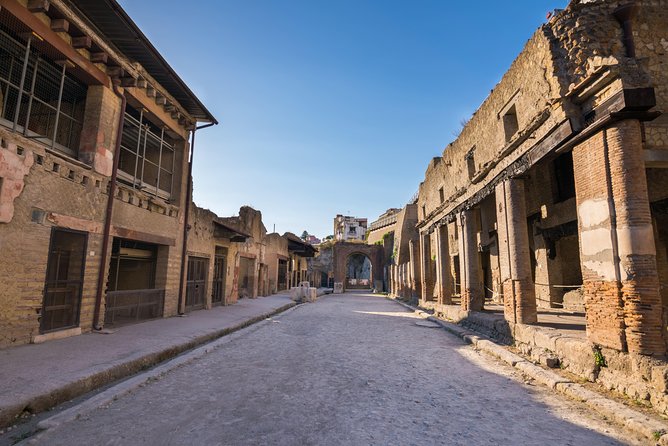
A lot of Pompeii/Herculaneum tours list big sights. This one tries to explain them with an archaeologist guide, which is a meaningful difference for your day.
Guides you may encounter on this operator include people like Rafael, Gennaro, Giulia, Vincenzo, Diego, and Michele Lamberti—names that show up often in feedback. What connects them is a practical style: they keep the group organized, answer questions in a way that doesn’t require a degree in Roman history, and they use humor to keep the heavy parts easier to handle.
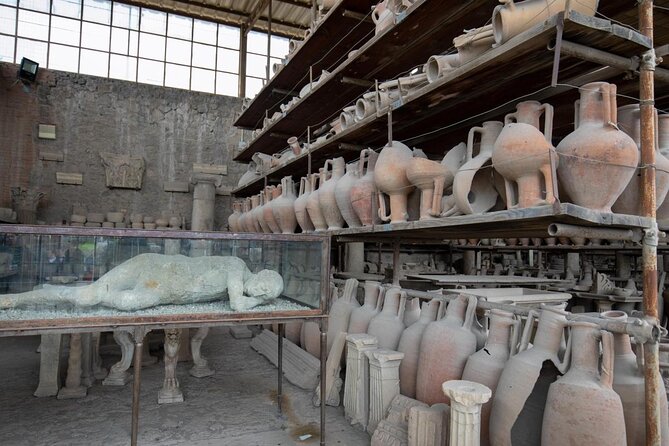
That’s important because the sites can be intense. You’ll see baths, theatres, houses, and everyday spaces—but you’ll also face the reality of what happened during the eruption and what the cities became afterward. With a good guide, that weight doesn’t overwhelm the day. It just makes the story stick.
Timing, walking comfort, and how to keep the day from feeling rushed
This tour runs about seven hours. Within that, the structure is built to fit: two larger blocks of site time (Pompeii and then Herculaneum) plus a stack of shorter stops. You’ll get your money’s worth if you show up ready to move.
A few practical tips:
- Wear sturdy, broken-in shoes. Uneven surfaces are part of the deal at both parks.
- Bring water, even though meals and drinks are not included.
- Don’t plan a long stop for souvenirs during the guided portion; the route is time-managed for a reason.
Also note the day can feel somewhat strenuous just from step count and terrain. The guide helps set pace, but you’re still walking real ground, not museum floors.
Value for money: what you’re paying for beyond tickets
At $173.27 per person, this isn’t a budget outing—but it can be good value if you count what’s included. You’re getting:
- Guidance at both Pompeii and Herculaneum by an archaeologist guide
- Entrance for Pompeii via the Pompeii Express tickets
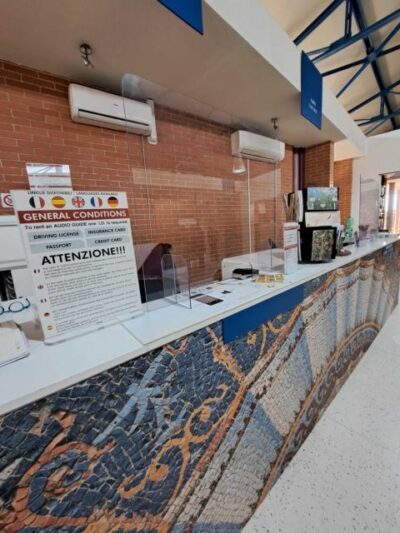
- Herculaneum entry tickets (noted as €16.00 each in the details)
- Assistance from a professional driver
- Transportation by minibus
What you’re really buying is time. Skip-the-line style entry and round-trip transportation from Naples Central Station/train station areas (plus pickup offered) reduce the biggest pain points: queues and figuring out transit on a tight schedule.
If you were to DIY, you’d spend time on ticket lines, transit timing, and the guesswork of what to prioritize in each park. Here, the route does that work for you—then adds context so you don’t just collect random photos.
COVID-era practicalities you should plan for
The operator notes mask requirements during the visit and you must bring your own. There’s also a temperature screening step to limit admission if someone registers a temperature at or above 37.5° C or shows symptoms.
None of this is unique to Pompeii and Herculaneum, but it can affect how smoothly the day starts. If you’re coming from a cruise or a tight Naples schedule, arrive early at the meeting point so you’re not stressed about extra checks.
Who should book this Pompeii and Herculaneum day
You’ll be happy with this tour if:
- You want to see both cities in one day without doing logistics math
- You like guided interpretation—especially for the forum, public buildings, and domestic spaces
- You appreciate a small-group cap and a guide who keeps the day organized
- You want a structured highlights route rather than free-form wandering
You might want to skip it if:
- You hate walking tours and want long solo time in fewer spots
- You want an unstructured photo hunt with zero time pressure
Quick decision guide: should you book?
I’d book this if your goal is a high-impact archaeology day with real explanations and minimal wasted time. The combination of archaeologist-led context, skip-the-line style entry for Pompeii, and a route that hits both public life and domestic life makes it a strong way to understand these two Roman towns in one go.
If you want maximum solitude and unlimited lingering, consider a slower plan. But if you want to get your bearings fast, learn the city layout, and see the big signature stops in both parks, this is a solid choice.
FAQ
How long is the Pompeii and Herculaneum excursion?
The tour runs about 7 hours.
What is the price per person?
The price is listed as $173.27 per person.
Does the tour include pickup in Naples?
Pickup is offered, and transportation service is included. The meeting point is Starhotels Terminus at P.za Giuseppe Garibaldi, 91, 80142 Napoli.
Is the tour a small group?
Yes. The tour has a maximum of 20 travelers.
Are entrance tickets included?
Yes for Pompeii (Pompeii Express entry tickets) and Herculaneum entry tickets are included as well (listed as €16.00 each).
Is guidance included?
Yes. You get guidance at Pompeii and Herculaneum by an archaeologist guide.
Are meals and drinks included?
No. Meals and drinks are not included.
Is this tour suitable for most people?
The details say most travelers can participate.
Do I need to bring a mask?
Yes. The use of masks is mandatory, and you should bring your own during the visit.
What is the cancellation window?
Free cancellation is allowed up to 24 hours in advance for a full refund.
More Tour Reviews in Pompeii
- Pompeii Small Group Tour with an Archaeologist★ 5.0 · 6,593 reviews
- Discover the Ancient Ruins of Pompeii: Day Trip from Rome★ 3.5 · 2,247 reviews
- Pompeii and Herculaneum Small Group Tour with an Archaeologist★ 5.0 · 1,350 reviews
- Skip the Line Guided Tour of Pompeii led by an Archaeologist★ 5.0 · 703 reviews
- Pompeii Ticket + Tour with Optional Tasting Experience at Pompeii★ 5.0 · 663 reviews
More of Herculaneum
- Pompeii and Herculaneum Small Group Tour with an Archaeologist★ 5.0 · 1,350 reviews
- Private Day Tour to Vesuvius, Herculaneum & Pompeii with Pick Up★ 5.0 · 279 reviews
- The Ultimate Ruins of Pompeii and Herculaneum Private Day Trip★ 5.0 · 103 reviews
- Naples: Pompeii & Herculaneum Day Trip – Small Group Tour★ 4.5 · 72 reviews
- Half-Day Exclusive Private Tour of Pompeii and Herculaneum★ 5.0 · 49 reviews
Just reviewed: more Pompeii tours and day trips


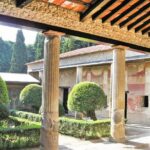

Herculaneum Ruins Tours, compared.
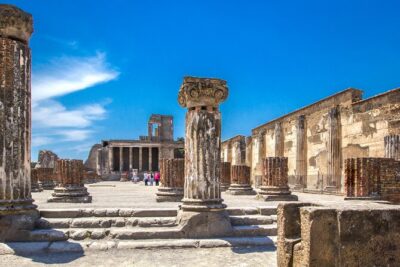 ★ 5.0Pompeii and Herculaneum Small Group Tour with an ArchaeologistFrom $771,350 reviews
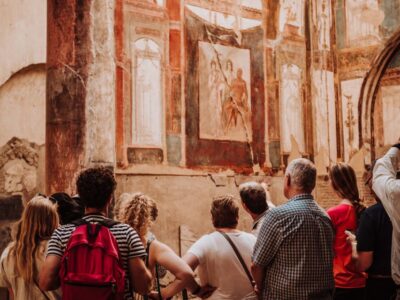 ★ 4.8Small-Group Tour of Pompeii and Herculaneum867 reviews
 ★ 4.1Ercolano: Herculaneum Entry Ticket with Optional Audio GuideFrom $21581 reviews
 ★ 5.0Private Day Tour to Vesuvius, Herculaneum & Pompeii with Pick UpFrom $120279 reviews
 ★ 4.3Herculaneum: Skip The Line Entrance ticket + AudioguideFrom $35266 reviews
 ★ 4.2Naples: Herculaneum and Vesuvius Day TripFrom $135200 reviews
 ★ 5.0Pompeii and Herculaneum: Guided Tour with an ArchaeologistFrom $141164 reviews
 ★ 4.4Naples: Pompeii and Herculaneum Tour with Tickets and LunchFrom $126136 reviews
Browse the lists this tour appears in