
Reviewed · POMPEII VIRTUAL REALITY & 3D TOURS
Pompeii 360° – 4-hour tour with an expert Guide in archaeology
Pompeii is a time capsule you can walk through. What makes this tour special is the private 4-hour plan with a licensed archaeology guide, built to hit the major sights without leaving you to guess what you are looking at. One thing to plan for: the Pompeii Archaeological Park entrance fee is €20 per person, and that is not included.
You’ll cover a lot of ground across the heart of Pompeii. The site spans 66 hectares, with about 50 excavated, so you are not seeing it all. Still, this route is designed to give you the big picture fast—amphitheater, villas, temples, bath complex, and the Forum—plus key details like mosaics and views of Mount Vesuvius.
This is also a comfortable setup for people who want structure. It’s private (only your group), offered in English, and the stops come with included admission where stated. Just note the pace is active: you’ll be moving between sites and doing photo stops in a set window.
In This Review
- Key things to know before you go
- Pompeii in 4 hours: why the pace feels right
- Price and the real logistics: what you pay for, and what you should budget
- Meet at Piazza Esedra, then walk the spine of the city
- Stop-by-stop Pompeii: what each site teaches you (and what to watch for)
- Anfiteatro Romano (Roman amphitheater)
- Orto dei Fuggiaschi (Garden of the Fugitives)
- Tempio di Giove Capitolino (Temple of Jupiter, Juno, and Minerva)
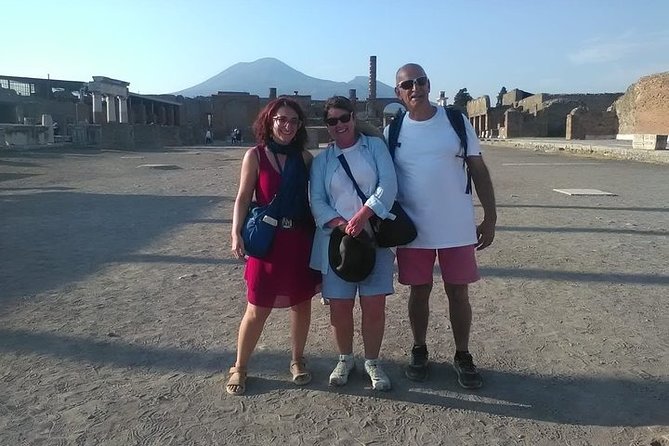
- Foro de Pompeya (Forum area with a Vesuvius photo stop)
- Casa del Fauno (House of the Faun)
- Temple of Apollo
- Casa del Cinghiale (Wildboar House)
- Via dell’Abbondanza (Main commercial street)
- Odeon – Teatro Piccolo (Small theater)
- Stabian Baths (Terme Stabiane)
- Casa dei Vettii (House of the Vettii)
- Basilica (Roman courthouse)
- Tempio di Venere (Temple of Venus)
- Casa del Fauno (second visit: statue and Alexander mosaic)
- Lupanar (House of Pleasure)
- House of Venus in the Shell
- What the expert archaeology guide changes for you
- Practicalities: tickets, timing, and what to bring
- Is this Pompeii 360° tour worth $203.70?
- Who should book this tour?
- Should you book Pompeii 360°?
- FAQ
- Is the Pompeii park entrance fee included in the tour price?
- What’s included in the tour besides the guide?
- How long is the tour?
- Where do we meet, and where does the tour end?
- What language is the tour offered in?
- What should I wear or bring?
Key things to know before you go
- A licensed archaeology guide keeps the ruins readable, not just pretty rocks.
- Most stop admissions are included, but the €20 Pompeii park ticket is extra.
- A tight, efficient route: amphitheater to villas, then baths and the Forum area, all in about four hours.
- You get Mount Vesuvius moments (including a temple viewpoint and Forum photo framing).
- Choice time for the Lupanar if you want the erotic fresco site.
- Guides like Luciano, Eugenia, Annalise, Martina, and Ernesto are often mentioned for clear explanations and interactive teaching.
Pompeii in 4 hours: why the pace feels right
Pompeii can swallow a day. This tour doesn’t try to do everything—it picks the pieces that explain how the city worked, and how people lived right up to the eruption.
You’re scheduled for about 4 hours total, with short time blocks at each stop. That sounds rushed, but the trick is that you are not expected to wander aimlessly. Your guide points out the details that most people miss: how the buildings fit into daily routines, what the art choices meant, and how the city layout connects religion, politics, and commerce.
If you like a plan you can trust—meet, walk, learn, move on—this pace is a win. If you’re the type who wants long solo lingering with no schedule pressure, you may find the time windows limiting.
See the city put back together in 3D
- Pompeii: walking tour with 3D glasses and with entrance ticket
★ 4.5 · 61 reviews - Pompeii 360° – 4-hour tour with an expert Guide in archaeology
★ 5.0 · 36 reviews - Pompeii Skip-the-Line Ticket and Virtual Museum
★ 4.5 · 8 reviews
Price and the real logistics: what you pay for, and what you should budget
The tour price is $203.70 per person for a private 4-hour experience with an expert guide in archaeology. That number includes the guide, taxes, and that private format. It also includes admissions for the listed stops on the route.
What’s not included is the entrance fee to the Archaeological Park of Pompeii: €20 per person. You’ll need to budget that separately when you plan your total cost.
If you are traveling with a younger person, the park fee details matter:
- Under 18: free park ticket
- EU ages 18 to 25 with valid ID: €2 per person
Also, the tour uses a mobile ticket, which is handy at a busy site. You’ll want to keep your phone charged and your screen brightness readable in outdoor light.
Meet at Piazza Esedra, then walk the spine of the city
The meeting point is Piazza Esedra, 80045 Pompei NA, Italy, and the tour ends there as well. The itinerary can end at the exit of Piazza Esedra at the discretion of the customer, which is useful if you want to transition straight to lunch or a later stop.
This is near public transportation, so you don’t have to rely entirely on taxis. The key practical move: arrive a few minutes early so you can start on time, because Pompeii crowds tend to build.
Dress for comfort over fashion. The recommended gear is sunglasses, a hat, and comfortable shoes. Backpacks are limited to no larger than 30x30x15, which is worth respecting so you don’t waste time figuring out bag rules on the spot.
Most people can participate, and service animals are allowed. If you have mobility concerns, you’ll want to think about how much walking and stair-and-street shifting a 4-hour route involves, since the stops are frequent.
Stop-by-stop Pompeii: what each site teaches you (and what to watch for)
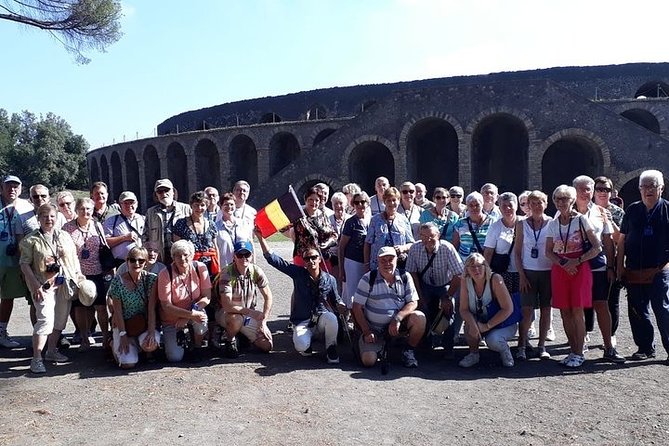
This route is a greatest-hits version of Pompeii, but it’s not random. Each stop adds a different layer: public life, private wealth, religious meaning, or everyday comfort.
Anfiteatro Romano (Roman amphitheater)
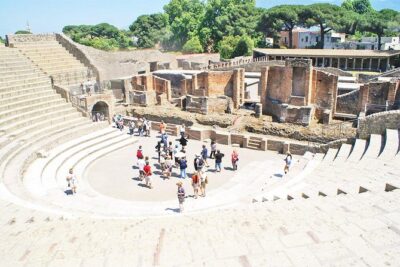
You start at one of the oldest Roman amphitheaters, and it’s described as very well preserved. In practical terms, this is where you’ll learn how public spectacle shaped city identity.
When you’re standing inside or near it, look at the shape and the stonework. Your guide should help connect the amphitheater to civic life—Pompeii wasn’t just streets and homes; it was also performance and community gatherings.
Time: about 15 minutes.
More guided visits to choose


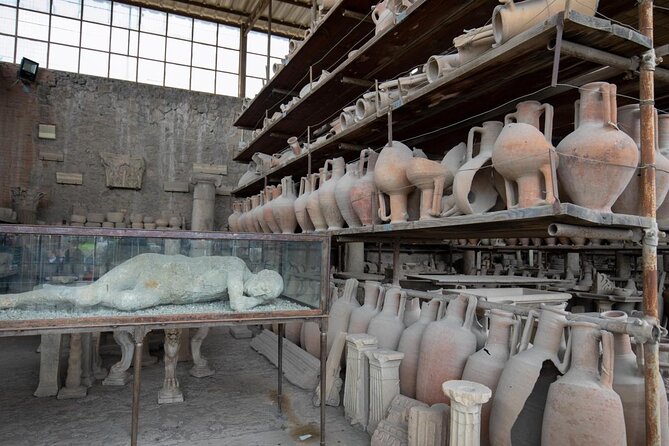
Orto dei Fuggiaschi (Garden of the Fugitives)
This stop focuses on the escape stories during the eruption. You’ll see the famous garden connected to people who took refuge, and you’ll admire the plaster casts.
This is one of those moments where your brain switches from tourist mode to human-history mode. The casts are the kind of detail you remember, because they make the disaster feel immediate instead of abstract.
Time: about 15 minutes.
Tempio di Giove Capitolino (Temple of Jupiter, Juno, and Minerva)
This is a major temple site with a famous view toward Mount Vesuvius. It’s also one of those photo opportunities that actually makes sense historically, because the view helps explain why certain places were built where they were.
Try to take one solid photo from the recommended angle—then listen to what the guide explains so you’re not just shooting blindly.
Time: about 5 minutes.
Foro de Pompeya (Forum area with a Vesuvius photo stop)
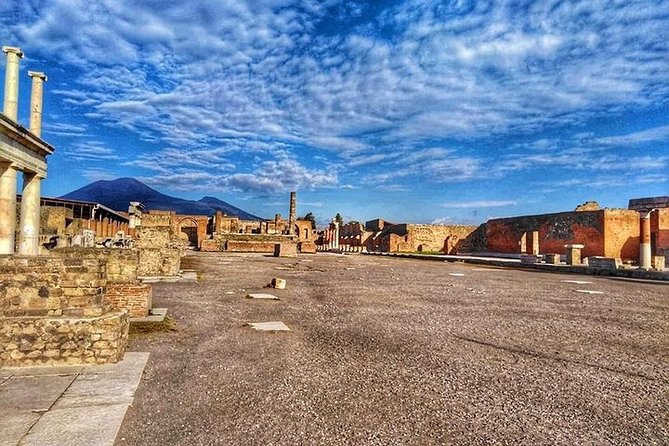
The Forum is the center of Pompeii’s political, religious, civil, and economic life. Think of it as the city’s “everyone meets here” zone—where public announcements, ceremonies, and business activity intersect.
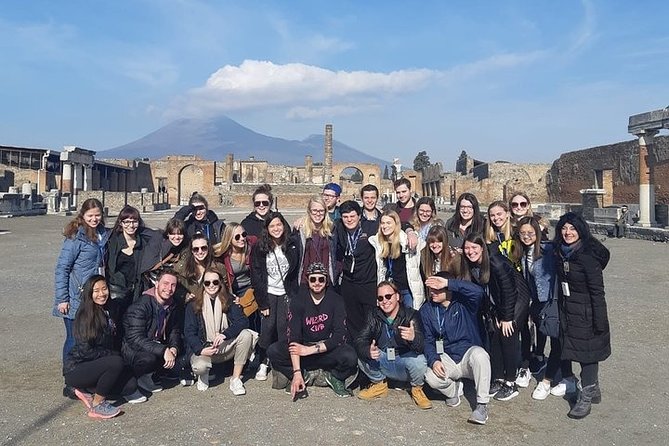
You’ll get a photo stop with Vesuvius behind. In a good tour, that view doesn’t feel like a gimmick—it helps you picture the city’s physical setting and why the eruption was so devastating.
Time: about 10 minutes.
Casa del Fauno (House of the Faun)
You’ll encounter Casa del Fauno as one of the major villa highlights. This is described as the largest house in Pompeii, with around 32,000 square feet, and it includes gardens and multicolor mosaics. One mosaic highlighted here is Alexander the Great.
The Faun motif is part of what makes this house memorable, and later in the route you’ll come back to key features again—so if something clicks, you’ll likely get a second chance to see it with more context.
Time: about 15 minutes (first visit).
Temple of Apollo
This temple is described as one of the most ancient in the city and restored not long ago. It also gives another dramatic Vesuvius view.
This is a good stop if you like the “religion meets design” angle. Apollo and the related twin sister (Diana) are tied to the sun-and-moon symbolism your guide should connect to the site.
Time: about 10 minutes.
Casa del Cinghiale (Wildboar House)
Another mosaic stop, this one right near the main street by the Forum. The attention here is on the mosaic floor, which is what you should focus on—think of it as a quick read on the wealth and taste of the household.
Even in short time, your guide can help you understand why that kind of floor art mattered in a world where people still spent a lot of time indoors.
Time: about 5 minutes.
Via dell’Abbondanza (Main commercial street)
This is the commercial spine—shops, houses, and public fountains. It’s not just a walk; it’s a way to understand the city as a place of exchange and street life.
If you’ve ever wondered how ancient people handled food, goods, and daily errands, this is your practical answer. Use the stop to connect the Forum (public decisions) to the street (public transactions).
Time: about 15 minutes.
Odeon – Teatro Piccolo (Small theater)
This is where you get details: a precious marble floor and a small theater used for music and poetry. Compared to the amphitheater, it’s a different cultural scale, and it helps round out the idea that Pompeii had entertainment for different settings.
If you’re a detail person, this stop rewards you. If you aren’t, your guide should still make it easy to understand what’s special.
Time: about 10 minutes.
Stabian Baths (Terme Stabiane)
Now you shift from temples and art to how people relaxed. The Stabian Baths include a typical Roman thermal setup: gym areas, swimming pool, and rooms for sauna and massages.
This is a highlight for first-timers because it makes Pompeii feel usable. You can picture a routine: meet up, work out, clean up, socialize. You are learning daily comfort, not just disaster.
Time: about 15 minutes.
Casa dei Vettii (House of the Vettii)
This is one of the best preserved Roman domus examples on the route. The focus is on mythological frescoes and mosaics, described as of impressive beauty.
Also pay attention to how much time you get here—30 minutes. That longer block usually means your guide can slow down and walk you through multiple layers of decoration and symbolism without rushing you.
Time: about 30 minutes.
Basilica (Roman courthouse)
Despite the name, it’s not a religious building. It’s an ancient Roman courthouse, and your guide points out beautiful details in the architecture.
This stop helps you understand how law and governance worked in a city that was very public about civic life.
Time: about 10 minutes.
Tempio di Venere (Temple of Venus)
This is dedicated to the main goddess of Pompeii and located in a panoramic spot. It’s both a religious reference and a view stop—so it can work for people who want meaning and photos.
Use the time to match the temple’s visual position with what your guide explains about the role of Venus in the city.
Time: about 10 minutes.
Casa del Fauno (second visit: statue and Alexander mosaic)
You return to Casa del Fauno again, with a focus on the statue of the faun and the mosaic of Alexander. The listing also notes the domus size at around 3,000 square meters here, reinforcing why this is treated as a centerpiece.
This second pass is a smart design choice. It gives you a second chance to connect the art to the household and see it with fresher context.
Time: about 15 minutes.
Lupanar (House of Pleasure)
At your discretion, you can visit the Lupanar, known for erotic frescoes. If this is comfortable for you, it’s an eye-opening glimpse into the city’s sexual economy and public/private boundaries.
If you’d rather skip it, you should be able to decide on-site based on your comfort level.
Time: about 15 minutes.
House of Venus in the Shell
This final stretch is anchored by the amphitheater-area location and a beautiful garden. You’ll also see a fresco representing the birth of Venus.
It’s a thoughtful end because it ties together the artistic themes you saw earlier—mosaics, myth, and the role of Venus—while finishing with garden calm instead of constant stone intensity.
Time: about 10 minutes.
What the expert archaeology guide changes for you
This is where the value shows. Pompeii can look like a pile of ruins until someone connects the dots: why the Forum sits where it does, why baths show up as a social center, how villas signal status through mosaics, and how temples anchor city identity.
In particular, the guides associated with this tour often come up for a few repeat strengths:
- clear, structured explanations that help you keep the city straight
- interactive moments that make questions feel welcome
- flexibility, like meeting at a different entrance if needed and adjusting the focus to what your group wants
You may also find this especially useful if you are traveling with kids. One of the strongest themes linked to the guides here is patience and the ability to make the historical significance click without turning it into a lecture.
Practicalities: tickets, timing, and what to bring
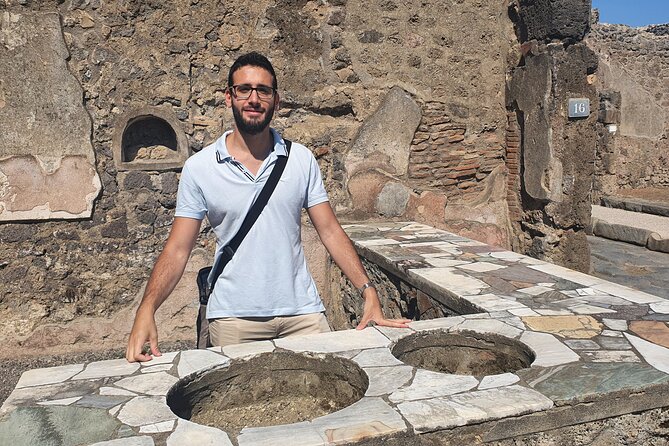
Here are the practical pieces that help you avoid stress:
- Plan for the park entrance ticket (€20 per person). It is separate from the tour.
- Bring comfortable shoes for uneven ancient surfaces and lots of standing.
- Use a hat and sunglasses. Pompeii sun can be relentless.
- Keep your backpack within 30x30x15. It’s specifically mentioned, so follow it.
- Mobile ticket is part of the experience. Have your phone ready.
- The tour can end at Piazza Esedra exit at your discretion.
One more timing note: the tour is short enough that you’ll likely want to eat after, not between stops. Decide in advance where you’ll go next so you can keep your day flowing.
Is this Pompeii 360° tour worth $203.70?
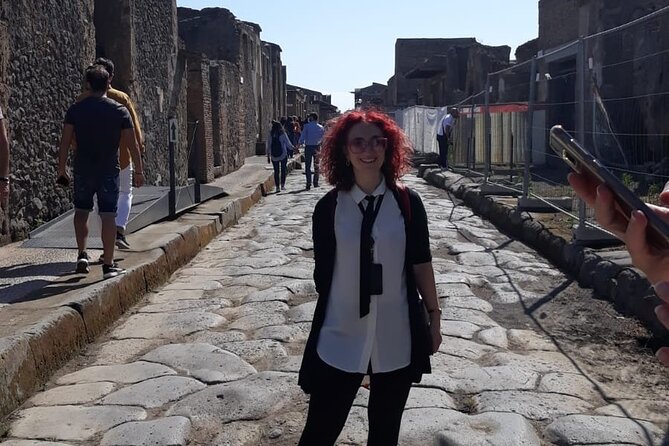
For a private tour, $203.70 per person is not a budget price—but it can be good value if you care about understanding what you see.
You’re paying for:
- a licensed archaeology guide
- a structured route that hits high-impact sites within about four hours
- admissions tied to the listed stops
Then you top it off with the €20 park entry. Once you add that, you’re paying for the kind of experience that usually takes far longer on your own, because you’d have to research and decide what’s worth your time.
If you are visiting Pompeii for the first time and you want a fast, intelligent tour that leaves you with real mental anchors—Forum, baths, villas, temples—this route is a strong fit. If you already know Pompeii well and prefer slow wandering, you might feel the schedule pressure.
Who should book this tour?
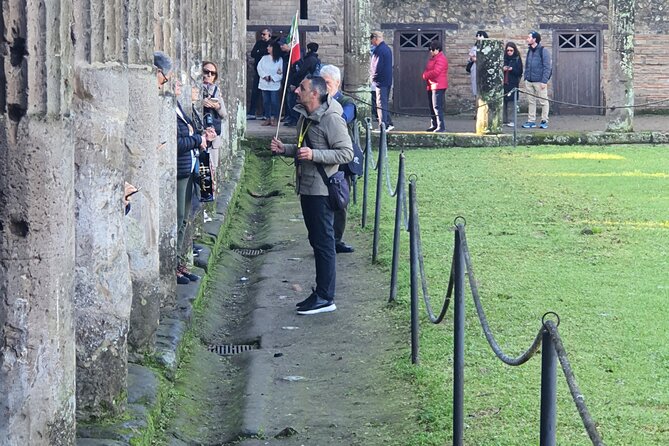
This tour is a great match for you if:
- you want a private guide and clear explanations, not a self-guided scramble
- you like mosaics, public buildings, and the “how the city functioned” story
- you want a route that keeps Vesuvius part of the picture
- you are traveling with a group that wants flexibility and pacing under one roof
It’s also a solid choice for families, since at least some guides on this route are known for adjusting to kids and keeping learning age-appropriate.
You might want to consider something different if:
- you want long free time at each site
- you dislike walking between many stops
- you prefer to skip sites like the Lupanar for comfort reasons (though you can decide there)
Should you book Pompeii 360°?
I think you should book this Pompeii 360° tour if you want the highest value per hour: expert guidance, a well-shaped route, and a clear sense of what to look for in mosaics, temples, baths, and the Forum.
Make your decision with two checks:
- Are you okay adding the €20 park ticket and moving through stops on a schedule?
- Do you want the guide’s interpretation enough to justify paying for private structure?
If yes to both, this is one of the most practical ways to get Pompeii right—fast, organized, and focused on the details that actually explain the place.
FAQ
Is the Pompeii park entrance fee included in the tour price?
No. The Archaeological Park of Pompeii entrance fee is €20 per person and is not included in the tour price.
What’s included in the tour besides the guide?
The tour includes a licensed expert archaeology guide, taxes, and the private tour format. Admission tickets are included for the listed stops on the route, while the separate Pompeii park ticket is not included.
How long is the tour?
It’s approximately 4 hours.
Where do we meet, and where does the tour end?
The meeting point and end point are both at Piazza Esedra, 80045 Pompei NA, Italy. The tour can end at the exit of Piazza Esedra at the customer’s discretion.
What language is the tour offered in?
The tour is offered in English.
What should I wear or bring?
Wear comfortable clothing and shoes, and bring a hat and sunglasses. Backpacks should be no larger than 30x30x15. A mobile ticket is part of the experience.
More Guided in Pompeii
- Skip the Line Guided Tour of Pompeii led by an Archaeologist★ 5.0 · 703 reviews
- Pompeii private tour with an Official Guide★ 5.0 · 631 reviews
- Pompeii Skip-the-line Tour with Archaeologist Guide★ 5.0 · 559 reviews
- Pompeii Guided Tour & Horse Riding on Vesuvius with Lunch★ 5.0 · 419 reviews
- Complete Pompeii Skip the Line Tour with Archaeologist Guide★ 4.5 · 379 reviews
More Tour Reviews in Pompeii
- Pompeii Small Group Tour with an Archaeologist★ 5.0 · 6,593 reviews
- Discover the Ancient Ruins of Pompeii: Day Trip from Rome★ 3.5 · 2,247 reviews
- Pompeii and Herculaneum Small Group Tour with an Archaeologist★ 5.0 · 1,350 reviews
- Skip the Line Guided Tour of Pompeii led by an Archaeologist★ 5.0 · 703 reviews
- Pompeii Ticket + Tour with Optional Tasting Experience at Pompeii★ 5.0 · 663 reviews
Pompeii Rebuilt, More 3D Tours
- Pompeii: walking tour with 3D glasses and with entrance ticket★ 4.5 · 61 reviews
- Pompeii Skip-the-Line Ticket and Virtual Museum★ 4.5 · 8 reviews
- Private Pompeii Tour with 3D Virtual Reality Headset – Tour Assistant Only★ 4.5 · 8 reviews
- Private Pompeii Tour with 3D Virtual Reality Headset★ 4.5 · 7 reviews
- Pompeii Virtual Museum Entrance Ticket★ 4.5 · 3 reviews
Just reviewed: more Pompeii tours and day trips





Pompeii Virtual Reality & 3D Tours, compared.
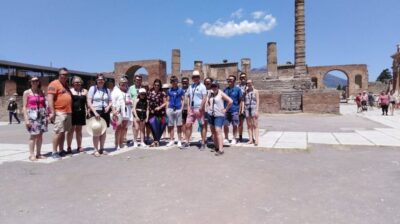 ★ 4.33D Walking Tour with Entry TicketFrom $61102 reviews
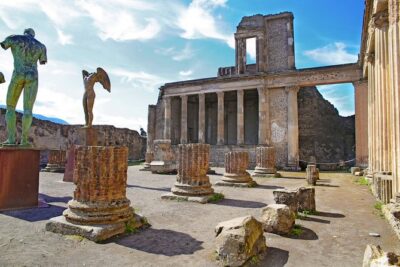 ★ 4.5Skip-the-Line Ticket and Virtual MuseumFrom $6066 reviews
 ★ 4.5walking tour with 3D glasses and with entrance ticketFrom $6261 reviews
 ★ 4.5Virtual Museum ticketFrom $1437 reviews
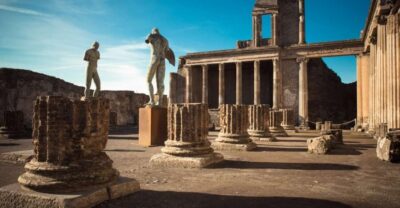 ★ 4.9Pompeii & Virtual Museum Private 2-in-1 Kid’s TourFrom $2379 reviews
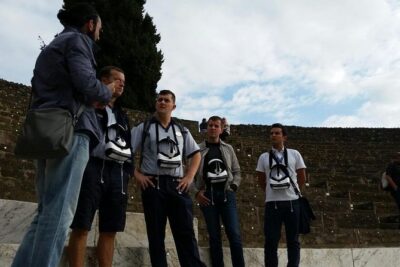 ★ 4.5Private Pompeii Tour with 3D Virtual Reality Headset – Tour Assistant OnlyFrom $1248 reviews
★ 4.5Pompeii Skip-the-Line Ticket and Virtual MuseumFrom $608 reviews
★ 4.5Private Pompeii Tour with 3D Virtual Reality Headset – Tour Assistant OnlyFrom $1248 reviews
★ 4.5Pompeii Skip-the-Line Ticket and Virtual MuseumFrom $608 reviews
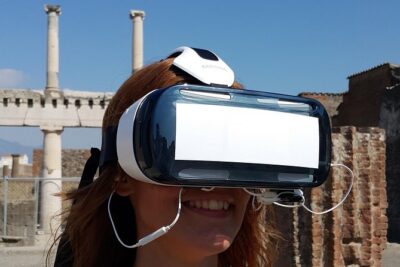 ★ 4.5Private Pompeii Tour with 3D Virtual Reality HeadsetFrom $2177 reviews
Browse the lists this tour appears in