
Reviewed · POMPEII SKIP-THE-LINE ENTRY
Exclusive Pompeii with Wine and Lunch on Vesuvius-Skip-the-line
Pompeii feels less like a blur and more like a story. The big wins here are skip-the-line tickets and a private certified guide who keeps you moving through the Forum, homes, baths, and the eruption story instead of getting lost in sheer scale; the only real drawback is the price is steep, so it’s best when you want maximum value out of a timed day.
What really makes this work is the flow: you get round-trip transport from where you’re staying, you spend focused time inside Pompeii, and you end with a proper lunch at a winery on Vesuvius slopes. Guides such as Natalia and Danilo, and drivers like Dino and Fabio, are repeatedly singled out for smooth pacing and stress-free logistics, which is exactly what you want when you’re crisscrossing a busy Naples area.
In This Review
- Key things to know before you go
- Pompeii, guided the way your feet and brain will thank you
- Door-to-door transport from Naples, Sorrento, and beyond
- Skip-the-line entry: where you actually gain time
- Pompeii essentials: the Forum, Basilica, Apollo, and public power
- The Forum of Pompeii (civic heart, and your easiest way to understand the city)
- The Basilica (Roman bureaucracy in stone)
- Temple of Apollo (religion in an open courtyard)
- Porta Marina and the defensive walls (how the city controlled access)
- Quick note on pacing
- Markets and public baths: where daily life becomes real
- Macellum (Pompeii’s main food market)
- Terme del Foro (Forum Baths and the hypocaust system)
- Wealth and neighborhoods: Vettii, lovers, and what frescoes imply
- Casa dei Vettii (elite life and art on everyday walls)
- Insula dei Casti Amanti (a residential block with a social window)
- Theatre and the Antiquarium: entertainment and context before the streets
- Teatro Grande (Roman drama and a view back toward Vesuvius)
- Antiquarium di Pompei (the emotional and practical doorway)
- Premium Plus: adding the Villa of Mysteries for the best fresco focus
- Cantina del Vesuvio on Vesuvius slopes: wine with a view, not a pit stop
- What’s for lunch (this is the part you’ll remember)
- Price and value: is $575.35 per person worth it?
- Who this tour fits best (and who should skip it)
- Should you book this Pompeii with wine and lunch on Vesuvius?
- FAQ
- How long is the Pompeii with wine and lunch experience?
- Does this tour include skip-the-line tickets for Pompeii?
- Is there a private guide?
- Do I climb Mount Vesuvius during the tour?
- What’s included at the winery on the Vesuvius slopes?
- Where does pickup happen?
- Can I cancel for a full refund?
Key things to know before you go
- Skip-the-line entry outside the crowds, so your Pompeii time goes to ruins, not waiting
- Private, paced guiding that explains daily life, Roman building tricks, and the AD 79 eruption
- Real Pompeii highlights in bite-sized stops, from the Forum and Apollo to the Macellum and Teatro Grande
- No Mount Vesuvius climb, but you still get dramatic volcano views and wine on the slopes
- Cantina del Vesuvio wine tasting plus a 3-course lunch, with vegetarian, vegan, and gluten-free options available
- Premium Plus option adds the Villa of Mysteries, with an extended 3-hour Pompeii guided visit
Pompeii, guided the way your feet and brain will thank you
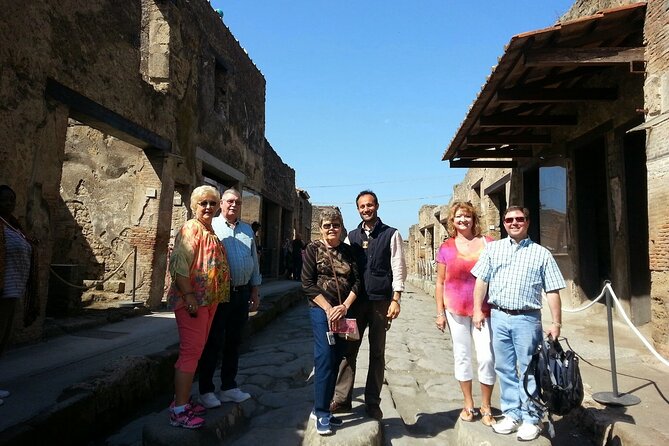
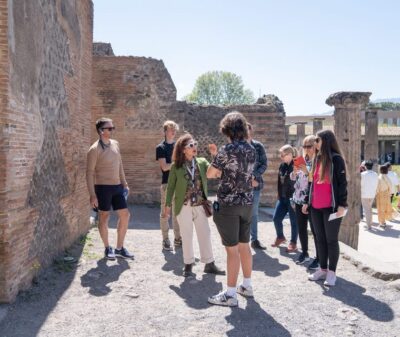
Pompeii is one of those places where you can either wander for hours and still feel blank… or you can get guided structure and suddenly it clicks. This tour is built for the second option. You start with a private, certified guide and a route that focuses on what matters: the city’s public spine, neighborhoods, and the physical evidence of the eruption, including ash and pumice rock.
I especially like that the walking tour is at your own pace. If you want to linger at mosaics, pause for photos, or ask for a specific theme (shops, baths, domestic life, politics), the guide can adjust. That flexibility matters because Pompeii is not a quick museum; it’s a whole town.
The trade-off is that you are still walking. Pompeii is uneven, some surfaces are exposed, and you’ll need comfortable shoes. The operator rates the day as moderate physical fitness, so if you know you’ll struggle with long stretches, plan on moving slowly and asking your guide to prioritize what you most want to see.
More ways past the ticket queue
- Skip the Line Guided Tour of Pompeii led by an Archaeologist
★ 5.0 · 703 reviews - Pompeii Private Tour with an Archaeologist and Skip The Line – 3 hours
★ 5.0 · 564 reviews - Pompeii Skip-the-line Tour with Archaeologist Guide
★ 5.0 · 559 reviews
Door-to-door transport from Naples, Sorrento, and beyond
The most practical part of this experience is the logistics. You don’t have to figure out trains, buses, or parking. Pickup is offered from hotels, vacation rentals, train station, airport, and cruise terminals or ports, including Naples, Sorrento, and Pompeii.
This is a big deal for two reasons. First, it protects your time. Pompeii is time-sensitive because you’ll want daylight and you’ll want to spend your energy in the ruins, not in transit. Second, Naples traffic is real. A good driver can turn a stressful hour into a tolerable one, and Dino and Fabio come up as examples of drivers who keep the ride smooth and on schedule.
You also get a mobile ticket, which is the kind of small modern convenience that saves headaches when you’re moving between locations.
Skip-the-line entry: where you actually gain time
This tour promises skip-the-line tickets that help you “zip past” the crowd bottlenecks outside Pompeii. In practice, that means you’re not burning your best hours standing at an entrance when you could be inside learning how the city worked.
Skip-the-line matters even more with a private format. When you’re on a tight day (5 to 7 hours), every minute compounds. You gain enough time to hit major zones like the Forum and the baths without feeling like you’re constantly sprinting.
And because the entry is guided, you also get context immediately. You’re not just looking at stones—you understand why that street corner, doorway, or courtyard mattered to everyday life.
Pompeii essentials: the Forum, Basilica, Apollo, and public power
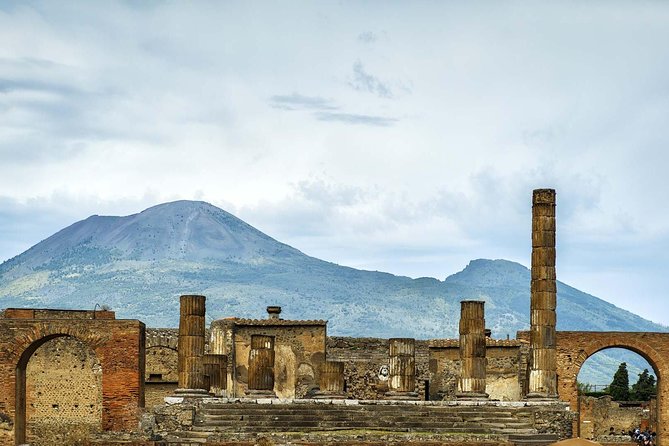
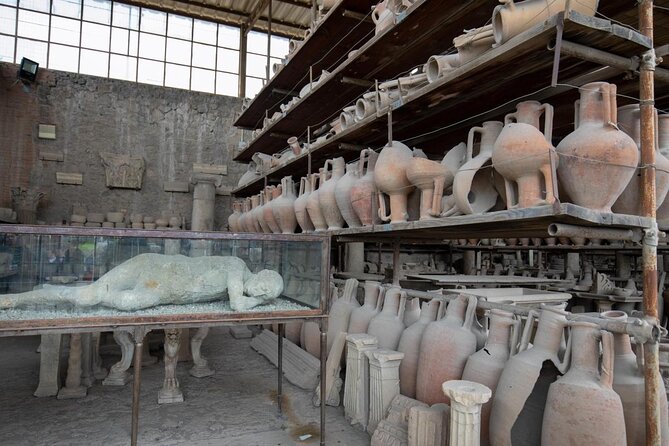
Inside Pompeii, the route is designed so the big ideas come first. You begin with the Archaeological Park of Pompeii under a private certified guide, and the highlights hit what you’d want to know as a first-timer: the Forum, plaster casts of victims, private homes, shops, the bath-house, the theatre area, and the eruption evidence tied to Mount Vesuvius.
Here’s how the key stops work:
The Forum of Pompeii (civic heart, and your easiest way to understand the city)
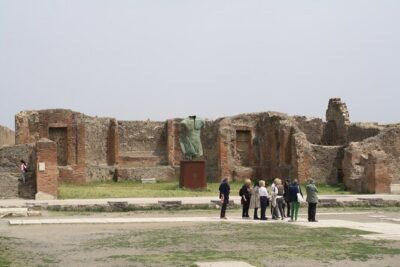
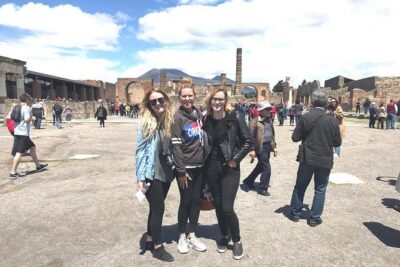
The Forum is Pompeii’s civic center, and it’s where politics, religion, and commerce all intersect. You’ll see the major surrounding structures from elevated walkways and terraces, which is a smart way to get orientation fast.
What you’ll notice with a guide is how layout becomes meaning. Temples, administrative buildings, and market structures frame daily public life, from announcements to festival moments. Without that explanation, the Forum can feel like a set of big ruins; with it, the square becomes a stage.
Smaller groups and quieter hours
The Basilica (Roman bureaucracy in stone)
The Basilica, dating to the 2nd century BC, is one of the oldest examples of its kind in the Roman world. It stands out because it’s imposing and purpose-driven. In your head, it helps to picture hearings, business, and formal civic activity happening inside these walls.
Temple of Apollo (religion in an open courtyard)
The Temple of Apollo sits in an open courtyard near the Forum. It’s tied to Apollo, the god of the sun, music, and prophecy. You’ll get a sense of what worship and offerings looked like in practice, not just as abstract mythology.
Porta Marina and the defensive walls (how the city controlled access)
Porta Marina was a main gate near the port area. It connects to Pompeii’s defensive walls and shows how the city welcomed (and managed) merchants, sailors, and visitors arriving from the Bay of Naples. You’ll spend only a short time here, but it’s valuable for perspective—your brain starts to imagine arrivals and street movement instead of only life inside.
Quick note on pacing
Several stops listed here are brief (a few minutes each). That’s not a flaw. It’s a deliberate strategy: you’re meant to see the highlights efficiently, then use your guide’s explanations to make each highlight feel bigger than its size.
Markets and public baths: where daily life becomes real
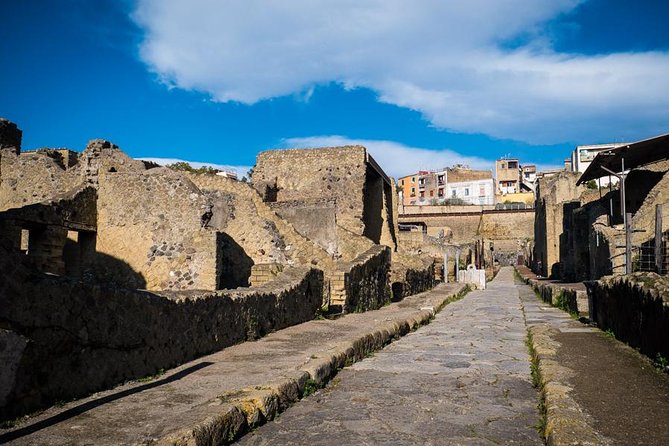
Pompeii wasn’t just temples and fancy villas. It was also food, routine, noise, and conversation. Two stops capture that best: the Macellum and the Forum Baths.
Macellum (Pompeii’s main food market)
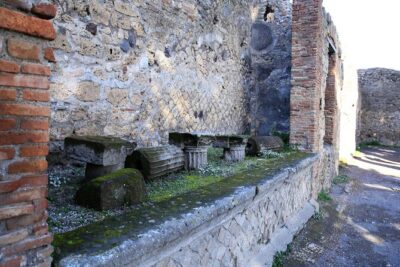
The Macellum was a covered complex where fish, meat, fruit, and imported delicacies moved through stalls and storerooms. You’ll get a feel for how Roman commerce worked day to day, not just how the elite lived.
What’s especially interesting here is the organization. The layout of counters and spaces suggests a system, like a supply chain for the city’s appetite. If you love food history (and who doesn’t), this stop is a reminder that Pompeii was a living economy.
Terme del Foro (Forum Baths and the hypocaust system)
The Forum Baths were one of the most elegant public bath complexes in Pompeii. You’ll see how baths were split into sections, and you’ll get a sense of the warmed-and-cooled rhythm of Roman hygiene and leisure.
Look for the advanced hypocaust heating system. Even when the architecture is ruin now, the concept comes through: someone designed heat to move under floors and through walls so people could soak and socialize. It’s a great reminder that Romans were engineers as much as they were builders of monuments.
Wealth and neighborhoods: Vettii, lovers, and what frescoes imply
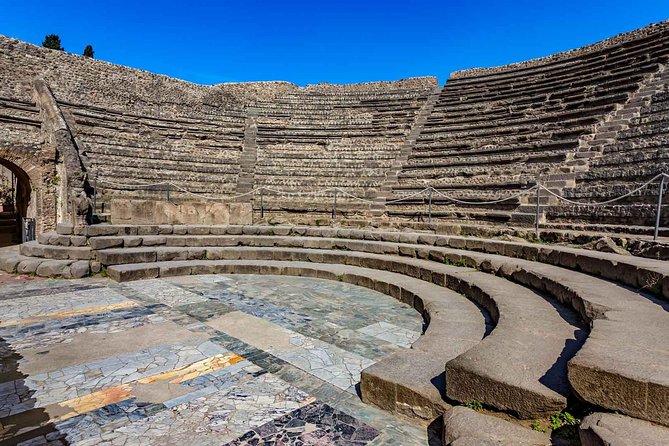
If Pompeii is the story of a whole city, then the houses and residential areas are how you hear its private voice.
Casa dei Vettii (elite life and art on everyday walls)
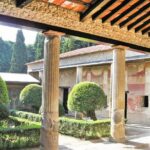
The House of the Vettii is known for richly decorated frescoes and an elegant layout around atria and peristyle gardens. This is the kind of place where the paintings are not just decoration—they show taste, mythological interests, and status.
If you’re the sort of person who wonders what people ate, wore, and talked about when they weren’t in public squares, this home helps you connect art to aspiration.
Insula dei Casti Amanti (a residential block with a social window)
This block is named after a lovers’ fresco. Today, access is via elevated ramps that let you see below without disturbing fragile archaeological surfaces. From above, you can picture workshops and domestic rooms working together, because in Pompeii those lines were often blurred.
This is also where the city’s unfinished moments feel close. Preserved frescoes, painted signs, and half-finished renovations create the sense of a neighborhood caught mid-routine at the moment of the eruption in AD 79.
Theatre and the Antiquarium: entertainment and context before the streets
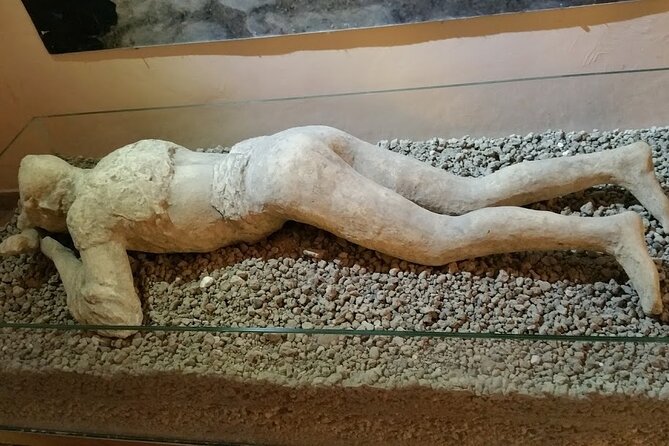
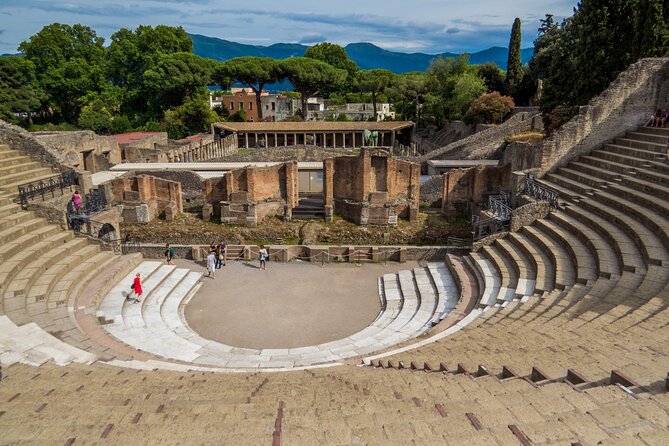
Pompeii’s theatre scene is a strong contrast to the quieter details of homes and baths.
Teatro Grande (Roman drama and a view back toward Vesuvius)
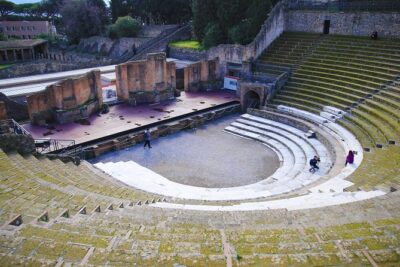
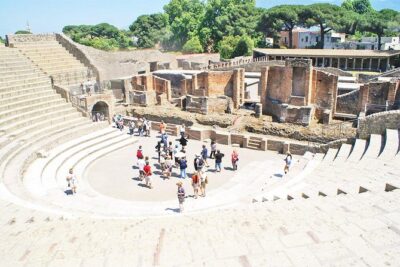
At the Teatro Grande, you look down onto the semicircular seating tiers and the stage area. The theatre’s location gives you commanding views toward the city and Mount Vesuvius, which makes the ruins feel like they belong to a living landscape.
With a guide, it’s easier to picture performances, crowds, and daily cultural life. Even if you only spend a short time here, the viewpoint does a lot of work.
Antiquarium di Pompei (the emotional and practical doorway)
The Antiquarium acts like a gateway before you wander deeper into the open site. Galleries show statues, household objects, inscriptions, jewellery, and other recovered items. Glass cases and organized layouts make delicate pieces visible in a way the open ruins can’t.
Then the museum layers in emotion: plaster casts of victims and eruption material that frames what you’re about to see outside. This helps you connect the scale of the tragedy to the physical evidence in the streets.
Premium Plus: adding the Villa of Mysteries for the best fresco focus
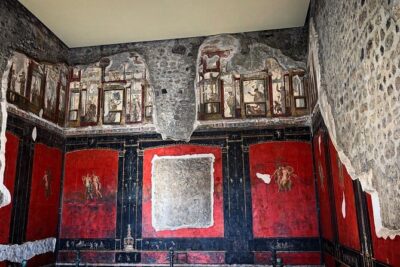
If you pick the Premium Plus option, you get access to the Villa of Mysteries. This site is famous for remarkably well-preserved frescoes depicting a Dionysian ritual, and it sits just outside the ancient city walls.
Premium Plus also includes an extended 3-hour private guided tour of Pompeii, giving you more time to absorb the city rather than moving through it like a highlights reel. The trade-off is time and cost: it’s for you if you want the extra depth, especially around fresco interpretation and belief systems.
Cantina del Vesuvio on Vesuvius slopes: wine with a view, not a pit stop
The volcano part is handled in a smart way. You don’t climb Mount Vesuvius. Instead, you enjoy stunning views of the volcano while moving between Pompeii and the winery, and then you head to the slopes for tasting and lunch.
At Cantina del Vesuvio (Russo Family Winery since 1930), you get:
- A guided tour of the vineyard and cellar
- A tasting of 5 wines (classic or superior)
- A 3-course lunch with traditional local ingredients
This winery is known for Lacrima Christi wines, which makes the tasting feel anchored in place rather than generic “Italian red and white” sampling.
What’s for lunch (this is the part you’ll remember)
The menu is substantial and local:
- Appetizer with salami, cheeses like provolone and ricotta, casatiello, roasted eggplant, and bruschetta with Piennolo tomatoes
- Pasta with Piennolo cherry tomatoes and basil
- Dessert: Neapolitan Pastiera with ricotta, cooked wheat, and candied fruit
Vegetarian, vegan, and gluten-free options are available, which matters because winery lunches often forget dietary needs. If you’re traveling with someone picky or with restrictions, this is worth checking early during booking so your meal matches the group’s rhythm.
And yes, you’ll have those Vesuvius views while you eat. That changes the vibe from tour day to experience day.
Price and value: is $575.35 per person worth it?
At $575.35 per person, this is not a budget Pompeii plan. You’re paying for three things that add up fast if you try to piece them together yourself:
1) Skip-the-line entry and admission included
You’re not arranging tickets, and you’re not spending your time in queues.
2) Private, guided storytelling inside a huge site
Pompeii is vast. A guide helps you avoid wandering without a point. That can turn a 2-hour visit into something you actually understand.
3) Round-trip transportation plus a winery tasting and lunch
The day ends with real food and a proper wine tasting experience on Vesuvius slopes, not just a snack.
So the value is strongest if:
- You want Pompeii explained, not just photographed
- You’re short on time
- You’ll appreciate the winery lunch as part of the day rather than treating it as filler
If you’d rather go at your own pace with a self-guided audio app and public transport, this may feel expensive.
Who this tour fits best (and who should skip it)
This tour is a great match for:
- First-time visitors who want the “how Pompeii worked” story fast
- People who hate logistical stress and want pickup and drop-off handled
- Food and culture travelers who will enjoy the market and bathhouse stops
- Wine lovers who want an actual tasting paired with lunch
It may not fit best if:
- You’re trying to keep costs low
- You want maximum time at one single area instead of a structured highlights route
- You strongly dislike walking on uneven terrain (the tour does require moderate fitness and good shoes)
Also, if mobility is a concern, the guide can help prioritize what’s possible. Danilo has been noted for understanding mobility issues and tailoring the experience to what guests can do.
Free cancellation is offered up to 24 hours in advance, so if your plans might shift, you have some breathing room.
Should you book this Pompeii with wine and lunch on Vesuvius?
If you want Pompeii to feel coherent—public life, home life, markets, baths, and the eruption story—book it. The combination of skip-the-line entry, a private certified guide, and a well-planned end at Cantina del Vesuvio is the kind of day that turns a famous site into a memorable one.
I’d especially recommend it if you’re traveling with limited time or you’ll struggle with the scale of Pompeii on your own. If you’re the type who enjoys being guided to the right stops, then this is the right mix of structure and freedom.
If, on the other hand, you’re craving a long, unstructured ramble and you don’t care about winery lunch, you might find better value in a simpler Pompeii self-guided plan.
FAQ
How long is the Pompeii with wine and lunch experience?
It runs about 5 to 7 hours.
Does this tour include skip-the-line tickets for Pompeii?
Yes. The experience includes skip-the-line tickets to help you move past the crowds outside Pompeii.
Is there a private guide?
Yes. You’ll have a private certified guide and a private tour format for your group.
Do I climb Mount Vesuvius during the tour?
No. The tour does not include a climb, but you will enjoy views of the volcano and go to the slopes for wine tasting and lunch.
What’s included at the winery on the Vesuvius slopes?
You get a guided tour of the vineyard and cellar, a tasting of 5 wines, and a 3-course lunch. Vegetarian, vegan, and gluten-free options are available.
Where does pickup happen?
Pickup is offered in Naples, Sorrento, Pompeii, and more, from hotels, vacation rentals, train station, airport, and cruise terminal/port. You specify your pickup place at booking.
Can I cancel for a full refund?
Yes. Free cancellation is allowed up to 24 hours in advance for a full refund.
Vesuvius, More Climbs to the Rim
- Pompeii Guided Tour & Horse Riding on Vesuvius with Lunch★ 5.0 · 419 reviews
- Private Day Tour to Vesuvius, Herculaneum & Pompeii with Pick Up★ 5.0 · 279 reviews
- Pompeii and Mount Vesuvius Small Group Tour★ 4.5 · 233 reviews
- Mount Vesuvius Tour from Pompeii Led by an Expert Guide★ 5.0 · 185 reviews
- Horseback Riding on Vesuvius★ 5.0 · 144 reviews
Small-Group and VIP Access
- PompeiI Exclusive Tour with your Archaeologist in a Small Group★ 4.5 · 363 reviews
- Fast Access Exclusive Private Ancient Pompeii Half Day Tour with Local Guide★ 5.0 · 54 reviews
- Half-Day Exclusive Private Tour of Pompeii and Herculaneum★ 5.0 · 49 reviews
- VIP Pompeii Tour including Newly Opened Houses With Archaeologist★ 5.0 · 33 reviews
- Skip-the-line Exclusive Private Full-Day Complete Ancient Pompeii Guided Tour★ 5.0 · 30 reviews
Skip-the-Line Entries, More to Book
- Skip the Line Guided Tour of Pompeii led by an Archaeologist★ 5.0 · 703 reviews
- Pompeii Private Tour with an Archaeologist and Skip The Line – 3 hours★ 5.0 · 564 reviews
- Pompeii Skip-the-line Tour with Archaeologist Guide★ 5.0 · 559 reviews
- Pompeii Private Tour with an Archaeologist and Skip The Line★ 5.0 · 391 reviews
- Complete Pompeii Skip the Line Tour with Archaeologist Guide★ 4.5 · 379 reviews
Just reviewed: more Pompeii tours and day trips




Pompeii Skip-the-Line Entry, compared.
 ★ 4.0Skip-the-Line Entrance Ticket with Audio GuideFrom $392,509 reviews
 ★ 4.6Skip-the-line-Ticket and Guided TourFrom $641,152 reviews
 ★ 4.9Guided Tour with Skip-the-Line EntryFrom $58812 reviews
 ★ 4.1Skip-the-Line Entry Ticket with Digital Guide AppFrom $22770 reviews
 ★ 4.9Pompeii Ruins Private Tour with Optional Skip-the-Line EntryFrom $254732 reviews
 ★ 5.0Skip the Line Guided Tour of Pompeii led by an ArchaeologistFrom $95703 reviews
 ★ 5.0Pompeii Private Tour with an Archaeologist and Skip The Line – 3 hoursFrom $302564 reviews
 ★ 5.0Pompeii Skip-the-line Tour with Archaeologist GuideFrom $71559 reviews
Browse the lists this tour appears in