
Reviewed · POMPEII ARCHAEOLOGIST-LED TOURS
2.5-Hour Guided Tour of Pompeii with an Archaeologist
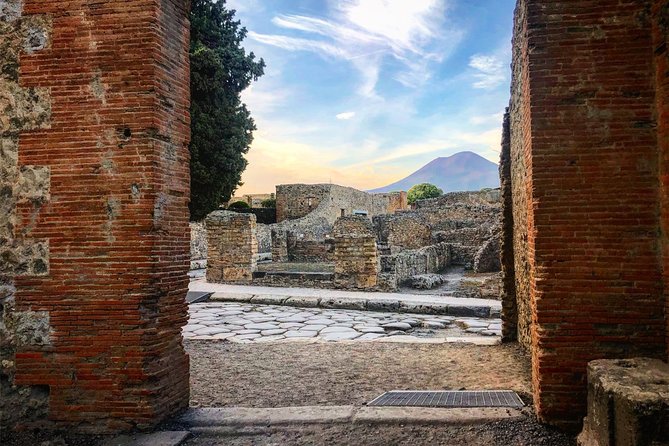
Pompeii feels close in just 2.5 hours. This 2-hour 30-minute guided walk in English uses skip-the-line entry and a small group (up to 10, with the activity capped at 15) to focus on the western part of the city and how daily life worked before AD 79. You’ll move from big public spaces to neighborhood streets, and the guide’s job is to turn scattered ruins into a place where people actually lived and ate.
The main tradeoff is pacing: it’s a tight route and there’s no scheduled break, so you’ll want to manage heat and questions without expecting lots of downtime. If you’re after very technical, super-deep history at every stop, you should be ready to ask direct questions early in the tour.
In This Review
- Key Highlights at a Glance
- What You’re Really Paying For at $71.20
- Meeting at Ristorante Bar Sgambati and Ending at the Forum
- The 2.5-Hour Western Pompeii Route: Basilica, Forum, Baths, Bakery, Homes
- Basilica: Where Law and Big Decisions Happened
- Forum: The City’s Social and Political Center
- Thermal Baths: How Social Life Mixed With Daily Care
- Bakery: Food Supply and Routine
- Residential Houses: Homes, Not Just Monuments
- The Big Picture Benefit (and a small drawback)
- Skip-the-Line Access: How It Changes Your Day
- Archaeologist-Led Guides: Francesco, Paulo, Ana, Vicenzo, Monica (and More)
- When the style might not match your preferences
- Timing, Heat, and the No-Break Reality
- After the Tour: Using the Forum Finish as Your Launch Point
- Should You Book This Pompeii Archaeologist Tour?
- FAQ
- How long is the Pompeii guided tour?
- Is the tour in English?
- Does the price include entrance tickets and skip-the-line access?
- How many people are in the group?
- Where do I meet the guide?
- Where does the tour end?
- What does the tour include and exclude?
- What if the weather is bad?
Key Highlights at a Glance
- Skip-the-line entry gets you into the ruins faster, so you spend more of your limited time seeing than waiting.
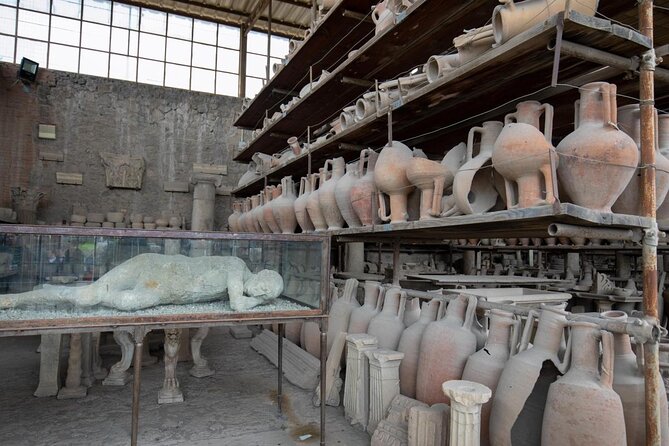
- Western Pompeii focus covers major landmarks like the Basilica and Forum, plus baths, a bakery, and residential areas.
- Small group size keeps the experience conversational, and it’s easier to spot what your guide is pointing out.
- Archaeologist-led storytelling connects buildings to everyday behavior—public life, food, bathing, and home routines.
- Mobile ticket in English keeps logistics simple and the tour straightforward to follow.
What You’re Really Paying For at $71.20
At $71.20 per person, this tour isn’t just “a walk with a guide.” You’re buying three practical things: a 2.5-hour guide-led route, entrance tickets, and skip-the-line access. For Pompeii, the entrance time and crowd management can make or break your day, so paying for that convenience can be a smart use of your time.
This tour is also sized to work well for a first visit. With a small group (up to 10, and the activity limit shown at 15), your guide can slow down enough for you to understand what you’re looking at—without turning it into a long, slow museum lecture.
Value tip: if you’re already planning to see Pompeii highlights, the price makes more sense than if you were hoping to add Pompeii on a whim. You’re paying to compress a lot of the most important parts of the site into a focused route.
More of the site walked with an archaeologist
- Pompeii and Herculaneum Small Group Tour with an Archaeologist
★ 5.0 · 1,350 reviews - Skip the Line Guided Tour of Pompeii led by an Archaeologist
★ 5.0 · 703 reviews - Pompeii Private Tour with an Archaeologist and Skip The Line – 3 hours
★ 5.0 · 564 reviews
Meeting at Ristorante Bar Sgambati and Ending at the Forum
The tour starts at Ristorante Bar Sgambati, Via Villa dei Misteri, 1, Pompei. It ends at the Forum of Pompeii, Via Villa dei Misteri, 2, Pompei. That end point matters, because you’ll finish in one of Pompeii’s central areas—useful if you plan to keep exploring afterward.
It’s also described as near public transportation, which is a relief if you don’t want to fight with parking or rely on a single ride option. Still, do yourself a favor and arrive a little early. In a site this large, being late can quietly cost you more than time—it can cost you the best order of stops.
One more small logistics point: you get a mobile ticket. That’s helpful when your phone signal cooperates and you don’t want to dig for paper.
The 2.5-Hour Western Pompeii Route: Basilica, Forum, Baths, Bakery, Homes
This is built as a “see the right pieces” route. The focus is the western part of Pompeii, with a guide leading you from the public core outward into daily life.
Basilica: Where Law and Big Decisions Happened
You’ll spend time at the Basilica, one of the big civic anchors of the city. This kind of building helps you understand Pompeii as more than ruins from one eruption—it was a functioning urban center with routines, rules, and regular public business.
Even if you’re not a history person, a good guide can show how spaces like this shaped people’s everyday movement: where they gathered, why they came, and what the building signaled about status and civic life.
Forum: The City’s Social and Political Center
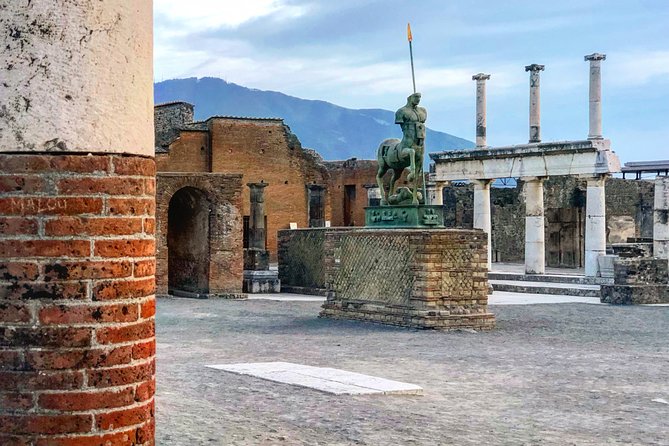
Next comes the Forum, Pompeii’s public stage. This is where you get a sense of how the city organized itself—movement, commerce, meetings, and daily visibility.
If you want one reason this tour feels satisfying, it’s because the Forum and Basilica give you a foundation. Once you understand the “public square” logic, the rest of the visit makes more sense.
More guided visits to choose


Thermal Baths: How Social Life Mixed With Daily Care
You’ll also see the thermal baths. Baths in Roman cities were more than hygiene. They were a social rhythm: meeting people, talking, unwinding, and spending time—sometimes for business, sometimes just because that’s what the day allowed.
Even when the walls are ruined, baths help you picture how bodies and conversations fit into the city layout.
Bakery: Food Supply and Routine
Pompeii’s bakery stop is a great reminder that survival and community ran on food. This is where the tour shifts from “grand civic spaces” to “the place that kept people fed.”
When a guide links this kind of site to everyday habits—what people ate, how food production worked, and how often supplies were needed—the ruins start acting like clues instead of stone.
Residential Houses: Homes, Not Just Monuments
You’ll also visit some residential houses. That’s important because Pompeii becomes truly memorable when you see the blend of public and private life.
Homes are where you can start thinking about household routines: where people gathered, how domestic space worked, and how wealth and family life could show up in architecture and layout.
The Big Picture Benefit (and a small drawback)
The biggest win is the structure: you cover major categories—public buildings, bathing culture, food production, and domestic life—without trying to do everything at once. The drawback is time compression. If you’re the type who wants to linger, take notes, and research every plaque you see, you may feel a little rushed.
Skip-the-Line Access: How It Changes Your Day
The tour includes skip-the-line access, plus admission tickets. That’s not a small detail in Pompeii. When you’re short on time, waiting at an entrance is the kind of delay that steals energy and focus.
Here’s how to make skip-the-line work in your favor:
- Have your mobile ticket ready on your phone screen.
- Don’t cut it close at the meeting point.
- Wear shoes you can stand in for a while, because the real walking starts right after you’re in.
Also, keep your expectations realistic about time. The stated duration is about 2 hours 30 minutes, but tours at Pompeii can run slightly shorter or longer depending on the group flow and onsite pacing. Plan your day so you’re not stuck rushing across the city afterward.
Archaeologist-Led Guides: Francesco, Paulo, Ana, Vicenzo, Monica (and More)
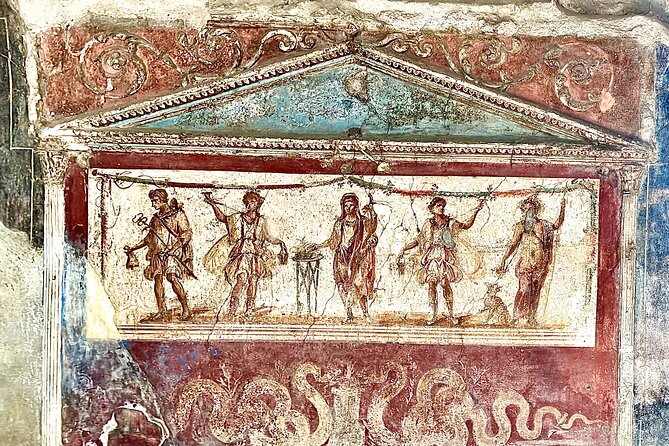
This experience is led by an archaeological guide, and the guide quality is the difference between seeing ruins and understanding them.
Some of the names you may encounter include Francesco, Paulo, Ana, Vicenzo, and Monica. Across those styles, the strongest repeated theme is delivery: guides who bring the city to life with clear explanations and a sense of humor, while still pointing you at the details you’re meant to notice.
A practical advantage of a good guide: they can answer your questions in a way that feels respectful and useful. That matters at Pompeii, because a lot of what you see is easy to misread if you don’t know what you’re looking for.
When the style might not match your preferences
Not every guide approach will click for every person. Some people prefer a more straightforward, deeply factual explanation at each stop. If your ideal Pompeii tour is very academic and heavy on evidence, you should treat this as a guided highlights-and-life tour first, not a graduate seminar.
Also note that one complaint mentioned the guide using more general materials and a less-history-forward approach. That’s why timing your questions matters. If something doesn’t feel detailed enough, speak up early—politely—and ask for specifics about what you’re seeing.
And yes, group dynamics can affect the vibe. Small groups are supposed to be conversational, so if you feel uncomfortable asking questions, that’s a red flag for how the guide is running the experience.
Timing, Heat, and the No-Break Reality
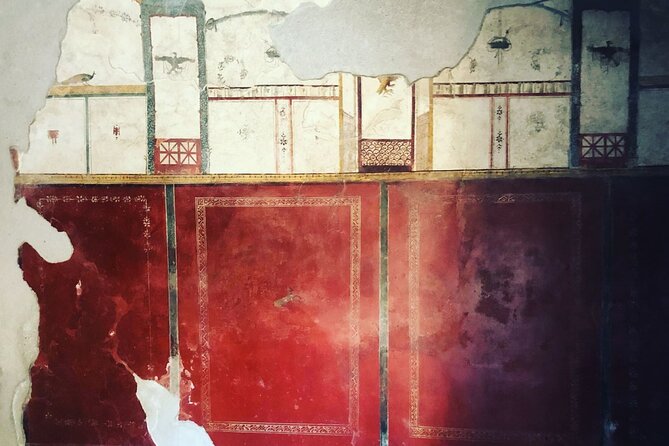
You’re going to walk. Pompeii is an outdoor site with sun, and the tour is structured as a steady sequence of stops rather than a casual stroll with frequent pauses. The tour does not list a scheduled break, and that’s something to factor in before you go.
How to handle it:
- Bring water and take small sips when you’re able.
- Wear a hat and sunscreen if you’re visiting in warm months.
- Expect some stretches of uneven ground and keep your attention on footing.
One more thing: the tour duration is listed as roughly 2.5 hours, but people have reported it finishing closer to 2 hours at times. That doesn’t mean you wasted your money—it often means the tour stayed efficient. Still, if you’re planning the rest of your day tightly, give yourself breathing room.
After the Tour: Using the Forum Finish as Your Launch Point
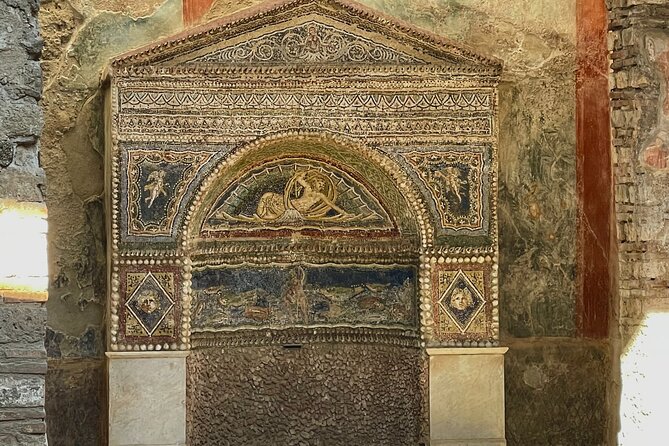
Because the tour ends at the Forum of Pompeii, you’re positioned in a smart place to keep exploring on your own. The best use of that free time is to follow your guide’s mental roadmap: return to spots you found most interesting, and look for the building type you just learned about—public space, baths, food, or homes.
Your guide’s notes can also help you “read” the ruins faster. Once you understand how different parts of the city functioned, it’s easier to spot what matters instead of getting lost in the scale.
If you have time for only one extra wander, focus on nearby areas you can connect back to what you already saw with the guide.
Should You Book This Pompeii Archaeologist Tour?
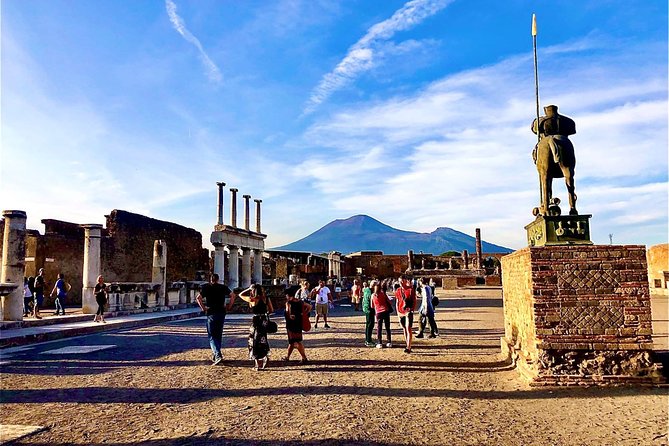
Book it if you want a tight, well-paced guided highlights tour in English, with entrance tickets and skip-the-line access bundled in, and you like the idea of learning how people lived through buildings like the Basilica, Forum, baths, bakery, and houses.
Consider another option if you need a long break, you expect a very detailed, technical lecture style throughout, or you’re extremely sensitive to timing variance. Pompeii is big, and a focused tour is exactly that—a focus.
If you’re deciding between guessing your way through the ruins and getting the right context fast, this is a solid choice.
FAQ
How long is the Pompeii guided tour?
The tour is about 2 hours 30 minutes.
Is the tour in English?
Yes, it’s offered in English.
Does the price include entrance tickets and skip-the-line access?
Yes. Entrance tickets are included, and the tour includes skip-the-line access.
How many people are in the group?
It’s described as a small group with a maximum of 10 people, and the activity also lists a maximum of 15 travelers.
Where do I meet the guide?
The meeting point is Ristorante Bar Sgambati, Via Villa dei Misteri, 1, 80045 Pompei NA, Italy.
Where does the tour end?
The tour ends at the Forum of Pompeii, Via Villa dei Misteri, 2, 80045 Pompei NA, Italy.
What does the tour include and exclude?
Included: the 2-hour 30-minute guided visit, entrance tickets, and skip-the-line access. Not included: parking area and transport.
What if the weather is bad?
The experience requires good weather. If it’s canceled due to poor weather, you’ll be offered a different date or a full refund.
More Guided in Pompeii
- Skip the Line Guided Tour of Pompeii led by an Archaeologist★ 5.0 · 703 reviews
- Pompeii private tour with an Official Guide★ 5.0 · 631 reviews
- Pompeii Skip-the-line Tour with Archaeologist Guide★ 5.0 · 559 reviews
- Pompeii Guided Tour & Horse Riding on Vesuvius with Lunch★ 5.0 · 419 reviews
- Complete Pompeii Skip the Line Tour with Archaeologist Guide★ 4.5 · 379 reviews
More Tour Reviews in Pompeii
- Pompeii Small Group Tour with an Archaeologist★ 5.0 · 6,593 reviews
- Discover the Ancient Ruins of Pompeii: Day Trip from Rome★ 3.5 · 2,247 reviews
- Pompeii and Herculaneum Small Group Tour with an Archaeologist★ 5.0 · 1,350 reviews
- Skip the Line Guided Tour of Pompeii led by an Archaeologist★ 5.0 · 703 reviews
- Pompeii Ticket + Tour with Optional Tasting Experience at Pompeii★ 5.0 · 663 reviews
More Tours Led by an Archaeologist
- Pompeii Small Group Tour with an Archaeologist★ 5.0 · 6,593 reviews
- Pompeii and Herculaneum Small Group Tour with an Archaeologist★ 5.0 · 1,350 reviews
- Skip the Line Guided Tour of Pompeii led by an Archaeologist★ 5.0 · 703 reviews
- Pompeii Private Tour with an Archaeologist and Skip The Line – 3 hours★ 5.0 · 564 reviews
- Pompeii Skip-the-line Tour with Archaeologist Guide★ 5.0 · 559 reviews
Just reviewed: more Pompeii tours and day trips




Pompeii Archaeologist-Led Tours, compared.
 ★ 4.8Entry Ticket and Guided Tour with an ArchaeologistFrom $3519,459 reviews
 ★ 4.8Small Group Tour with an ArchaeologistFrom $4012,264 reviews
★ 5.0Pompeii Small Group Tour with an ArchaeologistFrom $356,593 reviews
★ 4.8Small Group Tour with an ArchaeologistFrom $4012,264 reviews
★ 5.0Pompeii Small Group Tour with an ArchaeologistFrom $356,593 reviews
 ★ 5.0Pompeii and Herculaneum Small Group Tour with an ArchaeologistFrom $771,350 reviews
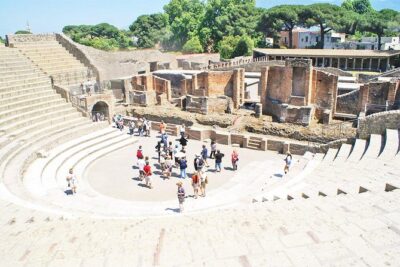 ★ 5.0Skip the Line Guided Tour of Pompeii led by an ArchaeologistFrom $95703 reviews
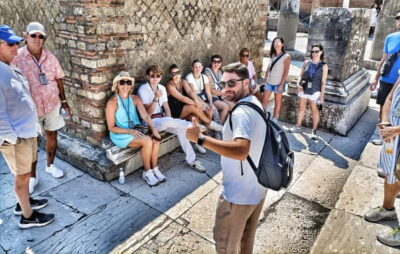 ★ 4.9Exclusive Tour with Archaeologist and Entry TicketsFrom $50634 reviews
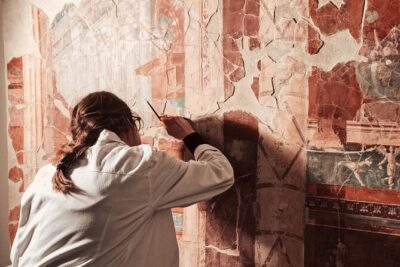 ★ 5.0Pompeii Private Tour with an Archaeologist and Skip The Line – 3 hoursFrom $302564 reviews
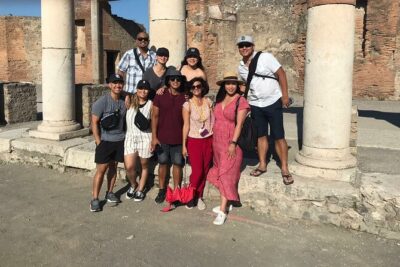 ★ 5.0Pompeii Skip-the-line Tour with Archaeologist GuideFrom $71559 reviews
Browse the lists this tour appears in