

Reviewed · POMPEII SKIP-THE-LINE ENTRY
Pompeii: Skip-the-Line Ticket with Audio Guide and Map
Pompeii is the kind of place that rewards your pace. This skip-the-line ticket plus an audio guide and updated map helps you see the big moments without getting lost in one of the world’s largest archaeological sites. I especially like that it lets you go on your own schedule while still having a path through the highlights.
I also like the practical setup: you get an audio guide and a map right up front, and the audio format is easy to manage when you’re walking and looking at frescoed walls, bath complexes, and streets that still feel eerily alive. One more plus: Pompeii is huge (about 66 hectares), so having an updated map matters more than most people expect.
The main thing to watch is simple: Pompeii is hot and spread out, and you need to plan for water and sun. Also, the map can feel a little tricky at times, and in one case the map had items that weren’t reflected in the audio guide, so I recommend using both as navigation tools, not as a perfect one-to-one match.
In This Review
- Key things to know before you go
- Pompeii in One Day: How Big Is It Really?
- Skip-the-Line Entry: Why It’s Worth Paying for the Head Start
- Getting Your Audio Guide and Map: Easy Control for a Self-Tour
- What You’ll See Walking Through Pompeii’s Main Highlights
- Frescoed houses (domus): more than just pretty walls
- Spas and temples: public life in stone and tile
- Thermopolis: the ancient fast-food stop
- Theaters and brothels: the city’s entertainment side
- Casts of the victims: the human side hits hard
- One of the best-preserved Roman amphitheaters
- Timing Your Visit: Build a Day That Doesn’t Feel Like a Race
- Price and Value: Is $44 a Good Deal for Pompeii?
- Practical Tips That Make the Day Easier
- Who This Skip-the-Line Audio Ticket Is Best For
- Should You Book This Pompeii Skip-the-Line Ticket?
- FAQ
- How long is the Pompeii ticket valid?
- What’s included with the ticket?
- Is it a skip-the-line experience?
- What languages are available for the audio guide?
- Are there host or greeters on-site?
- What should I bring with me?
- Is luggage allowed?
- Is this suitable for people with mobility impairments?
Key things to know before you go
- Skip-the-line entry helps you avoid wasting time before you’re even inside the ruins
- Audio guide + updated map let you self-tour while still hitting Pompeii’s key zones
- Pompeii’s size is real (about 66 hectares), so a flexible plan beats rushing
- Bring water and sun gear since it’s a walking day and food can be hard to find
- Large bags aren’t allowed, so travel light and pack smart
- Not suitable for mobility impairments due to the walking surfaces and site layout
Pompeii in One Day: How Big Is It Really?
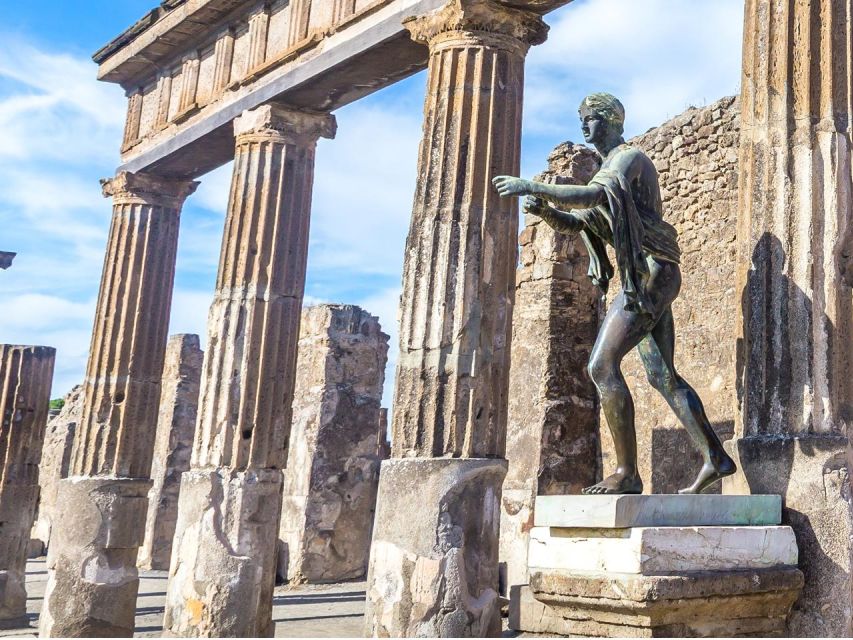
Pompeii isn’t a quick stop. It’s an ancient city spread over roughly 66 hectares, and it draws around 3 million visitors each year. That scale changes how you should plan your day: you want momentum, but not stress.
This ticket works for a one-day visit because it gives you freedom with guardrails. Instead of waiting in line and then trying to build an itinerary from scratch, you walk in with an audio guide and an updated map already in your hands. For many people, that means you can spend more energy looking closely instead of figuring out where to go next.
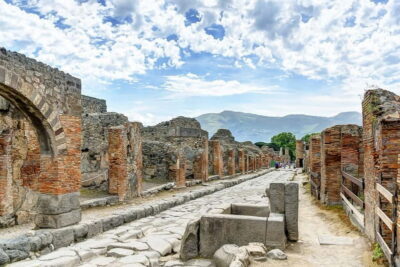
You’ll also notice that Pompeii is a place of layers. You’re not just looking at stones; you’re moving through streets, shop spaces, and public buildings that connect into neighborhoods. When you have an audio guide, those connections make more sense fast, even if you’re moving at your own pace.
More ways past the ticket queue
- Pompeii: Skip-the-Line Entrance Ticket with Audio Guide
★ 4.0 · 2,509 reviews - Pompeii: Guided Tour with Skip-the-Line Entry
★ 4.9 · 812 reviews - Pompeii: Skip-the-Line Entry Ticket with Digital Guide App
★ 4.1 · 770 reviews
Skip-the-Line Entry: Why It’s Worth Paying for the Head Start
Paying for skip-the-line at Pompeii is one of those travel choices that feels small until you’re standing there watching other people wait. When you’re in a hurry to see the ruins before the day slips away, time really matters.
With this option, you’re essentially buying back that time. You still walk the site like everyone else, but you start your sightseeing sooner. One practical note from real-world experience: even when you arrive early, there can be lines for specific ticket types (like children’s tickets). The skip-the-line part generally helps, but it doesn’t mean the day will run like a movie montage with zero waiting anywhere.
Also, you’re dealing with a major archaeological site, so expect some crowding in the most popular corridors and viewpoints. Your best defense is simple timing: start early, then let your walking plan do the heavy lifting.
Getting Your Audio Guide and Map: Easy Control for a Self-Tour
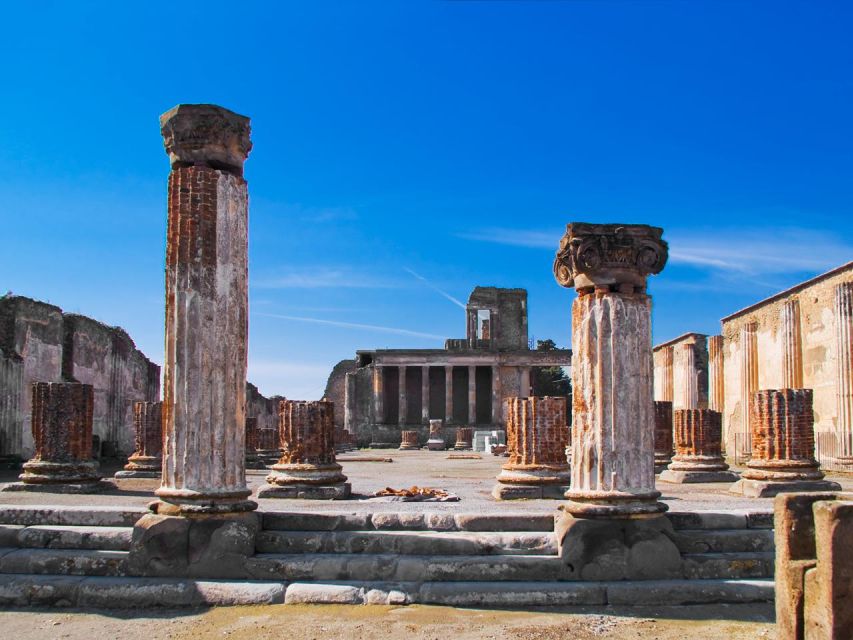
The biggest advantage here is that you don’t need a formal group tour. You get an audio guide and an updated map, and you move at your own pace through the ancient streets and standout buildings.
I like audio guides for ruins, because they help you understand what you’re seeing without demanding that you stay glued to a guide’s pace. In one case, the audio guide was described as very easy to handle, which matches how this kind of self-guided setup usually feels: you can pause, rewind in your head, or simply take your time as you look at frescoed walls and architectural details.
That said, there’s one caution worth taking seriously. In at least one experience, the map included some items that weren’t covered by the audio guide. So treat them like teamwork: the map helps you find, while the audio helps you understand. If you spot something the audio doesn’t mention, don’t panic. You can still enjoy it visually, and move on when it’s time.
What You’ll See Walking Through Pompeii’s Main Highlights
Pompeii is best understood by walking through recognizable categories of life in a Roman city: home, work, worship, and public entertainment. With this ticket, you’re free to stitch together your own route, but the audio guide and map are designed around Pompeii’s key zones.
Here’s what you can expect to encounter across the city:
Frescoed houses (domus): more than just pretty walls
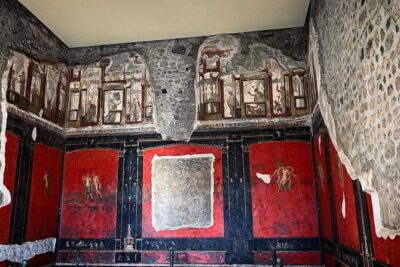
You’ll be drawn to the homes—especially the ones with well-preserved interior artwork. These domus weren’t just places to sleep; they were status statements and everyday stages for how people lived.
If you’re the type who stops to zoom in on details, domus areas are where you’ll feel rewarded. The frescoes and layout give you a sense of privacy, display, and daily routine. In a self-tour setup, you can spend longer here without feeling behind.
One practical thought: domus areas can be busy, so if you want calmer viewing, move in waves—watch the crowd swell, then step into the next courtyard or corridor.
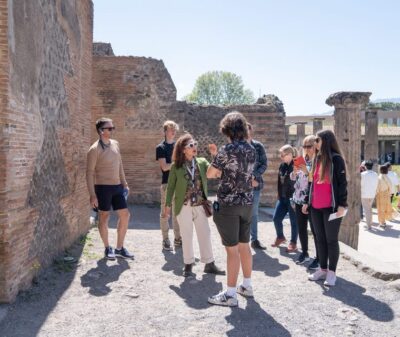
Set your own pace with an audio guide




Spas and temples: public life in stone and tile
Roman cities didn’t separate “religion” and “community” the way modern cities often do. In Pompeii, you’ll run into spaces that look built for gathering—spas, temples, and other civic structures.
These are the spots where the audio guide can really help, because the meaning of the space isn’t always obvious at first glance. You’ll get more out of it when you understand how these buildings functioned in daily routines and social life.
Thermopolis: the ancient fast-food stop
Thermopolium (often referred to as thermopolis) is one of those Pompeii details that makes the ruins feel startlingly human. It’s basically the period’s version of quick meals and drinks—places where people grabbed something on the move.
This is great for your one-day visit because it’s memorable and easy to connect to modern life. If you like those “this is how they ate” moments, don’t rush past it.
Theaters and brothels: the city’s entertainment side
Pompeii doesn’t try to be polite about Roman behavior. You’ll see theaters and also brothel-related areas in the broader complex of what the city provided for entertainment and vice.
In a self-guided tour, this is where timing becomes your friend. You might feel more comfortable taking breaks and giving yourself control over what you want to linger on and what you want to skim.
Also, it helps to know that Pompeii offers variety beyond temples and villas. This ticket lets you choose the balance.
Casts of the victims: the human side hits hard
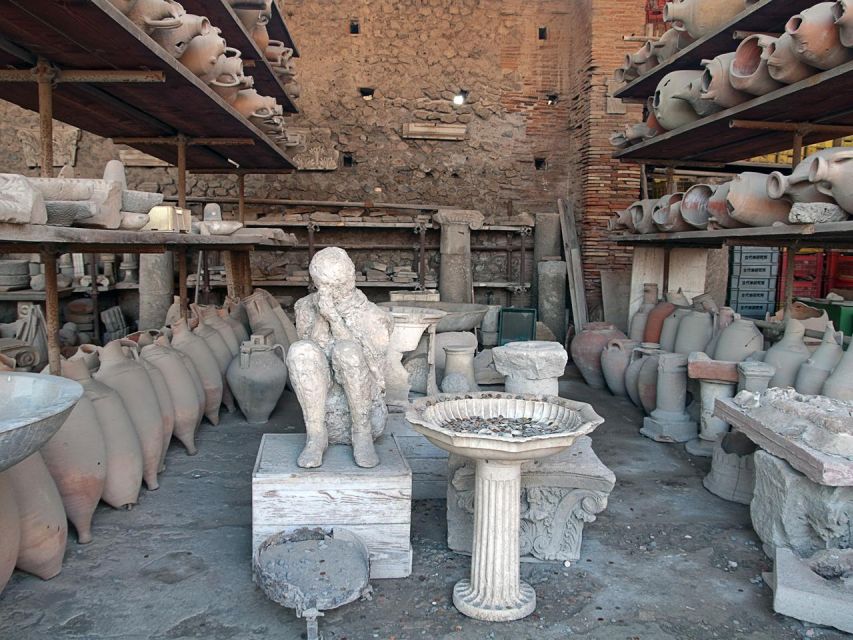
One of Pompeii’s most emotional sites is the cast area showing the victims of the eruption. Even if you’ve seen photos before, being there in person is different. The scale and placement can make it sink in.
This is the part of Pompeii where I suggest slowing down and letting the audio guide anchor the story. When the guide explains what you’re looking at, you’re not just staring at shapes—you’re understanding the moment behind them.
One of the best-preserved Roman amphitheaters
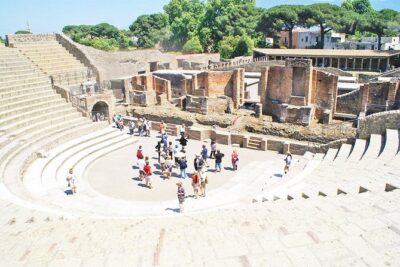
The amphitheater is a major highlight, and for a reason: it’s a big, clear example of how Roman entertainment was staged. If you want a single “wow” stop that feels like a real destination, aim for the amphitheater as one of your anchor points.
Since you’re self-guided, you can decide when to hit it based on crowd patterns and your energy level. Early or late can feel different, so having audio + map means you can plan the timing rather than getting trapped by logistics.
Timing Your Visit: Build a Day That Doesn’t Feel Like a Race
This is a one-day ticket, so the difference between a good day and a frustrating day is usually your pacing. Pompeii is large, and even with skip-the-line entry you still have to do the walking.
A real-world approach that works well is choosing a small set of “musts” and then building flexible wandering around them. For example:
- pick a domus area you want to see up close
- add the amphitheater as your big anchor
- make sure you include the casts and at least one public-building type (spas/temples/thermopolis)
Then leave space for the surprises. Pompeii has that effect where a side street or courtyard catches your eye and you lose track of time. If you’re not under pressure to meet a group, that’s when the ruins start to feel personal.
Water and breaks matter. One traveler advice was blunt: bring enough water because it’s warm and food can be hard to find. That’s a common reality at major sites—there may be places to eat, but they’re not always convenient or easy to locate while you’re moving.
Price and Value: Is $44 a Good Deal for Pompeii?
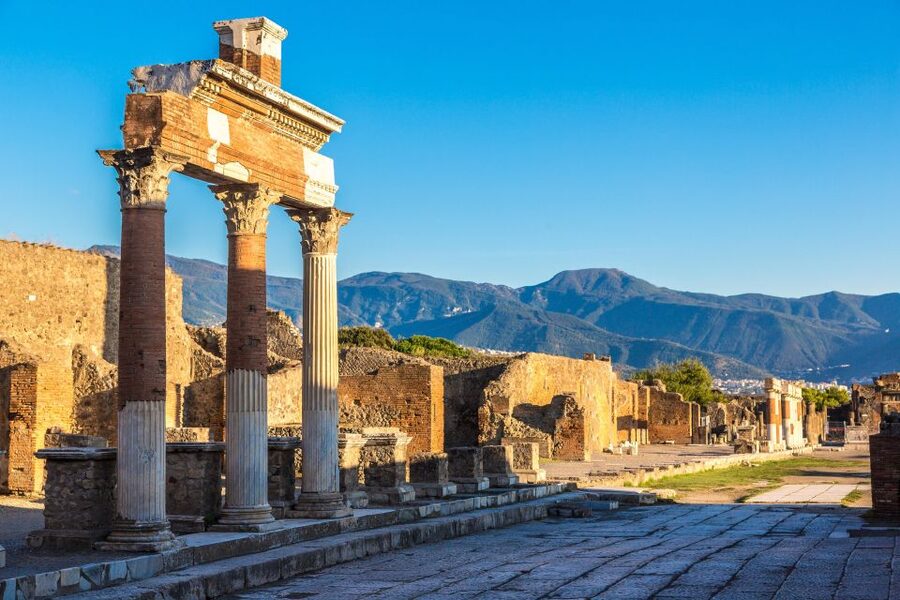
At $44 per person, you’re paying for two things: skip-the-line entry and the audio guide plus updated map. The value isn’t just in the convenience; it’s in how much time you can save for actual sightseeing.
If you’ve ever toured a huge site, you know that wasted time is the hidden cost. By skipping the main ticket line, you shift your day toward the ruins themselves, not the entry bottleneck. And the audio guide is practical—Pompeii has lots of architectural and daily-life details that you’d miss if you’re just staring without context.
You’ll get the best value if you plan to walk a lot and you want a self-guided experience that still feels guided. If you’d rather have a structured group tour with a live explanation at every stop, you might feel like audio-only is less satisfying. But if you like control over your pace, this setup is a strong bargain for Pompeii’s scale.
Practical Tips That Make the Day Easier
Pompeii is the kind of place where the basics decide whether you enjoy it.
Here’s what to bring and how to prepare, based on the practical guidance for this ticket:
- Comfortable shoes (you’ll walk more than you think)
- Hat and sunscreen (sun exposure adds up fast)
- Water (don’t wing it)
- Avoid bringing luggage or large bags (not allowed)
Also, be ready for signs that can feel unclear at times. One experience described signing as unclear, and that matches what I’ve seen in other major historic sites: once you enter, you’re navigating a lot of entrances, streets, and route choices. Having the map helps, but it still pays to stay calm and use it like a planning tool, not a perfect GPS.
Who This Skip-the-Line Audio Ticket Is Best For

This ticket fits people who want freedom with structure—no group pressure, but enough guidance to appreciate the site.
You’ll likely enjoy it if:
- you prefer exploring on your own schedule
- you like audio explanations while you look around
- you want to hit major Pompeii highlights in one day without getting lost
It’s less ideal if:
- you have mobility impairments (the site isn’t suitable per the tour info)
- you want a guided lecture style experience at each stop
One traveler even timed their own route from 10:00 to 17:00 and found it productive—exactly the kind of flexible day this format supports.
Should You Book This Pompeii Skip-the-Line Ticket?
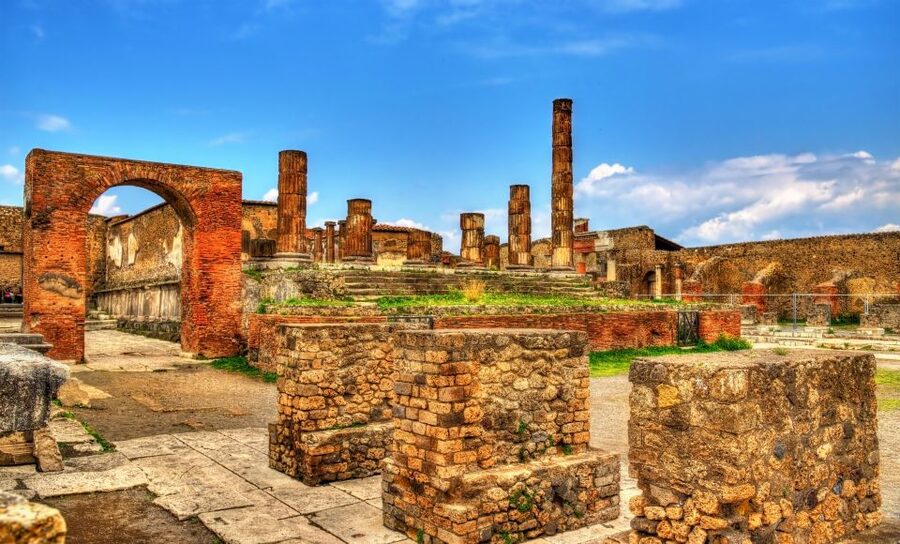
Yes, if you want the best of both worlds: skip the ticket-line stress and still tour Pompeii at a pace you control. At $44, the value is strongest when you’ll actively use the audio guide and map and when you’re comfortable planning a route with your own priorities.
Skip this one if you’re looking for a fully hosted tour with continuous live guiding, or if you know the walking demands won’t work for your body. But for most visitors doing Pompeii as a self-guided day, this is a smart, efficient way to see the city’s biggest highlights without wasting your precious hours outside.
FAQ
How long is the Pompeii ticket valid?
The ticket is valid for 1 day, and you should check available starting times.
What’s included with the ticket?
You get the Pompeii entrance ticket, an audio guide, and an updated map.
Is it a skip-the-line experience?
Yes, it’s a skip-the-line ticket.
What languages are available for the audio guide?
The audio guide is available in English, Chinese, French, Italian, German, Hebrew, Russian, Spanish, and Portuguese.
Are there host or greeters on-site?
Yes. A host or greeter is available in English, Spanish, French, and Italian.
What should I bring with me?
Bring comfortable shoes, a hat, sunscreen, and water.
Is luggage allowed?
No. Luggage or large bags are not allowed.
Is this suitable for people with mobility impairments?
No, it is not suitable for people with mobility impairments.
More Tour Reviews in Pompei Campania
- Pompeii: Entry Ticket and Guided Tour with an Archaeologist★ 4.8 · 19,459 reviews
- Pompeii: Small Group Tour with an Archaeologist★ 4.8 · 12,264 reviews
- Pompeii: Skip-the-Line Entrance Ticket with Audio Guide★ 4.0 · 2,509 reviews
- Naples: Pompeii and Mt. Vesuvius with Lunch and Wine Tasting★ 4.5 · 2,454 reviews
- Pompeii: Skip-the-line-Ticket and Guided Tour★ 4.6 · 1,152 reviews
More Audio-Guided Visits
- Pompeii: Skip-the-Line Entrance Ticket with Audio Guide★ 4.0 · 2,509 reviews
- Pompeii: Skip-the-Line Entry Ticket with Digital Guide App★ 4.1 · 770 reviews
- Pompeii: Skip-the-Line Entry & Audioguide★ 3.8 · 225 reviews
- Pompeii: Skip-the-Line Ticket with Audio Guide and Map★ 4.0 · 117 reviews
- From Pompeii: Vesuvius Entry with Transfer and Audioguide★ 4.2 · 74 reviews
Skip-the-Line Entries, More to Book
- Pompeii: Skip-the-Line Entrance Ticket with Audio Guide★ 4.0 · 2,509 reviews
- Pompeii: Skip-the-line-Ticket and Guided Tour★ 4.6 · 1,152 reviews
- Pompeii: Guided Tour with Skip-the-Line Entry★ 4.9 · 812 reviews
- Pompeii: Skip-the-Line Entry Ticket with Digital Guide App★ 4.1 · 770 reviews
- Pompeii: Tour with Archaeologist Guide & Skip-the-Line Entry★ 4.5 · 478 reviews
Just reviewed: more Pompei Campania tours and day trips



Pompeii Skip-the-Line Entry, compared.
 ★ 4.0Skip-the-Line Entrance Ticket with Audio GuideFrom $392,509 reviews
 ★ 4.6Skip-the-line-Ticket and Guided TourFrom $641,152 reviews
 ★ 4.9Guided Tour with Skip-the-Line EntryFrom $58812 reviews
 ★ 4.1Skip-the-Line Entry Ticket with Digital Guide AppFrom $22770 reviews
 ★ 4.9Pompeii Ruins Private Tour with Optional Skip-the-Line EntryFrom $254732 reviews
 ★ 5.0Skip the Line Guided Tour of Pompeii led by an ArchaeologistFrom $95703 reviews
 ★ 5.0Pompeii Private Tour with an Archaeologist and Skip The Line – 3 hoursFrom $302564 reviews
 ★ 5.0Pompeii Skip-the-line Tour with Archaeologist GuideFrom $71559 reviews
Browse the lists this tour appears in