
Reviewed · POMPEII SKIP-THE-LINE ENTRY
Pompeii Skip the Line Ticket + Guide Book with itineraries
Pompeii feels huge at first glance. What makes this setup work is the skip-the-line ticket and the take-home guidebook itineraries (2, 4, or 6 hours) that help you steer your day without needing a live guide. My only caution: it’s truly self-guided, so you’ll want solid shoe-leather time and you’re also paying for the ticket + book even if you might qualify for special/free entry (worth double-checking before you buy).
I like that you can enter from 9:00 am to 5:00 pm and still choose how intense you want the visit to be. The book stays with you as a souvenir, and the included map makes it easier to find the big sights fast. The practical drawback is simple: no transfer, no guide, and no food—so you’ll need to plan your day around getting there and carrying water.
If you want Pompeii with less stress and more control, this is a tidy way to do it.
In This Review
- Key things to know before you go
- Price and what you actually get for $41
- Piazza Anfiteatro entry: how to reduce waiting for real
- A self-guided day in Pompeii, with guardrails
- What you’ll see: Pompeii’s main categories, not just random ruins
- Timing your route: picking 2, 4, or 6 hours
- Two-hour route: the “greatest hits”
- Four-hour route: the sweet spot
- Six-hour route: for the ruins-obsessed
- How to make the most of your self-guided freedom
- The human side of Pompeii: why the guidebook routes help
- Who this ticket is best for (and who should consider something else)
- Should you book? My practical verdict
- FAQ
- Where is the meeting point for Pompeii entry?
- What’s included with the ticket?
- Do I get an on-site guide?
- What time can I enter Pompeii?
- What languages are available?
- What should I bring to visit Pompeii?
Key things to know before you go
- Skip-the-line access helps you start your day faster at the archaeological park entrance.
- 2/4/6-hour itineraries let you match Pompeii to your stamina and attention span.
- Updated map + guided routes reduce the “where am I now?” feeling inside the ruins.
- Big Pompeii hits are covered: frescoed houses, baths, temples, theaters, and the amphitheater area.
- Casts of victims are part of the experience, so you get the emotional core of the site too.
- One guidebook per two people means sharing is built in.
Price and what you actually get for $41
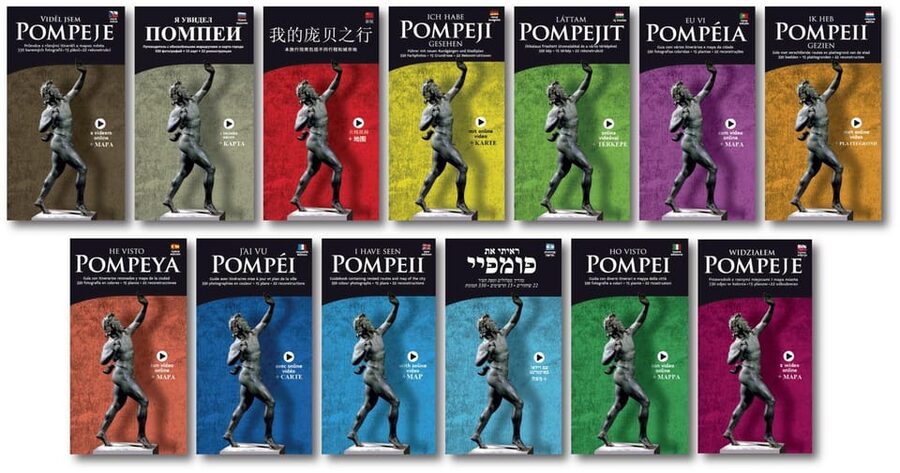
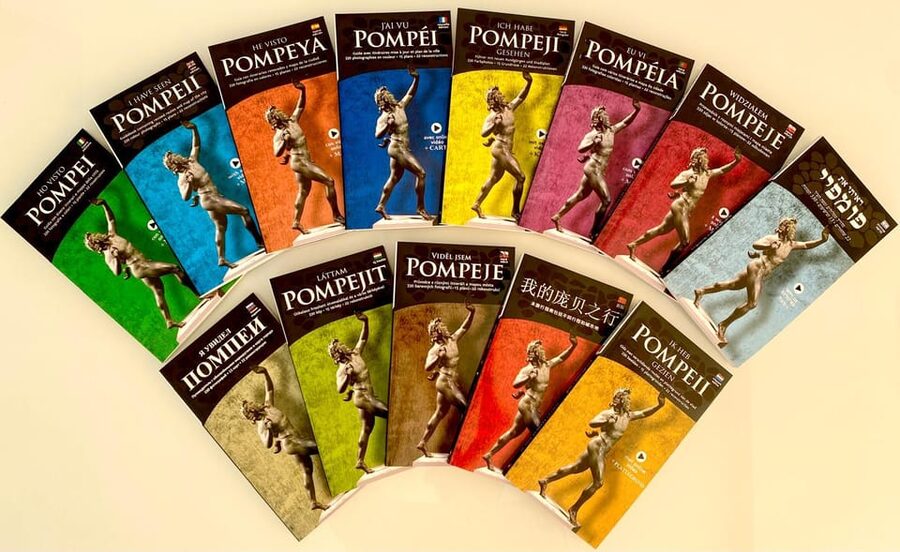
At about $41 per person for a 1-day Pompeii visit, you’re paying for three practical things: (1) an entry ticket that’s meant to reduce waiting, (2) a guidebook in 13 languages that includes routes, and (3) a map to help you navigate on your own.
That’s good value if you prefer independence but still want structure. It’s less ideal if you mainly want a fast look and you already know Pompeii well, or if you were hoping for a full guided walk with a speaking instructor in the park. This package does not include an on-site guide or transportation, so budgeting for getting there (and for snacks/water) is on you.
One note from real-world feedback: sometimes people feel the ticket price isn’t fair if they expected certain admissions to be free or discounted for their group (for example, seniors or certain children). I’d treat that as a reminder to check any personal eligibility rules before you lock in the purchase, so you’re not overpaying.
More ways past the ticket queue
- Pompeii: Skip-the-Line Entrance Ticket with Audio Guide
★ 4.0 · 2,509 reviews - Pompeii: Guided Tour with Skip-the-Line Entry
★ 4.9 · 812 reviews - Pompeii: Skip-the-Line Entry Ticket with Digital Guide App
★ 4.1 · 770 reviews
Piazza Anfiteatro entry: how to reduce waiting for real
Your access point matters more than most people think in Pompeii. You’ll enter through the Piazza Anfiteatro entrance, and you meet the operators at the information point at VIA ROMA 123, POMPEI.
When you arrive, you don’t need to guess or hunt for a random office. You show your voucher to the operator at that information point for easy access to the archaeological park. This is the kind of detail that saves time when you’re dealing with crowds, heat, and limited daylight.
Practical tip: if you’re trying to maximize your 2-, 4-, or 6-hour route choice, being there early in your time window helps you get into the flow before the site feels packed.
A self-guided day in Pompeii, with guardrails
The heart of this experience is that you’re not stuck in a slow, stop-and-start group pattern. You explore at your own pace, using the guidebook and updated map to choose where to spend time.
The guidebook’s value is that it’s not just facts. It’s designed with itineraries for two, four, or six hours, so you can build a day that matches your interests:
- If you want a quick but meaningful circuit, pick the shortest route and prioritize the major anchor sights.
- If you want time to linger, the 4-hour plan is a nice balance for walking, reading, and taking photos.
- If you’re in full deep-ruins mode, the 6-hour route gives you more room to slow down.
And because you have the map, you’re not guessing between neighborhoods of ruins. You can find the next stop and keep momentum.
What you’ll see: Pompeii’s main categories, not just random ruins
Pompeii can overwhelm you if you treat it like a checklist. The guidebook approach helps because it connects places by theme and gives you a way to navigate the city as a living Roman world.
Here are the kinds of sights this visit is built around:
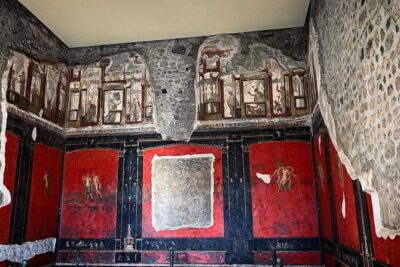
Frescoed houses and everyday neighborhoods
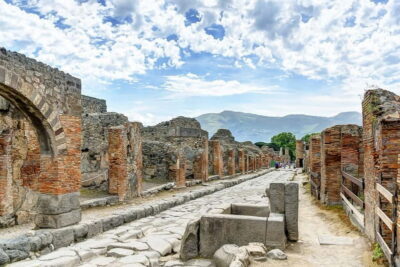
You’ll walk through streets lined with the remains of homes with wall paintings and signs of daily life. This is where Pompeii stops being “ancient” and starts feeling like a city people actually lived in.
Spas and baths
Pompeii’s wellness and social life show up through the remains of bathing spaces. Even if you don’t read every label, the layout helps you visualize how people spent hours there.
Temples and sacred spaces
The religious side matters here. Seeing temples in context helps you understand why the city wasn’t just residential—it had strong civic and spiritual rhythms.
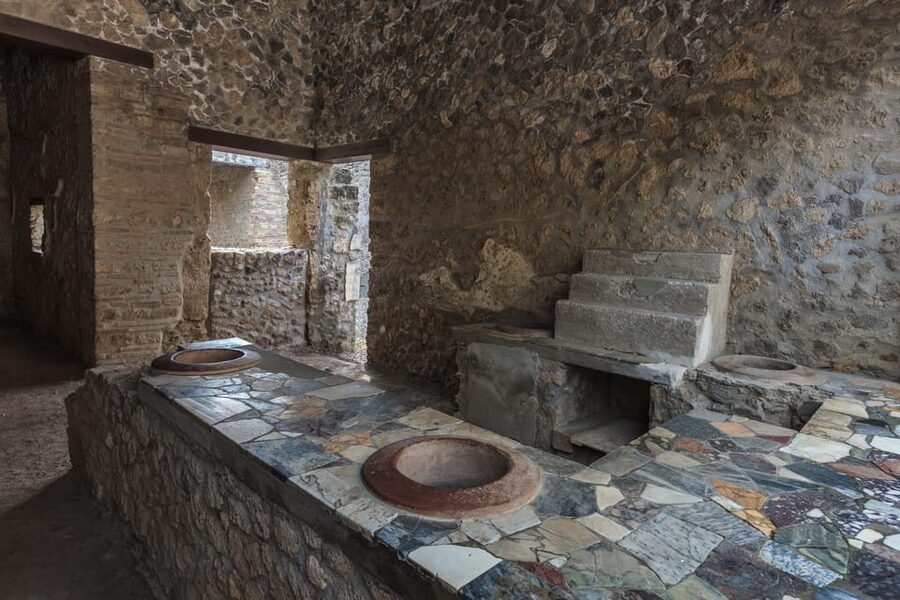
Shops and the thermopolis
A thermopolis is basically the Roman fast-food spot of its day. You’ll see remnants that help explain how people grabbed quick meals and socialized in between errands.
Theaters and brothels
Pompeii doesn’t sanitize life. The ruins include entertainment venues and what were essentially red-light districts. You’ll get a complete picture, even if it’s a bit uncomfortable in places.
The casts of victims
These are among the most emotionally heavy parts of Pompeii. The experience becomes clearer when you understand that the casts are not just “objects,” they’re evidence of the eruption’s impact.
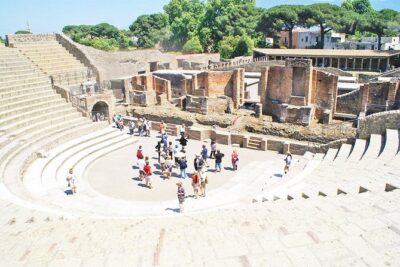
A best-preserved Roman amphitheater
If you love architecture and crowd spaces, the amphitheater is one of the best anchors. It gives you a strong sense of scale and Roman public life.
Unesco-listed Pompeii and the hermitage site
The package highlights the UNESCO nature of Pompeii and also notes an “hermitage” element within the broader experience. If you’re curious about what that refers to on the ground, let your guidebook route point you there on the day—it’s one of those details you’ll appreciate once you’re onsite.
The big takeaway: you’re not wandering randomly. Your route is built around the major types of places that make Pompeii feel coherent.
Timing your route: picking 2, 4, or 6 hours
Entry runs from 9:00 am to 5:00 pm, so you have time to choose your pace. The key is matching your plan to your energy, because Pompeii rewards slow reading but doesn’t slow down for you.
Here’s how to choose without overthinking:
More tickets to the site


Two-hour route: the “greatest hits”
This is for you if:
- you’re short on time,
- you want the main highlights,
- you’re okay with reading shorter sections in the guidebook.
With the map and itinerary, you can focus on the biggest anchor sites rather than getting lost in smaller side areas.
Four-hour route: the sweet spot
This tends to work well if you:
- like context, not just photos,
- want time to stand in one place long enough to absorb a layout,
- don’t mind walking a lot.
In a 4-hour plan, you usually get a better sense of how the city connects—houses to streets to public spaces—without feeling like you sprinted the whole day.
Six-hour route: for the ruins-obsessed
Pick this if:
- Pompeii is your top priority,
- you want deeper time with the emotional parts (like the casts),
- you’d rather linger than rush.
This is also a good choice if you’re the type who takes notes and wants the guidebook as a real reference, not just a quick pass.
No matter which route you choose, I’d treat the itinerary as a framework. If you’re drawn to a particular frescoed wall, you’re allowed to spend extra minutes—then simply let the rest of the route adjust around you.
How to make the most of your self-guided freedom
Skip-the-line is great, but the real win is control. Instead of waiting for a group, you decide when you want:
- a fast walk to build orientation,
- quiet time in heavier areas,
- a longer pause at architecture.
A few smart habits:
- Wear shoes you can walk in for hours. Pompeii isn’t gentle underfoot.
- Bring water and keep it visible. Heat and thirst sneak up quickly.
- Use your map early. Get your bearings before you start “following your curiosity” on impulse.
- Plan your breaks. There’s a lot to take in, and a timed pause keeps your day enjoyable instead of exhausting.
If you’re traveling with someone, sharing the guidebook is part of the system: one book is available for every two participants. That means you should agree early on who reads what, or how you’ll swap reading so both of you actually use it.
The human side of Pompeii: why the guidebook routes help
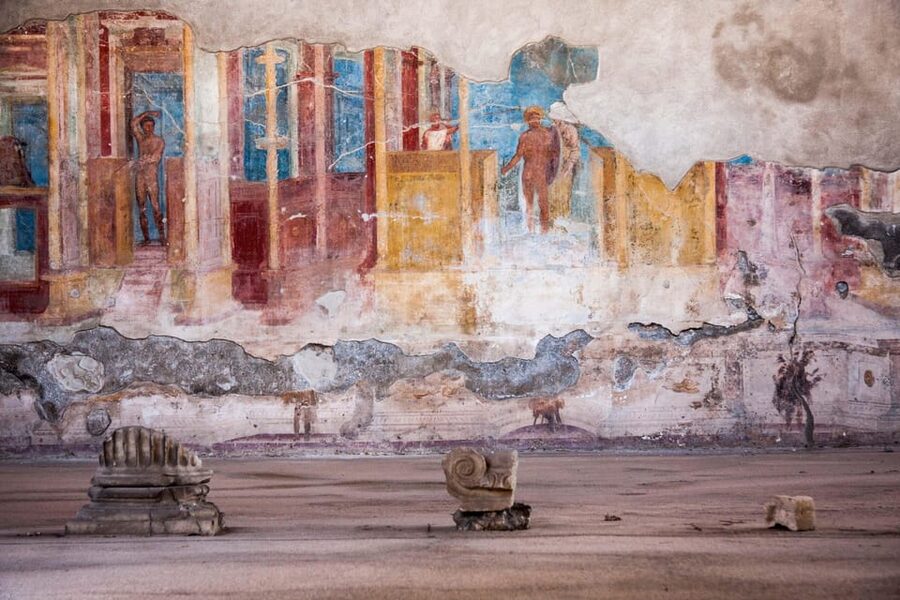
Pompeii can feel like a museum without explanation. The guidebook fixes that by giving you a way to connect places into a story: city life, public spaces, entertainment, daily routines, and the eruption’s aftermath.
The itineraries are especially helpful because they prevent a common mistake: trying to see everything at once. When your route is set for 2, 4, or 6 hours, you don’t have to guess how much is reasonable. You can spend more attention on the sights that actually grab you.
One more thing: having an updated map is not a small benefit. It turns navigation from guesswork into something you can handle with confidence, even if it’s your first time at Pompeii.
Who this ticket is best for (and who should consider something else)
This works best for you if:
- you want independence but still want structure,
- you’re happy doing the reading yourself in a guidebook,
- you’d rather manage your own pace than follow a group schedule,
- you value skip-the-line access and an onsite map.
It’s less ideal if you:
- strongly prefer a live guide speaking through the key sights,
- want transportation included,
- need food included in the price.
If you’re on a tight schedule and want someone else to handle the whole route, you may feel like this is DIY even with the guidebook. But if you’re comfortable being your own trip planner, it’s a solid, efficient way to see Pompeii.
Should you book? My practical verdict
Book it if you want a smooth, low-stress Pompeii day with skip-the-line entry plus a take-home guidebook that tells you where to go for 2, 4, or 6 hours. The included map and structured routes are what make independence enjoyable instead of chaotic.
Hold off or double-check value if:
- you might qualify for special or free admissions for your group (based on your age or status),
- you’re expecting a guided walk inside the ruins,
- you haven’t planned your transport and food/water.
For most first-timers who want to see the highlights without losing hours, this is a smart setup. You get control, clarity, and enough structure to make Pompeii feel like a real city, not just a pile of ruins.
FAQ
Where is the meeting point for Pompeii entry?
You meet operators at the information point at VIA ROMA 123, POMPEI. Your access to the archaeological park is through the Piazza Anfiteatro entrance.
What’s included with the ticket?
You get the Pompeii ruins entrance ticket, a guidebook in 13 languages, a map, and itineraries for two, four, or six hours.
Do I get an on-site guide?
No. This experience is set up for you to explore independently with the guidebook and map. A guide is not included.
What time can I enter Pompeii?
You can enter from 9:00 am until 5:00 pm, for a 1-day visit.
What languages are available?
The instructor is listed for English, Italian, Spanish, and French. The guidebook is available in 13 languages.
What should I bring to visit Pompeii?
Bring a passport or ID card, comfortable shoes, sun hat, and water (plus comfortable clothing).
More Tickets in Pompei Campania
- Pompeii: Entry Ticket and Guided Tour with an Archaeologist★ 4.8 · 19,459 reviews
- Pompeii: Skip-the-Line Entrance Ticket with Audio Guide★ 4.0 · 2,509 reviews
- Pompeii: Skip-the-line-Ticket and Guided Tour★ 4.6 · 1,152 reviews
- Pompeii: Skip-the-Line Entry Ticket with Digital Guide App★ 4.1 · 770 reviews
- Pompeii: Afternoon to Sunset Guided Tour with Ticket★ 4.9 · 484 reviews
More Tour Reviews in Pompei Campania
- Pompeii: Entry Ticket and Guided Tour with an Archaeologist★ 4.8 · 19,459 reviews
- Pompeii: Small Group Tour with an Archaeologist★ 4.8 · 12,264 reviews
- Pompeii: Skip-the-Line Entrance Ticket with Audio Guide★ 4.0 · 2,509 reviews
- Naples: Pompeii and Mt. Vesuvius with Lunch and Wine Tasting★ 4.5 · 2,454 reviews
- Pompeii: Skip-the-line-Ticket and Guided Tour★ 4.6 · 1,152 reviews
Skip-the-Line Entries, More to Book
- Pompeii: Skip-the-Line Entrance Ticket with Audio Guide★ 4.0 · 2,509 reviews
- Pompeii: Skip-the-line-Ticket and Guided Tour★ 4.6 · 1,152 reviews
- Pompeii: Guided Tour with Skip-the-Line Entry★ 4.9 · 812 reviews
- Pompeii: Skip-the-Line Entry Ticket with Digital Guide App★ 4.1 · 770 reviews
- Pompeii: Tour with Archaeologist Guide & Skip-the-Line Entry★ 4.5 · 478 reviews
Just reviewed: more Pompei Campania tours and day trips



Pompeii Skip-the-Line Entry, compared.
 ★ 4.0Skip-the-Line Entrance Ticket with Audio GuideFrom $392,509 reviews
 ★ 4.6Skip-the-line-Ticket and Guided TourFrom $641,152 reviews
 ★ 4.9Guided Tour with Skip-the-Line EntryFrom $58812 reviews
 ★ 4.1Skip-the-Line Entry Ticket with Digital Guide AppFrom $22770 reviews
 ★ 4.9Pompeii Ruins Private Tour with Optional Skip-the-Line EntryFrom $254732 reviews
 ★ 5.0Skip the Line Guided Tour of Pompeii led by an ArchaeologistFrom $95703 reviews
 ★ 5.0Pompeii Private Tour with an Archaeologist and Skip The Line – 3 hoursFrom $302564 reviews
 ★ 5.0Pompeii Skip-the-line Tour with Archaeologist GuideFrom $71559 reviews
Browse the lists this tour appears in