
Reviewed · POMPEII SKIP-THE-LINE ENTRY
Pompeii Ruins 2-Hours Guided Tour and priority entry ticket
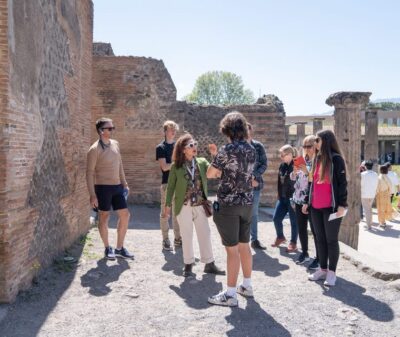
Pompeii feels real fast. I especially liked the expert archeological guide who keeps the story clear and human, and I loved that priority entry helps protect your limited 2 hours from ticket-line delays. One thing to plan for: this is a shared guided tour, so your timing follows the group.
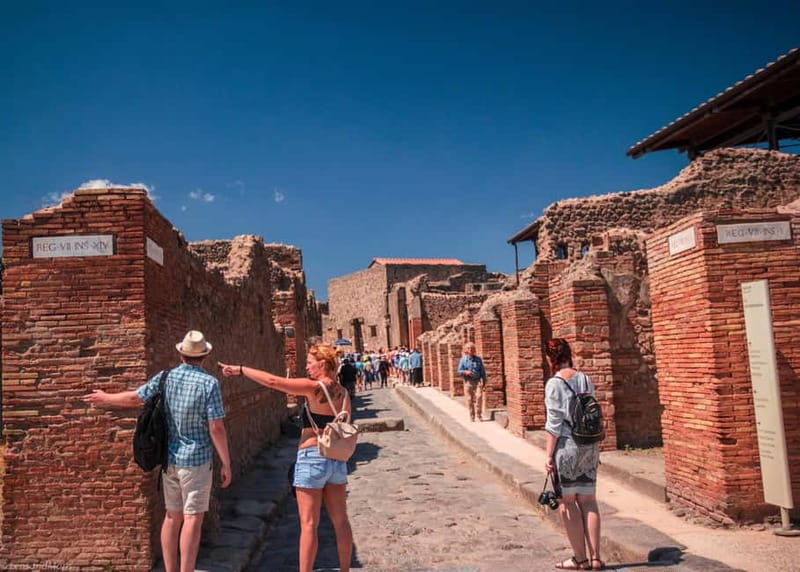
You’ll walk the ruins of a Roman town buried by volcanic ash from Mount Vesuvius in 79 AD, seeing everyday places like theaters, villas, public baths, a bakery with cooking utensils still on display, and the Forum. The guide also points out smaller but unforgettable details, from termopolia (street-side food shops) to mosaics and frescoes.
After the guided portion, you’re free to explore on your own. Bring comfortable shoes, and in summer pack a sunhat and water because you’ll be on uneven stone for a while.
In This Review
- Key highlights to look for
- Meeting at Tempio Travel by Pompei Train Station (and why it matters)
- The 79 AD ash story: what your expert guide will do in 2 hours
- Starting the route at the most important Pompeii stops
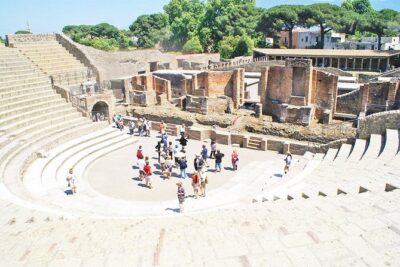
- Theaters and big public spaces
- Famous villas and homes
- Public baths
- The Forum
- Termopolia and a bakery with cooking utensils you can still see
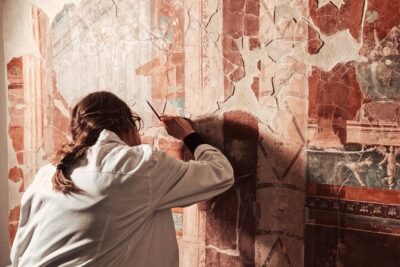
- Mosaics and frescoes: the art that survives the disaster
- The human cost: body casts and the terror of 79 AD
- Headsets, audio, and how the group tour works
- After the tour: explore on your own with your new bearings
- Priority entry and the 2-hour schedule: where the value really shows
- Practical tips so your Pompeii visit feels easy
- Who should book this Pompeii Ruins guided tour
- Should you book? My take
- FAQ
- Where is the meeting point for the Pompeii Ruins 2-hour guided tour?
- How long is the guided tour, and can I explore after?
- Does the tour include skip-the-line entry?
- What languages are available for the guide and audio?
- Is this a private tour or a shared group tour?
- What should I bring or wear for Pompeii?
Key highlights to look for
- Priority entry that saves time so you spend more minutes inside the ruins
- A 2-hour guided route that hits Pompeii’s most significant areas without rushing you too hard
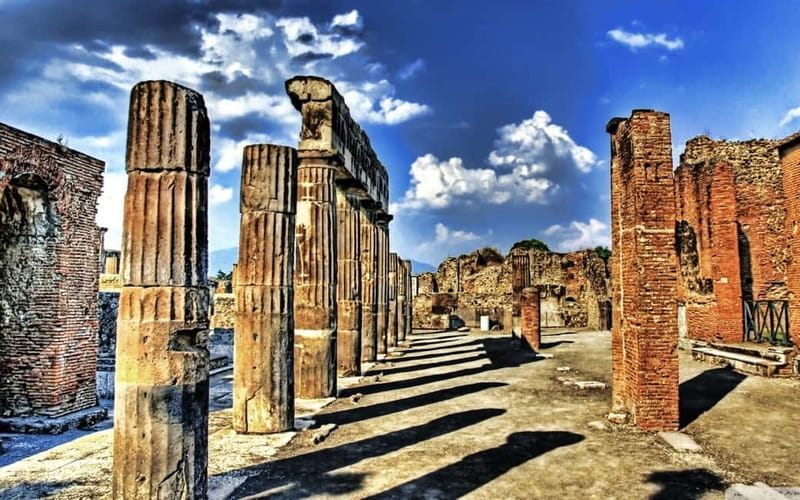
- Roman everyday life in plain view: baths, bakeries, the Forum, and theaters
- Mosaics, frescoes, and cooking utensils that make the past feel hands-on
- Termopolia stops to see how people ate and moved through the city
- Body casts connected to 79 AD for a sobering, memorable ending
Meeting at Tempio Travel by Pompei Train Station (and why it matters)
Your day starts at the Tempio Travel Office by Pompei Circumvesuviana Station, on the first floor. Your meeting point is listed as the Pompeii-tickets Tempio Travel office in Pompei Circumvesuviana Station, first floor, and you should arrive at least 15 minutes early.
This matters more than you’d think. Pompeii can eat up time before the tour even begins—finding the right office, lining up, and waiting for everyone to check in. Starting at the train-station office is practical because you’re already in the right transportation hub.
If you’re using GPS, double-check the exact wording: the start location for the experience is also given as Via Villa dei Misteri, 1. The key takeaway: be ready to meet promptly, then follow the group to the ruins.
More ways past the ticket queue
- Pompeii: Skip-the-Line Entrance Ticket with Audio Guide
★ 4.0 · 2,509 reviews - Pompeii: Guided Tour with Skip-the-Line Entry
★ 4.9 · 812 reviews - Pompeii: Skip-the-Line Entry Ticket with Digital Guide App
★ 4.1 · 770 reviews
The 79 AD ash story: what your expert guide will do in 2 hours
This isn’t a long, slow wander. It’s a focused guided visit designed to give you the big picture of life in the Roman Empire, plus the most striking surviving details from when Pompeii was buried by ash in 79 AD.
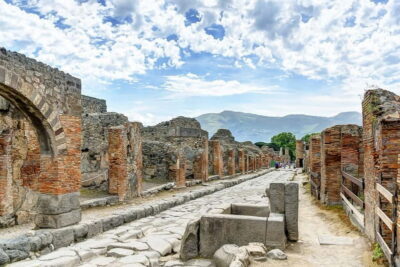
The guide’s job is to turn scattered ruins into an understandable city. You’ll navigate a “labyrinth” of remains, and without help it’s easy to get lost or bounce between random rooms. With a guide, you get a route that makes sense: where people gathered, where they bathed, where they ate, and where everyday goods were stored and prepared.
The time frame is also a gift. In two hours you can see a lot and still have energy left to explore afterward on your own. If you’ve got only a half day in the area, this format is one of the most efficient ways to experience Pompeii.
Starting the route at the most important Pompeii stops
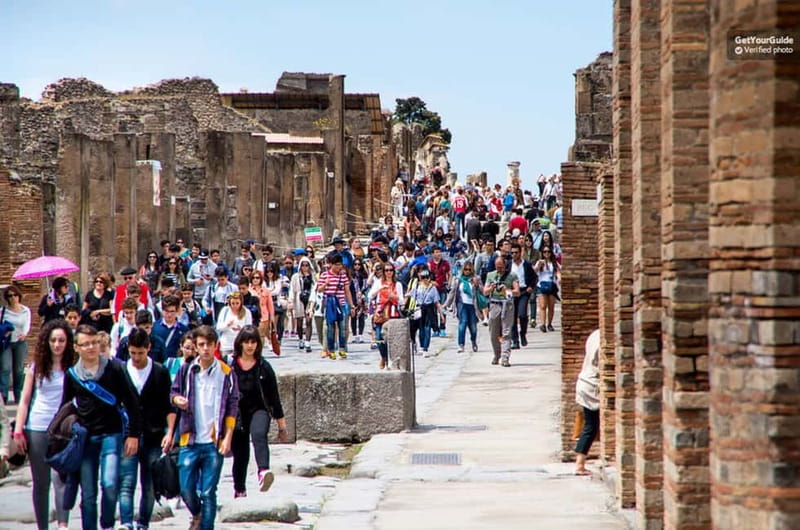
The guided tour covers the heart of Pompeii’s layout, with stops at the places that help you understand how the city worked.
Here are the main areas you’ll go through during the tour, and what to pay attention to:
Theaters and big public spaces
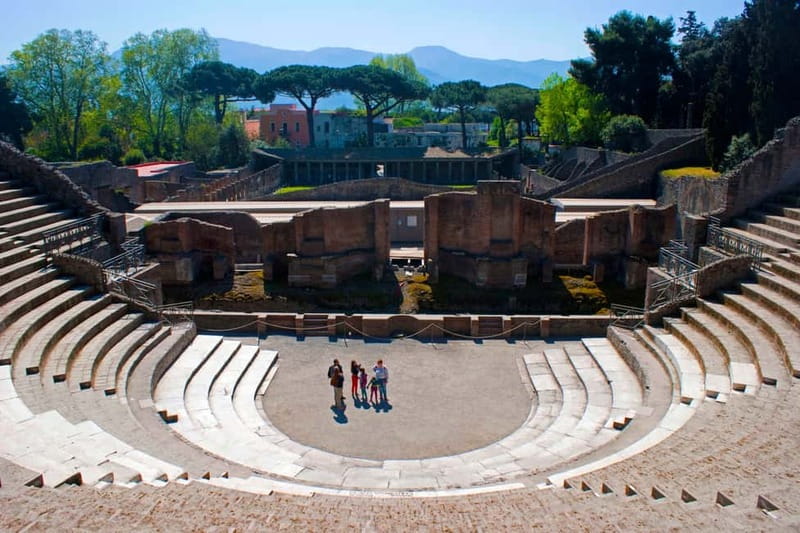
When you see the theaters, you’re looking at entertainment and public gathering—places where Roman city life could be shared by many people. The ruins here make it easier to picture crowds and routines instead of thinking of Pompeii as just a bunch of walls.
Famous villas and homes
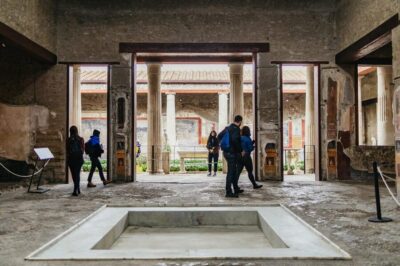
The villas help you understand the contrast in daily life. You’ll get a sense of how wealth and space played out in a city where different neighborhoods had different kinds of buildings and uses.
More tickets to the site


Public baths
Public baths are one of the best anchors for everyday life. Even in ruin form, you can read the function: bathing and social routines were built into daily schedules. If you like “how people lived” more than “what kings did,” this stop is a strong one.
The Forum
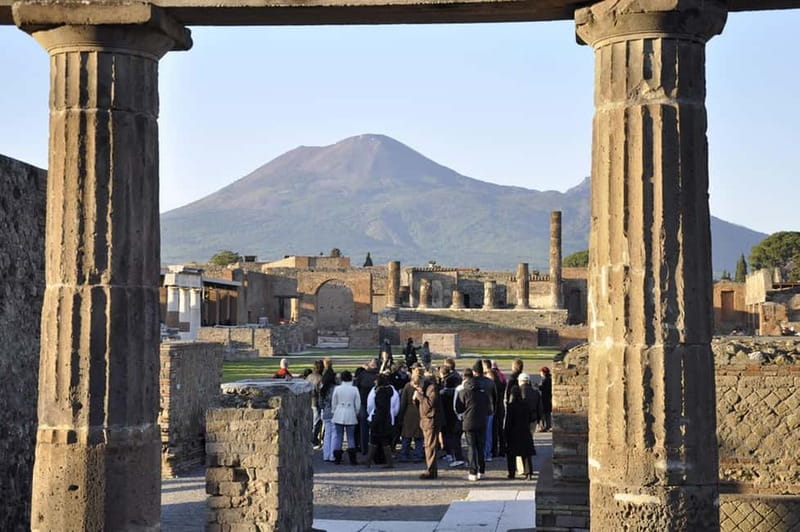
The Forum is where city life becomes political and social. It’s the kind of place that helps you connect the dots between public gatherings and the rest of the city’s neighborhoods.
A small caution: Pompeii is big even when you only tour two hours. So keep your expectations realistic. You’re not trying to see every street. You’re trying to learn how the city fits together, then use your time after the tour to pick what you want most.
Termopolia and a bakery with cooking utensils you can still see
One of my favorite parts of this style of tour is when it goes past the “tourist-famous” buildings and shows real routines: food, preparation, and daily transactions.
Your guided walk includes the termopolia, which were street-side food shops. Instead of treating Pompeii like a museum of big buildings, this brings you back to how people ate and moved through the city.
You’ll also see a bakery area where cooking utensils are still on display. That detail is oddly powerful. It’s not just that there was a bakery; it’s the visual proof of tools used in real daily work. If you’re the type who likes practical details—where things sat, how spaces were used—this tour gives you several of those moments.
And yes, it’s a lot of visual info in a short time. That’s where the guide’s pacing helps. You’ll be led to the right stops so you’re not spending your limited time just trying to orient yourself.
Mosaics and frescoes: the art that survives the disaster
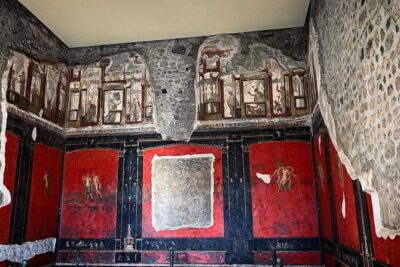
Pompeii is famous for what endured, and this tour specifically highlights the visual survivals you’ll likely remember after the dust settles—remarkably well preserved mosaics and frescoes.
Here’s what those decorations do for you as a visitor. They stop Pompeii from feeling like a graveyard of stone. You’re seeing interior and decorative choices that people made because they cared about beauty, comfort, and identity—even as their city was ultimately buried.
Mosaics are especially satisfying because you can often spot patterns and workmanship quickly, even if you’re moving through a ruin area at walking speed. Frescoes can be more delicate visually, so if you like art, slow down your gaze when your guide stops. Take in what’s there rather than only snapping a photo and moving on.
If you want the best results from this section:
- Look where people likely would have stood.
- Spend a few seconds longer in each room or doorway the guide points out.
- Use the audio guide during downtime afterward to reinforce what you just heard.
The human cost: body casts and the terror of 79 AD
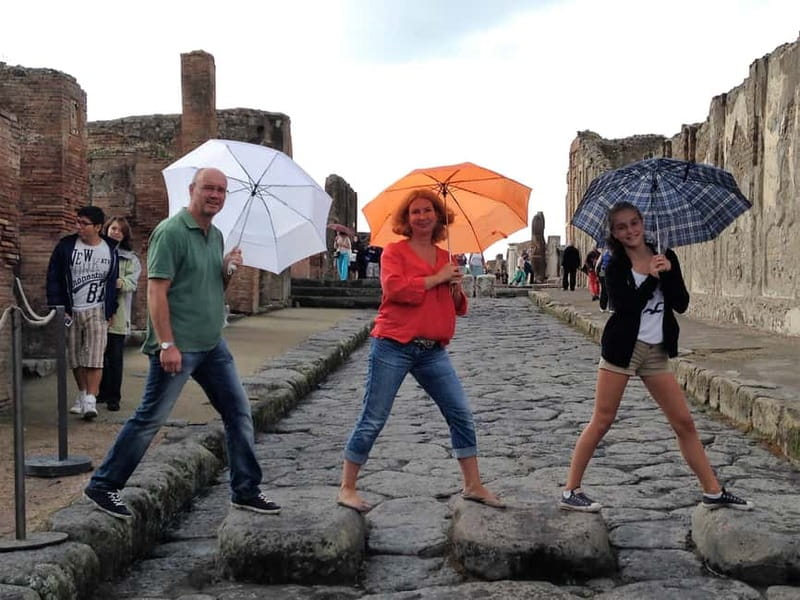
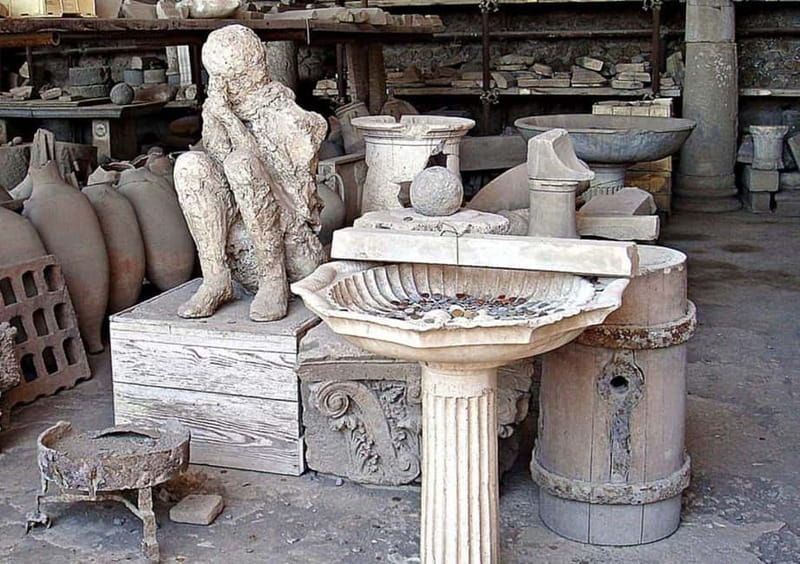
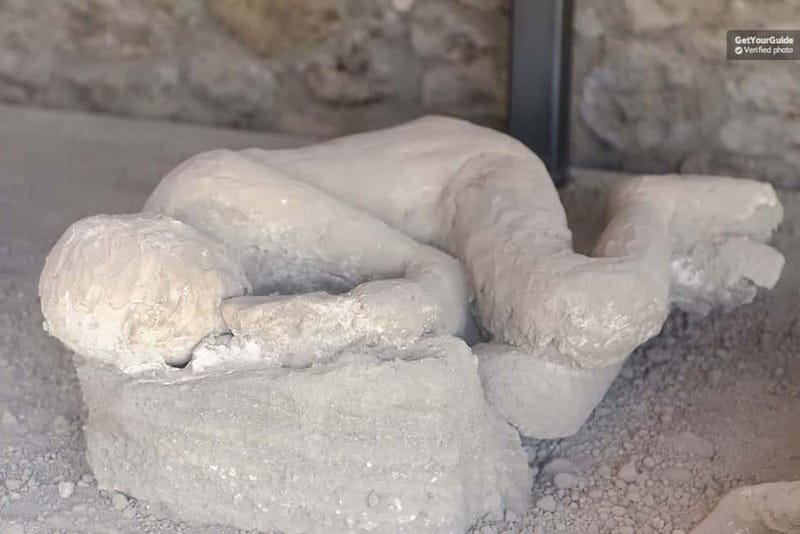
This tour doesn’t shy away from the tragedy. You’ll get a chance to “feel the terror” of what happened more than 2,000 years ago when Vesuvius erupted, as you look at body casts of the citizens.
These aren’t casual sightseeing pieces. They’re a direct reminder that a disaster can end ordinary routines overnight. Even if you know Pompeii’s story, seeing these forms as part of the guided narrative lands differently than reading about it later.
The value here is not shock for shock’s sake. It’s context. The tour builds from daily life (baths, shops, homes, public spaces) into the eruption moment, so the disaster feels connected to real people and real places—not just a dramatic headline.
Headsets, audio, and how the group tour works
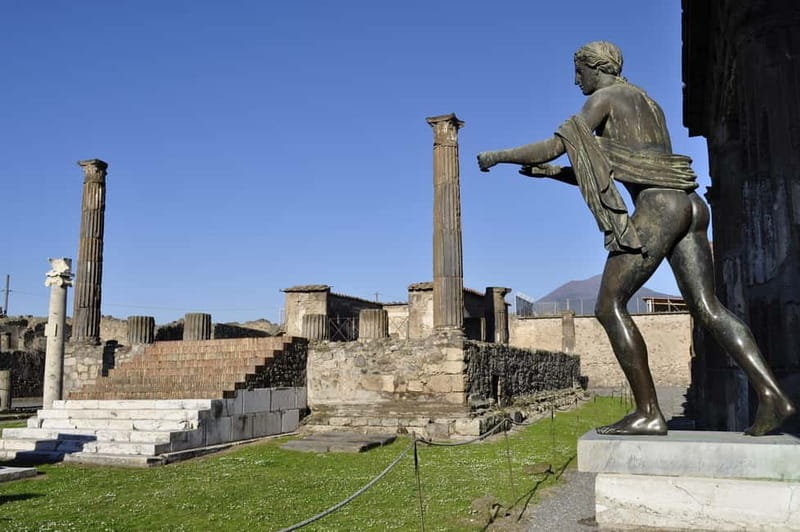
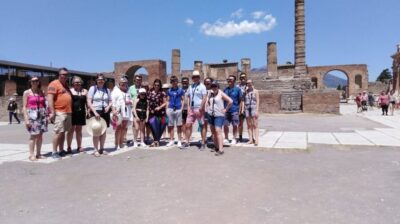
This experience is a shared guided tour, which means the group moves together and the guide’s timing is set for everyone. That’s not a dealbreaker; it’s often what makes a tour like this work in two hours.
Headsets are included for groups of 16 or more. Even if your group is smaller, you’ll have an audio guide available in English and Italian.
Why that matters: Pompeii has busy acoustics and lots of distractions. With audio support, you can keep listening while you look around. It also makes it easier to stay engaged even if you’re stuck behind someone briefly.
If you prefer a quiet pace, plan to lean on the after-tour freedom. The guided portion gives you structure. Your independent time lets you slow down where you personally care most.
After the tour: explore on your own with your new bearings
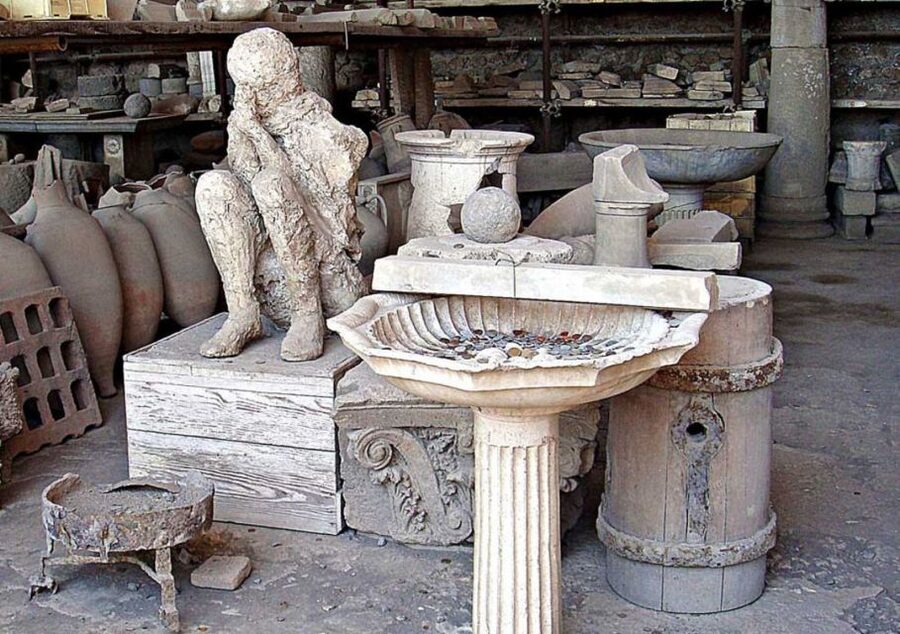
Once the 2-hour guided visit ends, you’ll have freedom to explore the archaeological site on your own.
This is the moment where the guided portion pays off. Since you’ve already learned the layout and seen the major stops, you’re not wandering blind. You can pick an area you want to linger in—maybe the decorations, maybe the public spaces, maybe the food-related stops you found most interesting.
Also, because the tour ends back at the meeting point, it helps to scan the route back while you’re still fresh on where you are. Pompeii has plenty of turns, and you don’t want to spend your last moments figuring it out.
Priority entry and the 2-hour schedule: where the value really shows
Let’s talk money. The price is $37.58 per person for a guided 2-hour tour with priority entry.
That price isn’t just paying for walking through ruins. You’re buying three practical things:
- A skip-the-line entrance ticket, which protects your time.
- An expert guide who keeps you from getting lost and points out what matters.
- Headset/audio support, so you can follow the story without straining.
If you were paying just for entry, you’d likely spend a bigger chunk of your day waiting or trying to figure out where to go next. Here, priority entry and guidance combine to turn limited time into meaningful sightseeing.
Is it a bargain? It’s a reasonable value for Pompeii, mainly because your time is capped at two hours for the guided portion, and the included guide is doing the heavy lifting of interpretation.
Practical tips so your Pompeii visit feels easy
A few common-sense tips based on what the tour specifically advises:
- Wear comfortable shoes. Pompeii is rough underfoot.
- In summer, bring a sunhat and water.
- Assume it’s shared. You’ll want to be comfortable with that group rhythm.
- Think like a marathoner, not a tourist cart. Two hours with a guide is fast. After that, choose one or two areas to revisit and actually look.
If you want one extra personal strategy: choose what kind of Pompeii you’re most curious about before you arrive. If your focus is everyday life, you’ll already be pulled toward food shops, baths, bakeries, and the Forum. If your focus is art and decoration, the mosaics and frescoes should be your “linger points.”
Who should book this Pompeii Ruins guided tour
This tour is a great fit if:
- You have only a half day and want the most important Pompeii pieces without getting lost.
- You like understanding everyday Roman life, not just snapping photos of big ruins.
- You want a guided structure, then time afterward to explore what grabbed you.
It might be less ideal if you need total flexibility in timing or you prefer wandering at your own pace from the first minute. Because it’s a shared group tour, you’ll be guided on a set path during the two hours.
Should you book? My take
I’d book this if you want Pompeii to feel organized and meaningful, not overwhelming. The priority entry and 2-hour expert-guided format are exactly what you need to make limited time count. The stops are practical and specific—Forum, theaters, public baths, bakeries with utensils, termopolia, and the mosaics and frescoes—so you leave with more than just “I was there.”
If you’re the type who gets frustrated by missing context, the guided story and the supporting audio/headset setup make this tour easier to enjoy. And the after-tour freedom is the bonus that lets you turn what you learned into your own route.
FAQ
Where is the meeting point for the Pompeii Ruins 2-hour guided tour?
You meet at the Pompeii-tickets Tempio Travel office in Pompei Circumvesuviana Station on the first floor. The guidance also lists the start location as Via Villa dei Misteri, 1. Arrive at least 15 minutes before departure.
How long is the guided tour, and can I explore after?
The guided tour lasts 2 hours. After the guided portion, you have freedom to explore the archaeological site on your own.
Does the tour include skip-the-line entry?
Yes. The package includes a skip-the-line entrance ticket.
What languages are available for the guide and audio?
The live tour guide is available in English and Italian, and the audio guide is included in English and Italian.
Is this a private tour or a shared group tour?
It’s a shared guided tour. Headsets are included for groups of 16 or more.
What should I bring or wear for Pompeii?
Comfortable shoes are recommended. In summer, bring a sunhat and water.
More Tickets in Pompei Campania
- Pompeii: Entry Ticket and Guided Tour with an Archaeologist★ 4.8 · 19,459 reviews
- Pompeii: Skip-the-Line Entrance Ticket with Audio Guide★ 4.0 · 2,509 reviews
- Pompeii: Skip-the-line-Ticket and Guided Tour★ 4.6 · 1,152 reviews
- Pompeii: Skip-the-Line Entry Ticket with Digital Guide App★ 4.1 · 770 reviews
- Pompeii: Afternoon to Sunset Guided Tour with Ticket★ 4.9 · 484 reviews
More Tour Reviews in Pompei Campania
- Pompeii: Entry Ticket and Guided Tour with an Archaeologist★ 4.8 · 19,459 reviews
- Pompeii: Small Group Tour with an Archaeologist★ 4.8 · 12,264 reviews
- Pompeii: Skip-the-Line Entrance Ticket with Audio Guide★ 4.0 · 2,509 reviews
- Naples: Pompeii and Mt. Vesuvius with Lunch and Wine Tasting★ 4.5 · 2,454 reviews
- Pompeii: Skip-the-line-Ticket and Guided Tour★ 4.6 · 1,152 reviews
Skip-the-Line Entries, More to Book
- Pompeii: Skip-the-Line Entrance Ticket with Audio Guide★ 4.0 · 2,509 reviews
- Pompeii: Skip-the-line-Ticket and Guided Tour★ 4.6 · 1,152 reviews
- Pompeii: Guided Tour with Skip-the-Line Entry★ 4.9 · 812 reviews
- Pompeii: Skip-the-Line Entry Ticket with Digital Guide App★ 4.1 · 770 reviews
- Pompeii: Tour with Archaeologist Guide & Skip-the-Line Entry★ 4.5 · 478 reviews
Just reviewed: more Pompei Campania tours and day trips


Pompeii Skip-the-Line Entry, compared.
 ★ 4.0Skip-the-Line Entrance Ticket with Audio GuideFrom $392,509 reviews
 ★ 4.6Skip-the-line-Ticket and Guided TourFrom $641,152 reviews
 ★ 4.9Guided Tour with Skip-the-Line EntryFrom $58812 reviews
 ★ 4.1Skip-the-Line Entry Ticket with Digital Guide AppFrom $22770 reviews
 ★ 4.9Pompeii Ruins Private Tour with Optional Skip-the-Line EntryFrom $254732 reviews
 ★ 5.0Skip the Line Guided Tour of Pompeii led by an ArchaeologistFrom $95703 reviews
 ★ 5.0Pompeii Private Tour with an Archaeologist and Skip The Line – 3 hoursFrom $302564 reviews
 ★ 5.0Pompeii Skip-the-line Tour with Archaeologist GuideFrom $71559 reviews
Browse the lists this tour appears in