
Reviewed · POMPEII SKIP-THE-LINE ENTRY
Pompeii: Guided Tour and Skip-the-Line Ticket
Pompeii hits harder when someone shows you where to look. This guided, priority-entry walk turns UNESCO Pompeii into a readable city with Roman routines, shops, baths, and even plaster casts of victims, explained in plain human terms. I like that you start fast with priority access and a licensed guide, instead of spending your first hour stuck in a queue.
Two other things I really value: you get a structured 2 to 2.5 hour route that doesn’t leave you wandering with no context, and you may get audio headsets for clearer group commentary (especially for larger groups). One thing to keep in mind: on the first Sunday of each month, priority entrance may not be available, depending on crowds at the ticket office.
In This Review
- Key Highlights I’d Plan Around
- Fast-Track Entry Through Porta Marina and the Priority-Queue Advantage
- Who You’ll Be Walking With: Local Guide Power and Headset Clarity
- The 2–2.5 Hour Route That Keeps Pompeii From Feeling Like Random Ruins
- Civil Forum, Basilica, and Via dell’Abbondanza: Where Pompeii Spent Its Days
- Theater District and Forum Baths: Roman Entertainment Meets Daily Reset
- Thermopolium and Pistrinum Stops: Street Food and Bakery Life in Pompeii
- House of the Faun and the Alexander Mosaic: Wealth, Art, and Status
- Lupanare, Macellum, and Plaster Casts: The Most Human Stops
- Comfort and Timing Tips: How to Make This 2 Hours Work
- Price and Value: What $43 Really Buys in Pompeii
- Who This Pompeii Tour Fits Best
- Should You Book This Pompeii Guided Tour?
- FAQ
- How long is the Pompeii guided tour?
- Does this tour include skip-the-line entry?
- Where do we meet for the tour?
- Will there be audio equipment?
- What languages are available?
- Is transportation or food included?
- Is this tour wheelchair accessible?
- Are unaccompanied minors allowed?
- What happens on the first Sunday of each month?
- What should I bring?
Key Highlights I’d Plan Around
- Priority access to the Pompeii Archaeological Site to beat the lines
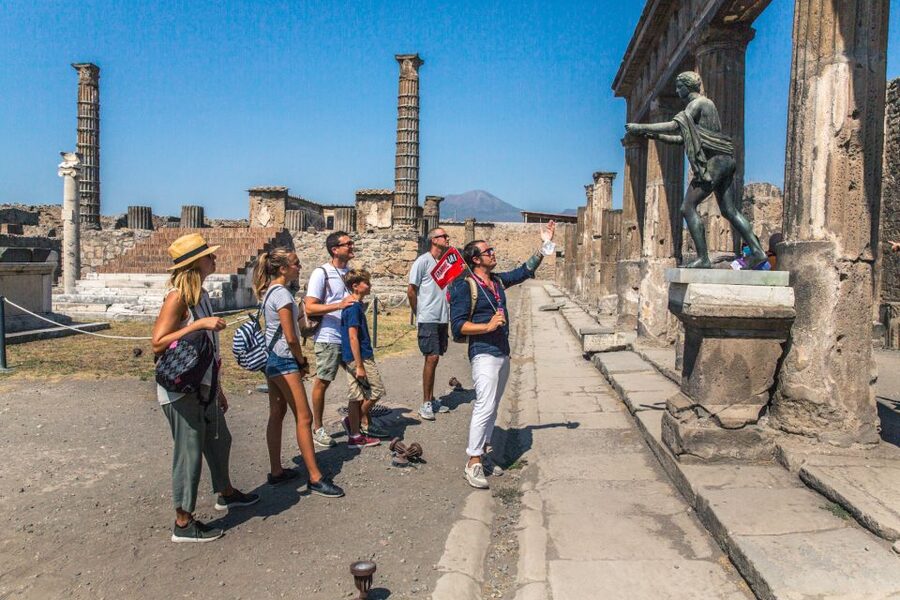
- Licensed local guide bringing daily life into focus, not just dates and stones
- Audio headsets for groups of 8+ so you can hear without craning your neck
- A smart walk through major zones, from Porta Marina to the House of the Faun
- Stops include places most people miss, like the Thermopolium (street food shop) and Pistrinum (bakery)
- A powerful finale with the plaster casts of Pompeii’s victims
Fast-Track Entry Through Porta Marina and the Priority-Queue Advantage
The biggest practical win here is simple: you’re not fighting the main ticket line for your first look at Pompeii. You meet at the entrance area and start with a fast-track, stress-free beginning, which matters because Pompeii is huge and easy to mismanage if you go in blind.
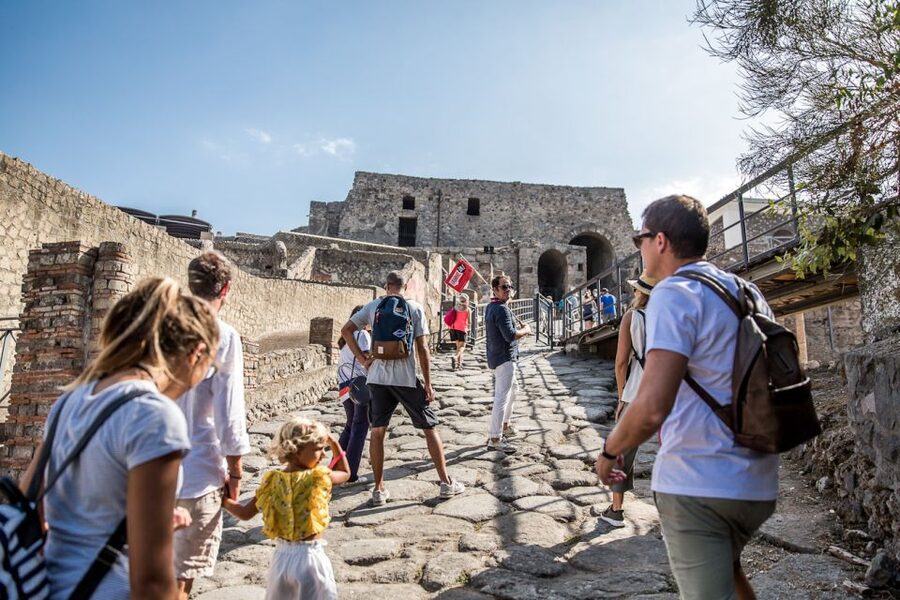
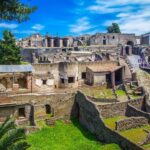
Your first big landmark is Porta Marina, one of Pompeii’s original gates. From the start, the guide helps you read the layout as you walk in—this place isn’t a museum hallway. It’s a street grid with neighborhoods, public spaces, and private homes, all packed into a surprisingly walkable experience if someone keeps you on the right streets.
Now, the caution. Priority entrance isn’t always guaranteed. On the first Sunday of each month, priority entrance can be unavailable and determined by crowd levels at the Pompeii ticket office. If you’re traveling on that date, I’d treat this tour as a best-case scenario rather than a guaranteed skip.
Also, a heads-up on logistics that can affect your day: the experience description mentions a stress-free day with round-trip transfers and hydrofoil tickets, but the included-price details also say transportation is not included. So, when you book, check exactly what you’re getting for getting to Pompeii from your base.
More ways past the ticket queue
- Pompeii: Skip-the-Line Entrance Ticket with Audio Guide
★ 4.0 · 2,509 reviews - Pompeii: Guided Tour with Skip-the-Line Entry
★ 4.9 · 812 reviews - Pompeii: Skip-the-Line Entry Ticket with Digital Guide App
★ 4.1 · 770 reviews
Who You’ll Be Walking With: Local Guide Power and Headset Clarity
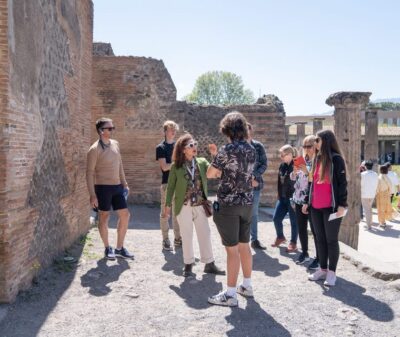
This is the kind of Pompeii tour where the guide is the main ingredient. You’ll have a live local guide with commentary, and the tour runs in multiple languages: English, Spanish, French, and German. That language flexibility is great if you’re traveling with mixed-language companions.
Audio headsets are included for groups of 8+ to keep things clear. Even if you’re sitting close, ruins tours can get noisy—footsteps, wind, and other groups. Headsets help you stay locked onto the story without turning your day into a guessing game.
I’ve seen guide names mentioned in past experiences, and they show the range of personalities you might get. People have praised guides like Melania and Annarita/Anna-Rita, including notes that they were friendly, quick to answer questions, and good at pointing out what you’d otherwise miss. Another highlight: one guide was noted for having a sign with the traveler’s name at the meeting point, which is a small thing that saves real time when you’re in an entry area with multiple groups.
One thing I’d watch for: one group mentioned an English accent that made parts harder to follow. Most likely you’ll be fine, but if you’re very sensitive to accents, plan to ask clarifying questions and don’t stay quiet if something isn’t coming through.
The 2–2.5 Hour Route That Keeps Pompeii From Feeling Like Random Ruins
Pompeii is not a place you can casually “see.” In a short time, you need a route with stops that build on each other—public life first, then neighborhoods, then everyday commercial details, and finally the most unforgettable, human parts.
That’s why the pacing works: you’re moving between key zones without losing the thread. And because this tour is only about 2 to 2.5 hours, you’ll likely finish with energy instead of fatigue. One person specifically said two hours was the perfect amount of time, which matches how I’d approach Pompeii if you want highlights without needing the whole day.
You should also know Pompeii can force small changes on the ground. Site regulations can mean groups are divided into smaller parties, each with its own licensed guide. That’s not a downgrade—it’s often how tours keep moving when space and entry rules tighten up.
Also note: the tour is not suitable for wheelchair users. If mobility is an issue, you’ll want to look for an accessible alternative instead of expecting this one to adjust.
Civil Forum, Basilica, and Via dell’Abbondanza: Where Pompeii Spent Its Days
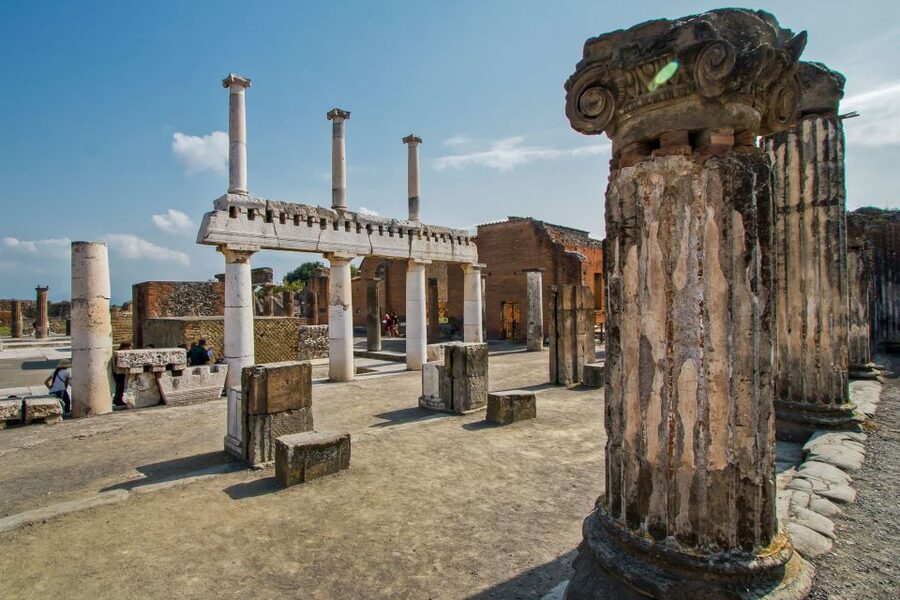
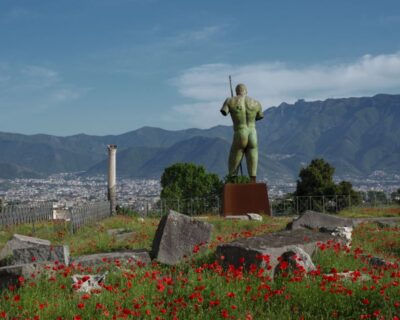
Your walk starts at Porta Marina, then heads into Pompeii’s core public spaces. The Civil Forum is the political, religious, and commercial heart, where big decisions and day-to-day activity mixed under the looming presence of Mount Vesuvius. Standing here helps you understand that Pompeii wasn’t just pretty ruins—it was a working city with routines and crowds.
Next comes the Basilica, which the tour frames as a place for legal affairs and business dealings. That’s a powerful stop because it changes how you see the stones: you start picturing conversations, paperwork, disputes, and transactions, not just architecture.
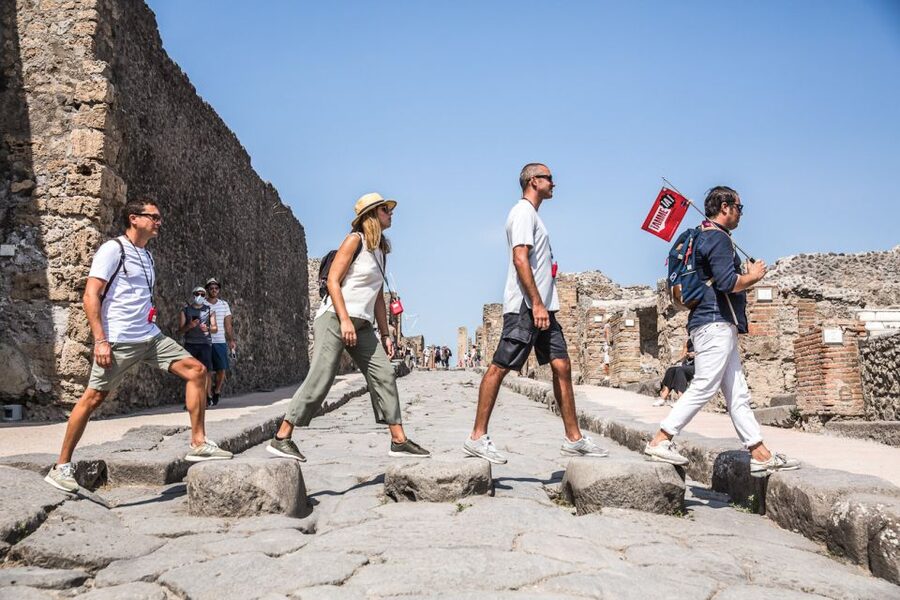
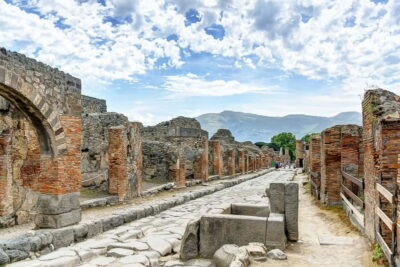
Then you walk down Via dell’Abbondanza, Pompeii’s main street. The guide will point out shop and homefront details and those famous chariot grooves etched into the stone. Even if you’ve heard about “ruts” before, seeing them on your route makes the street feel used, not staged. It’s also where the tour’s storytelling can really click—because every meter you walk is tied to how people moved, shopped, and lived.
This section is one of the best reasons to book a guide. Without one, you might spot buildings but miss how the city’s systems worked together.
Theater District and Forum Baths: Roman Entertainment Meets Daily Reset
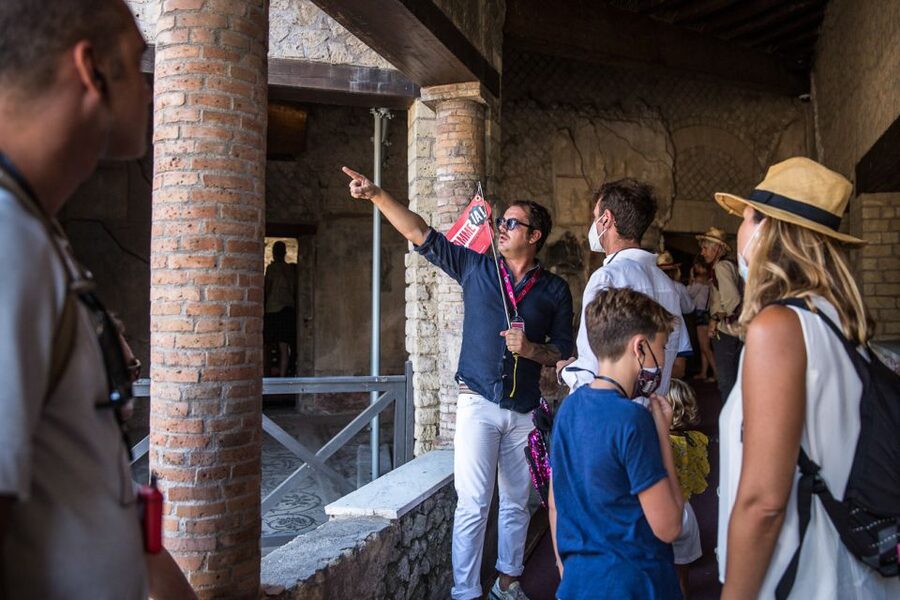
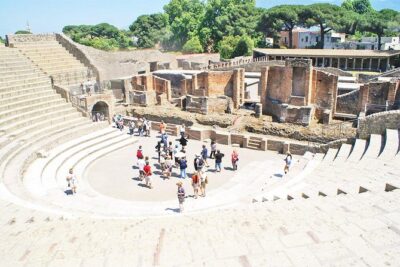
The tour moves into the Theater District, where social life showed up through art and performance. You’ll see the Large Theater, an open-air venue where crowds once gathered for comedies, dramas, and musical performances. In ruins, it’s easy to treat a theater like a shell. Here, it’s easier to understand how sound carried, how crowds gathered, and how entertainment fit into civic life.
Nearby, you’ll visit a bath complex. The tour specifically highlights the Forum Baths as a preserved snapshot of relaxation and daily rituals—Roman wellness culture in built form. This is a smart stop because it’s not abstract. Baths connect to something you already know: people made time for hygiene, socializing, and decompressing.
Practical note: this is exposed walking. Expect heat and sun on many parts of the route. One traveler recommended bringing an umbrella for shade, which is exactly the kind of tip that makes the tour feel manageable instead of sweaty.
More tickets to the site

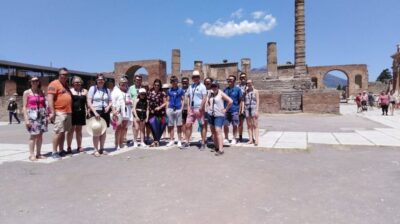
Thermopolium and Pistrinum Stops: Street Food and Bakery Life in Pompeii
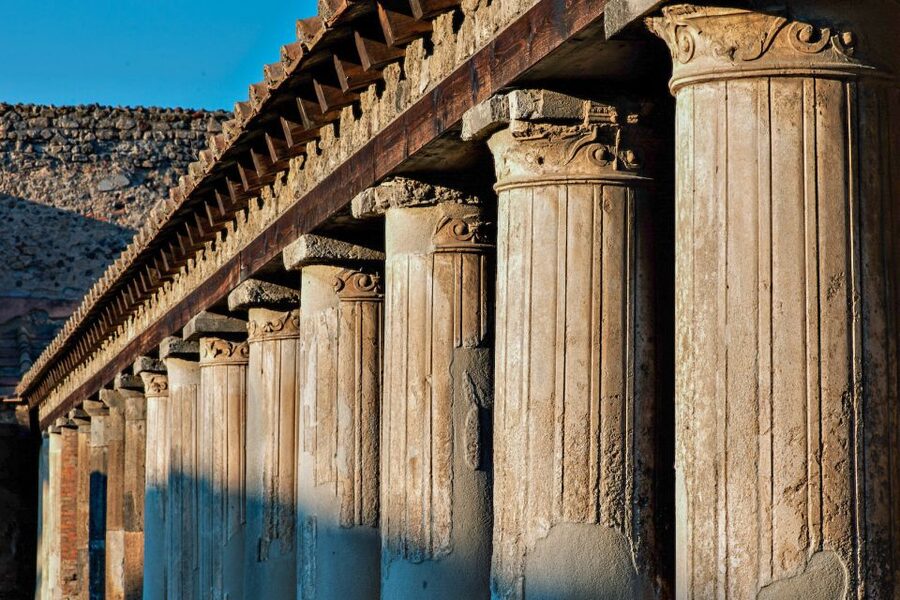
Some of the most memorable moments in Pompeii come from the places that smell like ordinary life. This tour includes Thermopolium stops—ancient street food shops—and also a Pistrinum, a bakery.
You’re meant to see how meals worked for people on the go: millstones, ovens, and counters used to serve hot food. Those practical details matter because they turn Pompeii from “big monuments” into a place where people ate, hurried, and grabbed fuel for their day.
One reason this section is so valuable: it connects the ruins to human behavior. Once you’ve seen food service spaces, you stop treating Pompeii like a graveyard of marble. It feels more like a city that suddenly paused.
House of the Faun and the Alexander Mosaic: Wealth, Art, and Status
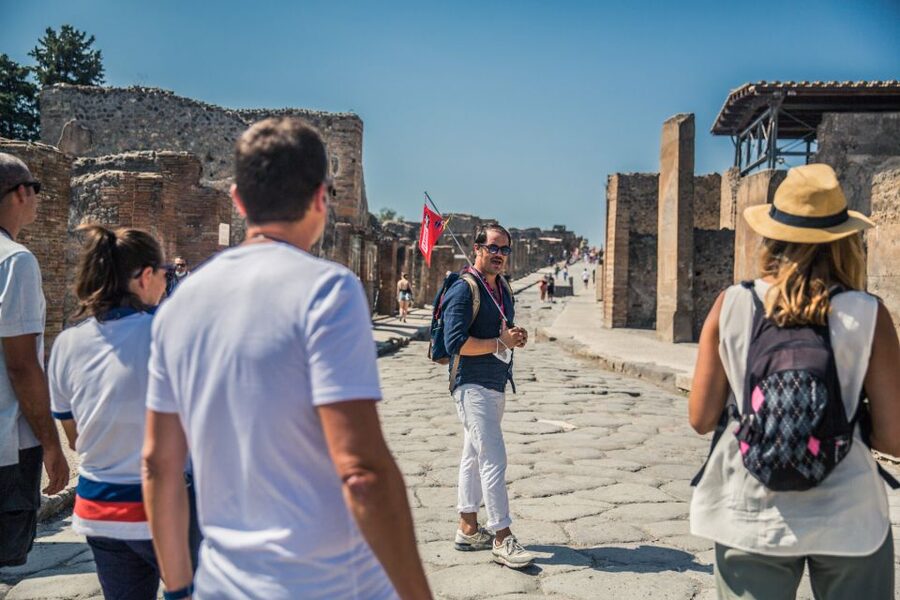
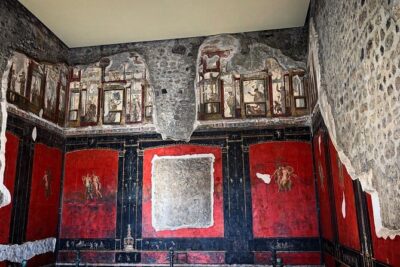
Then comes the contrast: private luxury. The tour includes the House of the Faun, a grand Roman villa known for mosaics, especially the Alexander Mosaic. This stop is a big one because it’s art you can actually see in context, not just in a textbook.
What I like about visiting a high-status home on a guided route is that the guide can frame what wealth meant. The mosaics aren’t decorative filler; they’re part of identity and power, showing taste and connections. Even if you’re not an art expert, the stop gives you a clear picture of Roman elite lifestyle.
One small practical point: this home is a highlight, so the crowds can feel different here. If your group is split into smaller parties, your pace might change slightly. Either way, keep an eye on your guide’s timing so you don’t get stuck behind someone taking long photos.
Lupanare, Macellum, and Plaster Casts: The Most Human Stops
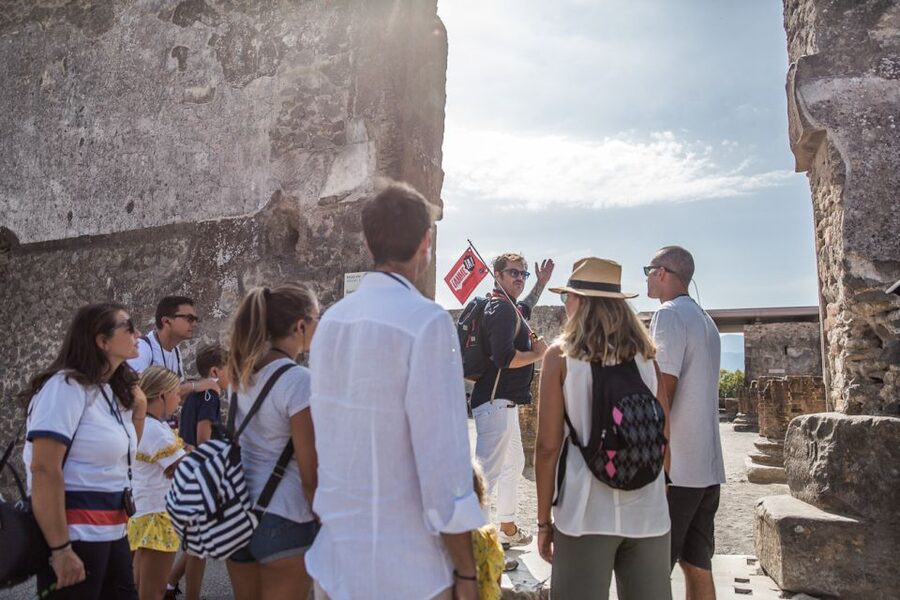
The tour includes some of Pompeii’s most intense sites, and it doesn’t sugarcoat them. You’ll see the Lupanare, the city’s ancient brothel, noted for vivid frescoes and compact stone rooms. This is an eye-opening stop because it shows another side of daily life that doesn’t fit neatly into “temples and theaters.”
A heads-up from real experience: one small-group guide reportedly chose to avoid the lengthy queue at that building in order to use time elsewhere. That doesn’t mean the stop is guaranteed in every version of the tour day. It means if you care deeply about that specific location, ask your guide early how they’re managing time when crowds are heavy.
After that, you’ll visit the Macellum, Pompeii’s food market. This is where the tour returns to everyday trade—sounds, smells, and busy commerce. It’s a nice mental reset after the heavier stops, and it closes the loop on how people ate, shopped, and socialized.
Finally, you’ll see the plaster casts of Pompeii’s victims. The tour frames these as more than artifacts—human reminders of life interrupted. This stop is emotionally intense, and it’s the kind of moment that makes the whole day feel real. It’s also why a guide helps: you’re not just looking—you’re being guided through meaning.
Comfort and Timing Tips: How to Make This 2 Hours Work
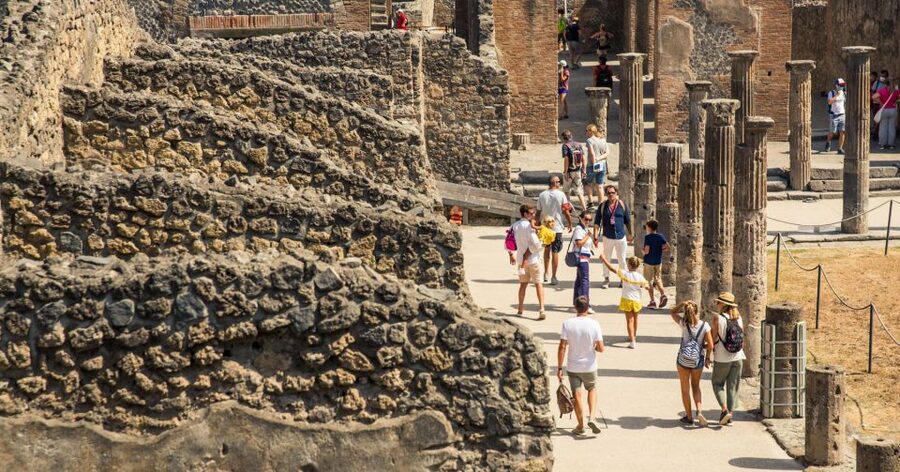
You’re walking on stone, in sun, and through sections that can feel crowded. I’d plan your day around comfort so you can enjoy the stories instead of counting minutes until shade.
Bring comfortable shoes and sunscreen. If you’re visiting in hot weather, consider an umbrella for shade, since parts of the route are exposed. Also, you’ll cover a lot of ground, so keep your camera ready but don’t stop every 30 seconds. A guide-led pace works best when you stay with the group.
Think about your schedule too. Pompeii can be tough to fully absorb in just a couple of hours. Even with a guide, this tour is a highlight set. If you have a longer day, build in extra time after the tour so you can wander at your own speed once you understand the city better.
Price and Value: What $43 Really Buys in Pompeii
At $43 per person, you’re paying for three big value drivers:
- Priority access / skip-the-line ticket support so your time starts on the ruins, not the queue
- A licensed local guide with in-depth storytelling (the real difference-maker in Pompeii)
- Included audio headsets for groups of 8+, which keeps the experience clearer for everyone
The trade-off is also clear. Food and transportation are not included. So if you’re coming from Naples or staying elsewhere, you’ll need your own plan to get there and eat. And since transportation is listed as not included while the description mentions hydrofoil/round-trip transfers, check what your particular booking includes so you don’t get surprised.
Still, for a short, high-impact visit, this price tends to make sense because you’re not paying just for entry—you’re paying for someone to help you “read” the site fast.
Who This Pompeii Tour Fits Best
This tour is a strong pick if you want a guided Pompeii that hits the major zones without turning your day into a self-guided scramble. It’s especially good for:
- First-timers who want a coherent route through public spaces and neighborhoods
- Families looking for a guided pace that can keep kids engaged
- Couples and small groups who prefer not to get lost
- People who value meaning—like the plaster casts and the everyday city details—not just big monuments
It’s not a fit for wheelchair users, and it also doesn’t allow unaccompanied minors.
Should You Book This Pompeii Guided Tour?
Yes, if you want Pompeii’s highlights with a guide who can explain daily life, not just buildings. I’d book this when you’re short on time and want priority entrance and a focused 2 to 2.5 hour experience that doesn’t waste your energy.
I’d hesitate only if you’re traveling on the first Sunday of the month and you strongly need guaranteed priority entry, or if you want a slow, all-day exploration without any group structure. Otherwise, this is one of the smarter ways to see Pompeii without spending half your visit figuring out where to go next.
FAQ
How long is the Pompeii guided tour?
The tour lasts about 2 to 2.5 hours.
Does this tour include skip-the-line entry?
Yes. It includes priority access to the Pompeii Archaeological Site.
Where do we meet for the tour?
The meeting point may vary depending on the option booked. Starting options include Porta Marina, Pompeii and Pompei Parking Zeus.
Will there be audio equipment?
Audio headsets are included for groups of 8+.
What languages are available?
Live guide commentary is available in English, Spanish, French, and German.
Is transportation or food included?
Transportation to and from Pompeii and food and beverages are not included.
Is this tour wheelchair accessible?
No. It is not suitable for wheelchair users.
Are unaccompanied minors allowed?
No. Unaccompanied minors are not allowed.
What happens on the first Sunday of each month?
Priority entrance may not be available on the first Sunday of each month and is determined by the crowd levels at the Pompeii ruins ticket office.
What should I bring?
Bring comfortable shoes and sunscreen.
More Tickets in Pompei Campania
- Pompeii: Entry Ticket and Guided Tour with an Archaeologist★ 4.8 · 19,459 reviews
- Pompeii: Skip-the-Line Entrance Ticket with Audio Guide★ 4.0 · 2,509 reviews
- Pompeii: Skip-the-line-Ticket and Guided Tour★ 4.6 · 1,152 reviews
- Pompeii: Skip-the-Line Entry Ticket with Digital Guide App★ 4.1 · 770 reviews
- Pompeii: Afternoon to Sunset Guided Tour with Ticket★ 4.9 · 484 reviews
More Tour Reviews in Pompei Campania
- Pompeii: Entry Ticket and Guided Tour with an Archaeologist★ 4.8 · 19,459 reviews
- Pompeii: Small Group Tour with an Archaeologist★ 4.8 · 12,264 reviews
- Pompeii: Skip-the-Line Entrance Ticket with Audio Guide★ 4.0 · 2,509 reviews
- Naples: Pompeii and Mt. Vesuvius with Lunch and Wine Tasting★ 4.5 · 2,454 reviews
- Pompeii: Skip-the-line-Ticket and Guided Tour★ 4.6 · 1,152 reviews
Skip-the-Line Entries, More to Book
- Pompeii: Skip-the-Line Entrance Ticket with Audio Guide★ 4.0 · 2,509 reviews
- Pompeii: Skip-the-line-Ticket and Guided Tour★ 4.6 · 1,152 reviews
- Pompeii: Guided Tour with Skip-the-Line Entry★ 4.9 · 812 reviews
- Pompeii: Skip-the-Line Entry Ticket with Digital Guide App★ 4.1 · 770 reviews
- Pompeii: Tour with Archaeologist Guide & Skip-the-Line Entry★ 4.5 · 478 reviews
Just reviewed: more Pompei Campania tours and day trips


Pompeii Skip-the-Line Entry, compared.
 ★ 4.0Skip-the-Line Entrance Ticket with Audio GuideFrom $392,509 reviews
 ★ 4.6Skip-the-line-Ticket and Guided TourFrom $641,152 reviews
 ★ 4.9Guided Tour with Skip-the-Line EntryFrom $58812 reviews
 ★ 4.1Skip-the-Line Entry Ticket with Digital Guide AppFrom $22770 reviews
 ★ 4.9Pompeii Ruins Private Tour with Optional Skip-the-Line EntryFrom $254732 reviews
 ★ 5.0Skip the Line Guided Tour of Pompeii led by an ArchaeologistFrom $95703 reviews
 ★ 5.0Pompeii Private Tour with an Archaeologist and Skip The Line – 3 hoursFrom $302564 reviews
 ★ 5.0Pompeii Skip-the-line Tour with Archaeologist GuideFrom $71559 reviews
Browse the lists this tour appears in