
Reviewed · HERCULANEUM RUINS TOURS
Herculaneum – Small Group Tour (admission included)
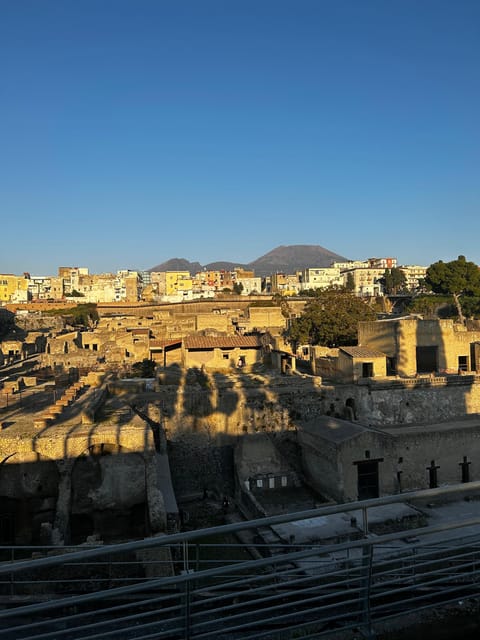
Herculaneum feels closer than Pompeii. This small-group tour uses the eruption of Vesuvius as a thread, so you don’t just look at stones—you understand what you’re seeing. I like how the town’s preservation helps you grasp daily life in a wealthy Roman residential center.
Two things I especially liked: the guide-led storytelling, and the way the tour makes room for questions. Guides such as Roberta, Marzia, and Gabriella have a talent for explaining the big disaster without turning it into a lecture, and they keep the pace human for a group that stays small.
One possible drawback: 2 hours goes quickly if you want to linger on every building detail. Use this as a focused orientation, then plan extra time on your own if you’re the type who reads every inscription.
In This Review
- Key highlights worth planning around
- Why Herculaneum Feels Different From Pompeii
- Corso Resina Meeting Point: Getting There Without Stress
- Skip the Ticket Line, Then Follow a Guided Route
- The Vesuvius 79 A.D. Story, Explained as City-Level Disaster
- Preservation Differences: Why Herculaneum Looks the Way It Does
- Boat Museum Stop: Connecting the Ruins to the Coast
- Walking Through Roman Daily Life in a Wealthy Center
- Guides, Languages, and Why Small Groups Matter
- What 2 Hours Covers—and What You’ll Need to Add Yourself
- Price and Value: Is $75 Good for This Experience?
- Who Should Book This Herculaneum Tour
- Should You Book This Herculaneum Tour?
- FAQ
- How long is the Herculaneum small group tour?
- What is the price per person?
- Is the admission ticket included?
- Does the tour include a visit to the boat museum?
- Where do we meet the guide?
- Is there a guided component?
- What languages are available?
- How big is the group?
- What is the cancellation policy?
- Can I book without paying right away?
Key highlights worth planning around
- Eruption-first context: You start with Vesuvius in 79 A.D., then you see the ruins through that lens.
- Preservation explained: You get a clear reason why Herculaneum survives differently than Pompeii.
- Boat museum visit: A dedicated stop helps connect the coastal setting to what the eruption buried.
- Small-group feel: Enough time for questions, not just a walk-by.
- Skip-the-line admission: You spend your limited time on the site, not outside the ticket office.
- Licensed guide: A tour guide licensed by the Regione Campania leads the walking portion.
Why Herculaneum Feels Different From Pompeii
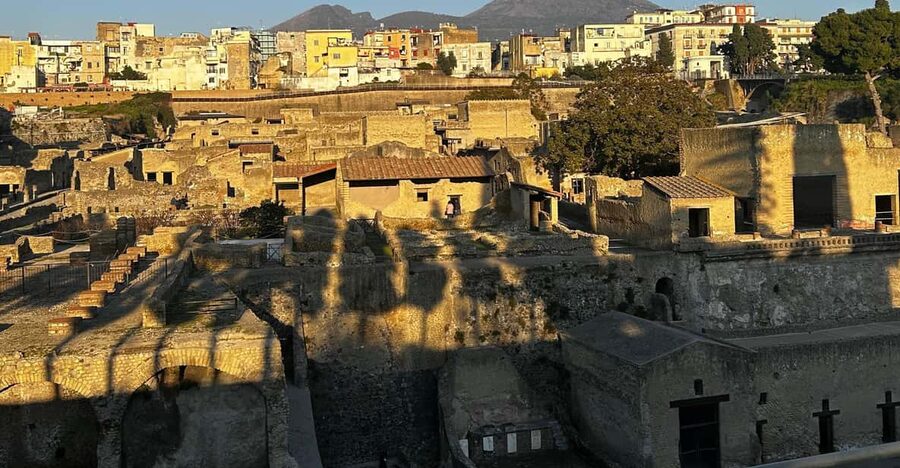
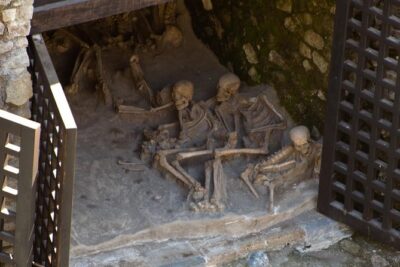
Pompeii gets most of the attention, but Herculaneum often lands harder. Both cities were buried by the 79 A.D. eruption of Mount Vesuvius, yet the results were not identical. Herculaneum was covered by pyroclastic flows—scalding ashes that blanketed the town under about 60 feet of cinder. That kind of heavy burial is exactly why so much still feels tangible.
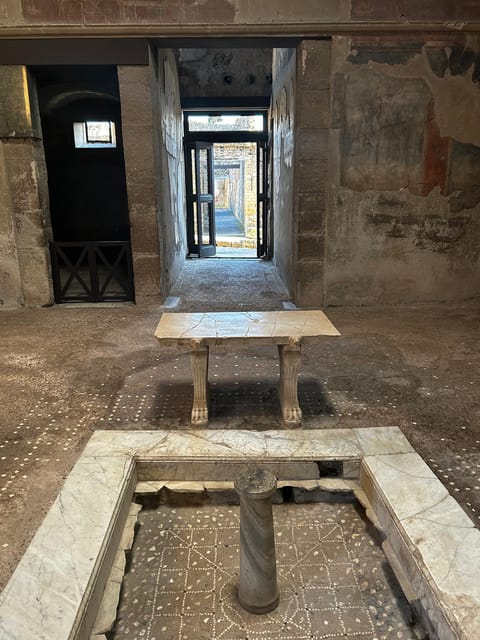
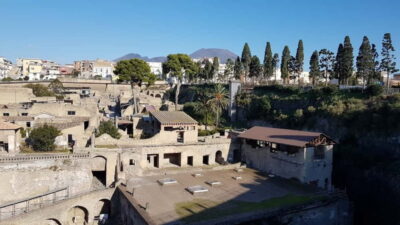
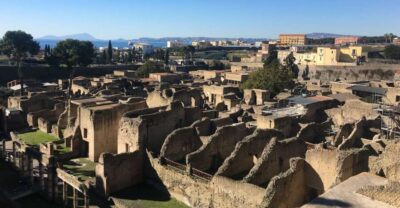
What you’ll notice during your walk is the “human scale” of the place. Herculaneum was a residential area for the wealthy—smaller than Pompeii, but with a sense of comfort and private life. The tour focuses on elegant decorations and the original style still visible in the private houses. Even if you’ve seen Pompeii, you’ll likely find yourself asking different questions here: not just what happened, but how people lived in daily routines shaped by comfort, status, and layout.
The best part is that the guide connects the preservation to the viewing experience. When you understand why Herculaneum looks the way it does, the ruins become clearer instead of just “old.”
More of Herculaneum next door
- Ercolano: Herculaneum Entry Ticket with Optional Audio Guide
★ 4.1 · 581 reviews - Herculaneum: Skip The Line Entrance ticket + Audioguide
★ 4.3 · 266 reviews - Naples: Pompeii and Herculaneum Tour with Tickets and Lunch
★ 4.4 · 136 reviews
Corso Resina Meeting Point: Getting There Without Stress
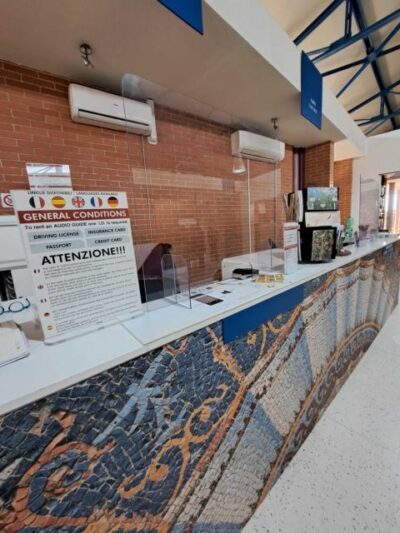
Your tour starts at Corso Resina, 187, with the meeting point located just outside the Herculaneum ticket office. That sounds simple, but it’s worth arriving a little ahead so you’re not searching while your group is forming.
The layout matters here because Herculaneum’s ticket office zone is the natural place where people cluster. Since the tour includes skip-the-line entry, you want to be ready to move as soon as the guide checks the group in. If you’re coming from Naples by train or bus, give yourself a buffer so you’re not sprinting to the meeting point.
If you like getting oriented fast, this is a solid way to do it. You’re not wandering until you accidentally catch a good view—you’re stepping into a planned route with a guide guiding you from the start.
Skip the Ticket Line, Then Follow a Guided Route
This is a guided walking tour inside the Archaeological Site of Herculaneum, and admission is included. Translation: you don’t have to add another step or pay extra at the last minute. The skip-the-line piece is especially valuable because timing in busy heritage sites is often the difference between a fun visit and a rushed one.
The tour lasts about 2 hours, which means the guide has to choose the moments that best explain the place. That’s not a weakness; it’s the advantage of a well-structured overview. You get a focused route that highlights why Herculaneum is distinct, rather than treating it like an open-ended self-guided stroll.
The practical takeaway: if you want deep reading time, pencil in extra hours for independent exploration later. For many people, this tour works best as the “make sense of it” layer that turns a quick glance into real understanding.
The Vesuvius 79 A.D. Story, Explained as City-Level Disaster
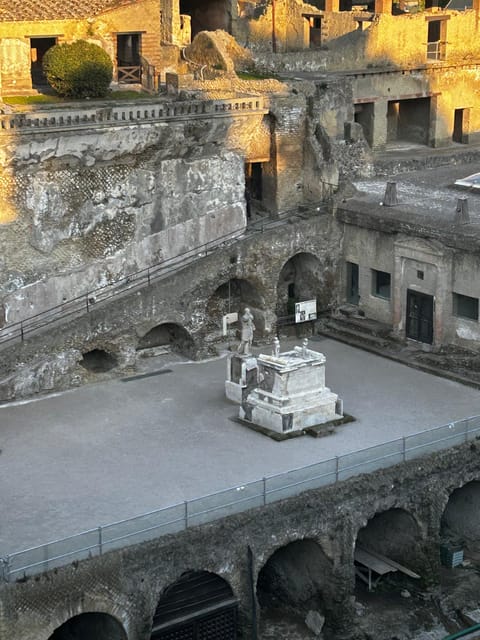
The tour begins with the eruption, and that’s a smart choice. Herculaneum isn’t just a pile of ruins; it’s a city that was destroyed and preserved by the same catastrophe. When the guide sets up the eruption properly, the ruins stop being random fragments and start becoming evidence.
You’ll learn about pyroclastic flows and the scale of burial—how scalding ash covered the town under 60 feet of cinder. That detail isn’t just dramatic. It helps you understand why certain surfaces and spaces can survive in a way you don’t get to see in many other ancient sites.
The “nature of the city” is also part of the introduction. Herculaneum’s identity as a coastal residential hub for the wealthy becomes the lens for what comes next. Once you understand that, the houses and decorations don’t feel like disconnected artifacts. They feel like parts of a lived environment that got interrupted.
Preservation Differences: Why Herculaneum Looks the Way It Does
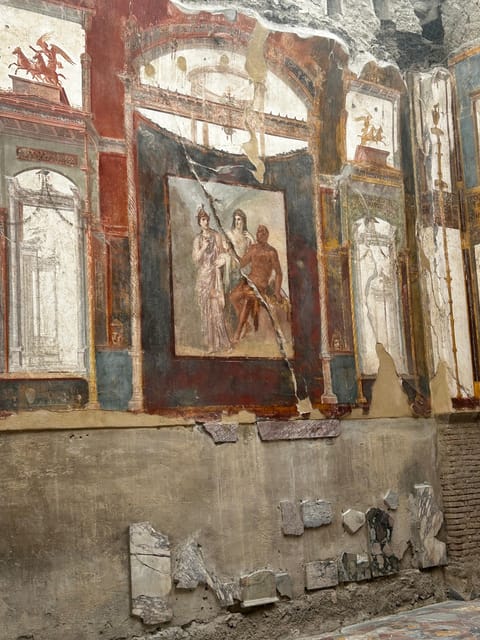
A big reason to choose this tour instead of doing it entirely on your own is that it explains the peculiar state of preservation. The tour specifically compares the effects of the eruption across the two cities. Both were destroyed by the same eruption, but the outcomes weren’t alike.
So what does that mean when you’re standing in the site? It means the guide helps you read what’s in front of you. You’ll hear why Herculaneum still carries charm today—why the town’s details can feel intact nearly 2,000 years later. And you’ll learn why this place can feel more intimate and detailed than Pompeii.
This matters for your experience because it changes how you look. Instead of thinking, This is ruined, you start thinking, This is preserved in a particular way because of the way the burial happened. That shift makes the ruins easier to follow—especially if you’re visiting with limited time.


Boat Museum Stop: Connecting the Ruins to the Coast
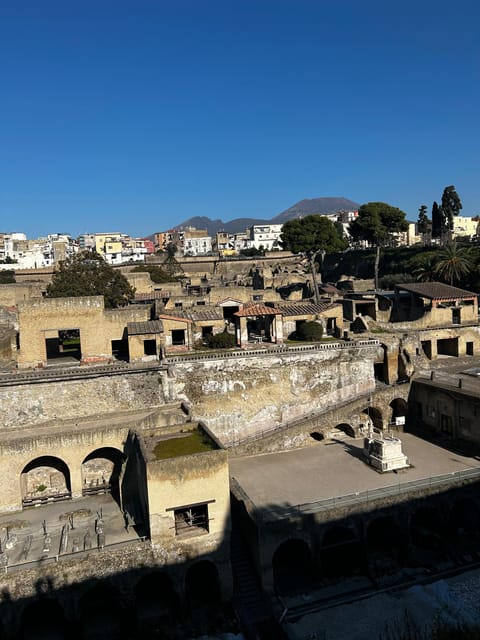
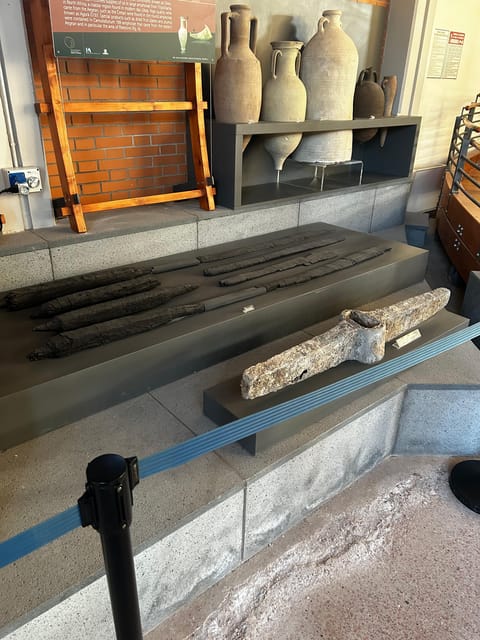
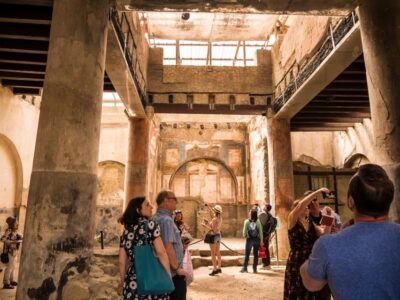
One of the tour highlights is a visit connected to the boat museum. Herculaneum’s coastal location is part of what makes it different, and a boat-focused stop brings that reality into view.
Even if you’re not a marine history person, this kind of museum visit is useful. Ruins show the architecture and daily spaces. A museum stop helps you connect those spaces to the broader setting—movement, trade, and the coastal life that shaped the town.
The guide also frames the boat museum as part of the story, not just an extra room you walk into. That way, you don’t leave thinking the museum was a random detour. You leave with a clearer picture of how the disaster affected a living seaside community.
Walking Through Roman Daily Life in a Wealthy Center
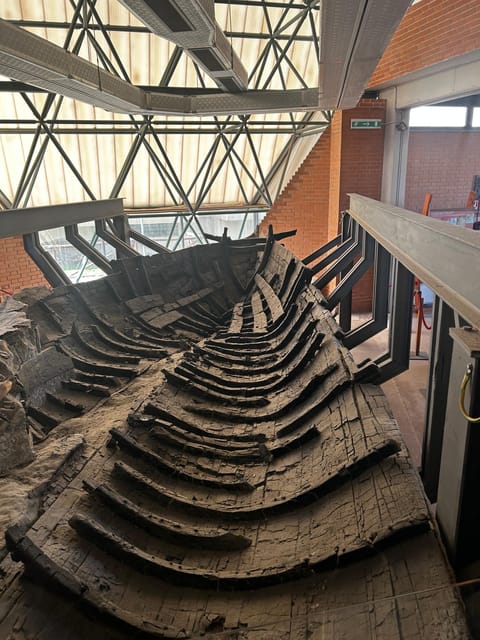
The core of the experience is the guided walking tour through the ruins, with a strong emphasis on typical Roman life in a center like this. Herculaneum was residential, and the tour highlights how the wealthy lived here—smaller than Pompeii, but richer in the evidence of comfort.
You’ll focus on private houses and the kinds of elegant decorations that still show through. The guide’s explanations aim to make the environment feel lived-in. Instead of only pointing out what a wall fragment is, the guide connects it back to lifestyle: how people likely organized spaces, what wealth could look like in everyday design, and how domestic life fit into a Roman city.
This part of the tour is also where you’ll probably get your best “wow” moments. When a guide helps you translate the visual language of decoration and layout, the ruins stop being just background and start becoming a real snapshot of ancient routine.
Guides, Languages, and Why Small Groups Matter
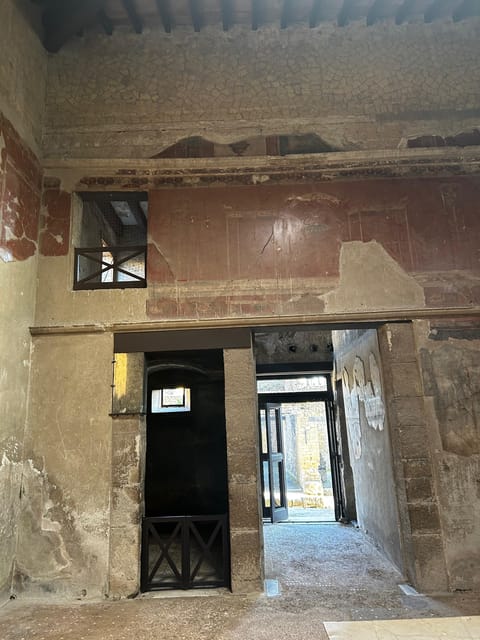
This tour is led by a live guide licensed by the Regione Campania. That’s a practical quality marker. It usually means you’ll spend your time learning, not translating basics for yourself.
Language options include German, Italian, and English, so you can choose what lets you follow along without straining. In past tours, guides like Roberta, Marzia, and Gabriella have been noted for clear, proportioned explanations and for answering questions with care. You can use that as a hint about the tone: this isn’t a quick script read through a headset. It’s more of a conversation shaped by the ruins.
Small group size is another big deal. When the group is smaller, you’re more likely to get your curiosity answered. That’s valuable at Herculaneum, where good questions often come fast—especially once the guide explains why preservation looks the way it does.
What 2 Hours Covers—and What You’ll Need to Add Yourself
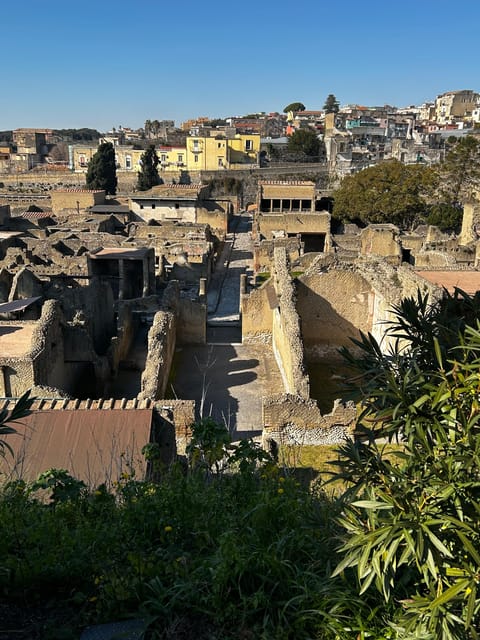
A two-hour tour is a smart way to see Herculaneum if you’re balancing other stops in Campania. But you should also plan around the limits. The tour focuses on the key story beats: eruption context, preservation differences, the boat museum visit, and a guided walk through Roman daily life and ruins.
If you love slow museum-style time, you might want more than 2 hours. The tour will guide your attention, but it won’t replace independent wandering where you can linger over every detail at your own speed.
My practical advice: treat this as your guided backbone. After the tour, if you still feel curious, you’ll get the most out of adding extra time to revisit the areas that caught your eye during the explanation.
Price and Value: Is $75 Good for This Experience?
At $75 per person for a 2-hour guided visit with admission included, the value comes from what’s bundled. You’re paying for three things at once:
- a licensed guide to interpret the site,
- admission that’s already taken care of,
- and skip-the-line access that saves your limited time.
If you’re someone who learns best with context—why things are preserved, what to look for, how the city functioned—then $75 is a reasonable price for turning a visit into a real understanding. If you already know Roman history deeply and prefer a fully independent pace, you might feel the cost more than the benefit. For most people, though, the guide’s focused storytelling is the difference between seeing ruins and understanding them.
Also, the small-group format matters for value. It’s not just about being less crowded. It’s about getting time for questions and a tour route shaped for people who want answers, not just photos.
Who Should Book This Herculaneum Tour
This tour is a great fit if you:
- want a Pompeii alternative that’s closer and more intimate in feel,
- like structured explanations that connect the eruption to what you’re seeing on the ground,
- want a coastal angle via the boat museum,
- and appreciate a small group when questions come up.
It’s also a good pick when your schedule is tight. Herculaneum is close enough in the same region that you can add it without building a full extra day around it—especially with the skip-the-line advantage.
If you’re traveling with mixed interests, the story-based approach helps. The eruption background works for history-minded people, while the domestic and decorative focus gives the visit a human scale that’s easier to enjoy.
Should You Book This Herculaneum Tour?
I think you should book it if you want the site to make sense fast. The combination of licensed guidance, admission included, and skip-the-line entry turns a limited visit into a meaningful one. The tour’s focus on preservation differences versus Pompeii also gives you a reason to come beyond the most famous option.
Skip it only if you’re determined to go at your own pace with no guidance at all, or if you know you want a long, unhurried museum-and-ruins day. For most travelers, this is a smart use of time: short enough to fit the schedule, structured enough to leave you with clear understanding.
FAQ
How long is the Herculaneum small group tour?
The tour lasts 2 hours.
What is the price per person?
The price is $75 per person.
Is the admission ticket included?
Yes. Skip-the-line admission ticket is included.
Does the tour include a visit to the boat museum?
Yes. The tour includes an explanation of preservation and a visit of the boat museum.
Where do we meet the guide?
The meeting point is just outside the Herculaneum ticket office. The listed starting location is Corso Resina, 187.
Is there a guided component?
Yes. The experience includes a guided tour with a live guide licensed by the Regione Campania.
What languages are available?
The tour is offered in German, Italian, and English.
How big is the group?
It’s a small group available.
What is the cancellation policy?
You can cancel up to 24 hours in advance for a full refund.
Can I book without paying right away?
Yes. You can reserve now and pay later.
More Tour Reviews in Ercolano
- Ercolano: Herculaneum Entry Ticket with Optional Audio Guide★ 4.1 · 581 reviews
- Herculaneum: Skip The Line Entrance ticket + Audioguide★ 4.3 · 266 reviews
- Naples: Pompeii and Herculaneum Tour with Tickets and Lunch★ 4.4 · 136 reviews
- Vesuvio Skip The Line Ticket With Digital Audioguide★ 3.2 · 91 reviews
- Herculaneum Archaeological Park smart Audio Tour★ 3.8 · 70 reviews
More of Herculaneum
- Ercolano: Herculaneum Entry Ticket with Optional Audio Guide★ 4.1 · 581 reviews
- Herculaneum: Skip The Line Entrance ticket + Audioguide★ 4.3 · 266 reviews
- Naples: Pompeii and Herculaneum Tour with Tickets and Lunch★ 4.4 · 136 reviews
- Herculaneum Archaeological Park smart Audio Tour★ 3.8 · 70 reviews
- Herculaneum: Private Walking Tour with Archeologist Guide★ 5.0 · 59 reviews
Just reviewed: more Ercolano tours and day trips





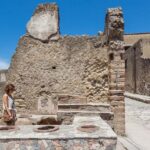
Herculaneum Ruins Tours, compared.
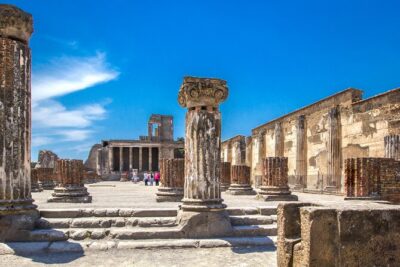 ★ 5.0Pompeii and Herculaneum Small Group Tour with an ArchaeologistFrom $771,350 reviews
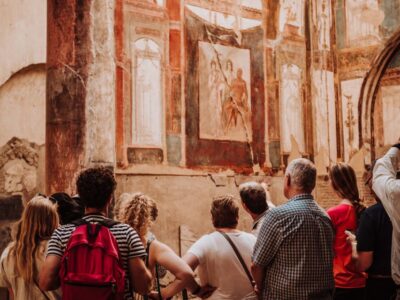 ★ 4.8Small-Group Tour of Pompeii and Herculaneum867 reviews
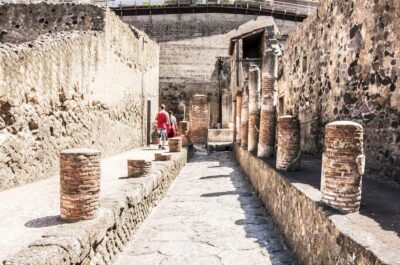 ★ 4.1Ercolano: Herculaneum Entry Ticket with Optional Audio GuideFrom $21581 reviews
 ★ 5.0Private Day Tour to Vesuvius, Herculaneum & Pompeii with Pick UpFrom $120279 reviews
 ★ 4.3Herculaneum: Skip The Line Entrance ticket + AudioguideFrom $35266 reviews
 ★ 4.2Naples: Herculaneum and Vesuvius Day TripFrom $135200 reviews
 ★ 5.0Pompeii and Herculaneum: Guided Tour with an ArchaeologistFrom $141164 reviews
 ★ 4.4Naples: Pompeii and Herculaneum Tour with Tickets and LunchFrom $126136 reviews
Browse the lists this tour appears in