
Reviewed · POMPEII VIP & EXCLUSIVE ACCESS
From Naples: Pompeii Ruins VIP Guided Tour
One afternoon in Pompeii can feel like time travel. This VIP-style day trip from Naples pairs a small group with skip-the-line entry and a guided walk through a city frozen after Vesuvius in 79 A.D. I especially like how the tour focuses on what daily life looked like, not just stone-and-columns sightseeing.
My other favorite part is the pacing: you get a 2-hour guided walking tour plus enough time to see major stops without exhausting yourself before heading back to Naples. The one drawback to consider is that it’s not suited for wheelchair users or mobility impairments, and the walking can be demanding under hot conditions.
In This Review
- Key highlights worth your attention
- Why a Naples-to-Pompeii day trip works so well
- Skip-the-line entry and what that means on the ground
- The 3.5-hour schedule: how the time is actually used
- Pickup in Naples: transfer comfort and driver timing
- Inside Pompeii: what the guided walk focuses on
- The streets, shops, and daily rhythms
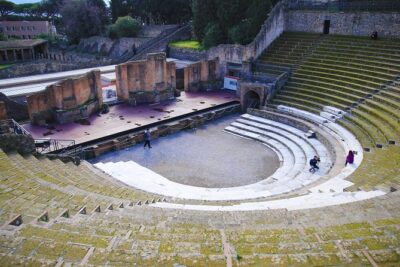
- The theater: entertainment as part of Roman life
- The house of the richest man in Pompeii
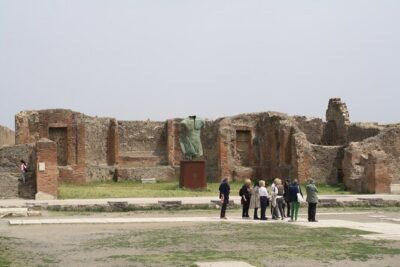
- The forum and bath houses: civic and social energy
- The necropolis: where the dead fit into the city’s plan
- Big-ticket highlights: Villa of the Mysteries and the amphitheater
- Mosaics and preserved details: why this matters more than you think
- Cameos and corals craft stop: a small detour with real texture
- What you get from the guide: storytelling vs. pure facts
- Who this VIP Pompeii tour fits best
- Price and value: is $135.94 worth it
- What to bring (and what can ruin your day)
- Should you book this Pompeii VIP guided tour?
- FAQ
- How long is the Pompeii Ruins VIP guided tour from Naples?
- How much time do you spend inside Pompeii?
- Where does the tour pick you up?
- Is there a live guide, or is it audio?
- What languages are offered?
- Does it include Pompeii entry and skip-the-line access?
- What should I bring, and what’s not included?
Key highlights worth your attention
- Small group size (up to 12) for a more personal feel through the ruins
- Separate entrance to skip the line, so you start exploring faster
- Two hours inside Pompeii with a walking tour focused on everyday Roman life
- Major sites like the theater, forum, bath houses, and the necropolis, plus iconic villas
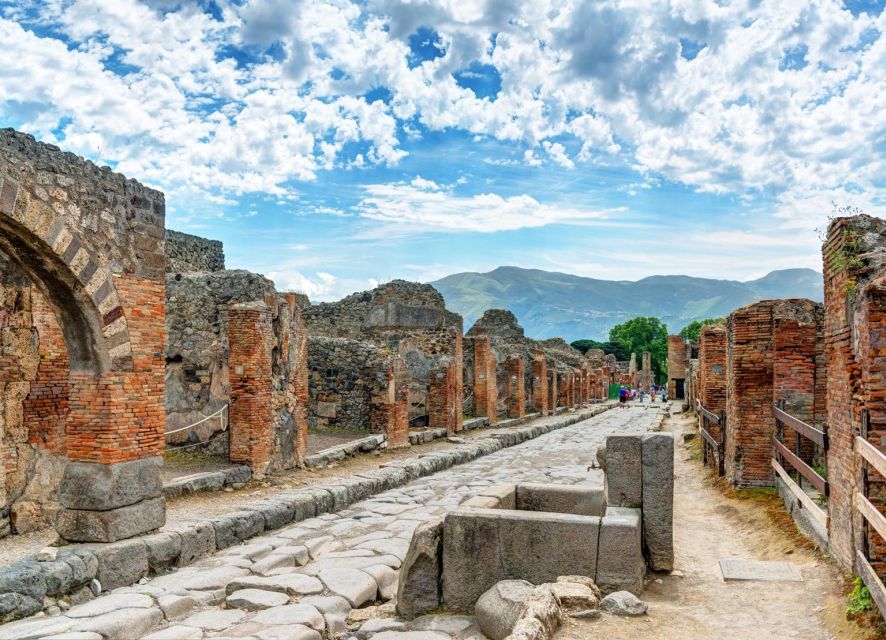
- Colorful mosaics and preserved streets that help the whole place make sense
- Optional stop for cameos and corals craft along the way, if time permits
Why a Naples-to-Pompeii day trip works so well

Pompeii is one of those places where you don’t want to waste time. The site is huge, and self-navigation can turn into a scramble of guessing what’s important. This tour is designed for the opposite: it gives you a clear route, a guide (when available), and enough structure to actually understand what you’re looking at.
The other practical win is the round-trip transfer from Naples. That matters more than it sounds. Even in good weather, Pompeii means walking. On a hot day, the return ride with air-conditioning is a real quality-of-life upgrade, and it shows up in the kinds of comments people make about the experience.
Lastly, the VIP angle here is about reducing friction. You’re not just buying a ticket. You’re getting entry efficiency plus a guided interpretation that helps you connect the ruins to real human habits: eating, shopping, working, relaxing, and living in a city that suddenly stopped.
Smaller groups and quieter hours
- From Naples: Pompeii and Herculaneum VIP Tour with Lunch
★ 4.4 · 129 reviews - From Rome: Pompei & Sorrento| Expert Guide and Exclusive Bus
★ 4.6 · 26 reviews - Pompeii VIP 3h Tour: Skip-the-line with your Archaeologist
★ 4.9 · 13 reviews
Skip-the-line entry and what that means on the ground
Pompeii can mean waiting. Even if you’re early, lines can eat up the best parts of your day. This tour uses a separate entrance so you can get moving instead of standing around.
That time saved isn’t only convenience. It changes how you experience the place. When you start the walk sooner, you’re more likely to catch the quieter, more comfortable light for photos and you avoid feeling rushed as the afternoon heats up.
The tour also builds in a simple flow: pickup in Naples, Pompeii walking time, then return. When the logistics are tight, your brain is free to focus on what’s in front of you—like the preserved street layouts and the mix of homes, shops, and public spaces.
The 3.5-hour schedule: how the time is actually used
The full experience runs about 3.5 hours, with 2 hours inside Pompeii on foot. In a city like Naples, where you could easily burn half a day on transit and logistics, that’s a good trade. You’re getting meaningful ruins time without turning the day into a marathon.
A realistic way to think about it: you’ll be in motion at Pompeii for most of that 2-hour guided window. The tour is built around highlights and the big-picture story of Roman life in the first century A.D., not around linger-for-an-hour-per-room pacing.
So if you like to browse slowly, you’ll still need to accept the limits of a guided-format day. But if your goal is to leave Pompeii feeling oriented and informed, this time structure is exactly the point.
Pickup in Naples: transfer comfort and driver timing
Pickup is from selected meeting points in Naples, and the driver will wait up to 5 minutes if you’re late. That short window sounds strict, but it also hints at why the day works: timing has to be tight for the skip-the-line entry and the guided route.
This is also where the tour scores points for comfort. The transfer includes air-conditioning, which matters because Pompeii can be brutally warm. You don’t want to start your walk already overheated, and you don’t want the return ride to be a suffering contest.
What I’d do if you’re choosing this: plan to arrive at your meeting point early enough that a quick bathroom break doesn’t cost you the bus. The ruins can be hot and uneven; your day starts smoother when the pickup doesn’t scramble it.
Inside Pompeii: what the guided walk focuses on
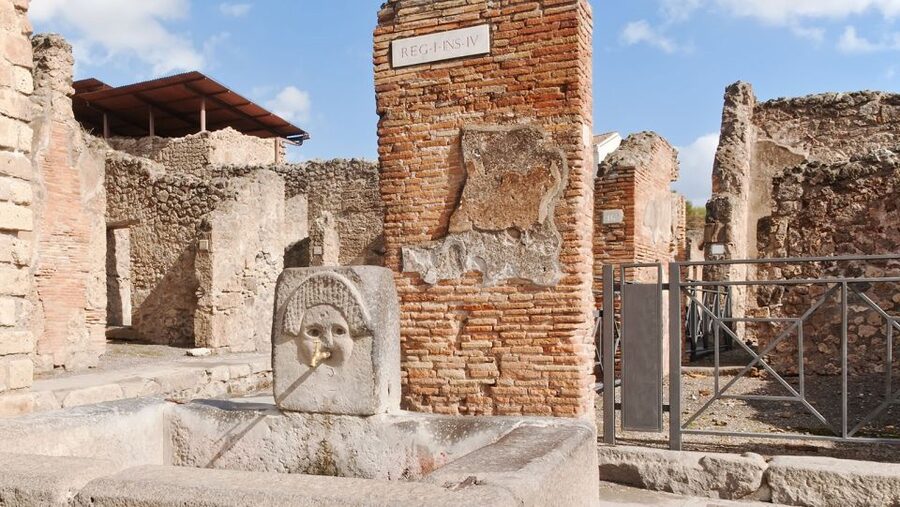
You’re visiting the Pompeii Archaeological Site, which was buried and preserved after the eruption of Vesuvius in 79 A.D. The guided walk is designed to connect the visible ruins to real habits and routines—so you can look at a street and understand how people used it.
Here are the kinds of stops and themes you should expect during the guided time:
More guided visits to choose

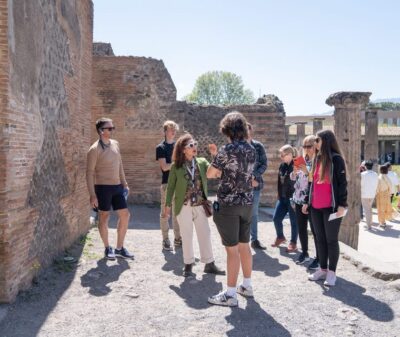
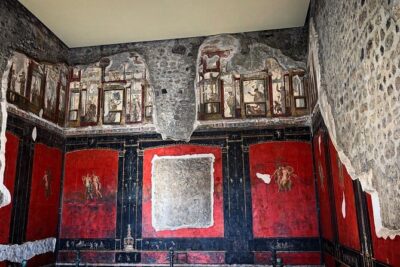

The streets, shops, and daily rhythms
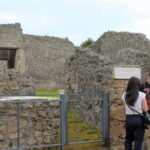
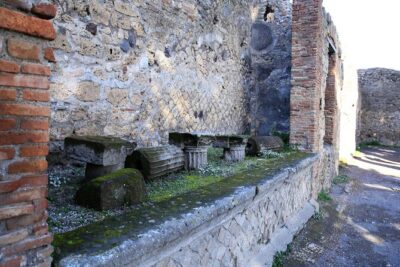
One standout is the sense of layout. You’ll see an ancient shopping street where details like preserved bakeries and pizzerias help you picture what daily commerce felt like. It’s not just architecture—it’s an old commercial street you can almost hear.
You’ll also get a sense of the scale of everyday life: the city wasn’t only villas and monuments. It was shops, services, public areas, and neighborhoods all interlocked.
The theater: entertainment as part of Roman life
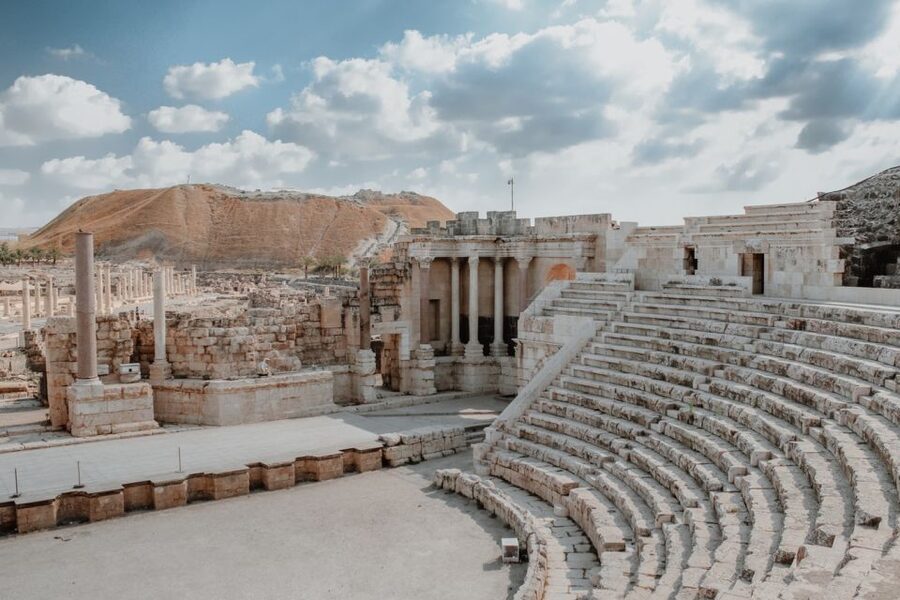
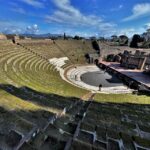
The theater is a key anchor for understanding leisure. Roman entertainment wasn’t separate from civic life. It sat right in the middle of a functioning city, where citizens came together for performances.
If you like learning how people spent time, this stop does the job fast. Even if you don’t go deep on technical architecture, you’ll get the idea: entertainment was a social event.
The house of the richest man in Pompeii
You’ll also see the house of the wealthiest resident in Pompeii. This is useful because it gives you a contrast point. After walking through shared spaces and commercial streets, you can better understand the difference between private luxury and public life.
The forum and bath houses: civic and social energy
The forum is where Roman public life concentrated. Think of it as politics, business, and community wrapped together. The bath houses add another layer: this wasn’t only about hygiene. Baths were social spaces where people met, talked, and relaxed.
Seeing these together helps the city feel like a living system rather than a museum.
The necropolis: where the dead fit into the city’s plan
The necropolis is a reminder that the city’s story wasn’t only about the living. Cemeteries and burial traditions were part of how the Romans organized space and memory.
It’s an important emotional balance in the route: you get the everyday routines, then a quieter, heavier perspective.
Big-ticket highlights: Villa of the Mysteries and the amphitheater
The tour also highlights signature ruins such as the Villa of the Mysteries and the amphitheater. These are the kinds of locations that help Pompeii stand apart: iconic spaces that make you pause because the preservation is so striking.
Even if you only have a couple of hours, these stops deliver big visual payoff, and they reinforce the story the guide is telling about Pompeii’s culture and wealth.
Mosaics and preserved details: why this matters more than you think
Pompeii is famous for preservation, but what really sticks for me is how the small elements make the entire place feel specific. Colorful mosaic art is a perfect example. You’re not just seeing decoration. You’re seeing the way Roman identity and taste got expressed in everyday spaces.
Mosaics also reward attention. When your guide points out what you’re looking at, you notice more: the patterns, the craftsmanship, and the role these artworks played in rooms that were used, not just built.
If you’re the type who likes to take photos, this is also where you’ll have the most satisfying results. Broad ruins shots are nice, but the details are what make the photos feel like they belong to Pompeii, not any other ancient site.
Cameos and corals craft stop: a small detour with real texture
Along the way, there may be a stop at a local factory to learn about the process of cameos and corals craft, jewelry made from coral and seashell materials. It’s listed as something that happens if time permits, so it’s not guaranteed.
Still, this can be a nice break from archaeology-only mode. Pompeii is frozen in time, but you’re traveling through a region that still makes handcrafted objects with long traditions. If the factory stop fits your day, you’ll leave with something more than photos: a practical sense of how local materials and skills are used today.
What you get from the guide: storytelling vs. pure facts
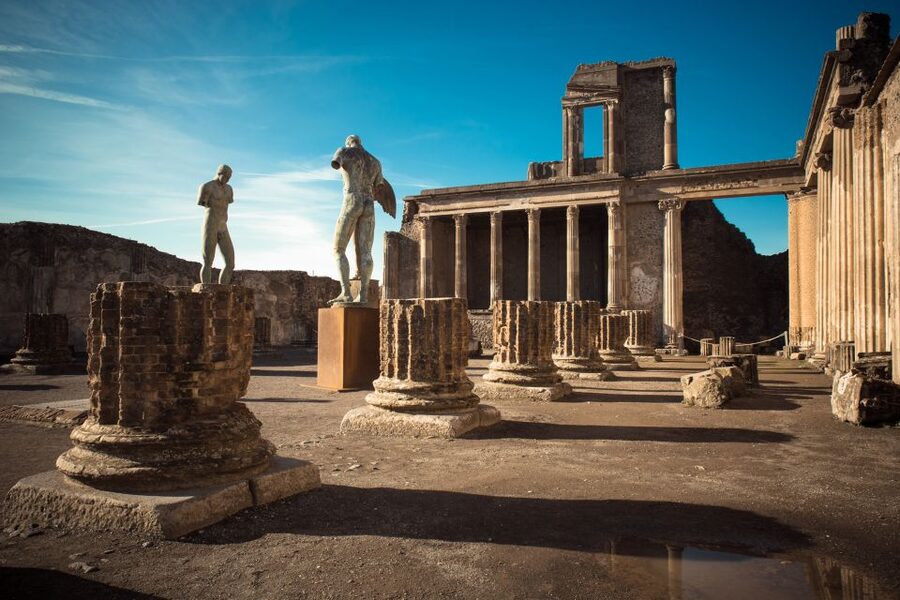
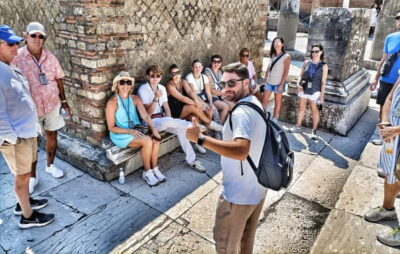
This is one of the best “value levers” built into the tour. When a live guide is available, you’re getting a mix of explanation and storytelling, and the tour format keeps the guide’s focus on the big picture—Roman life in the first century A.D.
The tour language can include Italian, English, or Spanish for the live guide. If there aren’t enough participants for a live guide in your language, you’ll still have an audio guide (with languages including French, Portuguese, Polish, Chinese, German, and Japanese).
So the important question isn’t only what language you want. It’s whether you’ll benefit from a guided narrative. If you like learning by hearing someone connect dots—this tour format suits you.
I’d also plan to use your questions. Even short answers from a guide can dramatically improve how you interpret what you’re standing next to.
Who this VIP Pompeii tour fits best
This is a solid pick if you want:
- A time-efficient Pompeii day trip from Naples with a clear route
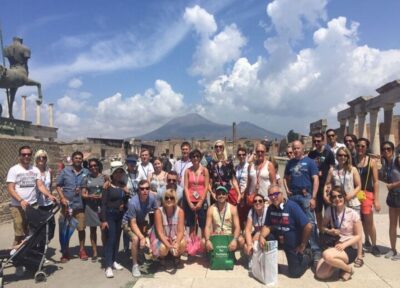
- A small group experience rather than a giant bus crowd
- A guided focus on daily Roman life, not just major monuments
- Easy entry thanks to the separate entrance
It’s also a good match for couples, friends, and solo travelers who like structured sightseeing but don’t want to spend hours planning a route.
It’s not a good match if you:
- Need wheelchair access (the tour is not suitable for wheelchairs)
- Have mobility limits that make uneven walking hard
- Want lots of free time to wander independently for long stretches
Price and value: is $135.94 worth it
At $135.94 per person, you’re paying for more than a ticket. You’re buying a package of:
- Round-trip transfer from Naples
- Skip-the-line entry through a separate entrance
- A Pompeii walking tour
- A guide in some situations (or audio guide when guide availability doesn’t meet the threshold)
- A small group format (up to 12 participants)
If you compare this to DIY, the savings aren’t always obvious, because DIY usually means you spend time figuring out transport, entry timing, and interpretation on your own. Here, you pay to reduce that mental and logistical load.
Is it the cheapest way into Pompeii? No. But the value is strongest when you care about saving time and getting context quickly—especially if it’s your first visit and you don’t want to wonder what matters.
What to bring (and what can ruin your day)
Bring:
- Comfortable shoes (Pompeii is walking-heavy)
- Hat and sunscreen (the heat can be relentless)
Don’t bring:
- Oversize luggage (it’s not allowed)
And one small tip that helps: wear layers you can manage. Pompeii can swing between sun exposure and shade, and a comfortable outfit makes the walk easier to enjoy.
Should you book this Pompeii VIP guided tour?
I’d book it if your priority is a structured, interpretation-focused Pompeii visit that fits neatly into a half-day plan from Naples. The combination of small group size, skip-the-line entry, and a route that covers the major story points (forum, bath houses, necropolis, theater, and standout villas) makes it a smart way to get real understanding fast.
I’d skip it if you’re sensitive to walking or need wheelchair accessibility. In that case, you’d be better off planning a different format that matches your mobility needs.
If you’re aiming for value in time and clarity—this one does the job.
FAQ
How long is the Pompeii Ruins VIP guided tour from Naples?
The tour lasts about 3.5 hours total.
How much time do you spend inside Pompeii?
The Pompeii Archaeological Site portion is about 2 hours, as a guided walking tour.
Where does the tour pick you up?
Pickup is available from selected meeting points in Naples. You should confirm the pick-up time and location with the provider.
Is there a live guide, or is it audio?
A live guide is available only in high season when a minimum number of participants is reached per language. If that minimum isn’t met, you’ll get an audio guide.
What languages are offered?
Live guide languages are Italian, English, and Spanish. Audio guides are available in French, Portuguese, Polish, Chinese, German, and Japanese.
Does it include Pompeii entry and skip-the-line access?
Yes. The ticket to the Pompeii Archaeological Park is included, and skip-the-line access is handled through a separate entrance.
What should I bring, and what’s not included?
Bring comfortable shoes, a hat, and sunscreen. Food and drinks are not included.
More Guided in Pompei Campania
- Pompeii: Entry Ticket and Guided Tour with an Archaeologist★ 4.8 · 19,459 reviews
- Pompeii: Skip-the-Line Entrance Ticket with Audio Guide★ 4.0 · 2,509 reviews
- Pompeii: Skip-the-line-Ticket and Guided Tour★ 4.6 · 1,152 reviews
- Pompeii: Guided Tour with Skip-the-Line Entry★ 4.9 · 812 reviews
- Pompeii: Skip-the-Line Entry Ticket with Digital Guide App★ 4.1 · 770 reviews
More Tour Reviews in Pompei Campania
- Pompeii: Entry Ticket and Guided Tour with an Archaeologist★ 4.8 · 19,459 reviews
- Pompeii: Small Group Tour with an Archaeologist★ 4.8 · 12,264 reviews
- Pompeii: Skip-the-Line Entrance Ticket with Audio Guide★ 4.0 · 2,509 reviews
- Naples: Pompeii and Mt. Vesuvius with Lunch and Wine Tasting★ 4.5 · 2,454 reviews
- Pompeii: Skip-the-line-Ticket and Guided Tour★ 4.6 · 1,152 reviews
Small-Group and VIP Access
- From Naples: Pompeii and Herculaneum VIP Tour with Lunch★ 4.4 · 129 reviews
- From Rome: Pompei & Sorrento| Expert Guide and Exclusive Bus★ 4.6 · 26 reviews
- Pompeii VIP 3h Tour: Skip-the-line with your Archaeologist★ 4.9 · 13 reviews
Just reviewed: more Pompei Campania tours and day trips



Pompeii VIP & Exclusive Access, compared.
 ★ 4.9Exclusive Tour with Archaeologist and Entry TicketsFrom $50634 reviews
 ★ 4.5PompeiI Exclusive Tour with your Archaeologist in a Small GroupFrom $30363 reviews
 ★ 4.4From Naples: Pompeii and Herculaneum VIP Tour with LunchFrom $237129 reviews
 ★ 5.0Fast Access Exclusive Private Ancient Pompeii Half Day Tour with Local GuideFrom $20354 reviews
 ★ 5.0Half-Day Exclusive Private Tour of Pompeii and HerculaneumFrom $4,65549 reviews
 ★ 5.0VIP Pompeii Tour including Newly Opened Houses With ArchaeologistFrom $35933 reviews
 ★ 5.0Skip-the-line Exclusive Private Full-Day Complete Ancient Pompeii Guided TourFrom $34730 reviews
 ★ 5.0Exclusive Private Tour: Explore Pompeii and the Amalfi CoastFrom $38529 reviews
Browse the lists this tour appears in