
Reviewed · POMPEII PRIVATE GUIDED TOURS
Private Tour with Official Guide through the wonders of Pompeii.
Pompeii makes more sense with a real guide. This private, English-language stroll through the city’s top ruins is designed for clarity and momentum, and the official guide keeps the story moving. I especially love how the route links theaters, homes, baths, and temples into a single, you-can-follow flow, with bottled water to keep you comfortable.
I also love the small-detail focus you usually miss on your own. You get pointed views of frescoes and mosaics at Casa dei Vettii, the standout mosaic at Casa del Poeta Tragico, and the everyday feel of the Thermopolium, where people grabbed food. Add in the map of the Archaeological Park Pompeii, and you’re set up to connect what you saw with what’s around you afterward.
One consideration: the tour price does not include the main Pompeii entry ticket, so you’ll want to plan for that extra cost. Also, with a 12:30 pm start, midday walking can feel long if you’re not a fan of sun and stone.
In This Review
- Key highlights worth planning around
- The value of an official guide in Pompeii
- Meeting at Via Villa dei Misteri and the 12:30 start
- How the route works: short stops, strong connections
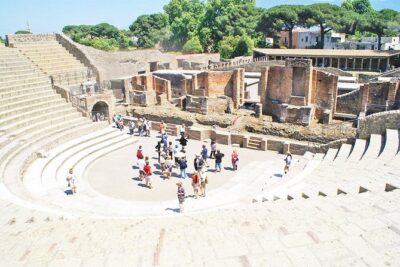
- Teatro Grande: tragedies, comedies, and civic pride
- Casa dei Vettii: frescoes and mosaics you can actually picture
- Casa del Fauno: one of Pompeii’s oldest villas
- Casa degli Amorini Dorati: beauty that needs a guided lens
- Suburban Baths: leisure built near the walls
- Stabian Baths (Terme Stabiane): Pompeii’s largest scale
- Odeon – Teatro Piccolo: the singing tradition symbol
- Foro de Pompeya: the main square where life happened
- Tempio di Giove Capitolino: where big power played out
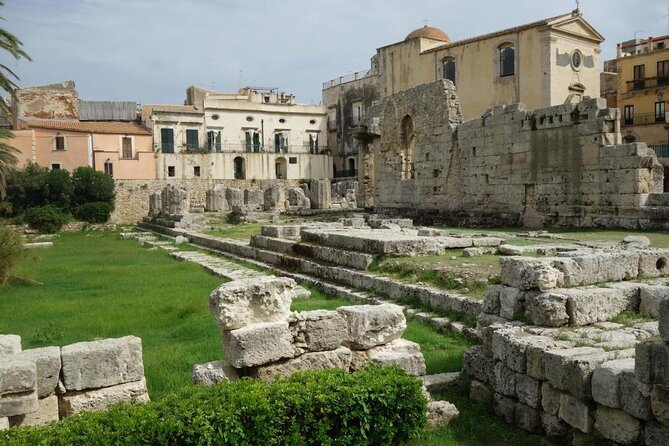
- Temple of Apollo: Zeus’s sun son in stone form
- Casa del Poeta Tragico: the famous mosaic house
- Via dell’Abbondanza: Pompeii’s main street
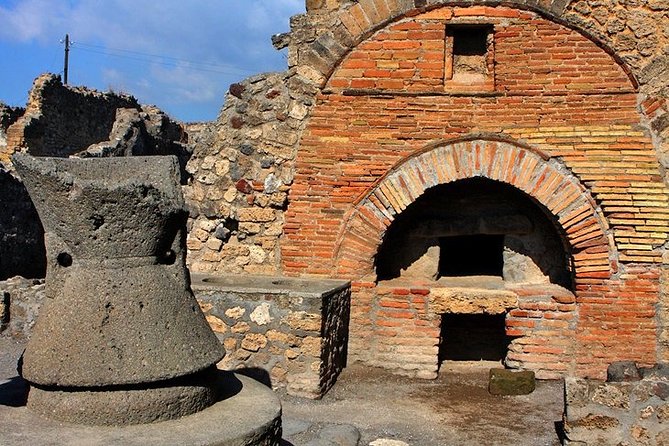
- Thermopolium Regio VI, Insula VIII, 8: food on the move
- Price and what you’re really paying for ($102.35 per person)
- What this tour feels like in practice
- Who should book this private Pompeii walk
- Should you book this tour?
- FAQ
- How long is the Pompeii private tour?
- Is this a private tour?
- What language is the tour offered in?
- What time does the tour start?
- Where do we meet?
- Where does the tour end?
- What is included in the price?
- Is the Pompeii Archaeological Park ticket included?
- Does the tour allow service animals?
- Can I cancel for a full refund?
Key highlights worth planning around
- Private tour, only your group: No waiting for other languages or pacing styles.
- Official guide with real stories: Guides like Paolo bring humor and context that make the ruins feel lived-in.
- A tight 2–3 hour route: Stops are short and purposeful, built around the biggest “wow” areas.
- Pompeii made practical: You get a park map plus bottled water, so you can navigate better than relying on signage.
- You hit the classics plus the details: From Teatro Grande to mosaics to the Thermopolium food counter.
The value of an official guide in Pompeii
Pompeii is easy to look at and hard to fully understand—there’s just so much stone, so many doorways, and not enough labels for your brain to grab onto. That’s exactly where a guided walk helps. With an official guide leading the way, you’re not just passing ruins; you’re learning how they connect.
I like that this tour keeps things grounded in what you can see: architecture, daily spaces, public life, and religious landmarks. You also get a guide who can explain what you’re looking at without turning it into a lecture. In the best versions of this tour, the guide (often Paolo) adds humor and stories, plus the kind of excavation-level perspective that makes details feel less random.
The practical bonus: you’ll finish with a clearer mental map. That matters in Pompeii because you’ll keep noticing things after you’re done—corners, inscriptions, street layouts, and building styles that start to make sense.
Prefer your own guide? More private tours
- Pompeii private tour with an Official Guide
★ 5.0 · 631 reviews - Pompeii Private Tour with an Archaeologist and Skip The Line – 3 hours
★ 5.0 · 564 reviews - Visit in Pompeii – Pompeii Private Tour with Ada
★ 5.0 · 436 reviews
Meeting at Via Villa dei Misteri and the 12:30 start
The tour meets at Via Villa dei Misteri, 1, 80045 Pompei NA, Italy. It starts at 12:30 pm, and it ends back at the same meeting point. That round-trip setup is useful because Pompeii ruins can sprawl, and having a clear start/end point saves energy.
It’s also described as near public transportation, so you’re not forced into a complicated transfer plan. You’ll likely want to arrive a bit early to settle in and make sure you’re ready with the needed Archaeological Park Pompeii ticket (since the tour itself doesn’t include it).
And because the tour is in English with a mobile ticket, you’re not stuck trying to figure out paper logistics while you’re already on-site. Still, double-check your ticket on your phone before you head in—Pompeii has enough friction without adding your own.
How the route works: short stops, strong connections
The tour moves through major areas with quick, focused breaks. Many stops run around 10–20 minutes, with a couple even shorter, like the final street-and-food segment. That timing is not a flaw—it’s the strategy. Pompeii is too big for a casual “wander and hope” approach.
Instead, you get a guided sequence that builds from public life to domestic life to leisure and back out toward commerce. If you like stepping from one kind of space to another—then you’ll like this plan a lot.
The downside to know up front: because the tour is limited to roughly 2–3 hours, you won’t be treating Pompeii like a museum visit where you sit with one house for an hour. If that’s your travel style, consider adding independent time on another visit day.
Teatro Grande: tragedies, comedies, and civic pride
You start with Teatro Grande, the Theater of the great Greek-Roman tragedies and comedies. Even if you don’t know a thing about ancient drama, the scale and layout do the teaching. A theater like this wasn’t just entertainment—it was public identity. You can feel why crowds would gather here: it’s built for visibility and shared experience.
This stop is short (about 10 minutes), so the guide’s job matters. A good guide will help you read the space quickly—how a theater functions, where attention would go, and what kind of performance culture existed in Pompeii. In tours led by guides like Paolo, the explanations tend to come with word origins and quick, human connections, not just dates.
Casa dei Vettii: frescoes and mosaics you can actually picture
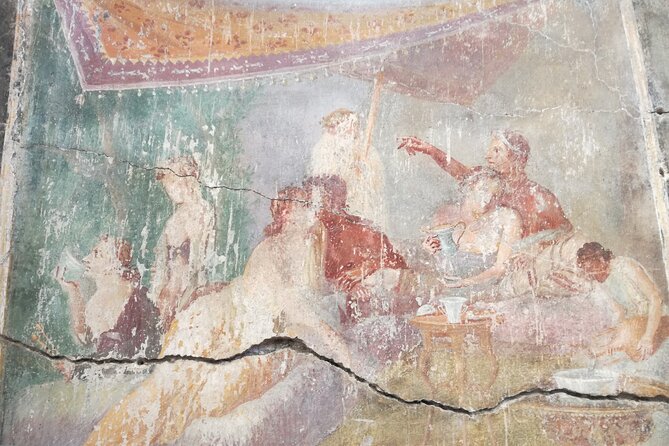
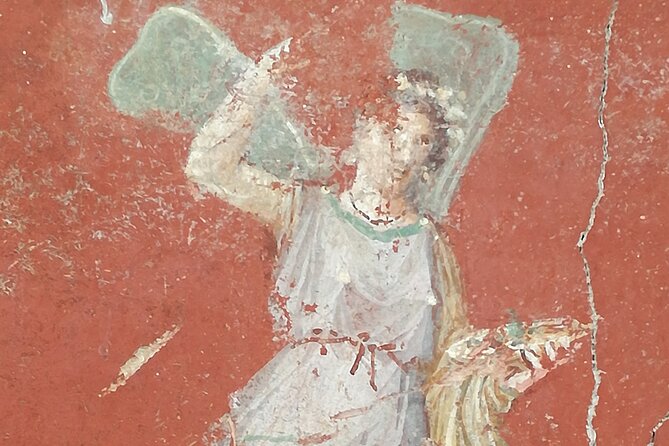
Next is Casa dei Vettii, known for architecture, frescoes, and mosaics. Houses here aren’t just pretty shells. The walls and floors tell you what mattered—taste, wealth, religion, and the everyday habits of the people who lived there.
A 20-minute stop works well because it forces you to look like a detective. Don’t just glance at what’s visible from one angle. With guidance, you can learn what to notice first: the overall structure, then the decorative program (frescoes and mosaics), and finally how the house layout supports daily movement.
If you enjoy visual details—color, pattern, and composition—this is one of the stops you’ll remember.
More guided visits to choose

Casa del Fauno: one of Pompeii’s oldest villas
Then you move to Casa del Fauno, described as one of the oldest villas in Pompeii. The value here isn’t only age; it’s the chance to see how domestic design evolved and how older homes shaped the neighborhood’s “center of gravity.”
Because the stop is around 10 minutes, the guide likely focuses on quick comparisons: how this villa reads in the context of the city’s layout and what its age implies about Pompeii’s development. This kind of “why this place, why now” explanation is what makes a guided route feel worth paying for.
Casa degli Amorini Dorati: beauty that needs a guided lens
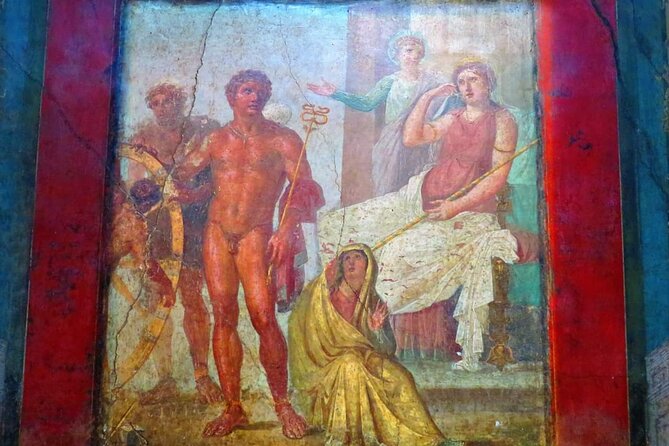
Casa degli Amorini Dorati gets the shortest version of the big-villa treatment at about 20 minutes, but it’s presented as a standout. The name points to the famed theme of the home—so when the guide draws your attention to what’s preserved, you’ll understand why people call the beauty indescribable.
Here’s the key: without guidance, it’s easy to “check the box” and move on. With a guide who knows what you’re looking at, you can see why the decoration mattered to the people living there. It turns the house from rubble into a deliberate message.
Suburban Baths: leisure built near the walls
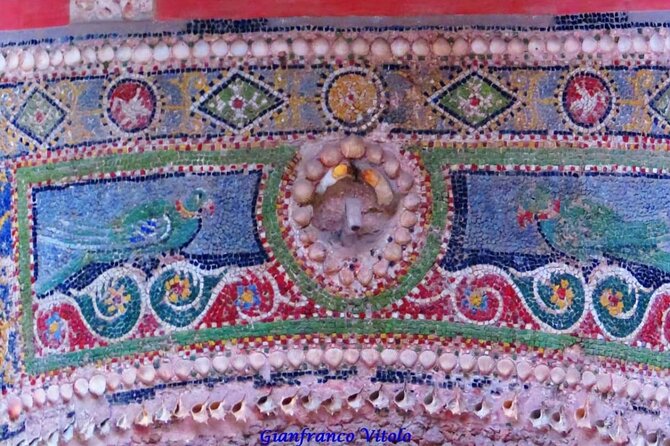
Next come the Suburban Baths, described as the extraordinary Spa built near the walls. This stop shifts you from private rooms to public leisure and social rhythm. Baths like these were part of how people spent time and interacted. They also show you Pompeii’s practical side: the city invested in comfort and routine.
Because this stop is about 15 minutes, it’s best approached with questions. Ask yourself: where would people move, what would separate zones, and how does the layout serve different needs? A good guide will help you spot the building logic quickly, so you aren’t just staring at stone tubs and half-walls.
Stabian Baths (Terme Stabiane): Pompeii’s largest scale
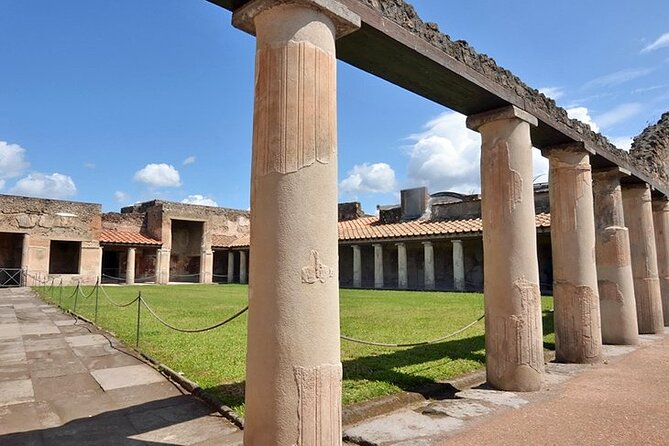
Then you hit the Stabian Baths (Terme Stabiane), noted as the largest Baths of Pompeii. Scale is the point. When you walk through the larger bath spaces, you grasp how serious Pompeii was about daily leisure.
This stop lasts around 20 minutes, which is just enough time to take in the major elements and understand the “big picture” of how a bath complex worked. If you’re the type who loves architecture and function, you’ll likely enjoy this stop because baths are where engineering and social life overlap.
Odeon – Teatro Piccolo: the singing tradition symbol
Odeon – Teatro Piccolo follows, described as the theater symbol of the singing tradition. This is an easy stop to love because it’s specific. You’re not just looking at a theater—you’re seeing the idea of performance culture in a form that suggests music and public gatherings.
A 10-minute stop sounds quick, but for a place like this it’s enough to orient you and set the scene. With an official guide, you’ll connect this theater’s purpose to the broader civic entertainment world you saw at Teatro Grande, and suddenly Pompeii’s public life feels more coherent.
Foro de Pompeya: the main square where life happened
Then it’s Foro de Pompeya, the main square, with about 20 minutes here. This is where the city becomes a city. Markets, meetings, movement—squares like this are social engines.
Even if you think of Pompeii mostly as dramatic ruins, the Forum stops you from staying stuck on tragedy. You see a place designed for everyday public energy. And because it’s centrally located, the guide can tie it back to what you saw in the theaters and temples before, creating a thread that helps you remember.
Tempio di Giove Capitolino: where big power played out
Next is Tempio di Giove Capitolino, described as The Temple of the temples. Religion wasn’t tucked away here—it shaped politics, public identity, and how people understood the world.
This stop is around 10 minutes, so focus on the guide’s framing: what kind of worship space you’re looking at, and what it signals about civic priorities. When the guide explains the meaning behind the structure, the temple stops being just a large ruin and becomes a statement of purpose.
Temple of Apollo: Zeus’s sun son in stone form
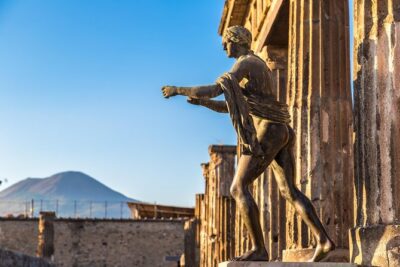
Then comes Temple of Apollo, described through the myth: Apollo, god of the sun, son of Zeus. That myth detail matters because it gives you a lens for the symbolism you can’t automatically “read” from ruins.
With another 10-minute stop, you’ll likely get a tight explanation of why Apollo mattered and how temple culture shaped public life. It’s also a nice rhythm break—so you’re not only seeing homes and entertainment venues.
Casa del Poeta Tragico: the famous mosaic house
Casa del Poeta Tragico is next, with the promise of the home of the famous Mosaic and only about 5 minutes here. That short time can sound stressful, but in a good guided format it forces the right kind of attention: you go in knowing the mosaic is the main event, and you come out with a clearer sense of why it’s famous.
If mosaics are your thing, don’t rush past the guide’s pointers. This is the kind of stop where one “look here” moment makes the difference between seeing decoration and understanding storytelling in floor art.
Via dell’Abbondanza: Pompeii’s main street
Then you walk Via dell’Abbondanza, the main street, for about 10 minutes. Streets are where you start to feel the city as a place where people moved constantly. A main thoroughfare tells you about commerce, foot traffic, and what everyday movement looked like.
Because it’s a street, it’s also a chance to reorient. Your guide’s job is to help you connect what you’ve seen inside buildings to what happened outside—how public buildings and private spaces relate to street life.
Thermopolium Regio VI, Insula VIII, 8: food on the move
Finally, you visit Thermopolium Regio VI, Insula VIII, 8, described as one of the restaurants of the time, with about 5 minutes there. This is one of those stops that turns Pompeii from “ancient city museum” into “this is how people ate.”
Even without extra time, it’s a powerful ending because it returns you to daily life. A thermopolium wasn’t a full restaurant the way we think today. It was fast, practical, and built for people who needed something now.
If you want that human-feeling finish—food, routine, and the ordinary—this stop does it.
Price and what you’re really paying for ($102.35 per person)
At $102.35 per person, this is a paid tour with a clear scope: a private, official guided route through Pompeii’s best-known—and most readable—high points. You also get bottled water and a map of the Archaeological Park Pompeii.
What’s not included is the Archaeological Park Pompeii ticket. So the realistic cost is the tour price plus the separate park entry. Tips aren’t included either, so if you plan to tip, it should be part of your budget.
The value here comes from concentration. Pompeii rewards people who know where to look and what to look for, and this tour packs that into a short, structured time block. If you were planning a self-guided visit, you’d spend time piecing together what each ruin meant. Here, the guide handles that for you—so you get more understanding per hour.
What this tour feels like in practice
You should expect a guided walk that’s active but not exhausting. Stops are frequent enough to keep you engaged, but not so frequent that you never sit and process. You’ll likely move from one “type” of place to another—performance, home life, leisure, religion, street life, and food—so your brain keeps getting new anchors.
Also, since it’s private and for “only your group,” your pace can match what you want. In the best guided versions of this experience, the guide is patient and answers questions clearly, including how daily life worked in Pompeii, how buildings were used, and what ongoing excavation efforts reveal.
If you care about the small stuff—frescoes, mosaics, layout details—this format is made for you.
Who should book this private Pompeii walk
This tour is a great fit if you want:
- a guided, English explanation of major Pompeian sites
- a time-efficient plan that hits the highlights without feeling random
- architecture and decoration details explained in plain language
- a route that helps you leave Pompeii with a usable mental map
It’s also set up for most travelers, allows service animals, and is described as near public transportation.
If you’re the type who wants to linger for long periods at just one house or one chapel area, you might feel limited by the overall 2–3 hour structure. In that case, you can pair this tour with extra independent time before or after.
Should you book this tour?
Yes—if you want Pompeii to make sense fast, and you like your ancient sites explained with humor and practical detail. The price is easier to justify because you’re not only paying for walking instructions; you’re paying for someone who can point out what matters in each place and connect it into a clear whole.
Skip it only if you’d rather roam slowly without structure, or if you prefer a museum-style pace with long stops and minimal walking.
If your goal is to see Pompeii’s big moments and still come away understanding the city’s rhythm, this private official-guided route is a strong bet.
FAQ
How long is the Pompeii private tour?
The tour lasts about 2 to 3 hours.
Is this a private tour?
Yes. It’s private, and only your group will participate.
What language is the tour offered in?
The tour is offered in English.
What time does the tour start?
The start time is 12:30 pm.
Where do we meet?
The meeting point is Via Villa dei Misteri, 1, 80045 Pompei NA, Italy.
Where does the tour end?
It ends back at the meeting point.
What is included in the price?
Included items are the tourist guide, a map of the Archaeological Park Pompeii, and bottled water.
Is the Pompeii Archaeological Park ticket included?
No. The Archaeological Park Pompeii ticket is not included.
Does the tour allow service animals?
Yes. Service animals are allowed.
Can I cancel for a full refund?
You can cancel for a full refund up to 24 hours in advance of the experience’s start time.
More Guided in Pompeii
- Skip the Line Guided Tour of Pompeii led by an Archaeologist★ 5.0 · 703 reviews
- Pompeii private tour with an Official Guide★ 5.0 · 631 reviews
- Pompeii Skip-the-line Tour with Archaeologist Guide★ 5.0 · 559 reviews
- Pompeii Guided Tour & Horse Riding on Vesuvius with Lunch★ 5.0 · 419 reviews
- Complete Pompeii Skip the Line Tour with Archaeologist Guide★ 4.5 · 379 reviews
More Tour Reviews in Pompeii
- Pompeii Small Group Tour with an Archaeologist★ 5.0 · 6,593 reviews
- Discover the Ancient Ruins of Pompeii: Day Trip from Rome★ 3.5 · 2,247 reviews
- Pompeii and Herculaneum Small Group Tour with an Archaeologist★ 5.0 · 1,350 reviews
- Skip the Line Guided Tour of Pompeii led by an Archaeologist★ 5.0 · 703 reviews
- Pompeii Ticket + Tour with Optional Tasting Experience at Pompeii★ 5.0 · 663 reviews
More Private Guides at the Site
- Pompeii private tour with an Official Guide★ 5.0 · 631 reviews
- Pompeii Private Tour with an Archaeologist and Skip The Line – 3 hours★ 5.0 · 564 reviews
- Visit in Pompeii – Pompeii Private Tour with Ada★ 5.0 · 436 reviews
- Pompeii Private Tour with an Archaeologist and Skip The Line★ 5.0 · 391 reviews
- Pompeii Vineyard Escape: Private Wine Tasting & Lunch★ 5.0 · 329 reviews
Just reviewed: more Pompeii tours and day trips




Pompeii Private Guided Tours, compared.
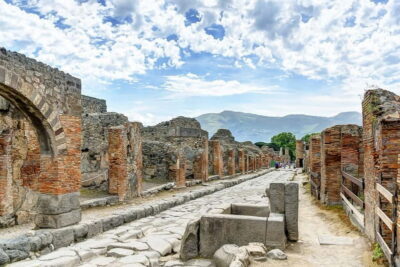 ★ 4.9Pompeii Ruins Private Tour with Optional Skip-the-Line EntryFrom $254732 reviews
 ★ 5.0Pompeii private tour with an Official GuideFrom $107631 reviews
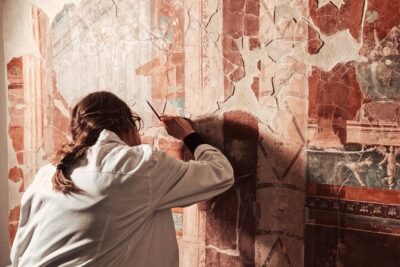 ★ 5.0Pompeii Private Tour with an Archaeologist and Skip The Line – 3 hoursFrom $302564 reviews
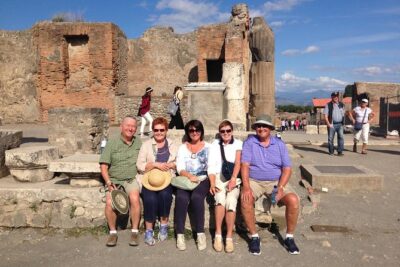 ★ 5.0Visit in Pompeii – Pompeii Private Tour with AdaFrom $229436 reviews
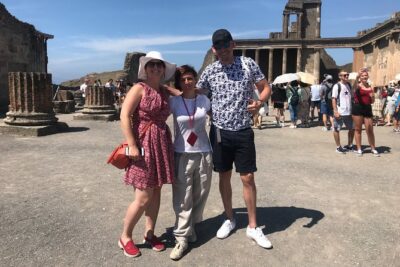 ★ 5.0Pompeii Private Tour with an Archaeologist and Skip The LineFrom $375391 reviews
 ★ 5.0Pompeii Vineyard Escape: Private Wine Tasting & LunchFrom $66329 reviews
 ★ 5.0Private Day Tour to Vesuvius, Herculaneum & Pompeii with Pick UpFrom $120279 reviews
 ★ 5.0Guided Small Group Tour Max 6 People with Private OptionFrom $168269 reviews
Browse the lists this tour appears in