
Reviewed · ANCIENT POMPEII HISTORY TOURS
Pompeii the Buried city
Pompeii hits harder with a real guide. This private walk is built around professional local guidance and a calmer route through the ruins, so you spend your time understanding Pompeii instead of just scanning stone.
The big winner for me is the chance to see plaster casts of the victims in the southern part of the site, plus the famous buildings that show both daily life and private life.
One drawback to plan for: Pompeii is uneven underfoot, and this experience is rated for moderate walking, so sturdy shoes matter.
In This Review
- Key highlights to look for
- Pompeii’s buried streets: what you’ll actually get out of a guide
- Finding your way at Pompei-porta Marina (and why it matters)
- The Forum and thermal baths: Pompeii’s public life in plain view
- Menandro’s House and the private world of daily rituals
- Lupanare: the brothel, the erotic frescoes, and how to handle it
- The uncrowded southern walk: cast bodies of 79 A.D., then theaters
- Price and value for a private group up to 6
- When the 2 hours feels perfect (and when it might not)
- Who this Pompeii experience fits best
- Should you book this Pompeii tour?
- FAQ
- How long is the Pompeii tour?
- How many people are in each group?
- Are Pompeii admission tickets included?
- Where do we meet for the tour?
- Who provides the guided service?
- Is the tour physically demanding?
- What if weather is bad or I need to cancel?
Key highlights to look for
- Authorized local guides in Campania who know how to connect the buildings to real life.
- A focused 2-hour private route (up to 6 people) so you are not lost in a crowd.
- Uncrowded southern ruins where the cast bodies make the tragedy feel close and real.
- Lupanare and its erotic frescoes, explained in context instead of treated like shock value.
- Classic Pompeii anchors like the Forum and thermal baths, plus standout homes such as Menandro’s House.
- Mobile ticket for a smoother start at the meeting point near Porta Marina.
Pompeii’s buried streets: what you’ll actually get out of a guide
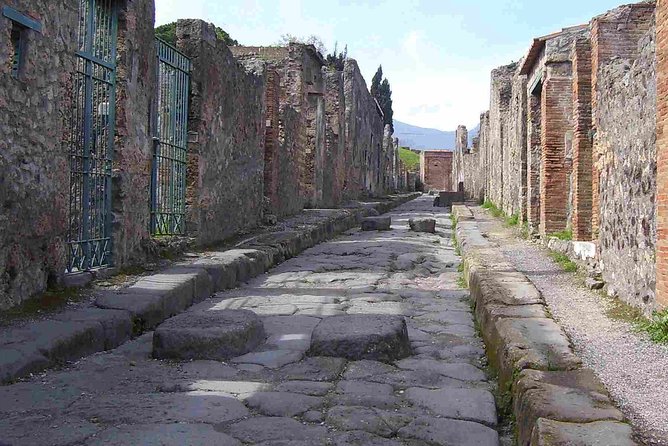
Pompeii works on the senses. You see streets, doorways, and public buildings all frozen in time, and the whole place feels strangely intimate. But the reason a good guide matters here is simple: the ruins are dense, and without context they turn into a lot of pretty stone fragments.
On this walk, you get help turning the site into a story. I love how the route mixes major landmarks with stops that show how people lived behind the scenes. If you care about everyday details, you will probably feel more connected to the city after just two hours than you would with a half-day of wandering.
You also get the kind of pacing that lets you look for meaning. You are guided through the Forum area and thermal baths, then across houses and private spaces, and eventually toward the quieter southern section where the famous plaster casts are set up. That flow is what makes Pompeii stick in your mind.
More of the story behind the stones
- 2 hours Pompeii Tour with Local Historian – Ticket Included
★ 5.0 · 335 reviews - Stories of Pompeii: Small Group tour with archeology expert guide
★ 5.0 · 191 reviews - Ancient Pompeii Private Tour: Skip the Line & Kid-Friendly Option
★ 5.0 · 167 reviews
Finding your way at Pompei-porta Marina (and why it matters)
Your meeting point is Pompei-porta Marina – scavi, address 80045 Pompei. It is close to public transportation, which helps if you are not driving in from Naples or Rome.
This start location is useful because Pompeii is big. When you begin at a clear point with a guide, you avoid the classic problem of arriving, finding your bearings, and then losing the best light of the day to logistics. Since the tour lasts about 2 hours, every minute matters.
Also, go in expecting a walk over uneven ground. You are on archaeological surfaces, not smooth sidewalks, so bring shoes you trust. Moderate physical fitness is recommended, and that usually means you should be comfortable moving steadily for a solid chunk of time even if you take short pauses.
The Forum and thermal baths: Pompeii’s public life in plain view
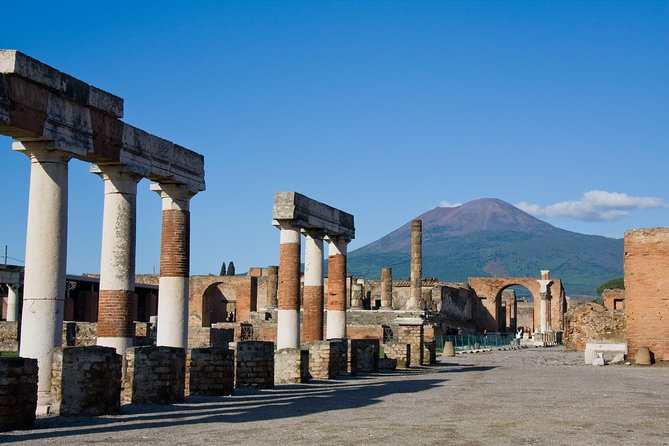
The tour includes Pompeii Archaeological Park with a guided circuit through some of the most important public spaces. You will visit big-name landmarks such as the Forum and the Thermal Baths, plus a mix of public and private buildings that help you see how the city functioned.
Here is what you should look for. In the Forum, try to picture the rhythm of the day—where people would gather, what it meant to have civic space, and how power and public life were displayed. In a place like Pompeii, you are not just looking at ruins; you are reading how the city was designed for movement and crowding.
The thermal baths add another layer. Bathing in Roman cities was about routine, social life, and status as much as it was about cleanliness. Even when details are worn, the layout helps you understand how people moved between spaces and what a normal day might have looked like.
A short guided visit works here because the guide can point out what is easiest to miss. You get to see the highlights without getting lost, and you come away with a clearer sense of how public Pompeii felt.
Menandro’s House and the private world of daily rituals
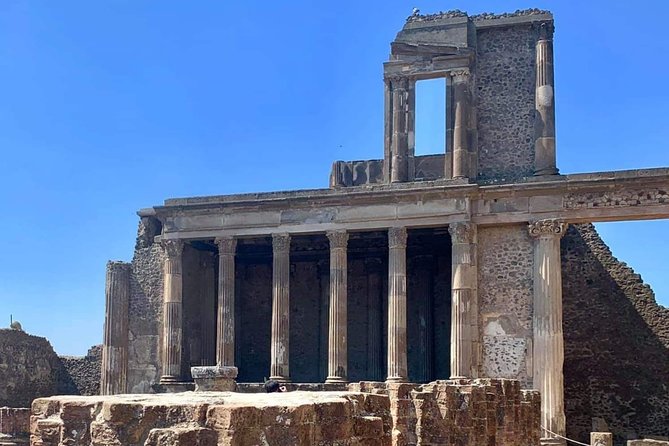
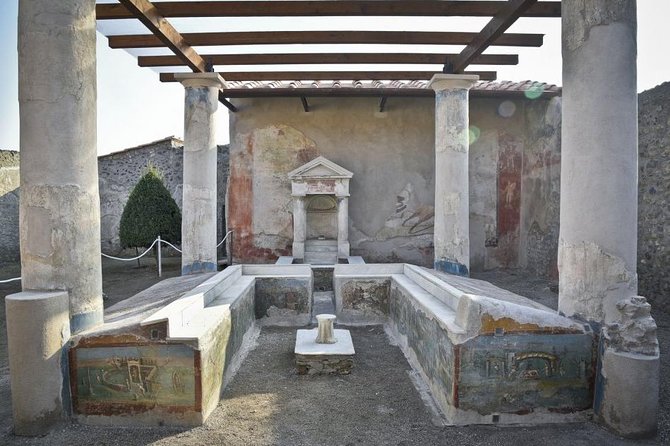
After the big public spaces, you will shift toward private buildings. One stop mentioned is Menandro’s House, which helps you understand how homes reflected personality, wealth, and everyday habits.
This is where Pompeii gets personal. In a house, you stop thinking like a tourist and start thinking like a resident. Look at the way rooms connect, how entrances would channel movement, and how art and decoration were woven into ordinary life.
Even though the ruins are static, the layouts tell you where people would pause, where they would move quickly, and how interior spaces supported routine. A good guide makes those connections fast—so you are not standing in the middle of rooms asking yourself what you are looking at.
If you like history that feels human-sized instead of museum-abstract, this segment is a big part of the value. Private spaces are where you begin to sense the city as lived-in, not just preserved.
Lupanare: the brothel, the erotic frescoes, and how to handle it
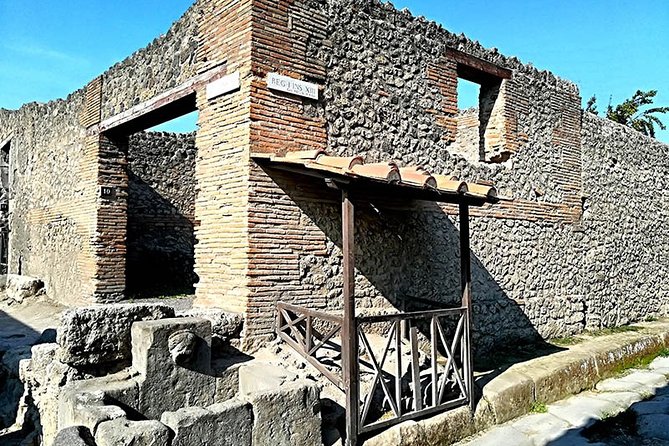
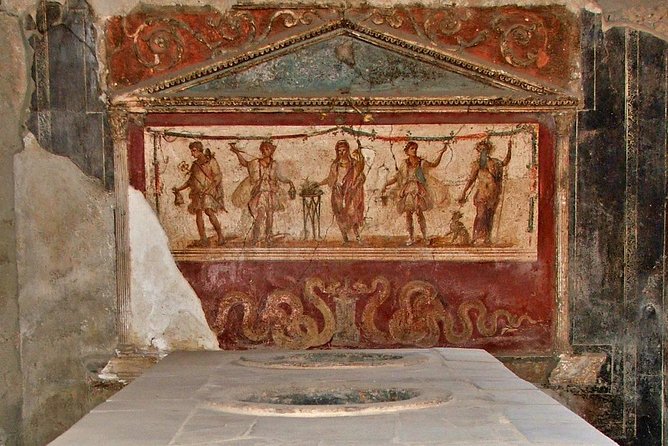
One of the most talked-about stops is the brothel called Lupanare, including its erotic frescoes. This is the kind of place that can go two ways: either it becomes titillating spectacle, or it becomes cultural context.
On this tour, you are led through it as part of a bigger Pompeii picture. You will get help connecting it to the realities of urban life—how business and commerce existed in tight spaces, and how art played a role in signaling and branding even in private commercial settings.
Be aware: this stop is not for everyone if you prefer your Roman history strictly PG. But it is also one of the most historically specific windows you can get into everyday economics and social systems in the ancient city.
The value isn’t just that it exists. It is that a guide can help you see why it is there, how it fit into the neighborhood, and what it reveals about how people navigated desire, money, and public reputation.
A few more Pompeii trips to look over
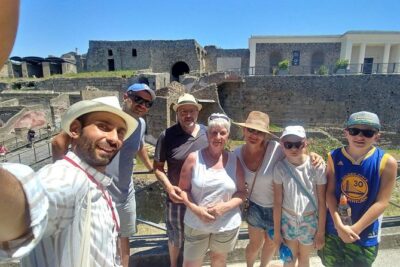

The uncrowded southern walk: cast bodies of 79 A.D., then theaters
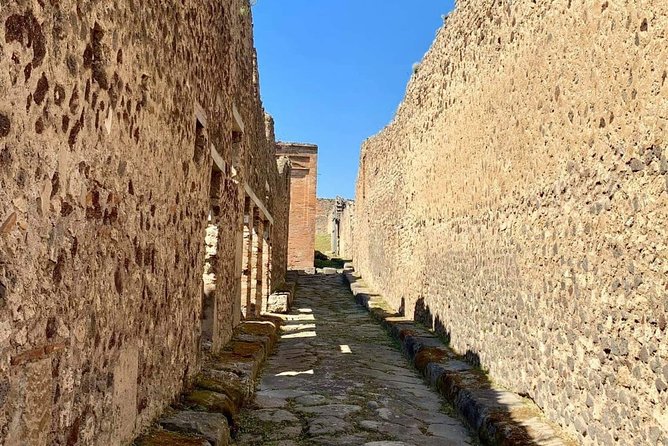
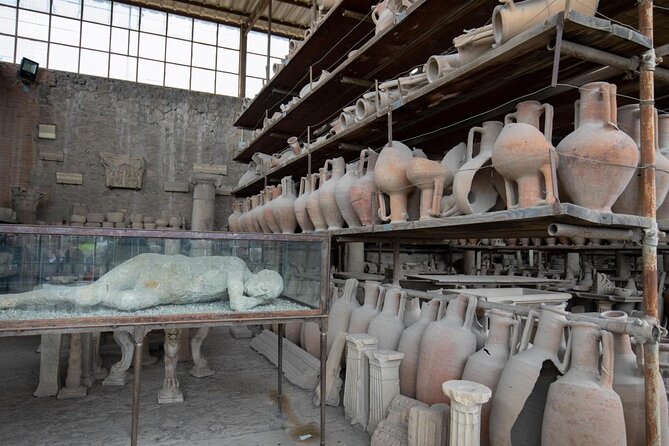
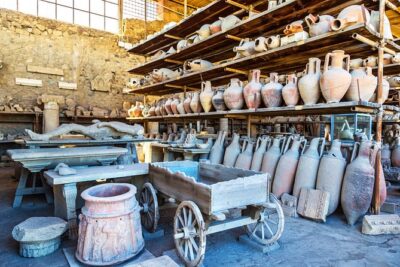
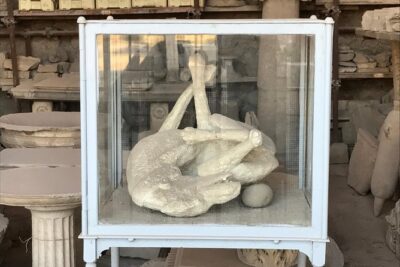
Here’s the part you will probably remember most: the tour heads into the southern part of the ruins, described as calmer and less crowded than other areas. The payoff is the chance to see the famous plaster casts—the bodies of those who died during the eruption of Mount Vesuvius in 79 A.D.
This is not a stop you rush. Even though the overall tour is about two hours, the guide’s pacing helps you slow down long enough to take it in. The casts make the story immediate. You are no longer thinking in terms of dates; you are facing evidence of a sudden end, preserved in position and form.
After that emotional center, the tour continues toward the theaters. Then you cross and walk along the north side, with enough time to feel, for a short while, like you are moving through Pompeii as inhabitants might have—street-to-building, pause-to-look, then back on the path.
If you only have a short time in Pompeii, this route is smart. It mixes the iconic monuments with the human impact point, and it avoids the dead feeling that can happen when a walk is all the same broad sightseeing without a narrative arc.
Price and value for a private group up to 6
The price is $229.28 per group, with a group size of up to 6 people. That is a private setup, so the guide’s time goes only to your group. You are not negotiating around other people’s pacing, and you can ask questions without feeling like you are talking over a crowd.
Admission is not included. The tour notes a €16 ticket per person, with free entrance for under 18 visitors if they show valid ID. Also, the tour is listed as a mobile ticket, which usually means less hassle than printed vouchers.
So is it good value? For me, the math depends on your group size. If you roll with the full six, the per-person guide cost drops fast, and the experience becomes a solid deal—especially because Pompeii is one of those places where context really changes the outcome. If you are fewer than four people, it can still be worth it if you want a guided route and a calmer pace rather than a self-guided scramble.
The big value signal here is focus: a 2-hour guided circuit that targets specific buildings you will otherwise struggle to prioritize. Instead of spending your limited time figuring out what to see, you spend it learning how to look.
When the 2 hours feels perfect (and when it might not)
Two hours is a sweet spot for many first-timers. Pompeii is vast, and time slips away quickly when you are choosing between areas, re-entering the site, or figuring out which entrances make sense. A private, guided 2-hour plan helps you get real value without wearing yourself out.
That said, Pompeii can also tempt you to linger. The review highlights you may come away wanting more time, especially because there are many houses, streets, and buildings beyond the main stops. If you are the type who wants to sit on stone steps and read every carving, you might feel that two hours is just the appetizer.
This tour is also best when you like variety. You move from civic life (Forum), to leisure and routine (thermal baths), to private spaces (homes like Menandro’s House), to the Lupanare, and then to the southern emotional anchor and theaters. That blend is what makes the experience feel complete even within a short window.
Who this Pompeii experience fits best
This is a strong match for:
- Small groups who want a private format and the freedom to ask questions.
- First-time Pompeii visitors who want the main buildings plus a guided path through lesser-feeling corners.
- Anyone drawn to how people lived day-to-day, not just monumental ruins.
It might be less ideal if:
- You want a slower, longer visit with lots of independent exploring.
- You have mobility limitations that make uneven archaeological surfaces hard to manage.
The tour also depends on weather. It is listed as requiring good weather, which matters because Pompeii walking is outdoors. If the conditions are rough, expect that plans may shift. The good news is that the core experience is the Pompeii walking focus, not a complicated juggling act of distant sites.
Should you book this Pompeii tour?
If you want Pompeii in a short, meaningful dose, I would book it. You get authorized local guidance, a private group setup up to 6, and a route that connects major landmarks like the Forum and thermal baths with deeper private spaces like Menandro’s House and the Lupanare. Then you finish with the southern part of the ruins and the plaster casts from 79 A.D., which is the stop that tends to leave people quiet afterward.
Skip it if your priority is maximum time on your own—because Pompeii is huge, and two hours is still two hours. For most visitors, though, this is a smart way to spend limited time and walk away with a clearer picture of the city instead of just a checklist of ruins.
FAQ
How long is the Pompeii tour?
It lasts about 2 hours.
How many people are in each group?
This is a private tour/activity, and it’s priced per group of up to 6 people.
Are Pompeii admission tickets included?
No. Admission is not included. The ticket is listed at €16 per person, and free entrance is available for under 18 with a valid ID document.
Where do we meet for the tour?
The meeting point is Pompei-porta Marina – scavi, 80045 Pompei, Metropolitan City of Naples, Italy. The location is near public transportation.
Who provides the guided service?
Professional local tourist guides authorized by the authorities of the Campania Region provide the guided service.
Is the tour physically demanding?
It’s recommended for travelers with moderate physical fitness, since you’ll be walking through the ruins.
What if weather is bad or I need to cancel?
The experience requires good weather. If it’s canceled due to poor weather, you’ll be offered a different date or a full refund. You can cancel for free up to 24 hours in advance for a full refund.
More City Tours in Pompeii
- Pompeii Ancient City Walking Tour – Italian & English Guide★ 4.5 · 10 reviews
- Discover Pompeii on this Guided Walking Tour of the Buried City★ 4.0 · 9 reviews
More Tour Reviews in Pompeii
- Pompeii Small Group Tour with an Archaeologist★ 5.0 · 6,593 reviews
- Discover the Ancient Ruins of Pompeii: Day Trip from Rome★ 3.5 · 2,247 reviews
- Pompeii and Herculaneum Small Group Tour with an Archaeologist★ 5.0 · 1,350 reviews
- Skip the Line Guided Tour of Pompeii led by an Archaeologist★ 5.0 · 703 reviews
- Pompeii Ticket + Tour with Optional Tasting Experience at Pompeii★ 5.0 · 663 reviews
The Story of the City, More Ways In
- Discover the Ancient Ruins of Pompeii: Day Trip from Rome★ 3.5 · 2,247 reviews
- 2 hours Pompeii Tour with Local Historian – Ticket Included★ 5.0 · 335 reviews
- Stories of Pompeii: Small Group tour with archeology expert guide★ 5.0 · 191 reviews
- Ancient Pompeii Private Tour: Skip the Line & Kid-Friendly Option★ 5.0 · 167 reviews
- Skip-the-Line Half-Day Private Tour Ancient Pompeii Highlights with Native Guide★ 5.0 · 146 reviews
Just reviewed: more Pompeii tours and day trips





Ancient Pompeii History Tours, compared.
 ★ 3.5Discover the Ancient Ruins of Pompeii: Day Trip from Rome2,247 reviews
 ★ 5.02 hours Pompeii Tour with Local Historian – Ticket IncludedFrom $48335 reviews
 ★ 4.8Discover Pompeii: French Walking Tour of the Buried CityFrom $41253 reviews
 ★ 5.0Stories of Pompeii: Small Group tour with archeology expert guideFrom $54191 reviews
 ★ 5.0Ancient Pompeii Private Tour: Skip the Line & Kid-Friendly OptionFrom $165167 reviews
 ★ 5.0Skip-the-Line Half-Day Private Tour Ancient Pompeii Highlights with Native GuideFrom $83146 reviews
 ★ 5.0Ancient Pompei in the afternoonFrom $254140 reviews
 ★ 5.0Fast Access Exclusive Private Ancient Pompeii Half Day Tour with Local GuideFrom $20354 reviews
Browse the lists this tour appears in