
Reviewed · POMPEII GUIDED RUINS WALKS
Discover Pompeii on this Guided Walking Tour of the Buried City
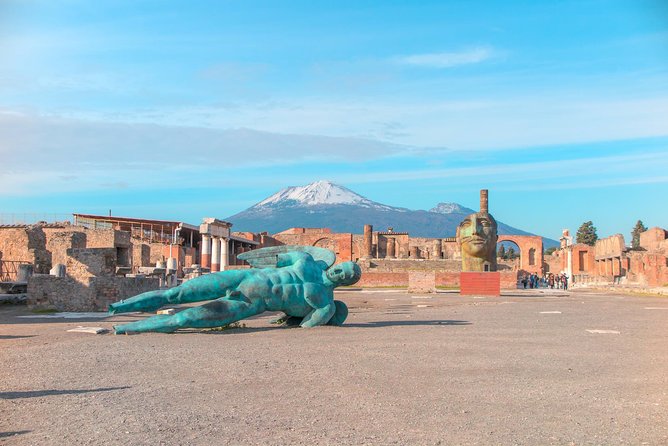
Pompeii can feel like a time machine. This guided walking tour is built for max value in minimal time, with you entering without losing time to the ticket line and getting an explanation of what you’re seeing. I like that the whole visit is organized to help you get oriented fast and make sense of the ruins, instead of wandering and guessing.
I also like that communication is set up for comfort: headsets come with the tour, and you’ll hear the story in the guide’s language. The one drawback to keep in mind is language certainty: the French and German options require a minimum number of participants, and if the minimum isn’t met, the tour runs in English.
In This Review
- Key points worth knowing before you go
- Why Pompeii Hits Hard in Just Two Hours
- Meeting at Piazza Esedra and Using Your Mobile Ticket
- Pompeii Archaeological Park: The City Built on a Lava Plateau
- How the Eruption Story Connects Vesuvius to What You Walk Past
- The Guided Walk: What You’ll Be Watching For
- Languages, Headsets, and Audio Guides: Getting the Story in Your Language
- Price and Value: Is $63 Worth It?
- Small Group Size (Max 15): Why It Changes the Tour Feel
- What to Bring (and What to Skip)
- Should You Book This Pompeii Guided Tour?
- FAQ
- Where does the tour start?
- How long is the guided tour?
- Is admission to Pompeii included?
- What languages are available for the guide?
- Are headsets included?
- Is there an audio guide?
- Do I need an ID or passport?
- What happens if the tour can’t confirm French or German?
Key points worth knowing before you go
- Skip the long ticket line so you start seeing Pompeii sooner
- Headsets included, which makes a big difference in a noisy park
- Up to 15 people, so the pace stays manageable and questions are easier
- Admission is included, so you’re not doing math at the entrance
- Multilingual options for both guides and (seasonal) audio guides
- You’ll learn how Pompeii connects to Vesuvius and daily Roman life
Why Pompeii Hits Hard in Just Two Hours
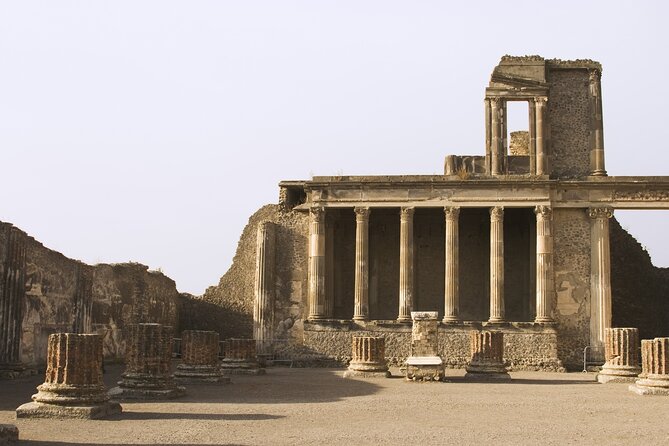
Pompeii is one of those places where the buildings look broken, but the human details feel oddly intact. In a short visit like this, you get the main story without needing to piece it together yourself. Think of it as a guided route that helps you understand what you’re looking at and why it mattered.
What makes the format smart is the time balance. Pompeii can swallow a day if you let it. Here, the tour is about 2 hours, so you see enough to feel the scale and the tragedy, while still leaving room for the rest of your Naples-area plans.
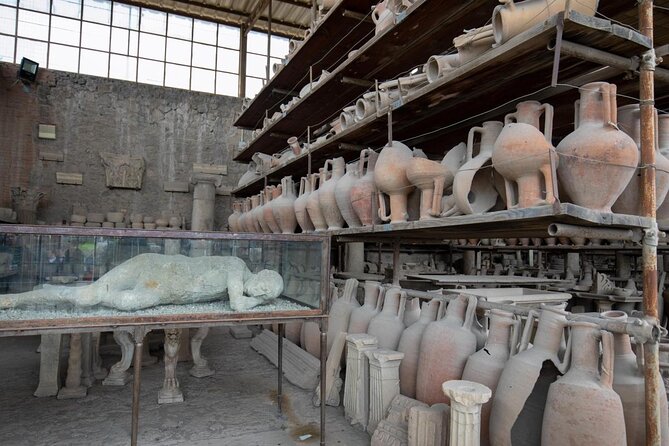
You also get a guided explanation of the eruption and its impact, not just a list of ruins. That matters, because Pompeii isn’t only about art and architecture. It’s about how Romans lived—where they worked, how streets moved people through daily routines, and how quickly normal life ended.
Keep walking the excavated streets
- Pompeii 3 Hours Walking Tour Led by an Archaeologist
★ 5.0 · 126 reviews - Explore Pompeii: 2-Hour Guided Walking Tour with Included Ticket
★ 4.5 · 77 reviews - Pompeii: walking tour with 3D glasses and with entrance ticket
★ 4.5 · 61 reviews
Meeting at Piazza Esedra and Using Your Mobile Ticket
You start at Piazza Esedra, 2, 80045 Pompei NA, Italy. The tour also returns you to that same meeting point, so you don’t have to worry about figuring out transit or a second pickup.
The experience uses a mobile ticket, which is handy if you already have your phone loaded with travel docs. One practical note: you’ll need a valid ID or passport for entry verification. I’d keep it accessible from the start, so you’re not digging through a bag while others are waiting at the entrance.
If you care about language, this is also where your planning helps. The tour confirms at booking, but for French and German speakers there’s a minimum-participant rule. If you’re trying to match the guide to a specific need—especially for kids who rely on the explanation—don’t wait until you arrive to worry about it.
Pompeii Archaeological Park: The City Built on a Lava Plateau
The heart of the tour is Pompeii Archaeological Park, where the city sits on a plateau shaped by Vesuvius lava flows. That location matters because it explains the weird mix you see in the ruins: volcanic geology beneath a thriving urban landscape.
Your guide frames the city around its wider setting too. Pompeii dominated the valley around the Sarno River, and the river delta supported a busy port. That helps you picture Pompeii not as a single town block, but as a trading hub that could import goods, attract visitors, and support the daily flow of people and supplies.
The story goes deeper than “Romans lived here.” You’ll hear about the uncertain origins and the early defensive walls built much earlier than the eruption. One detail that stands out is the first tuff walls, called pappamonte, built in the 7th–6th centuries BC. Those walls enclosed roughly 63.5 hectares, giving you a sense of how early the idea of a protected settlement took shape.
You also learn that Pompeii didn’t develop in a vacuum. A mixed population—including Etruscans, Greeks, and other Italic peoples—shaped how the city grew. That context is useful because it takes Pompeii beyond a one-culture postcard and helps you understand the cross-current of Mediterranean influences.
How the Eruption Story Connects Vesuvius to What You Walk Past
Even if you never ride up Vesuvius itself, the eruption explanation is built into how you interpret Pompeii. Your guide connects the city’s survival and destruction to the volcano’s structure and position.
Vesuvius is described as a somma-stratovolcano on the Gulf of Naples in Campania, about 9 km (5.6 mi) east of Naples. It sits close to the shore, within a volcanic arc that formed over time in this part of Italy. The tour’s value is that it uses this science context to make the ruins feel logical rather than random.
You’ll also hear that Vesuvius is a cone partially encircled by the rim of a summit caldera, created when an earlier, larger structure collapsed. That’s the kind of detail that usually belongs in a textbook, but here it supports the bigger point: the eruption wasn’t a vague myth. It had a physical mechanism, and it changed the city instantly.
And once that connection clicks, the streets and buildings stop being just scenery. The tour makes you see them as the setting for real routines—markets, homes, and the small systems that kept a city functioning until disaster ended it.
The Guided Walk: What You’ll Be Watching For
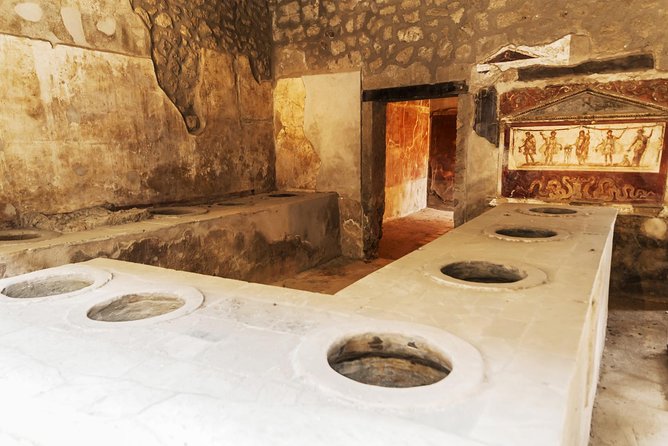
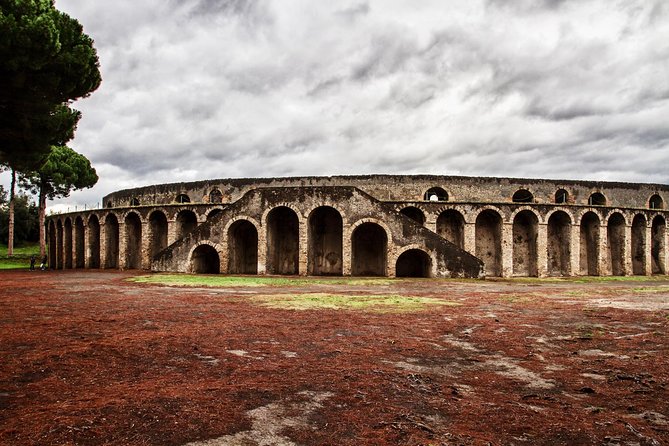
Because this is a guided walking tour, the experience is less about ticking off famous landmarks and more about learning how to “read” Pompeii. Your guide will follow you through the remains and point out how the city worked as a place where Romans moved, worked, shopped, and socialized.
So when you join, try to track three things as you walk:
- How streets organize movement, and where you can sense a hub or transition from public to private space.
- How daily life shows up in everyday spaces, not just monuments.
- How the eruption changed the city’s timeline, turning ordinary places into historical evidence.
This tour is designed to help you ask questions too. That’s where a small group helps, because you’re not lost in a crowd with a guide talking at the speed of group logistics. Even in two hours, the pacing is meant to keep your attention on the story rather than on long waits.
More of the story behind the stones


Languages, Headsets, and Audio Guides: Getting the Story in Your Language
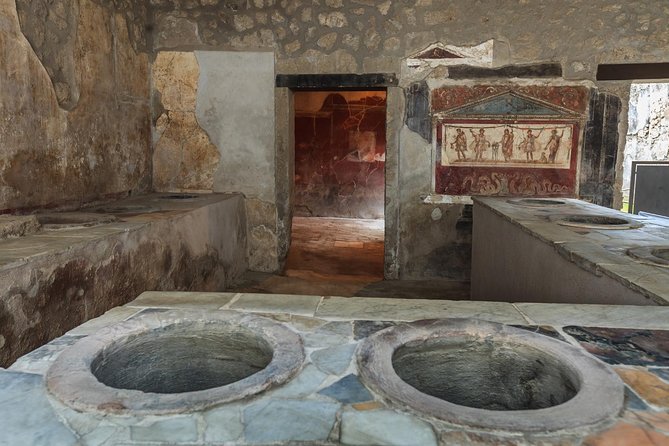
If language is part of your travel plan, this tour is set up to work well. You get professional guides who speak English, Spanish, German, and French. That’s already a strong start, because you’re not relying on a printed guidebook for the key explanations.
You also get headsets, which makes a huge difference in archaeological sites. Even if you speak the guide’s language, hearing clearly under outdoor conditions is the difference between enjoying the story and missing it.
Audio support is offered in additional languages, and the availability changes by season:
- From November to March, audio guides include Italian, Portuguese, Chinese, Russian, and Japanese.
- From April to October, audio guides include Italian, German, French, Portuguese, Chinese, Russian, and Japanese.
One more language reality: for French and German, there’s a minimum number of participants needed for the tour to run in that language. If the minimum isn’t met, the tour goes in English. If you booked French or German because you want full understanding for yourself or younger travelers, it’s worth confirming your language option close to departure.
Price and Value: Is $63 Worth It?
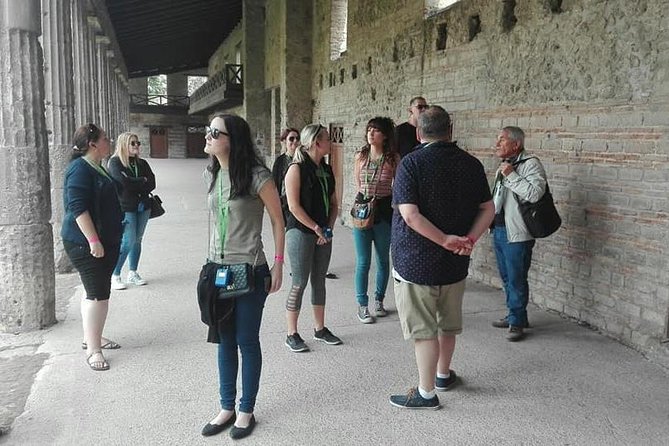
At $63 for about 2 hours, this tour competes well with “self-guided entry plus a book” options. The key value isn’t only the guide. It’s that admission is included, and you get headsets plus a multilingual structure. Those pieces cost money when you price them separately, especially headsets in a big site.
You’re also saving the time cost of a long ticket line. When you’re on a tight itinerary around Naples and Pompeii, “time saved” is real value. A two-hour guided window is also a practical choice: it reduces the risk of spending half your day drifting without context.
So for value, I’d measure it this way: you’re paying for a guided route that turns Pompeii from random ruins into an organized story, with built-in listening support and a capped group size.
The only pricing caution is that beverages and lunch are not included. If you’ll be hungry, plan ahead so the tour stays enjoyable rather than turning into a snack hunt.
Small Group Size (Max 15): Why It Changes the Tour Feel

This experience caps the group at 15 travelers. That’s not just a comfort detail. It affects how the guide can manage the pace and how easily you can hear explanations and ask questions.
In places like Pompeii, you’re often squeezed into narrow paths between walls and open spaces. A small group makes it less stressful to keep up. It also helps you avoid the “stop-and-start” rhythm that happens when groups are much larger.
The result is a tour that feels organized and human-sized. You’re not racing to stay near the person in front of you, and you’re not stuck watching your guide from a distance.
What to Bring (and What to Skip)
You should show up ready to be outside and walking, since this is a guided walking tour. Beyond that, the practical requirements are clear.
Bring:
- A valid ID or passport for entry verification
- Your mobile ticket (for a smooth start)
Don’t expect:
- Beverages and lunch are not included
- Pick-up and drop-off are not included, and the tour meets and returns at Piazza Esedra
If language is crucial for you, also bring patience and flexibility. Even with the best planning, the French and German language options depend on a minimum number of participants.
Should You Book This Pompeii Guided Tour?
I’d book it if you want Pompeii’s core story in a time-efficient way, especially if you care about hearing explanations clearly thanks to headsets. The combo of guided interpretation, admission included, and skip-the-line entry makes the value straightforward.
I’d be more cautious if you’re relying on a specific language. The French and German options depend on meeting a minimum number of participants, and if that doesn’t happen, the tour runs in English. If you’re booking for children or for anyone who needs detailed language support, confirm the language option in advance and plan a Plan B in your mind.
Overall, this is a solid choice when you want Pompeii to make sense quickly and you’d rather spend your energy learning than waiting.
FAQ
Where does the tour start?
The meeting point is Piazza Esedra, 2, 80045 Pompei NA, Italy.
How long is the guided tour?
It runs for approximately 2 hours.
Is admission to Pompeii included?
Yes. Admission Ticket Included is part of the tour.
What languages are available for the guide?
The guide is offered in English, Spanish, German, and French.
Are headsets included?
Yes, headsets are included.
Is there an audio guide?
Yes. Audio guides are available in additional languages, with different options depending on the season (November to March vs April to October).
Do I need an ID or passport?
Yes. You should bring a valid ID/passport for entry verification.
What happens if the tour can’t confirm French or German?
A minimum of 10 participants is required for French and German. If the minimum isn’t met, the tour will be conducted in English.
More Tour Reviews in Pompeii
- Pompeii Small Group Tour with an Archaeologist★ 5.0 · 6,593 reviews
- Discover the Ancient Ruins of Pompeii: Day Trip from Rome★ 3.5 · 2,247 reviews
- Pompeii and Herculaneum Small Group Tour with an Archaeologist★ 5.0 · 1,350 reviews
- Skip the Line Guided Tour of Pompeii led by an Archaeologist★ 5.0 · 703 reviews
- Pompeii Ticket + Tour with Optional Tasting Experience at Pompeii★ 5.0 · 663 reviews
The Story of the City, More Ways In
- Discover the Ancient Ruins of Pompeii: Day Trip from Rome★ 3.5 · 2,247 reviews
- 2 hours Pompeii Tour with Local Historian – Ticket Included★ 5.0 · 335 reviews
- Stories of Pompeii: Small Group tour with archeology expert guide★ 5.0 · 191 reviews
- Ancient Pompeii Private Tour: Skip the Line & Kid-Friendly Option★ 5.0 · 167 reviews
- Skip-the-Line Half-Day Private Tour Ancient Pompeii Highlights with Native Guide★ 5.0 · 146 reviews
Still in the Ruins? Keep Walking
- Pompeii 3 Hours Walking Tour Led by an Archaeologist★ 5.0 · 126 reviews
- Explore Pompeii: 2-Hour Guided Walking Tour with Included Ticket★ 4.5 · 77 reviews
- Pompeii: walking tour with 3D glasses and with entrance ticket★ 4.5 · 61 reviews
- Pompeii walking tour★ 5.0 · 29 reviews
- Small Group Guided Walking Tour of Ancient Pompeii Highlights★ 5.0 · 27 reviews
Just reviewed: more Pompeii tours and day trips






Pompeii Guided Ruins Walks, compared.
 ★ 4.3Guided Walking Tour with Entrance TicketFrom $501,423 reviews
 ★ 4.8Discover Pompeii: French Walking Tour of the Buried CityFrom $41253 reviews
 ★ 5.0Pompeii 3 Hours Walking Tour Led by an ArchaeologistFrom $256126 reviews
 ★ 4.6Highlights Guided Walking TourFrom $53105 reviews
 ★ 4.33D Walking Tour with Entry TicketFrom $61102 reviews
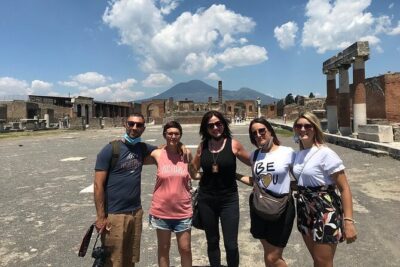 ★ 4.5Explore Pompeii: 2-Hour Guided Walking Tour with Included TicketFrom $5277 reviews
 ★ 4.5walking tour with 3D glasses and with entrance ticketFrom $6261 reviews
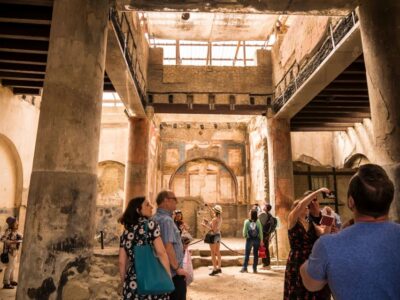 ★ 5.0Herculaneum: Private Walking Tour with Archeologist GuideFrom $31759 reviews
Browse the lists this tour appears in