
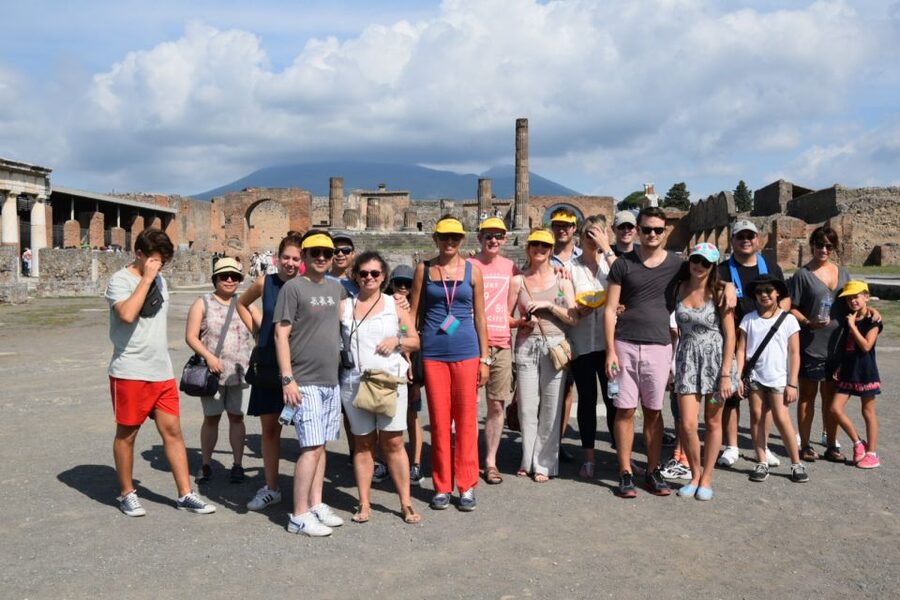
Reviewed · POMPEII SKIP-THE-LINE ENTRY
Pompeii Skip-the-Line Tour with Expert Archeological Guide
Pompeii hits fast, even before you enter. What makes this tour special is the way an archaeological guide turns scattered ruins into a readable city, and the plaster casts make the 79 AD tragedy feel personal and close.
I especially like the tight, well-paced route through the big Roman landmarks you actually want to see, from the Forum area to standout homes such as the House of the Vettii and the House of Menander. You also get a breather with a stop at a cameo workshop, where you can watch shells being carved by hand and use the restroom.
The one drawback to keep in mind: the experience can be slightly uneven on the logistics side. Some groups report uncomfortable or unreliable ear pieces, and the meeting point can feel chaotic, so arrive early and plan to stay flexible if the start shifts.
In This Review
- Key highlights worth prioritizing
- Meeting outside Fortuna Village: where your Pompeii walk starts
- Skip-the-line entry and the real value of a $31 tour
- What skip-the-line helps with
- The route through Pompeii’s center: Forum, baths, and the daily Roman rhythm
- Thermopolium and markets: where people grabbed food fast
- Forum Baths: the social engine
- Houses that feel like neighborhoods: Vettii and Menander
- House of the Vettii: style and social signals
- House of Menander: a home with a story
- Temples, theatres, and photo stops that set the tone
- The good and the trade-off
- The plaster casts and Vesuvius: why the emotion lands
- Cameo workshop break: a hands-on pause in an outdoor world
- Hearing your guide: small-group expectations and real-world issues
- Ear pieces can be hit-or-miss
- Guide clarity matters
- What to bring, what you can’t bring, and the rules that catch people
- If you care about crowds, plan around the schedule
- Who this Pompeii tour is best for
- Should you book this Pompeii skip-the-line tour?
- FAQ
- FAQ
- How long is the guided tour inside Pompeii?
- Where is the meeting point?
- What does skip-the-line mean for this Pompeii tour?
- Is there an archaeologist guide or is it sometimes audio only?
- Which languages are offered?
- Does the tour include the cameo workshop?
- What’s included in the price?
- Is admission free on the first Sunday of each month?
- What should I bring, and what is not allowed?
- Is this tour suitable for wheelchair users?
- Can I cancel for a refund?
Key highlights worth prioritizing
- Archaeologist-led storytelling that connects temples, houses, and shops to how people lived day to day
- Skip-the-line Pompeii entry to protect your limited time inside the ruins
- Moving plaster casts of Vesuvius victims that add real emotion to the history
- Major stops you can actually cover in ~2 hours (Forum Baths, Macellum, Temple of Jupiter and Apollo, key houses)
- Cameo workshop + restroom timing so you’re not hunting facilities while walking for hours
- Audio equipment may vary; come prepared to catch key points even if ear pieces don’t fit great
Meeting outside Fortuna Village: where your Pompeii walk starts
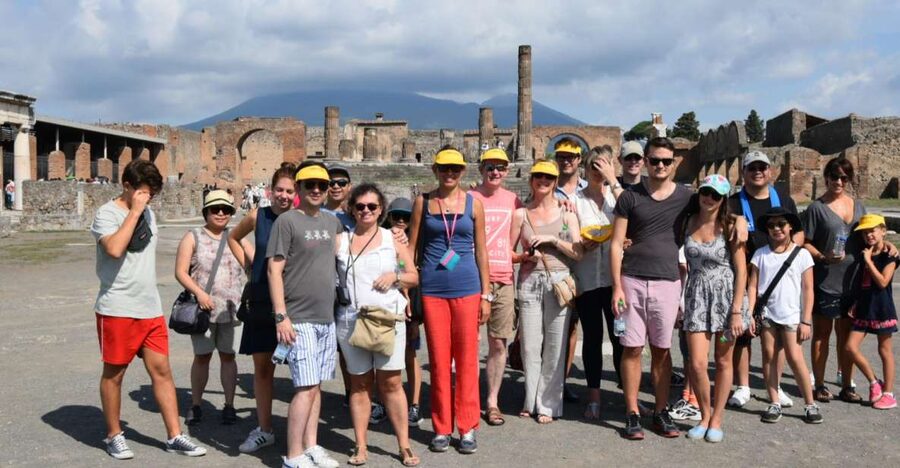
Your tour begins outside the entrance of Fortuna Village Pompei, and your guide holds a sign with the company name. There’s no hotel pick-up or drop-off, so you’re meeting in Pompeii proper and starting from there.
This matters because Pompeii can feel bigger than it looks on a map. A good meeting point helps you avoid the common stress spiral of arriving, searching, and then rushing. If you’re cutting it close, you’ll feel it quickly.
More ways past the ticket queue
- Pompeii: Skip-the-Line Entrance Ticket with Audio Guide
★ 4.0 · 2,509 reviews - Pompeii: Guided Tour with Skip-the-Line Entry
★ 4.9 · 812 reviews - Pompeii: Skip-the-Line Entry Ticket with Digital Guide App
★ 4.1 · 770 reviews
Skip-the-line entry and the real value of a $31 tour
At $31 per person for about 2 hours inside Pompeii, this isn’t just a “see the ruins” ticket. It’s paying for time saved and for someone to help you interpret what you’re looking at.
Pompeii is one of those places where you can walk for hours and still miss the meaning. A guided route through the Forum area, bathhouses, markets, villas, and temples gives you context so the buildings stop being random stone blocks and start looking like a functioning Roman town.
What skip-the-line helps with
Even when you’re skipping the ticket line, you’re still dealing with a major site and crowd flow. So the skip-the-line component is about reducing one big friction point so your guide can spend more time on the stops that matter.
The route through Pompeii’s center: Forum, baths, and the daily Roman rhythm
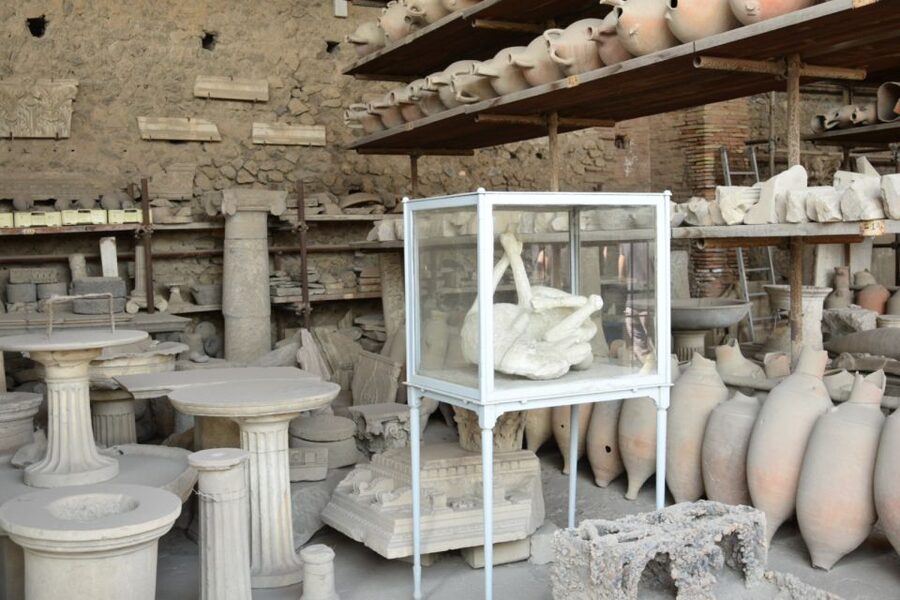
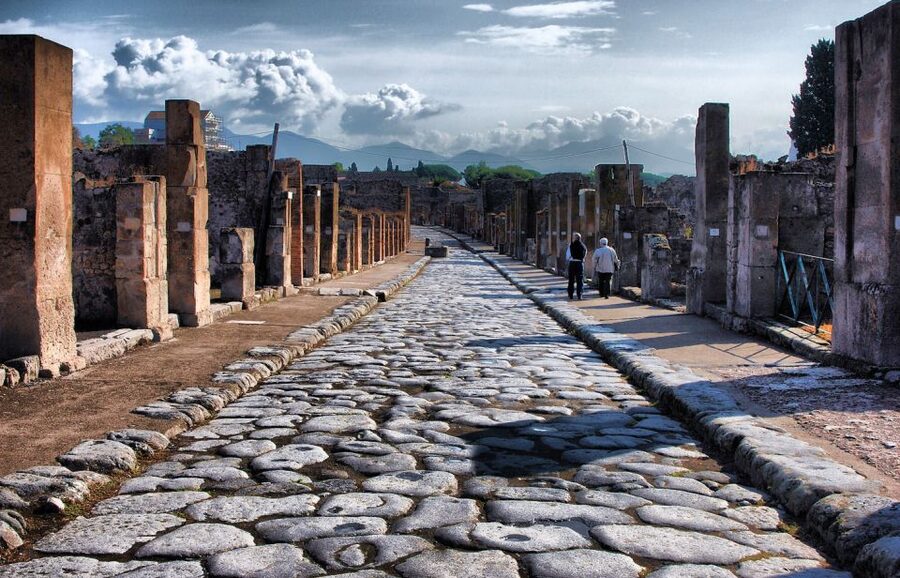
Your walk takes you through the key parts of Pompeii where daily life was loud, public, and social. The route includes a visit to the Foro Civile di Pompeii (Civil Forum area), plus major nearby stops that show commerce and culture, not just monuments.
One of the best things about this kind of focused center-walk is that it teaches you how Romans moved through their world. You’re not only learning what the buildings were; you’re learning what they did.
Thermopolium and markets: where people grabbed food fast
A short visit to a thermopolium (a kind of quick-service hot food spot) gives you a glimpse of everyday eating. These places were part of regular city life, not special events.
Then you move to the Macellum of Pompeii, the market area. If you like understanding how cities feed themselves, this is a great stop because it turns “Roman ruins” into “Roman supply chain.” You’ll start spotting the human logic behind where shops clustered and where foot traffic would have been thick.
More guided visits to choose
Forum Baths: the social engine
Next up is the Forum Baths. Baths in Pompeii aren’t just about hygiene. They’re about routine, status, conversation, and the daily catch-up that helped people stay connected.
You’ll likely notice that the tour pacing fits this theme: stops are long enough to let the guide explain, but quick enough that you’re not stuck in one corner of the city. That pacing is part of the value when you only have a couple of hours.
Houses that feel like neighborhoods: Vettii and Menander
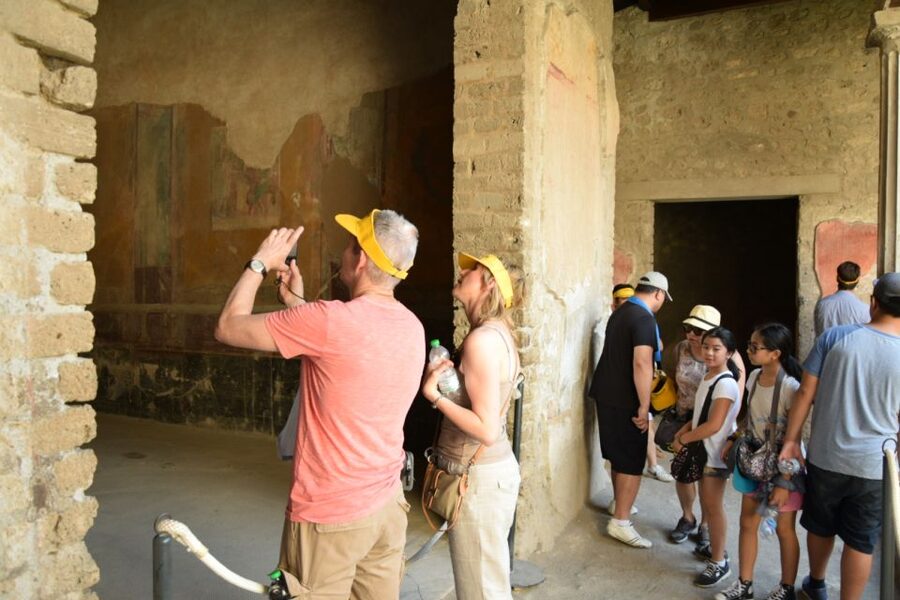
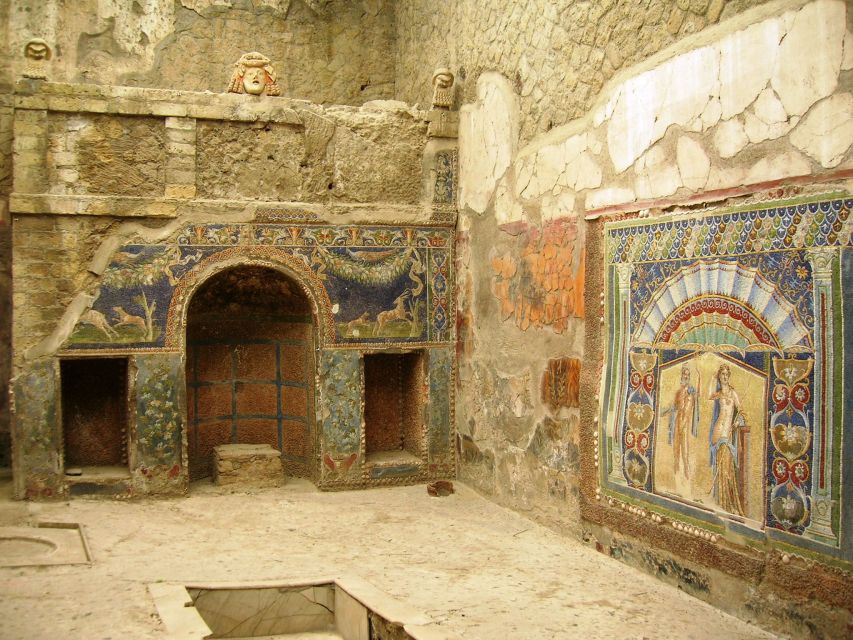
Pompeii’s biggest wow moments often come from the houses. You don’t just see architecture; you see hints of personality, family life, and money.
Two highlights are the House of the Vettii and the House of Menander, each with a substantial viewing window (about 20 minutes apiece). This is where you start to get that “frozen in time” feeling in a more practical way, because you’re seeing the layout of private spaces, not only public plazas.
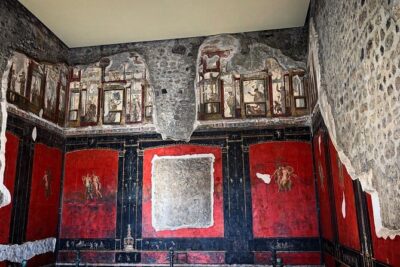
House of the Vettii: style and social signals
The House of the Vettii is one of those places where you can understand why wealthy Romans invested in their homes. The tour framing helps you read details as social signals, not just decorative stone.
Even if you’re not a hardcore art nerd, the guide’s narration makes it easier to interpret why certain rooms mattered and how movement through the house would have worked.
House of Menander: a home with a story
The House of Menander is another key stop that helps you compare “how people lived” rather than just “what buildings existed.” With time spent here, you can actually connect the house’s layout to daily rhythms: coming in, gathering, using rooms, and living around open spaces.
The benefit of including these homes on a short tour is that you get the emotional payoff without needing half a day just to reach a single highlight.
Temples, theatres, and photo stops that set the tone
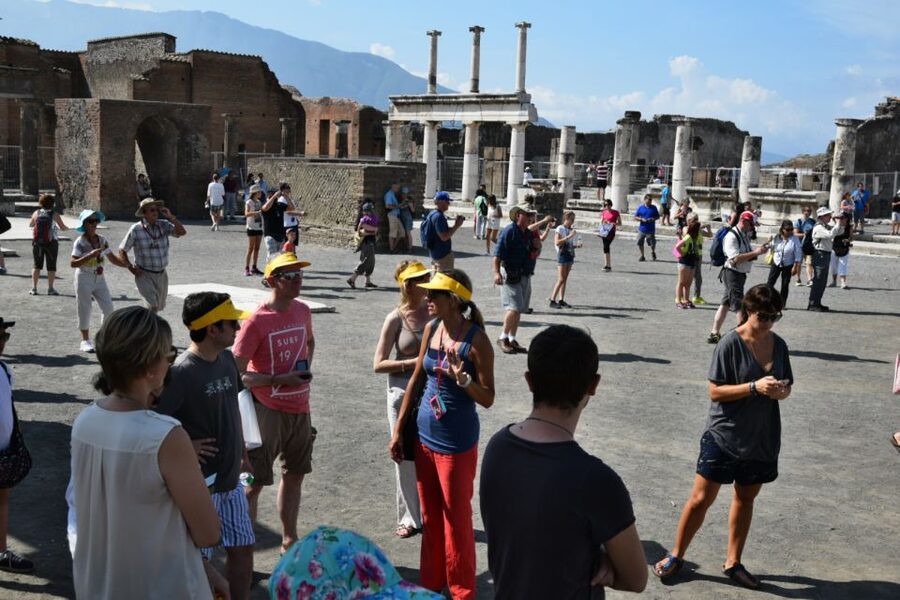
Not every part of Pompeii gets a long deep-hold. Some areas are short, especially photo stops, which means you’ll get the visual reference and the key story beat, but not a full linger.
You’ll make quick stops at:
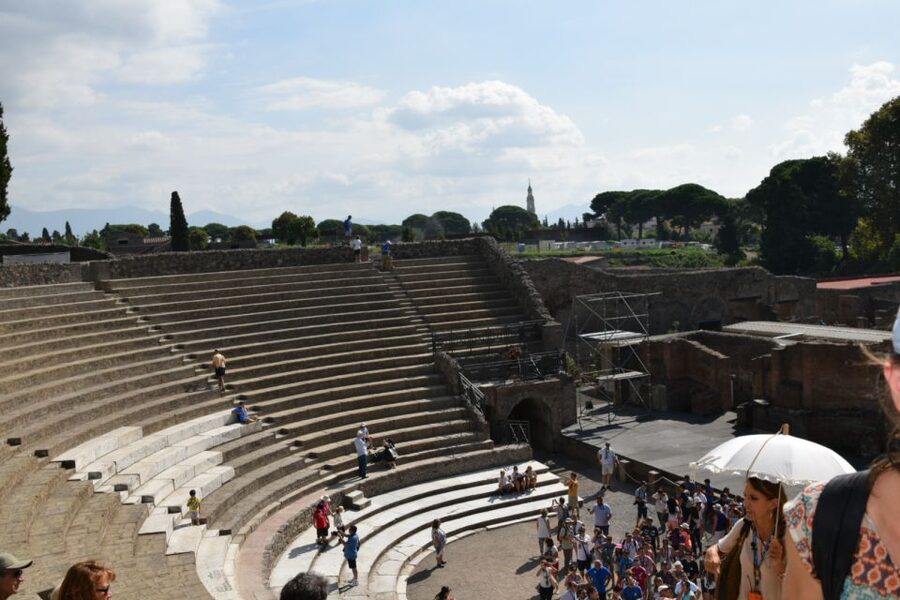
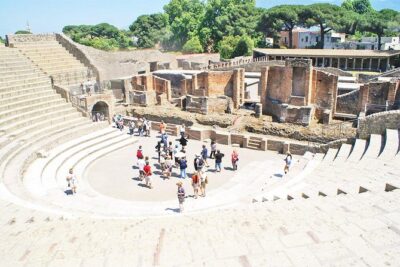
- Large Theatre (about 5 minutes)
- Teatro Piccolo (photo stop, about 5 minutes)
- Temple of Jupiter (photo stop, about 5 minutes)
- Temple of Apollo (visit, about 10 minutes)
The good and the trade-off
The good part is you sample major civic and religious spaces without blowing the entire 2 hours. Pompeii is too big to treat everything like a museum wing.
The trade-off is that if you’re the kind of person who wants to slow-walk every column and read every sign, you’ll probably want to plan extra time afterward. One traveler note that I think matches reality: the tour focuses on the core route, and it doesn’t cover every major attraction.
The plaster casts and Vesuvius: why the emotion lands
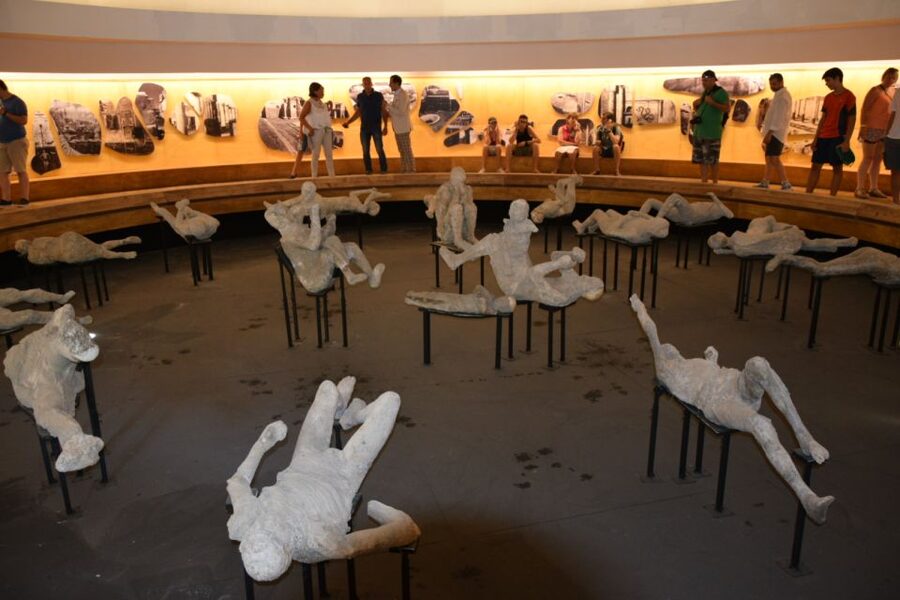
One of the tour’s most moving components is the plaster casts of the victims of Vesuvius’ eruption in 79 AD. This isn’t just “sad history.” It’s a reminder that Pompeii was a lived-in city with real people, and the suddenness of catastrophe shaped what survived.
That emotional anchor changes how you look at everything else. When you move from a market area to a house, you start noticing how ordinary the scenes are. It’s the difference between learning facts and feeling scale.
Cameo workshop break: a hands-on pause in an outdoor world
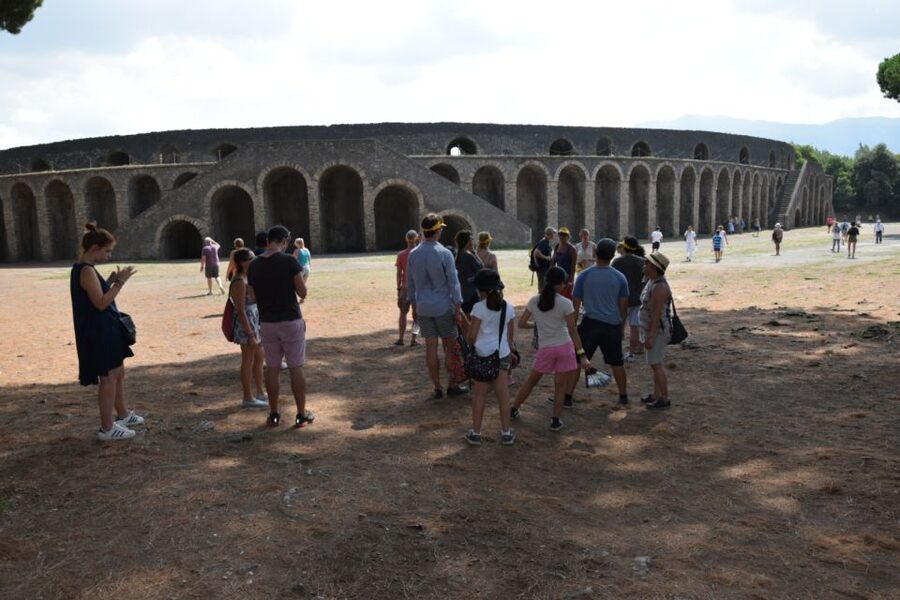
Before you fully settle into the ruins, you make a brief stop at a cameo workshop. This is a traditional craft demonstration where artisans carve delicate shells by hand.
I like this break because it shifts your brain away from stone details and back to motion and skill. It also functions as a practical reset: you get a chance to freshen up with a restroom break, and you’re not forced to gamble on facilities while your tour schedule keeps moving.
If you care about crafts and local food-culture-type things, this workshop adds flavor to the day without taking over the main event.
Hearing your guide: small-group expectations and real-world issues
The tour runs with a live guide (English, Italian, Spanish, French), and it also notes that a small group is available. There’s also a contingency built in: if a minimum number of participants isn’t met, you’ll get an audio guide instead of the licensed archaeologist guiding in person.
That’s why it’s smart to treat the “group size” promise as flexible. Some groups can feel bigger than what you’re picturing, and audio gear quality can vary.
Ear pieces can be hit-or-miss
Some people have reported ear pieces that were uncomfortable or didn’t fit well. That means your listening experience might depend on how your ear shapes line up with the device.
If you want a smoother experience, do two simple things:
- Stand closer when your guide is explaining a stop, especially indoors or in tight spaces
- If the ear piece hurts or keeps falling, pause and tell yourself you may need to rely on the guide’s voice instead
Guide clarity matters
Guide delivery style can also affect understanding. Some notes mention fast talking or heavy accents, while others highlighted strong communication and the ability to answer questions.
Names that came up include Michael (often praised for clear, understandable pacing) and Analisa (praised for passion). You can’t plan for a specific guide, but it’s a good reminder that how the guide talks shapes how well you walk away with knowledge.
What to bring, what you can’t bring, and the rules that catch people
Pompeii is outdoors, uneven, and full of small pathways. Bring:
- A passport or ID card
- Comfortable shoes
- Camera
- Water
- Comfortable clothes
Leave behind anything that the site rules won’t allow. The tour notes these are not allowed:
- Pets
- Luggage or large bags
- Drones
- Walking sticks
- Unaccompanied minors
Also note the child policy: admission to the archaeological site at Pompeii is free for children under 18, but you must show a valid passport or photo ID.
And one more practical heads-up: if you’re thinking of using a phone camera for long bursts, plan your timing around the stops that are photo-based and short.
If you care about crowds, plan around the schedule
The itinerary can adjust based on crowd levels and site access. That’s normal at Pompeii, where entrances and walkways can shift.
Also, while the guide tour time inside the ruins is listed around 2 hours, you may experience slightly shorter or longer timing depending on how the group moves and how quickly you reach each area. So don’t schedule something tight right after.
Who this Pompeii tour is best for
This is a strong choice if you want:
- A guided Pompeii route that hits major parts of the town in a short window
- An archaeologist-style explanation of daily Roman life (not just sightseeing)
- A balance of public spaces (Forum, baths, markets) and private ones (notably the House of the Vettii and House of Menander)
- Skip-the-line entry so you don’t lose the day to queues
It may be less ideal if you:
- Want to spend ages in only one area, like the amphitheatre or the far corners
- Need mobility-friendly conditions; the tour is listed as not suitable for people with mobility impairments or wheelchair users
If amphitheatre-level attention is a top priority, you’ll likely enjoy doing this tour first for context, then returning on your own for the extra areas you want.
Should you book this Pompeii skip-the-line tour?
I’d book it if you want a smart, time-efficient way to experience Pompeii without playing “archaeology guessing game” for two hours. The biggest reason is the combination of skip-the-line access plus an expert-guided route that ties streets, shops, baths, temples, and houses into a believable picture of daily life.
Pass if you’re the type who needs maximum freedom and maximum time in each zone. This tour is compact. You’ll get the core hits, but you won’t treat Pompeii like a slow personal study.
If you do book, show up early at the Fortuna Village Pompei meeting point, wear comfortable shoes, bring water, and keep your expectations realistic about ear-piece comfort and short photo stops. Do that, and you’ll come away with more than “I saw Pompeii.” You’ll understand what you were seeing.
FAQ
FAQ
How long is the guided tour inside Pompeii?
The guided tour lasts about 2 hours inside the ruins.
Where is the meeting point?
Meet the guide outside the entrance of Fortuna Village Pompei. The guide holds a sign with the company name.
What does skip-the-line mean for this Pompeii tour?
You get a skip-the-line entrance for Pompeii, so you can start the site visit with less waiting.
Is there an archaeologist guide or is it sometimes audio only?
A licensed archaeologist guide leads the tour. If the minimum participant number isn’t met (minimum 6 participants), each participant receives an audio guide instead.
Which languages are offered?
The live tour is available in English, Italian, Spanish, and French. The tour may be bilingual.
Does the tour include the cameo workshop?
Yes. Before entering the ruins, there’s a stop at a cameo workshop where you can watch shell carving by hand, plus there’s a restroom break.
What’s included in the price?
Included: meeting point in Pompeii, Pompeii skip-the-line entrance, licensed archaeologist guide, and the cameo factory and shop.
Is admission free on the first Sunday of each month?
Yes, site admission is free on the first Sunday of each month, but tickets can’t be reserved ahead of time, so entry is not guaranteed.
What should I bring, and what is not allowed?
Bring passport or ID, comfortable shoes, camera, water, and comfortable clothes. Not allowed: pets, luggage or large bags, drones, walking sticks, and unaccompanied minors.
Is this tour suitable for wheelchair users?
No. The tour is not suitable for people with mobility impairments or wheelchair users.
Can I cancel for a refund?
Yes, free cancellation is allowed up to 24 hours in advance for a full refund.
More Guided in Pompei Campania
- Pompeii: Entry Ticket and Guided Tour with an Archaeologist★ 4.8 · 19,459 reviews
- Pompeii: Skip-the-Line Entrance Ticket with Audio Guide★ 4.0 · 2,509 reviews
- Pompeii: Skip-the-line-Ticket and Guided Tour★ 4.6 · 1,152 reviews
- Pompeii: Guided Tour with Skip-the-Line Entry★ 4.9 · 812 reviews
- Pompeii: Skip-the-Line Entry Ticket with Digital Guide App★ 4.1 · 770 reviews
More Tour Reviews in Pompei Campania
- Pompeii: Entry Ticket and Guided Tour with an Archaeologist★ 4.8 · 19,459 reviews
- Pompeii: Small Group Tour with an Archaeologist★ 4.8 · 12,264 reviews
- Pompeii: Skip-the-Line Entrance Ticket with Audio Guide★ 4.0 · 2,509 reviews
- Naples: Pompeii and Mt. Vesuvius with Lunch and Wine Tasting★ 4.5 · 2,454 reviews
- Pompeii: Skip-the-line-Ticket and Guided Tour★ 4.6 · 1,152 reviews
Skip-the-Line Entries, More to Book
- Pompeii: Skip-the-Line Entrance Ticket with Audio Guide★ 4.0 · 2,509 reviews
- Pompeii: Skip-the-line-Ticket and Guided Tour★ 4.6 · 1,152 reviews
- Pompeii: Guided Tour with Skip-the-Line Entry★ 4.9 · 812 reviews
- Pompeii: Skip-the-Line Entry Ticket with Digital Guide App★ 4.1 · 770 reviews
- Pompeii: Tour with Archaeologist Guide & Skip-the-Line Entry★ 4.5 · 478 reviews
Just reviewed: more Pompei Campania tours and day trips



Pompeii Skip-the-Line Entry, compared.
 ★ 4.0Skip-the-Line Entrance Ticket with Audio GuideFrom $392,509 reviews
 ★ 4.6Skip-the-line-Ticket and Guided TourFrom $641,152 reviews
 ★ 4.9Guided Tour with Skip-the-Line EntryFrom $58812 reviews
 ★ 4.1Skip-the-Line Entry Ticket with Digital Guide AppFrom $22770 reviews
 ★ 4.9Pompeii Ruins Private Tour with Optional Skip-the-Line EntryFrom $254732 reviews
 ★ 5.0Skip the Line Guided Tour of Pompeii led by an ArchaeologistFrom $95703 reviews
 ★ 5.0Pompeii Private Tour with an Archaeologist and Skip The Line – 3 hoursFrom $302564 reviews
 ★ 5.0Pompeii Skip-the-line Tour with Archaeologist GuideFrom $71559 reviews
Browse the lists this tour appears in