

Reviewed · POMPEII SKIP-THE-LINE ENTRY
Pompeii Pass: Skip-the-Line, Guided Tour & Museum Access
Skip-the-line Pompeii saves your daylight. With skip-the-line access and an archaeologist guide, this 4-hour Pompeii Pass gets you into the UNESCO ruins and includes a virtual museum ticket plus a city-train ride, so you spend less time queueing and more time looking. The main consideration: this experience is not suitable for people with mobility impairments.
I also like the flexibility baked into the plan. You can decide the order of the pieces during your visit, then finish with practical extras like water at the start and orange juice at the end, while learning how the city was preserved under Vesuvius ash. Your tour starts at the IBT Center/Touristation next to Chalet Donna Lucia in Piazza Esedra.
In This Review
- Key Points That Make This Pompeii Pass Worth Your Time
- What You Actually Get With This Pompeii Pass (And Why It Helps)
- Meeting at Piazza Esedra: Finding the IBT Center/Touristation
- Pompeii With an Archaeologist Guide: How the Ruins Come to Life
- The Virtual Museum Ticket: Using Reconstruction to Understand 79 AD
- Pompeii City Train: Quick Orientation Around the Area
- A Realistic Look at the 4-Hour Schedule
- Practical Rules That Affect Your Day (So You Don’t Get Stuck)
- Value Check: Why This Pass Usually Beats Booking Pieces Separately
- Who This Tour Suits (And Who Might Want a Different Plan)
- Should You Book the Pompeii Pass?
- FAQ
- How long is the Pompeii Pass experience?
- Where is the meeting point?
- Does this pass include skip-the-line entry?
- Is a guided tour included?
- What languages are available for the guide?
- Is the Virtual Museum included?
- Do I get access to a train during the visit?
- What should I bring?
- Are pets allowed?
- Can I get a refund if I cancel?
- Is it suitable for people with mobility impairments?
Key Points That Make This Pompeii Pass Worth Your Time
- Reserved, skip-the-line entry into the archaeological area so you start seeing Pompeii faster
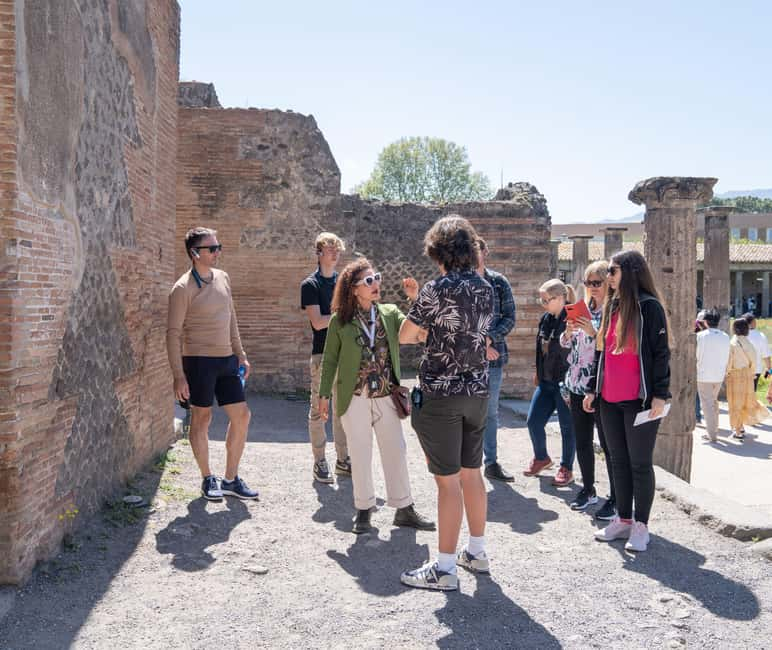
- Archaeologist-guided walk through the streets and buildings where people lived, worked, and socialized
- Virtual Museum of Pompeii access to help you visualize life before and during the 79 AD eruption
- Pompeii city train for quick orientation around the area and a better sense of where things sit
- Small comfort extras: a bottle of water at the beginning and orange juice at the end
What You Actually Get With This Pompeii Pass (And Why It Helps)
This pass is built for one big problem in Pompeii: time. Even if you’re well organized, Pompeii’s ruins are spread out, and the biggest stress is usually the bottleneck at entry. The Pompeii Pass solves that with skip-the-line admission and a reserved entrance, which matters because you can’t “make up” lost minutes once you’re inside—walks get longer, and the ruins don’t wait.
Beyond entry, you’re not just buying ruins-and-go. You also get:
- A guided tour with an archaeologist, focused on reading the city through what survived.
- Access to the Virtual Museum of Pompeii, which uses reconstruction to make the disaster and everyday life easier to grasp.
- A ticket for the Pompeii city train, which gives you a faster overview of the area and helps you orient yourself for the walking parts.
- A small comfort touch: water at the start and orange juice at the end.
If you’re visiting for the first time, this mix is a smart way to avoid the classic mistake: wandering the ruins without a strong guide to connect the dots. If you already know Pompeii and want a smoother day, this still helps because it reduces friction at the start and gives you a structured way to plan your time.
More ways past the ticket queue
- Pompeii: Skip-the-Line Entrance Ticket with Audio Guide
★ 4.0 · 2,509 reviews - Pompeii: Guided Tour with Skip-the-Line Entry
★ 4.9 · 812 reviews - Pompeii: Skip-the-Line Entry Ticket with Digital Guide App
★ 4.1 · 770 reviews
Meeting at Piazza Esedra: Finding the IBT Center/Touristation
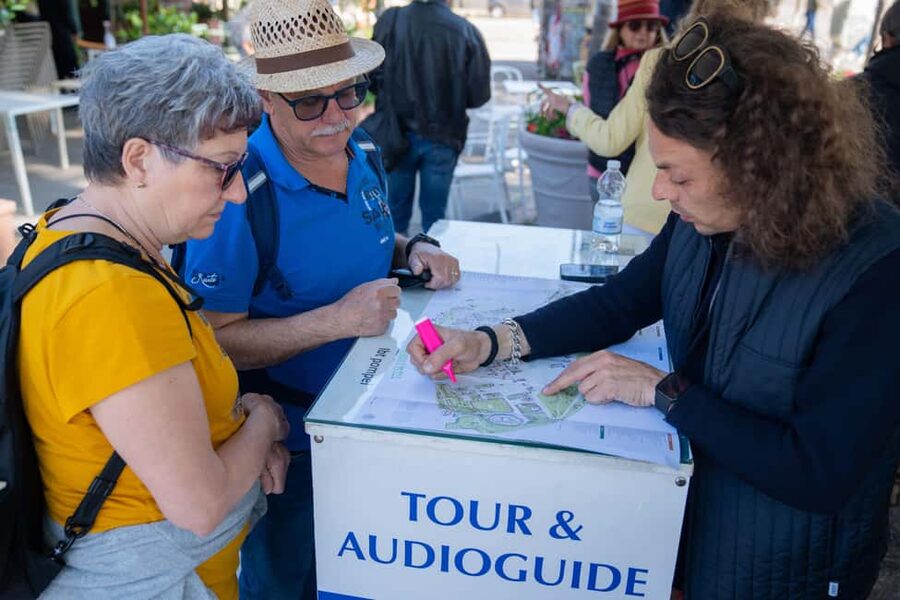
Your day begins at Piazza Esedra, 11, at the Office called IBT Center/Touristation, located next to Chalet Donna Lucia. If you’re arriving by foot, treat this as your anchor point and don’t try to “guess” your way in from the main area.
Two practical tips that make this smoother:
- Bring your passport or ID card. ID is required for all participants.
- Plan to arrive a few minutes early. Starting times depend on availability, and if you show up late, you may shrink the time you get to enjoy the ruins and the add-ons.
You’ll also notice there are clear rules about what you can bring. Glass objects are not allowed, and alcohol and drugs aren’t either. If you want to stay comfortable, wear shoes that handle uneven ground—Pompeii is realistic about its “terrain.”
Pompeii With an Archaeologist Guide: How the Ruins Come to Life
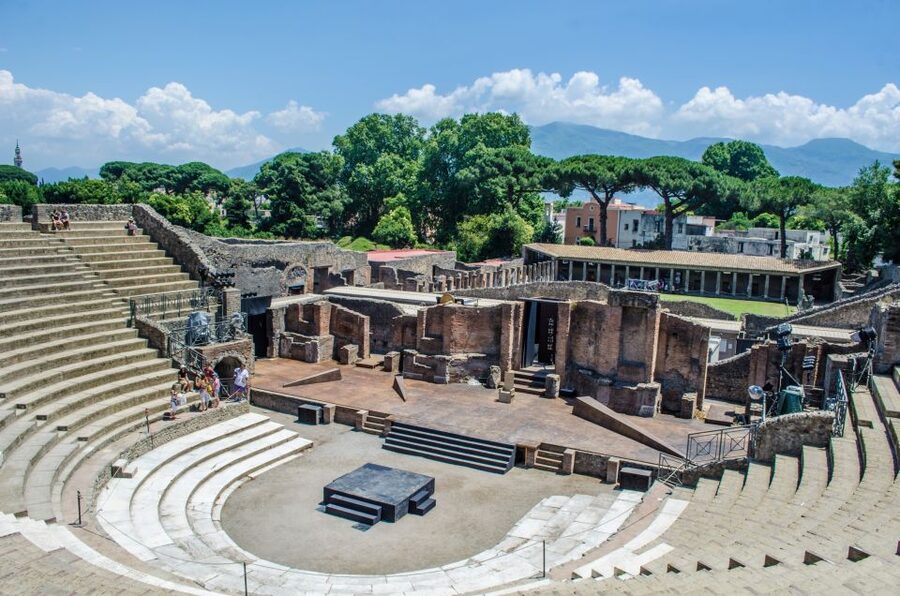
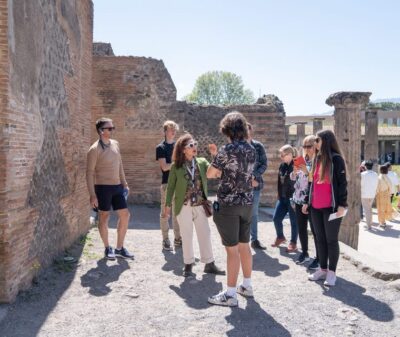
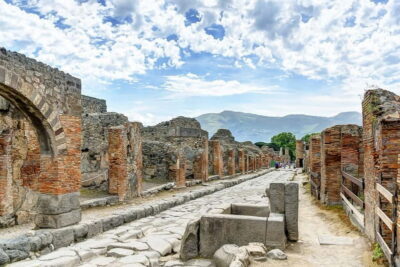
Once you’re inside, the core of your experience is a guided walk through the archaeological site with an archaeologist guide. The goal isn’t just to point at famous spots. You’ll get help understanding what you’re seeing—streets, building entrances, and the overall layout of a city preserved under volcanic ash from Mount Vesuvius.
This is the part I’d focus on if you only did one thing during a Pompeii day. A good guide turns “a lot of stone” into a place with routines:
- Where people moved through town
- How buildings were used
- How the city functioned as a real community, not a museum set
The tour is designed to cover a lot without feeling like a frantic sprint. Still, keep expectations grounded: Pompeii is huge, and 4 hours sounds longer than it feels once you include entry, walking, and stops for explanation.
One more detail that matters: the tour is offered in Spanish, English, French, and Italian, so you can usually match your language comfort level without doing a lot of translation in your head.
The Virtual Museum Ticket: Using Reconstruction to Understand 79 AD
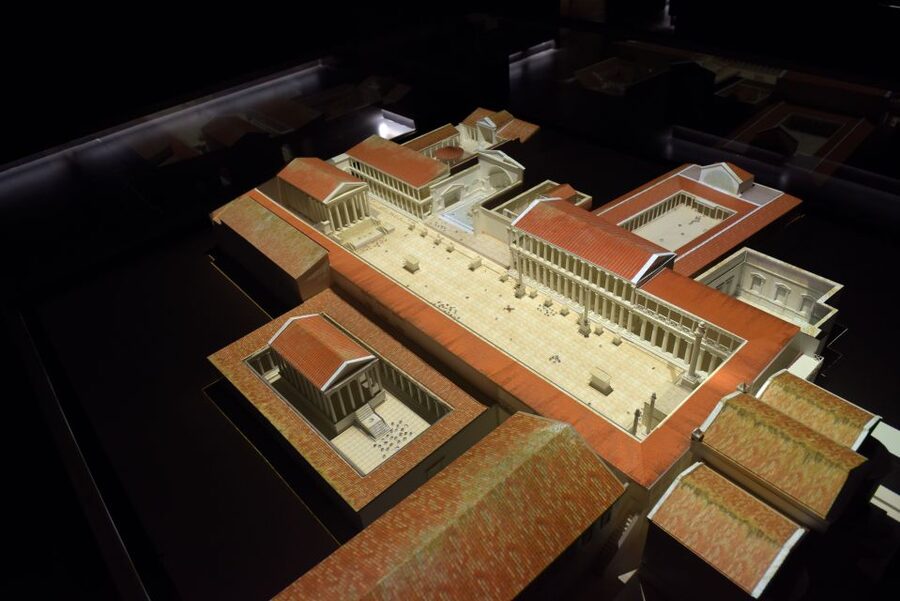
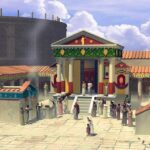
After the walking, you get something that’s often missing from ruin-only visits: a Virtual Museum of Pompeii ticket. This is especially helpful if you want to understand what happened and what everyday life looked like before the eruption froze the city.
Here’s what the virtual component is built to do:
- Show a reconstruction of part of ancient Pompeii
- Help you connect daily life with the eruption timeline
- Explain life before and during the catastrophic events of 79 AD
Even if you’ve read about Pompeii, the virtual museum can make details easier to hold onto because it gives context in a way that raw stone can’t. Ruins show the aftermath. Reconstruction helps you picture the “before,” the rhythm of the city, and the scale of what was lost.
If you’re the type who likes to understand the big picture—how disaster and daily routine connect—this add-on can be the difference between a visit that feels like snapshots and one that feels like a story with cause and effect.
Pompeii City Train: Quick Orientation Around the Area
The Pompeii city train is included for a reason. Pompeii can feel confusing at first because the walking routes don’t always match what you think the city “should” look like from the outside. A train ride gives you a faster overview of the wider area, so when you later see certain zones from the ground, things click.
In practical terms, I’d use the train as a support tool:
- If you take it early, it helps you get your bearings fast.
- If you take it later, it helps you mentally map what you already saw into the broader picture.
The pass also includes time to “visit the new Pompeii” by train, which means you’re not just stuck in the archaeological bubble—you get a sense of how the town sits around the ancient site. That can be useful for planning the rest of your day too.
More guided visits to choose
A Realistic Look at the 4-Hour Schedule
This experience runs about 4 hours, but the best part isn’t just the length—it’s the flexibility. You can organize your day and decide the order of attractions during your visit. That’s a big deal in Pompeii, where crowds and timing can shift quickly.
Here’s how to think about that 4-hour window:
- Expect enough time for the guided ruins portion to matter.
- Expect a structured stop for the virtual museum.
- Expect the train ride to help you orient, not to replace the walking.
If you’re the kind of traveler who wants to read every plaque and stop for photos often, you might feel time pressure. If you’re more focused on learning from the guide and keeping moving, 4 hours is a workable sweet spot.
One thing to keep in mind from real-world operations: sometimes not every component of a bundled day lands exactly the way you expect. A guide or staff member can help adjust the plan, but it’s still smart to arrive ready to be flexible and keep your schedule light that day.
Practical Rules That Affect Your Day (So You Don’t Get Stuck)
Pompeii is strict about a few things, and knowing them early prevents awkward moments:
- Bring an ID (passport or ID card) since it’s required for all participants.
- Pets aren’t allowed inside, with one exception: small dogs are permitted inside the archaeological area as long as they’re on a leash, and they must be carried when inside buildings.
- No glass objects and no alcohol and drugs.
- If you’re visiting with certified accessibility needs: there’s free admission for disabled visitors with a certification. That said, the experience itself is not suitable for people with mobility impairments.
If you’re planning to take photos, bring a normal phone or camera setup. The rules are clear enough, but they also mean you should avoid bringing items you might have packed out of habit.
Value Check: Why This Pass Usually Beats Booking Pieces Separately
I can’t quote a price without seeing it, but I can tell you how to judge value. This pass tends to make sense when you value three things at once:
- Time savings from skip-the-line entry
- Expert interpretation from a guided archaeologist walk
- Extra learning layers from the virtual museum and city train
If you try to assemble those parts yourself—entry tickets, guided interpretation, and a virtual/transfer add-on—you’re basically building a puzzle in a busy place. The pass reduces the number of moving parts you have to manage.
It’s also a good value for first-timers. The ruins alone can be overwhelming. The archaeologist guide gives structure, the virtual museum supplies context, and the train helps your brain build a map.
And there’s one more less obvious value: stress reduction. Skip-the-line means fewer moments where you’re hovering around entrances wondering if you missed something.
Who This Tour Suits (And Who Might Want a Different Plan)
This Pompeii Pass is a great fit if:
- You want a guided understanding of the city rather than wandering.
- You’re short on time and want skip-the-line entry.
- You want a balance of walking ruins plus explanation through the Virtual Museum.
- You like having orientation help from the city train.
It’s not suitable if you need mobility-friendly routing. The activity is explicitly not suitable for people with mobility impairments, so choose another format that matches your needs.
For language comfort, you can select from Spanish, English, French, and Italian. That matters in Pompeii because the best details come through clear explanations, not generic captions.
Should You Book the Pompeii Pass?
Book it if you want the smart version of Pompeii: skip the queue, get an archaeologist guide, and leave with a clearer understanding than you’d get from ruins alone. The virtual museum and city train add practical learning and orientation, and the whole thing is built around a manageable 4-hour window.
Pass on it if mobility is a concern, or if you know you want a very unstructured, wandering-only day with no museum reconstruction and no train component. This one is designed to teach you Pompeii in a set rhythm.
FAQ
How long is the Pompeii Pass experience?
It lasts about 4 hours.
Where is the meeting point?
Meet at the Office called IBT Center/Touristation next to Chalet Donna Lucia, at Piazza Esedra, 11 (40.74748992919922, 14.483768463134766).
Does this pass include skip-the-line entry?
Yes. Your ticket includes reserved entrance with skip-the-line admission to the Pompeii archaeological area.
Is a guided tour included?
Yes. You get a guided tour with a live archaeologist guide.
What languages are available for the guide?
The tour is available in Spanish, English, French, and Italian.
Is the Virtual Museum included?
Yes. The pass includes a ticket for the Virtual Museum of Pompeii with access to a reconstruction.
Do I get access to a train during the visit?
Yes. The pass includes a ticket for the Pompeii touristic/city train to help you visit and get an overview.
What should I bring?
Bring your passport or ID card. ID is required for all participants.
Are pets allowed?
Pets are not allowed, but small dogs are permitted inside the archaeological area if they are on a leash and carried when inside buildings.
Can I get a refund if I cancel?
This activity is non-refundable.
Is it suitable for people with mobility impairments?
No, it is not suitable for people with mobility impairments.
More Guided in Pompei Campania
- Pompeii: Entry Ticket and Guided Tour with an Archaeologist★ 4.8 · 19,459 reviews
- Pompeii: Skip-the-Line Entrance Ticket with Audio Guide★ 4.0 · 2,509 reviews
- Pompeii: Skip-the-line-Ticket and Guided Tour★ 4.6 · 1,152 reviews
- Pompeii: Guided Tour with Skip-the-Line Entry★ 4.9 · 812 reviews
- Pompeii: Skip-the-Line Entry Ticket with Digital Guide App★ 4.1 · 770 reviews
More Tour Reviews in Pompei Campania
- Pompeii: Entry Ticket and Guided Tour with an Archaeologist★ 4.8 · 19,459 reviews
- Pompeii: Small Group Tour with an Archaeologist★ 4.8 · 12,264 reviews
- Pompeii: Skip-the-Line Entrance Ticket with Audio Guide★ 4.0 · 2,509 reviews
- Naples: Pompeii and Mt. Vesuvius with Lunch and Wine Tasting★ 4.5 · 2,454 reviews
- Pompeii: Skip-the-line-Ticket and Guided Tour★ 4.6 · 1,152 reviews
Skip-the-Line Entries, More to Book
- Pompeii: Skip-the-Line Entrance Ticket with Audio Guide★ 4.0 · 2,509 reviews
- Pompeii: Skip-the-line-Ticket and Guided Tour★ 4.6 · 1,152 reviews
- Pompeii: Guided Tour with Skip-the-Line Entry★ 4.9 · 812 reviews
- Pompeii: Skip-the-Line Entry Ticket with Digital Guide App★ 4.1 · 770 reviews
- Pompeii: Tour with Archaeologist Guide & Skip-the-Line Entry★ 4.5 · 478 reviews
Just reviewed: more Pompei Campania tours and day trips



Pompeii Skip-the-Line Entry, compared.
 ★ 4.0Skip-the-Line Entrance Ticket with Audio GuideFrom $392,509 reviews
 ★ 4.6Skip-the-line-Ticket and Guided TourFrom $641,152 reviews
 ★ 4.9Guided Tour with Skip-the-Line EntryFrom $58812 reviews
 ★ 4.1Skip-the-Line Entry Ticket with Digital Guide AppFrom $22770 reviews
 ★ 4.9Pompeii Ruins Private Tour with Optional Skip-the-Line EntryFrom $254732 reviews
 ★ 5.0Skip the Line Guided Tour of Pompeii led by an ArchaeologistFrom $95703 reviews
 ★ 5.0Pompeii Private Tour with an Archaeologist and Skip The Line – 3 hoursFrom $302564 reviews
 ★ 5.0Pompeii Skip-the-line Tour with Archaeologist GuideFrom $71559 reviews
Browse the lists this tour appears in