
Reviewed · POMPEII COOKING CLASSES & LOCAL FOOD
Pompei: Cooking class fresh pasta
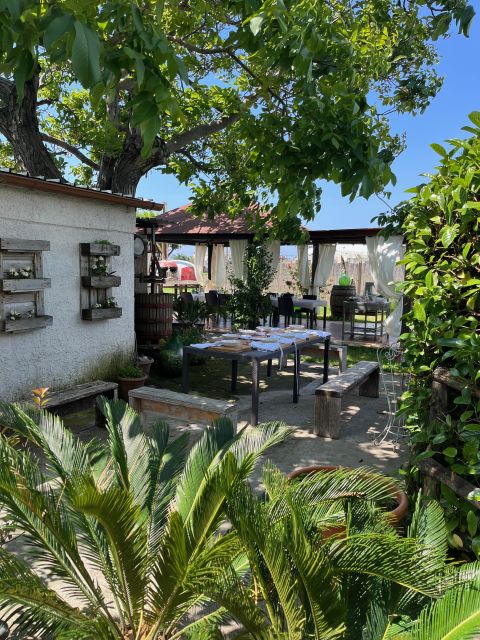
One apron. Lots of flour. A real taste of Campania. This Pompeii cooking experience is built around hands-on pasta making in a countryside garden, with the Pompeii excavations close by and views toward Vesuvius and the Lattari mountains. I love that the setting feels intimate and family-like, not staged, and that you eat what you make in the same relaxed flow.
Two things I especially like: you’ll learn fresh pasta techniques from Sabrina, a Cesarina focused on local traditions, and you get a proper meal (bruschetta, pasta, dessert) rather than a snack with a cooking demo. The meals lean on seasonal produce and a homemade dessert, and you’ll even have Gragnano wine with the menu.
One possible drawback: this is a minimum-two-people experience, so solo plans may not fit unless you’re booking as a pair (and transfers aren’t included). If you’re short on time and want a fast stop-and-go food hit, the full three hours may feel like a commitment.
In This Review
- Key highlights to know before you go
- A garden kitchen a few minutes from Pompeii
- Meet Sabrina the Cesarina and get into the Campania mindset
- What you’ll cook: bruschetta, fresh pasta, and a homemade dessert
- The garden produce angle: why it tastes better
- Gragnano wine and a real meal pace
- Timing and the flow of the three-hour experience
- Price of $91.76: what you’re really paying for
- Who this Pompeii cooking class fits best
- Small logistics that matter: transfers and meeting points
- Should you book this cooking class near Pompeii?
- FAQ
- How long is the Pompeii fresh pasta cooking class?
- Is the cooking class taught in English?
- What’s included in the meal?
- Where do I meet for the experience?
- Is a transfer included?
- How much does it cost, and is there a minimum number of people?
Key highlights to know before you go
- Cesarina-led cooking focused on Campania traditions, not a generic pasta lesson
- Garden setting with a view toward Vesuvius and the Lattari mountains
- A real family-meal format: you make and then eat what’s on the menu
- Seasonal ingredients including bruschetta with seasonal vegetables
- A full menu: bruschetta, fresh pasta, homemade dessert, water, plus Gragnano wine
A garden kitchen a few minutes from Pompeii
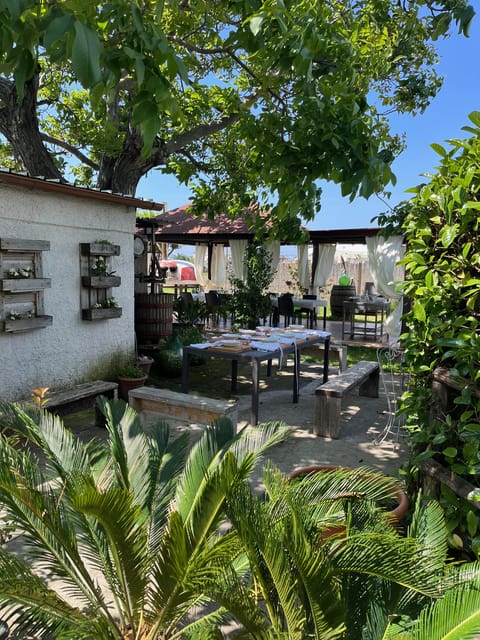
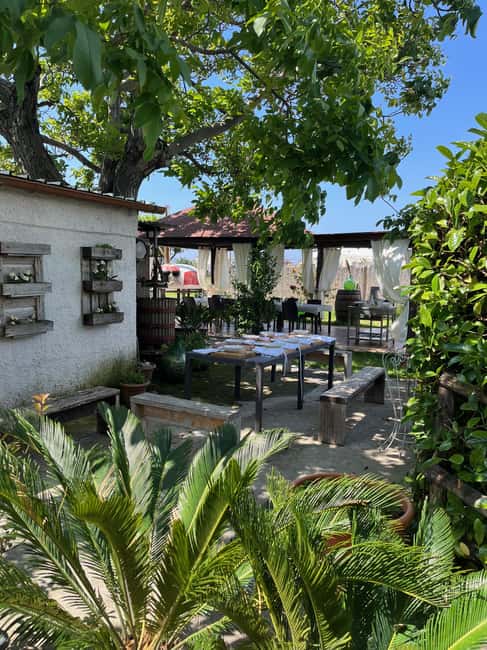
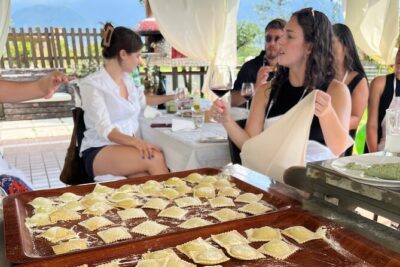
The best surprise here is how quickly “Pompeii day” turns into countryside time. The meeting spot is in the Giardini Balestrieri area (look for the sign that says balestrieri gardens), and you’re close enough that Pompeii’s excavations and sanctuary are reachable, but the experience itself happens in a garden setting outside the main tourist crush.
This matters because the class doesn’t feel like a rushed add-on. You get a calmer rhythm: nature around you, open views toward Vesuvius and the Lattari mountains, and enough space to focus on the food. Several moments throughout the experience are described as part of family life, and that’s exactly what changes the vibe—this is less classroom, more kitchen conversation.
Also, the location keeps practical sense. After a few hours of cooking, you’re still positioned for an easy continuation of Pompeii sightseeing, since the class ends back near where you started.
Still hungry? More kitchens near the ruins
- Pompei: Cooking class fresh pasta
★ 5.0 · 6 reviews
Meet Sabrina the Cesarina and get into the Campania mindset
You won’t just meet your instructor—you’ll meet the mission behind the cooking. The host is Sabrina, described as a Cesarina. If you’re new to the idea, a Cesarina is a local home cook trained to safeguard and share traditions, recipes, and hospitality in an authentic, straightforward way.
The language is English, which helps if you’re confident with food but not fluent in Italian. And the tone is direct: after the apron moment, you’re expected to roll up your sleeves and get your hands involved. This isn’t just watching someone form dough while you hover nearby.
A key detail that comes through strongly: you experience “moments of our family life.” That shows up in the teaching style—patient, welcoming, and personal. One of the things I look for in cooking experiences is how comfortable you feel making mistakes. The feedback for this class repeatedly points out that Sabrina (and the household) is generous with guidance, even if you’re not a chef.
What you’ll cook: bruschetta, fresh pasta, and a homemade dessert
The menu is built around three distinct phases: start with bruschetta, make the fresh pasta dish, then finish with a traditional Campania dessert. That structure is smart for two reasons. First, you get a taste of the garden and seasonal ingredients right away. Second, you build momentum before the pasta takes over.
Here’s what’s included in the menu:
- Bruschetta with seasonal vegetables
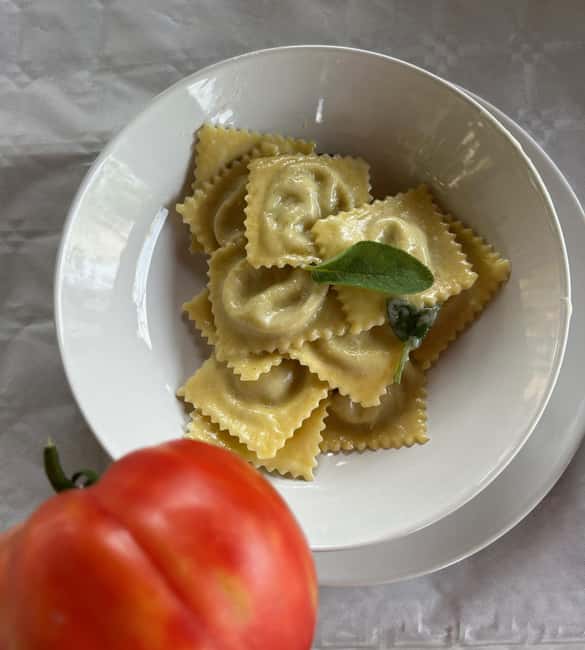
- Fresh pasta
- Homemade dessert
- Water
- Gragnano wine
The bruschetta is your “get ready” course. It’s simple, but it sets the theme: seasonal vegetables and that Campania habit of letting good ingredients do the heavy lifting. You’re not chasing complicated cooking styles—you’re learning the local approach: thoughtful, practical, and rooted in what grows nearby.
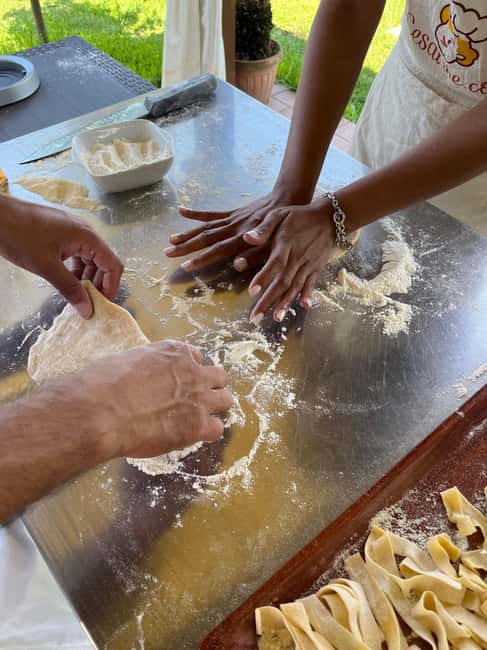
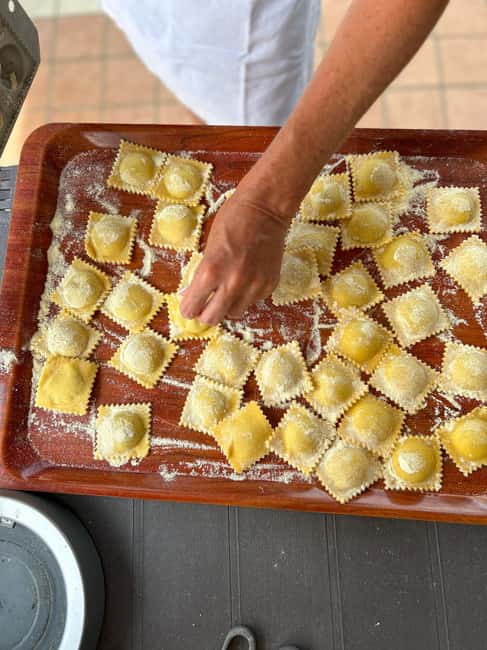
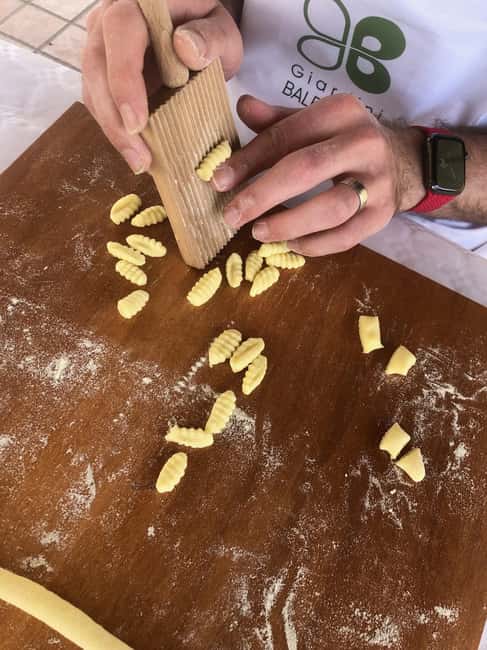
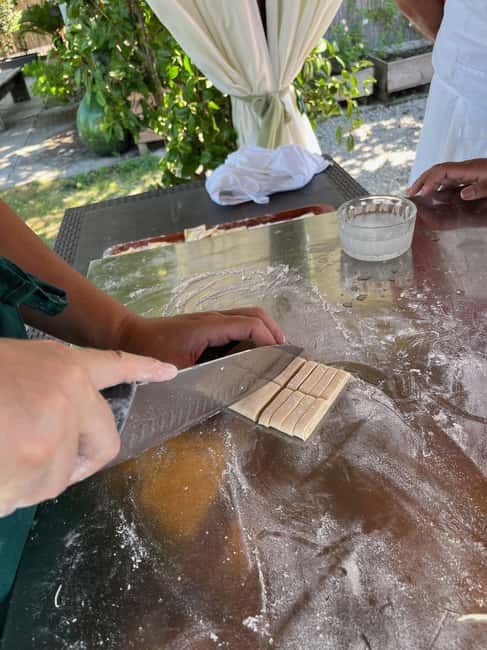
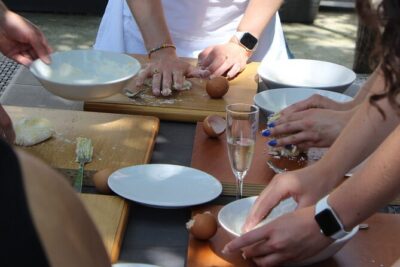
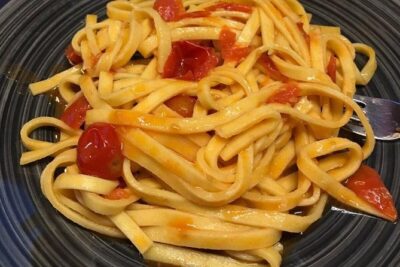
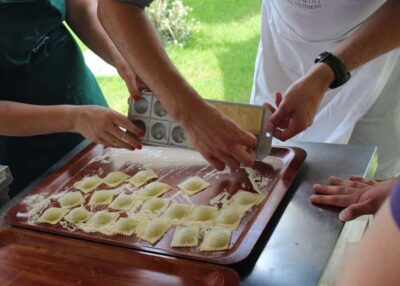
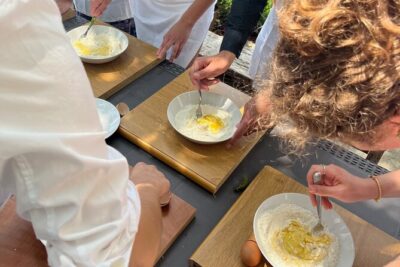
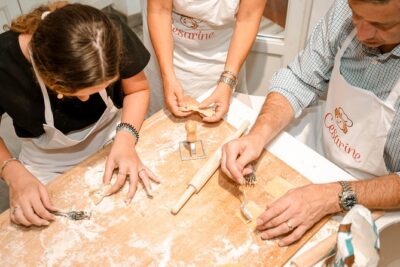
For the fresh pasta part, you’ll put your hands in the dough and work through the process together. The experience is framed as a typical Sunday dish in Campania, which helps you understand the why behind the how. Pasta isn’t treated as a fancy project—it’s treated as food people make for ordinary joy.
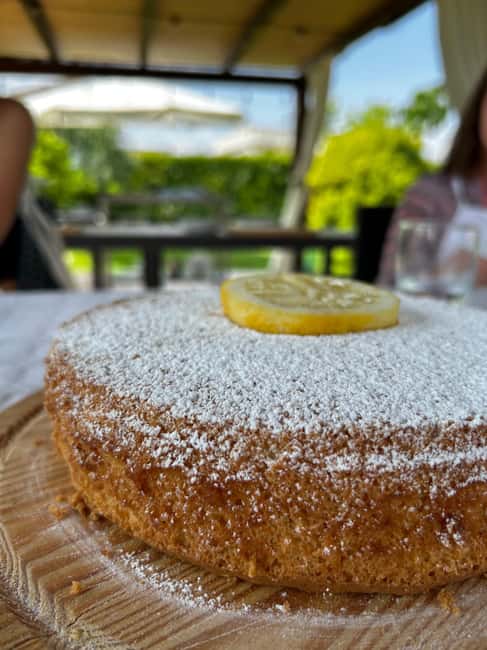
Then comes dessert. The description calls it a typical Campania dessert, and in at least one example session it included a caprese lemon cake, made with mostly homegrown ingredients. Even if the exact dessert varies, the consistent message is the same: it’s homemade, seasonal-leaning, and meant to be eaten right after you make it.
The garden produce angle: why it tastes better
You might think a cooking class is just about technique. This one adds a second layer: ingredients grown and selected with care. The highlights explicitly mention products from the garden, and the bruschetta portion is tied to seasonal vegetables—so your meal isn’t built from generic supermarket shortcuts.
And because you’re in the Pompeian countryside with a view, you’re cooking in a place that feels connected to the food. That matters. When people talk about “fresh,” they often mean marketing. Here, the garden component gives you a more grounded kind of freshness, and you can taste the difference in the simplicity of the flavors.
One more small detail that helps: the meal isn’t just components. It’s served as a menu you eat together after cooking. That’s a big value point. You’re not hauling ingredients home or sampling one bite standing up. You’re settling in and tasting the work while it’s still at its best.
Gragnano wine and a real meal pace
A lot of food experiences say you’ll have wine. Here, it’s Gragnano wine, and it’s included with the menu. That’s not just a perk—it’s part of the pacing. You’re making pasta, eating bruschetta, then continuing into dessert. Having wine included means you don’t have to decide whether you should spend extra to match the meal.
The meal pace also stays friendly. This isn’t the kind of experience where you’re rushed through steps and then kicked out. The format is intimate and familiar, and that makes it easier to relax into the cooking. If you’ve had days where everything feels like a checklist, this is the opposite.

Timing and the flow of the three-hour experience
The class runs three hours, with starting times based on availability. That duration is long enough to matter—short enough that you’re not sacrificing your whole day.
The flow is basically:
- Arrive at the garden meeting spot (look for the balestrieri gardens sign)
- Get welcomed and put on your apron
- Make the bruschetta course with seasonal vegetables
- Learn and prepare fresh pasta
- Eat what you made
- Finish with a homemade dessert
- Head back to the meeting point
The “back to the meeting point” ending is useful if you want to keep your navigation simple after class. You’re not sent across town or left wandering while you think about dinner.
One practical note: since you’re handling pasta dough, plan on getting a little mess in your day. Wear clothes you’re okay with getting floury, even if you’re supplied an apron and the vibe is relaxed.
Price of $91.76: what you’re really paying for
At $91.76 per person, this isn’t a cheap impulse activity. But it also isn’t just a “cook and eat” event that happens somewhere inconvenient. You’re paying for an English-speaking Cesarina guide, hands-on instruction, and a full menu with water, Gragnano wine, bruschetta, fresh pasta, and dessert.
So the value question becomes: are you getting a real meal plus a real lesson, in a memorable setting? Based on the structure and what’s included, yes.
Here’s how I’d justify it for most budgets:
- You’re getting multiple courses, not a single dish
- The garden setting adds atmosphere without requiring extra transport time
- The class is framed as authentic Campania tradition, led by a Cesarina (meaning it’s not a generic pasta script)
If you’re already planning to spend time in Pompeii, this is also an efficient add-on. You’re near the action but not trapped inside it.
Who this Pompeii cooking class fits best
This one fits best if you want a day that feels local without being complicated.
You’ll likely love it if:
- You enjoy cooking but want guidance more than technical pressure
- You want Campania cuisine in a setting that feels connected to the landscape and daily life
- You’re traveling as a couple, since there’s a minimum experience for two people
- You want a small, personal experience rather than a big crowd event
You might skip it if:
- You only want quick food tasting with no hands-on time
- You’re traveling alone and can’t meet the minimum
- You’re very focused on sightseeing only, with no room for a three-hour meal-based block
Small logistics that matter: transfers and meeting points
Transfers aren’t included, and that’s the main logistics consideration. If you don’t want to handle your own ride, you can request a transfer (ask for information). For many people, this is the make-or-break detail: the class is in the Giardini Balestrieri garden area, and you’ll want a plan for how you’re getting there smoothly.
Your meeting point is clearly tied to the property: look for the sign that says balestrieri gardens. The address provided is Giardini Balestrieri 132, and the activity ends back at the meeting point, which helps with timing.
Should you book this cooking class near Pompeii?
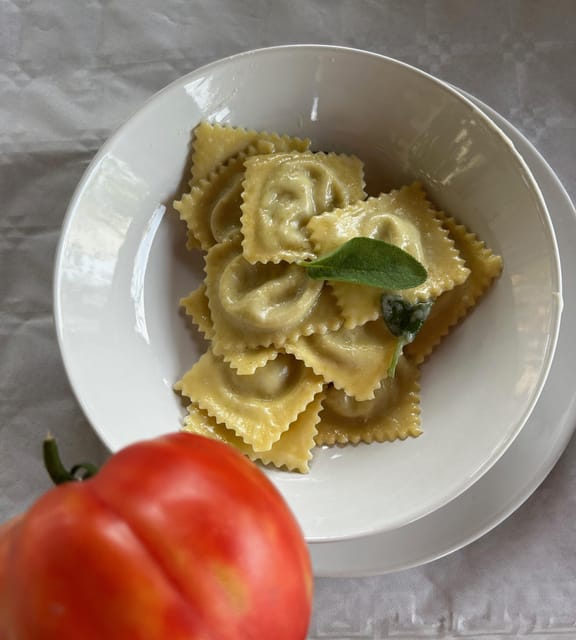
I’d book it if you want something you can’t replicate at home from a YouTube clip: a hands-on fresh pasta experience led by a Cesarina in a garden setting near Pompeii, with a full meal that includes bruschetta, pasta, dessert, water, and Gragnano wine.
It’s also a smart choice if your Pompeii day risks becoming only ruins-and-routes. This gives you a taste of the region that goes beyond monuments. And the repeated emphasis on family-like hospitality and patient teaching is exactly what you hope for in a class where you’re making dough with your own hands.
My simple decision checklist:
- You’re okay spending three hours on one focused food experience
- You’re traveling with someone (minimum for two people)
- You want authentic Campania flavors more than photo-stops
- You’re fine handling transfers on your own or requesting one
If those boxes fit, this is a strong value, and a fun way to remember Pompeii for more than what’s preserved in stone.
FAQ
How long is the Pompeii fresh pasta cooking class?
The experience lasts 3 hours.
Is the cooking class taught in English?
Yes, the instructor speaks English.
What’s included in the meal?
You’ll have bruschetta with seasonal vegetables, fresh pasta, a homemade dessert, plus water and Gragnano wine.
Where do I meet for the experience?
You’ll find a sign that says balestrieri gardens. The provider location is Giardini Balestrieri 132, and the activity ends back at the meeting point.
Is a transfer included?
No, transfer is not included, but you can request a transfer by asking for information.
How much does it cost, and is there a minimum number of people?
The price is $91.76 per person, and there is a minimum experience for two people.
More Cooking Classes to Book
- Cooking Class w/Italian Mamma from Pompei!★ 5.0 · 7 reviews
More Tour Reviews in Pompei Campania
- Pompeii: Entry Ticket and Guided Tour with an Archaeologist★ 4.8 · 19,459 reviews
- Pompeii: Small Group Tour with an Archaeologist★ 4.8 · 12,264 reviews
- Pompeii: Skip-the-Line Entrance Ticket with Audio Guide★ 4.0 · 2,509 reviews
- Naples: Pompeii and Mt. Vesuvius with Lunch and Wine Tasting★ 4.5 · 2,454 reviews
- Pompeii: Skip-the-line-Ticket and Guided Tour★ 4.6 · 1,152 reviews
More Kitchens Near the Ruins
- Cooking Class w/Italian Mamma from Pompei!★ 5.0 · 7 reviews
Just reviewed: more Pompei Campania tours and day trips
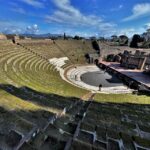
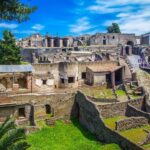
Pompeii Cooking Classes & Local Food, compared.
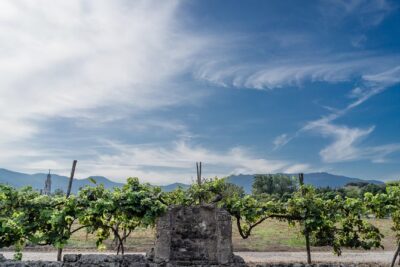 ★ 5.0Seafood Lunch & Wine Tasting with Scenic Golf Cart TourFrom $9647 reviews
 ★ 5.0Pompeii Tour and Cooking Class with MammaFrom $21334 reviews
 ★ 5.0guided tour of the ruins and cooking class fresh pastaFrom $3008 reviews
 ★ 5.0Traditional Neapolitan Dinner in Pompei – Villa Franca – Family RestourantFrom $508 reviews
 ★ 5.0Cooking Class w/Italian Mamma from Pompei!From $947 reviews
 ★ 5.0Italian Cooking Class with Local MammaFrom $967 reviews
 ★ 5.0Pasta Cooking class in PompeiiFrom $944 reviews
 ★ 5.0Private Pasta & Tiramisu Class at a Cesarina’s home with tasting in PompeiFrom $1683 reviews
Browse the lists this tour appears in