
Reviewed · POMPEII PRIVATE GUIDED TOURS
Late Afternoon Best time to visit Pompei on a private tour
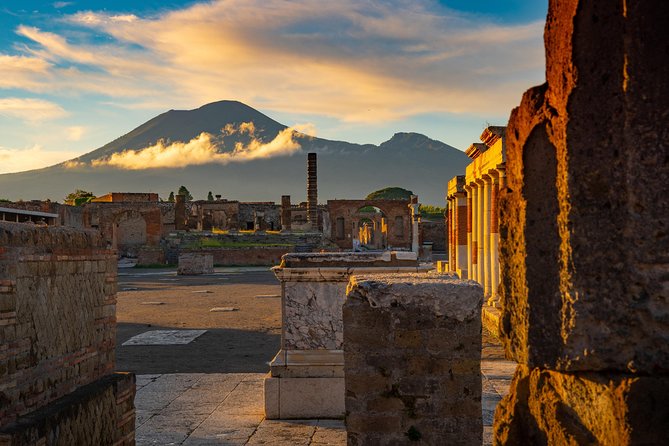
Pompeii after hours hits differently. This late-afternoon private tour helps you dodge the worst of the crowd and heat while seeing the ruins glow in sunset light. With a guide who keeps things moving, you get a strong overview of this UNESCO site without feeling rushed or overwhelmed.
I especially like the way Pompeii’s AD 79 eruption becomes a clear, story-driven walk instead of random stone blocks. And I like that you’re not stuck in a one-size-fits-all group rhythm; Alex guides at a pace that lets you ask questions and actually connect the details to what you’re seeing.
One consideration: the Pompeii entrance ticket isn’t included. Budget an extra €18 for adults (under 18 is free), and that cost is what determines your final total.
In This Review
- Key highlights you’ll care about
- Why late afternoon is the smartest way into Pompeii
- Starting from Porta Marina and getting oriented fast
- The AD 79 story your guide makes practical
- The Forum and the religious pulse of ancient Pompeii
- Baths, theatres, and the mix of Greek and Roman life
- House of Menander: art, status, and everyday decoration
- A look at shops, workshops, and Pompeii’s water system
- Ancient “street eats” stops: bakery power and the termopolio
- The Orto dei Fuggiaschi plaster casts: emotional, explained, and worth the time
- Why the guide, Alex, changes the whole visit
- Price and value: what $249 really covers
- Timing tips for the late-afternoon sweet spot
- Who this tour fits best
- Should you book this private late-afternoon Pompeii tour?
- FAQ
- How long is the late-afternoon private tour of Pompeii?
- Is the entrance ticket included in the tour price?
- Where does the tour start?
- Where does the tour end?
- What’s included with the booking?
- Can the guide arrange skip-the-line tickets?
- Is this a private tour?
- What if the weather is bad?
- Is there free cancellation?
- Are service animals allowed?
Key highlights you’ll care about
- Late-afternoon timing: better light, cooler temperatures, and fewer people than midday
- A private, licensed guide: you set the question tempo and the tour stays personal
- Forum to the baths and theatres: you cover the big civic, public, and cultural hubs
- Victim plaster casts at Orto dei Fuggiaschi: emotionally heavy, explained in context
- House of Menander plus ancient street food stops: daily life shows up on both sides of the street
- Mobile ticket: simpler check-in and less fuss on arrival
Why late afternoon is the smartest way into Pompeii
Pompeii is famous for a reason, but it can be draining if you arrive at peak heat and peak crowds. The late-afternoon schedule is a practical upgrade. You’re still there long enough to see the major highlights, but the site is usually kinder to your feet and your patience.
The other win is light. Seeing stone paths, faded wall art, and the geometry of Roman buildings in softer sunset tones helps your brain do what it’s supposed to do here: picture a real city, not just an archaeological park. It’s also a nice change from the usual early-morning hustle.
Finally, the tour format matters. This is private, so you’re not trapped in the pacing of a large group. When you want a slower moment at a detail, you can ask. When you want to keep momentum, the guide can do that too.
Prefer your own guide? More private tours
- Pompeii private tour with an Official Guide
★ 5.0 · 631 reviews - Pompeii Private Tour with an Archaeologist and Skip The Line – 3 hours
★ 5.0 · 564 reviews - Visit in Pompeii – Pompeii Private Tour with Ada
★ 5.0 · 436 reviews
Starting from Porta Marina and getting oriented fast
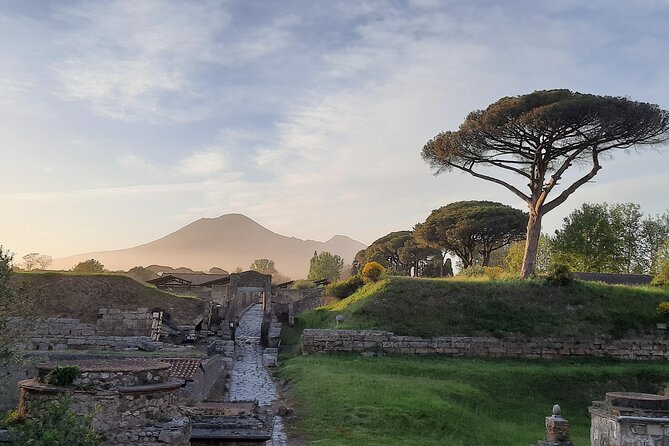
The experience begins at Porta Marina, the sea gate. That choice is more than a location marker. It helps you understand that Pompeii was a working place with movement, trade, and daily routines, not only a museum of tragedy.
Early on, your guide frames the dynamics of the eruption and the historical background of the ancient city. That quick setup helps everything that follows make sense. Without that, you can walk past the forum or a bathhouse and still feel like you’re seeing disconnected ruins.
From there, you begin building your mental map: public spaces first, then the cultural and social spots, then the homes and the streets. And because you start with orientation, you’ll spend less time thinking, Where am I? and more time thinking, Why does this matter?
The AD 79 story your guide makes practical
Pompeii hits people in different ways. Some visitors focus on the drama of the eruption. Others care more about daily life—food, bathing, street markets, and how people decorated their homes.
This tour steers both directions. Your guide explains the eruption in a way that makes the city’s layout feel logical—why certain areas were central, how people used public buildings, and what kinds of evidence survive. The goal is simple: you should leave with a coherent picture, not a collection of facts.
One thing I appreciate is how the guide keeps you engaged without turning it into a lecture. You’ll have moments where you get a clear explanation, then you look around and connect it to the physical remains—columns, street tracks, wall sections, and the shape of rooms.
And yes, expect to walk cobblestone streets. That’s part of the point here. You’re not just looking at ruins from behind a barrier; you’re moving through the same pathways that structured city life.
The Forum and the religious pulse of ancient Pompeii
You’ll spend time at the Forum, Pompeii’s main square and civic heart. This is where the city’s political, economic, religious, and social life intersected. Standing in the middle of that space, it becomes easier to understand why Pompeii functioned the way it did—how decisions were made, where people gathered, and how public identity showed up in architecture.
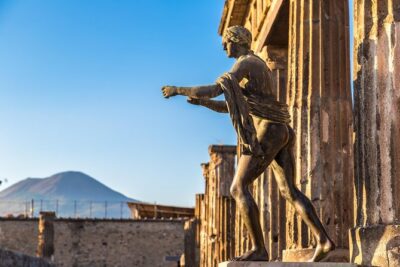
Next comes the Temple of Apollo. Even if you don’t know every detail of Roman religion, the guide’s focus on gods and mythology makes this stop feel grounded. You start to see how myth wasn’t just entertainment—it was tied to meaning, authority, and the city’s sense of identity.
A practical note: both of these stops are popular for a reason. Even when you’re avoiding peak crowds, you’ll still want to slow down and look at the scale. In Pompeii, scale is storytelling.
Baths, theatres, and the mix of Greek and Roman life
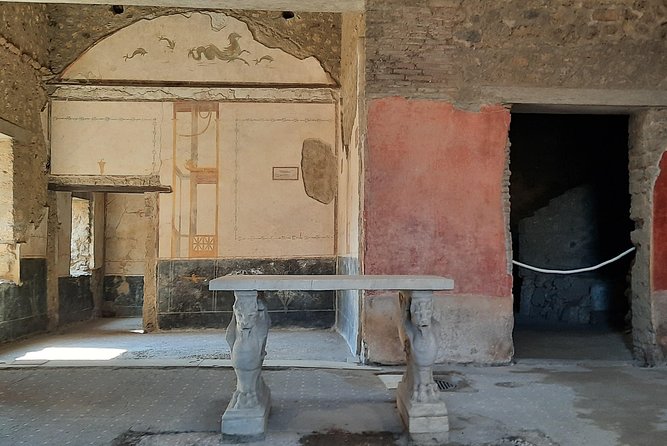
Roman bathhouses weren’t just for cleanliness. They were social spaces where people gathered, talked, and spent time. The tour includes Stabian Baths (Terme Stabiane), giving you a clear view into the public routine of bathing.
Even if you’ve seen Roman baths in other cities, Pompeii’s preserved layout is a strong teacher. You start to recognize patterns: changing areas, larger communal zones, and the idea that daily life had a rhythm. The guide helps you connect the rooms to what people likely did there.
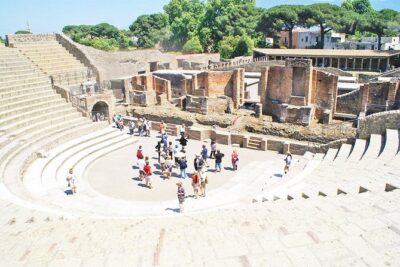
Then you’ll move to the Teatro Grande, Pompeii’s Greek theatre. This is where the city’s cultural mix becomes visible. Greek stagecraft and Roman civic pride meet in one of the places where community life played out.
If you like architecture and “how things worked,” theatres and bathhouses are your sweet spot. They’re not abstract. They show movement, seating logic, and the practical side of entertainment and public routine.
House of Menander: art, status, and everyday decoration
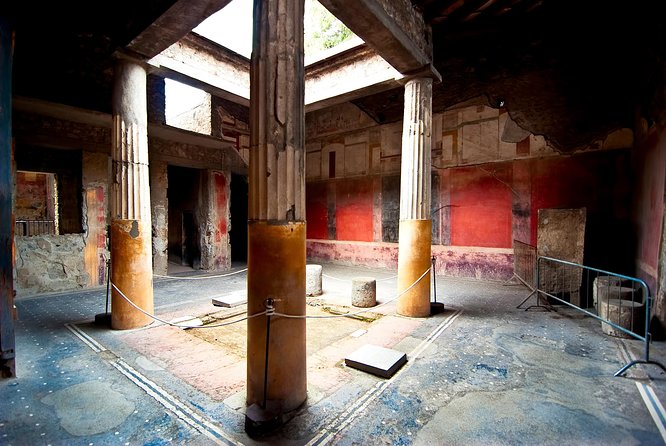
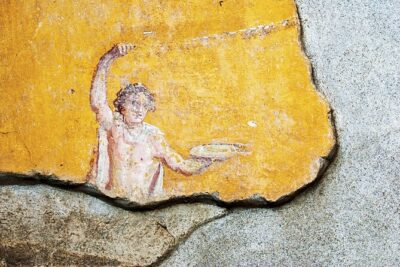
The tour includes the Casa del Menandro, a rich Roman domus with frescoes and mosaics. This is one of those stops that quietly changes your view of Pompeii. You stop seeing only public buildings and start noticing how wealth displayed itself in private space.
The frescoes and mosaics are the kind of details that make you slow down. Even in a short visit, you’ll likely find yourself studying borders, color choices, and how scenes fit the architecture around them.
This is also a good reminder that Pompeii wasn’t only about people walking through streets. It was a city of private rooms, visual culture, and status signals—woven into the layout of daily living.
A look at shops, workshops, and Pompeii’s water system
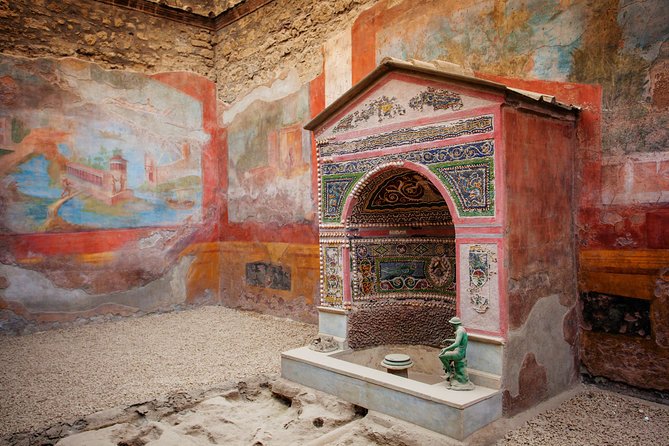
Inside the main Pompeii Archaeological Park stop, your guide also works in practical city infrastructure: shops and workshops, and the water system. These aren’t the headline stops, but they’re the ones that make the city feel real.
A water system stop helps you understand that Pompeii wasn’t surviving on vibes. It ran on engineering. Shops and workshops help you connect the dots between where people bought things, where they made things, and where they hung out when they weren’t in formal civic spaces.
The guide also includes time for a theatre area and a “rich house” that can be selected based on crowd levels, opening rotation, or your request. That flexibility is smart. It means you’re not blindly stuck with the same room everyone else gets, even if conditions shift.
Ancient “street eats” stops: bakery power and the termopolio
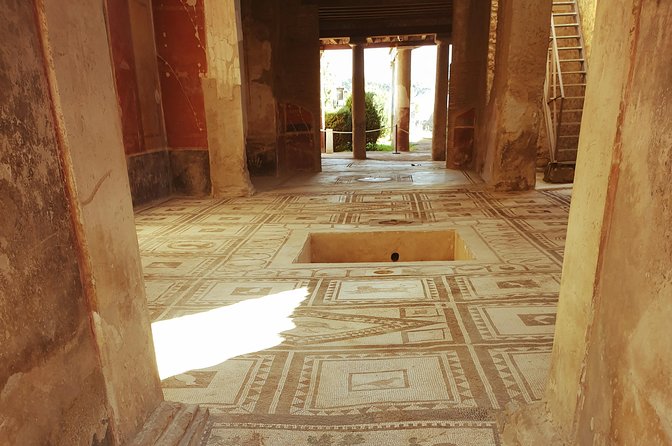
Two of the most fun parts of this tour are the food-related stops. First is Panificio di Popidio Prisco, a 2,000-year-old bakery with an oven and mills. Standing near the preserved evidence of milling and baking turns your imagination into something concrete.
Then you’ll see the Termopolio di Vetuzio Placido, a kind of ancient street food counter. This stop gives you a quick, human scale view of city life: people grabbing meals, eating in the flow of the street, and interacting in public space.
These food stops are a big reason this tour avoids feeling like only tragedy and stone. You get a reminder that normal life existed here—busy, social, and routine right up until it wasn’t.
The Orto dei Fuggiaschi plaster casts: emotional, explained, and worth the time
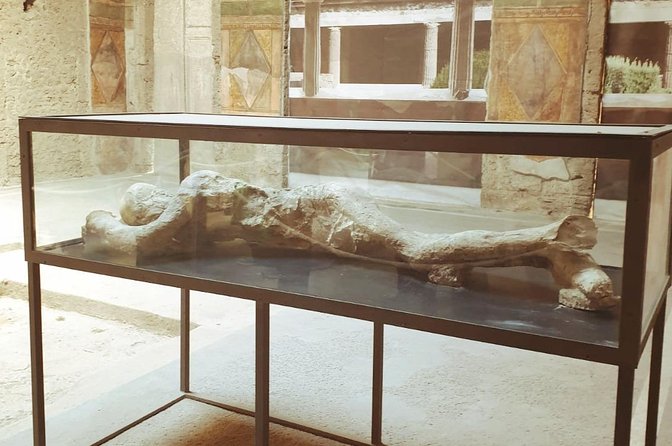
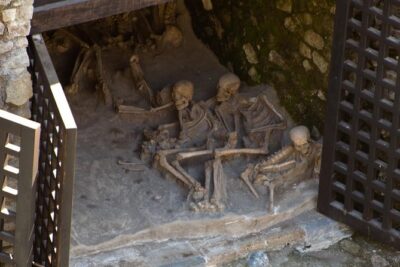
The final major stop is Orto dei Fuggiaschi, where you’ll see the plaster casts of the victims of the eruption. This part is heavy. It’s also where the tour’s explanation matters most.
The guide’s background framing makes this moment less random and more meaningful. You’re not just seeing bodies; you’re seeing evidence captured in the last seconds of real people’s lives. That context is what turns a visit from sad sightseeing into understanding.
Plan for a slower pace here. Even with a guide who keeps things moving, this is the point where your body and your thoughts will want a pause. Give yourself that moment. It’s part of why late-afternoon timing can be helpful—you’re often more emotionally ready when the day feels calmer.
Why the guide, Alex, changes the whole visit
A private tour can be a mixed bag if the guide is all personality and no clarity. In this case, Alex’s style works for real people with real questions.
What I like most is the combination of speed and precision. The pace stays brisk enough that you see many key places in about two hours, but you still get explanations when something matters. And if your group is slower, Alex adjusts. That adaptability matters on cobblestones, in crowds, and when your attention gets caught by a small detail.
Alex also makes Pompeii feel accessible to different ages. I’ve seen how guides can forget that kids need stories, not just dates. Here, the focus on storytelling helps keep younger visitors engaged without dumbing anything down.
You’re also dealing with a site that rewards curiosity. When you can ask questions in the moment—about symbols, layout, daily routines, or how the eruption impacted the city—you’ll get more out of your visit than you would by reading a sign and moving on.
Price and value: what $249 really covers
The tour price is $249 for about two hours, and it includes a private licensed guide and a mobile ticket. That’s the core value: you pay for a dedicated person who plans the flow and explains what you’re looking at.
Entrance tickets are not included. Adults pay €18, and under 18 are free. That means your total cost is the tour price plus the admission fee for your group. On request, the guide can buy skip-the-line tickets.
Here’s how I’d think about value. If you’re visiting with a small group and you care about understanding what you’re seeing, a private guide often pays for itself in time and mental clarity. You’re not spending your limited visit time trying to figure out which ruins matter or trying to decode what a room was for without help.
Timing tips for the late-afternoon sweet spot
Late afternoon is the strategy, but you still want to arrive ready. The tour ends back at the meeting point, so you don’t have to worry about long end-of-day logistics.
You’ll want comfortable shoes. Pompeii isn’t smooth-floor strolling. You’ll be on uneven cobblestones and moving between areas that can feel longer than the map suggests.
If you’re sensitive to heat, aim to plan your day around cooler hours. This tour is designed to work with the daylight and temperature shift, and it’s a big part of why it’s popular. You’ll also likely enjoy the atmosphere when the site looks warmer and the light starts to fade.
One more practical thought: this experience depends on good weather. If conditions are poor and the tour must be canceled, you’ll be offered a different date or a full refund. So don’t book it as your only plan on a fragile day.
Who this tour fits best
This is ideal if you want top sights without spending your day herding yourself through a huge site. It also fits well for families who don’t want a long, exhausting day of standing in line.
If you love stories and explanation, the private format gives you room to ask questions. If you prefer a more direct viewing style, you’ll still get the highlights quickly and move on.
This also works if you’ve been to Pompeii before and want a better structure. A guide-led approach can reframe what you noticed last time and point you to details you might have missed.
Should you book this private late-afternoon Pompeii tour?
I’d book it if you want a focused, high-impact visit with golden-hour timing and a guide who can keep different types of visitors engaged. The combination of civic Pompeii (Forum), public life (baths and theatre), daily routine (water system, shops, bakery, street food), and the emotional evidence (plaster casts) is a solid mix for a short two-hour window.
I’d pause only if you’re trying to minimize every extra cost. The entrance ticket is extra, and you should budget for that upfront. If you can handle that, this tour is a strong way to see Pompeii with clarity, pacing, and less stress than the peak-hour alternative.
FAQ
How long is the late-afternoon private tour of Pompeii?
It lasts about 2 hours.
Is the entrance ticket included in the tour price?
No. The entrance ticket is not included. Adults are €18 and under 18 are free.
Where does the tour start?
It starts at Via Villa dei Misteri, 2, 80045 Pompei NA, Italy.
Where does the tour end?
The tour ends back at the meeting point.
What’s included with the booking?
You get a private licensed guide and a mobile ticket.
Can the guide arrange skip-the-line tickets?
On request, skip-the-line tickets can be bought by the guide.
Is this a private tour?
Yes. Only your group participates.
What if the weather is bad?
This experience requires good weather. If it’s canceled due to poor weather, you’ll be offered a different date or a full refund.
Is there free cancellation?
Yes. You can cancel for a full refund up to 24 hours in advance.
Are service animals allowed?
Yes, service animals are allowed.
More Tour Reviews in Pompeii
- Pompeii Small Group Tour with an Archaeologist★ 5.0 · 6,593 reviews
- Discover the Ancient Ruins of Pompeii: Day Trip from Rome★ 3.5 · 2,247 reviews
- Pompeii and Herculaneum Small Group Tour with an Archaeologist★ 5.0 · 1,350 reviews
- Skip the Line Guided Tour of Pompeii led by an Archaeologist★ 5.0 · 703 reviews
- Pompeii Ticket + Tour with Optional Tasting Experience at Pompeii★ 5.0 · 663 reviews
More Private Guides at the Site
- Pompeii private tour with an Official Guide★ 5.0 · 631 reviews
- Pompeii Private Tour with an Archaeologist and Skip The Line – 3 hours★ 5.0 · 564 reviews
- Visit in Pompeii – Pompeii Private Tour with Ada★ 5.0 · 436 reviews
- Pompeii Private Tour with an Archaeologist and Skip The Line★ 5.0 · 391 reviews
- Pompeii Vineyard Escape: Private Wine Tasting & Lunch★ 5.0 · 329 reviews
Just reviewed: more Pompeii tours and day trips




Pompeii Private Guided Tours, compared.
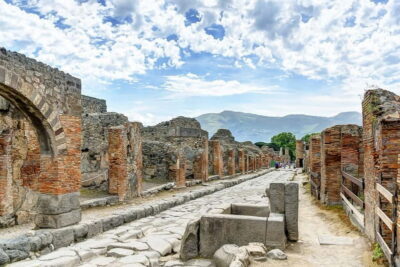 ★ 4.9Pompeii Ruins Private Tour with Optional Skip-the-Line EntryFrom $254732 reviews
 ★ 5.0Pompeii private tour with an Official GuideFrom $107631 reviews
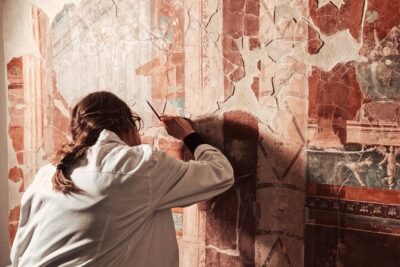 ★ 5.0Pompeii Private Tour with an Archaeologist and Skip The Line – 3 hoursFrom $302564 reviews
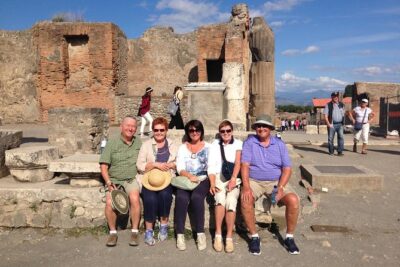 ★ 5.0Visit in Pompeii – Pompeii Private Tour with AdaFrom $229436 reviews
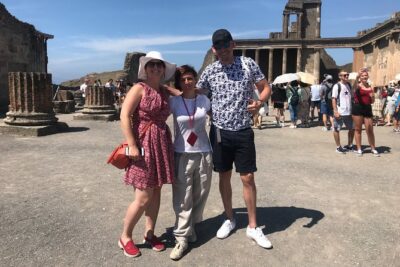 ★ 5.0Pompeii Private Tour with an Archaeologist and Skip The LineFrom $375391 reviews
 ★ 5.0Pompeii Vineyard Escape: Private Wine Tasting & LunchFrom $66329 reviews
 ★ 5.0Private Day Tour to Vesuvius, Herculaneum & Pompeii with Pick UpFrom $120279 reviews
 ★ 5.0Guided Small Group Tour Max 6 People with Private OptionFrom $168269 reviews
Browse the lists this tour appears in