
Reviewed · GUIDED
From Naples: Pompeii Wheelchair-accessible with a Guide
Pompeii without the usual hurdles sounds like a win. This wheelchair-first tour gets you from Naples to Pompeii with a ramp-equipped van, then guides you along an access-designed route inside the excavations. I like that the day is built around real logistics: you start with tickets in hand at Piazza Anfiteatro, and your guide keeps the stories clear and useful as you move through the ruins. The one thing to plan for is the terrain: Pompeii still has steep and uneven areas, so you may need a capable chair and sometimes brief help for harder spots.
The standout love for me is the combination of skip-the-line access plus a professional guide who can point out what matters in the limited time you have. Second, I appreciate the inclusion of entrance fees for the wheelchair visitor (and a personal assistant, with proof), which makes the $88 price feel more reasonable than a “ticket-only” add-on. The possible drawback: if your chair is not great on bumps or slopes, you’ll want to bring an all-terrain setup, because not every patch will feel smooth.
Key Takeaways Before You Go
- Ramped transfer from Naples in a vehicle that can handle 1 wheelchair user plus up to 4 passengers
- Meet at Piazza Anfiteatro for tickets and a clear start inside Pompeii
- Accessibility-minded route with ramps designed to reduce architectural barriers
- Skip-the-line via a separate entrance so you lose less time to queues
- Terrain reality check: steep, uneven ground means you should use an all-terrain wheelchair if possible
In This Review
- Ramped Van From Naples: What This Logistics-Heavy Tour Does Right
- Getting Tickets at Piazza Anfiteatro (and Why It Saves Energy)
- A Wheelchair-Accessible Pompeii Route: What You’ll See in 3 Hours
- The route reality: accessible, not frictionless
- You may also see active excavation areas
- Free Time in Pompeii: How to Use It Without Getting Stuck
- The Guide Makes or Breaks It: Clear Explanations and Real Adjustments
- Vehicle Capacity and Driver Help: Small Details That Matter
- Price and Value: Why $88 Can Make Sense Here
- What to Bring (So You Don’t Lose Time at the Gate)
- Who This Tour Fits Best (and Who Should Rethink It)
- Should You Book This Pompeii Wheelchair-Accessible Tour?
- FAQ
- Is this tour wheelchair accessible?
- Where do I meet the guide and get tickets?
- How long is the Pompeii visit?
- Do wheelchair users get free admission?
- Is pickup from Naples included?
- Can I choose private options?
- What languages are the guides offered in?
- What should I bring for the tour?
- Are there restrictions on bags or food?
- Is cancellation flexible?
Ramped Van From Naples: What This Logistics-Heavy Tour Does Right
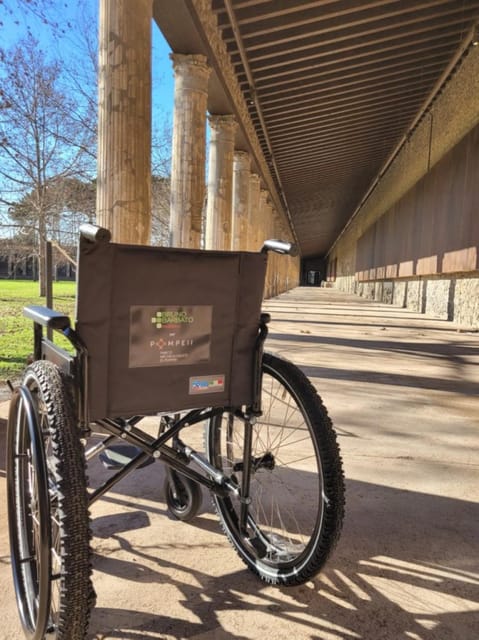
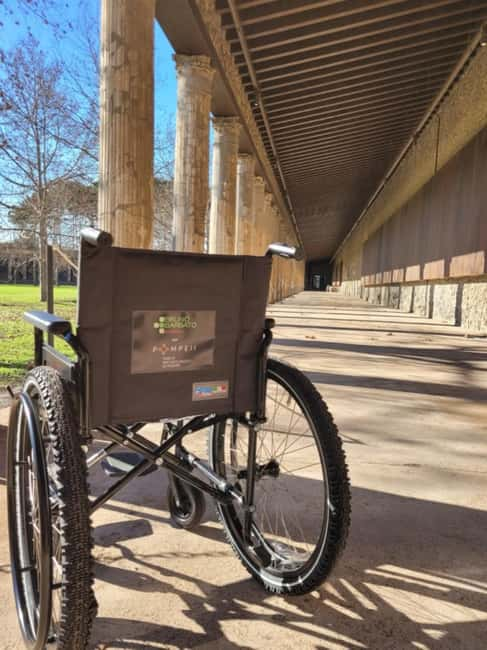
This is the kind of tour that’s built for a specific problem, not just sold as “accessible.” The big win is the wheelchair-accessible vehicle: it comes with a ramp, and the driver assists with getting in and out. That matters because the hardest part of visiting famous sites isn’t the sightseeing. It’s getting through doors, steps, and transfers without turning the whole day into a struggle.
You have options on how you arrive, depending on what you select. The main experience is a transfer option from Naples, where the van takes you to Pompeii. If you choose a private alternative, you can also opt for a private car plus guide or a private guide only, meeting you at the Pompeii Amphitheater entrance area. Either way, the goal stays the same: fewer unknowns and less time spent figuring out where to go.
Also pay attention to the group size. This is set up as a private group, not a crowded pack. That usually makes it easier for your guide to adjust pacing and keep everyone moving at a comfortable speed—especially important when your route includes ramps and access points that don’t work like a smooth city sidewalk.
Getting Tickets at Piazza Anfiteatro (and Why It Saves Energy)

The tour starts with a very practical setup: you meet your guide at the Pompeii Entrance, specifically at Piazza Anfiteatro, and you receive the tickets there. That means you’re not spending your energy later hunting for the right line or trying to match faces to meeting points while you’re already tired.
Pompeii is busy, so the skip-the-line element is more than a convenience. It can mean the difference between arriving stressed and arriving ready to actually enjoy the ruins. Once you’re in, your guide leads you through a wheelchair-accessible itinerary with paths and ramps meant to reduce architectural barriers.
One more thing that’s easy to overlook: for entry, you’re expected to provide the names of all travelers and their dates of birth. And if you want the accessibility to be truly smooth, the operator asks for details about your wheelchair size and needs after booking. That’s not busywork. It’s what helps them match you with the right vehicle setup and plan the route accordingly.
More guided visits to choose
- Pompeii: Entry Ticket and Guided Tour with an Archaeologist
★ 4.8 · 19,459 reviews - Pompeii: Skip-the-Line Entrance Ticket with Audio Guide
★ 4.0 · 2,509 reviews - Pompeii: Skip-the-line-Ticket and Guided Tour
★ 4.6 · 1,152 reviews
A Wheelchair-Accessible Pompeii Route: What You’ll See in 3 Hours
You’re visiting one of the world’s most famous archaeological sites, but this is not a “wander until you’re done” kind of trip. It’s built around a guided visit that lasts about 3 hours, plus time to breathe on your own afterward.
Your guide explains the Roman world in a way that’s meant to work while you’re seated and moving through the excavations. Expect stories about daily life—how people lived, what the city looked like, and why Pompeii matters so much. Pompeii was buried by ash after Vesuvius erupted in 79 A.D., and that sudden stop is exactly why archaeologists have such a detailed snapshot of ancient Roman life.
The route reality: accessible, not frictionless
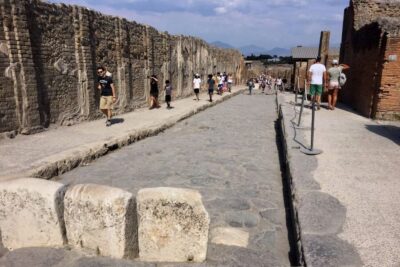
The tour follows a path inside the excavations designed to be wheelchair accessible, and you’ll use ramps that help overcome barriers. But Pompeii isn’t modern flat ground. Even with paved routes where available, there can be slopes, changes in elevation, and uneven patches that can feel like a mini obstacle course.
That’s why the tour specifically recommends bringing an all-terrain wheelchair with rugged wheels. If you’re using a chair designed only for indoor smooth floors, you might find parts of the route more challenging. If you do have the sturdier wheels and a chair that handles bumps well, you’ll likely feel more confident on the day.
You may also see active excavation areas
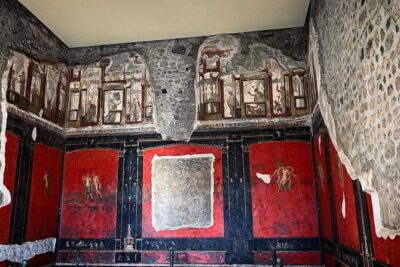
One of the most interesting surprises in this kind of guided approach is getting to see areas where work is still happening. Pompeii isn’t a museum that’s frozen in time—it’s a living archaeological site. Your guide may help you notice what’s being uncovered and how that changes what you think you’re looking at.
Free Time in Pompeii: How to Use It Without Getting Stuck
After the guided portion, you’ll have free time. This part is important because it lets you do the human thing: go back for the photo you missed, pause when something catches your eye, or just take a breather.
The catch is that free time can turn into stress if you’re not sure where you can comfortably stay in your chair. Since Pompeii has accessibility features, but also terrain challenges, I’d plan your free-time goals around what’s easiest for you:
- Aim to return to areas you’ve already visited with the guide, so you’re not moving into unknown ground.
- If your chair needs occasional assistance, treat this time as a chance to rest rather than “push farther.”
Your guide will have already shown you key highlights, which means your free time can feel like relaxing, not problem-solving. Use it to absorb what you learned, not to test your patience.
The Guide Makes or Breaks It: Clear Explanations and Real Adjustments
A guided tour inside Pompeii can go two ways. You either get a fast recitation of dates and stones, or you get explanations that help you connect what you see to how people lived.
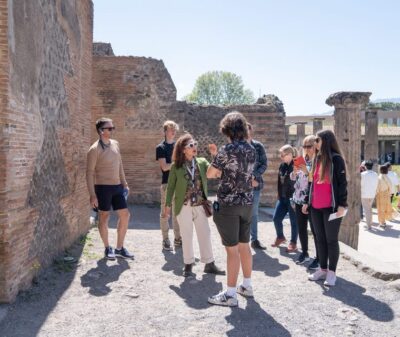
This experience leans strongly toward the helpful side. Your professional guide is there to interpret the ruins in a way that works as you move through the route. That means you’ll spend less time trying to guess what you’re looking at, and more time understanding why it matters.
From the way guides are described on this kind of accessible visit, the best ones do two things well:
- They keep explanations clear and organized, so the story doesn’t get lost while you’re navigating ramps and paths.
- They adapt to the group, including sensitivity to a wheelchair user’s needs.
If you get an English-speaking guide like Jasmine, you can expect instruction that’s both informative and supportive, with a real focus on making the day doable. Even with an accessible route, some sections may require standing or short walking breaks for certain viewpoints. If that’s you, it helps to know you’ll have help and guidance on where the harder moments are.
Vehicle Capacity and Driver Help: Small Details That Matter
The tour’s vehicle setup is pretty specific. The “special” vehicle can accommodate 4 passengers plus 1 person in a wheelchair. It has a ramp, and the driver helps with boarding and leaving the vehicle.
That helps in two ways. First, it reduces the number of transfers you need to manage. Second, it avoids the awkward situation where people with mobility needs are squeezed into a vehicle that technically fits them but doesn’t make it easy.
Also note the tour rules inside the van: no smoking, and no alcohol or drugs. Food and drinks aren’t allowed in the vehicle either, and you can’t bring bags. Those rules may sound minor, but on an outing with a wheelchair, having less clutter and fewer items to manage can actually make the trip smoother.
Price and Value: Why $88 Can Make Sense Here
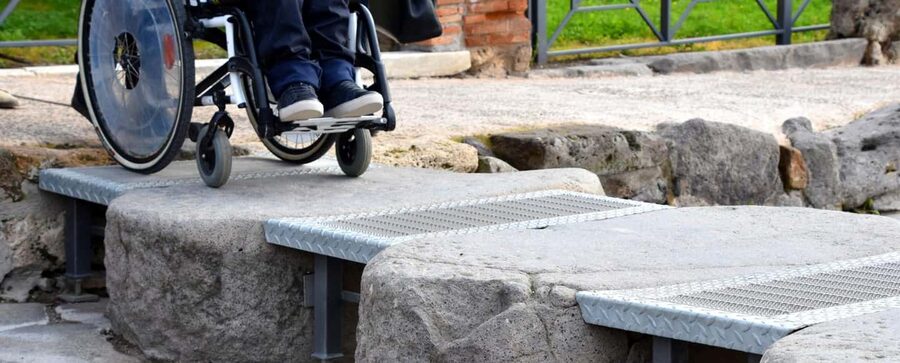
At $88 per person for a 3–4 hour experience, this tour isn’t the cheapest way to reach Pompeii. But it also isn’t “just a ticket.” For that price, you’re typically getting:
- Private, guide-led access to Pompeii
- A wheelchair-accessible transfer with ramp support (when you book that option)
- Pompeii fees, including free admission for wheelchair users and their personal assistant with proof of identification from your home country
That combination is where the value comes from. If you were to do this yourself, you’d likely pay for separate transportation, arrange accessibility help, buy tickets, and spend extra time coordinating entry. Here, those moving parts are bundled into one plan.
If you’re traveling with a personal assistant, confirm how your proof of identification applies to the “free admission” benefit. The tour notes that it’s available with documentation, which can meaningfully improve the cost for people who need extra support.
What to Bring (So You Don’t Lose Time at the Gate)
Keep it simple. You should bring:
- Passport or ID card (you need it for entry)
- Sunglasses and a hat (Pompeii is outdoors and bright)
Also, be ready for the wheelchair planning piece. If you haven’t already provided wheelchair dimensions and needs after booking, do that. It helps the operator match you to the right setup.
Since bags aren’t allowed and food/drink aren’t allowed in the vehicle, pack light. If you need essentials for your chair or comfort, plan how you’ll carry them without violating the restrictions.
Who This Tour Fits Best (and Who Should Rethink It)
This experience is a strong match if you:
- Want a guided Pompeii visit that’s designed around wheelchair access
- Prefer a private group setting over a large tour crowd
- Would benefit from being met at the entrance with tickets ready, rather than troubleshooting lines
It may be less ideal if:
- Your wheelchair is not suited to uneven ground and you can’t bring an all-terrain version
- You’re expecting the day to feel entirely level and smooth. It might not.
That said, even if you can do only part of the day comfortably, the accessibility-minded route plus guide support can still make the visit realistic.
Should You Book This Pompeii Wheelchair-Accessible Tour?
If Pompeii is on your list and mobility access is your main concern, I think this is the kind of tour worth booking. The ramped van, the guided route with ramps, and the ticket handling at Piazza Anfiteatro remove many of the usual stress points.
I’d book it if you want structure, clear explanations, and fewer logistics headaches. I’d also book it if you value time: skip-the-line access means more time for the ruins, less time in a queue.
The key decision factor is your wheelchair setup for real-world ground. If you can bring a chair with rugged wheels and you’re comfortable with some slope and bumping, you’ll likely feel more at ease. If you can’t, consider whether you can handle short, assisted moments or brief standing/walking as needed for specific spots.
Overall: this isn’t a “sit back and everything is automatic” tour. But it is one of the better ways to make Pompeii feel possible and meaningful without turning it into a logistics battle.
FAQ
Is this tour wheelchair accessible?
Yes. The route inside Pompeii is described as wheelchair accessible, with ramps designed to reduce barriers. The tour also uses a ramp-equipped vehicle for transfers.
Where do I meet the guide and get tickets?
Meet your guide and get your tickets at the Pompeii Entrance. The guide meets you at the Pompeii Anfiteatro Entrance / Piazza Anfiteatro area.
How long is the Pompeii visit?
The guided ruins portion is about 3 hours, and the overall activity is listed as 3 to 4 hours.
Do wheelchair users get free admission?
Yes. Pompeii fees are included, and the tour states that wheelchair users get free admission. A personal assistant may also be admitted free with proof of identification from their home country.
Is pickup from Naples included?
Pickup is included if you select the option with transfer. Pickup can be from your hotel, Naples cruise terminal, train station, or airport.
Can I choose private options?
Yes. You can choose a private tour with a private car and guide, or a private tour with only a guide (both meeting at the entrance near the Pompeii Amphitheater).
What languages are the guides offered in?
The live tour guide is available in English, Spanish, Italian, French, and German.
What should I bring for the tour?
Bring your passport or ID card, plus sunglasses and a hat.
Are there restrictions on bags or food?
Yes. Smoking, alcohol, and drugs are not allowed in the vehicle. Bags are not allowed, and food and drinks are not allowed in the vehicle.
Is cancellation flexible?
The tour offers free cancellation up to 24 hours in advance for a full refund.
More Guided in Pompei Campania
- Pompeii: Entry Ticket and Guided Tour with an Archaeologist★ 4.8 · 19,459 reviews
- Pompeii: Skip-the-Line Entrance Ticket with Audio Guide★ 4.0 · 2,509 reviews
- Pompeii: Skip-the-line-Ticket and Guided Tour★ 4.6 · 1,152 reviews
- Pompeii: Guided Tour with Skip-the-Line Entry★ 4.9 · 812 reviews
- Pompeii: Skip-the-Line Entry Ticket with Digital Guide App★ 4.1 · 770 reviews
More Tour Reviews in Pompei Campania
- Pompeii: Entry Ticket and Guided Tour with an Archaeologist★ 4.8 · 19,459 reviews
- Pompeii: Small Group Tour with an Archaeologist★ 4.8 · 12,264 reviews
- Pompeii: Skip-the-Line Entrance Ticket with Audio Guide★ 4.0 · 2,509 reviews
- Naples: Pompeii and Mt. Vesuvius with Lunch and Wine Tasting★ 4.5 · 2,454 reviews
- Pompeii: Skip-the-line-Ticket and Guided Tour★ 4.6 · 1,152 reviews
Just reviewed: more Pompei Campania tours and day trips




Guided, compared.
 ★ 4.8Entry Ticket and Guided Tour with an ArchaeologistFrom $3519,459 reviews
 ★ 4.2Entry Ticket with Optional Audio GuideFrom $2612,360 reviews
 ★ 4.0Skip-the-Line Entrance Ticket with Audio GuideFrom $392,509 reviews
 ★ 4.3Guided Walking Tour with Entrance TicketFrom $501,423 reviews
 ★ 4.6Skip-the-line-Ticket and Guided TourFrom $641,152 reviews
 ★ 4.9Guided Tour with Skip-the-Line EntryFrom $58812 reviews
 ★ 4.1Skip-the-Line Entry Ticket with Digital Guide AppFrom $22770 reviews
 ★ 5.0Skip the Line Guided Tour of Pompeii led by an ArchaeologistFrom $95703 reviews