
Reviewed · ANCIENT POMPEII HISTORY TOURS
Pompeii: living with the volcano
Pompeii feels uncomfortably close to the past. This private, English-guided walk, led by Michele Arpa, turns the ruins into a daily-life storyline set just one day before the 79 AD eruption—so you see the city with the clock ticking. You’re not just looking at stones; you’re following how people ate, voted, watched fights, and relaxed, right up to the moment the volcano changed everything (Pompeians living on borrowed time).
I especially love the day-to-day details that make the site feel human: shops and streets, a take-away meal vibe, wealthy domus life, and even the scratched-in election names on walls. I also like how the route balances big public spaces (the theater/amphitheater area) with quieter stops (like a spa and the civil forum), so the tour lands both emotionally and geographically.
One consideration: the price includes the guide service, but entrance tickets aren’t included, so you’ll want to budget for site admission on top of the tour cost. Also, Pompeii involves uneven ground and the route includes roads that aren’t recommended for mobility difficulties, even though the tour is only about 2 hours.
In This Review
- Key things to know before you go
- A 2-hour walk that feels like Pompeii is still running
- Finding your starting point at the Pompeii Archaeological Park
- Stop 1: Pompeii’s Archaeological Park, told like you’re walking with residents
- Walking the streets, then understanding what you’re actually seeing
- The theater/amphitheater mood: gladiators, noise, and crowd energy
- Eating like it’s 1st century BC: quick meals, not museum snacks
- Domus and the wealthy end of town: luxury as a contrast
- Politics on the walls: election candidates written into daily life
- A spa moment: relaxation before the rupture
- The civil forum: where decisions and community life met
- Remembering those lost in the final frantic hours
- Why the volcano theme makes Pompeii hit harder
- Michele Arpa’s guide style: English storytelling with practical clarity
- Price and value: what your $33.36 really buys
- Timing, pacing, and how to plan your walk
- Who should book this Pompeii tour, and who should rethink it
- Should you book Pompeii: living with the volcano?
- FAQ
- How long is the Pompeii: living with the volcano tour?
- What language is the tour offered in?
- Is the entrance ticket included in the price?
- Is this tour private?
- What time does the tour run?
- Is the tour accessible for visitors with mobility difficulties?
Key things to know before you go
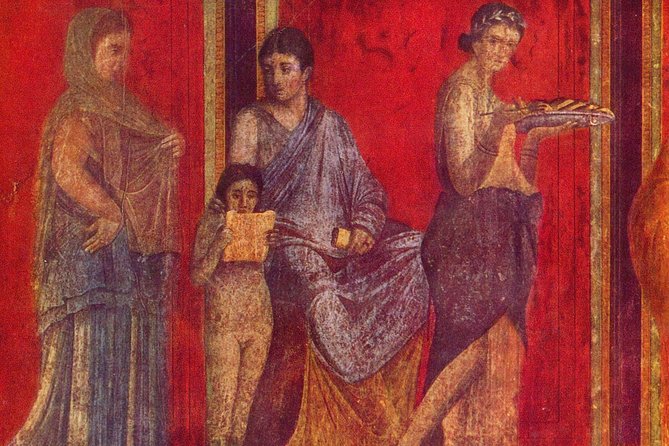
- A one-day-before-79-AD framing: the story is built around what it felt like to live in Pompeii the day before the eruption.
- Private tour feel: only your group joins, which usually makes it easier to ask questions and keep a steady pace.
- Public life and private life, side by side: you get the amphitheater/theater experience plus residences and civic spaces.
- Election graffiti and names: you’ll focus on how politics showed up in everyday surfaces, not just in big monuments.
- Spa and forum stops: the tour doesn’t stay in one mood; it moves from tension to routine and back again.
- Admission tickets extra: plan for entrance fees since only the guide service is included.
A 2-hour walk that feels like Pompeii is still running
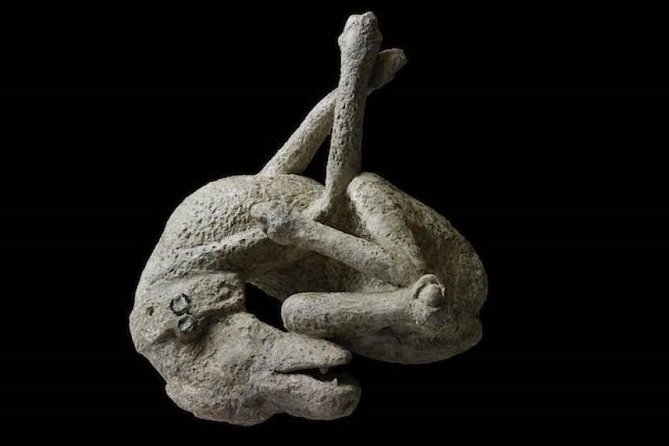
This tour is built for people who want more than a checklist of highlights. In about 2 hours, you get a guided walk through Pompeii’s major spaces while staying anchored in a single narrative: the city as it functioned right before catastrophe.
I like that the timing forces good focus. You won’t get lost in information overload, and you’ll still come away with a sense of how the city worked—where people gathered, where they ate, where they argued politics, and where they went to unwind.
And because the guide uses that one-day framing, the ruins stop feeling like a “theme park of history.” They start feeling like a place where people had routines and opinions—then the volcano cuts the story off.
More of the story behind the stones
- 2 hours Pompeii Tour with Local Historian – Ticket Included
★ 5.0 · 335 reviews - Stories of Pompeii: Small Group tour with archeology expert guide
★ 5.0 · 191 reviews - Ancient Pompeii Private Tour: Skip the Line & Kid-Friendly Option
★ 5.0 · 167 reviews
Finding your starting point at the Pompeii Archaeological Park
You meet at the Pompeii Archaeological Park (80045 Pompei, Metropolitan City of Naples). The tour ends back at the meeting point, so you don’t need to worry about ending up across town with no idea how to get back.
The park opens between 9:30 AM and 11:30 AM each day, and the tour runs for about 2 hours (approx.). That morning timing matters. Pompeii can be crowded, so earlier hours tend to mean smoother walking and easier attention for the details your guide points out.
It’s also listed as near public transportation, which helps if you’re arriving without a rental car. If you’re driving, keep in mind you’ll still have to deal with getting yourself and your group into the park area on time.
Stop 1: Pompeii’s Archaeological Park, told like you’re walking with residents
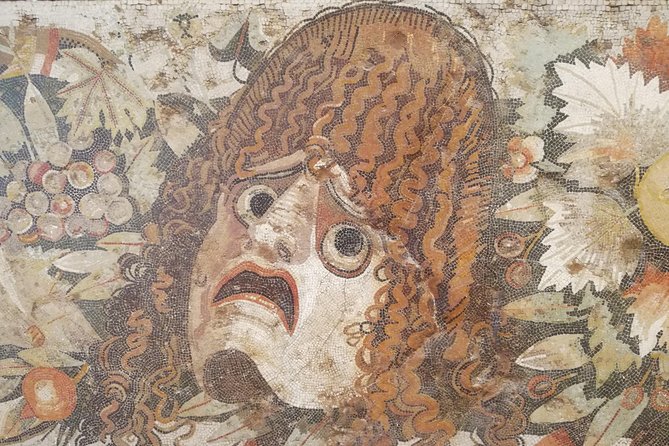
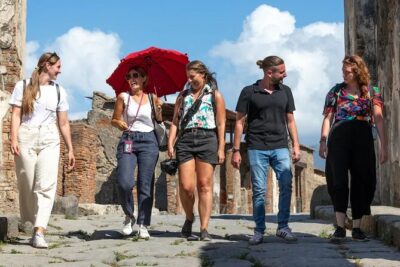
This is the main event: a guided exploration of the buildings, shops, streets, and civic spaces of Pompeii, positioned as one day before the eruption of 79 AD. The tour’s big trick is that it treats the ruins like a living city—so each stop is explained as if you’re there in the moment.
Walking the streets, then understanding what you’re actually seeing
At Pompeii, the temptation is to look at a ruin and think: “What was it?” A good guide makes the question more precise: “Who used this, when, and why?”
You’ll follow streets and building fronts with the mindset of an inhabitant, so things like layout and proximity start to make sense. Instead of random stonework, you start noticing patterns: where daily commerce likely happened, where people congregated, and how civic life connected to everyday movement.
The theater/amphitheater mood: gladiators, noise, and crowd energy
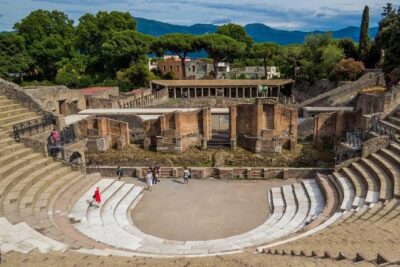
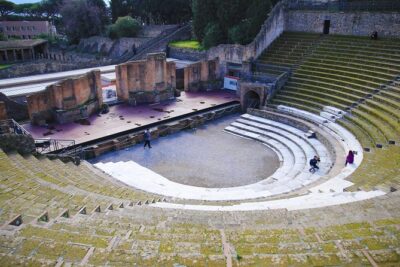
You’ll go with the Pompeians to the theater and the immense amphitheater area. The focus here isn’t just architecture—it’s the feeling of public spectacle and brutal entertainment, including the acrid taste described around gladiator fights.
That’s a useful approach because the amphitheater is one of those places where the scale is obvious, but the atmosphere isn’t. Once you understand the emotional temperature of the day, you read the site differently. It’s not only about seeing the structure; it’s about understanding what the crowd came to do.
More climbs up to the crater rim


Eating like it’s 1st century BC: quick meals, not museum snacks
The tour also includes a stop for a take-away meal setting from the 1st century BC. Even without a literal reenactment, this kind of explanation is valuable because it grounds you in ordinary needs: hunger, speed, routine, and social rhythm.
If you’re the type who likes travel experiences that connect to daily life rather than only royal power or war, this food stop helps you feel how normal people lived—even in a city that now looks frozen.
Domus and the wealthy end of town: luxury as a contrast
You’ll also explore the idea of dining or being a guest in the luxurious domus of the richest people. This contrast matters. Pompeii isn’t only “everyday life” and it isn’t only “elite art and marble.” The city had layers, and the tour highlights them by moving you between public entertainment, everyday commerce, and high-status homes.
Even a brief explanation of wealth helps you understand why some buildings look the way they do. The domus areas can feel like they’re from another world if you view Pompeii as one uniform class. With a guided narrative, you start seeing that the city was a social mix with clear boundaries.
Politics on the walls: election candidates written into daily life
One of the standout points in the tour storyline is reading the names of candidates for magistrates’ elections. That’s powerful because it makes politics tactile.
It also changes how you interpret inscriptions. Instead of treating written names as decorative archaeology, you view them as real civic messaging—part of how people tried to influence power in a normal day. That simple shift can make Pompeii feel much less like a distant tragedy and much more like a place with opinions.
A spa moment: relaxation before the rupture
The itinerary includes a moment of relaxation at the spa. This is more than a “nice break” stop. It shows that daily life had downtime and routines—people weren’t only working and worrying.
I like that the tour gives you this tonal reset. When you later return to civic space (like the forum), you’re carrying the contrast of what normal life felt like versus what the eruption would take away.
The civil forum: where decisions and community life met
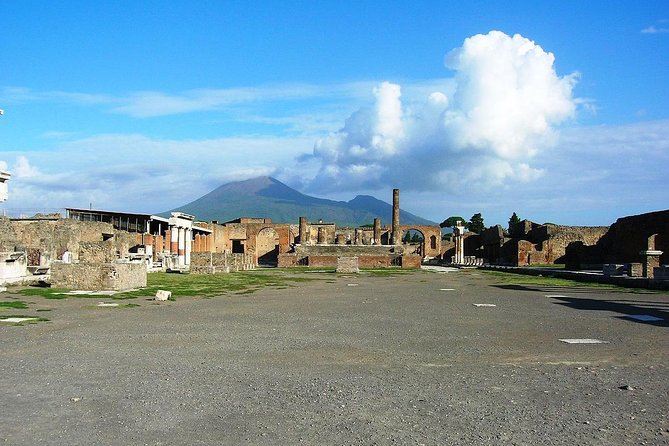
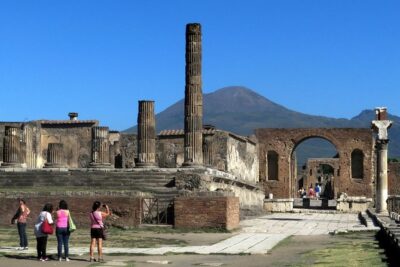
Finally, you’ll reach the splendid square of the civil forum. This is where Pompeii shifts from personal life and entertainment into the shared center of the city—where collective identity showed up.
The guided explanation helps you see the forum not just as a pretty architectural set-piece, but as a practical hub. If you want to understand how a Roman city functioned day to day, the forum-type space is a key piece of that puzzle.
Remembering those lost in the final frantic hours
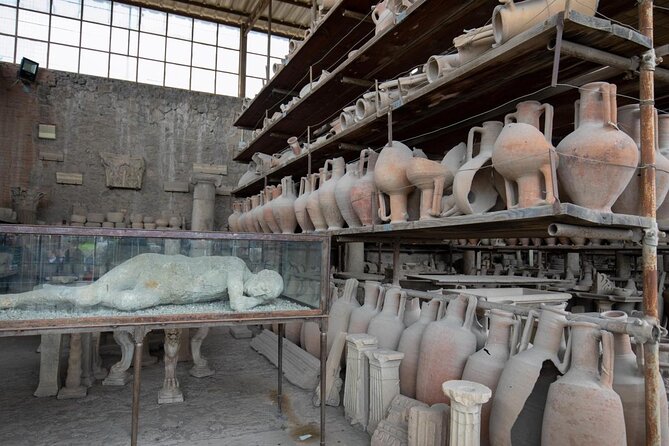
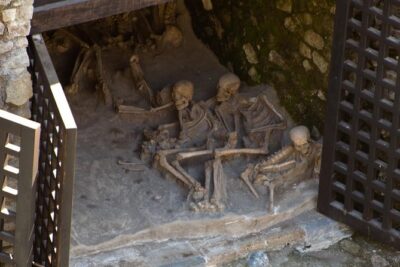
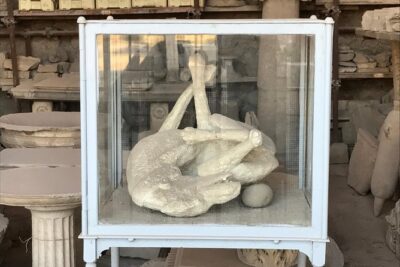
The tour also includes a somber thread: you meet the Pompeians who lost their lives during the frantic eruption moments, covered by volcanic ash and preserved by the archaeological work that came later.
This part is important for balance. After a tour built around ordinary life—shops, homes, elections—you land on what the eruption ended. The emotional effect can be strong, and it works best when you let the guide’s framing do its job rather than rushing through.
Why the volcano theme makes Pompeii hit harder
Many Pompeii visits feel like a history lecture. This one tries to make you think like a resident. When the story is set one day before the eruption, you experience the city’s normal patterns while also knowing—through the guide’s framing—that time is running out.
That contrast is the value. It makes the ruins feel like interrupted lives, not only “ancient sights.”
And it changes what you notice. Instead of only looking for the biggest structures, you start paying attention to daily details: where someone would grab food, how civic life was advertised, how public entertainment fit into the day, and where relaxation could happen.
Michele Arpa’s guide style: English storytelling with practical clarity
Michele Arpa is the guide for this experience. The tone coming through in the way the tour is described is personal and human—someone who wants Pompeii to feel alive, not just explained.
A theme in the tour presentation is that the guide links spaces together logically: theater to streets, luxury domus to civic squares, and elections to public surfaces. That makes your time more efficient. You’re not wandering; you’re following cause-and-effect.
Language is English, which matters because Pompeii’s details can be subtle. If you can follow the story easily, you’ll probably remember more afterward—and you’ll understand what you saw instead of wondering about it later.
Price and value: what your $33.36 really buys
The tour price is $33.36 per person, and the listed inclusion is guide service only.
That means you’ll likely pay two things:
- the guided tour fee (included)
- entrance tickets to the site (not included), plus any site-related fees and taxes listed separately
This price can still be good value if you like guided storytelling and want to avoid the trial-and-error of figuring out what matters most. Pompeii is big, and self-guiding without a framework can turn into long walks with lots of “cool, but what is this?” moments. Here, you’re paying to make the time matter.
If you’re the type who loves going at your own pace for longer than 2 hours, you might prefer a ticket + self-guided plan. But if you want direction and interpretation in a short window, the guide-inclusive model usually makes the day feel less scattered.
Timing, pacing, and how to plan your walk
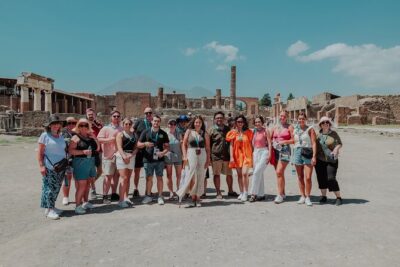
This is a private tour, so only your group participates. Private usually means better pacing control—especially on uneven surfaces—because you’re not stuck waiting for a large group to catch up.
The duration is about 2 hours, which is a sweet spot for Pompeii if you’re not trying to conquer the whole park. You’ll still be doing real walking, though. The tour is marked for people with moderate physical fitness, and it’s not recommended for visitors with mobility difficulties due to the particular state of the roads.
Also note: the tour runs within that morning window (9:30–11:30). If you’re connecting to other plans after, build in buffer time. Pompeii exits and meet-up points can take a few extra minutes, even when your tour ends right where it started.
Who should book this Pompeii tour, and who should rethink it

I think this tour is best for you if:
- you want a guided narrative, not just a map of ruins
- you like the human scale of Pompeii—everyday life, politics, food, and public spectacle
- you have limited time and want the highlights tied into a single storyline
- you appreciate a guide who can explain what symbols and spaces likely meant in context
I’d rethink it if:
- mobility is a major issue for you, since the road/ground conditions are specifically noted as not recommended for mobility difficulties
- you want a longer, deeper archaeological sweep—this is about a focused walk, not hours of free roaming
- you hate the idea of paying separate entrance tickets on top of the tour fee
Should you book Pompeii: living with the volcano?
If you’re visiting Pompeii for the first time and you want the ruins to feel like a real place with real people—complete with meals, politics, and the nervous rhythm of a city that’s about to end—then yes, book it. The 2-hour format is efficient, and the one-day-before-79-AD framing is a smart way to make the site emotionally and intellectually stick.
Just go in with the right expectations: you’ll need to budget for entrance tickets, and you’ll be walking on uneven historic ground. If that’s fine for you, this is a strong way to get more meaning out of less time—without turning Pompeii into a checklist.
FAQ
How long is the Pompeii: living with the volcano tour?
It lasts about 2 hours (approx.).
What language is the tour offered in?
The tour is offered in English.
Is the entrance ticket included in the price?
No. Entrance tickets to the site are not included, and all fees and taxes are also not included.
Is this tour private?
Yes. It’s a private tour/activity, and only your group will participate.
What time does the tour run?
The listed opening hours for this activity are Monday through Sunday, 9:30 AM to 11:30 AM.
Is the tour accessible for visitors with mobility difficulties?
The tour is not recommended for visitors with mobility difficulties due to the particular state of the roads. It does require moderate physical fitness.
More Tour Reviews in Pompeii
- Pompeii Small Group Tour with an Archaeologist★ 5.0 · 6,593 reviews
- Discover the Ancient Ruins of Pompeii: Day Trip from Rome★ 3.5 · 2,247 reviews
- Pompeii and Herculaneum Small Group Tour with an Archaeologist★ 5.0 · 1,350 reviews
- Skip the Line Guided Tour of Pompeii led by an Archaeologist★ 5.0 · 703 reviews
- Pompeii Ticket + Tour with Optional Tasting Experience at Pompeii★ 5.0 · 663 reviews
Vesuvius, More Climbs to the Rim
- Pompeii Guided Tour & Horse Riding on Vesuvius with Lunch★ 5.0 · 419 reviews
- Private Day Tour to Vesuvius, Herculaneum & Pompeii with Pick Up★ 5.0 · 279 reviews
- Pompeii and Mount Vesuvius Small Group Tour★ 4.5 · 233 reviews
- Mount Vesuvius Tour from Pompeii Led by an Expert Guide★ 5.0 · 185 reviews
- Horseback Riding on Vesuvius★ 5.0 · 144 reviews
The Story of the City, More Ways In
- Discover the Ancient Ruins of Pompeii: Day Trip from Rome★ 3.5 · 2,247 reviews
- 2 hours Pompeii Tour with Local Historian – Ticket Included★ 5.0 · 335 reviews
- Stories of Pompeii: Small Group tour with archeology expert guide★ 5.0 · 191 reviews
- Ancient Pompeii Private Tour: Skip the Line & Kid-Friendly Option★ 5.0 · 167 reviews
- Skip-the-Line Half-Day Private Tour Ancient Pompeii Highlights with Native Guide★ 5.0 · 146 reviews
Just reviewed: more Pompeii tours and day trips




Ancient Pompeii History Tours, compared.
 ★ 3.5Discover the Ancient Ruins of Pompeii: Day Trip from Rome2,247 reviews
 ★ 5.02 hours Pompeii Tour with Local Historian – Ticket IncludedFrom $48335 reviews
 ★ 4.8Discover Pompeii: French Walking Tour of the Buried CityFrom $41253 reviews
 ★ 5.0Stories of Pompeii: Small Group tour with archeology expert guideFrom $54191 reviews
 ★ 5.0Ancient Pompeii Private Tour: Skip the Line & Kid-Friendly OptionFrom $165167 reviews
 ★ 5.0Skip-the-Line Half-Day Private Tour Ancient Pompeii Highlights with Native GuideFrom $83146 reviews
 ★ 5.0Ancient Pompei in the afternoonFrom $254140 reviews
 ★ 5.0Fast Access Exclusive Private Ancient Pompeii Half Day Tour with Local GuideFrom $20354 reviews
Browse the lists this tour appears in