
Reviewed · POMPEII TOURS FOR KIDS & FAMILIES
Pompeii & Herculaneum Family Adventure | Guide+Transport+Tickets
Herculaneum makes ancient life feel close. This private family tour strings together two volcanic wrecks of 79 AD—starting with Herculaneum’s shockingly preserved streets—then moving to Pompeii’s bigger, louder ruins with hands-on kid-friendly stops. I like that the plan stays family-focused without turning into a boring museum shuffle.
I especially like the private Blue Badge guide time, which means your family can ask questions and move at a pace that works. I also like the way the itinerary mixes big “wow” scenes—like preserved wood and mosaics—with practical context, like how people ate, shopped, bathed, and traveled by sea.
One possible drawback: you’ll cover a lot of walking in one long day (about 8 hours), so comfortable shoes and sunscreen are not optional.
In This Review
- Key highlights you’ll feel right away
- Herculaneum First: Why This Day Starts With the Most Intense Ruins
- Inside Herculaneum: The Boat Pavilion and the Port Story That Clicks
- Carbonized Wood, the Antiquarium, and Why Some Materials Survive
- Shoreline Moments: Boathouses, Sea-Level Changes, and a Sensitive Human Story
- House of the Deer and Roman Luxury You Can Actually See
- Exercise Courtyard and the Emperor-Cult Hall: Civic Life, Not Just Homes
- Everyday Rooms: Baths, Shops, Mosaics, and Multi-Level Homes
- Pompeii Gets You Scale: Porta Marina, Basilica, and the Forum Engine
- The Macellum, Forum Baths, and Big Homes With Real Details
- Pompeii Streets, a Dollhouse View, the Theater, and the Antiquarium
- Price and Value: What $738.31 Buys You Here
- Practical Tips That Make the Day Easier
- Should You Book This Family Pompeii and Herculaneum Day?
- FAQ
- How long is the Pompeii & Herculaneum family adventure?
- Are tickets included and will we skip the line?
- Is pickup available, and where do they pick up from?
- Is the tour private and in English?
- Are meals included?
- What should we bring or prepare for?
- What happens if we need to cancel?
Key highlights you’ll feel right away
- Herculaneum’s preservation: carbonized wood and sealed rooms make daily life readable at street level.
- Roman port context: the Boat Pavilion turns trade and travel into something you can picture, not just facts.
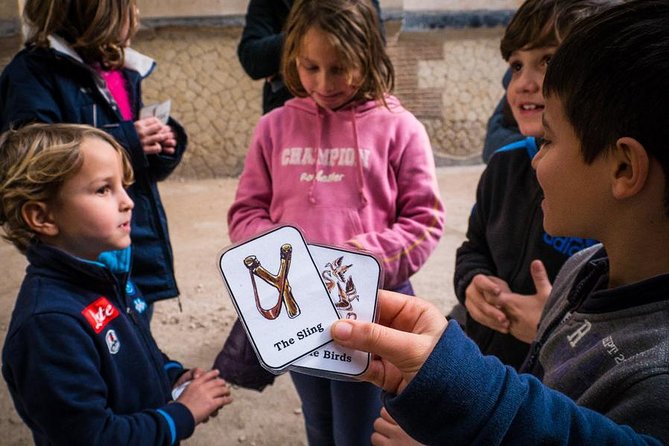
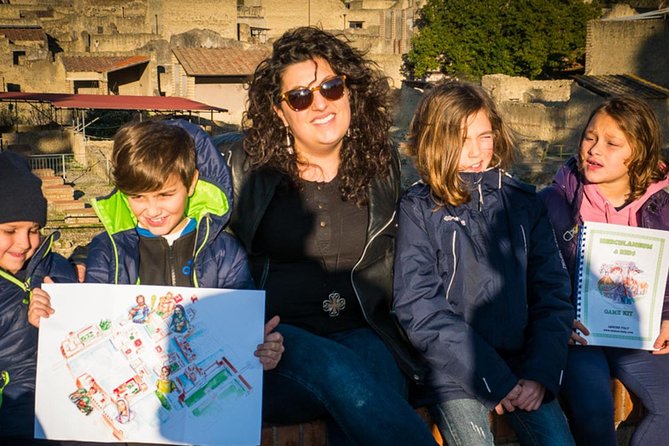
- Kids get structure: booklet, map, and simple activities help them stay engaged while you learn too.
- Skip-the-line tickets: less waiting means more time inside the sites.
- Pompeii at a human pace: the guide adjusts timing by day and season, when possible.
- Volcano views without the climb: you see Vesuvius from the lower viewpoints, not from the top.
Herculaneum First: Why This Day Starts With the Most Intense Ruins
Most Pompeii tours shove you straight into the biggest site. This one starts at Parco Acheologico di Ercolano, and that’s a smart move. Herculaneum is smaller, so it’s easier for kids to wrap their brains around the layout, and easier for adults to slow down and notice details.
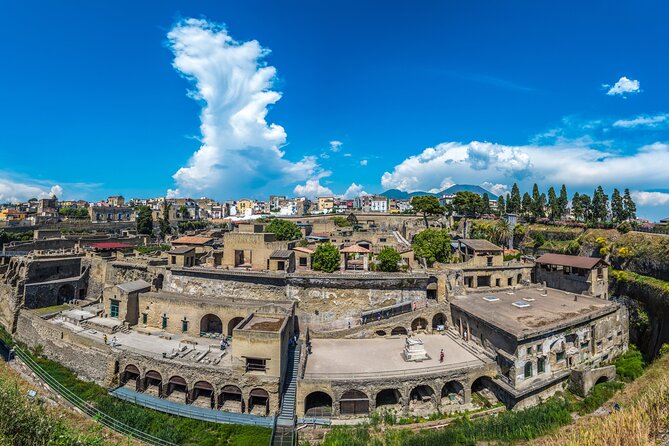
The reason Herculaneum hits so hard is the way it was buried. Pompeii was buried under ash and pumice; Herculaneum was overrun by a superheated surge. That different kind of burial helped preserve street corners, wall paint, wooden beams, and even everyday objects—so the town feels more like a place you could walk through, not a pile of stone.
Your guide helps you translate what you see into real daily rhythms. You’ll look at arcades, townhouses, and the ancient shoreline, with clear explanations of what a wealthy Roman seaside community did for work, family life, and leisure.
More tours that keep younger visitors along
- Ancient Pompeii Private Tour: Skip the Line & Kid-Friendly Option
★ 5.0 · 167 reviews - Pompeii Skip-the-Line Tour for Kids & Families with Archaelogist
★ 5.0 · 93 reviews - Skip-the-Line Pompeii Tour for Kids with an Archaeologist
★ 5.0 · 89 reviews
Inside Herculaneum: The Boat Pavilion and the Port Story That Clicks
After you get your bearings, you’ll spend time in the Boat Pavilion, where a Roman vessel and maritime equipment were discovered. This stop is a gift for families because it answers the question kids naturally ask: How did people get places? Boats make the eruption story less abstract and more human.
Adults tend to connect this stop to the bigger picture fast: Herculaneum was tied into trade and travel by sea, not only by land roads. Kids, meanwhile, usually love imagining fishermen and sailors preparing to depart from a small harbor.
If your family likes “objects with stories,” this is one of the most concrete places in the day. Seeing maritime gear preserved for nearly 2,000 years makes the town feel like it was functioning right up until the disaster.
Carbonized Wood, the Antiquarium, and Why Some Materials Survive
Next comes the Antiquarium in Herculaneum, where you’ll focus on artifacts that survived in startling condition. The key detail is that you’re looking at carbonized wood—pieces connected to furniture, doors, beams, and shelves. It’s the kind of fact that sounds odd until you see why it matters.
I love this stop because it teaches you how archaeology works in real time. Most sites give you stone and pottery; wood is rare. Here, the burial conditions helped seal wood and keep shapes recognizable, so you get texture and domestic context that you’d never see elsewhere.
For families, it’s often a breakthrough moment: you can look at an intact-looking wooden element and actually picture a home. For adults, it’s also a reminder that “ruins” can still preserve the everyday.
Shoreline Moments: Boathouses, Sea-Level Changes, and a Sensitive Human Story
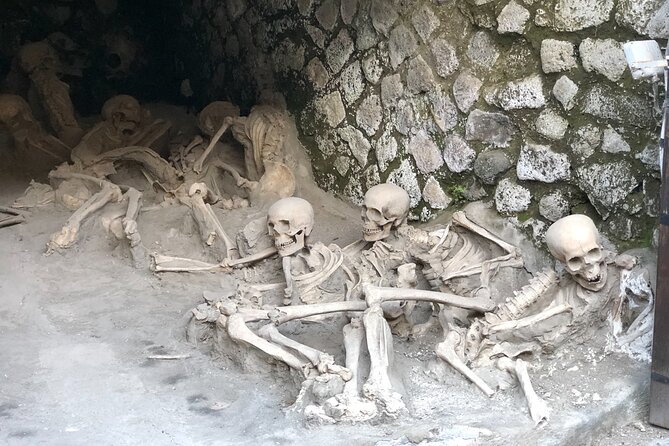
One of the most powerful parts of Herculaneum is the walk down to the ancient shoreline, where your guide helps you picture the city’s final geography. You’re not just looking at water access—you’re learning how residents might have tried to reach escape routes.
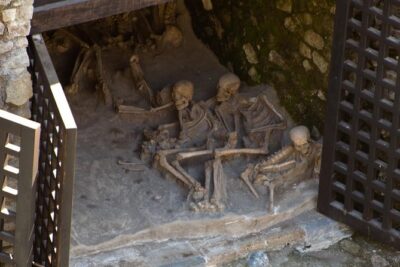
A standout detail here is the discovery from inside the boathouses: archaeologists found over 300 skeletons. The guide handles the section sensitively, so it becomes a way to understand the final minutes rather than a shock tactic.
For kids, the shoreline and sea-level changes can make the story click without needing graphic descriptions. For adults, this discovery changed how historians understand what people were doing when the eruption hit—people weren’t only hiding; some were trying to move toward sea escape.
House of the Deer and Roman Luxury You Can Actually See
Then you’ll head into the seafront villa known for its marble sculptures of deer attacked by dogs, called the House of the Deer. Kids often remember this as the dramatic garden set-piece, because the imagery feels like a scene from a play.
Adults tend to connect it to something practical: Roman luxury wasn’t only about money; it was about display, aesthetics, and daily rhythms. Terraces overlooking the coastline let you see why art and outdoor space worked together for wealthy residents.
The value of this stop isn’t just the art. It’s the way the guide helps you connect the visuals to how people entertained, relaxed, and showed status.
More of Herculaneum next door

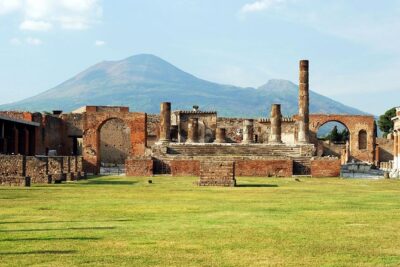
Exercise Courtyard and the Emperor-Cult Hall: Civic Life, Not Just Homes
Herculaneum wasn’t only domestic. You’ll also see public and semi-public spaces that explain civic priorities.
First up is the exercise courtyard, once used by young citizens for athletics and social life. Your guide helps you imagine the scene: kids running drills, teachers watching from shade, and events held on special days. It’s a reminder that education and discipline were public concerns, not private hobbies.
Later, you’ll enter a richly decorated hall linked to the cult of the Emperor. This is where Roman religion and civic power blend in a visible way. Frescoes and the explanation of groups like the Augustales help you grasp local social hierarchy—especially how freedmen could gain prestige through public roles.
It’s one of the more atmospheric spaces in Herculaneum because it gives you color, symbolism, and a sense of ceremony—without requiring you to know Latin or mythology.
Everyday Rooms: Baths, Shops, Mosaics, and Multi-Level Homes
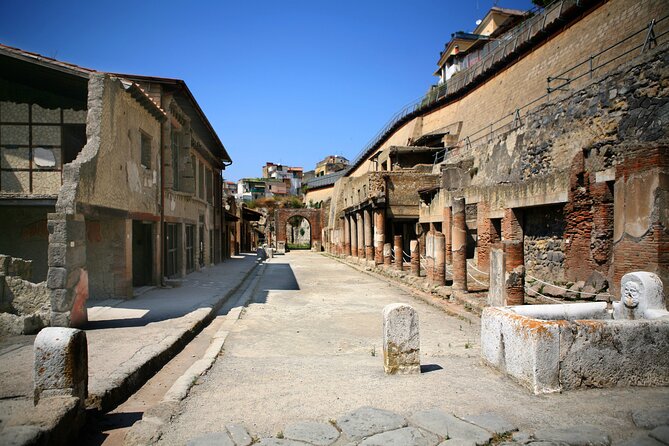
One of the best things about Herculaneum is that it doesn’t just show “big art.” It shows daily life in a way you can walk through.
You’ll see a celebrated residence reopened after restoration, where you can view preserved wall paintings, wooden shutters, and upper-floor structures. This multi-level layout is a big deal for families because it makes the house feel like a lived-in structure, not flat ruins.
Then there’s an ancient shop with rows of terracotta jars set into a marble counter (cucumae). The jars help you understand how food and drinks were stored and served. It’s close to how a modern café or takeaway works—just with Roman materials and Roman rhythms.
You’ll also get a standout mosaic house: the Neptune and Amphitrite mosaic, with deep blues and golden glass tesserae. This is the kind of detail that works on both levels: kids see the colors, and adults can appreciate the skill and the cost of making a floor like this.
Finally, you’ll visit the women’s section of the public baths, including changing areas and warm/hot rooms. Baths in Roman cities weren’t only hygiene. They were social time. Benches, painted walls, and surviving shelving help you see how women gathered, prepared, and talked through routines.
Pompeii Gets You Scale: Porta Marina, Basilica, and the Forum Engine
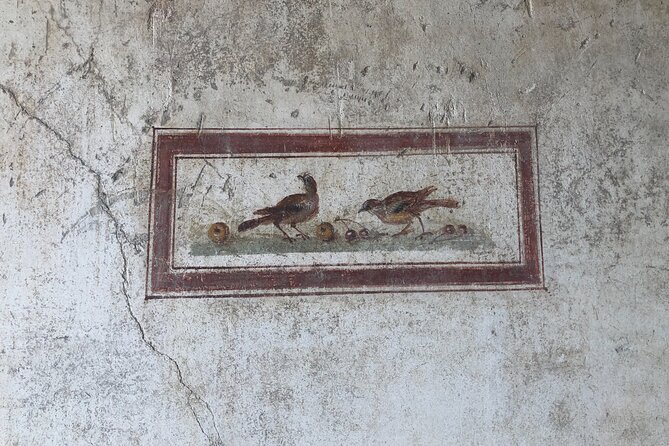
After Herculaneum, Pompeii feels bigger and louder. That contrast is useful. Herculaneum helps you feel what daily life looked like; Pompeii helps you see how a whole city worked.
Your guide begins at Porta Marina, a main gateway tied to merchants and sailors. This is where you start understanding scale before you hit the center. It’s also a practical “warm-up” walk for families: you ease into Pompeii rather than jumping straight into the hardest core areas.
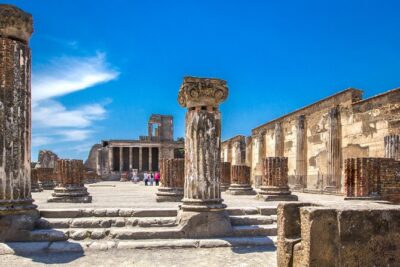
Next comes the Basilica, Pompeii’s key civic building. This is where legal disputes were heard and contracts negotiated. The surviving columns may not look dramatic, but your guide helps you connect the architecture to daily business. It’s one of those stops that feels like a lecture—until you realize it’s the ancient version of civic life.
Then you’ll reach the Temple of Apollo, where you can also get a view toward Mt. Vesuvius. This is your reminder of the eruption looming in the background—history tied to geography, no extra travel required.
The Forum is the beating heart of Pompeii: a place for religious ceremony, business, speeches, and politics. For kids, the guide turns the space into an imagination game—where noise came from, what people did as they moved between buildings. For adults, it’s where you see how the city’s identity was built around public spaces.
The Macellum, Forum Baths, and Big Homes With Real Details
From the civic center, you’ll move into more everyday Pompeii spaces.
The Macellum is Pompeii’s market area, where citizens shopped for meat, fish, fruit, and imported goods. You’ll spot marble counters and storage vessels while your guide explains what Romans bought and sold. For families, markets are naturally interesting because they connect to senses: food, trade, and errands.
Then you’ll visit the Forum Baths, which help explain the Roman bathing routine as a mix of hygiene, exercise, and social time. Mosaics and stucco decorations that survived the eruption make it feel like a functioning space rather than a graveyard.
Next come the big aristocratic homes. You’ll see gardens and mosaics, including the small bronze “mascot” statue of a dancing faun—often a hit with kids because it feels like a hidden character. Adults usually focus on the craftsmanship, like the mosaic floor depicting Alexander the Great.
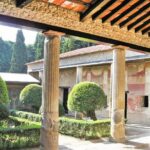
The guide then takes you through the House of the Vettii, known for vivid frescoes and a garden courtyard. The storytelling angle helps kids see paintings as scenes with characters, while adults get a clearer sense of how the Vettii brothers used art to show wealth and status through domestic space.
Pompeii Streets, a Dollhouse View, the Theater, and the Antiquarium
One of the fun ways Pompeii is taught in this itinerary is through movement.
You’ll walk along Pompeii’s liveliest ancient street—lined with bakeries, bars, and storefronts. Kids often love the stepping-stone moments and the idea that people moved around this pavement every day. Adults pick up practical clues like shop counters and fountains that suggest how errands happened at street level.
Then you’ll get a raised platform view into a whole city block. This is a “dollhouse effect” stop: without roofs, you can see rooms, courtyards, kitchens, and workshops. It’s not just a photo break; it’s a way to understand how densely built Pompeii was behind the street façade.
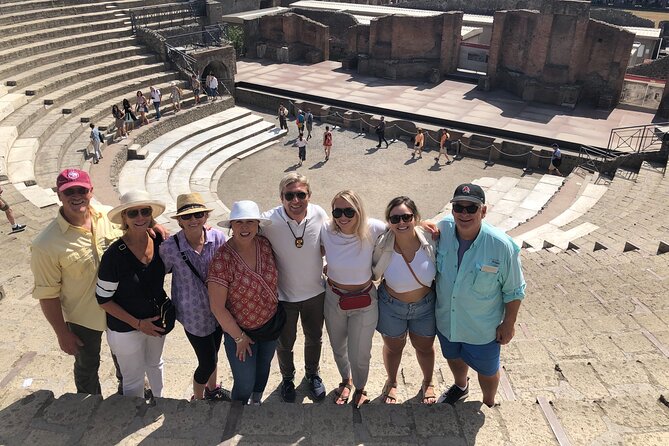
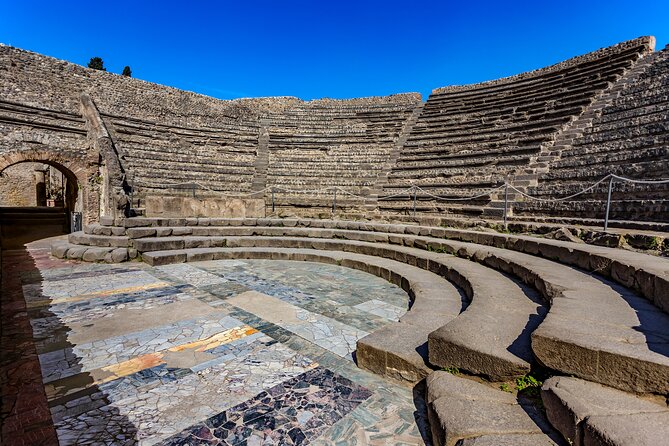
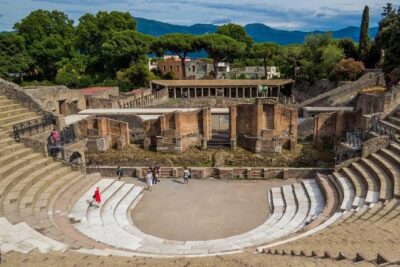
From there, the main theater is a standout. It’s built into the hillside, and the guide helps you test the acoustics from the stage. Kids often enjoy the silly part—trying to be heard. Adults enjoy the cultural part: public entertainment mattered a lot, and the theater’s design shows how Romans planned sound and gathering space.
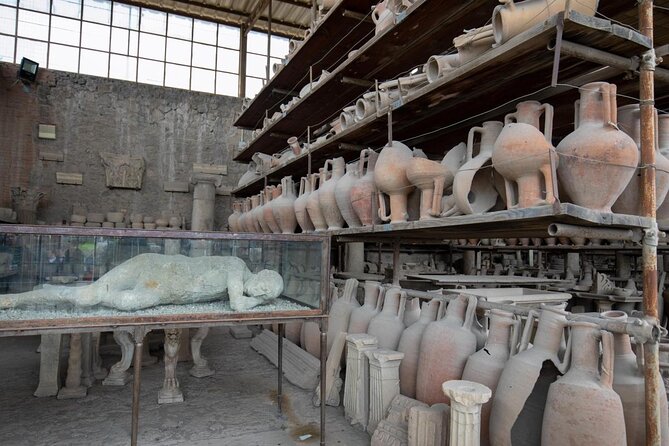
Finally, you end at the Antiquarium, where recovered artifacts connect the ruins back to people’s hands. Jewelry, coins, tools, and household objects give everyday texture. Plaster casts of eruption victims are introduced sensitively, so families can grasp the human story without it taking over the whole day.
Price and Value: What $738.31 Buys You Here
At $738.31 per person, this isn’t a budget hop-on/hop-off day. What you’re paying for is a full, private structure: transport by private vehicle, Blue Badge private guides in both sites, and Herculaneum and Pompeii Express skip-the-line tickets.
You also get time. Skip-the-line access plus a guide who keeps you moving in the right order can be a big value for families, especially when you’re trying to avoid long waits that drain energy and patience.
The itinerary is also built around family attention spans. Kid-friendly activities (booklet and map) and simple prompts like riddle-style exploration can keep younger visitors from getting lost in the scale of ruins. If you select the pizza lunch option, meals are included; otherwise, meals aren’t part of the base package.
One more practical note: the tour runs about 8 hours, and it’s often booked well in advance (on average, 142 days). If you’re traveling during peak seasons or with limited time, booking early is smart.
Practical Tips That Make the Day Easier
This is a “wear it out” day. You’ll want comfortable walking shoes and sun protection, and you should plan for heat because both sites are outdoors.
Bottled water isn’t included. If you’re traveling with kids, I’d plan on bringing water you can handle easily and refill when you can.
Pick-up is flexible. The operator can collect you from places like Naples, Sorrento, Pompeii, and more, including train station and cruise port areas, depending on what you enter when booking. If you’re on a cruise, double-check the timing so you don’t feel rushed.
Also, the tour is offered in English and is private, meaning you’re not sharing the guide with strangers. If you’ve got someone in the family who needs the day to be slower, a private setup helps.
If you’re curious about guide quality, one guide associated with this kind of experience—Giuseppe D’Angelo—has been praised for being kind and thoughtful while staying on top of the details your family actually cares about.
Should You Book This Family Pompeii and Herculaneum Day?
Book it if you want a family tour that teaches, not just transports. I’d choose this day plan if your kids need structure and you want adults to get real context: port life at the Boat Pavilion, preserved domestic details in Herculaneum, and civic city understanding in Pompeii.
Skip it if your family struggles with long outdoor walks or if you only want the most famous Pompeii hits. Pompeii alone can be enough work. This option is best when you’re okay with a full day and you want the contrast between the two eruption sites.
If you want one “value check”: you’re not buying a cheap ticket. You’re buying guided time, skip-the-line access, and family-ready pacing—and those add up fast when you’re dealing with kids, heat, and big sites.
FAQ
How long is the Pompeii & Herculaneum family adventure?
The tour runs about 8 hours (approx.).
Are tickets included and will we skip the line?
Yes. The experience includes Herculaneum and Pompeii Express skip-the-line tickets, and admission tickets are included for both stops.
Is pickup available, and where do they pick up from?
Pickup is available from flexible locations, including hotels, vacation rentals, train station, airport, and cruise terminal/port areas. You specify your pickup place when booking.
Is the tour private and in English?
Yes. It’s a private tour for only your group, and it’s offered in English.
Are meals included?
Meals are included only if you select the pizza lunch option. Bottled water is not included.
What should we bring or prepare for?
Bring comfortable walking shoes and sunblock. The itinerary involves moderate physical fitness, so plan for a full day outdoors.
What happens if we need to cancel?
You can cancel for a full refund up to 24 hours before the experience’s start time. If you cancel less than 24 hours before, the amount paid isn’t refunded.
More Tour Reviews in Pompeii
- Pompeii Small Group Tour with an Archaeologist★ 5.0 · 6,593 reviews
- Discover the Ancient Ruins of Pompeii: Day Trip from Rome★ 3.5 · 2,247 reviews
- Pompeii and Herculaneum Small Group Tour with an Archaeologist★ 5.0 · 1,350 reviews
- Skip the Line Guided Tour of Pompeii led by an Archaeologist★ 5.0 · 703 reviews
- Pompeii Ticket + Tour with Optional Tasting Experience at Pompeii★ 5.0 · 663 reviews
More of Herculaneum
- Pompeii and Herculaneum Small Group Tour with an Archaeologist★ 5.0 · 1,350 reviews
- Private Day Tour to Vesuvius, Herculaneum & Pompeii with Pick Up★ 5.0 · 279 reviews
- The Ultimate Ruins of Pompeii and Herculaneum Private Day Trip★ 5.0 · 103 reviews
- Naples: Pompeii & Herculaneum Day Trip – Small Group Tour★ 4.5 · 72 reviews
- Pompeii and Herculaneum small group Excursion from Naples★ 5.0 · 70 reviews
For Families, A Few More
- Ancient Pompeii Private Tour: Skip the Line & Kid-Friendly Option★ 5.0 · 167 reviews
- Pompeii Skip-the-Line Tour for Kids & Families with Archaelogist★ 5.0 · 93 reviews
- Skip-the-Line Pompeii Tour for Kids with an Archaeologist★ 5.0 · 89 reviews
- Pompeii – kids oriented private tour★ 5.0 · 37 reviews
- Tour of Pompeii for families with Transfer from Naples & Sorrento★ 5.0 · 37 reviews
Just reviewed: more Pompeii tours and day trips



Pompeii Tours for Kids & Families, compared.
 ★ 5.0Ancient Pompeii Private Tour: Skip the Line & Kid-Friendly OptionFrom $165167 reviews
 ★ 4.7Tour for ChildrenFrom $294106 reviews
 ★ 5.0Pompeii Skip-the-Line Tour for Kids & Families with ArchaelogistFrom $10793 reviews
 ★ 5.0Skip-the-Line Pompeii Tour for Kids with an ArchaeologistFrom $11989 reviews
 ★ 4.9Skip-the-Line Tour for Kids and Families72 reviews
 ★ 5.0Tour of Pompeii for families with Transfer from Naples & SorrentoFrom $21437 reviews
 ★ 5.0Pompeii – kids oriented private tourFrom $10637 reviews
 ★ 5.0Pompei Adventure: A Tailored Tour for Families with Kids!From $36030 reviews
Browse the lists this tour appears in