Reviewed · POMPEII
Exploring Pompeii
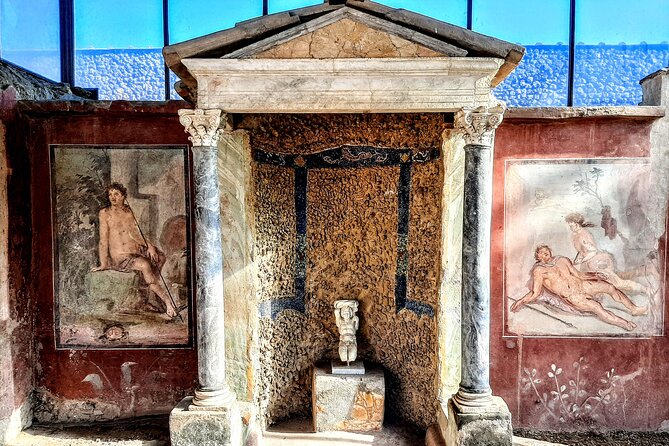
Pompeii hits fast, and it stays. What I like about this 2-hour private visit is that it goes beyond big ruins to show everyday luxury inside Roman residences, with painted frescoes and original mosaics. You also stop for the plaster casts of the victims, where the 79 AD eruption of Mount Vesuvius stops being a date and becomes a human story.
One practical note: the Pompeii entry tickets are not included, so you’ll need to plan that cost and timing before you go. On the bright side, this tour is offered in English, and the guides (including Francesco, who’s praised for explaining things clearly) help you connect what you’re seeing to how people lived.
In This Review
- Key Highlights You Should Know Before You Go
- 2 Hours in Pompeii: What You Actually Get to See
- Pompeii Archaeological Park Route: Homes, Shops, Temples, and Baths
- Roman Frescoes and Mosaics: Seeing Wealth Up Close
- Shops and Temples: The Public Side of a Roman Town
- Thermal Baths: Relaxation, Routine, and Social Life
- The Plaster Casts of the Victims: When the Story Becomes Personal
- English Private Guidance: How Francesco Fits In
- Price and What It Covers: Is $36.04 Worth It?
- Physical Comfort, Location, and Getting There
- How to Pair This Tour With the Rest of Your Day
- Who This Pompeii Tour Is Best For
- Should You Book Exploring Pompeii? My Straight Answer
- FAQ
- Is the Pompeii entry ticket included in the tour price?
- How long is the Exploring Pompeii tour?
- What language is the tour offered in?
- Is this a private tour?
- What is included in the tour?
- What should my physical condition be like?
- Are service animals allowed?
- Is the tour located in Pompeii, Italy?
- Can I cancel and get a full refund?
Key Highlights You Should Know Before You Go
- Private-group pacing means you can ask questions without feeling rushed.
- Roman homes, frescoes, and mosaics give you a real feel for wealth and daily life.
- Temples, shops, and thermal baths help you understand the town’s layout and routines.
- Plaster casts of victims deliver the emotional weight of the 79 AD catastrophe in one powerful stop.
- English-guided storytelling helps you make sense of what would otherwise be just stone walls.
2 Hours in Pompeii: What You Actually Get to See
This is a focused Pompeii outing in the Archaeological Park, built around one main goal: helping you understand the place as a working Roman town, not just a photo backdrop. With an approximate 2-hour duration, you’re not trying to cover everything. Instead, you get a guided route through the highlights that matter for understanding life before the eruption.
Because it’s private and only your group participates, the experience tends to feel less like a stamp-collecting exercise. You can stay longer at the spots that grab your attention and get explanations for the details you might otherwise miss.
If you’re the type of traveler who likes to leave with names, context, and a stronger picture in your head, this format works well. You won’t just be walking; you’ll be connecting the ruins to the people who lived there.
Not decided yet? A few more Pompeii tours worth weighing before you book.
- Pompeii Small Group Tour with an Archaeologist
★ 5.0 · 6,593 reviews - Discover the Ancient Ruins of Pompeii: Day Trip from Rome
★ 3.5 · 2,247 reviews - Pompeii and Herculaneum Small Group Tour with an Archaeologist
★ 5.0 · 1,350 reviews
Pompeii Archaeological Park Route: Homes, Shops, Temples, and Baths
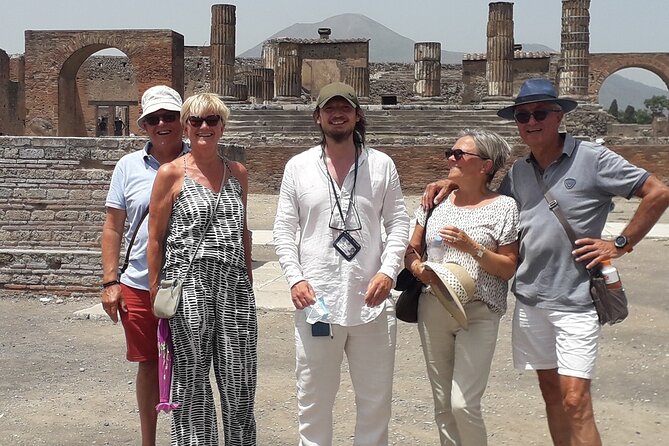
Your tour centers on key parts of Pompeii that reveal how a wealthy Roman town functioned. The itinerary typically starts in the Archaeological Park of Pompeii, where the guide frames the big picture: a prosperous community in the Roman Empire, abruptly interrupted by the Vesuvius eruption in 79 AD.
From there, you’ll move through several types of spaces, which is exactly what you want for a first visit:
- Private Roman residences with painted frescoes and original mosaics
- Roman shops, so you see the commercial side, not only domestic life
- Important temples, which grounds you in religion and civic identity
- Thermal baths, a clue to how people relaxed, socialized, and stayed clean
The practical win here is variety. Instead of getting stuck in one category of ruins, you get a cross-section of Pompeii’s daily rhythm: living, shopping, worship, and bathing.
Potential drawback: because the tour is only about 2 hours, it’s best to show up with a plan for what you want to linger on afterward. If you’re hoping for a deep, slow self-guided wander of the entire site, you’ll still want time beyond the tour.
Roman Frescoes and Mosaics: Seeing Wealth Up Close
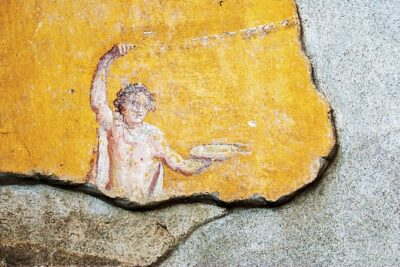
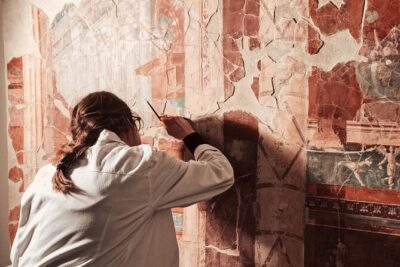
One of the biggest reasons this tour works is the way it uses the best-preserved visual clues: painted frescoes and original mosaics in private residences. Those surfaces are more than decoration. They tell you what wealthy people valued—status, taste, and the idea of a home that impressed visitors.
When you’re standing in a space that once belonged to a real household, the details feel more grounded. You can look at the colors, patterns, and subject matter and understand that Pompeii wasn’t just collapsing stone. It was a place where people invested in their homes.
This also makes your photos better, even if you’re not a photographer. It’s easier to frame shots when you know what part of the house you’re looking at and why it’s there. The guide helps you “read” the ruin rather than just glance at it.
Shops and Temples: The Public Side of a Roman Town
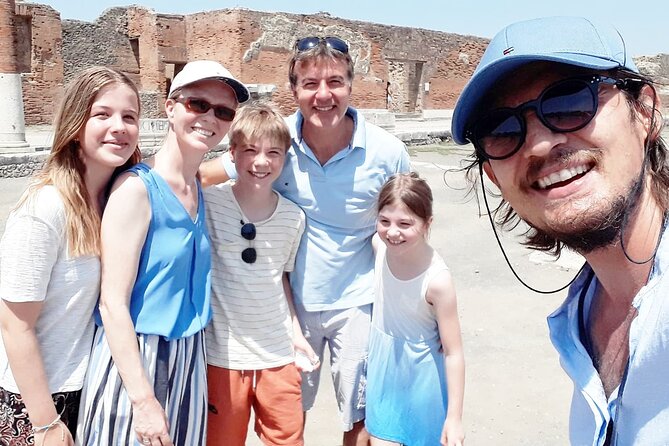
Pompeii wasn’t only houses and private spaces. It had a public pulse—places where people met, traded, prayed, and handled community life. That’s why the tour includes Roman shops and the most important temples.
This stop pattern is useful because it answers a question you might have when you first arrive: Where did all the everyday action happen? Shops help you picture commerce and daily needs, while temples help you understand the role of religion in public identity.
If you like walking through a town and imagining the flow of people—who went where and when—these elements give you that sense of movement. Without them, Pompeii can feel like a collection of pretty rooms. With them, you start to see a system.
Thermal Baths: Relaxation, Routine, and Social Life
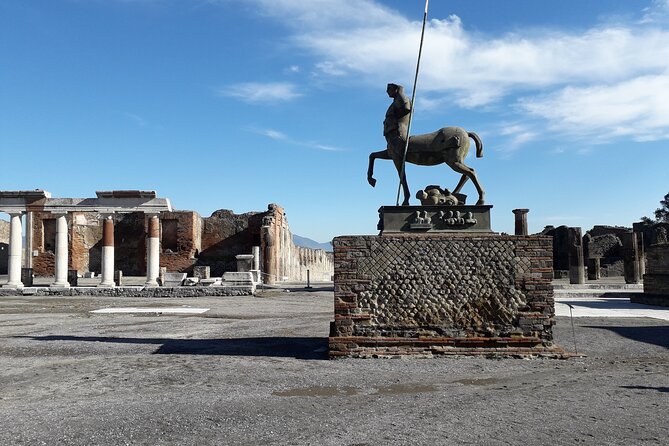
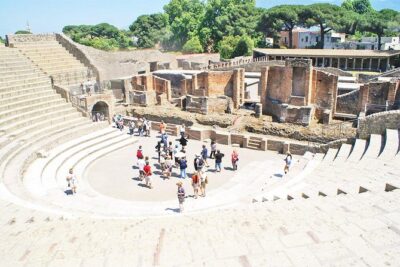
Including the thermal bath stop is a smart move for anyone who wants Pompeii to feel human. Baths weren’t a minor side feature. They were part of routine and social life. Even if you don’t know every Roman term, you can learn what mattered in the bathing experience and why it was such a central part of daily living.
From a value perspective, baths also help you understand how Pompeii handled practicality—space planning, flow, and how people moved through shared areas. A guided look keeps you from getting lost in the layout and lets you focus on the key functions the site shows.
If you’re traveling with teens or friends who think ruins will be boring, baths are often a turning point. They’re one of the most relatable Roman spaces because they connect to something everyone understands: routine, comfort, and social time.

The Plaster Casts of the Victims: When the Story Becomes Personal
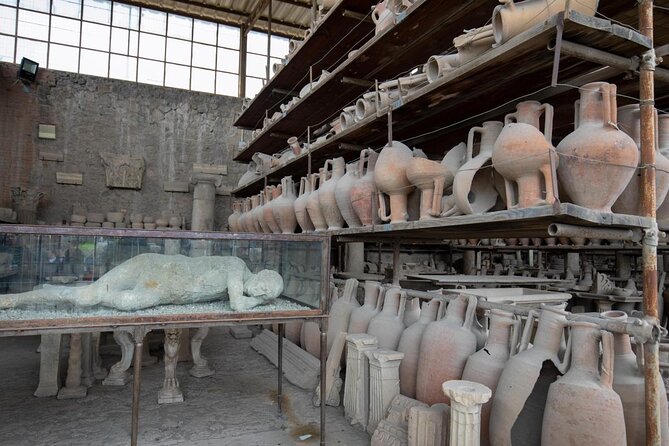
The emotional center of the tour comes when you see the plaster casts of the victims’ bodies. This isn’t a gentle stop. It’s meant to confront what the eruption meant, right down to the final moments people faced.
Why this matters for your experience: Pompeii can sometimes turn into a spectacle, especially if you’re chasing only the impressive visuals. The plaster casts pull you back to reality. You’re not just seeing what survived—you’re seeing what was lost.
I’d treat this stop with a little extra time in your mindset. Don’t rush through it to get to the next photo spot. If you’re sensitive to heavy history, plan for that emotional impact. The rest of the tour becomes more meaningful when you’ve seen this part.
And yes, it’s part of the value. You’re paying for more than structure and walls. You’re paying for guided context that connects the site to the event in 79 AD.
English Private Guidance: How Francesco Fits In
This tour is offered in English, which is a big deal at Pompeii. The site can be confusing at first glance, and English interpretation helps you piece together what you’re looking at—especially when you’re moving between homes, public spaces, and the tragedy-focused stops.
One name that comes up often is Francesco, praised for clear, confident guiding. When a guide is strong, you spend less time guessing and more time understanding. That makes even a short tour feel like it has real substance.
Since the tour is private, you also have a practical advantage: you can ask follow-up questions when something clicks. That kind of interaction is hard to get on a larger group schedule.
If you want the experience to feel tailored to your interests—homes more than temples, or emotional history more than architecture—this private format is one of the best reasons to choose it.
Price and What It Covers: Is $36.04 Worth It?
At $36.04 per person for about 2 hours, this tour can be a strong value if you factor in what you’re buying: time-saving guidance and interpretation. You’re not paying for a long full-day plan. You’re paying for a guided route through the most meaningful categories of Pompeii, so you don’t spend your visit wandering without direction.
The key catch: admission tickets are not included. That means you should budget separately for the Pompeii entry ticket cost. It’s not just extra money—it’s extra planning. You’ll want to make sure you arrive ready to enter, with tickets handled ahead of time.
When the guide is good, a short guided visit like this can be the difference between seeing Pompeii as random ruins versus understanding it as a town with routines, beliefs, and class.
If you’re already planning to buy tickets anyway, then this tour price becomes easier to justify: you’re adding guided context for a relatively small add-on. If you’re hoping for a tour where you just show up and everything is covered, this one needs a ticket plan first.
Physical Comfort, Location, and Getting There
This experience asks for moderate physical fitness. That matters because Pompeii terrain can be uneven, and you’ll be moving through an outdoor archaeological site. It doesn’t mean you need to be an athlete, but it does mean good walking shoes and a realistic pace are smart.
The tour is near public transportation, which helps. If you’re using transit to get around Naples and its region, you won’t need to build your day around a private car.
Service animals are allowed, which is helpful for travelers who need that support.
Since this is a private activity for your group, you should also consider how your group handles walks. If you have someone in your party who moves slowly, you might want to plan the rest of the day with extra buffer.
How to Pair This Tour With the Rest of Your Day
Because the tour is about 2 hours, I treat it like a strong anchor in your Pompeii day. It gives you a guided first pass through the major themes, then you can build from there.
A good approach is:
- Do this tour early enough that you still have energy for a little extra exploring afterward.
- Decide in advance what you want more of: Roman homes and art, public spaces like temples and shops, or the emotional part of the story.
If you’re the type who likes to return to one or two places you found especially meaningful, you’ll get more out of Pompeii by planning for that. A short guided segment works best when you use it to orient yourself.
Who This Pompeii Tour Is Best For
This tour fits well if you:
- Want a private, English-guided experience without committing to a full day
- Like the idea of seeing Pompeii as a town with homes, shops, temples, and baths
- Care about understanding the 79 AD story through the plaster casts stop
- Want a guide who helps you interpret what you’re looking at (Francesco is specifically noted for strong guiding)
It’s less ideal if you:
- Want Pompeii ticket costs to be bundled into one price
- Expect a very long, everything-in-one-shot walking marathon
- Need fully step-free conditions (moderate fitness is required, and the data doesn’t promise specific accessibility features)
Should You Book Exploring Pompeii? My Straight Answer
Book it if you want a short, focused Pompeii experience with a guide who connects the ruins to real daily life—and then brings you face-to-face with what happened in 79 AD. For many people, that balance of everyday Roman details and the emotional weight of the plaster casts is the part that makes Pompeii stick.
I’d hold back or at least plan carefully if you don’t already want to buy Pompeii entry tickets on your own. Since admission isn’t included, you’ll need to add that step to your schedule and budget.
If you’re booking soon, remember that it’s often scheduled about 36 days in advance on average. That’s a useful hint: don’t leave it to the last minute if your dates are fixed.
FAQ
Is the Pompeii entry ticket included in the tour price?
No. The tour price does not include Pompeii admission tickets.
How long is the Exploring Pompeii tour?
It lasts about 2 hours.
What language is the tour offered in?
The tour is offered in English.
Is this a private tour?
Yes. It’s a private activity, and only your group participates.
What is included in the tour?
The tour includes Exploring Pompeii, guided as part of the activity.
What should my physical condition be like?
The tour requires a moderate physical fitness level.
Are service animals allowed?
Yes, service animals are allowed.
Is the tour located in Pompeii, Italy?
Yes. The experience takes place in Pompeii, Italy, at the Archaeological Park.
Can I cancel and get a full refund?
Yes. Free cancellation is available up to 24 hours in advance for a full refund.
More Tour Reviews in Pompeii
- Pompeii Small Group Tour with an Archaeologist★ 5.0 · 6,593 reviews
- Discover the Ancient Ruins of Pompeii: Day Trip from Rome★ 3.5 · 2,247 reviews
- Pompeii and Herculaneum Small Group Tour with an Archaeologist★ 5.0 · 1,350 reviews
- Skip the Line Guided Tour of Pompeii led by an Archaeologist★ 5.0 · 703 reviews
- Pompeii Ticket + Tour with Optional Tasting Experience at Pompeii★ 5.0 · 663 reviews